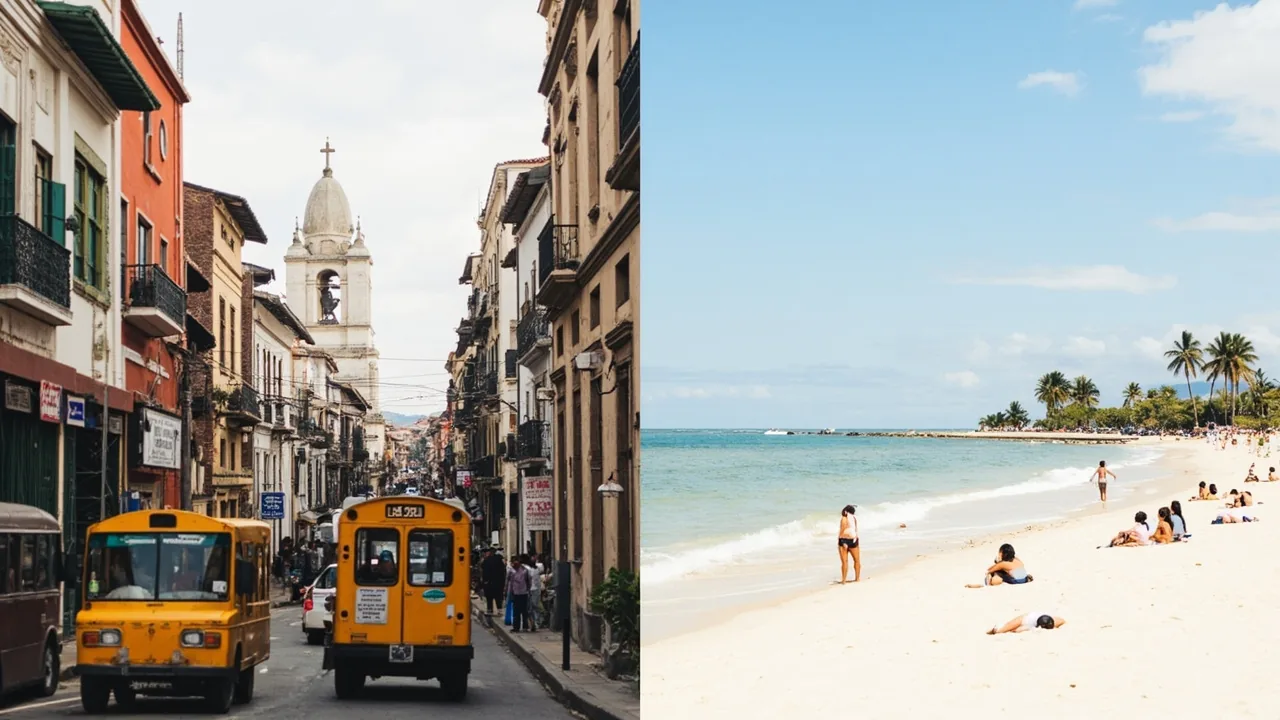
Manila vs Cebu: Which One for Indian Backpackers?
If you want history, museums, an actual Indian-food scene when you need a dal-chawal break, and a direct flight from India, pick Manila. If you want white-sand beaches, island-hopping day trips, and the more relaxed pace most first-time Philippines travellers end up preferring, pick Cebu. Manila is the entry door and the urban experience; Cebu is where most Indian backpackers want to spend their nights. For related planning, see our guide on Sea Backpacking Hub.
The Manila vs Cebu question comes down to a single split: do you want a city break with side trips to Spanish-era forts, or an island-hopping base with dive shops and beachfront hostels? Both have direct flights from India via Manila (Cebu Pacific and Air India operate Manila routes from Delhi and Mumbai), and you can fly between the two cities in about 1 hour 20 minutes for under 3,500 PHP. The Philippines uses the Philippine Peso (PHP), and 1 PHP ≈ ₹1.61 at time of writing. Keep that rate in your head, every peso you spend below is a direct conversion.
Quick Answers
| What | Answer | Price (INR) |
|---|---|---|
| Easier first-time city for Indians | Manila (direct flights, more Indians on the ground) | Manila |
| Better for beach + island-hopping | Cebu | Cebu |
| Cheaper overall (7-day budget) | About even, both around ₹18,000-₹22,000 (~$186.84-$228.36) | Tie |
| Veg food availability | Manila has more Indian restaurants | Manila |
| Better for history and museums | Manila (Intramuros, National Museum complex) | Manila |
| Better for diving and beaches | Cebu (Moalboal, Bantayan, Mactan day trips) | Cebu |
Quick Comparison Table
| Factor | Manila | Cebu |
|---|---|---|
| Daily budget (budget) | ₱1,500-2,000 | ₱1,400-1,900 |
| Daily budget (comfortable) | ₱3,000-5,000 | ₱3,000-4,500 |
| Visa for Indians | 30-day visa-free for Indian passport holders, extendable by 29 days | Same rule, both are PH entry points |
| Best months | December to May (dry season) | December to May (dry season, calmer seas) |
| Veg food availability | Strong (Royal Indian Curry House, Biryanista) | Limited, mostly in Cebu City proper |
| Safety (solo) | Use Grab after dark in Makati/Intramuros | Easier, more tourist-friendly |
| English spoken | Excellent, widely spoken | Excellent, widely spoken |
| Vibe | Capital-city chaos, history, malls, traffic | Provincial capital, beach gateway, chill |
| Best for | First-night base, museum fans, foodies | Beach lovers, divers, island-hoppers |
Choose Manila If…
- You land late at night or early morning and want a clean hostel with hot water and a lift near the airport. NAIA Terminal 3 to Makati by Grab is around ₱350-450, and you can be in a dorm bed 45 minutes later.
- You want to see Spanish colonial history up close. Intramuros, Fort Santiago, and the National Museum complex are all walkable inside one day. See Fort Santiago tours on GetYourGuide for the full old-town walk.
- You want Indian food that’s not a hotel buffet. Royal Indian Curry House in Manila serves rich North Indian curries that taste closer to Delhi than to a generic “international” menu, and Biryanista does solid Hyderabadi biryani for ₱350-450 a plate.
- You’re using Manila as a one-night layover before flying onward. Many travellers arriving through Manila wish they’d skipped it and gone straight to Cebu; others spend 3 nights in Intramuros and love it. Your call.
Choose Cebu If…
- Beaches and island-hopping are the actual point of your Philippines trip. From Cebu City you can day-trip to Bantayan Island, overnight at Moalboal for sardine runs and turtle sightings, or take a ferry to Bohol for the tarsiers and chocolate hills. See Bantayan Island tours on GetYourGuide to compare day-trip options.
- You want a slower pace after Bangkok or Bali. Cebu City is calmer than Manila, and once you leave the city for the surrounding islands, you’re in small-resort territory with scooter rentals for ₱500 a day.
- You want to combine with Bohol in one trip without flying back through Manila. The Cebu-Bohol ferry runs every couple of hours and costs around ₱500-700 one way.
- You’re a certified diver or want to get certified. Moalboal and Mactan are both PADI hubs with prices around ₱2,500 for a fun dive and ₱18,000-22,000 for an Open Water course.
Manila: Pros and Cons
Pros:
- Direct flights from Delhi and Mumbai on Cebu Pacific, Air India, and Philippine Airlines. No Manila-Cebu domestic leg required.
- The National Museum complex (Fine Arts, Natural History, Anthropology) is one of the best museum clusters in Southeast Asia, and entry is free or ₱150-300. See National Museum of Fine Arts tours on GetYourGuide for current guided options.
- Intramuros is a walkable Spanish-era walled city with Fort Santiago . See Fort Santiago tours on GetYourGuide for a half-day walking version.
- Real Indian food scene: Royal Indian Curry House, Biryanista, and a handful of smaller spots in Makati and Ermita.
- Best nightlife in the country, from indie vinyl bars like Fred’s Revolucion-Escolta to rooftop cocktail spots like Night Sky.
Cons:
- Traffic is brutal. A 6 km Grab ride in EDSA rush hour can take 50 minutes. Plan half-day windows for any cross-city movement.
- Manila has a steeper learning curve on safety. After dark, stay in Makati, BGC, or Intramuros, and use Grab instead of walking taxis.
- It’s not a beach city. Manila Bay is grey and not swimmable for tourists. You fly out to get to actual beaches.
- Pollution and noise wear some travellers down by day 3.
Cebu: Pros and Cons
Pros:
- You’re 30 minutes from white sand. Bantayan, Mactan, Camotes, and Moalboal are all reachable as day trips or short overnights from Cebu City.
- Moalboal’s sardine run (tens of thousands of sardines in a tight ball, 5 metres from shore, free if you bring a mask) is genuinely one of the best things to do in the Philippines, and it costs ₱0 if you’ve got your own snorkel.
- Provincial pace. People are friendly, English is universal, and the chaos level is a fraction of Manila.
- Direct ferries to Bohol, Negros, and Leyte make Cebu a natural hub for an island-hopping loop.
- Hostels in Cebu City are slightly cheaper than Manila on average. Dorm beds around ₱400-600 vs ₱500-700 in Manila.
Cons:
- Indian food options are thin outside of a handful of spots in Cebu City proper. If you’re strictly vegetarian and want Indian every day, you’ll get bored fast.
- No direct India-Cebu flights in most cases. You fly into Manila and connect, which adds 3-4 hours and a domestic flight.
- Public transport outside the city is jeepney- and van-based. Comfortable, but you need patience or a scooter rental.
- Cebu City’s old downtown (Colon Street area) is run-down and not where most travellers stay. You’ll be in IT Park, Lahug, or near the port, which are all fine.
Where to Stay
Manila Hostels
| Hostel | Rating | Area | Book |
|---|---|---|---|
| Mad Monkey Manila | 9.48 | Makati / central | Check prices |
| Manila-Z-Hostel | 9.32 | Makati | Check prices |
| Lub d Manila Makati | 9.16 | Makati | Check prices |
| Ola! Hostel Manila | 8.6 | Malate / near Intramuros | Check prices |
| Mad Monkey and Lub d are the strongest picks for first-time Manila visitors. Both have proper common areas, female-only dorms, and Grab-friendly locations in Makati. Ola! Wins on proximity to Intramuros if you’re planning a history-heavy day. |
Cebu Hostels
For Cebu, the shortlist above only covered Manila. If you’re heading to Cebu City, look at hostels near IT Park (where most backpackers end up) or in Mactan if you want a beachfront base from day one. Cebu City dorms run ₱400-700 a night, and Mactan resort-hostels start around ₱1,200-1,800.
Cost Comparison
PHP is the local currency for both cities, so the table below uses PHP directly. At time of writing, 1 PHP ≈ ₹1.61.
| Expense | Manila (PHP) | Cebu (PHP) |
|---|---|---|
| Dorm bed (per night) | 500-700 | 400-600 |
| Private room (budget) | 1,500-2,500 | 1,200-2,000 |
| Street food meal (local) | 80-150 | 70-130 |
| Restaurant meal (mid-range) | 350-600 | 300-500 |
| Indian restaurant meal | 350-500 | 350-500 |
| Local transport (per day, mostly Grab/jeepney) | 300-600 | 200-400 |
| SIM card (tourist, 7 days, data) | 200-300 | 200-300 |
| Domestic flight Manila-Cebu | 1,500-3,500 | 1,500-3,500 |
| Top activity (museums, day trip) | 150-1,500 | 800-3,500 (island tours) |
| Beer (local, 500ml) | 60-90 | 50-80 |
| 7-day total (budget) | ₱13,000-18,000 | ₱11,000-16,000 |
| 7-day total (comfortable) | ₱25,000-40,000 | ₱22,000-35,000 |
Note: add a domestic flight of ₱1,500-3,500 if you’re combining both cities. Cebu and Manila come out roughly even, with Cebu a touch cheaper on accommodation and food, but once you factor in island-hopping day trips (Bantayan, Moalboal) it evens out. Manila is more expensive on transport because Grab dominates; Cebu is cheaper because jeepneys and habal-habal (motorbike taxi) rides are affordable.
The Bananarchy Take
Here’s the honest split. If you have 5-7 days in the Philippines and you’ve never been, do 2 nights Manila and 4-5 nights Cebu (with day trips from Cebu). Manila’s Intramuros is genuinely worth a day, the National Museum cluster is genuinely worth a half-day, and the Indian food scene in Makati will save your veg-and-dal week. Cebu is the actual point of the trip for most travellers, the beaches, the sardine run, the dive shops, the slow pace. Spend your longer stretch there.
If you only have 3-4 days total, pick one. Manila if your priority is museums and food and your flight lands at NAIA. Cebu if you can afford a short domestic hop from Manila on arrival and you want beaches as the headline.
If you have 10+ days, do Manila (2 nights), Cebu City (3 nights), Moalboal (2 nights), Bantayan (2 nights), and finish with a Bohol day trip from Cebu or push onward to Palawan. That itinerary covers 90% of what Indian backpackers want from the Philippines.
For a broader Philippines plan that includes these islands plus more, see our 10-day Philippines itinerary for Indian travellers.
What to Eat
Manila
Kantina Manila does Filipino comfort food done right: their sisig (sizzling pork, garlic, chilli) and adobo (soy-vinegar braised chicken or pork) are the dishes Indian travellers tend to order twice. Plates run ₱250-450.
Cafe Ilang-Ilang is the buffet option in Manila Hotel, famous for its dessert spread and a mix of Asian and Western stations. ₱1,800-2,500 per person for the full buffet, worth it if you want one big splurge meal.
When You Need Indian
Royal Indian Curry House in Manila serves North Indian curries that taste closer to Delhi than to a hotel buffet. Biryanista does Hyderabadi biryani in a modern setting, around ₱350-450 a plate, and it’s widely considered one of the most consistent veg biryanis in Metro Manila.
For veg travellers worried about Filipino food: most Filipino dishes use fish sauce, pork, or shrimp paste. Pure vegetarian Filipino food exists (vegetable sinigang, kare-kare with vegetables, pinakbet) but is rarer on restaurant menus. Lean on Indian restaurants like Royal Indian Curry House and Biryanista for your everyday veg meals; spots like Kantina Manila also serve vegetable sinigang, kare-kare with vegetables, and pinakbet if you want to try local veg, and Filipino spots are still your best bet for meat and seafood experiences.
Getting Connected
SIM cards in the Philippines are identical between Manila and Cebu. Globe and Smart both have tourist SIMs at the airport for ₱200-300 with 7 days of data (around 6-8 GB). Get Nomad eSIM works in both cities if you’d rather skip the airport counter, and you can activate before landing. For a deeper SIM comparison, see our where to buy SIM card in the Philippines guide.
Can You Do Both?
Yes, and most Indian backpackers should. The flight is 1 hour 20 minutes, Cebu Pacific and Philippine Airlines run it 6-8 times a day, and round-trip fares run ₱3,000-5,000 if booked a week out.
Suggested splits:
- 2 nights Manila + 5 nights Cebu (7 total), most common
- 3 nights Manila + 7 nights Cebu (10 total), adds a day for a volcano day trip from Manila or a Moalboal overnight
- 2 nights Manila + 4 nights Cebu + 4 nights Bohol (10 total), covers both islands in one loop
Order: Manila first (to recover from the flight), then fly to Cebu, then either loop Bohol from Cebu or fly out from Cebu back to Manila for your international return.
Safety
Both cities are safe for Indian backpackers with standard precautions. Manila needs more caution: use Grab after dark, stay in Makati/BGC/Intramuros, and avoid the Quiapo and Tondo areas at night. Cebu City is calmer, but the same Grab-after-dark rule applies.
For current advisories, check the Indian Ministry of External Affairs travel page (mea.gov.in) and your airline’s destination page before departure. Both cities have had periodic advisories around typhoon season (June-November), and the U.S. State Department has flagged some Manila metro areas in past advisories, so a quick look before you fly is worth the 5 minutes.
FAQ
Is Manila or Cebu safer for solo Indian travellers? Cebu feels easier day-to-day, Manila is fine if you stay in the right districts (Makati, BGC, Intramuros). Both have functioning Grab and the same English-speaking environment.
Which is cheaper, Manila or Cebu? About the same, within 10-15%. Cebu is slightly cheaper on hostels and food; Manila is cheaper on Grab rides. Once you add Cebu’s island-hopping day trips, both even out.
Can I fly directly from India to Cebu? No direct flights as of mid-2026. You fly into Manila (NAIA) on Cebu Pacific, Air India, or Philippine Airlines, then take a 1-hour-20-minute domestic hop to Cebu. Most Indian travellers book both legs on one Cebu Pacific ticket.
Do Indians need a visa for the Philippines? Indian passport holders get a 30-day visa-free entry, extendable once for another 29 days at a Bureau of Immigration office in Manila or Cebu. Bring your passport, return ticket, and a hotel booking for immigration.
Is Manila worth visiting, or should I skip straight to Cebu? Worth at least one night for Intramuros and the National Museum cluster. After that, most backpackers head to Cebu or the islands. Manila without Intramuros is just a bigger, busier Cebu City.
Is Cebu good for non-divers? Yes. Snorkelling on Bantayan, sardine run in Moalboal (no certification needed), and beach time don’t require any course. Cebu is more than a dive destination.
Can I combine Cebu with other Philippine islands? Yes, easily. The Cebu-Bohol ferry is the natural next step (₱500-700, 2 hours). From Cebu you can also fly to Palawan (Puerto Princesa, El Nido) in under 2 hours, or grab a Boracay flight for around ₱2,500-4,000.
Subodh’s Take
Manila is what you tolerate to get to the Philippines. Cebu is the Philippines. If you’re choosing between the two for the same number of days, pick Cebu, then do 2 nights in Manila at the end of your trip to see Intramuros and eat at Biryanista before flying home. That’s the order that works best for most travellers.
