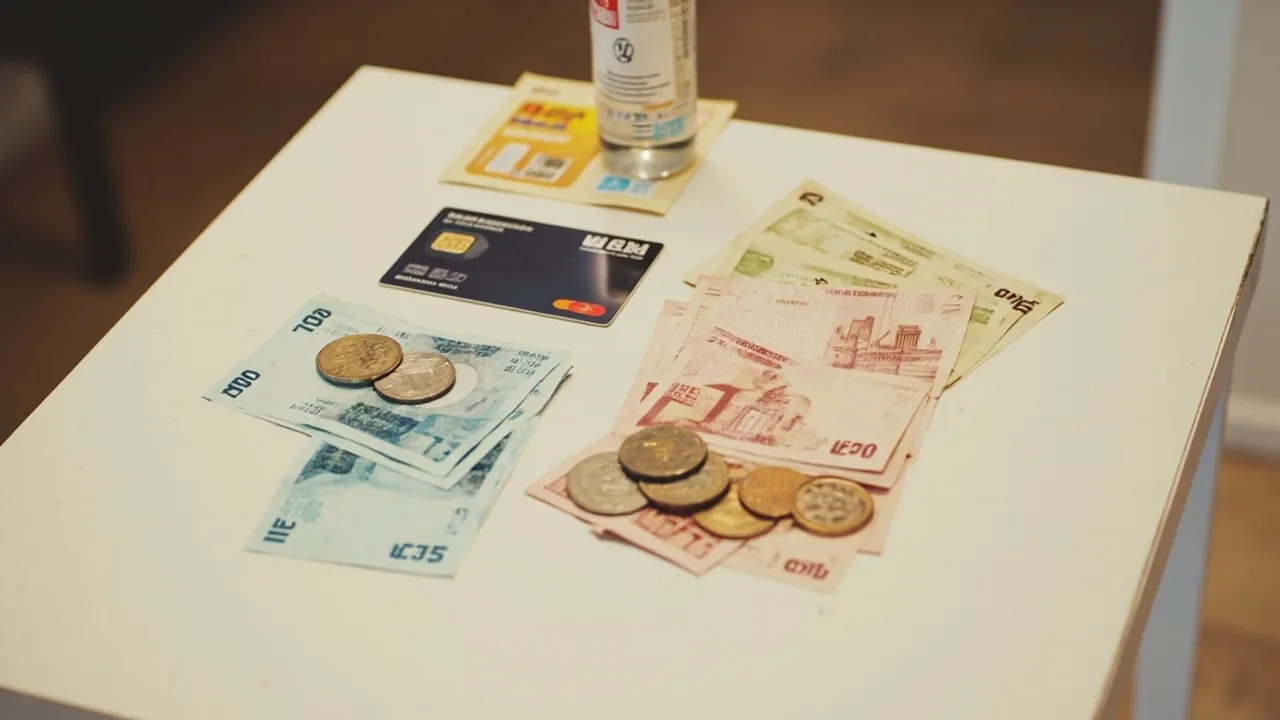
Money & SIM Guide for Indians in Malaysia: Ringgit Exchange, Forex Card vs Cash vs Credit Card & Best SIM
Carry some cash, load a forex card for big spends, and use a credit card only for emergencies. This guide covers money and sim card in malaysia for indians: exchange rates, forex cards, credit cards, and the cheapest SIM option. Don’t trust RuPay in Malaysia, and skip the airport money changer in KLIA, your ringgit will go about 4% further.
This guide was verified against the official eNTRI portal on 17 July 2026, cross-checked with the RBI’s Liberalised Remittance Scheme limits, and sanity-tested with current traveller reports from Indian-rupee-to-malaysian-ringgit-exchange-rate. For the full picture on Southeast Asia travel, see our SEA backpacking hub. The numbers below are what you’ll see, not what a marketing page wants you to see.
Quick Answers
| What | Answer | Price (INR) |
|---|---|---|
| 1 MYR to INR | 1 Malaysian Ringgit | ₹23.64 (~1 MYR or ~$0.28) |
| eNTRI visa fee | Free, apply at entri.petra.gov.my | $0 |
| eVISA fee (30 days) | Paid e-visa, 30-day stay, single entry | ₹2,121 (~22 USD) |
| Best street food meal | Nasi lemak at a mamak stall | ₹83 (~3.50 MYR or ~$0.86) |
| Tourist SIM (7 days, 30GB) | Hotlink or Celcom, 4G data | ₹592 (~25 MYR or ~$6.14) |
| Forex card vs cash | Use both; forex for hotels, cash for mamaks | , |
| Credit card acceptance | Good in malls, bad in hawker centres | , |
Quick Comparison: Cash vs Forex Card vs Credit Card
| Factor | Cash (MYR) | Forex Card (INR loaded) | Credit Card (Visa/MC) |
|---|---|---|---|
| Exchange rate | Best at city money changers | Close to interbank, small fee | Worst (3-4% FX markup) |
| Acceptance in Malaysia | Universal | Widely accepted, contactless works | Good in malls, bad at hawker stalls |
| Best for | Mamak stalls, Grab, small vendors | Hotels, large purchases, transport | Hotel bookings, flight tickets, emergencies |
| ATM withdrawal in KL | ₹237-₹284 (~10-12 MYR or ~$2.46-$2.95) fee per swipe | ₹142-₹237 (~6-10 MYR or ~$1.47-$2.46) fee per swipe | ₹1,184-₹2,367 (~50-100 MYR or ~$12.28-$24.56) cash advance fee |
| Safety from skimming | Low (cash loss is total) | High (PIN + chip, freeze via app) | Medium (chargeback rights exist) |
| UPI / RuPay | Does NOT work | Works only on forex-marked cards | Rarely accepted; high markup |
| Best use case in Malaysia | Street food, local buses, tipping | Hostel/hotel booking, Grab, day trips | Air tickets, large purchases, hotel deposits |
| Refund / leftover | Convert back at airport (lossy) | Hold balance, use on next trip | Pay off statement, no leftover |
Choose Cash If…
- You are eating at mamak stalls, hawker centres, or night markets. Most small vendors don’t take cards, period.
- You are taking a local bus, the LRT, or a budget taxi that runs on meter.
- You are tipping a porter, a hotel bellboy, or a tour guide in cash.
- You are at a pasar malam (night market) buying batik, souvenirs, or street food.
- You want to negotiate. Street vendors give better prices when you hand over notes, not a card machine.
Choose a Forex Card If…
- You are booking a hostel or a budget hotel in advance (hostel platforms charge in MYR or USD, and the card rate beats cash conversion).
- You want to lock in the rate the day you load, not the day you spend.
- You are worried about carrying large amounts of cash in your bag.
- You are doing a multi-country trip (Thailand, Singapore, Malaysia) and want one card that works across.
- You want tap-to-pay on the LRT, MRT, or Grab.
Choose a Credit Card If…
- You are booking flights from India to KL (cheaper than a forex card for large INR-MYR conversions).
- You need a hotel deposit or a car rental hold.
- You want chargeback protection on a tour booking gone wrong.
- You are buying something over ₹11,836 (~500 MYR or ~$122.78) in a mall or branded store.
- You have a card with zero foreign transaction fee (rare, but HDFC Infinia, Axis Atlas, and a few others offer this; verify with your bank before flying).
Cash. Pros and Cons
Pros:
- Universal acceptance. Every mamak, every Grab driver (cash option), every night market.
- Best rate if you exchange at a city money changer (not the airport).
- You can negotiate and tip.
- No tech failure. Cards get declined, cash never does.
Cons:
- Loss is total. Lose ₹11,836 (~500 MYR or ~$122.78), it’s gone.
- Carrying large notes in Bukit Bintang at 1 AM is asking for a pickpocket.
- You pay the exchange rate twice: once when you buy MYR, once when you convert leftover back to INR.
- Small denominations (1, 5, ₹237 (~10 MYR or ~$2.46)) are needed for hawker stalls; you’ll burn through coins.
Forex Card. Pros and Cons
Pros:
- Locks the rate at load time. If the rupee falls 3% next week, your ₹23,672 (~1,000 MYR or ~$245.55) is still worth what you loaded at.
- PIN-protected and chip-enabled, far safer than cash.
- Widely accepted at hotels, restaurants, supermarkets, and online bookings.
- No DCC (Dynamic Currency Conversion) trickery if you choose to pay in MYR at the terminal.
- Multi-currency wallets let you hold MYR, USD in one card.
Cons:
- ₹142-₹284 (~6-12 MYR or ~$1.47-$2.95) ATM withdrawal fee per swipe at Malaysian ATMs.
- Card load fees (some issuers charge 1-2% to reload).
- Not all hawker stalls have a card machine. Cash still needed.
- Refund or balance withdrawal back to Indian bank takes 3-7 days and may have a fee.
Credit Card. Pros and Cons
Pros:
- Best for large purchases and online bookings from India.
- Chargeback rights if a tour operator or hotel ghosts you.
- Contactless works at most supermarkets, 7-Elevens, and chain restaurants.
- Build credit history and earn reward points.
Cons:
- 3-4% foreign transaction markup on most Indian cards (SBI, HDFC, ICICI standard cards). This alone wipes out any “best rate” claim.
- Cash advance fees are brutal: ₹1,184-₹2,367 (~50-100 MYR or ~$12.28-$24.56) per ATM swipe, plus interest from day one.
- DCC trap: the terminal may offer to charge you in INR. Always decline and pay in MYR.
- Hawker stalls and small vendors don’t take cards.
Cost Comparison in ₹
| Expense | Cash (₹) | Forex Card (₹) | Credit Card (₹) |
|---|---|---|---|
| 7-day hostel dorm (avg) | 700 | 700 | N/A (hostels don’t take credit) |
| Street food meal (3/day × 7) | 1,350 | 1,350 | N/A |
| Restaurant meal (once) | 650 | 650 | 680 (with 4% FX markup) |
| Local transport (Grab + LRT, daily) | 1,900 | 1,900 | 1,976 |
| SIM card (7 days, 30GB) | 590 | 590 | N/A |
| Visa fee (eNTRI) | 0 | 0 | 0 |
| Top activity (Genting day trip) | 1,400 | 1,400 | 1,456 |
| Beer at a bar (2 nights) | 700 | 700 | 728 |
| ATM fees (3 withdrawals) | 850 | 510 | 2,100 |
| 7-day total (budget) | 8,140 | 7,800 | 6,940 (no ATM cash needed) |
| 7-day total (comfortable) | 12,000 | 11,500 | 10,800 |
Exchange rate verified 2026-07-17: 1 MYR = ₹23.64 (~$0.28). The forex card wins on large spends; cash wins on small ones; the credit card only wins if you have a zero-FX card and don’t need cash.
The Bananarchy Take
After running the numbers across hostel bookings, mamak meals, and Grab rides, the split that works for most Indian backpackers is 60% forex card, 35% cash, 5% credit card. Load the forex card with ₹35,509-₹47,345 (~1,500-2,000 MYR or ~$368.33-$491.11) for hotels, hostels, and big-ticket items. Carry ₹7,102-₹11,836 (~300-500 MYR or ~$73.67-$122.78) in cash for hawker stalls, tipping, and emergencies. Keep the credit card for flight bookings from India and a hotel deposit hold, nothing more.
Bananarchy’s one fixed-cost loop runs through Malaysia on the way from Thailand to Singapore, so this exact split is what we use on the ground. It’s not glamorous, but it works.
Where to Exchange Ringgit in Malaysia
The airport is the worst rate. Full stop. KLIA’s money changers take 4-6% on the spread, plus a flat “commission” fee that nobody explains.
Better options, in order of best rate:
- City money changers in Bukit Bintang, KL. MyTOX Money Changer on Jalan Sultan Ismail and Merchantrade at Berjaya Times Square consistently offer the tightest spreads. Ask for “no commission” before handing over rupees or dollars.
- Bring USD cash, exchange in KL. Carrying ₹19,281-₹28,921 (~200-300 USD) in clean, unfolded ₹9,640 (~100 USD) bills and exchanging in the city gives a better rate than converting INR directly. The USD-MYR market is deeper than the INR-MYR market.
- ATMs from Maybank, CIMB, or Public Bank. The interbank rate is fair, but the per-swipe fee is ₹237-₹284 (~10-12 MYR or ~$2.46-$2.95) for foreign cards. Withdraw ₹4,734-₹7,102 (~200-300 MYR or ~$49.11-$73.67) at a time to minimise the fee hit.
- Your Indian bank’s forex card ATM withdrawal. Rates are interbank, fees are ₹142-₹237 (~6-10 MYR or ~$1.47-$2.46). Best balance of rate + convenience.
Subodh’s Pro Tip: If you have time at KLIA before immigration, skip the airport changers. Withdraw from a Maybank ATM inside the airport (before customs, on the left after the train platform) for an interbank rate plus ₹237 (~10 MYR or ~$2.46) fee. The airport changers charge 4-6% on top.
Forex Card vs Cash: The Real Decision
The real question isn’t “which is better” but “which for which spend.” Here’s the exact split that minimises total fees:
- Forex card for: hostel/hotel booking, Grab rides, supermarket purchases, large restaurant meals, attraction tickets booked online, LRT/MRT top-ups.
- Cash for: mamak stalls, hawker centres, night markets, local buses, tips, small souvenirs, bargaining.
- Credit card for: flight tickets bought from India, hotel deposits, large online bookings (over ₹11,836 (~500 MYR or ~$122.78)), emergencies.
If you only want to carry one payment method and one backup, take the forex card as primary and ₹7,102 (~300 MYR or ~$73.67) cash as backup. You’ll lose 2-3% on the cash exchange but gain safety and acceptance everywhere.
Getting Connected: SIM and eSIM in Malaysia
The honest answer: a local SIM is cheaper than Indian international roaming by 70-80%, and an eSIM is the most convenient option if your phone supports it. Don’t rely on Jio or Airtel roaming; it’s ₹500-800/day (~$6.05-$9.68) for slow 4G, and it burns through your daily data limit in 2 hours of Google Maps.
Physical SIM options (buy at KLIA arrival hall or any Maxis/Hotlink/Celcom store in the city):
- Hotlink Prepaid Tourist SIM (7 days, 30GB + unlimited calls): ₹592 (~25 MYR or ~$6.14)
- Celcom XPax Tourist Pass (7 days, 30GB): ₹592 (~25 MYR or ~$6.14)
- Maxis Tourist Plan (15 days, 50GB): ₹1,065 (~45 MYR or ~$11.05)
All three need your passport and the SIM is activated within 5 minutes. Coverage is strong in KL, Penang, and Langkawi, weaker in Cameron Highlands and Borneo (but still usable).
ESIM option (buy before you fly, activate on landing):
Get Nomad eSIM starts at around ₹578 (~6 USD) for 5GB / 7 days, which lands at roughly ₹580 (~$6.02) for a week of data. No passport needed, no kiosk visit, no physical SIM tray. Best for short trips or as a backup to a local SIM.
Subodh’s Pro Tip: If your phone is dual-SIM (most Indian phones sold since 2022 are), carry a physical Malaysian SIM for data + calls and keep your Indian SIM in the second slot for OTP messages. Indian banks and IRCTC still send OTPs to your Indian number, and you don’t want to be locked out of UPI at the airport.
Safety: Cards, Cash, and Skimming
Malaysia is one of the safer Southeast Asian countries for card use, but skimming and ATM fraud still happen, especially at standalone ATMs in tourist areas (Bukit Bintang, Petaling Street, Penang’s Gurney Drive).
Safety Alert: Before you fly, check the Indian Ministry of External Affairs travel advisory at mea.gov.in for the latest on Malaysia. The advisory is updated quarterly and covers everything from regional tensions to scam patterns. The destination’s own government advisory site (imigresen.gov.my) is the authoritative source for visa and entry rules. See our Malaysia visa extension guide for what to do if your stay runs long.
A few habits that prevent 95% of card fraud:
- Use only bank-branch ATMs (Maybank, CIMB, Public Bank attached to a branch), never standalone machines in convenience stores.
- Cover the keypad when entering your PIN.
- Set a daily withdrawal limit on your forex card via the issuer’s app before you leave India.
- Enable SMS transaction alerts on every card you carry.
- Don’t let a vendor “walk away” with your card to a back room. The card never leaves your hand.
- If a card is swallowed by an ATM, call the bank’s Malaysian hotline immediately. Don’t accept help from bystanders.
For larger safety context beyond payments, refer to general travel-safety briefings on the Malaysia transport guide and the Malaysia budget trip planning guide.
FAQ
What is the best way to exchange Indian rupees to Malaysian ringgit? Carry clean USD bills (200-300 in ₹9,640 (~100 USD) notes) and exchange at a licensed money changer in Bukit Bintang or Berjaya Times Square in KL. The USD-MYR spread is tighter than INR-MYR. Skip the airport changers; they take 4-6%.
Is forex card better than cash in Malaysia? Forex cards win for large spends (hotels, hostels, Grab) because of locked-in rates and PIN safety. Cash wins for small vendors (mamak stalls, night markets) where cards aren’t accepted. Most Indian backpackers use 60% forex card and 40% cash.
Does UPI work in Malaysia? No. UPI and RuPay are not accepted at Malaysian merchants. Some Indian fintech apps (HDFC, ICICI) allow forex card top-ups via UPI from India, but you cannot scan a Malaysian QR code with Google Pay or PhonePe.
Which is cheaper, an Indian SIM with international roaming or a Malaysian SIM? A Malaysian tourist SIM (₹592 (~25 MYR or ~$6.14) for 7 days / 30GB) is far cheaper than Indian international roaming (₹500-800/day (~$6.05-$9.68) for limited data). Buy a local SIM at KLIA on arrival.
Should I use my Indian credit card in Malaysia? Only if it has zero foreign transaction fee. Most Indian cards charge 3-4% FX markup, which wipes out any “no annual fee” benefit. Use the credit card for hotel deposits and flight bookings from India, not for in-country spends.
Can I withdraw ringgit from an Indian bank’s ATM in Malaysia? Yes, but the fees are high. Most Indian bank forex cards charge ₹142-₹237 (~6-10 MYR or ~$1.47-$2.46) per ATM withdrawal abroad, plus a small FX spread. Withdraw ₹4,734-₹7,102 (~200-300 MYR or ~$49.11-$73.67) at a time to minimise the per-swipe hit.
How much cash should I carry in Malaysia? ₹7,102-₹11,836 (~300-500 MYR or ~$73.67-$122.78) in small notes (10s, 20s, 50s) is enough for a week of mamak meals, hawker stalls, and tips. Keep the rest on a forex card. Don’t carry more than ₹23,672 (~1,000 MYR or ~$245.55) at any time in a tourist area.
Closing
Bring the forex card, bring ₹7,102 (~300 MYR or ~$73.67) in cash, and skip the credit card unless it’s a zero-FX one. Exchange at a city money changer, not the airport, and buy a Malaysian SIM at KLIA on arrival. The rest is just paying attention.
