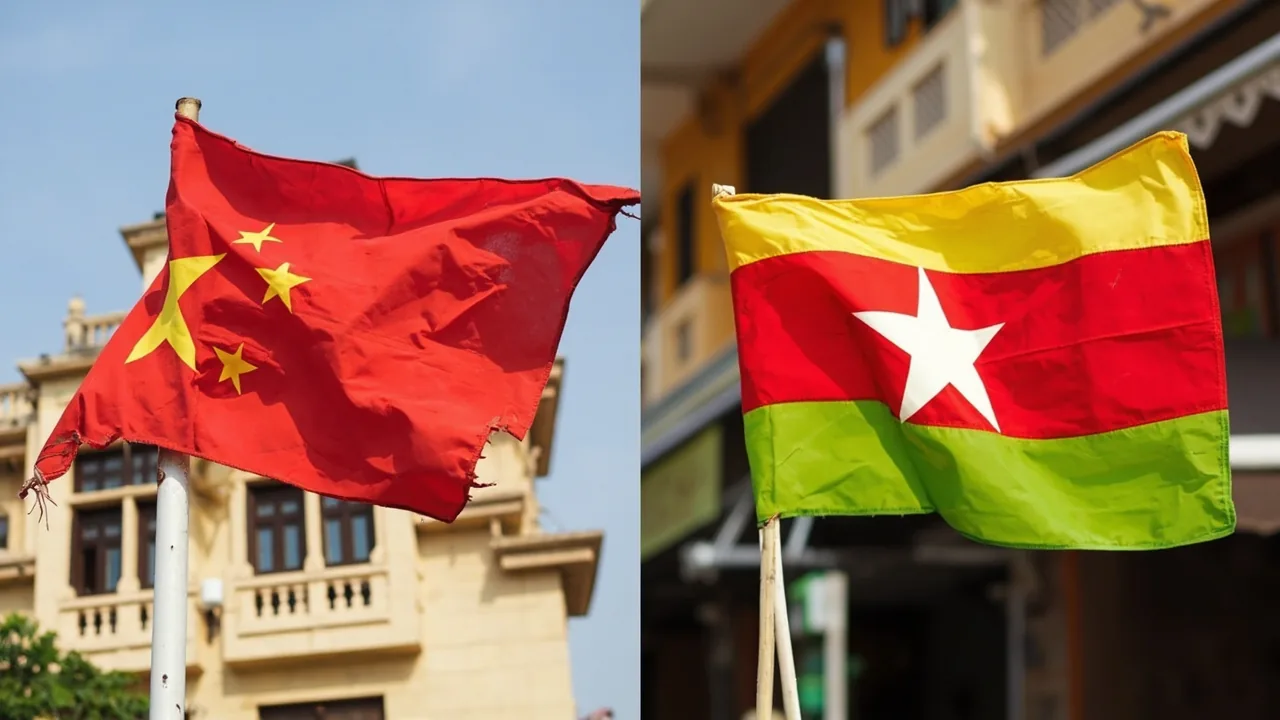
Vietnam vs Myanmar: Which Should You Visit? A Backpacker’s Comparison
Short answer: Go to Vietnam for 2026. For most Indian backpackers, Vietnam is the practical pick; Myanmar is the meaningful one, if you can go at all. Planning the wider region? Our Southeast Asia backpacking hub covers the full multi-country route.
I want to be direct about something before we go further: the situation in Myanmar is not what it was in 2019. Travellers who haven’t checked the news recently may assume the country is open and waiting. Since the February 2021 military coup and the resulting civil conflict, India’s Ministry of External Affairs has advised against all but essential travel to large parts of the country, and the on-the-ground picture changes without notice. Cross-checked against the latest MEA travel advisory (mea.gov.in) and the Myanmar government’s own tourism channels before booking anything. This article is structured as a long-term comparison so the framework stays useful when conditions change.
FX at 1 INR = 271.52 VND and 1 INR = 33.97 MMK.
Quick Answers
| What | Answer | Price (INR) |
|---|---|---|
| Cheapest dorm bed | Vietnam (Hanoi/Mekong delta hostels) | ₹921 (~250,000 VND or ~$9.55) |
| Better food variety for Indians | Vietnam | ₹221 (~60,000 VND or ~$2.29) |
| Easier visa for Indians | Vietnam (e-visa or VOA) | ~₹4,820 (~50 USD) |
| More off-the-beaten-path feel | Myanmar | 35,000 MMK |
| Currently safe for tourists | Vietnam (more stable) | — |
Quick Comparison Table
| Factor | Vietnam | Myanmar |
|---|---|---|
| Daily budget (budget) | ~₹2,210 (~600,000 VND or ~$22.92) | ~55,000 MMK |
| Visa for Indians | E-visa 90 days, or VOA | Currently restricted/limited |
| Best months | Feb-Apr, Oct-Dec | Nov-Feb (dry season) |
| Veg food availability | Strong in cities, weak in rural areas | Weak overall |
| Safety (solo) | High in tourist zones, petty theft in HCMC | Variable, check advisories |
| English spoken | Common in tourist hubs | Limited outside Yangon |
| Vibe | Energetic, fast-moving, food-obsessed | Quiet, slow, deeply traditional |
| Best for | First-timers, foodies, motorbike riders | Repeat SEA travellers, culture seekers |
Choose Vietnam If…
- You want a visa you can sort in under 24 hours (e-visa approved online, fees from around ₹5,083 (~1,380,000 VND or ~$52.72)).
- You want strong vegetarian and Indian food options, especially in Ho Chi Minh City, Hanoi, and Da Nang.
- You want a transport network that connects every major city by cheap sleeper bus, train, or low-cost flight.
- You want beach, mountain, and city variety in one country without long overland days between them.
- You want motorbike loops (Hai Van Pass, Ha Giang) that are famous worldwide for good reason.
Choose Myanmar If…
- You’ve already done Thailand, Vietnam, and Cambodia, and want something less crowded.
- You care more about Buddhist temples, pagodas, and slow cultural immersion than nightlife or beaches.
- You’re comfortable with a higher level of uncertainty around borders, transport, and current events.
- You want Bagan at sunrise over a thousand temples, and you’ll remember that view for the rest of your life.
- You have the flexibility to monitor the situation and shift dates if advisories change.
Is Vietnam and Myanmar the Same?
No, they are not the same country, and the confusion usually comes from three places: shared border, similar scripts on old maps, and similar-sounding names in Indian languages.
Geography: Vietnam is a long S-shaped strip on the eastern edge of mainland Southeast Asia, facing the South China Sea. Myanmar is the big rectangle on the western edge, bordering India, Bangladesh, Thailand, Laos, and China. They share a small land border in the north and are otherwise separated by Laos and Thailand.
History (Vietnam vs Myanmar history in brief): Both were colonised, but differently. Vietnam was under French colonial rule from the late 1800s until 1954, which is why Vietnamese food has strong French influence (baguettes, coffee with condensed milk, pâté). Myanmar was British Burma from 1824 until 1948, which is why Yangon still has colonial-era architecture, cricket, and left-hand driving. Vietnam fought the Americans in a long war that ended in 1975. Myanmar’s modern story is a sequence of military governments, the 2010s democratic opening, the 2021 coup, and the ongoing civil conflict. The political situations have shaped travel conditions in each country far more than their shared coastline has.
Religion and culture: Vietnam is officially atheist but culturally Buddhist, with strong ancestor worship, Confucian family structure, and a growing Catholic minority. Myanmar is one of the most devoutly Buddhist countries in the world; monks, monasteries, and pagodas are central to daily life, and you’ll see them everywhere.
Language: Vietnamese is tonal, six tones, Latin script with diacritics. Burmese (Myanmar language) is also tonal but uses its own circular script. Hindi or Tamil won’t get you far in either, but English is more widely spoken in Vietnam’s tourist hubs.
Food (this is where most Indians care): Vietnamese food is fresh, light, herb-heavy, and among the healthiest cuisines in the world. Lots of rice, noodles, spring rolls, pho, banh mi. Indian restaurants exist in every tourist city. Myanmar food is heavier, oilier, more meat-based, with strong Indian influence in some regions (especially Rakhine, near the Bangladesh border, where you can find decent curries and roti). Vegetarian options are limited outside Yangon and Mandalay.
Vietnam: Pros and Cons
Pros:
- Best food infrastructure for Indian vegetarians in Southeast Asia, outside Thailand. Cities have dedicated veg restaurants, Jay F&B spots, and Indian restaurants in every backpacker hub.
- E-visa process is straightforward and works reliably, with an official 90-day single-entry option. Apply through the official immigration portal.
- Domestic transport is cheap and frequent. Sleeper buses from ₹921 (~250,000 VND or ~$9.55), flights from ₹2,946 (~800,000 VND or ~$30.56), trains from ₹1,289 (~350,000 VND or ~$13.37). You can move almost anywhere in the country within a day.
- Massive variety of landscapes and experiences within one country: Hanoi old quarter, Halong Bay, Sapa terraces, Hoi An lanterns, Hue citadel, HCMC street life, Mekong delta, Phong Nha caves, Da Nang beaches.
- Solo travellers report feeling safe in tourist zones. Petty theft is the main concern (pickpockets in HCMC markets, bag-snatching from motorbikes).
Cons:
- Cities can feel intense. Hanoi and HCMC are loud, crowded, and fast. First-timers sometimes find the traffic overwhelming. For backpackers choosing between Vietnam’s open-ended bus network and its sleeper trains, see our sleeper bus vs train comparison.
- Rainy season (roughly May-Sep in central and south, slightly different in the north) disrupts some routes, especially the Hai Van Pass and Ha Giang loop.
- Motorbike rental scams are common, especially in Hoi An and Nha Trang. Renters get blamed for pre-existing damage. Photograph everything before riding off.
- Less of an off-the-beaten-path feel. Vietnam is well-trodden by international backpackers. If you want to feel off-grid, you’ll need to push into the northern highlands.
Myanmar: Pros and Cons
Pros:
- Bagan’s temple plain, Inle Lake’s leg-rowing fishermen, and Mandalay’s royal sites are among the most unique travel experiences in Asia, with far fewer tourists than Vietnam’s headline sites.
- Burmese people are widely reported by travellers as genuinely warm, curious, and welcoming to Indian visitors specifically (shared Buddhist cultural ties help).
- Cheap by Vietnam standards. Dorm beds from around 35,000 MMK, street meals from 5,000 MMK, taxis and tuk-tuks negotiable at low rates.
- Currency quirks (multiple exchange rates) mean savvy travellers can stretch their money further if they research the current situation carefully.
Cons:
- The political situation is the elephant in the room. Most Western governments, including India’s MEA, currently advise against all but essential travel to large parts of Myanmar. Some regions are outright no-go. Check the advisory the day before you book.
- Tourist transport and infrastructure have degraded since 2019. Some overland routes, especially to remote regions, are unreliable or unsafe.
- E-visa and visa-on-arrival for Indians has been restricted since 2021. As of mid-2026, the official channels list limited entry points and nationality restrictions that change without notice. Some travellers report success entering via specific overland borders; others are turned back. This is the single biggest planning risk.
- Indian food and vegetarian options are limited. Outside Yangon and Mandalay, you’ll be eating rice and vegetable curries from local teashops — Indian restaurants and Jay-marked veg spots do exist in those two cities specifically, so route around them rather than relying on fruit and bread as the default. Veg travellers need to plan around this.
- ATMs and banking are patchy. Bring enough USD cash to cover your whole trip, and exchange through official channels.
- English proficiency is lower than Vietnam outside the main cities.
Cost Comparison in INR
Daily costs calculated against 1 INR = 271.52 VND and 1 INR = 33.97 MMK. All prices in local currency only.
| Expense | Vietnam (VND) | Myanmar (MMK) |
|---|---|---|
| Dorm bed (avg/night) | ₹921 (~250,000 VND or ~$9.55) | 35,000 MMK |
| Street food meal | ₹110 (~30,000 VND or ~$1.15) | 5,000 MMK |
| Restaurant meal | ₹368 (~100,000 VND or ~$3.82) | 20,000 MMK |
| Local transport (per day) | ₹295 (~80,000 VND or ~$3.06) | 15,000 MMK |
| SIM card (tourist) | ₹258-₹442 (~70,000-120,000 VND or ~$2.67-$4.58) | 50,000 MMK |
| Visa fee | ₹5,083 (~1,380,000 VND or ~$52.72) | Variable, currently restricted |
| Top activity (day trip) | ₹1,473 (~400,000 VND or ~$15.28) | 50,000 MMK |
| Beer | ₹55 (~15,000 VND or ~$0.57) | 3,500 MMK |
| 7-day total (budget) | ₹15,469 (~4,200,000 VND or ~$160.46) | 590,000 MMK |
| 7-day total (comfortable) | ₹36,093 (~9,800,000 VND or ~$374.40) | 1,500,000 MMK |
Myanmar is cheaper on paper. Vietnam’s price tag buys you certainty, infrastructure, and a far wider choice of where to spend.
The Bananarchy Take
Here’s the honest answer for most of you reading this in 2026.
If you’ve never been to Southeast Asia, or if you’ve only done one or two countries, Vietnam is the correct choice. You’ll eat well, you’ll move easily, you’ll meet other travellers, and you’ll see more variety in two weeks than most countries offer in a month. The visa works, the transport works, the food scene is the best in the region for vegetarians and Indian travellers, and you can book flights to Hanoi or HCMC from Indian metros for under ₹25,000 (~$259.12) round trip on carriers like IndiGo, VietJet (via connections), Air India, and Vietnam Airlines. You will not regret picking Vietnam.
If you have done Thailand and Vietnam, and you’re specifically looking for Myanmar because you want temples, slow pace, and an experience most backpackers in your circle have not had, Myanmar is the answer, but only after checking the current advisory, having a backup plan, and accepting that some of what you planned may not happen. The risk is real.
The “which is better” question has a clear answer in 2026: Vietnam, for the average Indian backpacker. The “which is more meaningful” question has a clearer one: Myanmar, for the right traveller, in the right conditions.
Getting Connected
Vietnam’s tourist SIM options are simple: Viettel, Mobifone, and Vinaphone all sell tourist SIMs at the airport or any phone shop. A 30-day, 3-5 GB/day plan runs around ₹258-₹442 (~70,000-120,000 VND or ~$2.67-$4.58). Coverage is strong everywhere except deep mountains and remote islands.
Myanmar’s SIM situation is complicated. Telenor and Ooredoo have pulled out since 2021. The state operator (MPT) and a domestic operator (MyTel) are the main options, but tourist SIMs may not be available at all entry points, and registration requires your passport plus a local reference in some cases. Plan to sort this in Yangon or Mandalay, not at the border.
For both countries, an eSIM you activate before you fly is the easiest way to land connected. Get Nomad eSIM works across Vietnam, Cambodia, Thailand, and Laos on regional plans, and you can buy it the night before your flight.
Can You Do Both?
In theory, yes. In practice in 2026, it’s a stretch.
The geographic order would be Vietnam first (north to south), then an overland or flight connection through Thailand into Myanmar. Direct flights exist between Bangkok and Yangon, and Yangon-HCMC overland used to be straightforward but currently involves border restrictions.
A realistic combined trip in 2026 looks like this:
- 10-14 days Vietnam (Hanoi to HCMC, classic route)
- 3-5 days buffer for the Thailand/Myanmar transit
- 7-10 days Myanmar (Yangon, Bagan, Inle, Mandalay)
Total: roughly 3-4 weeks. Budget around ₹60,000-₹90,000 (~$621.88-$932.82) for the whole thing, excluding international flights.
If Myanmar’s borders are closed to you on arrival, the fallback is to extend Vietnam with a side trip to Cambodia (Siem Reap) and Laos (Luang Prabang, Vang Vieng), both of which pair with the Vietnam route. If you’re trying to decide between Vang Vieng and Thailand’s Pai for a backpacker stop, see our Vang Vieng vs Pai guide. See our Vietnam itinerary options for the exact breakdown.
If you’re starting from Thailand and considering Myanmar as a side trip from Bangkok, check what’s currently happening on the border before booking anything. Conditions have changed and may change again.
For an overview of how Vietnam compares to its most common alternative (Thailand) for Indian first-timers, see our Thailand vs Vietnam comparison.
Subodh’s Pro Tip: If Myanmar’s visa situation is unclear when you want to travel, don’t try to “wing it” at the border. Travellers report being turned back. Get written confirmation from the Myanmar embassy before you fly, and have a fallback destination booked in case plans change at the last minute.
FAQ
Is Vietnam cheaper than Myanmar for Indian backpackers? On paper, Myanmar is cheaper. In practice, Vietnam’s prices buy you reliable transport, consistent SIM data, and a wider food selection. Myanmar’s lower prices come with more risk and fewer options.
Is Vietnam and Myanmar the same country? No. They are two separate countries. Vietnam is on the eastern edge of mainland Southeast Asia, facing the sea. Myanmar is on the western edge, bordering India. They share a small northern border but have different languages, food, cultures, and political situations.
Can Indians get a visa for both Vietnam and Myanmar on the same trip? Vietnam e-visa is straightforward and you can apply online. Myanmar’s visa situation has been restricted for Indian travellers since 2021, with entry points and eligibility changing without notice. Check the current Myanmar embassy advisory before booking.
Which is safer for solo Indian women? Vietnam is the safer choice, with the caveat that bag-snatching from motorbikes is a real risk in HCMC and Hanoi. Wear your bag on the inside shoulder away from the road. Myanmar’s safety picture is location-dependent and time-dependent; check the current advisory.
When is the best time to visit Vietnam or Myanmar? Vietnam’s best months are February-April (dry across the whole country) and October-December. Myanmar’s dry season is November-February. Aim for the overlapping window if combining both.
Should I pick Vietnam or Myanmar for my first SEA trip? Vietnam. Myanmar is a rewarding destination for travellers who already know what Southeast Asia travel feels like, but it’s not the place to learn.
