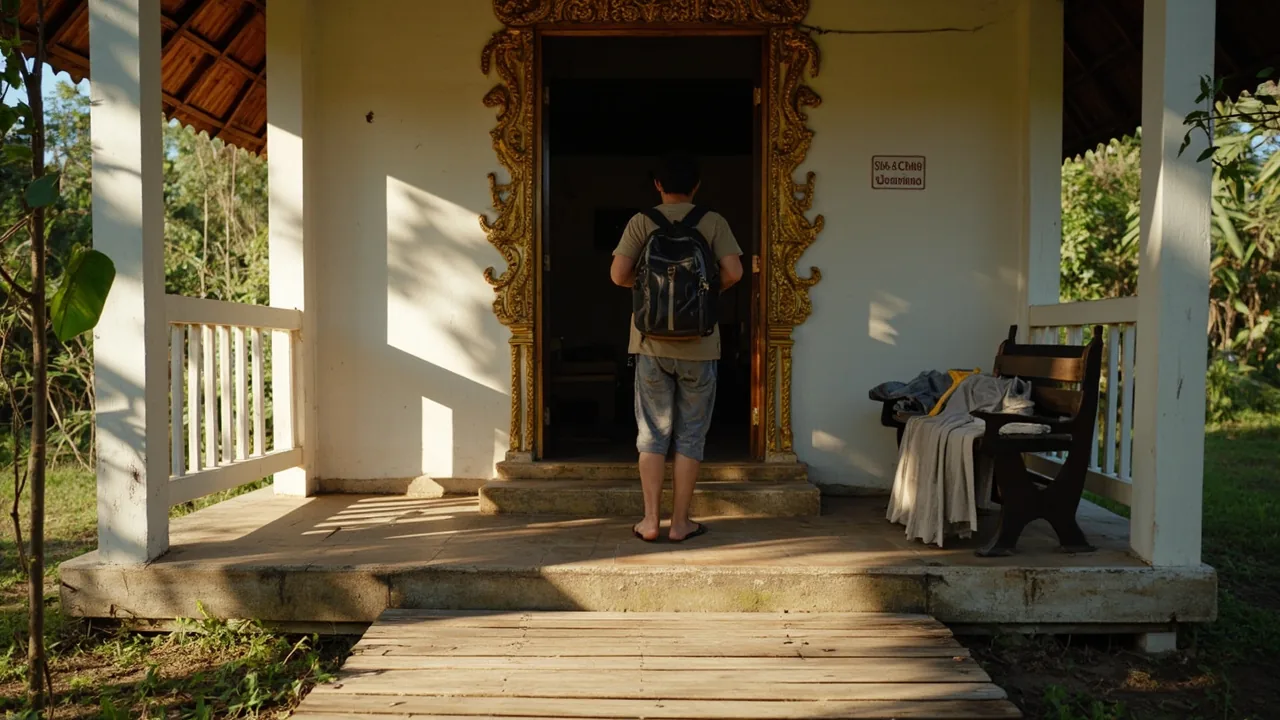
4000 Islands Temple Etiquette Guide: How to Respect Local Customs at Don Det and Don Khon (2026)
Temple etiquette in the 4000 Islands comes down to four things: cover your shoulders and knees, take your shoes off at the door, never point your feet at a Buddha image, and ask before photographing monks.
This guide was written for Indian backpackers landing in Don Det after the slow boat from Huay Xai, working through the basics of how to behave in a Lao Buddhist temple without standing out for the wrong reasons. I’ve cross-checked the rules against the official Lao National Tourism Administration guidance and traveller reports from the last quarter of 2025. For the full breakdown of getting to the islands, see our Si Phan Don complete guide.
Quick Answers
| What | Answer | Price (INR) |
|---|---|---|
| Where you’ll find wats | Don Det (Wat Phra Ah), Don Khon (Wat Khon Tai), and a few smaller village shrines | Free |
| Dress code | Shoulders covered, knees covered, no hats inside the sim (ordination hall) | Free |
| Shoes | Off at every temple entrance, every doorway threshold | Free |
| Pointing feet rule | Never point feet at a Buddha image or a seated monk | Free |
| Photography | Fine for the building. Always ask before photographing monks or people praying | Free |
| Best time to visit | Early morning around 6:00 to 7:30 AM, or just before sunset | Free |
| Entry fee | None. Donations welcome | ₹86-₹216 (~20,000-50,000 LAK or ~$0.90-$2.24) |
| Monk interaction | Women: do not touch monks or hand items directly. Men: a slight bow with hands in nump is appropriate | Free |
Subodh’s Pro Tip: Carry a lightweight long-sleeve overshirt and a sarong in your daypack even if you’re wearing shorts. The wats in the 4000 Islands are village temples with no loaner sarongs at the gate, and the monks will politely tell you to come back dressed properly.
What Counts as “Temple Etiquette” in Laos?
Temple etiquette is the set of customs Lao Buddhists follow when entering a wat (the Lao word for a Buddhist temple complex), particularly the sim or viharn (the main ordination hall where the Buddha image sits). The basics haven’t changed in centuries: dress modestly, behave calmly, remove shoes, and treat the Buddha image and the monks as you would elders in your own home. In the 4000 Islands, where the temples serve a small village population and see far fewer tourists than Luang Prabang or Vientiane, the rules feel less like a checklist and more like normal respect for a sacred space that also happens to be a community centre.
For Indian travellers specifically, the rules will feel partly familiar. Removing shoes at the door is the same as at a gurdwara or a South Indian temple. The “feet pointing” rule has parallels with how we treat elders at home. The biggest adjustment is around monk interactions, where the gender norms are stricter than anything most Indian travellers will have encountered.
Step-by-Step: How to Visit a Wat Respectfully in the 4000 Islands
Step 1: Dress before you leave the hostel
This is the single most common reason travellers get turned away at small village wats. The temples on Don Det and Don Khon don’t have a sarong stand at the entrance the way Wat Pho in Bangkok does. You need to arrive dressed.
- Shoulders covered. A t-shirt is fine. Singlets and tank tops are not.
- Knees covered. Long pants, long skirt, or a sarong wrapped around your shorts.
- Shoes you can slip off easily. You’ll be doing this at every doorway.
- Hats off before entering the sim. Carry them in your hand or leave them outside with your shoes.
If you’re in a rush from your bungalow, don’t count on borrowing a sarong on arrival, there is no loaner system at these village wats.
Step 2: Walk to the wat
The main temple worth visiting in the 4000 Islands is Wat Khon Tai on Don Khon. It’s a 20-minute walk from the Don Det side across the old French railway bridge, or a short motorbike ride if you’ve rented one. On Don Det itself, Wat Phra Ah sits near the centre of the island and is easier to reach on foot. If you’re figuring out how to get between the islands, our transport guide covers boats, bikes, and walking routes.
Plan to arrive either early morning (6:00 to 7:30 AM, when monks may be doing morning alms rounds) or late afternoon (4:30 to 6:00 PM, when the light is soft and the temple is quiet). Midday is when the sim gets hot and empty.
Step 3: Remove your shoes at the threshold
Every temple entrance, and every doorway inside the complex, has a threshold where you take your shoes off. Look for the other shoes piled near the door. Leave yours with them. In Lao temples, shoes are usually taken off at the outer gate rather than at the sim door, so you can wear them on the temple grounds themselves until you reach the main hall.
Subodh’s Pro Tip: Put your shoes together, soles touching, pointing away from the door. Lao temple-goers do this out of habit, and it signals to the caretaker that you know the local custom. Travellers who kick their shoes off in a heap stand out.
Step 4: Enter the sim (main hall) calmly
When you step up into the sim:
- Walk in slowly. Don’t run, don’t shout, don’t take phone calls.
- If people are praying or a monk is speaking, sit quietly at the back and wait.
- Lower your body to the floor in a respectful position before sitting. Men typically sit cross-legged. Women sit with their legs tucked to one side.
- Never point your feet toward the Buddha image at the front of the hall. If you need to stretch, point your feet behind you, toward the door.
- Don’t raise your feet above the level of a seated monk or a Buddha image, even to stretch.
Step 5: Approach the Buddha image (optional)
If you want to make a small offering, you’ll see small bowls or trays near the front of the sim. Place a small banknote (10,000, 20,000, or ₹216 (~50,000 LAK or ~$2.24) notes are appropriate) on the tray without making a fuss. Bow slightly with your hands together at chest level in a nump gesture. Three slow bows are the traditional count, but one is fine for a visitor.
You don’t need to kneel, light incense, or chant. Visitors who bow slightly with hands together and step back are behaving correctly.
Step 6: Photograph the building, ask before photographing people
Photography of the temple building, the Buddha images, and the architecture is generally fine. Photography of:
- Monks, especially during prayer or alms rounds: ask first, ideally through a guide or with a gesture and an enquiring look. A flat “no” hand-wave means no.
- Local people praying or making offerings: don’t photograph them. It’s intrusive.
- Children at the temple: ask the parents, not the kids.
If you want a souvenir photo of yourself in front of the Buddha image, do it quickly, without striking poses, and never with your back turned to the image.
Step 7: Interact with monks correctly
This is where most Indian travellers feel uncertain, so the rules are worth being specific:
- Men: A slight bow with palms together at chest level (nump) is appropriate when greeting a monk or passing him on the temple grounds. Don’t shake hands unless the monk offers first. Don’t stand higher than a seated monk.
- Women: Do not touch a monk. Do not hand a monk anything directly. If a woman needs to give an offering, food, or document to a monk, she places it on a cloth or table and the monk picks it up from there. This is the strictest gender rule in Lao Buddhism and applies even to tourists.
- Don’t sit next to a monk on a bench unless invited. Don’t take selfies with monks. Don’t ask a monk for a blessing unless you’re genuinely prepared to receive one (it involves kneeling and the monk tying a white string around your wrist).
If a monk speaks to you in English or another language, respond politely and briefly. The village monks in the 4000 Islands are generally used to backpackers and won’t initiate conversation.
Step 8: Leave a donation, then leave
Donations keep the wat running. A respectful amount for a visitor is 20,000-50,000 LAK (around ₹86 to ₹215 at current rates, where 1 LAK ≈ ₹0.0043). Drop it in the donation box near the door, or hand it to the monk or caretaker with a nump.
When you leave, walk out the same way you came in, putting your shoes back on at the threshold. Don’t linger if there’s a service starting. Bow once more toward the Buddha image as you exit if you feel moved to.
Common Mistakes Indians Make at Lao Wats
Mistake 1: Showing up in shorts and a vest
The mistake: assuming a small village temple is casual because it doesn’t have the “no shoes” sign of a big tourist site.
What happens: a monk or a temple caretaker politely tells you the sim is closed to you today. You have to walk back to your bungalow, change, and walk back. You’ve lost an hour.
How to avoid it: pack the long-sleeve overshirt and sarong as a default in your daypack whenever you’re heading out for a half-day of exploring. Costs you nothing, saves you the walk twice.
Mistake 2: Touching a monk’s hand, shoulder, or robe
The mistake: an Indian instinct to greet a monk the way you’d greet a Hindu sadhu or a priest, with a handshake or a respectful touch on the arm.
What happens: the monk will step back, sometimes visibly uncomfortable. Women in particular should never initiate physical contact with a monk, ever.
How to avoid it: hands together in nump (palms pressed, fingers pointing up, at chest level) and a small bow. That’s it. Works for men and women.
Mistake 3: Photographing alms rounds close-up
The mistake: seeing the morning alms round (where monks collect food from villagers) and crowding in for a phone photo.
What happens: monks and villagers find it intrusive, and you’ll be asked to step back. The 4000 Islands isn’t as ritualised as Luang Prabang, where alms rounds have become a heavily managed tourist event, but the same rules apply.
How to avoid it: keep a respectful distance (3 to 4 metres), don’t use flash, and never block the path of a monk walking toward a donor.
Mistake 4: Pointing feet at the Buddha image while sitting
The mistake: sitting cross-legged facing the Buddha image without realising your feet are pointed at it.
What happens: nothing dramatic, but you’ll quietly signal ignorance to anyone in the hall.
How to avoid it: sit with your feet tucked under you, or to one side, never stretched out toward the front of the hall.
Mistake 5: Loud group behaviour in the temple grounds
The mistake: continuing the volume of a hostel breakfast or a tubing conversation while walking through the wat compound.
What happens: you’ll see monks and elderly villagers visibly wince.
How to avoid it: treat the temple grounds like a library. Voices low, no phone speaker, no laughing. Save the group chat for after you’ve left the gate.
What Most Guides Don’t Tell You
The temple is also a school and a village hall
Wats in the 4000 Islands are working community centres. Kids study there in the afternoons. Village meetings happen there. A funeral procession may use the grounds while you’re visiting. None of this is your entertainment. If a private village event is happening when you arrive, come back another day. Travellers who linger to “watch” a funeral or a ceremony are making a serious cultural error.
The donation amount matters less than how you give it
A ₹43 (~10,000 LAK or ~$0.45) note given with a quiet bow and a nump gesture is more respectful than a ₹432 (~100,000 LAK or ~$4.48) note handed over with a flourish. Lao culture underweights the amount and overweights the manner. Don’t make a show of generosity.
The 4000 Islands monks don’t expect donations of food
Unlike Luang Prabang, where the morning alms round is a major tourist event with sticky rice purchases from vendors, the monks on Don Det and Don Khon generally don’t expect visitors to participate in alms rounds. If you want to, ask your guesthouse owner how to do it properly, or skip it. Watching respectfully from a distance is also fine.
There’s no official dress code sign, and that’s the point
Big tourist wats post signs in English and have sarong stands. Village wats don’t. The absence of a sign isn’t an absence of rules, it’s just a sign that the community expects visitors to know the customs already. Showing up in modest dress without being told to is part of how you signal respect.
Where to Stay
Most travellers visiting the wats stay on Don Det, which is cheaper and has more backpacker bungalows. Don Khon is quieter and more scenic. Both are walkable from the temples. Book ahead in high season (December to February) because the islands fill up. See our hostel guide for budget stays near the temples and the full Si Phan Don travel guide for food, stays, and logistics.
There are no major hostel chains on the islands. There is a cluster of guesthouses near the boat pier on Don Det that form the typical accommodation for backpackers. For your booking decision, the real choice is whether you want the party side (Don Det’s east, near the tubing drop-off) or the quiet side (Don Det’s west, or Don Khon).
Getting Connected in the 4000 Islands
Mobile data is patchy on Don Det and Don Khon. The two main options are:
- Physical SIM: Unitel or Lao Telecom, bought at the boat pier when you arrive. Costs ₹86-₹216 (~20,000-50,000 LAK or ~$0.90-$2.24) for a basic data package. Coverage is decent on the islands but weak in the interior.
- eSIM: If your phone supports it, a regional eSIM is more reliable and you can set it up before you leave India. Get Nomad eSIM and you arrive with data already working.
Budget an hour for SIM activation either way. Don’t expect 4G speeds. WhatsApp calls generally work; video calls often don’t.
Safety and Cultural Sensitivity
The 4000 Islands are among the safest parts of Laos. The main risks are scooter accidents on the dirt roads, Mekong currents near the waterfalls (especially at the Liphi Falls viewpoint), and occasional theft from bungalows left unlocked. None of this is temple-specific.
For temple safety, the only real risk is the slippery steps leading up to older sims. Watch your footing on wet mornings.
For general safety context before travelling, check the Indian Ministry of External Affairs travel advisory at mea.gov.in for current Laos updates. Lao government advisories are usually less detailed, but the MEA page flags any tensions near the borders or major demonstrations in Vientiane that might affect overland travel into the country. For more temple etiquette across the region, see our Southeast Asia backpacking hub.
Safety Alert: Dress code, monk interaction, and photography rules aren’t suggestions in Laos. A monk may refuse entry or ask you to leave if rules are broken, and in a small village like Don Det, word travels. Treat the wat like a guest’s home, because in a sense, it is.
Subodh’s Take
Most backpackers stress about temple etiquette because they’ve been told a hundred rules and can’t remember which ones matter. In the 4000 Islands, only four do: cover shoulders and knees, take shoes off at every threshold, don’t point feet at a Buddha image, and don’t touch monks (women) or grab their hands (men). If you remember those, the rest takes care of itself. The Lao Buddhists I know would much rather see a slightly underdressed visitor who is genuinely trying than a perfectly dressed one taking selfies.
FAQ
Do I need to remove my shoes for the entire temple compound or just the main hall?
Just the main hall (the sim). You can wear shoes on the temple grounds themselves. There will usually be a row of other shoes near the entrance to the sim, follow their lead.
Can women enter Lao Buddhist temples?
Yes, women are welcome in every wat in the 4000 Islands. The restriction is on physical contact with monks and on pointing feet at Buddha images. Women should also avoid sitting cross-legged with feet pointing forward; tuck them to one side instead.
Is there an entry fee to visit the temples in Don Det and Don Khon?
No, the village wats are free to enter. A donation of ₹86-₹216 (~20,000-50,000 LAK or ~$0.90-$2.24) is appropriate if you’d like to contribute to upkeep.
Can I visit a wat during a Buddhist ceremony or festival?
Yes, but let a local guide or your guesthouse owner advise you first. Major Lao Buddhist festivals like Boun Bang Fai (rocket festival, May) and Boun That Luang (October, mainly in Vientiane) draw large crowds and have specific protocols. During Pi Mai (Lao New Year, mid-April), wats are busy with purification rituals that visitors can watch respectfully from a distance.
Is photography allowed inside the sim?
Photography of the building and Buddha images is usually fine. Photography of monks during prayer or alms rounds is not. Photography of villagers praying is also off-limits. When in doubt, ask.
What should I do if I accidentally break a rule?
Apologise quietly, correct yourself, and move on. A small bow with hands in nump and a brief “sorry” goes a long way. Lao Buddhists are forgiving of genuine mistakes, especially from visitors who are trying.
Are there any temples in 4000 Islands that are off-limits to non-Buddhists?
No, every wat in the 4000 Islands is open to visitors of any background. The only restricted area inside a temple complex is occasionally the monks’ quarters (the kuti), which visitors don’t have a reason to enter anyway.
