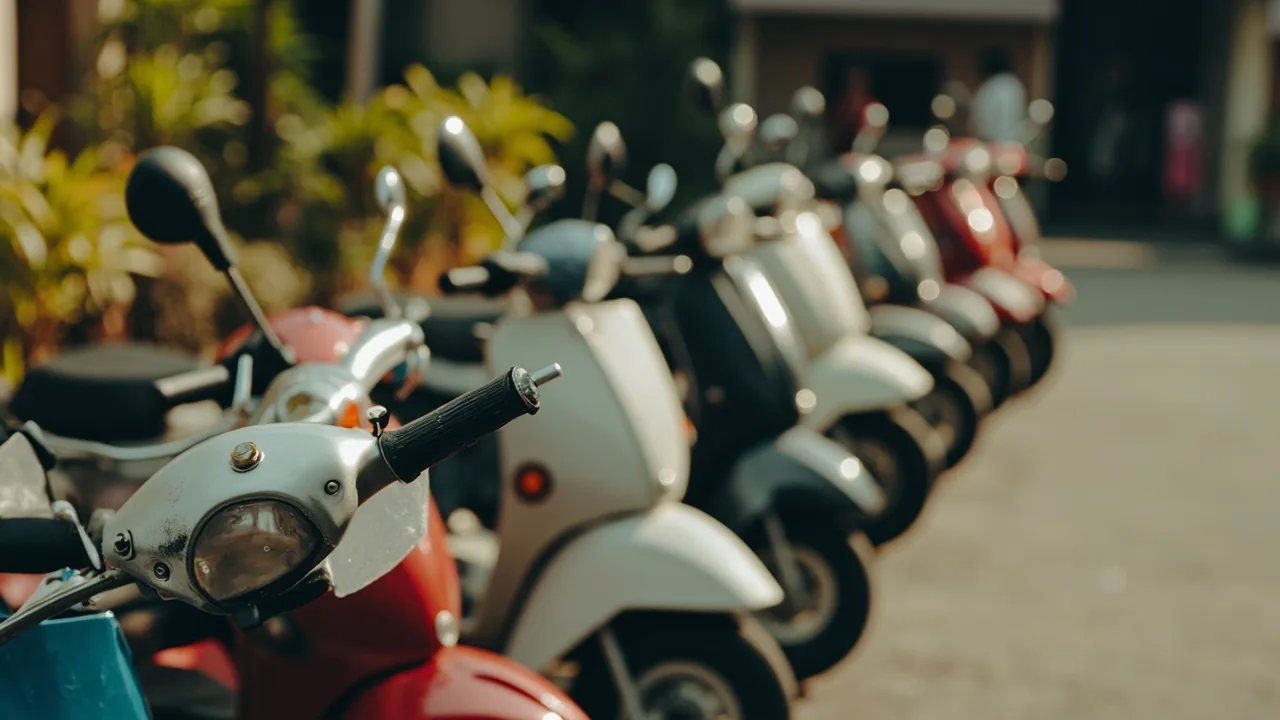
Renting a Scooter in Bali? Read This First: Safety Tips, Cheap Insurance & What To Do After a Crash
Cross-checked against current Bali rental insurance terms and the Indonesian police (Polisi) reporting procedure for motorcycle incidents. Bali is genuinely one of the best places in Southeast Asia to ride, but it is also where the most backpacker hospital admissions happen, which is exactly why these bali scooter safety tips matter. For a broader look at health risks Indian travellers face on the road, see the Bali health survival guide. Most of them are avoidable. The rest are manageable if you know the bali scooter safety tips before you grab the handlebars. For related planning, see our guide on Sea Backpacking Hub.
This guide walks you through the gear that reduces injury severity (not just the helmet), the rental contract clauses that leave you exposed, the step-by-step police and hospital procedure after a crash, and the insurance policies Indian travellers can claim against. All verified against current sources as of July 2026.
Quick Answers
| What | Answer | Price (INR) |
|---|---|---|
| Average daily scooter rental | ₹375 (~70,000 IDR or ~$3.89) | ₹370 (~$3.83) |
| Cheapest travel insurance that covers scooter riding | SafetyWing Standard (~₹5,900/month) | ₹5,900 (~$61.15) |
| Hospital deposit in private clinic (BIMC, Siloam) | ₹26,790 (~5,000,000 IDR or ~$277.89) typical upfront | ₹26,500 (~$274.66) |
| Police report for accident | Free at the local station (Polsek) | ₹0 |
| Helmet that meets standard | SNI-certified (built-in) | included in rental |
| IDP requirement | Mandatory under Indonesian law | ₹2,000 (~$20.73) to apply in India |
One line on currencies: verified 2026-07-18 at 1 INR = 188.68 IDR (live mid-market). All IDR figures below are in Indonesian Rupiah, the only currency on the ground in Bali.
The Real Risks (What to Worry About)
Scooter incidents dominate. They are not rare, they are routine, and they are the single biggest reason Indian backpackers end up in a Bali clinic. The good news: the risk profile is well understood, and almost every severe case involves a handful of avoidable factors.
| Risk | Likelihood | Impact | How to Avoid |
|---|---|---|---|
| Minor scrape / fall on first ride | High | Low | Practice in an empty lot for 15 minutes before traffic. |
| Collision with another vehicle (car, truck, scooter) | Moderate | High | Stay out of the left lane on multi-lane roads. |
| Hit by car running red light | Moderate | Severe | Treat every intersection like a defensive driver. |
| Sunburn/dehydration on long ride | High | Low | Wear a long-sleeve shirt, carry 1,000 ml water. |
| Bike breakdown / clutch cable snaps | Moderate | Low | Take a photo of the bike pre-rental. |
| Theft of bike (you are liable in the contract) | Moderate | High | Never leave the bike unattended in public. |
| Riding under the influence (alcohol + scooter) | Moderate | Severe | This is the #1 cause of head injuries. Don’t. |
| Sliding on wet road after rain | High | Moderate | Pull over if rain starts; roads get slick fast. |
The pattern is consistent in hospital data across BIMC, Siloam, and SOS International in Kuta: of the Indians who show up with scooter injuries, a clear majority were not wearing closed shoes, were wearing shorts, had no proper jacket, and either had alcohol in their system the night before or were riding a bike that was too big for them. Gear matters more than raw skill.
Prevention and Preparation (Before You Leave India)
The legal paperwork
Indonesian law treats a scooter as a motor vehicle. That means you are legally required to carry:
- A valid Indian driving licence with motorcycle endorsement (the MCWG or a learner’s licence class with two-wheeler), and
- An International Driving Permit (IDP) issued by the Regional Transport Office (RTO) in India, which costs around ₹2,000 (~$20.73) with the licence fee, takes one day, and is valid for one year across 150+ countries including Indonesia.
Without these, a rental shop will still hand you the keys, and a police officer will still fine you around ₹2,679 (~500,000 IDR or ~$27.79) on the spot if stopped, or worse, void your insurance claim after a crash. Travellers report some shops offering a “tourist licence” for ₹268 (~50,000 IDR or ~$2.78). This is an unofficial local paper. Do not buy it. In a crash investigation it is worthless and the rental shop will deny all responsibility.
Vaccines and pre-trip health
| Vaccine | Required? | Recommendation |
|---|---|---|
| Hepatitis A + B | Recommended | All Southeast Asia travellers |
| Typhoid | Recommended | Especially if eating street food |
| Tetanus booster | Recommended | Critical if you ride, road rash = tetanus risk |
| Japanese Encephalitis | Optional | Only for rural long stays |
| Rabies | Optional | Bali has street dogs; if bitten you will need a series |
Carry a copy of your immunisation record. Bali clinics will ask.
Travel insurance that covers scooters
This is the most-confused part. Most travel insurance policies sold in India have one of three exclusions for motorcycles:
- Total exclusion for any motorized two-wheeler.
- Coverage only with a valid international motorcycle licence (the proper full-fat motorcycle licence, not just a learner’s endorsement).
- Coverage only for engine capacity under 150cc.
Scooters rented to tourists in Bali are usually 110cc to 155cc. Read your policy wording for “motorized two-wheeler”, “motorcycle”, “moped”, “scooter”, and “cc limit”. Bike rental shops will tell you their policy covers everything. It does not.
Three policies that have been verified by travellers to cover Bali scooter incidents:
- SafetyWing Standard: covers scooter riding under 150cc with a valid licence. Around $62/month (~₹5,900). The most-used by Indian backpackers.
- World Nomads Explorer: covers motorized two-wheelers up to 250cc if you hold the appropriate licence. Higher premium but more full.
- Bajaj Allianz Travel Insurance (India): the Indian-only plans cover two-wheeler riding, but only if your Indian licence has the MCWG class.
Subodh’s Pro Tip: Take a screenshot of your policy’s motorcycle clause before you fly. Save it offline. If you crash, you’ll be on the phone with the insurance hotline from the roadside, and “I think it covers me” is not enough.
What to Wear Riding a Scooter in Bali
Helmets get all the attention. The gear that saves you from a long hospital stay is everything else. Riders report that the difference between walking away from a 30 km/h slide and ending up in surgery is the clothing between your skin and the tarmac.
Helmet
The SNI-certified helmet the rental shop gives you is the legal minimum. It will pass police checks. It is also adequate. Wear it. Fasten the strap. Do not buy the loose “half helmet” sold by beach sellers; it will fly off in a crash and offers almost no protection.
To reduce neck strain on long rides, a full-face or open-face with a peak is better than the basic three-quarter. Some rental shops offer a small upgrade range for ₹54-₹107 (~10,000-20,000 IDR or ~$0.56-$1.11) per day.
Eyes and face
Tropical sun + open road + dust = squinting, watering eyes, and sudden blindness at the wrong moment. A basic pair of clear or tinted sunglasses or a helmet visor fixes this. If you wear prescription glasses, helmet visors sit slightly above your line of sight and your regular glasses will do the job.
Torso
This is the gear detail competitors miss. A proper riding jacket or thick denim shirt does two things competitors usually skip:
- It cuts road rash severity by half. Hitting tarmac at 30 km/h in a t-shirt means skin grafts. Hitting it in a thick jacket means bruises.
- It reduces theft risk. Wearing a bike jacket visibly marks you as an experienced rider; opportunistic theft of scooters happens mostly to riders who walk up to a bike wearing beach wear and a tourist T-shirt. Riders who look the part are passed over.
For Bali’s heat, a light mesh riding jacket is the answer. They look dorky, they are cheap (₹1,500 (~$15.55) on Amazon India), and they are the single most underused item in a backpacker’s bag. A heavy denim shirt or hoodie works too; many travellers just borrow an old jacket from their hostel for the day.
Hands
Gloves. Any gloves. Gardening gloves. ₹200 (~$2.07) cricket gloves from a local shop. Anything that covers your palms. In a forward fall your instinct is to put your hands out, and exposed palms sliding on tarmac need surgery. Riders often skip this because the rental shop doesn’t offer them. Bring your own, or buy a pair at a warung in Ubud for under ₹161 (~30,000 IDR or ~$1.67).
Legs
Closed shoes, full stop. NOT sandals. NOT flip-flops. A bike exhaust pipe burns through skin in 1.5 seconds if you brush it with a bare leg, and the burn scars badly. Trainers, sneakers, or basic riding shoes are fine. If you do not have them, the backpacker set’s fallback is thick socks plus closed rubber slippers (the kind sold at Indonesian minimarkets for under ₹268 (~50,000 IDR or ~$2.78)). Better than bare feet, worse than proper shoes.
Trousers instead of shorts. Same road-rash logic as the jacket. A light pair of jeans works.
Subodh’s Safety Alert: The single most common scooter injury I see in Bali clinic reports is a foot/ankle burn from a hot exhaust. Closed shoes are not optional. The second most common is a road-rash infection from a t-shirt slide, requiring daily dressing changes for a week.
Renting the Scooter (Read the Contract)
Counter logic at every shop on Kuta, Seminyak, Canggu, and Ubud is the same: pickup, photo, ride. Here’s what to do.
The pre-rental walk-around
Take 10 photos on your phone:
- Front of the bike, full body.
- Rear.
- Left side.
- Right side.
- Odometer reading (the existing km).
- Fuel gauge (full at start, or half, or empty).
- Both tyres, close-up.
- Any existing scratches (zoom in, all of them).
- Helmet condition.
- Side mirror on each side.
If the shop owner points at scratches and says “already there, no problem”, get them on video saying it. Travellers report that this verbal acknowledgement matters more than the photos when negotiating post-rental damage disputes.
The contract
Three clauses to refuse or photograph:
- “Full liability for any damage”: this is industry standard in Bali, but it should be capped at the bike’s market value (around ₹42,864-₹80,370 (~8,000,000-15,000,000 IDR or ~$444.63-$833.68) for a 2022 Scoopy). Anything over and above that, especially “unlimited”, is a red flag.
- “Passport as collateral”: do not leave your actual passport. A photocopy or a cash deposit of ₹2,679 (~500,000 IDR or ~$27.79) works. A passport held hostage over a ₹1,072 (~200,000 IDR or ~$11.12) scratch is how travellers lose hundreds of dollars.
- “Third-party liability waiver”: the shop’s basic insurance covers the bike, not the other person. You need your own policy for that. The shop owner will not volunteer this.
Daily cost breakdown
| Item | Price | Notes |
|---|---|---|
| Scoopy / NMAX daily rental | ₹375 (~70,000 IDR or ~$3.89) | Standard 110-155cc |
| Premium / bigger bike daily | ₹643-₹804 (~120,000-150,000 IDR or ~$6.67-$8.34) | Avoid these if inexperienced |
| Helmet upgrade (full-face) | 10,000-20,000 IDR/day | Worth it |
| Petrol (Pertamax) per litre | ₹70-₹80 (~13,000-15,000 IDR or ~$0.72-$0.83) | Full tank ~25 km/L |
| Gojek alternative (short hop) | ₹43-₹134 (~8,000-25,000 IDR or ~$0.44-$1.39) | Per trip |
| Grab Bike alternative (longer) | ₹54-₹134 (~10,000-25,000 IDR or ~$0.56-$1.39) | Per trip |
If you are going to ride for one or two days only, Grab Bike or Gojek often works out cheaper than the rental plus petrol. Check the math first. See the Bali transport guide for the full comparison. For a broader look at health risks Indian travellers face on the road, see the Bali health survival guide.
What to Do After a Crash (Step by Step)
This is the section that matters most, because every decision in the first 30 minutes changes your financial outcome.
Step 1: Move to safety and check yourself
If you can stand and walk, move yourself and the bike to the side of the road. Turn on hazard lights. If there is an obvious serious injury, do not move; call 112 (the Bali emergency line) or 118 (ambulance).
Step 2: Check the other party
Are they hurt? Are they conscious? If anyone is bleeding, keep them still and call 112. If everyone is walking and talking, you have time to sort the paperwork. Even low-speed Bali crashes are often followed by a crowd gathering, including informal “witnesses” who will demand a payment on the spot for the owner. Do not pay any third-party cash.
Step 3: Photographs
Take photos of:
- The bike’s position relative to the road.
- The other vehicle.
- All damage, both bikes.
- The road surface (pothole? Oil? Wet?).
- Any visible injuries on yourself or the other party.
- The scene from three angles, wide.
Step 4: Call your insurance hotline
Before going to the police. SafetyWing and World Nomads both have 24/7 accident hotlines that will tell you exactly what they need. The number is in your confirmation email. Save it offline.
Step 5: Go to the police station (Polsek)
For any damage, even minor, you need a Surat Keterangan Kecelakaan (accident report). It is free. It takes 30 to 90 minutes. Without it, the rental shop can deny any claim, your insurance claim will be reduced, and the other party’s insurer will refuse to pay. Travellers report that some shop owners will tell you the police report is unnecessary. It is not. Get it.
Bring:
- Your passport.
- Your IDP.
- The bike’s registration (STNK, the rental shop has it).
- The other party’s ID if willing.
- Your photos.
The police may try to suggest an on-the-spot settlement. Refuse politely but firmly; you want the report, not the cash.
Step 6: Hospital
For any head impact, even with a helmet, get checked. Concussions and slow bleeds kill people who felt fine at the roadside. Tell the clinic front desk: “Saya kecelakaan motor” (“I had a motorbike accident”). They will route you to the right doctor.
Private clinics (BIMC Hospital Kuta, Siloam Hospitals Denpasar, SOS International) all have direct billing with most international insurances. If you have SafetyWing, you pay upfront and claim. Receipts, diagnostic codes, and the doctor’s letter are critical for any later insurance claim.
Upfront cash deposit if you are self-paying: around ₹26,790 (~5,000,000 IDR or ~$277.89) for emergency admission at a private clinic. Public hospitals (Rumah Sakit Umum) cost a fraction of that and are good for non-life-threatening care. If your embassy is involved, the public hospital is often faster.
Step 7: Damage to the bike
The rental shop will quote a damage cost. Travellers report that without the pre-rental photo set, this is where you lose money. With the photos and a refusal to pay anything not in the contract, you negotiate. Insurance (your travel insurance, the shop’s third-party liability, or the at-fault party’s insurance) usually covers the bike damage after deductibles.
For the deeper crash procedure plus emergency contacts for hospitals, police, and the Indian embassy in Bali, see the Bali emergency contacts guide.
Indian-Specific Considerations
Medicines to pack
| Indian brand | Local equivalent | Use |
|---|---|---|
| Electral ORS | Oralit (Indonesia) | Dehydration, heat exhaustion |
| Crocin / Dolo 650 | Paracetamol / Panadol | Fever, pain |
| Pantocid / Pan 40 | Omeprazole / Pantoprazole | Gastric, often needed on the road |
| Ciplox / Norflox | Ciprofloxacin | Traveller’s diarrhoea |
| Soframycin | Generic antibiotic ointment | Road rash, the moment you land in tarmac |
| Band-Aid | Hansaplast | Same brand worldwide |
| Volini / Diclofenac gel | Hot / counterpain cream | Bruises and swelling |
| Avomine | Antivert / generic | Motion sickness on long scooter days |
Pack them in a small first-aid pouch. You will use the ointment on day one.
Indian Embassy in Bali
There is no permanent Indian consulate in Bali. The closest full-service Indian mission is the Embassy of India in Jakarta:
- Address: Jalan Imam Bonjol No. 32, Jakarta 10310
- Phone: +62 21 5204150 / +62 21 5204157
- Helpline for Indians in distress overseas: +62 811 9500 678 (24/7, MEA operational)
- Email: [email protected]
For lost passport, the Honorary Consul in Bali does exist and is much faster than faxing Jakarta. For embassy contacts and detailed emergency steps, see our Bali emergency contacts guide. The MEA’s Indian Consular Passport Services portal has the current name and phone. Take a photo of the page on your phone before you leave home.
Hospital deposit cost (triple-currency, verified 2026-06)
| Facility | Self-pay deposit | What it covers |
|---|---|---|
| BIMC Hospital Kuta | ₹26,790 (~5,000,000 IDR or ~$277.89) | Initial 24h, ER, imaging |
| Siloam Hospitals Denpasar | ₹26,790-₹37,506 (~5,000,000-7,000,000 IDR or ~$277.89-$389.05) | Initial 24h, ER |
| Kasih Ibu Hospital (public-affiliated) | ₹8,037-₹16,074 (~1,500,000-3,000,000 IDR or ~$83.37-$166.74) | Initial 24h, ER |
| Rumah Sakit Umum (public) | Free to ₹2,679 (~500,000 IDR or ~$27.79) | Outpatient only |
If you travel insured and notify the insurer at the start of treatment, you usually skip the deposit. Read the full Bali clinic breakdown in the Bali health survival guide.
Getting Connected
Data is critical in a crash. The first thing you do is call your insurance, the second is open Google Maps to find a clinic. Both need working internet. A local SIM is around ₹268 (~50,000 IDR or ~$2.78) for 30GB from Telkomsel, Indosat, or XL. Pick one up at Ngurah Rai airport on arrival.
For a zero-counter option, get a Nomad eSIM before you fly so you land with data already on. Get Nomad eSIM
Subodh’s Pro Tip: Save your insurance claim hotline, the Indian Embassy Jakarta number, and Grab Bike (for replacement transport) as contacts in your phone before you ride. In a crash you will not be in the state of mind to type them in.
Other Risks in Bali Beyond the Scooter
Scooters are the headline, but the wider safety picture matters too. Our Indonesia safety guide walks through scams, drug law (which is severe, do not touch anything), and Bali-specific crimes.
Two specific risks worth flagging here because they intersect with scooter riding:
- Earthquakes and tsunamis: Bali sits on the Ring of Fire. The Indonesia natural disasters guide has the current alert status and what to do if you are on a bike when one hits (pull over, stay away from the beach).
- Volcanoes: Mount Agung and Mount Batur are active. Avoid restricted zones; ash affects scooter air filters within hours. See the Indonesia volcano safety guide.
FAQ
Do I need an IDP to ride a scooter in Bali? Yes, under Indonesian law. Without one, you can be fined on the spot, your insurance claim is at risk, and the rental shop holds you fully liable for any damage. Apply for one in India before you fly; it costs around ₹2,000 (~$20.73).
Will my travel insurance cover me if I crash without a helmet? Most policies cover medical costs, but a few exclude injuries sustained while breaking a local law. Riding without a helmet is a fineable offence. Wear one; the policy may otherwise pay reduced benefits.
Is it safe to ride at night in Bali? Travellers report mixed experiences. Roads are quieter, but street lighting is patchy in Canggu, Ubud, and Uluwatu. Animals cross the road unpredictably. Avoid riding after dark in your first week; if you must, ride well below the speed you would use in daylight.
Can I refuse the rental shop’s “full liability” clause? Yes, walk away and try another shop. There are dozens in every tourist area. Travellers report that the better shops cap liability to bike market value (around ₹53,580 (~10,000,000 IDR or ~$555.79)) and accept a cash deposit instead of the passport. Always ask.
What if the other party runs away? File a police report anyway, even if you cannot identify them. Your insurance will be slower to pay out, but a documented report is better than no report. The CCTV at shops and warungs along main roads often has footage; ask the police to check.
Are rental bikes inspected for brakes and tyres? Travellers report this is the variable. Most shops test brakes; some test front only. Test both brakes yourself in the rental parking lot before you sign.
Is it true alcohol and scooters are a deadly combo in Bali? Yes. This is the second leading cause of fatal scooter incidents after not wearing helmets. If you drink, do not ride. Grab Bike costs around ₹80 (~15,000 IDR or ~$0.83) and saves lives.
Most scooter incidents in Bali are survivable. Most are avoidable. The split is roughly half-and-half between rider error (alcohol, speed, no gear) and outside factors (wet roads, reckless drivers, brake failure). Your control is over the first half. Get the licence, get the insurance, wear the jacket, and ride like every other road user is trying to kill you. You’ll be fine.
