Best Time to Visit Komodo in 2026 (& Is the Padar Island Sunrise Hike Worth the 4 AM Wake-Up?)
`
Komodo National Park is one of those places where timing decides your whole trip. The same boat, the same itinerary, can give you glassy turquoise water and a postcard sunrise on Padar, or a grey sky, a closed dive site, and a miserable climb up a wet, slippery ridge. The good news: there is a clear best window, and the bad news is also clear (monsoon months). Indian travelers flying via Bali or Jakarta usually have plenty of flexibility around Indian holidays, so picking the right 7-10 day stretch is realistic. This guide gives you the seasonal window, a straight answer on the Padar hike, and the street-smart bits (visa, ferry, SIM, scams) you need before booking. For broader Southeast Asia planning, see our Sea Backpacking Hub.
Subodh’s Pro Tip: Komodo’s “best time” lines up almost perfectly with Indian school holidays minus peak Diwali weeks. If you can travel in late August or mid-September, you get shoulder-season pricing, calmer water than July, and you avoid the August domestic-tourism spike from Indonesia.
Quick Answers
| What | Answer | Price (INR) |
|---|---|---|
| Best months to visit Komodo | April to June, September to early November | — |
| Worst months (rain, rough seas, some dive sites closed) | January to mid-March | — |
| Is the Padar Island sunrise hike worth the 4 AM wake-up? | Yes, on a clear dry-season day. Skip it in monsoon. | — |
| Best time to see Komodo dragons up close | Dry season (May to September), especially Rinca island | — |
| Best time for diving in Komodo | April to June and September to November (visibility 20m+) | — |
When to Go: The Seasonal Truth
Komodo sits in the strait between Sumbawa and Flores, where the climate splits into a clear dry season and a proper wet season. The two are different enough that locals will tell you which one you are in within ten seconds of looking at the sky.
Dry season: roughly May to September, with shoulder months April and October.
- Sea is calm, boat crossings from Labuan Bajo are reliable, dive sites are open.
- Visibility underwater regularly hits 20m or more, occasionally 30m+ in the right current.
- Rain, if any, is a short afternoon shower, not a full-day washout.
- Park fees, boats, and hotels charge peak rates; book 2-3 weeks ahead.
Shoulder season: April, early November.
- Weather is mostly fine, water is still warm (~27°C).
- Lower prices, fewer boats, more negotiating room on the dock.
- Risk: a freak storm window can shut dive sites for a day or two.
Wet / monsoon: roughly January to mid-March, sometimes bleeding into December.
- Heavy rain, choppy crossings, some dive operators pause altogether.
- Currents reverse and visibility drops.
- Komodo dragons are less active in the heat and humidity but still visible.
- Avoid if Padar sunrise is on your list. A wet rock climb at 5 AM is miserable.
The sweet spot for Indian travelers: If you are tying Komodo into a Bali trip, late August through mid-September is the cleanest answer. You escape Bali’s August domestic peak, the seas are at their calmest before the November transition, and flights from India are usually cheaper than the December window. Easter school holidays (mid-April) also work if you can avoid the weekend crowd at the boat harbor.
The Padar Island Sunrise Hike: Worth the 4 AM Wake-Up?
Yes, on a clear dry-season day. No, not in the monsoon, and not for everyone.
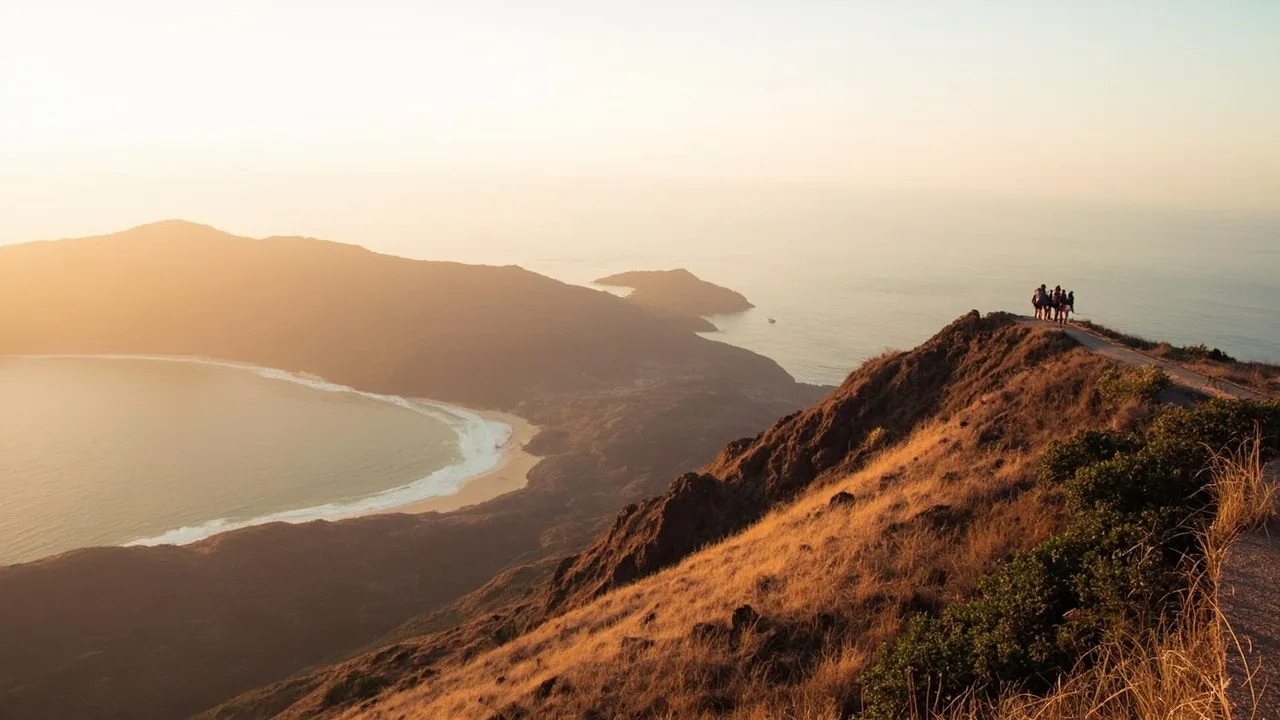
Here is the actual math: most liveaboard boats leave Labuan Bajo around 4 AM, motors across for about an hour, and drop you at Padar’s trailhead before first light. The hike is roughly 20-25 minutes up a fairly steep ridge (some sections have loose rock and a couple of short, exposed steps with chain handrails). You reach the top in time for the sun to clear the hills across the strait. From the summit you see three bays, each a slightly different shade of blue, with the black sand beach on one side and the white sand on another. That is the photo. The photo is on every Komodo brochure because it is real.
Why it is worth it in dry season:
- Cool air, no rain, dry rock underfoot, sunrise colors appear.
- The photo is genuinely one of the better summit views in Southeast Asia.
- You are already on the boat, the timing is built in, no separate decision needed.
Why you might skip it:
- Any rain in the last 12 hours and the trail becomes a slippery mud track. Bad idea before a day of snorkelling.
- If you have a knee issue, the descent is the harder direction. Take it slow.
- If you are on a 2-day liveaboard and the second day has a manta dive, sleep matters more than the photo.
Verdict: the hike itself is short. The 4 AM wake-up is real. On a dry-season morning with any visibility, the view justifies it. On a wet, grey morning, you will be standing in a cloud at the summit taking photos of fog. Check the boat captain’s weather read the night before, and if it is borderline, skip and sleep.
Safety Alert: Padar’s summit is exposed, with no shade and a chain handrail in only the steepest section. Bring a light layer, water, and a headlamp for the descent. The trail is not technical, but a wet rock plus early-morning tiredness is how people get hurt.
How to Get There (and Skip the Common Scams)
Most travelers fly into Labuan Bajo via Bali (DPS) or, less often, Jakarta. From Bali, the fastest route is a 1-hour flight to Komodo Airport (LBJ) for around ₹3,228 (~600,000 IDR or ~$33.51) to ₹6,456 (~1,200,000 IDR or ~$67.01) one way depending on airline and how far ahead you book (see our guide on how to get to Labuan Bajo from Bali). From the airport, a fixed-price taxi into Labuan Bajo town is around ₹538 (~100,000 IDR or ~$5.58) to ₹807 (~150,000 IDR or ~$8.38), and Grab/Gojek rarely operate the airport route. If you prefer a slower overland/ferry option, book on 12go to lock the connection before you fly.
Once in Labuan Bajo, the main scams to know:
- The “Komodo is closed” or “park fee just went up” line at the harbor. The official Komodo National Park entrance fee for foreign tourists is ₹1,875 (~350,000 IDR or ~$19.45) on weekdays (Tue-Thu) and ₹2,411 (~450,000 IDR or ~$25.01) on weekends/peak days, posted at the ticket counter. Verify before you pay anyone on the dock. For a full breakdown of Komodo National Park fees, see our Komodo National Park 2026 fees guide.
- Overpriced boat charters. A standard 2-day/1-night Komodo liveaboard should run around ₹6,456 (~1,200,000 IDR or ~$67.01) to ₹13,450 (~2,500,000 IDR or ~$139.61) per person sharing. Anyone asking ₹21,520 (~4,000,000 IDR or ~$223.38)+ without a clear reason (private cabin, specific boat) is bargaining, not selling.
- “Mandatory” snorkel gear rental at inflated prices. Bring your own mask and snorkel if you have space; rental on the boat is usually ₹269 (~50,000 IDR or ~$2.79) to ₹538 (~100,000 IDR or ~$5.58) per day, more if they push.
- Fake Komodo dragon photo setups. Real guides do not let you pose with a wild dragon; if someone offers a “guaranteed close-up dragon photo” in town, walk away.
For the broader Labuan Bajo transport scene, our Labuan Bajo scams and transport guide walks through it all in detail.
Visa, SIM, and Money: The 5-Minute Street-Smart Setup
Visa: Indian passport holders get a Visa on Arrival (VoA) for $35 USD (~₹3,378 at the current 1 USD = ₹96.5289 rate). Maximum stay 30 days, single entry, extendable once at the local immigration office. The Bali airport also charges an extra ₹807 (~150,000 IDR or ~$8.38) tourism levy as of February 2024, payable online before arrival. Print the levy receipt.
SIM card and data: Telkomsel has the strongest 4G signal in eastern Indonesia, including Komodo. The 7-day tourist SIM runs about ₹269 (~50,000 IDR or ~$2.79) for around 15GB of data. It is sold at the airport counters in Bali and Jakarta, in 7-Eleven across Bali and Labuan Bajo, and at small phone shops in town. Activation usually takes 15-30 minutes with your passport. If you do not want to swap SIMs or your phone is locked, Get Nomad eSIM works in Indonesia and you can activate before flying.
Money and payments: Labuan Bajo town has plenty of ATMs (BCA, Mandiri, BNI). Most withdraw in IDR. Notify your bank before flying. Cash rules for boats, dive shops, smaller warungs (small family-run food stalls), and park fees; bigger restaurants and hotels take cards. Indonesian rupiah exchange rate is roughly 175 IDR per INR (or ~$0.01 per rupee).
Where to Stay
Labuan Bajo has a range of budget hostels and guesthouses near the harbour, where most liveaboard boats depart. Dorm beds run ₹500-₹1,500 per night, and private rooms start around ₹2,000. If you want a quiet base with a rooftop sunset view, there are several options near the harbour. Book a day or two before your boat date; availability tightens in peak season.
What to Eat (Without Blowing Your Veg-Friendliness)
Labuan Bajo’s food scene has evolved in recent years. There is now a real mix of seafood and Indonesian staples, plus a couple of solid Indian options if you are heading through Jakarta.
For seafood and Indonesian plates right by the harbor, Photo Spot Labuan Bajo, a restaurant with panoramic views, has the view and the sunset crowd. Their Indonesian fusion menu leans fresh fish, around ₹430 (~80,000 IDR or ~$4.47) to ₹807 (~150,000 IDR or ~$8.38) per dish. A short walk away, Happy Banana sits overlooking the harbor and is known for grilled tuna steak in sambal (a chili-based Indonesian sauce), about ₹484 (~90,000 IDR or ~$5.03) to ₹699 (~130,000 IDR or ~$7.26).
If you are in town the night before your boat, Alma Restaurant Komodo is a quieter Indonesian and seafood pick, and SATOO is the reliable casual all-rounder when you do not want to think. Pre-trip, if you fly through Jakarta for the connection, Ganesha Ek Sanskriti Kemayoran is the safe dal-chawal stop, around ₹538 (~100,000 IDR or ~$5.58) to ₹1,345 (~250,000 IDR or ~$13.96) per person.
For the stricter-veg and full Indian menu crowd: The Royal Kitchen Signature (North Indian, lamb Raan Sikandar is the signature, ₹807 (~150,000 IDR or ~$8.38) to ₹1,614 (~300,000 IDR or ~$16.75) per person) and The Indiana Cuisine are both Jakarta options if your Komodo trip starts from CGK.
Subodh’s Pro Tip: Boats usually supply meals for liveaboards, but they are seafood-heavy. If you are vegetarian, message the operator at booking and ask explicitly about the menu. Most will accommodate with fried rice, eggs, and tempeh (a fermented soybean cake, common Indonesian protein), but do not assume.
What Indian Travelers Get Wrong in Komodo
- Assuming Padar sunrise is always fine in dry season. It is, until one freak squall rolls in at 3 AM. Always check the boat captain’s weather read the night before, and have a Plan B (sleep, swim at Pink Beach instead).
- Booking the cheapest liveaboard. Boats vary wildly in sea-sickness comfort, food quality, and English-speaking crew. A slightly more expensive boat with fewer guests is almost always a better trip.
- Treating Komodo dragons like zoo animals. The guides are strict for a reason. Stay 2-3 meters back, no flash, follow the ranger’s exact positioning. Dragons are fast, and “calm” is not the same as “tame.”
- Forgetting reef-safe sunscreen. Some parks and dive shops are starting to refuse chemical sunscreens. Bring a mineral/reef-safe one or risk buying an overpriced bottle on the boat.
- Skipping travel insurance. Boats cancel for weather, medical evacuation from a small island is expensive. Standard Southeast Asia backpacking risk; do not skip it.
Safety Alert: Always check your home government’s travel advisory before departure. The Indian Ministry of External Affairs posts current advisories at mea.gov.in, and Indonesia’s own immigration and park service posts updates at imigrasi.go.id and komodonationalpark.org. Conditions can change quickly, especially in the wet season.
Itinerary: How to Build Your Komodo Trip
A clean 4-night / 5-day plan looks like this:
- Day 1: Fly Bali or Jakarta to Labuan Bajo. Settle in, harbor walk, sunset dinner.
- Day 2-3: 2-day/1-night liveaboard covering Padar sunrise, Komodo or Rinca dragon trek, Pink Beach, Manta Point or Batu Bolong snorkel/dive.
- Day 4: Spare day in Labuan Bajo. Cunca Wulang waterfall, mirror stone, or just recover (see our guide on what to do in Labuan Bajo).
- Day 5: Fly back to Bali or onward to Jakarta.
If you have 3 days total, do a 1-day speedboat tour instead of the liveaboard (see our guide on how long to stay in Labuan Bajo). You will miss the early-morning Padar window (most day trips land there late morning, when the photo is harsh), so weigh that trade-off.
FAQ
Q: Is Komodo worth it if I am not a diver? Yes. The dragons, the hikes, and the boat ride itself are the main draw, not the diving. Diving is a bonus, not a requirement.
Q: Do I need a guide to see Komodo dragons? Yes. Park rules require a licensed ranger for any Komodo or Rinca trek. Solo tracks are not allowed.
Q: Can I see Padar Island without a 4 AM wake-up? You can, but you skip the photo. The classic three-bay view is a sunrise view. Midday it is still pretty, but you get the harsh overhead light.
Q: When is manta ray season in Komodo? Year-round sightings are possible, but the strongest aggregations are June through September, especially at Manta Point near Makassar Reef.
Q: How much cash should I bring for 4 days in Labuan Bajo? Plan around ₹18,830 (~3,500,000 IDR or ~$195.46) to ₹26,900 (~5,000,000 IDR or ~$279.22) in cash to cover park fees, boat tips, smaller warungs, and souvenirs. Most of your major costs (boat, hotel, flights) are card-friendly.
Q: Is it safe to travel to Komodo alone as an Indian woman? Yes. Labuan Bajo is a small harbor town, English is widely spoken on boats, and Indonesian hospitality toward Indian travelers is warm. Standard solo precautions apply, especially on the dock at night.
Q: What if I only have a window in December or January? Go, but adjust expectations. Pick a 1-day tour instead of the liveaboard, skip the Padar sunrise if weather is grey, and budget for a possible rescheduling. Komodo is not closed in monsoon, it is just less reliable.
Subodh’s Take
Komodo is one of the few places where the timing question is honestly binary: dry season or skip. If your dates are flexible, target late April to early June, or September to early November, when the seas are calm, the dive sites are open, and the Padar sunrise is a guaranteed photo. The 4 AM wake-up is real, the hike is short, and on a clear morning the view from the top is one of the better summit shots you will get anywhere in Southeast Asia. The dragons are the headline, the bays are the memory, and the boat is the trip. Do not try to compress it into a day trip from Bali, give it three nights minimum, and pick your window deliberately.
- Subodh
