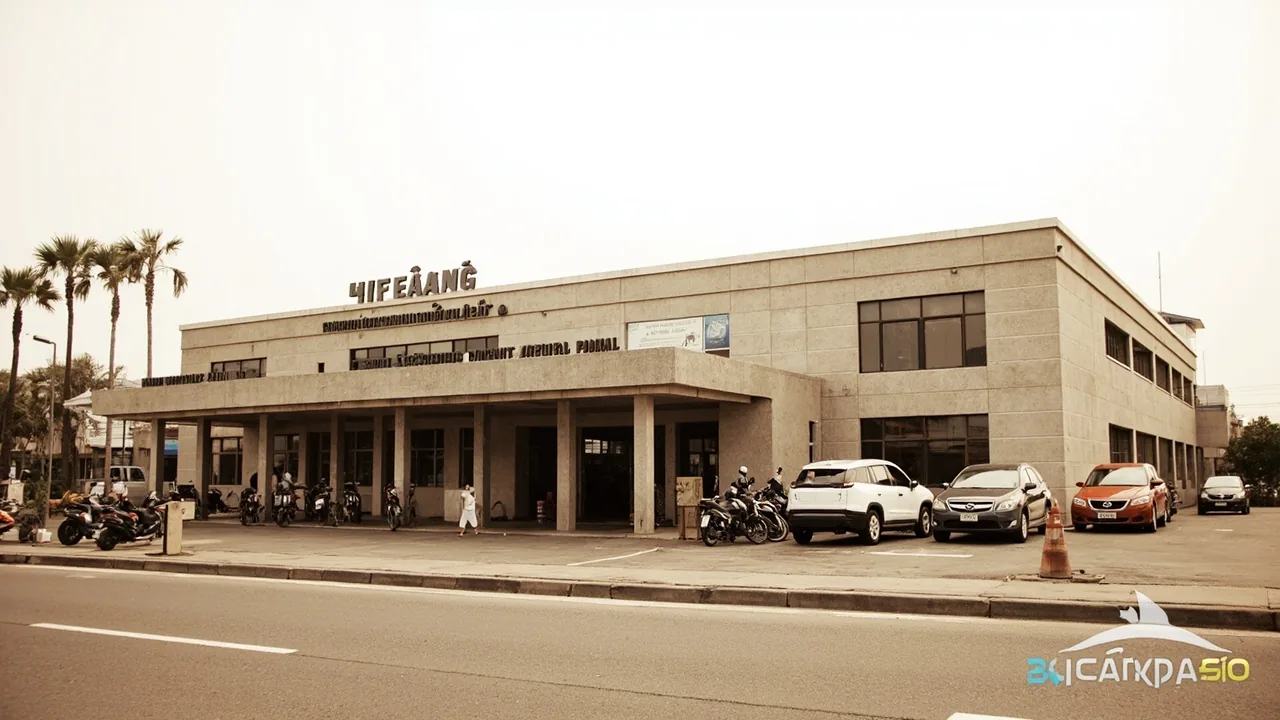
Hue Airport (Phu Bai) Guide: Terminals, Transport to Hoi An & Da Nang, and Layover Tips
Phu Bai International Airport (IATA: HUI) is the small, two-terminal gateway that serves Hue and most of central Vietnam. It is not the slick international hub that Ho Chi Minh City’s Tan Son Nhat or Hanoi’s Noi Bai is, and that is exactly why this guide exists: you will land here tired, with a phone that has no data, and you need to know whether to grab a taxi, a Grab, a bus, or just sleep at the airport until morning. Most travellers using HUI are either heading 15 km into Hue’s old city, 100 km up the coast to Da Nang, or pushing 120 km further to Hoi An. That triangle, plus the question of what to do during a long layover, is what this article answers. For related planning, see our guide on Sea Backpacking Hub.
Quick Answers
| What | Answer | Price (INR) |
|---|---|---|
| Distance from HUI to central Hue | 15 km, 25 to 35 minutes by taxi or Grab | ₹918-₹1,285 (~250,000-350,000 VND or ~$9.53-$13.34) |
| Distance from HUI to Da Nang | 100 km, 2 to 2.5 hours by car, 3 to 3.5 hours by bus | ₹918-₹1,652 (~250,000-450,000 VND or ~$9.53-$17.15) |
| Distance from HUI to Hoi An | ~120 km, 2.5 to 3 hours direct, 3.5 to 4 hours with stops | ₹1,285-₹2,020 (~350,000-550,000 VND or ~$13.34-$20.96) |
| Cheapest way into Hue city | Local bus 11, runs roughly every 30-45 min in daylight | ₹73 (~20,000 VND or ~$0.76) |
| Does HUI have a 24-hour lounge? | No dedicated lounge; the terminal itself is small enough to camp in | Free (air-con) |
Phu Bai Airport (HUI): Terminals and Layout
Phu Bai has two terminals, joined by a short walkway. Terminal 1 handles domestic flights (Vietnam Airlines, VietJet, Bamboo Airways) and Terminal 2 handles international flights, mostly limited routes from Bangkok, Kuala Lumpur, and a few regional Asian cities. If you are on a domestic connection from Hanoi or Ho Chi Minh City, you will land at Terminal 1.
The airport is small, in the way Indian tier-2 city airports are small: one arrival hall, one departure hall, a handful of check-in counters, and two security lanes. You can walk from check-in to gate in under five minutes during off-peak hours. The international terminal (T2) is newer and quieter, with a few more seats and better air conditioning.
Subodh’s Pro Tip: Immigration at T2 can be slow when a regional flight lands (sometimes only one counter open), but no slower than a Tier-2 Indian airport. Have your e-visa printout ready, not just the email.
Facilities inside the terminal are minimal: a small café serving pho and bánh mì for around ₹129-₹184 (~35,000-50,000 VND or ~$1.33-$1.91), a convenience store with overpriced drinks (₹55-₹92 (~15,000-25,000 VND or ~$0.57-$0.95) for a water bottle), free Wi-Fi that works about 60% of the time, and ATMs from Vietcombank and BIDV that accept most Indian debit cards on Visa/Plus networks. There are no sleeping pods, no showers, and no left-luggage office that I have seen open after 9 pm. Travellers on overnight layovers typically camp in the departure hall chairs.
Getting from HUI to Central Hue
Hue’s old city and backpacker area sit about 15 km south of the airport, a 25 to 35 minute ride depending on traffic. You have four realistic options:
Grab (ride-hailing app) is the cleanest option if you have data on arrival. A GrabCar from HUI to central Hue costs around ₹734-₹1,028 (~200,000-280,000 VND or ~$7.62-$10.67) and takes 25-35 minutes. Set your pickup point at the Terminal 1 parking lot exit; drivers cannot enter the terminal forecourt.
Airport taxis (Vinasun, Mai Linh, Phu Bai Taxi) line up outside arrivals. The official airport taxi counter sells fixed-price vouchers for around ₹918-₹1,102 (~250,000-300,000 VND or ~$9.53-$11.43) to the city centre. These are metered but with a small surcharge. Avoid any driver who approaches you inside the terminal offering “taxi”; the official queue starts outside.
Local Bus 11 is the cheapest option, just ₹73 (~20,000 VND or ~$0.76) per person, with departures roughly every 30-45 minutes during daylight hours (usually 5:30 am to 7 pm). It terminates at the Hue bus station, about 1.5 km from the main backpacker strip on Pham Ngu Lao. Travellers report it is reliable but slow (45-60 minutes) and carries luggage awkwardly.
Hotel/hostel pickup is free at most mid-range hotels and some hostels if you book directly and request it. Worth asking before you land.
For the full breakdown including scooter rental options and bus 11 schedules, see our Hue airport to city centre guide.
Hue Airport to Hoi An: Distance, Options, and Honest Time Estimates
This is the most-Googled question about Phu Bai, and the honest answer is: there is no direct public transport from HUI to Hoi An. You almost always go through Da Nang. The total journey, door-to-door, is about 120 km and takes 2.5 to 3 hours by private car or 3.5 to 4 hours by bus with a transfer in Da Nang.
Private car (one-stop, HUI → Hoi An direct): Bookable through your hostel, a local agent, or on 12go. Costs around ₹3,305-₹5,141 (~900,000-1,400,000 VND or ~$34.30-$53.36) for a 4-seater, ₹4,406-₹6,610 (~1,200,000-1,800,000 VND or ~$45.74-$68.61) for a 7-seater. The driver takes the Hai Van Tunnel (no longer the scary mountain pass road for through-traffic), drops you at your Hoi An hotel. This is the option 90% of backpackers with luggage should pick.
Bus via Da Nang (cheaper, slower): Take a bus from HUI area to Da Nang (₹918-₹1,285 (~250,000-350,000 VND or ~$9.53-$13.34), 2-2.5 hours), then a separate bus from Da Nang to Hoi An (₹184-₹294 (~50,000-80,000 VND or ~$1.91-$3.05), 45 minutes to 1 hour). Total cost: ₹1,102-₹1,579 (~300,000-430,000 VND or ~$11.43-$16.39). Total time including transfers: 4-5 hours. Worth it only if you want to save money and have a flexible schedule.
Grab to Da Nang, then local bus to Hoi An: A GrabCar from HUI to Da Nang runs ₹918-₹1,285 (~250,000-350,000 VND or ~$9.53-$13.34). From Da Nang, local bus 01 to Hoi An is ₹184 (~50,000 VND or ~$1.91) and runs roughly every 30 minutes until 6 pm.
For a detailed breakdown of the corridor, our how far is Hue from Da Nang guide covers the Hai Van Tunnel option and the old mountain pass route if you want scenery.
Hue Airport to Da Nang
Da Nang is the closer, faster, and more common onward stop from Phu Bai. The 100 km coastal highway now runs through the Hai Van Tunnel (15 km tunnel, opened 2005), shaving 30-45 minutes off the old mountain route.
| Mode | Duration | Cost (VND) | Book |
|---|---|---|---|
| Private car (HUI → Da Nang direct) | 2 to 2.5 hours | 800,000-1,200,000 | Find rides on 12go |
| Public bus (Hue → Da Nang) | 2.5 to 3 hours | 150,000-250,000 | Find rides on 12go |
| Train (Hue → Da Nang, scenic, slower) | 2.5 to 3.5 hours | 120,000-200,000 | At station, not on 12go |
The train option from Hue Railway Station (not the airport, you’ll need to first get into the city) is the scenic one: it climbs over the Hai Van Pass the old way, with views of the coast and the tunnel entrance from above. Worth doing once, in daylight, if you have time.
Layover Tips: Sleeping, Eating, and Waiting at HUI
If you have a long layover at HUI (anything over 6 hours where leaving the airport doesn’t make sense), here is what works:
Sleeping at the airport: The Terminal 1 departure hall has rows of padded chairs that recline slightly. After the last flight of the night (usually around 10 pm), security stops checking and the hall becomes quiet. Travellers report sleeping comfortably until 4-5 am. Bring a light layer; the air conditioning runs cold. There are no proper lounges unless you have Priority Pass or a business class ticket.
Eating inside the terminal: The departure hall café serves pho, bánh mì, and instant noodles for ₹129-₹257 (~35,000-70,000 VND or ~$1.33-$2.67). The convenience store has snacks, sandwiches, and instant cup noodles (₹55-₹92 (~15,000-25,000 VND or ~$0.57-$0.95)). Water bottles run ₹55-₹73 (~15,000-20,000 VND or ~$0.57-$0.76) inside, half that outside.
Eating outside the terminal: There are a few local pho shops within a 5-minute walk of the terminal exit. Turn right out of the arrivals door and walk towards the main road; you’ll see 2-3 family-run places serving breakfast from 6 am. A bowl of pho runs ₹110-₹165 (~30,000-45,000 VND or ~$1.14-$1.72), less than half the airport price.
Day layover idea: If you have 6-8 hours and want to leave the airport, grab a GrabCar into Hue old city (₹918-₹1,285 (~250,000-350,000 VND or ~$9.53-$13.34)), walk the Nguyen Dinh Chieu walking street and the Citadel area, eat a bowl of bún bò Huế (Hue’s signature beef noodle soup, ₹129-₹184 (~35,000-50,000 VND or ~$1.33-$1.91)), and head back. Budget 1.5 hours each way plus 2-3 hours of sightseeing. Tight but doable.
Safety Alert: Travellers report occasional taxi touts inside Terminal 1 arrivals offering “metered” rides at flat ₹1,836 (~500,000 VND or ~$19.06) rates to the city. These are not the official airport taxis. Use the voucher counter outside, or book a Grab.
Getting Connected: SIM and Data at Phu Bai
You need data the moment you land if you plan to use Grab, navigate with Google Maps, or message your hostel. There are three options:
Buy a SIM at the airport kiosk (Viettel, Mobifone, Vinaphone): Tourist SIMs with 30-day validity and 3-5 GB/day data run ₹551-₹918 (~150,000-250,000 VND or ~$5.72-$9.53). The kiosk is right after customs/arrivals in both terminals. Activation requires your passport; the staff handles it in 5 minutes.
Buy a SIM in town (cheaper, more data): Head into Hue and visit a Viettel or Mobifone store. Same 30-day tourist SIM for ₹367-₹661 (~100,000-180,000 VND or ~$3.81-$6.86), often with extra promotional data.
eSIM before you fly: If your phone supports eSIM and you want to land with data already on, Get Nomad eSIM works across Vietnam with regional SEA plans starting around ₹482 (~5 USD) for 1 GB/7 days.
Whichever option you pick, you need data to use Grab from the airport, period. The voucher taxi counter also accepts cash, so SIM-or-not, you will not be stranded.
Common Mistakes Indians Make at Phu Bai
Mistake 1: Exchanging money at the airport at “0% commission” The airport exchange counters advertise no commission but give worse rates than gold shops in Hue city. A ₹9,634 (~100 USD) exchange loses you ₹73-₹147 (~20,000-40,000 VND or ~$0.76-$1.52) versus the city rate. Better: withdraw VND from a BIDV or Vietcombank ATM with a Visa/Mastercard debit card. Declined cards are common, so carry a backup Visa from a different bank.
Mistake 2: Assuming the “taxi” line inside arrivals is official Inside Terminal 1 arrivals, you will be approached by men in plain clothes offering taxis. They are not drivers. Walk past them to the official taxi counter (left side of the exit) or book a Grab. Travellers report being quoted ₹1,836 (~500,000 VND or ~$19.06) for a ₹918 (~250,000 VND or ~$9.53) ride by these touts.
Mistake 3: Forgetting that Vietnam requires a visa in advance Indian passport holders need a visa to enter Vietnam. The e-visa system (apply online at the official immigration portal, ₹2,408 (~25 USD), 3-day processing) is the standard route. Visa on arrival is technically possible but requires a pre-arranged letter and is more hassle. Check your visa status before you fly; being turned back at HUI immigration is not how you want to start the trip.
Mistake 4: Booking a “direct” HUI → Hoi An bus that transfers in Da Nang Some operators advertise through-tickets from HUI area to Hoi An but the bus physically drops you at Da Nang bus station and you need to find a second bus. Always confirm whether the ticket is one-vehicle door-to-door or two-leg. If two-leg, it is usually cheaper to just book Da Nang → Hoi An yourself (₹184-₹294 (~50,000-80,000 VND or ~$1.91-$3.05)) and not pay the “through” markup.
Mistake 5: Missing the last bus into the city Local Bus 11 stops running around 7 pm (sometimes earlier on weekends). If your flight lands after 8 pm, you are stuck paying for a taxi or Grab. Plan ahead.
What to Eat Near the Airport (If You Have a Layover)
If you are killing 2-3 hours near the airport, the local restaurants in the area worth knowing about (none are at the airport itself, you’d need a short Grab into the city):
- N. Cafe & Food: fusion Vietnamese and modern dishes, the lemongrass chicken and coconut coffee are the picks.
- Vị Huế Restaurant & Café: blends traditional Vietnamese and modern cafe vibes, a good mid-budget sit-down option.
- XỨ HUẾ RESTAURANT AND BREWING: local brews and Hue cuisine in a rustic setting, good for trying regional dishes like bánh khoái (Hue-style crispy pancakes) at ₹147-₹220 (~40,000-60,000 VND or ~$1.52-$2.29).
- Y Thao Garden Restaurant: garden setting with Vietnamese cuisine, slightly upscale but a nice break from the airport cafeteria.
If you need a vegetarian or Indian-friendly meal during a longer layover in Hue city, MẸT Hội An has a vegetarian Vietnamese menu that works for strict-veg eaters, and Rang does contemporary Indian fusion around ₹1,469 (~400,000 VND or ~$15.25) per person if you want a proper Indian meal.
Hue as a Stopover: Should You Stay or Transit?
Phu Bai exists because Hue exists. The city is not just a transit point between Hanoi and Ho Chi Minh City; it has the Imperial City Citadel, the Perfume River, and a food scene distinct from the rest of Vietnam. If your layover is over 8 hours, consider adding a night in Hue rather than camping at the airport.
The Imperial City itself is a half-day minimum, and the Hue Imperial City Full-Day Tour from Da Nang/Hoi An/Hue covers the major sites if you want a structured day. For something more food-focused, the Hue Traditional Cake-Making Workshop is a 3-4 hour hands-on class with a local instructor that finishes with you eating what you made.
For longer Vietnamese itineraries, our Hanoi Noi Bai airport guide and Tan Son Nhat airport guide cover the two larger Vietnamese hubs.
FAQ
Is Phu Bai Airport (HUI) international or domestic? Both. Terminal 1 handles domestic flights (Hanoi, Ho Chi Minh City, Da Lat), Terminal 2 handles international flights (Bangkok, Kuala Lumpur, Singapore, plus a few regional Asian routes).
How far is Hue Airport from Hoi An? About 120 km, which translates to 2.5 to 3 hours by direct private car, or 3.5 to 4 hours with a transfer in Da Nang. There is no direct public bus from HUI to Hoi An.
Can I sleep at Phu Bai Airport overnight? Yes, travellers report sleeping in Terminal 1 departure hall chairs between roughly 11 pm and 5 am. The airport does not close between flights, but facilities are limited (no showers, no proper lounge unless you have Priority Pass).
What is the cheapest way to get from Hue Airport to Da Nang? A public bus from Hue city (not the airport) to Da Nang runs ₹551-₹918 (~150,000-250,000 VND or ~$5.72-$9.53) and takes 2.5 to 3 hours. From the airport itself, the cheapest is a shared minivan or a Grab split with other travellers.
Do I need a visa for Vietnam as an Indian passport holder? Yes. Apply for an e-visa online through the official Vietnamese immigration portal (₹2,408 (~25 USD), 3-day processing) before you fly. Visa on arrival is possible but requires a pre-arranged letter and is more hassle.
Is there a Grab or ride-hailing app at Phu Bai? Yes, Grab works in Hue and accepts cash payment (set this up in the app before you land if you have data; otherwise book on airport Wi-Fi).
What is the FX rate for the Vietnamese Dong right now? 1 VND = 0.0037 INR right now, which means 100,000 VND ≈ ₹370 (~$3.84). Useful for quick mental math when you’re handed a ₹1,836 (~500,000 VND or ~$19.06) taxi quote.
Subodh’s Take
Phu Bai is a small, manageable airport. If your flight lands before 8 pm and you have a hostel booked, you’ll be in central Hue within 35 minutes for under ₹1,285 (~350,000 VND or ~$13.34). If your flight is the late Hanoi or HCMC arrival, plan ahead: download Grab offline, confirm your hostel pickup, or accept that you’re paying ₹1,102 (~300,000 VND or ~$11.43) for a taxi. For Hoi An, just book the direct private car; the “saving money by bus” math doesn’t work when you have luggage and a 4-hour timeline. And if your layover is more than 6 hours, get out of the airport. Hue is worth a few hours, and the pho is better in the city.
Safety and Travel Advisory
Before flying, check the Indian Ministry of External Affairs travel advisory for Vietnam at mea.gov.in, and the Vietnamese government’s own advisory page if you are crossing from a neighbouring country. Both update on regional incidents and weather events (typhoon season, June to November, can cause flight cancellations in central Vietnam).
