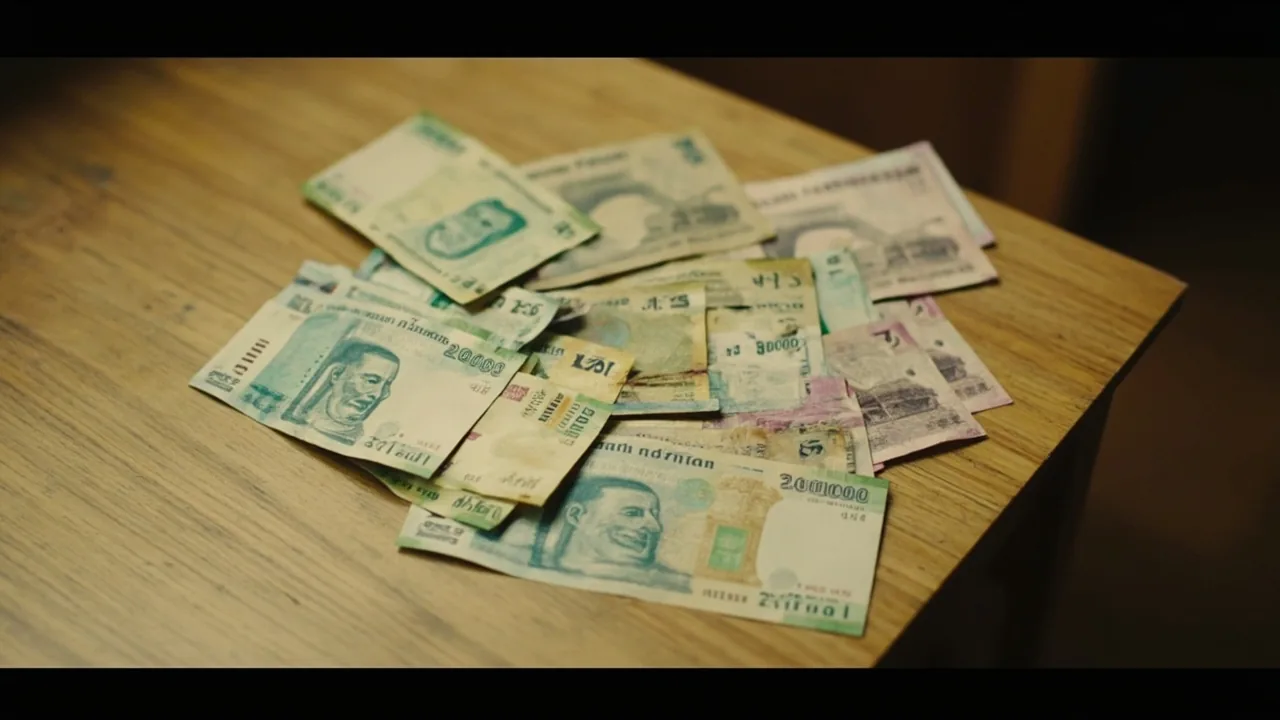
INR to Vietnamese Dong Exchange Rate Today: Best Ways to Convert Money
The INR to Vietnam currency exchange rate today (mid-market) sits near 1 INR ≈ 270 VND, and the cheapest way to convert INR to VND in 2026 is a zero-markup debit card (Fi or Niyo) used at Vietnamese ATMs for cash, plus a cards-everywhere backup. Skip airport counters, skip pre-loaded forex cards in most cases, and skip carrying more than ₹8,000 (~$82.92) in cash from India. For related planning, see our guide on Sea Backpacking Hub.
Subodh’s Pro Tip: Always let the ATM charge you in VND, never in INR. When a machine offers “Convert to your home currency,” choose NO. That option is called Dynamic Currency Conversion (DCC), and it inflates your cost by 3% to 7% versus the real mid-market rate.
Quick Answers
| What | Answer | Price (INR) |
|---|---|---|
| 1 INR to VND today | 1 INR ≈ 270 VND (mid-market) | ₹0 |
| Best payment method | Zero-markup debit card (Fi / Niyo) at ATMs | ₹0 markup |
| Cash exchange margin at Hanoi/Noi Bai airport | 4% to 8% worse than mid-market | ₹800 to ₹1,600 per ₹20,000 |
| Cash declaration limit at Vietnam customs | USD 5,000 (equivalent VND) without declaration | ₹0 |
| Vietnam e-Visa fee (Indian passport) | ₹2,410 (~25 USD), paid online via official portal only | ₹2,410 (~$24.98) |
| Worst option | Airport exchange in India (Thomas Cook, Cox & Kings) | 5% to 8% worse than mid-market |
How VND Conversion Works
Vietnam’s dong (VND) is unusual in three ways that catch Indian travelers off guard. For a broader look at carrying money into Vietnam, see our how much money to carry guide. For ATM withdrawal specifics, see our vietnam-money-guide-atm-forex-card-dong-scams.
1. The denominations are large. A bowl of pho costs ₹129 (~35,000 VND or ~$1.34) to ₹221 (~60,000 VND or ~$2.29). A hostel dorm bed costs ₹921 (~250,000 VND or ~$9.55) to ₹1,473 (~400,000 VND or ~$15.28) per night. A taxi across central Hanoi costs ₹295 (~80,000 VND or ~$3.06) to ₹442 (~120,000 VND or ~$4.58). There are no decimal places. The smallest note in wide circulation is ₹4 (~1,000 VND or ~$0.04), which you will rarely see; the most common banknotes you handle are 10,000, 20,000, 50,000, 100,000, 200,000, and ₹1,842 (~500,000 VND or ~$19.10).
2. The zeros confuse first-timers. A ₹1,842 (~500,000 VND or ~$19.10) note (worth about ₹1,850 (~$19.17)) looks identical at a glance to a ₹184 (~50,000 VND or ~$1.91) note. Both are pink-ish. Count the zeros on every transaction. A common scam at small food stalls: quoting “50” when they mean “50,000” or “500.” Always confirm the full number before you hand over a note. For more on this and related scams, see our Vietnam scams guide.
3. There is no consumer-level “best FX rate” locked in. VND is a managed currency. The State Bank of Vietnam sets a daily reference rate, and licensed banks and exchange counters add a spread of 0.5% to 3% depending on the operation. Airports add 4% to 8%. Hotel desks add 5% to 10%. The mid-market rate you see on Google or XE is the cleanest benchmark to compare against.
How ATM withdrawals work in Vietnam
Vietnamese ATMs mostly dispense ₹184 (~50,000 VND or ~$1.91), and ₹1,842 (~500,000 VND or ~$19.10) notes, with an occasional 100,000-limit stuck. Withdrawing ₹7,366 (~2,000,000 VND or ~$76.41) gives you ten 200,000 notes. The local bank that owns the ATM will charge a flat fee (typically ₹203 (~55,000 VND or ~$2.10) per transaction at Vietcombank and BIDV, lower or zero at some newer machines). Then your Indian card issuer charges its own fee on top.
TCS, LRS, and PAN: what Indian travelers need to know
Under the RBI’s Liberalised Remittance Scheme (LRS), you can remit up to USD 250,000 per financial year (April to March) for permitted purposes including overseas travel. For the practical tax collection angle, see our vietnam-budget-breakdown-for-indians. Most Indian travelers spend well under USD 10,000 per trip and never come close to the LRS cap.
The bigger issue is Tax Collected at Source (TCS). From October 2023, the Finance Act mandates that banks collect 20% TCS on forex released under LRS, unless the remittance falls under specific exemptions. For tourism, the relevant exemption is the ₹7 lakh per financial year threshold (per individual, when funded from a savings/rupay/card-source account rather than a loan). Above ₹7 lakh, 20% TCS applies; below it, the practical impact for most backpackers is zero.
The critical rule: TCS is collected when you load a forex card, buy foreign exchange, or remit money abroad. It is not collected when you withdraw cash from an international ATM using a regular Indian debit card (until/unless the government changes this). This is one reason a plain zero-markup debit card beats a forex card for trips under ₹7 lakh: you skip the TCS timing question entirely.
You do need a PAN card to be issued a forex card or to remit more than ~USD 250,000 (the full LRS cap) cumulative. PAN is not required to use your existing debit card abroad.
Comparison of Popular Options for Indians in 2026
Below is the side-by-side comparison of the four tools an Indian backpacker usually chooses between. Markup percentages are taken from the latest published fee schedules; the best choice depends entirely on your trip length and ATM access.
| Method | Markup over mid-market | ATM fee in Vietnam (VND) | Cash needed? | Best for |
|---|---|---|---|---|
| Zero-markup debit (Fi, Niyo, Jupiter) | 0% (tied to Visa/Mastercard wholesale rate) | 55,000-110,000 per withdrawal | No, ATM-only | Trips under 21 days, ATM-heavy |
| HDFC/ICICI/SBI forex card | 2% to 3.5% loaded at issuance | 55,000-110,000 (varies by PIN network) | Pre-loaded before flying | Trips over 21 days, locked-in rate preference |
| Thomas Cook / Cox & Kings forex card | 3% to 4% | 55,000-110,000 | Pre-loaded | Older travelers, agent-assisted |
| Cash exchanged in India (airport) | 5% to 8% | None | Yes, carry from India | Worst option, only as backup |
| Cash exchanged in Vietnam (city) | 1% to 3% | None | Yes, convert USD/EUR brought in | Pair with a card for low-cost replenishment |
At current rates (1 INR ≈ 270 VND), the markup difference between a zero-markup card (1% to 2% effective after issuer fees) and a forex card (2% to 3.5%) on a ₹100,000 (~$1,036.47) budget comes to ₹1,000 (~$10.36) to ₹2,500 (~$25.91) saved per trip. On a ₹300,000 (~$3,109.40) annual spend across multiple trips, the zero-markup card path saves a meaningful chunk.
What about UPI?
UPI does not work in Vietnam in 2026. There is no merchant acceptance, no QR interoperability, and no Indian bank has publicly launched UPI acceptance in Vietnam as of the latest
What about credit cards?
Visa and Mastercard are accepted at mid-range and chain restaurants, larger convenience stores, and most hotels in HCMC, Hanoi, Da Nang, and Hoi An. For more on managing these conversions on the ground, see our Vietnam ATM and card guide. Amex acceptance is patchy. For local street-food and small shops, cash is still king. Foreign transaction fee (FTF) on most Indian credit cards is 2.5% to 3.5%, with some premium cards (HDFC Infinia, ICICI Emeralde, Axis Atlas) waiving it. A zero-markup debit card still beats most credit cards on cost unless you are earning reward points worth more than the 3% fee.
India-Specific Gotchas (RBI, TCS, and Customs)
Cash you can carry out of India. As per Indian customs rules, you can carry up to USD 3,000 (equivalent) in foreign currency notes without a declaration. Above USD 3,000 and up to USD 250,000, you must declare and may need supporting documents. Most travelers carry ₹19,281 (~200 USD) to ₹48,202 (~500 USD) in emergency cash, which is well under the limit. Note: RBI’s earlier ₹2 lakh INR foreign-currency carry rule was relaxed; the practical limit now is governed by the customs declaration and your bank’s per-trip issuance cap.
Cash you can carry into Vietnam. Vietnam requires you to declare foreign currency equivalent to USD 5,000 or more. Below that, no declaration is needed. There is no limit on the amount you can bring in, only on what you can take out (USD 7,000 undeclared, USD 5,000+ declared with proof of source).
Do not bring Indian rupee into Vietnam for exchange. No licensed Vietnamese money changer will exchange INR. If you bring leftover dong back, you can only reconvert at the airport on departure at poor rates, or hold it for your next trip. Bring USD or EUR if you want Vietnam-side cash conversion, then use a card for the bulk.
Forex card reload triggers fresh TCS. Reloading a forex card from a new bank transfer means a fresh 20% TCS event under current rules, even if your lifetime outflow is still under ₹7 lakh. This is a real cash-flow trap for long trips. A zero-markup debit card has no such reload event.
ATM withdrawal limits. Vietnamese ATMs cap withdrawals at ₹7,366 (~2,000,000 VND or ~$76.41) to ₹18,415 (~5,000,000 VND or ~$191.02) per transaction depending on bank and machine. Your Indian card issuer may cap daily ATM withdrawals at ₹50,000 (~$518.23) to ₹150,000 (~$1,554.70). Plan around both caps; if your daily issuer cap is ₹50,000 (~$518.23), you will need 2 to 3 ATM visits on heavy days.
What Indian Travelers Use: The Real Setup
Most Indian backpackers land in Hanoi or HCMC with one of three configurations, in roughly this order of frequency.
Configuration A: Zero-markup debit, light cash. Carry ₹8,000 (~$82.92) to ₹15,000 (~$155.47) in USD bought in India (from a bank or forex.card). On landing, walk past the airport exchange counters, get a Grab to the hostel, and use an ATM on Day 2 to load up VND. This is the cheapest path for trips under 21 days. The risk: ATM machine failures at some BIDV and VietinBank branches; carry backup cash in USD or EUR for ATM outages.
Configuration B: Forex card, no cash. Travelers who fear card-skimming or who want a fixed rate. The 2% to 3.5% markup is the trade-off. This works well for travelers who book most accommodation and long-distance transport online because cards are accepted there. Don’t rely on a forex card for street food.
Configuration C: Cash-only (rare in 2026). A few travelers still carry the full budget in USD from India and convert at Vietnamese gold shops or money changers in District 1 (HCMC) or the Old Quarter (Hanoi). Rates are usually 1% to 2% off mid-market, sometimes better than USD-issued cards. Only works if you can keep the cash physically secure.
Safety Alert: Outside the airport and major bank branches, ATM card skimming is a real and recurring problem in tourist-heavy areas of HCMC and Hanoi. Always use ATMs attached to bank branches during staffed hours. Cover the keypad with your hand when entering the PIN. Avoid stand-alone ATMs in alleys and convenience stores.
Where to Convert INR to VND (and Where Not To)
You cannot directly convert INR to VND inside Vietnam. Every legal path goes INR → USD (EUR) → VND. So the question becomes: where in this chain is the loss smallest?
| Option | Path | Effective markup |
|---|---|---|
| Zero-markup debit at Vietnam ATM | INR → VND via Visa/Mastercard | 1% to 2% effective |
| Forex card loaded in India, used in Vietnam | INR → VND at load time | 2% to 3.5% |
| USD cash exchanged in Vietnam gold shop | INR → USD (5% to 8% markup in India) → VND (1% to 2% spread) | 6% to 10% total |
| Thomas Cook / Cox & Kings cash in India | INR → VND direct, cash pickup before flight | 5% to 8% |
| Vietnam airport exchange on arrival | USD/EUR → VND at Noi Bai or Tan Son Nhat | 4% to 8% |
The single most efficient path is: zero-markup debit card, plus a ₹9,640 (~100 USD) to ₹19,281 (~200 USD) cash backup bought in India, and zero airport exchanges.
If your bank charges more than 2% on the debit card route, an HDFC ForexPlus loaded at issuance at 2.5% is competitive for trips where you prefer the peace of a pre-loaded card.
Getting Connected
For data on the go so you can check live FX rates and monitor your bank app after every ATM withdrawal, the cheapest physical SIM option is a Viettel or Mobifone tourist SIM at the airport (around ₹552 (~150,000 VND or ~$5.73) for 30 days, 3 GB/day). If you want to skip the airport counter, or your eSIM-friendly phone makes it easier, Nomad eSIM for Vietnam offers 1 GB to 5 GB plans from around ₹482 (~5 USD), activated before you fly.
Dong Confusion: Reading Vietnamese Prices Without Panic
A short cheat sheet for the denominations you will handle.
| VND note | INR (approx) | USD equivalent | What it buys (typical) |
|---|---|---|---|
| ~₹37 (~10,000 VND or ~$0.38) | ₹37 (~$0.38) | ~₹10 (~0.10 USD) | A bottle of water from a street stall |
| ~₹74 (~20,000 VND or ~$0.76) | ₹74 (~$0.77) | ~₹20 (~0.21 USD) | A banh mi from a street vendor |
| ~₹184 (~50,000 VND or ~$1.91) | ₹185 (~$1.92) | ~₹50 (~0.52 USD) | A bowl of pho at a small stall |
| ₹368 (~100,000 VND or ~$3.82) | ₹370 (~$3.83) | ~₹100 (~1.04 USD) | A short Grab ride in central Hanoi |
| ₹737 (~200,000 VND or ~$7.64) | ₹740 (~$7.67) | ~₹201 (~2.08 USD) | A dorm bed in a mid-range hostel |
| ₹1,842 (~500,000 VND or ~$19.10) | ₹1,850 (~$19.17) | ~₹501 (~5.20 USD) | A private room in a budget guesthouse |
The shortlist of local places travelers consistently end up at in Vietnam for good food includes Nhà An (great vegan-friendly options, a rare find for plant-based travelers), Vietnamese Soul Food for street classics, and Hello Hanoi Restaurant for a sit-down introduction to northern Vietnamese cooking. In Da Nang, NGON DA NANG stands out for Bun Cha Ca and Banh Xeo. Vegetarians and travelers needing Indian-friendly backup will find MẸT Hội An reliable on both counts in Hoi An (see our vietnam-activities-cost-guide-halong-sapa-hoi-an for more Hoi An food picks).
The 200,000 vs 20,000 mistake
This is the single most common first-week error. The ₹737 (~200,000 VND or ~$7.64) and ₹74 (~20,000 VND or ~$0.76) notes look similar in low light. Always count your change. If the vendor reads back “200” without the dong suffix, do not interpret “200” as ₹1 (~200 VND or ~$0.01) and overpay for a ₹74 (~20,000 VND or ~$0.76) item; likewise, do not let “200” mean ₹737 (~200,000 VND or ~$7.64) when you know the price was ₹74 (~20,000 VND or ~$0.76). Confirm: “Mấy trăm ngàn?” (How many hundreds of thousands?) or look at the note yourself. For a wider run-down of currency scams and how to handle them, see our Vietnam money guide.
FAQ
Does UPI work in Vietnam?
No. UPI does not work in Vietnam as of mid-2026. There is no merchant acceptance for BHIM, PhonePe, or Google Pay. Plan to use cash, debit, or credit.
What is the best forex card for Indian travelers in Vietnam?
For trips under ₹7 lakh annual outflow, a zero-markup debit card (Fi, Niyo, Jupiter, or even SBI’s recently launched zero-FTF debit for premium accounts) beats every forex card on cost. For longer stays or where you want a fixed locked-in rate, HDFC ForexPlus with 2% to 2.5% loading markup is the next option.
How much cash can I carry out of India?
Without declaration, up to USD 3,000 in foreign currency notes. With declaration at customs, up to USD 250,000 under LRS. Practical limit for backpackers: USD 200 to USD 500 as emergency cash, loaded on a card.
What is the Vietnam e-Visa fee in INR?
₹2,410 (~25 USD) on the official portal. Apply only at https://evisa.xuatnhapcanh.gov.vn, which is the government portal. For full details, see our Vietnam e-Visa guide.
Do I need to declare currency at Vietnam customs?
Yes, if you are carrying USD 5,000 or equivalent. Below that, no declaration is required.
Should I carry Indian rupees as backup?
No. INR is not exchangeable in Vietnam. Carry USD or EUR as backup cash if you want a paper-currency safety net.
Is it safe to use ATMs in Vietnam?
Generally yes, but stay at branch-attached ATMs in staffed hours. Avoid standalone machines in alleys. Cover the PIN pad. Some Vietnamese ATMs default to DCC (Dynamic Currency Conversion), offering to charge you in INR; always decline and choose to be charged in VND.
Subodh’s Take
The simplest rule I have watched work over and over: a zero-markup debit card does the heavy lifting, ₹9,640 (~100 USD) to ₹19,281 (~200 USD) in your passport pouch covers ATM outages, and the airport exchange counter is for emergencies only. Forget the rest. Travelers who bring Thomas Cook envelopes on arrival spend 6% to 10% more than they need to on conversions; travelers who rely on cards everywhere run into ATM cash-flow gaps. The middle path is cheap, fast, and predictable. Master that, and money is one thing you will not have to think about on the trip.
