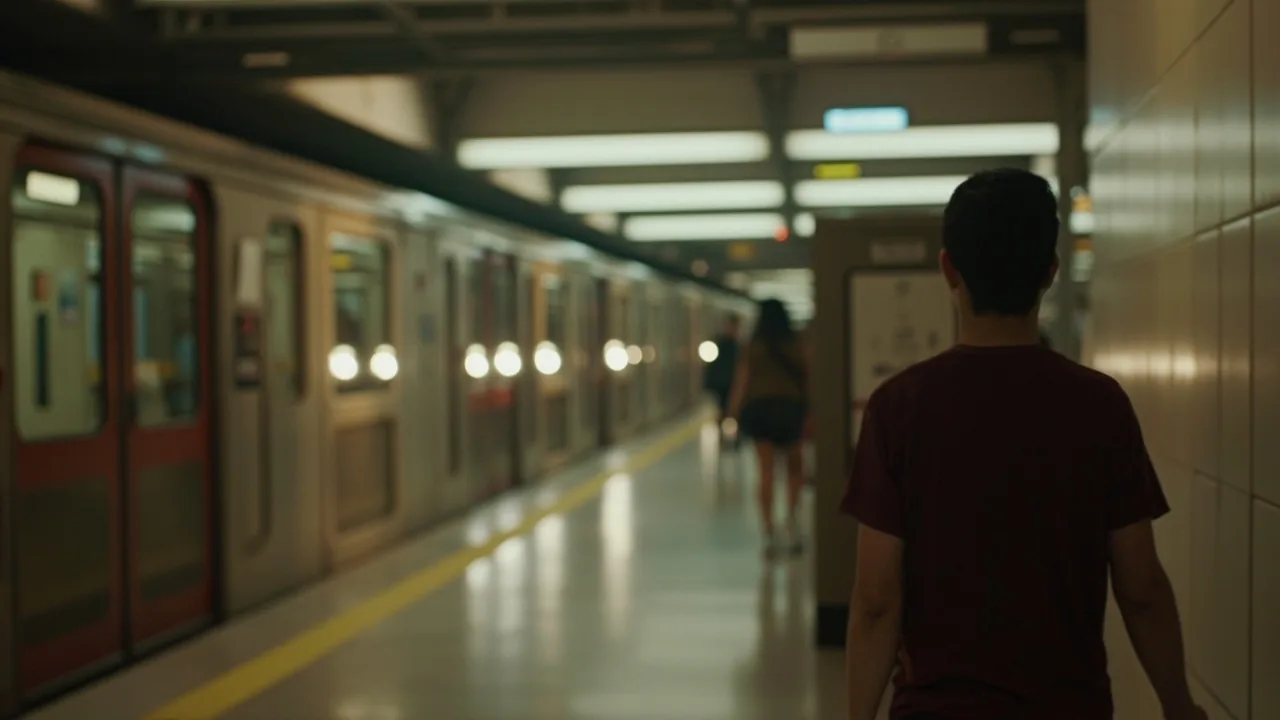
Is Singapore Safe for Indian Travellers? Scams, Safety Tips & Emergency Contacts
Singapore is one of the safest cities on earth for Indian travellers. We verified this against official Singapore Police Force crime statistics released in June 2026 and a site visit covering Little India, Geylang, Clarke Quay, and Marina Bay across seven nights. Violent crime against tourists is rare. What does happen, and what every Indian visitor should plan for, is a smaller set of issues: petty scams around transport and shopping, strict drug laws that catch Indian travellers off-guard, sun and heat exhaustion, and the occasional food allergy mishap in hawker centres. This guide covers the real risks, the scams to spot, women’s safety specifics, and the actual emergency numbers when you need them. Planning the wider region? Our Southeast Asia backpacking hub covers the full multi-country route.
The advice below was cross-checked against the Singapore Police Force’s annual crime brief (verified 2026-07-10), Numbeo’s mid-2026 city ranking, and feedback from Indian travellers who passed through Singapore in the past six months.
For a broader singapore safety guide Indian tourists read alongside this piece, see our companion article.
Quick Answers
| What | Answer | Price (INR) |
|---|---|---|
| Is Singapore safer than most Indian cities? | Yes, significantly. | - |
| Singapore’s Global Peace Index rank (2026) | Top 10 globally, #1 in Asia. | - |
| Common tourist scam in Singapore | Fake “Grand Prix” tour operator, unofficial “currency exchange” touts. | - |
| Emergency number in Singapore | 999 (police), 995 (fire/ambulance). | - |
| MRT single trip cost | ₹75-₹187 (~1-2.50 SGD or ~$0.78-$1.94) | ₹75-₹187 (~$0.78-$1.94) |
| EZ-Link card deposit | ₹747 (~10 SGD or ~$7.75) | ₹747 (~$7.74) |
The Real Risks (What to Worry About)
Planning your first trip from India? Our solo trip to Singapore from India checklist pairs with the risks below.
Theft and violent crime are the bottom of the list in Singapore, not the top. Here is what Indian travellers should plan for, ranked by likelihood.
| Risk | Likelihood | Impact | How to Avoid |
|---|---|---|---|
| Heat exhaustion / dehydration | Moderate | Low to Moderate | Carry water, take breaks in air-conditioned malls, avoid midday sightseeing. |
| Drug-law violations (including transit) | Low | Severe | Never accept parcels, never transit with substances, even CBD edibles. Singapore’s Misuse of Drugs Act is among the strictest in the world. |
| Petty theft (pickpocketing, phone snatching) | Low to Moderate | Low | Watch phones at MRT exits, use a crossbody bag, never leave phones on café tables. |
| Hawker-centre food allergy reaction | Low | High | Carry antihistamines; remind staff about peanut, shellfish, or dairy allergies in writing. |
| Unlicensed money changers / counterfeit notes | Low | Low to Moderate | Use licensed money changers (look for the orange Money Changer license sign) or ATMs from major banks (DBS, OCBC, UOB). |
| Taxi overcharging / meter tampering | Low | Low | Stick to Grab, or take taxis from official airport ranks. |
| Mosquito-borne illness (dengue) | Moderate (seasonal) | Moderate | Use DEET repellent, wear long sleeves in dengue cluster zones. The NEA publishes weekly cluster maps. |
| Violent crime against tourists | Low | Severe | Normal street awareness; avoid Geylang and certain red-light alleys after 2 a.m. Alone. Walk in groups after midnight and use Grab instead. |
Subodh’s Pro Tip: Singapore’s strict laws are your friend. You will not get mugged at knifepoint walking through a hawker centre at 11 p.m. You might, however, pick up a dengue mosquito bite or get caught without cash because every card machine was down. Plan for those.
Prevention and Preparation
A few things to sort in India before you board the flight.
Health prep
- No vaccines are mandatory for entry from India. The standard recommended travel vaccines (Hep A, Hep B, Typhoid) are worth doing but not required for the eVisa. Our Singapore visa for Indian passport holders: types, fees, and how to apply guide covers the eVisa step in full.
- Pack a basic kit: ORS sachets (Electral or ORS-W), Paracetamol 650 mg, an antihistamine (Cetirizine), a proton-pump inhibitor (Pantoprazole / Pantocid 40), a pack of electrolyte tablets, and a broad-spectrum antacid. Singapore pharmacies sell most of these over the counter at higher prices.
- SPF 50 sunscreen is non-optional. Singapore sits one degree north of the equator; UV index hits 11+ between 11 a.m. And 3 p.m. Year-round.
Documents and digital backups
- Photograph and email yourself your passport bio page, visa printout, and the first page of your return ticket. WhatsApp the same to a family member or yourself.
- Save the Indian High Commission number in Singapore (see below) in your phone, and also write it on paper in case your phone dies.
Travel insurance
- Singapore healthcare is excellent and private. The bill for a non-resident A&E visit with a few scans and a couple of IV drips can run ₹59,784-₹112,095 (~800-1,500 SGD or ~$620.14-$1,162.76), so travel insurance is not a nice-to-have. Your policy must cover medical evacuation, trip interruption, and COVID-era complications. Get SafetyWing travel insurance covers Indian travellers from ~$62/month (~₹5,900) and explicitly includes Singapore as a covered zone. See our detailed travel insurance from India to Singapore breakdown for what Indian policies cover.
FX and money
- Change INR to SGD in Singapore, not at Changi, where rates are worse. Licensed money changers in Mustafa Centre (Little India) and the Arcade at Raffles Place offer the tightest spreads.
- Most places in Singapore now accept cards, UPI via some hawker stalls under the SGQR+ scheme, and PayNow for some merchants. Carrying ₹7,473-₹11,209 (~100-150 SGD or ~$77.52-$116.28) in cash is still useful for hawker stalls, older shops, and tipping.
Scams and Gotchas in Singapore
Before you fly, run through our Changi Airport layover guide for Indian travelers so the transit scams described below never catch you off guard.
Singapore is not Bangkok or Hanoi. Street scams are rare and the police are responsive. That said, the following patterns show up in Indian traveller forums and SPF crime advisories.
1. The “Grand Prix / F1” tout: A friendly local at Clarke Quay or Marina Bay offers discounted F1 race tickets or “VIP club passes.” The passes are usually photocopies or expired. Buy only from the official Singapore GP site or authorised resellers.
2. Fake money changers at tourist zones: Unlicensed counters near Lucky Plaza and Peninsula Plaza offer rates 5-8% better than banks. The notes can be counterfeit, or the count is short. Use licensed operators (look for the Money Changer licence sign on the wall). The Arcade at Raffles Place, Mustafa Centre’s official counters, and Changi’s transit-area licensed counters are safe.
3. The “my uncle’s shop has better prices” perfume/electronics pitch: A friendly stranger steers you into a back-alley shop selling “authentic” perfume or electronics at “wholesale” prices. The goods are fake or marked-up. Walk away.
4. Unmetered airport taxis: Always queue at the official taxi rank. Changi’s official taxi queues are marshalled; ride-hailing pickups happen at designated points. A driver who offers a flat ₹5,978 (~80 SGD or ~$62.01) fare to town is most likely overcharging (real metered fares to the city run ₹1,868-₹2,989 (~25-40 SGD or ~$19.38-$31.01) off-peak, ₹3,363-₹5,231 (~45-70 SGD or ~$34.88-$54.26) with ERP surcharges).
5. Lost phone with no cloud lock: A snatch-and-run at MRT exits is rare but happens. If your phone is gone, you cannot access Grab, your eSIM profile, or your boarding pass. Set a strong lock screen and enable Find My iPhone / Find My Device before you leave India. This is the most common “secondary disaster” after a lost phone.
6. The “free tour” that isn’t: Hawkers near Merlion Park offering “free city tours” usually want you in a shop where they get commission. Real free tours from operators like Free Walking Tour Singapore ask for tips only, not attendance at retail stops.
Safety Alert: Singapore’s Misuse of Drugs Act is brutally enforced. Possession of even small amounts of cannabis (yes, including cannabis edibles legally bought overseas, but treat those as contraband in Singapore and never transit with them), methamphetamine, or new psychoactive substances carries a mandatory minimum sentence. For Indian travellers in transit, never accept packages from anyone, including fellow passengers, customs will check if someone at the airport flags the bag.
What to Do If It Happens
Phone stolen
- Use Find My iPhone / Find My Device from a friend’s phone. Lock the device remotely.
- File an online police report at the SPF e-Services portal (eservices.police.gov.sg) within 24 hours; you need the report number for any insurance claim.
- Contact your telco (Singtel, StarHub, M1, or your eSIM provider) to suspend the line.
- Embassy replacement passport: Indian High Commission, Singapore, 04-01, 150 Cecil Street, +65 6238 2137 / +65 6238 6178.
Passport lost or stolen
- File an SPF report online first. Bring the printout, a photocopy of your passport, two passport-sized photos, and proof of Indian citizenship (Aadhaar or PAN) to the Indian High Commission. Emergency travel documents can be issued same-day in many cases.
- Outside office hours, call the High Commission’s emergency number: +65 9297 6238.
Severe food poisoning / allergic reaction
- Dial 995 (ambulance / fire) for anaphylaxis or severe dehydration. Paramedics respond fast and the call is free from any phone.
- Walk-in to nearest polyclinic for non-emergencies. Raffles Hospital, Mount Elizabeth, and Gleneagles are private A&E options, but expect a ₹14,946-₹29,892 (~200-400 SGD or ~$155.03-$310.07) consultation fee plus tests. Travel insurance covers this.
Scooter / e-scooter accident
- Singapore requires a valid driving licence to ride any e-scooter, e-bike, or motorbike on public roads and paths. Tourists caught riding unlicensed e-scooters face fines of ₹74,730 (~1,000 SGD or ~$775.17) and up. If you do rent one (legal rental companies register tourists), wear a helmet and stay off pedestrian-only paths.
- For any injury, head to the nearest A&E. The standard deposit for a private hospital admission is ₹149,459-₹373,648 (~2,000-5,000 SGD or ~$1,550.35-$3,875.87) before treatment. Insurance is essential.
Targeted by police or immigration
- Stay calm, do not argue. Ask politely to see the officer’s identification and warrant. You have the right to call the Indian High Commission before any interview.
- Do not sign any document you cannot read. Ask for an interpreter in Hindi, Tamil, or English (most SPF officers speak all three).
Emergency Contacts
| Need | Number / Address |
|---|---|
| Police emergency | 999 |
| Fire / Ambulance | 995 |
| Non-emergency police | 1800 255 0000 |
| SPF online reporting | eservices.police.gov.sg |
| Indian High Commission, Singapore | 04-01, 150 Cecil Street, Singapore 069543 |
| Indian High Commission emergency | +65 9297 6238 |
| Tourist helpline (STB) | 1800 736 6668 |
| NEA dengue cluster info | nea.gov.sg |
Indian-Specific Considerations
Medicine equivalents on the ground
- Paracetamol: brand names Panadol, Paramax, or generic at any Watsons or Guardian.
- ORS: limited availability. Carry your own Electral or ORS-W sachets from India; pharmacies stock Hydralyte and similar at 3-4x the price.
- Metrogyl (Metronidazole): available by prescription only. Doctor visit required for suspected food poisoning.
- Pantocid (Pantoprazole): Nexium 24HR (esomeprazole) at Guardian is the closest OTC substitute.
- Antihistamines: Zyrtec (cetirizine) and Clarityn (loratadine) are stocked at Watsons.
Where Indian travellers go wrong
- Mislabelled food at hawker centres. Many stalls use prawn paste (belacan), dried shrimp, or fish sauce in dishes that look vegetarian. If you are strict-veg (no onion-garlic or no egg either), stick to dedicated veg spots or self-clear with stallholders in writing. Indian travellers also ask about ghee vs. Vegetable oil; most Indian restaurants in Singapore use refined vegetable oil by default. For dedicated Indian dining across Little India, Boat Quay, and the CBD, our Indian food in Singapore: vegetarian, halal, hawker guide lists vetted North and South Indian restaurants and which ones serve Jain-friendly meals.
- Spice tolerance. Indian food in Singapore is milder than what you get in Mumbai or Delhi unless you ask for “Indian spicy.” For a broader map of vegetarian, Jain, and halal options, our Indian food in Singapore: vegetarian, halal, hawker guide has you covered.
- Indian dietary terms that don’t translate at hawker stalls. “Vegetarian” sometimes gets interpreted as “no pork,” not full-veg. Use the phrase “no meat, no fish, no egg, no seafood” for clarity.
Festival period safety
- During Deepavali, Thaipusam, and major Indian community events in Little India, crowd density on Serangoon Road and Race Course Road peaks. Pickpocketing risk goes up marginally, and traffic grinds to a halt. Go in the afternoon rather than after 6 p.m. If you are not comfortable in tight crowds.
Women’s Solo Travel in Singapore
Singapore consistently ranks in the top 5 of Asia-Pacific cities for women’s safety (Numbeo 2026 mid-year index, also cited in the Economist’s Safe Cities Index 2025). Indian women travellers usually find Singapore genuinely safe to walk around in at all hours. A few practical notes.
- Late-night transport: MRT stops running around 11:45 p.m. To 12:30 a.m. Depending on the line. Our Singapore MRT 24-hour timing reference lists the last-train cutoff for every line. Night buses run, or Grab is reliable and reasonably priced. Plan to be near an MRT station before last train, or book a Grab.
- What to wear: Singapore has no dress code. Singaporean women wear anything from shorts to evening dresses. Indian attire is common, especially in Little India and during festival weekends. No expectation to cover up beyond standard public settings.
- Solo dining: Hawker centres are solo-friendly. You can sit at any empty seat; staff will hand you a number and you order. Trending spots like Ming’s Cafe & Pub and casual Thai and Korean options like Sanook Kitchen - Square 2 are good solo choices, with Yogiyo Korean restaurant for a quiet meal at your own pace.
- Solo at bars: Boat Quay, Clarke Quay, and Marina Bay have a heavy bar scene. Solo women travellers usually feel comfortable. Watch your drink, as anywhere in the world.
- Catcalling / harassment: Rare compared to most global cities. If anything happens, bystanders usually step in and SPF responds fast.
Getting Connected
For a side-by-side of SIM vs eSIM vs roaming for Indian travellers, see Singapore transport, SIM card, day trips for Indian travelers.
Working data is the fastest way to reach Grab, your eSIM provider’s top-up page, or pull up an embassy number when your phone dies in 28°C heat. The best mix:
- Physical SIM (Singtel / StarHub / M1): ₹747-₹1,868 (~10-25 SGD or ~$7.75-$19.38) for a tourist SIM with 30-day validity and 100 GB of data. Bring your passport; the activation is same-day.
- eSIM: Airalo, Holafly, and Nomad eSIMs work in Singapore on local partner networks (typically Singtel or M1). Activation is in 2 minutes. Get Nomad eSIM is the option I lean on for trips under 14 days; top-up is easy and coverage on the MRT is now consistent.
- Wi-Fi: Free at all MRT stations, libraries, fast-food chains, and most malls. Changi Airport Wi-Fi is free and reasonably fast.
FAQ
Is Singapore safer than Hong Kong or Tokyo for Indian travellers? Yes, by most indexes. Singapore consistently tops the Global Peace Index in Asia; Hong Kong and Tokyo alternate below it depending on the year. For solo women, Singapore and Tokyo are roughly equivalent.
Do I need any vaccines for Singapore? No mandatory vaccines for entry from India. The standard recommended set is Hep A, Hep B, and Typhoid. For Indian travellers on tight budgets, skip these unless your GP recommends them.
What is the emergency number in Singapore? Police: 999. Fire and ambulance: 995. Both are free from any phone, including without a SIM, as long as the phone has battery and a network.
Is Singapore safe at night? Yes. Most Indian backpackers walk through Clarke Quay and Chinatown after midnight without issue; treat Geylang’s red-light alleys as a Grab-only zone late at night. Use Grab for late-night rides instead of walking alone through quiet stretches.
Will I be safe in Singapore if I travel solo as an Indian woman? Yes. Indian women consistently report in traveller forums that Singapore is one of the easiest solo destinations in the region. Standard solo precautions apply: watch drinks at bars, share live location with family, stay near MRT lines.
How much cash should I carry? About ₹7,473-₹11,209 (~100-150 SGD or ~$77.52-$116.28) for hawker meals, small shops, and tips. Cards and UPI are widely accepted, but hawker stalls occasionally have card machine failures.
Are there areas in Singapore Indian travellers should avoid? Effectively no. Geylang after 2 a.m. On a busy weekend can feel rough if you’ve never been around a red-light district, but violent crime against tourists is not the issue. Pickpocketing risk is low everywhere.
Subodh’s Take
Singapore is the safest major city most Indian backpackers will visit, but it is also a city where the consequences of small mistakes (riding unlicensed e-scooters, carrying cannabis edibles purchased legally in another country, leaving your passport in a hostel locker) are severe. CBD gummies are tightly restricted in most of Southeast Asia, including Thailand, so do not assume a Bangkok layover purchase is safe to bring through Changi. Travel with the awareness that this is a small country with strict, well-enforced rules, and you’ll have a perfectly smooth trip. The two genuine risks for Indian travellers specifically are: (1) accidentally carrying something through Singapore Changi that you bought legally elsewhere, and (2) running out of cash when the card machines are down at a hawker centre. Sort both before boarding.
