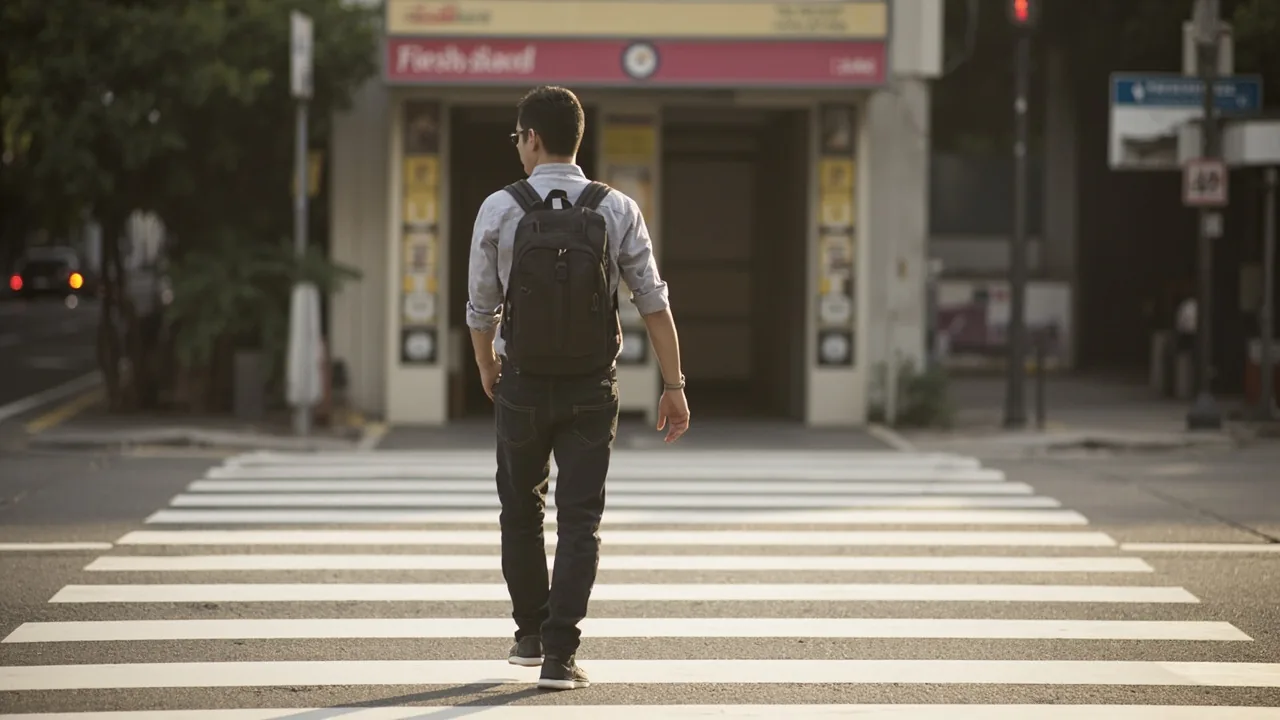
Is Singapore Safe to Travel Alone? A Solo Backpacker’s Honest Guide (2026)
Short answer: yes. Singapore is one of the safest cities in Asia for solo travel, with violent crime rates so low the local news barely covers it. Petty theft and tourist scams exist, but they are rare and predictable. Women, first-timers, and older travellers all do Singapore solo without incident every day. Planning the wider region? Our Southeast Asia backpacking hub covers the full multi-country route.
This article answers the real questions Indian backpackers ask before booking that solo flight: how safe is the MRT at midnight, can a woman walk from Clarke Quay to her hostel alone, what are the actual scams to watch for, and where do Indians get caught out by cultural rules that look innocent but carry fines of ₹37,365-₹74,730 (~500-1,000 SGD or ~$387.59-$775.17).
For live safety updates before you fly, check the Indian Ministry of External Affairs advisory at mea.gov.in.
Quick Answers
| What | Answer | Price (INR) |
|---|---|---|
| Overall safety rating | safe (one of Asia’s lowest crime rates) | , |
| Solo female-friendly? | Yes, but standard night precautions apply | , |
| Safe at night? | Yes, MRT runs till ~midnight, streets well-lit, taxis/Grab safe | , |
| Tourist visa required? | Yes, for Indian passport holders | ₹2,121 (~22 USD) |
| Max stay on tourist visa | 30 days | , |
| Drug possession penalty | Death (zero tolerance) | , |
| Littering fine | First offence | ₹22,419 (~300 SGD or ~$232.55) |
| Cheapest local SIM | Singtel/M1 tourist 7-day | ₹1,121 (~15 SGD or ~$11.63) |
| MRT single trip | Distance-based | 1-2.5 SGD (~₹75 to ₹187) |
Verified 2026-07-17 at 1 SGD = ₹74.69.
Why Singapore Ranks as One of Asia’s Safest Solo Destinations
Singapore consistently appears in the top 5 of the Global Peace Index for Asia-Pacific, with violent crime against tourists almost unheard of. The police are visible, English-speaking, and responsive. Public spaces, MRT stations, and hawker centres have CCTV coverage, and the city-state’s small geography means help is never more than a few minutes away.
For Indian travellers specifically, the practical upsides are huge: English is an official language, so menus, signs, and MRT announcements are readable without translation. Indian restaurants are everywhere (Little India alone has dozens), and UPI works at many retail outlets via PayNow-linked Indian bank accounts. You will not feel culturally lost the way you might in Hanoi or Vientiane.
That said, “safe” does not mean “no rules.” Singapore runs on fines, and tourists get caught out by ones they did not know existed. Chewing gum possession, jaywalking, feeding pigeons, smoking in non-designated areas, and littering all carry on-the-spot fines. The famous caning sentence still applies for vandalism. None of these are “safety” risks in the crime sense, but they will ruin your trip if you walk into one unknowingly.
Step-by-Step: How to Stay Safe on a Solo Singapore Trip
1. Sort your visa and arrival paperwork before you fly
Indian passport holders need a tourist visa. Apply via the ICA-authorised eVisa portal or a registered travel agent. The fee is ₹2,121 (~22 USD), processing takes 3 to 5 working days, and the visa is single-entry for up to 30 days.
Carry printed proof of your onward ticket, hotel booking for at least the first night, and bank statements showing sufficient funds. The most common rejection reason Indian applicants face is insufficient funds shown. ICA expects roughly ₹3,736-₹7,473 (~50-100 SGD or ~$38.76-$77.52) per day of stay as a benchmark. For our full visa walkthrough, see Singapore visa application process for Indians and common rejection reasons.
2. Land at Changi and reach your hostel on public transport
Changi Airport’s MRT station connects directly to the city. The East-West and Downtown lines run from Changi to the city in about 40 minutes. A single MRT ride costs ₹75-₹187 (~1-2.50 SGD or ~$0.78-$1.94) depending on distance (~₹75 to ₹187), versus ₹2,242-₹3,736 (~30-50 SGD or ~$23.26-$38.76) for a taxi (~₹2,240 to ₹3,735). For a detailed breakdown, read cheapest way from Changi to city.
For late-night arrivals (past midnight), MRT stops running. Use Grab, which typically costs ₹598-₹1,121 (~8-15 SGD or ~$6.20-$11.63) for a city ride (~₹600 to ₹1,120). The official airport taxi queue is also safe and metered. See Singapore airport to city at night for the exact breakdown.
3. Buy a local SIM at Changi or pre-order an eSIM
Connectivity matters more than most solo travellers realise. Grab needs data, Google Maps needs data, and if anything goes wrong, WhatsApp-ing home needs data. The Singtel and M1 counters at Changi Arrivals sell a tourist SIM for ₹1,121 (~15 SGD or ~$11.63) with about 50GB data valid 7 days. Counter staff speak English and Tamil.
If you prefer to skip the counter queue, Get Nomad eSIM and activate before takeoff. Both work fine across Singapore and Johor Bahru if you are doing a day trip to Malaysia.
4. Use MRT and Grab, not unmarked taxis
The MRT is the backbone of solo travel in Singapore. It is clean, fast, air-conditioned, and runs from about 5:30 AM to midnight (last trains vary slightly by line). Buy an EZ-Link card at any MRT station for ₹747 (~10 SGD or ~$7.75) deposit (~₹750), which includes ₹374 (~5 SGD or ~$3.88) stored value. Top up at the ticket machines with cash or card.
Grab works everywhere in Singapore and is safer than flagging unmarked street taxis. A short hop (Orchard to Bugis) runs about ₹598-₹1,121 (~8-15 SGD or ~$6.20-$11.63). Always confirm the driver’s name, plate, and photo before getting in. For MRT operating hours and EZ-Link details, see Changi Airport MRT operating hours and where to buy the Singapore MRT tourist pass.
5. Stick to well-reviewed hostels in central neighbourhoods
Solo safety starts with where you sleep. Book hostels with 24-hour reception, secure lockers, and good recent reviews. Avoid properties in isolated industrial areas or far-flung suburbs like Tuas or Lim Chu Kang. The safe central picks for solo backpackers are Bugis, Little India, Chinatown, and Clarke Quay, all within walking distance of MRT stations and 24-hour eateries.
Hostel rooms with mixed-gender dorms are standard in Singapore and safe by international standards. Use the locker provided, carry your own padlock (most hostels do not include one), and keep passport and extra cash in the hostel’s secure storage, not in your dorm bag.
6. Plan your nights out with a clear route home
Singapore nightlife in Clarke Quay, Boat Quay, and Marina Bay is safe but the area gets quiet after the last MRT trains leave around 12:15 AM. If you are out late, pre-book a Grab before you leave the bar, do not walk alone down poorly lit riverside paths, and keep your drink in sight at all times (the standard rule anywhere).
For solo female travellers, the practical tips match any major safe city: share your live location with a friend via WhatsApp, sit in the back of the Grab, and avoid alcohol to the point of fogginess. Singapore has strict drink-spiking laws and the venues take it seriously, but the basic vigilance still applies.
7. Know the cultural rules that catch tourists out
Most “I got fined in Singapore” stories come from tourists who did not realise a behaviour was illegal. The big ones for Indian travellers:
- Chewing gum: importing or selling gum is banned. Do not bring packs in from Malaysia.
- Jaywalking: crossing outside the marked zebra crossing can cost you ₹3,736 (~50 SGD or ~$38.76) if caught. Use overhead bridges or underpasses.
- Smoking: only in designated blue-marked zones. Tossing a cigarette into a drain costs ₹14,946 (~200 SGD or ~$155.03) on first offence.
- Littering: ₹22,419 (~300 SGD or ~$232.55) first offence (~₹22,500), higher for repeat offenders. Hawker centres have tray-return points.
- Drugs: zero tolerance. Even traces on clothing from a previous country can lead to arrest. Do not bring any substance into Singapore without a doctor’s prescription in original packaging.
- Feeding pigeons: banned, with fines up to ₹37,365 (~500 SGD or ~$387.59). The Health Promotion Board enforces this.
8. Stay aware of common tourist scams (they exist but are mild)
Singapore’s scam scene is gentler than Bangkok or Bali, but it is not zero. Watch for these:
- “Attraction closed” redirection at Marina Bay: touts near Merlion Park claim the Singapore Flyer or Gardens by the Bay are closed, then offer “discounted tour packages” that are overpriced or skip key parts. The Flyer and Gardens are open almost every day. Book Singapore Flyer Entry Ticket online at official prices instead.
- Unmetered “premium” taxis at tourist spots: always insist on the meter or use Grab. Airport and hotel queues are always metered and safe.
- Friendship bracelet trick: rare in Singapore but reported around Bugis Junction. Someone ties a string on your wrist, then demands payment. Decline firmly and walk on.
- Fake SIM upgrades: only buy from official Singtel, M1, or StarHub counters at Changi or in malls. Reject any “promo upgrade” from a stranger.
- Overcharging at non-mall restaurants: rare in Singapore because menu prices are regulated, but always check the menu before sitting down at smaller zi char places.
9. Connect with other travellers without compromising safety
Solo does not have to mean isolated. Hostel common rooms are the standard way to meet people, and most reputable hostels run weekly social nights. Joining a free walking tour is another solid option. Apps like Meetup and Internations have Singapore groups if you want to meet locals.
For a day out, the popular solo-friendly activities are the Singapore Zoo (Book Singapore Zoo tour), the Macritchie Treetop Walk (Book Macritchie Treetop Walk Trailhead tour), and the Singapore River Cruise evening slot (Book Singapore River Cruise, Garden Rhapsody & Spectra tour), which are all well-organised, English-speaking, and safe for solo travellers.
If you want adrenaline, the Mega Adventure zip line at Sentosa (Book Mega Adventure tour) is a good fit. The Guided City Tour by Amphibious Duck Boat (Book Guided City Tour by Amphibious Duck Boat tour) is the easiest way to get a Singapore overview in 90 minutes without planning logistics yourself.
10. Set up your safety net before you fly
Three things every solo Indian traveller should have lined up before departure:
- Travel insurance: standard medical coverage plus adventure activities if you are doing ziplines or trekking. Get SafetyWing travel insurance, covers Indian travellers from about ₹5,977 (~62 USD) per month (~₹5,900). Includes COVID, trip interruption, and medical evacuation across Southeast Asia.
- Embassy contact: the High Commission of India in Singapore is at 31 Grange Road, +65 6237 6178, reachable 24/7 for Indian nationals in distress.
- Government advisory check: read the latest Singapore advisory on mea.gov.in the week before you fly. Regional tensions can shift, and your insurance may not cover travel into advisory zones.
Common Mistakes Indians Make in Singapore
Mistake 1: Assuming Singapore is “just like India, but cleaner”
The legal system is not Indian. Drugs that are decriminalised or legal in parts of Europe and the Americas remain strictly illegal here, including medicinal cannabis. Carrying prescription medicine? Carry it in original pharmacy packaging with your name and a copy of the prescription. Codeine-based cough syrups, which are common in India, are controlled in Singapore and can lead to arrest at the checkpoint if undeclared.
Mistake 2: Not declaring food items at Changi customs
Bringing in meat, eggs, or fresh produce without declaring them is a quarantine offence. Travellers from India have been turned around at the airport for carrying home-cooked food, including sealed biryani containers. The AVA (Agri-Food and Veterinary Authority) inspection is strict, and the fines are steep. Eat your last meal before landing or buy at the airport.
Mistake 3: Walking around with too much cash
You do not need it. ATMs accept Indian debit cards (Visa, Mastercard, RuPay). Most hostels, restaurants, and shops accept cards. UPI works via PayNow at select merchants including Mustafa Centre and several hawker stalls. Carry ₹7,473 (~100 SGD or ~$77.52) as emergency backup, not your entire trip budget.
Mistake 4: Confusing Little India at night with daytime
Little India is lively and safe during the day, but parts of it (particularly the side streets off Serangoon Road) feel deserted after 11 PM. Walk along the main road, take a Grab if your hostel is off the main drag, and avoid cutting through Tekka Market car park area late at night. It is not dangerous, just quiet.
Mistake 5: Skipping the EZ-Link and tapping with foreign cards
The SimplyGo system lets you tap your contactless Visa or Mastercard directly at MRT gates, no card needed. Many Indian travellers do not realise this works and end up queuing for the tourist pass. Either works. EZ-Link is cheaper for short stays because SimplyGo adds a small admin fee per trip.
What Most Guides Don’t Tell You
The Honest Truth About Female Solo Travel in Singapore
Singapore is one of the safest major Asian cities for women travelling alone. Travellers report feeling comfortable walking alone in central areas at 1 AM without incident. The combination of strict laws, visible policing, CCTV coverage, and a culture of low tolerance for street harassment means solo female travellers have a smooth experience.
That said, two practical patterns show up in traveller reports:
- Club/bar creep at closing time: not unique to Singapore, but the area between Clarke Quay and Fort Canning MRT gets rowdy between 12:30 and 2 AM on weekends. Solo women are usually safer waiting inside a venue until their Grab arrives rather than walking to the pickup point.
- Commentary from older Indian men: less common than in Kuala Lumpur, but reported occasionally around Mustafa Centre and parts of Geylang. The fix is the same as anywhere: ignore, walk into a shop, and the moment passes.
Neither of these is a deal-breaker. Both are smaller than what you would face in Mumbai’s late-night local trains. Solo women travellers consistently rank Singapore as the safest Asian city they have visited.
The Cultural Rule That Surprises Indian Travellers Most
Most Indians know about chewing gum and littering fines. The one nobody expects: feeding birds. Singapore is serious about pigeon population control because of historical health concerns. Tossing bread crumbs to birds at a hawker centre or park is a ₹37,365 (~500 SGD or ~$387.59) fine (~₹37,500) for first offence. The same applies to feeding stray cats in some HDB areas. Travellers who grew up feeding pigeons at Indian monuments do this reflexively.
Why Singapore Feels “Too Safe” to Some Travellers
A real piece of feedback from backpackers used to the chaos of Bangkok or Hanoi: Singapore can feel sterile. The strict rules, the calm streets, and the absence of street vendors create an atmosphere that some solo travellers describe as “boring by day 3.” This is not a safety issue, but it is worth knowing if you are choosing between Singapore and Bali for a solo reset trip. Singapore is for a comfortable, structured 3 to 5 days. Bali or Thailand is for wilder solo travel. For the honest budget breakdown, see Singapore budget travel: free things and cheap shopping.
What to Eat: Honest Picks for Solo Travellers
Solo dining in Singapore is easy because hawker centres have shared seating and small portion sizes. Order three dishes, share a table with strangers, and move on.
Sanook Kitchen - Square 2 is a good budget Thai stop near Novena MRT, with pad thai around ₹897 (~12 SGD or ~$9.30). Yogiyo Korean restaurant in the same area does solid bibimbap at similar prices. For a sit-down pub meal, Ming’s Cafe & Pub is relaxed and central. Les Climats is the splurge pick, fine French dining with a wine list that justifies the price tag.
When the Indian craving hits (and it will, around day 3), three reliable spots cover the bases:
- Sahebs - The Indian Restaurant on Orchard Road does proper Punjabi thalis. Dinner for one with a drink runs about ₹2,616-₹3,363 (~35-45 SGD or ~$27.13-$34.88).
- Zaffron Tandoori Restaurant @ Boat Quay is the riverside tandoor pick, more atmospheric for a solo dinner than a food court.
- Black Pepper Multicuisine Restaurant Singapore covers both North and South Indian in case you want a dosa after three days of biryani.
For more vegetarian and halal Indian options across hawker centres, see Indian food in Singapore: vegetarian, halal, hawker guide and best hawker centres in Singapore under ₹374 (~5 SGD or ~$3.88).
FAQ
Is Singapore safe for solo female travelers?
Yes. Singapore consistently ranks as one of Asia’s safest cities for women travelling alone. Standard precautions apply (share live location, pre-book late-night rides), but violent crime against tourists is rare and reporting rates for harassment are low.
Is Singapore safe at night for tourists?
Yes, especially in central areas like Marina Bay, Orchard Road, Bugis, and Clarke Quay. MRT runs until about midnight. After that, use Grab or a metered taxi. Avoid walking through industrial estates or the edges of Geylang late at night.
What scams should Indian tourists watch out for in Singapore?
The main ones are touts near Merlion Park offering “discounted attraction tickets” (buy online instead), unmarked street taxis insisting on fixed fares (always use meter or Grab), and rare friendship bracelet tricks around Bugis Junction. Singapore’s overall scam level is much lower than Bangkok or Bali.
Do I need a visa to travel to Singapore alone as an Indian?
Yes. Indian passport holders need a tourist visa. The fee is ₹2,121 (~22 USD), processing takes 3 to 5 working days, and the visa is valid for up to 30 days single-entry. Apply via ICA-authorised eVisa portal or a registered agent.
Can I drink alcohol in public in Singapore?
Yes, with limits. Public drinking is allowed from 10:30 AM to 10:30 PM in most areas (some HDB zones have stricter rules). Drinking outside these hours, particularly late at night in public spaces, can result in fines or arrest. Geylang has additional restrictions.
What should I do if I lose my passport in Singapore?
Report the loss immediately to the nearest police station (Neighbourhood Police Centre or Post) and get a police report copy. Then contact the Indian High Commission at 31 Grange Road or call +65 6237 6178. They issue emergency travel documents for Indian nationals.
Is Singapore safe during the haze season?
The haze from Indonesian forest fires typically affects Singapore between June and October. It is not a safety issue but a health one. People with asthma or breathing conditions should carry medication, and outdoor activities may need rescheduling. Check the NEA 24-hour PSI reading before planning outdoor days.
Subodh’s Take
Singapore is the easiest Asian city to do solo as a first-time international backpacker. The rules are strict but predictable, the public transport is world-class, and the language barrier is zero. The catch is that the strictness makes the city feel a little controlled, so do not expect the chaos and spontaneity of Bangkok or Hanoi. Come for 3 to 5 days, eat well at hawker centres, do Sentosa and Marina Bay, and move on. If you want the “wild” Southeast Asia experience afterwards, cross overland to Kuala Lumpur or fly to Bali. Singapore is the calm start, not the main event.