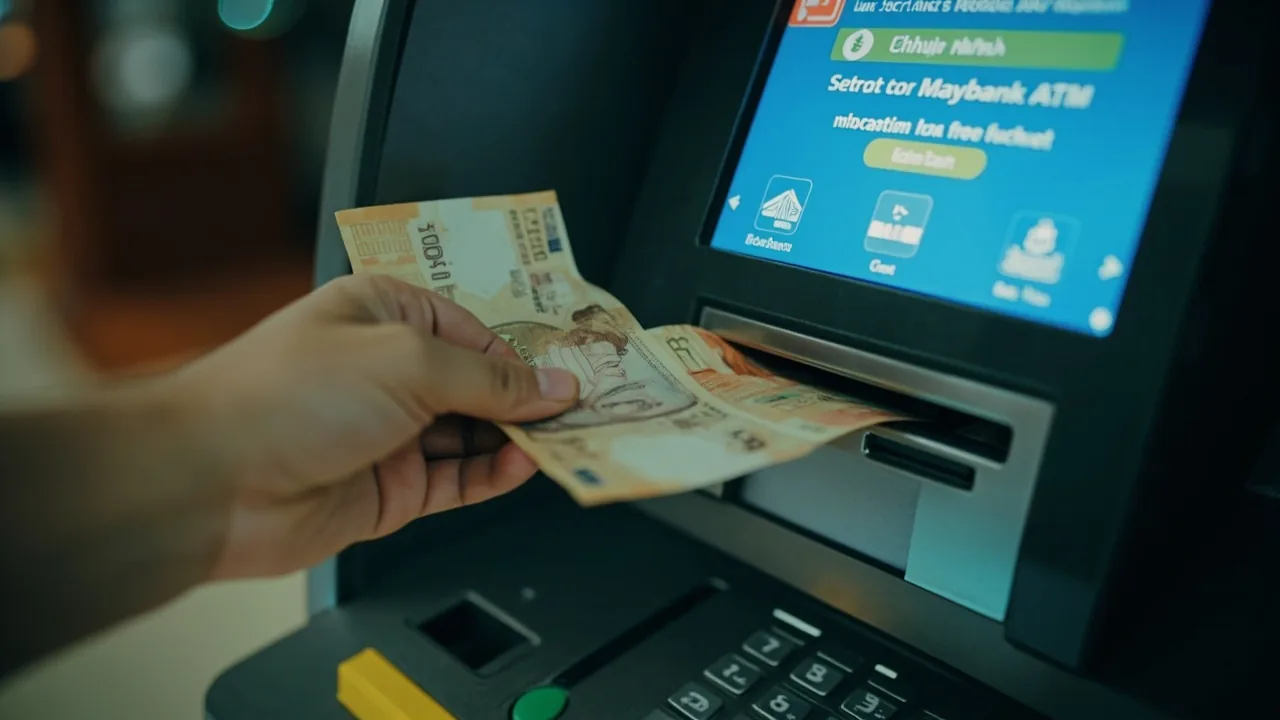
Malaysia ATM Withdrawal Guide for Indian Travelers: Limits, Fees & Charges Explained
The shortest version: walk past any ATM with a purple Euronet logo or a Standard Chartered sticker, find a Maybank, CIMB, or Public Bank machine, and your Indian Visa or Mastercard will cost you around ₹236 (~10 MYR or ~$2.45) per withdrawal. For related planning, see our guide on Sea Backpacking Hub.
1 INR sits at roughly 0.0424 MYR right now, so ₹1,000 buys you about 42 MYR. That’s the number to keep in your head whenever you see a price in Ringgit on a menu or a Grab receipt.
Quick Answers
| What | Answer | Price (INR) |
|---|---|---|
| Best payment method | Zero-markup Indian debit card (Fi, Niyo, Jupiter) at Maybank / CIMB / Public Bank | ~₹0 markup + ₹200-₹300 (~$2.08-$3.11) Indian bank ATM fee |
| Backup method | Forex card (HDFC, ICICI, Axis) | 2-3.5% markup + ATM fee |
| Worst option | Euronet or Standard Chartered ATMs | ₹471 (~20 MYR or ~$4.89) surcharge + bad FX + DCC trap |
| Daily ATM withdrawal limit (KL banks) | ₹35,342 (~1,500 MYR or ~$366.85) per transaction, bank caps 3000-5000 MYR/day | ~₹70,000-₹1,18,000/day |
| Street food | Walk-up stalls: ₹94-₹234 (~4-10 MYR or ~$0.98-$2.45) | ~₹94-₹234 (~$0.98-$2.43) |
| UPI in Malaysia | Works at most major retailers via QR, NOT at street stalls | ₹0 fee, 1-2% FX markup |
| Indian debit card issuer fee | Most charge 0-3.5% FX markup + flat ₹100-₹200 (~$1.04-$2.08) ATM fee | ₹100-₹300 (~$1.04-$3.11) per withdrawal |
| Cash to carry from India | No limit, but declare above USD 3,000 at customs | ₹0 fee if under threshold |
How ATM Withdrawals Work in Malaysia
Every time you stick an Indian Visa or Mastercard into a Malaysian ATM, three different people take a cut, and the trick is to know which ones you can control.
Step 1: Your Indian bank. This is the FX markup, which is the gap between the real mid-market rate (what Google shows) and the rate your bank charges you to convert INR to MYR. With a standard HDFC or SBI debit card, this is 2.5% to 3.5%. With a zero-markup card like Fi, Niyo, or Jupiter, this drops to 0% on the FX spread. That’s a ₹2,800 (~$29.06) difference on a ₹100,000 (~$1,038) spend, which is exactly the cost of a week’s hostel stays in Penang.
Step 2: The Malaysian ATM owner’s fee. This is where 90% of Indian travellers get burned. There are three categories of ATMs in Malaysia:
- Local bank ATMs (Maybank, CIMB, Public Bank, RHB, Hong Leong, AmBank). These charge ₹0-₹47 (~0-2 MYR or ~$0-$0.49) per transaction. Your Indian bank on top of that is where most of the cost lives. These are the ones you want.
- Euronet ATMs. You’ll see the purple logo and a Hindi-language screen option that feels reassuring. Stay away. Euronet adds a ₹236-₹471 (~10-20 MYR or ~$2.45-$4.89) surcharge on top of everything, and the FX rate they offer is one of the worst in the country. Travellers regularly report being charged ₹471 (~20 MYR or ~$4.89) for a single withdrawal that should cost ₹47 (~2 MYR or ~$0.49). The Hindi screen is a sales tactic, not a courtesy.
- Standard Chartered ATMs. This one surprises people, because Standard Chartered is a “global” bank and feels like it should be traveller-friendly. It’s not. Their ATMs in Malaysia charge a foreign-foreign transaction fee, and Indian-issued cards get hit with the worst tier. Skip these even if you’re standing next to one at a 7-Eleven.
Step 3: DCC (Dynamic Currency Conversion). The ATM screen asks “Convert to your home currency?” and offers to charge you in INR instead of MYR. This is the most expensive button on the machine. DCC adds a 3% to 7% markup on top of the real exchange rate, and your bank will also charge its own markup, so you lose twice. The answer is always Decline / No / Proceed without conversion. Always transact in MYR.
The Math on a Real Trip
Let’s say you withdraw ₹35,342 (~1,500 MYR or ~$366.85) from a Maybank ATM in Bukit Bintang with a Fi debit card.
- Maybank ATM fee: ₹4,712 (~200 MYR or ~$48.91)
- Fi FX markup: 0%
- Indian bank ATM fee: ₹100 (some banks charge ₹0 with zero-markup cards, others charge a flat ₹100-200)
- Real MYR rate: 1500 MYR × 23.5868 = ₹35,380
- What your card shows: ₹35,380 + ₹100 = ₹35,480
Now do the same withdrawal with a vanilla SBI debit card at a Euronet ATM.
- Euronet surcharge: 20 MYR (~₹472)
- SBI FX markup: 3% on 1500 MYR = ₹35,342
- SBI ATM fee: ₹140
- Plus DCC if you ticked the wrong box: another 5% = ₹1,769
- Real MYR rate: 1500 MYR × 23.5868 = ₹35,380
- What your card shows: ₹35,380 + ₹472 + ₹1,061 + ₹140 + ₹1,769 = ₹38,822
Same 1500 MYR. ₹3,342 difference. That’s the cost of picking the wrong ATM and the wrong card.
Comparison of Options for Indian Travelers
| Card / Method | FX Markup | ATM Fee (Local) | Daily Limit | DCC Risk | Verdict |
|---|---|---|---|---|---|
| Fi Zero Forex Debit | 0% | ₹100 (~$1.04) flat | ₹100,000 (~$1,038) | Low (always choose MYR) | Best overall for ATMs |
| Niyo Global Card | 0% | ₹145 (~1.50 USD) | $3,000/day | Low | Best for high-volume withdrawals |
| Jupiter Federal Bank | 0% | ₹0-₹100 (~$0-$1.04) | ₹100,000 (~$1,038) | Low | Backup, ATM acceptance is patchy in small towns |
| HDFC ForexPlus Card | 2.5% | ₹100-₹200 (~$1.04-$2.08) | ₹192,678 (~2,000 USD) | Medium | Only if you locked in rate at airport before travel |
| ICICI Sapphiro Forex | 2.0% | ₹100-₹200 (~$1.04-$2.08) | ₹240,848 (~2,500 USD) | Medium | Decent if you already have one |
| SBI Global Debit | 3.5% | ₹140-₹300 (~$1.45-$3.11) | ₹100,000 (~$1,038) | High | Worst forex card; avoid for new trips |
| Cash from India (Thomas Cook) | 5-8% markup already baked in | n/a | n/a | n/a | Bring only ₹19,268-₹28,902 (~200-300 USD) for first day |
| Maybank ATM (issuer side) | n/a | 0 MYR | 3000 MYR/day | Low | Best ATM network to find |
| CIMB ATM | n/a | 0 MYR | 3000 MYR/day | Low | Second-best, common in malls |
| Euronet ATM | n/a | ₹236-₹471 (~10-20 MYR or ~$2.45-$4.89) surcharge | 1500 MYR/transaction | high | Avoid |
| Standard Chartered ATM | n/a | ₹283 (~12 MYR or ~$2.93) + bad FX | 1500 MYR/transaction | High | Avoid |
India-Specific Gotchas: RBI, TCS, and LRS
Indians traveling abroad fall under the RBI’s Liberalised Remittance Scheme (LRS), which allows USD 250,000 per financial year per person for all remittances combined. That includes forex cards, international debit card spend, and ATM withdrawals. You’re not going to hit that ceiling on a vacation, but the rules underneath it matter.
The 20% TCS rule (effective October 2023, still current): Every forex transaction triggers Tax Collected at Source. For educational and medical remittances, the rate is nil. For everything else, including tourism, it’s 20% on amounts above ₹7 lakh per financial year. The catch is that TCS is a credit, not a tax, meaning you get it back when you file your ITR. The cash flow problem is real, though: you pay ₹20,000 (~$207.60) in TCS on a ₹100,000 (~$1,038) trip, recover it next July, but it’s locked up for 12 months.
How to stay under the ₹7 lakh exemption: Spread your spending across the financial year if you travel twice. Or use the new RBI rule that allows you to claim the ₹7 lakh exemption for tourism if you don’t use it for any other LRS category. The simplest play: keep all forex spend below ₹7 lakh in one FY, file ITR, claim the refund.
PAN card requirement: Mandatory for any single remittance over ₹50,000. A forex card load of ₹80,000? PAN required. ATM withdrawals? PAN isn’t required at the ATM, but your bank will ask for PAN when you first activate international usage on the card.
Documents to keep: All ATM receipts (especially if you dispute a charge), monthly card statements, the original forex card load receipt showing the rate, and screenshots of the mid-market rate on the day of withdrawal. If your bank charges you more than the rate you saw on Google at the time, you have a complaint case.
Currency declaration at Indian customs: if you carry more than USD 3,000 (equivalent) in cash out of India, you have to declare it on the customs form. Card balances don’t count, only paper cash.
What Bananarchy Travellers Use
The setup that has worked best across multiple trips is two cards, no more. Primary is a Fi Zero Forex debit card, which charges 0% markup and ₹100 (~$1.04) per ATM withdrawal on the Indian side. Backup is a Niyo Global card backed by SBM Bank India, which has a ₹145 (~1.50 USD) fee but higher daily limits when you need to pull ₹70,683 (~3,000 MYR or ~$733.69) in one go for a homestay or a scooter deposit.
On the Malaysian side, the rule is simple: if the ATM says Maybank or CIMB, use it. If it says anything else, walk to the next one. Maybank is the most common, you’ll find them in every mall, in airports, and in most city centres. CIMB is the runner-up and usually sits right next to a Maybank in shopping centres.
People make the same mistake every trip: they land at KLIA, see an ATM at the immigration hall, and withdraw with the first card they find. That’s often a Euronet or a Travelex machine with a ₹589 (~25 MYR or ~$6.11) fee baked in. The right move is to walk out to the public arrivals area, where Maybank has standard-rate ATMs with no surcharge on Visa and Mastercard withdrawals.
For the first ₹5,000 (~$51.90) in cash, we also recommend bringing INR from home and exchanging at a licensed money changer in KL once you’ve cleared immigration. Thomas Cook or UAE Exchange at the airport are the worst rates (5-8% below mid-market); a city money changer like Merchantrade or Jalan Tun Sambanthan counters in KL is closer to 2-3%. This is only for your first night; from day two, switch to ATM withdrawals.
Getting Connected
You need data working the moment you land, because the first thing you’ll do is open Wise or Google to check the real MYR rate before your first ATM withdrawal. AirAsia customers flying into KLIA2 can grab a free Yes 5G SIM with their boarding pass, otherwise a Celcom or Maxis tourist SIM at the airport runs ₹707 (~30 MYR or ~$7.34) for 30 days and 50 GB.
For the budget-conscious, a Nomad eSIM lets you skip the airport counter and activate before takeoff. They have a 1 GB Malaysia plan for $5 (~₹483) covering 7 days, which is enough to get you through the first airport taxi and your first ATM withdrawal before you switch to a local SIM. Get Nomad eSIM
If you skip the travel data plan and try to tether off your Indian SIM, Jio and Airtel roam in Malaysia but cost ₹700-₹1,300 (~$7.27-$13.49) per day for a few hundred MB. That math doesn’t work for a 10-day trip.
Where to Eat While You’re Maximising Your ATM Math
Cutting fees on ATMs means you have more MYR in your pocket for actual food. A few spots worth the trip:
Pia’s the Padi in Kuala Lumpur serves authentic Malaysian cuisine at local prices. A plate of nasi lemak with sambal and rendang runs ₹283-₹424 (~12-18 MYR or ~$2.93-$4.40). The atmosphere is the kind of cozy neighbourhood spot you’d never find on a hotel’s concierge list.
Pauline’s is the casual comfort food answer when you’ve been on a bus from Penang for six hours and need real rice and curry on a plate. Local Malaysian dishes run ₹353-₹518 (~15-22 MYR or ~$3.67-$5.38).
In the Cameron Highlands, OK Tuck Restaurant Brinchang is the local favourite for hot food in the cold hill-station weather. Steamboat dinners run ₹589-₹825 (~25-35 MYR or ~$6.11-$8.56) per person with a clear view of the surrounding tea plantations.
Souled Out in KL is the upscale option when you want the signature beef rendang and spicy laksa done with a modern twist. Main courses run on the higher end but worth it for a one-night splurge after a week of street food.
For caffeine and a hill-station view, De Telang Cafe Kea Farm in Cameron Highlands is a charming spot with local vibes. Light meals run ₹236-₹424 (~10-18 MYR or ~$2.45-$4.40).
When the Indian-craving hits hard, Ponmalar Indian Stall in Cameron Highlands is a family-run South Indian kitchen that does proper idli, dosa, and rice meals at ₹188-₹353 (~8-15 MYR or ~$1.96-$3.67). Travellers report the sambar is the standout.
Restoran Sentral Spice serves a North Indian-Malaysian fusion at ₹353-₹660 (~15-28 MYR or ~$3.67-$6.85) per plate. Good for when you’re in a smaller city and the only other options are halal Chinese or McDonald’s.
Solh Restaurant & Bar in KL is the Middle Eastern alternative when you’ve had too much rice. The lamb shawarma and saffron biryani are the standout dishes, with mains running ₹754-₹1,296 (~32-55 MYR or ~$7.83-$13.45). The bar is a bonus after a long day of bargaining at Petaling Street.
For more on daily spending in Malaysia, the monthly cost breakdown gives you a side-by-side of where your MYR goes, and the Malaysia money guide covers the UPI and forex card side of the same problem.
Daily Budget: What You’ll Withdraw
For a budget backpacker doing KL, Penang, and Cameron Highlands on ₹20,000 (~$207.60) per day (which is the SEA 2,500/day target), you’ll need about ₹20,027 (~850 MYR or ~$207.88) per day. That’s well within the 3000 MYR/day Maybank limit, so you’ll withdraw once every 3-4 days, which means only 3-4 ATM fees per trip instead of 15-20.
At 1 INR = 0.0424 MYR, ₹20,000 sits at about 850 MYR. Here’s how that breaks down on a typical day:
| Item | Cost (MYR) | Cost (INR) |
|---|---|---|
| Hostel dorm (Bukit Bintang / Penang) | ₹825-₹1,296 (~35-55 MYR or ~$8.56-$13.45) | ~₹825-₹1,300 (~$8.56-$13.49) |
| Street food lunch | ₹188-₹235 (~8-10 MYR or ~$1.96-$2.45) | ~₹189-₹236 (~$1.96-$2.45) |
| Indian restaurant dinner | ₹471-₹707 (~20-30 MYR or ~$4.89-$7.34) | ~₹472-₹708 (~$4.90-$7.35) |
| Two MRT / Grab rides | ₹283-₹471 (~12-20 MYR or ~$2.93-$4.89) | ~₹283-₹472 (~$2.94-$4.90) |
| Coffee + snacks | ₹236-₹353 (~10-15 MYR or ~$2.45-$3.67) | ~₹236-₹354 (~$2.45-$3.67) |
| Attraction entry (Batu Caves, etc.) | ₹236-₹589 (~10-25 MYR or ~$2.45-$6.11) | ~₹236-₹590 (~$2.45-$6.12) |
| Daily total | ₹20,027 (~850 MYR or ~$207.88) | ~₹20,000 (~$207.60) |
If you’re doing the extreme 1,200/day budget, cut the dinner to street food (₹236 (~10 MYR or ~$2.45)), skip MRT in favour of LRT (₹118 (~5 MYR or ~$1.22) total), and stay at dorms near Bukit Bintang for 30 MYR. That gets you down to about 500 MYR (~₹12,000/day).
The “Which Bank Is Best for Indians” Question, Directly Answered
Indian travellers almost always ask, in order: Maybank, CIMB, or Public Bank? The honest answer is that the bank’s local fee is the smallest of the three costs you’ll pay. The bigger difference is between Indian banks.
On the Malaysian side, Maybank wins on network density (more machines, more reliably working Indian Visa and Mastercard). CIMB is second. Public Bank is third, with fewer tourist-area ATMs. RHB and Hong Leong work fine but are the backup options.
On the Indian side, the ranking is Fi, Niyo, Jupiter in tier 1; HDFC Regalia ForexPlus and ICICI Sapphiro in tier 2; everything else in tier 3. The 0% markup on the tier 1 cards saves you more money than any ATM network choice.
If you only have a regular HDFC debit card and can’t get a Fi or Niyo before your trip, the playbook is: pre-load a small forex card with ₹30,000 (~$311.40) at the airport before departure (rate is about 2.5% worse than mid-market), use that card for first-day expenses, then find a Maybank or CIMB ATM and use your HDFC debit card for the rest. Decline DCC every single time.
FAQs
What is the daily ATM withdrawal limit in Malaysia for Indian cards? Most Maybank and CIMB ATMs cap you at ₹35,342 (~1,500 MYR or ~$366.85) per transaction and ₹70,683 (~3,000 MYR or ~$733.69) per day. Your Indian bank may have a lower limit, often ₹50,000-₹100,000 (~$519-$1,038) per day. Whichever is lower is your real cap.
Does UPI work in Malaysia? Yes, but only at large retailers and chains via the QR code at the till. Street stalls, hawker centres, and small restaurants do not accept UPI. The FX markup is 1-2%, lower than most forex cards.
Can I use my Indian debit card at any ATM in Malaysia? Yes, any ATM with a Visa or Mastercard logo will accept it. The question is what they charge. Euronet and Standard Chartered ATMs are the worst, local banks (Maybank, CIMB, Public Bank) are the best.
Should I bring cash from India or withdraw at the ATM? Bring ₹5,000-₹10,000 (~$51.90-$103.80) in INR cash for the first day, then switch to ATM withdrawals. The forex card load at the airport is the worst option (worst rate, instant lock-in).
What is DCC and how do I avoid it? DCC is Dynamic Currency Conversion. The ATM offers to charge you in INR instead of MYR. Always choose MYR. DCC adds 3-7% on top of the real exchange rate, and your bank also charges its own markup.
How much cash can I take out of India for a Malaysia trip? There’s no RBI limit, but you must declare at customs if you carry more than USD 3,000 (equivalent) in cash. Card balances don’t count. For practical purposes, ₹5,000-₹10,000 (~$51.90-$103.80) or ₹9,634-₹19,268 (~100-200 USD) in cash is enough for the first day.
What is the cheapest way to get Malaysian Ringgit from India? A zero-markup Indian debit card (Fi, Niyo) at a Maybank or CIMB ATM, declining DCC. That’s 0% markup plus ₹100-₹150 (~$1.04-$1.56) per withdrawal. Anything else costs more.
Are Euronet ATMs that bad? Yes. Travellers report ₹471 (~20 MYR or ~$4.89) surcharges plus a 3-5% FX markup. On a ₹35,342 (~1,500 MYR or ~$366.85) withdrawal, that’s ₹1,500-₹2,000 (~$15.57-$20.76) wasted on a single transaction. The Hindi-language option is a sales tactic, not a service.
Subodh’s Take
The most expensive mistake I see Indian travellers make in Malaysia is not the ATM choice, it’s the DCC. I watched a friend withdraw ₹35,342 (~1,500 MYR or ~$366.85) from a Maybank ATM with a perfectly good Fi card, tick the “charge in INR” box because it felt safer, and lose ₹1,800 to a bad conversion rate that his own zero-markup card would have given him for free. The ATM was the right machine. The button was the wrong button. Always choose MYR, every time, no exceptions.
