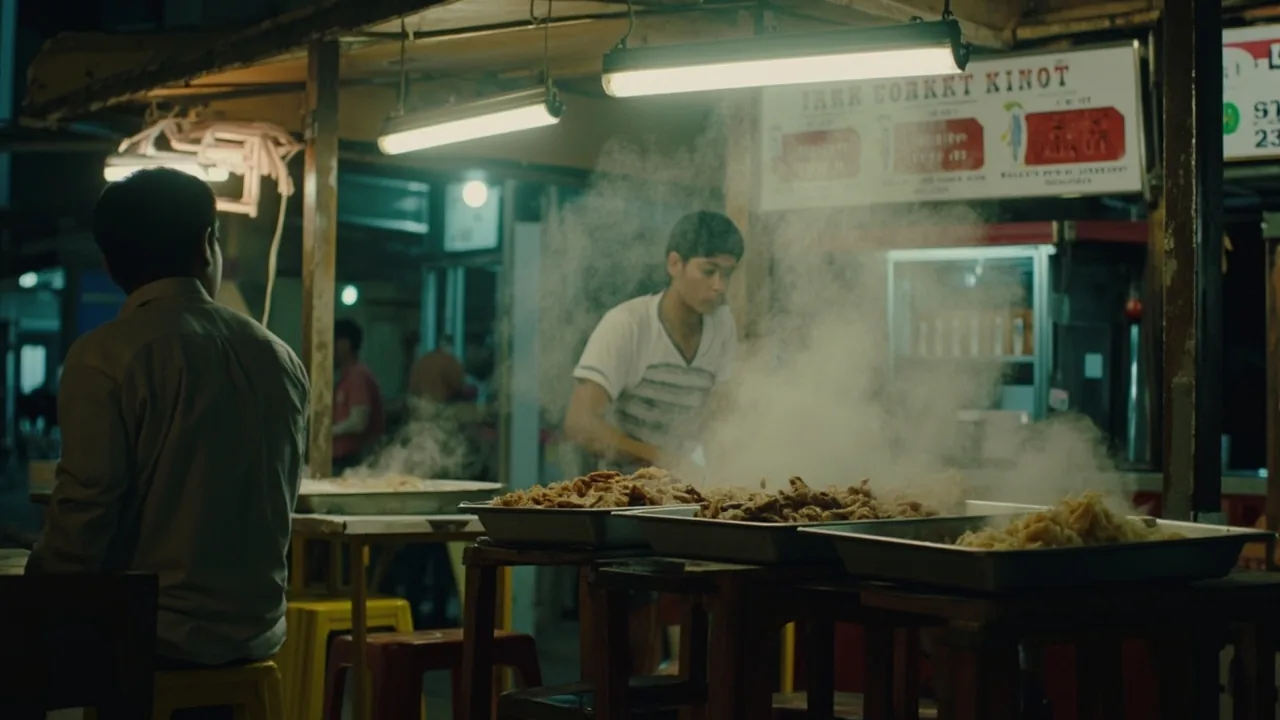
Is Street Food in Malaysia Safe for Indians? Allergy Phrases & 2026 Food Safety Guide
Short answer to “is street food in Malaysia safe to eat”: yes, mostly. Malaysian hawker centres are some of the cleanest and most regulated street food cultures in Asia. The real risk is not the stall, it is your stomach not being ready for the oil, the chilli load, and the prawn paste hiding inside dishes that look vegetarian.
This guide covers hawker hygiene rules, what to skip on day one, the Malay and Mandarin allergy phrases you need, and the dishes on a typical Malaysian street food list that catch Indian vegetarians and allergy-prone eaters off guard. You will also find the Indian embassy contact card and what to do if the worst happens.
For the wider safety picture across Southeast Asia, see our Southeast Asia backpacking hub. For embassy numbers and emergency clinics in KL, see our Malaysia emergency contacts guide.
Quick Answers
| What | Answer | Price (INR) |
|---|---|---|
| Is street food in Malaysia safe to eat? | Yes, mostly. Eat at busy hawker centres, avoid pre-cut fruit, drink bottled water. | Free to plan |
| Is street food safe in Kuala Lumpur specifically? | Yes. Jalan Alor, Lot 10 Hutong, and Brickfields are well-policed. | ₹94-₹235 (~4-10 MYR or ~$0.98-$2.44) per dish |
| Is it safe to eat street food in Singapore? | Yes, and safer than Malaysia. Hawker centres are graded A/B/C by NEA. | ₹118-₹294 (~$1.22-$3.05) per dish |
| What food is Malaysia famous for? | Nasi lemak, char kway teow, laksa, roti canai, satay, beef rendang, hokkien mee. | ₹118-₹353 (~5-15 MYR or ~$1.22-$3.67) per plate |
| How do I say “no prawn, no peanut” in Malay? | ”Tiada udang, tiada kacang”, works at almost every hawker stall. | Free |
Subodh’s Pro Tip: Hawker stalls that finish a wok batch in under 20 minutes and refill from a hot tray are safer than buffets sitting under a fan. Turnover is your best hygiene signal, far ahead of how shiny the counter looks.
The Real Risks: What to Worry About
Malaysian street food is not the health gamble most Indian travellers expect. The bigger issue is wrong dish identification. Here is the rank-ordered risk list for the first two weeks:
| Risk | Likelihood | Impact | How to Avoid |
|---|---|---|---|
| Hidden prawn/shrimp paste (belacan) in “vegetable” dishes | High | Severe (allergy, Jains) | Ask in Malay or Mandarin; skip anything with sambal unless you confirmed ingredients. |
| Chilli overload / gastritis | High | Moderate | Carry an antacid; avoid “tom yam” style broths on day one. |
| Iced drinks from unknown stalls (unfiltered ice) | Moderate | Moderate | Drink only bottled water; ask for “tanpa ais” (no ice) or “air suam” (warm water). |
| Pre-cut fruit at roadside stalls | Moderate | Low | Eat fruit you peel yourself: banana, mangosteen, cempedak. |
| Tap water in budget hotels | Moderate | Low | Use bottled water for brushing teeth if your hotel tank looks old. |
| Halal-only cross-contamination (alcohol, pork) | Low | Low | Malaysia is halal-default; no real cross-contamination risk for pork-shy travellers. |
| Severe food poisoning requiring a clinic | Low | Moderate | Most cases clear in 12 hours; rehydrate with ORS and seek a clinic if blood appears. |
| Scam: overpricing at tourist-trap hawker stalls | Moderate | Low | Ask locals what a plate should cost before sitting down; reject “tourist menu” attempts. |
Subodh’s Pro Tip: The single biggest reason Indian travellers end up sick in Malaysia is not the oil, it is the belacan. Belacan (fermented shrimp paste) is in sambal, in laksa broth, in stir-fried greens, and in many “vegetarian-looking” curries. If you are vegetarian, allergic to shellfish, or Jain, treat belacan as your number one enemy.
What Food Is Malaysia Famous For (and Where to Eat It)
The Malaysian street food list below covers the dishes you will see at a hawker centre. I have grouped them into “safe to start with” and “try from week two,” and listed which ones carry hidden animal products.
Safe to start with (mild, mostly identifiable ingredients):
- Nasi lemak, coconut rice, sambal, cucumber, egg, peanuts. Around ₹118-₹188 (~5-8 MYR or ~$1.22-$1.96). Confirm sambal has no belacan if you are strict veg.
- Roti canai, flaky flatbread, dal curry on the side. ₹47-₹71 (~2-3 MYR or ~$0.49-$0.73). The dhal is usually vegetarian but the cook may use ghee (clarified butter, not always veg).
- Roti tissue, sweet, crispy, condensed-milk dusted. ₹71-₹118 (~3-5 MYR or ~$0.73-$1.22). Purely vegetarian.
- Satay (chicken or beef), grilled skewers, peanut sauce. 1 MYR per stick. Easy to identify, easy on the stomach.
- Pisang goreng, banana fritters. ₹47-₹94 (~2-4 MYR or ~$0.49-$0.98) per piece. Safe, vegan, and a great low-risk starter.
Try from week two (after your stomach has settled):
- Char kway teow, flat noodles, prawns, egg. Often cooked with lard (pork fat) but some stalls use vegetable oil. Ask if pork-free.
- Laksa, coconut or sour broth, contains belacan and prawns in most variants. Assam laksa has fish.
- Hokkien mee, dark prawn broth, pork oil. Hidden pork and shellfish.
- Beef rendang, slow-cooked dry curry, dry and spicy. Found at Souled Out in KL for an upmarket take.
- Bak kut teh, pork rib herbal soup. Skip entirely if pork-averse.
For a healthy break from heavy hawker food, drop into Seeds Origin - Healthy Food Cafe Kuala Lumpur in KL for grain bowls and fresh juice. For a sit-down Malaysian experience with rendang and laksa done in a modern way, Souled Out in KL is the spot travellers mention most often.
For Indian food when your gut needs a break from sambal, three reliable bets: We Desi - Indian Bistro (North Indian street food, tandoori momos), KOTHI RESTAURANT & BAR (Punjabi dishes, family-friendly), and Bombay Grand Indian Cuisine in Brickfield (Mumbai street food, North Indian curries). All three are in or near KL and well-rated by Indian travellers.
Hawker Hygiene: The Eight Rules That Matter
Follow these eight rules and your stomach will outlast your visa:
- Pick stalls with a queue. Turnover is the single best hygiene signal. A stall selling out by 8 PM is safer than one with food sitting on a tray since noon.
- Look for the cleaning flow. Hot water rinse, soap, rinse again. If a hawker only wipes down with a damp cloth, walk on.
- Avoid pre-cut fruit and pre-peeled sugarcane. Buy whole bananas and mangosteens and peel them yourself.
- Drink bottled water. Brands like Spritzer and Aqua are ₹24-₹71 (~1-3 MYR or ~$0.24-$0.73) per bottle at any 7-Eleven.
- Order hot food, eat it hot. Bacteria double every 20 minutes in the “warm zone” between 30 and 60°C. If your plate arrives lukewarm, send it back.
- Use the tray and cutlery provided. Wash hands with soap before and after, not sanitizer. Alcohol gel does not kill norovirus.
- Skip buffets. All-you-can-eat hawker stalls sit out food for hours; this is where most of the stomach bugs originate.
- Trust your nose. Sour milk smell, oily reheat smell, or any “off” fragrance is the universal signal to skip.
Prevention and Preparation (Before You Fly)
A little prep in India saves you a clinic visit in Bukit Bintang.
Vaccines recommended for Malaysia (from India):
- Routine: MMR, DTaP, varicella, polio, annual flu.
- Recommended for most travellers: Hepatitis A, Hepatitis B, Typhoid.
- Considered for rural or jungle stays: Japanese Encephalitis, Rabies.
- No yellow fever vaccine required unless you are transiting through an endemic country.
For the full breakdown, see our Malaysia vaccine guide.
Carry a personal pharmacy kit:
- ORS sachets (Electral or ORS-L powder from any Indian pharmacy)
- Loperamide for emergency runs (only if you must take a bus or flight)
- Pantoprazole (Pantocid 40) for acid reflux from spicy food
- Metronidazole (Metrogyl 400) for traveller’s diarrhea, three times a day for three days
- Paracetamol 650 mg
- Probiotic capsules (Saccharomyces boulardii works well for first-week adjustment)
- Oral rehydration salts in zip-lock bags, pre-measured
Travel insurance:
For Indian backpackers, scooter accidents are not the worry in Malaysia, but dengue, food poisoning relapses, and rare allergic reactions are. Pick a policy that covers:
- Emergency medical evacuation (helicopter from Tioman or Perhentian islands)
- Hospital deposit advance (Malaysian private hospitals ask for ₹47,122-₹117,805 (~2,000-5,000 MYR or ~$489.13-$1,222.82) up front for non-residents)
- Adventure activities if you plan to dive, climb Kinabalu, or jungle-trek
- Trip interruption if dengue floors you for a week
Allergy Phrases Every Indian Must Know (Malay + Mandarin)
This is the single most useful skill at a Malaysian hawker stall. Write these on your phone or screenshot them before you travel.
Bahasa Malaysia phrases:
- “Saya alergi udang”. I am allergic to prawns.
- “Tiada udang, tiada ketam, tiada sotong”. No prawn, no crab, no squid.
- “Tiada belacan”. No shrimp paste.
- “Sayur sahaja, tanpa daging”. Vegetables only, no meat.
- “Tidak pedas” or “Kurang pedas”. Not spicy / less spicy.
- “Tanpa ais”. No ice.
- “Air suam”. Warm water.
- “Saya vegetarian”. I am vegetarian.
Mandarin phrases (Penang, Klang Valley older generation):
- “我吃素” (wǒ chī sù). I am vegetarian.
- “不要虾” (bù yào xiā). No prawns.
- “不要辣” (bù yào là). Not spicy.
- “不要虾膏” (bù yào xiā gāo). No shrimp paste.
Hindi/English fallback:
Most hawkers in tourist zones speak basic English. Showing a photo on your phone of a “vegetarian green tick” or a “no prawn” symbol works too. Pointing at ingredients on Google Translate and confirming visually is faster than pronunciation at a noisy stall.
Safety Alert: Seafood allergy (especially prawn) is the most common food allergy in India and the most common trigger for anaphylaxis at Malaysian hawker centres. If you carry an EpiPen in India, carry one here. EpiPens are not easily available over the counter in Malaysia; bring two from home.
City-by-City Food Safety Notes
Kuala Lumpur:
Jalan Alor is the most famous hawker street. It is safe but prices inflate 30 to 50% after 8 PM when tour buses arrive. Eat before 7 PM or walk two streets over for the same food at local prices. Lot 10 Hutong on Bukit Bintang is air-conditioned and graded, a safe first stop for a sensitive stomach. Brickfields (Little India) has the Indian food safety net covered with Bombay Grand Indian Cuisine and KOTHI Restaurant right in the neighbourhood.
Penang:
George Town hawker centres (Lebuh Chulia, New Lane, Red Garden) are the cleanest in the country. Penang is also where the famous “cendol” stalls sit, and the shaved-ice dessert is safe if the ice is from a commercial machine. Avoid roadside durian in monsoon season; the smell alone attracts bacteria.
Melaka:
Jonker Street night market is a weekend-only affair. Friday and Saturday nights are safe for satay and chicken rice balls. The weekday hawker centres around Jalan Bunga Raya are quieter and cleaner.
Singapore (for comparison):
Is street food safe in Singapore? Yes, and safer than Malaysia. Every hawker centre is graded A, B, or C by the National Environment Agency, and the grade is posted at the entrance. Stick to A-graded centres: Lau Pa Sat, Maxwell, Chinatown Complex, Tiong Bahru. Pricing is slightly higher than KL but the hygiene oversight is rigorous.
Getting Connected (So You Can Reach a Clinic)
Working data on your phone is the difference between calling an ambulance and wandering Bukit Bintang at 2 AM with stomach cramps. Buy a local SIM at the airport on arrival:
- Yes 5G, ₹589 (~25 MYR or ~$6.11) for 7 days, 30 GB. Comes with free local calls.
- Hotlink, ₹471 (~20 MYR or ~$4.89) for 5 days, basic data.
- CelcomDigi, ₹707 (~30 MYR or ~$7.34) for 10 days with more rural coverage (good for Penang and Tioman).
For an eSIM option that activates before you land, Get Nomad eSIM is the cleanest one-click setup with Indian payment methods supported.
What to Do If It Happens
Mild food poisoning (most cases):
- Stop eating solid food for 4 to 6 hours.
- Drink ORS every 15 minutes, small sips.
- Take one Pantocid 40 for the burning.
- Resume bland food (white rice, plain roti, banana) after 6 hours.
- If symptoms last beyond 24 hours, see a doctor.
Severe food poisoning (blood in stool, fever above 38.5°C, unable to keep water down for 8+ hours):
- Get to a private hospital. Ask your hotel reception for the nearest one or call 999 for an ambulance to the closest emergency department.
- Show insurance card at intake, ask for direct billing.
- Most cases resolve in 24 to 48 hours with IV rehydration and a short antibiotic course.
- Cost: ₹18,849-₹58,902 (~800-2,500 MYR or ~$195.65-$611.41) if uninsured. SafetyWing covers this.
Allergic reaction (hives, swelling, breathing difficulty):
- Use EpiPen immediately if you carry one.
- Call 999 (Malaysian emergency line, ambulance).
- Go to the nearest hospital emergency department, do not wait.
- Notify your embassy if you are admitted for more than 24 hours.
Lost passport with food-poisoning hospital admission:
Carry two printed passport copies plus a Cloud backup (Google Drive, WhatsApp to yourself, and email to a family member). The Indian High Commission in KL can issue an emergency certificate within 24 hours if you have the copies and a police report. The contact is in our Malaysia emergency contacts guide.
Indian-Specific Considerations
Indian embassy in Malaysia:
The High Commission of India in Kuala Lumpur handles all emergencies. Keep the number saved offline.
- Address: 2 Jalan Taman Duta, Off Jalan Duta, 50480 Kuala Lumpur
- Phone: +60-3-2093-3510 (general), +60-3-2093-3504 (consular)
- Email: [email protected]
- Before travelling, check the live MEA advisory for Malaysia for any current updates.
Hospital deposit reality:
Malaysian private hospitals do not treat uninsured foreign patients without a deposit. The upfront ask ranges from ₹47,122-₹117,805 (~2,000-5,000 MYR or ~$489.13-$1,222.82) for admission, more for ICU. Travel insurance that offers direct billing (SafetyWing included) waives this.
Cost reference for typical medical visits (no insurance):
- GP consultation: ₹1,885-₹3,534 (~80-150 MYR or ~$19.57-$36.68)
- ER visit with IV drip: ₹9,424-₹18,849 (~400-800 MYR or ~$97.83-$195.65)
- Inpatient overnight stay: ₹18,849-₹47,122 (~800-2,000 MYR or ~$195.65-$489.13)
- Ambulance: ₹3,534-₹9,424 (~150-400 MYR or ~$36.68-$97.83)
These figures explain why insurance is not optional.
FAQ
1. Is street food in Malaysia safe to eat for first-timers from India?
Yes, if you follow three rules: pick busy stalls, avoid pre-cut fruit and buffets, and order food hot. The bigger risk for first-timers is the chilli load and hidden belacan in “vegetable” dishes, not bacteria.
2. What food is Malaysia famous for that a vegetarian can eat?
Nasi lemak (request no sambal or no belacan), roti canai, roti tissue, pisang goreng, satay if you accept meat, vegetarian curry puffs, and Indian-Muslim stalls serving veg biryani. For a healthy break, Seeds Origin - Healthy Food Cafe Kuala Lumpur has grain bowls.
3. Is street food safe in Kuala Lumpur at night?
Yes, the night hawker scene is when food is freshest because of high turnover. Jalan Alor is the most famous; for safer and cheaper options, Lot 10 Hutong (air-conditioned) or the Brickfields hawker stretch are better.
4. Is it safe to eat street food in Singapore?
Safer than Malaysia. Every hawker centre is graded A/B/C by the NEA. Stick to A-graded centres like Lau Pa Sat, Maxwell, or Chinatown Complex. Cost is 4 to 8 SGD per dish.
5. What is the cheapest safe meal I can find in Malaysia?
A plate of nasi lemak or roti canai at a busy neighbourhood stall is ₹47-₹118 (~2-5 MYR or ~$0.49-$1.22). For Indian veg, vegetarian thali at small Brickfields stalls is ₹188-₹353 (~8-15 MYR or ~$1.96-$3.67).
6. Should I drink the tap water in Malaysia?
No. Stick to bottled water for drinking and brushing. The ₹24-₹71 (~1-3 MYR or ~$0.24-$0.73) per bottle cost is trivial compared to the cost of a clinic visit.
7. What if I have a nut or shellfish allergy?
Carry an EpiPen. Show the Malay phrase “Saya alergi kacang / udang” at every stall. For full safety, see our broader Malaysia scams and warnings guide and the solo-travel safety article.
Subodh’s Take
If you are an Indian vegetarian, Jain, or nut-allergic traveller, the actual answer to “is street food in Malaysia safe to eat” is: it is safer than you think, but only if you treat belacan, peanut sauce, and sambal as your real enemies, not germs. Most Indian travellers who end up sick in Malaysia do so because they ate a “vegetable curry” loaded with shrimp paste, not because the wok was dirty. Learn five Malay phrases, pick the stalls with queues, and pack ORS in your bag. You will eat better and cheaper than you do at home.
Travel Insurance: Cover scooter accidents, dengue, and food poisoning relapses with a policy that includes medical evacuation and trip interruption across Southeast Asia.