Philippines Transport Guide: Best Ways to Get Around for Backpackers
The easiest way to get around the Philippines starts with one decision: ferry or fly? With 7,641 islands, your transport choices always come back to that question. Jeepneys and tricycles handle short hops on-island, Grab covers the cities, and ferries plus budget airlines link everything together. This guide covers all of it, verified against current Grab Philippines fares, 12Go ferry schedules, and traveller reports from June 2026.
Subodh’s Pro Tip: The single biggest transport mistake Indian backpackers make in the Philippines is assuming they can island-hop cheaply by ferry alone. Some routes (say, Manila to Siargao) take 30+ hours by sea but only 2 hours by air for roughly the same price. Always compare ferry and flight times side by side before booking.
Quick Answers
| What | Answer | Price (INR) |
|---|---|---|
| Cheapest city ride (jeepney) | Shared jeepney within Manila, Cebu, or Davao | ₹15-₹34 (~9-20 PHP or ~$0.16-$0.36) |
| Short tricycle hop (under 2 km) | Tricycle for 1-3 passengers on small islands | ₹34-₹84 (~20-50 PHP or ~$0.36-$0.89) |
| Grab car in Metro Manila | Sedan for 1-4 passengers, app-booked | ₹168-₹505 (~100-300 PHP or ~$1.78-$5.34) |
| Manila to Boracay (flights + ferry combo) | Fly to Caticlan, ferry to Boracay | ~₹5,500 (~$57.05) to ₹8,500 (~$88.17) |
| Airport terminal fee (international) | Paid at NAIA or any intl. Airport on departure | ₹926-₹1,432 (~550-850 PHP or ~$9.79-$15.12) |
Understanding the Philippines Transport Mix
The Philippines doesn’t have a single “best way” to get around because the geography forces split decisions. For inner-city travel, jeepneys, tricycles, UV Express vans, and Grab dominate. For inter-island travel, you pick between RoRo (Roll-on, Roll-off) ferries, fast crafts like Oceanjet and 2GO, and budget airlines (Cebu Pacific, AirAsia Philippines, Philippine Airlines). Trains exist only in Metro Manila (LRT/MRT) and a handful of regional lines, so they’re rarely part of a backpacker’s daily routine. Planning the wider region? Our Southeast Asia backpacking hub covers the full multi-country route.
The FX rate for this guide: 1 INR ≈ 0.56 PHP (verified 2026-07-17 at 1 PHP = ₹1.78). For a full budget breakdown, see our Philippines trip cost from India guide.
Safety Alert: For broader Philippines safety context, always check the official Indian Ministry of External Affairs advisory (mea.gov.in) and the Philippine Department of Tourism (tourism.gov.ph) before booking. Some Mindanao regions have periodic advisories that affect transport options, especially overland buses.
Jeepneys: The Cheapest Way Around Manila, Cebu, and Davao
Jeepneys are the backbone of city transport in Manila, Cebu, and Davao. They’re those gaudy, extended jeep-style vehicles with bench seats in the back. You hop on at the side, pass your fare forward through the other passengers, and hop off at the back when you reach your stop. The fixed fare is 9 to 20 PHP within most cities, depending on distance and route.
Indians used to Thailand’s songthaews will find jeepneys more cramped and louder, but the cost is unbeatable. The catch: routes are posted on the windshield in Tagalog or Bisaya, and there are no formal stop announcements. You’ll need Google Maps (with offline Philippine maps downloaded) to know when to press the bell or tap the roof.
Tricycles: Short-Distance Workhorses on Siquijor, Bantayan, and Camotes
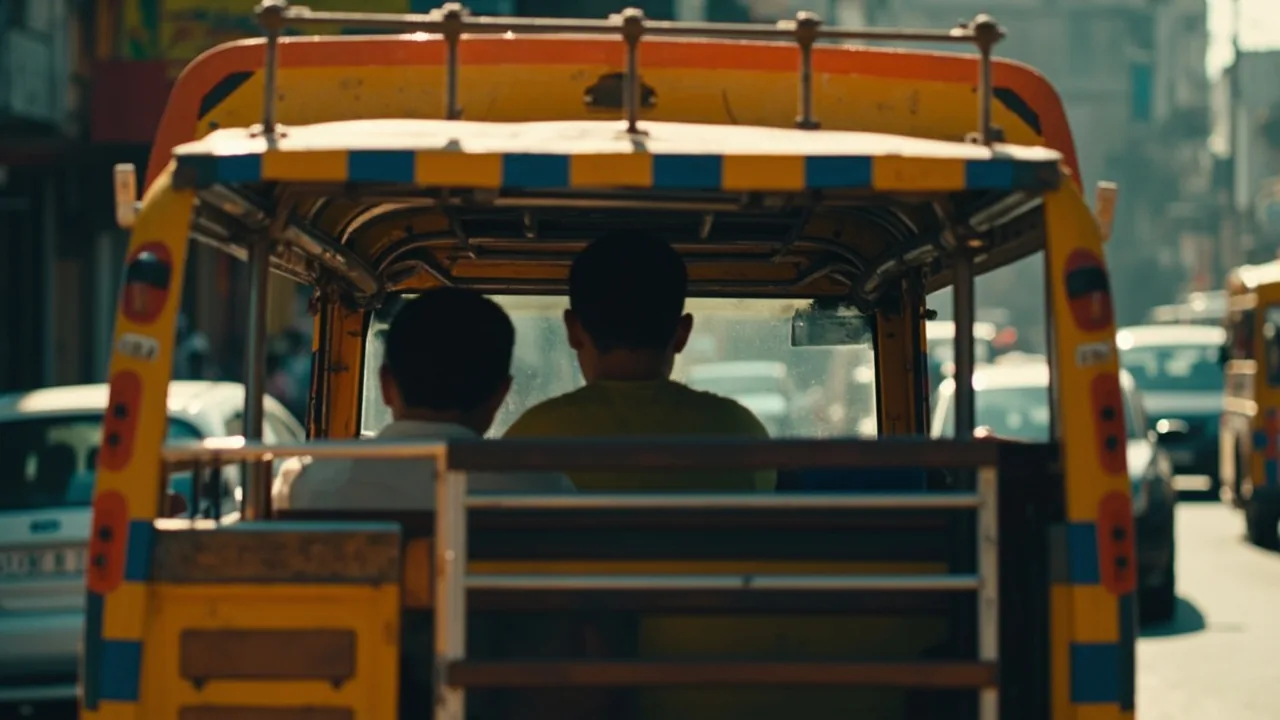
On smaller islands (Siquijor, Bantayan, Camotes), tricycles replace jeepneys. These are motorcycles with a sidecar, fitting 3-4 passengers at most. Fares run 20 to 50 PHP for short hops under 2 km. Tricycles are the default way to get from a port to your hostel if the distance is walkable but you’ve got luggage.
Always confirm the fare before boarding. Unlike jeepneys, tricycles don’t run on fixed routes. They’re private hires, so negotiation is expected. If a driver quotes 150 PHP for what should be a 30 PHP ride, walk away and flag another one.
Grab in the Philippines
Grab operates in Metro Manila, Cebu City, Davao City, and a handful of other urban centers. Fares run 100 to 300 PHP for most city trips, depending on distance and traffic. Surge pricing kicks in during rush hour (7-9 AM, 5-8 PM) and heavy rain, sometimes doubling or tripling fares.
Grab setup for Indian travelers:
- Download Grab from the Play Store or App Store.
- Sign up with your Indian number (works fine, OTP arrives via SMS).
- Bind a Visa/Mastercard forex card or set up cash payment.
- Choose GrabCar (sedan, 1-4 pax) or GrabBike (motorcycle, 1 pax, cheaper).
Cash payment is the safer option since some Indian forex cards get declined on first try due to foreign transaction authentication. Always have PHP cash on hand as a backup.
Ferries: Cebu to Tagbilaran, Manila to Cebu, and Beyond
Ferries are the scenic, slow way to move between islands. The main operators:
- 2GO Travel: Long-distance RoRo ferries with sleeping cabins. The Manila to Cebu route takes ~22 hours, and Manila to Davao runs ~50 hours.
- Oceanjet: Fast crafts for shorter routes. Cebu to Tagbilaran (Bohol) is about 2 hours.
- Weesam Express, SuperCat: Similar fast-craft options across the Visayas, including Tagbilaran to Siquijor.
Prices vary wildly by route and class. A Cebu-to-Bohol fast craft runs ~500 to 800 PHP for economy. A Manila-to-Cebu 2GO sleeper in a shared cabin runs ~2,500 to 4,000 PHP. Check schedules and book on 12Go:
Budget Airlines: Manila to Boracay (Caticlan), Manila to Siargao, and Cebu to Coron
For anything farther than 500 km, flying almost always beats ferries on time and often on cost. Cebu Pacific and AirAsia Philippines run promo fares as low as 888 to 1,500 PHP one-way for routes like Manila to Boracay (Caticlan), Manila to Siargao, or Cebu to Coron. The trick: book 4-6 weeks ahead, fly with only a carry-on (checked bags add ₱500-1,500), and avoid peak weekends.
Tricycle from Caticlan port to Caticlan airport: ~50 PHP. Tricycle from Caticlan airport to Boracay jetty port: ~100 PHP. Ferry from Caticlan to Boracay: ~50 to 100 PHP terminal fee + ~100 PHP ferry. Total door-to-door from Manila NAIA to a Boracay hostel: ~3-5 hours, ~₹5,500 (~$57.05) to ₹8,500 (~$88.17).
Manila LRT/MRT: When It Makes Sense
Manila’s LRT-1, LRT-2, and MRT-3 lines cover a useful north-south corridor through Makati, Quezon City, and Pasay. Fares are 13 to 35 PHP per ride, paid via a beep card (₱100 for the card, loadable at any station). If your hostel is near a station and your destination is near another station, the train is faster and cheaper than Grab during rush hour. Otherwise, traffic makes it slower than walking.
Long-Distance Buses
Buses are your main overland option on large islands like Luzon and Mindanao. On smaller islands (Bohol, Palawan, Cebu), buses exist but run infrequently, so jeepneys or vans fill the gap.
Major bus operators:
- Genesis Transport, Solid North: Luzon routes (Manila to Baguio, Manila to Vigan).
- Bachelor Express, Rural Transit: Visayas and Mindanao routes.
- UV Express vans: Short intercity routes, 8-12 passengers, faster than buses but slightly pricier.
Manila to Baguio by bus: ~6-7 hours, 700 to 1,200 PHP for aircon. Vigan from Manila by bus: ~8-9 hours, similar price.
Eating Near Transport Hubs
If you’re grabbing food between transfers, a few solid options near major hubs: Kantina Manila (near NAIA, known for sisig and adobo, rated 4.9), Hill-Top Cuisine in Siquijor (panoramic views, rated 5.0), and Biryanista (Hyderabadi biryanis, rated 4.9) when you need Indian food. For more options, see our vegetarian and Indian food in the Philippines guide.
Getting Connected
You need working data to use Grab, Google Maps, and 12Go. The two practical options:
- Physical SIM: Globe or Smart, available at the airport or any sari-sari store. Tourist SIMs with 7-30 days of data run ₱40 to ₱300. Bring your passport for registration.
- ESIM: If you want data the moment you land without swapping physical SIMs, get a Nomad eSIM before departure.
Common Transit Mistakes Indians Make
Mistake 1: Booking only the ferry, not the ferry + transfer combo.
Many islands (Boracay, Siargao, Camiguin) require a land transfer from the airport to the ferry port, then a ferry, then another tricycle on the other side. Travelers who book just the ferry get stranded at a port with no onward ride. Always book the full door-to-door leg or budget ₱300-800 for local transfers.
Mistake 2: Assuming Manila traffic is like Bangkok or Mumbai.
Manila’s traffic is worse. EDSA (the main ring road) can take 2 hours to cross 15 km during peak times. Always leave 4+ hours of buffer for a flight from NAIA if you’re staying in Makati or Quezon City.
Mistake 3: Flying into the wrong airport.
Manila has NAIA (Ninoy Aquino International) for most domestic and all international flights, but Clark (CRK) is sometimes cheaper for flights from Southeast Asia. Cebu has Mactan-Cebu International. Boracay’s airport is Caticlan (MPH), not Kalibo (KLO), unless you’re on a budget promo flight. Picking the wrong one adds 3+ hours of bus or van time.
Mistake 4: Not budgeting for the terminal fee.
Every departure from a Philippine airport requires a terminal fee of 50 to 200 PHP domestically, 550 to 850 PHP internationally. Some airlines include it; most don’t. Keep ₱1,000 in cash when you head to the airport.
Mistake 5: Skipping the ferry-vs-flight comparison.
The ferry from Manila to Cebu is romantic and cheap (~₱1,500-2,500), but it takes 22 hours. A Cebu Pacific flight is often the same price or cheaper and takes 1.5 hours. Always compare before defaulting to the ferry “experience.”
Visa Basics for Indian Travelers
Indians are visa-free for 30 days on a Philippine tourist entry. You can extend at any Bureau of Immigration office for 3,030 PHP/month (verified 2026-06-26). Bring your passport, a recent 2x2 photo, and the fee in cash. Extensions take 1-3 hours depending on the office and queue.
For more on planning your trip on a budget, see how to travel to Philippines cheap and Manila airport to Angeles City.
FAQ
Q: Is Grab available in Manila? A: Yes, Grab operates across Metro Manila, Cebu City, and Davao City. Fares run 100 to 300 PHP for city trips. Surge applies during rush hour.
Q: Can I use Indian UPI in the Philippines? A: No. UPI does not work in the Philippines. Bring cash (PHP) or a Visa/Mastercard forex card. GCash (a local e-wallet) requires a Philippine SIM to register.
Q: How do I get from Manila to Boracay cheaply? A: Fly to Caticlan (₱1,500-3,000 promo fare), take a tricycle to Caticlan jetty port (₱100), then the Boracay ferry (₱50-100). Total door-to-door: 3-5 hours, ~₹5,500 (~$57.05) to ₹8,500 (~$88.17).
Q: Do I need a ticket for jeepneys and tricycles? A: No tickets. Pay the driver directly (jeepneys) or hand the fare to the driver (tricycles). Keep small bills and coins ready; drivers rarely have change for ₱500 or ₱1,000 notes.
Q: What’s the best way to get around Boracay? A: Tricycles and e-trikes. The island is small enough that most hops cost 20 to 50 PHP. Walking is also fine if your hostel is along White Beach or Bulabog Beach. For island recommendations, see our best Philippines islands for backpackers guide.
Q: How safe are overnight ferries? A: Generally safe with 2GO and Oceanjet. Bring a padlock for your bag, keep valuables in your cabin, and book a known operator through 12Go to avoid random boats.
Subodh’s Take
The easiest way to get around the Philippines is to split your decisions: book budget flights for long hauls (Manila to Siargao, Cebu to Coron), ferries for short scenic hops (Cebu to Bohol, Tagbilaran to Siquijor), Grab for city rides, and jeepneys or tricycles for everything else. The backpackers who overspend are the ones who insist on ferrying everywhere out of principle or who fly last-minute without checking promo fares. Mix the modes, and your per-day transport cost stays under ₱800-1,200 across a multi-island route.