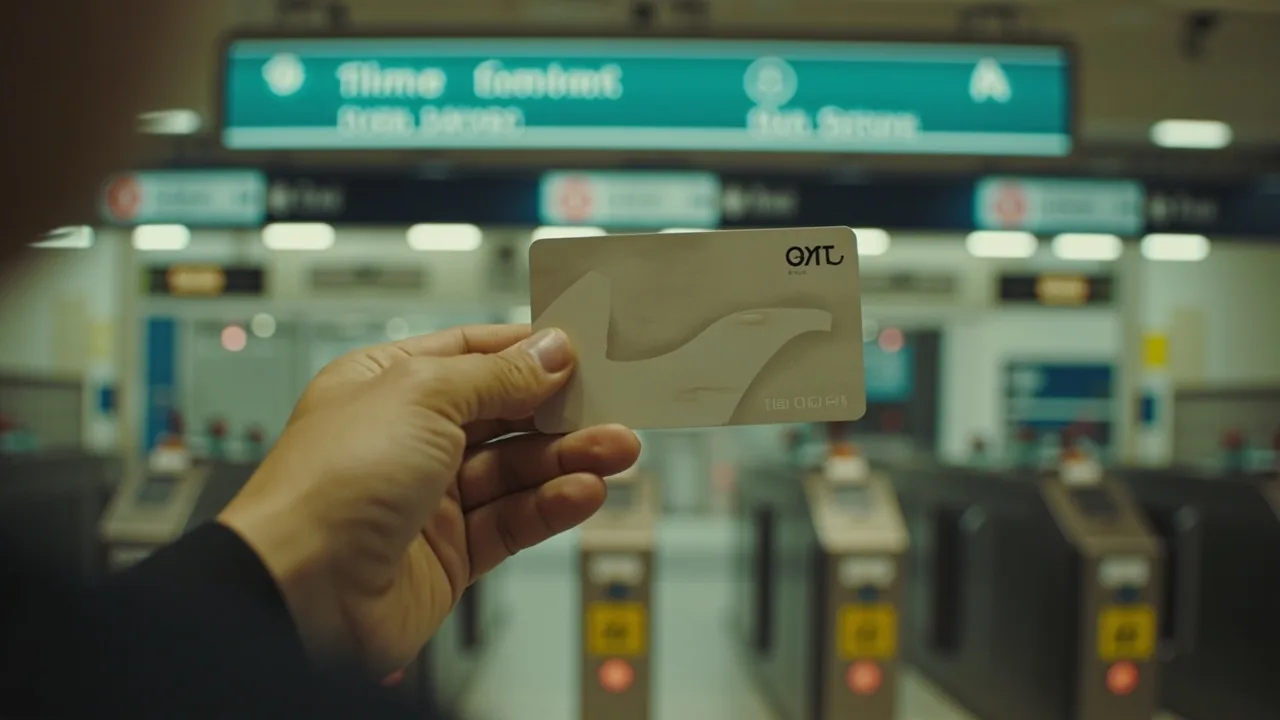
Solo in Singapore? 15 Practical Tips, Best Apps & Is the Tourist MRT Pass Worth It?
Singapore is the easiest big city in Southeast Asia to solo through on your first trip out of India. The MRT runs like a Swiss watch, English is everywhere, and the food courts have labelled veg options. But it is also the most expensive dorm bed in the region.
Wondering whether the MRT Singapore tourist pass worth it solo? It depends entirely on how many rides you take per day. The honest breakdown, including whether the Singapore Tourist Pass saves you money or is a tourist trap dressed up as a convenience product, is below. For related planning, see our guide on Sea Backpacking Hub.
Subodh’s Pro Tip: Singapore is the one city in Southeast Asia where you should NOT wing it on transport passes. The Tourist Pass looks like a flat-rate dream, but the math depends entirely on how many rides you take per day. I’ll break the actual numbers down below so you can decide before you land at Changi.
Quick Answers
| What | Answer | Price (INR) |
|---|---|---|
| Is Singapore safe for solo travellers? | Yes, safer than most Indian metros. Standard precautions only. | ₹0 |
| Singapore tourist visa fee (Indian passport) | Apply via ICA or eVisa partner. 3-5 working days processing. | ₹2,119 (~22 USD) |
| Singapore Tourist Pass (3-day) | Unlimited MRT/LRT rides. Worth it only if you ride 7+ times a day. | ₹2,238 (~30 SGD or ~$23.23) |
| EZ-Link card (refundable stored value) | Better for 1-2 rides/day or stays under 3 days. Add value as you go. | ₹895 (~12 SGD or ~$9.29) |
| Best dorm bed in Singapore | Most expensive in SE Asia. Budget hostels cluster in Little India and Bugis. | ₹1,865-₹3,729 (~25-50 SGD or ~$19.36-$38.71) |
| Cheapest way from Changi to city | MRT (East-West line) runs direct through Tanah Merah to the city. ~40 min. | ₹186 (~2.50 SGD or ~$1.94) |
| Best app for MRT routing | Citymapper (live train times, platform exits, fare estimates). | Free |
| Local SIM at Changi (Singtel/M1, 7 days, ~50GB) | Available at airport counters on arrival. | ₹1,119 (~15 SGD or ~$11.61) |
The Solo Singapore Vibe
Singapore doesn’t have a “backpacker trail” the way Bangkok or Bali do. You won’t find Khao San Road 2.0. What you will find is a city that works so smoothly on your own that being solo feels like the default state, not the exception. From Little India MRT to Raffles Place, the signs are in English, every hawker centre from Lau Pa Sat to Maxwell has a queue system, and Grab works everywhere with no surge at 11pm.
The trade-off is cost. Singapore is the most expensive city in Southeast Asia for hostels. A dorm bed at a Little India hostel here costs what a private room in Chiang Mai costs. You pay for the efficiency. But if you’re coming from India for a 4-5 day stopover (most solo Indians do Singapore as a transit hub, not a destination in itself), the city rewards a short, focused trip. Three days is enough to hit the major neighbourhoods like Kampong Glam and Bras Basah-Bugis. Five days lets you add a Sentosa day or a day trip to Johor Bahru.
Solo travellers blend in here more than anywhere else in SEA. Nobody stares. Nobody tries to sell you a tuk-tuk. You walk into a hawker centre, order chicken rice, eat alone without anyone caring. For a first-time solo trip out of India, that low-friction environment is the whole point.
15 Practical Tips for Solo Travellers in Singapore
1. Decide on the MRT pass BEFORE you land
Don’t wing it at Changi. Read the breakdown below, do the math for your itinerary, then buy at the airport TransitLink counter on arrival. If you decide wrong, you’ll either overpay ₹2,238 (~30 SGD or ~$23.23) or end up queuing at a MRT station top-up machine on day two.
2. Download these three apps before you board the flight
- Citymapper: Best MRT/bus routing in the city. Shows platform exits, fare estimates, and live delays.
- Grab: For late-night rides when the MRT stops running (it closes around midnight). The base fare is higher than Bangkok, but it’s honest.
- Burpple: Local food discovery app with hawker centre reviews and “5-stars under ₹746 (~10 SGD or ~$7.74)” filters. Better than TripAdvisor for cheap eats.
3. Chew gum? Don’t.
Chewing gum is illegal to import and sell in Singapore. If customs finds a packet, they confiscate it. You won’t get arrested, but you’ll lose the gum.
4. Don’t drink the tap water if you’re paranoid, but it’s safe
Singapore’s tap water is potable and meets WHO standards. If you’ve been in Bangkok or Bali for weeks, the taste will shock you (in a good way). Refill your bottle at any MRT station water cooler.
5. Use the MRT, not taxis, for most trips
A 20-minute MRT ride costs ₹112-₹186 (~1.50-2.50 SGD or ~$1.16-$1.94). The same trip in a Grab is ₹1,119-₹1,492 (~15-20 SGD or ~$11.61-$15.48). Over 5 days, the difference is the cost of a hostel bed.
6. Stand on the left on escalators
Locals stand left, walk right. If you block the right side, an entire commuter crowd will silently judge you. This is the most Singaporean etiquette rule.
7. Eat at hawker centres, not restaurants
A chicken rice at a hawker stall is ₹298-₹448 (~4-6 SGD or ~$3.10-$4.65). The same dish at a restaurant is ₹1,119-₹1,865 (~15-25 SGD or ~$11.61-$19.36). Read our hawker guide for the best ones.
8. Don’t jaywalk
The Land Transport Authority fines jaywalkers. Enforcement cameras are real. You’ll see locals waiting at empty roads at 2am. Do the same.
9. Carry a water bottle
Singapore is hot and humid year-round. The MRT stations have free water coolers. Convenience store water is ₹149-₹224 (~2-3 SGD or ~$1.55-$2.32).
10. Get a local SIM at Changi, not in the city
Singtel and M1 have airport counters with the 7-day tourist SIM at ₹1,119 (~15 SGD or ~$11.61). Same SKU at a 7-Eleven in town might cost ₹1,343-₹1,492 (~18-20 SGD or ~$13.94-$15.48). Airport beats city for SIM price, every time.
11. The MRT Tourist Pass deposit is refundable
When you buy the 3-day pass (₹2,238 (~30 SGD or ~$23.23)), you pay a ₹746 (~10 SGD or ~$7.74) deposit. Return the pass at any TransitLink counter before you fly out to get the deposit back. Skip this and you lose ₹746 (~10 SGD or ~$7.74).
12. Most museums have free entry for certain days
The National Gallery, Asian Civilisations Museum, and Singapore Art Museum have free or pay-what-you-wish evenings. Check each museum’s site before you go.
13. Sentosa is a tourist trap unless you go for one specific thing
If you want Universal Studios, fine. If you want beaches, there are better ones in Malaysia and Thailand. If you want a cheap day out, take the MRT to HarbourFront and walk the Sentosa Boardwalk (free) instead of paying for the cable car.
14. Use the SimplyGo feature on your contactless card
Since 2024, Singapore supports SimplyGo on Visa/Mastercard contactless cards. Tap in, tap out, fare auto-deducted. No need to queue for an EZ-Link card if your Indian bank card supports international contactless (HDFC, ICICI, Axis all work).
15. Don’t try to “do everything” in 2 days
Singapore is dense but expensive. Better to pick 3-4 neighbourhoods per day and walk slowly than sprint across the city on the MRT. The MRT is fast, but you waste 30-40 minutes per transfer.
Is the Singapore Tourist Pass Worth It Solo? The Real Math
This is the question every solo traveller Googles, and the honest answer is: it depends on how many rides you take per day.
The Tourist Pass costs:
- 1-day pass: ₹746 (~10 SGD or ~$7.74)
- 2-day pass: ₹1,492 (~20 SGD or ~$15.48)
- 3-day pass: ₹2,238 (~30 SGD or ~$23.23)
At first glance, the 3-day pass looks like a steal. ₹2,238 (~30 SGD or ~$23.23) for unlimited rides over 3 days? But the catch is in the fare value, not the headline price.
A typical MRT fare in Singapore:
- Short trip (1-2 stops): ₹74-₹90 (~0.99-1.20 SGD or ~$0.77-$0.93)
- Medium trip (3-5 stops): ₹104-₹134 (~1.40-1.80 SGD or ~$1.08-$1.39)
- Long trip (cross-island): ₹149-₹186 (~2-2.50 SGD or ~$1.55-$1.94)
If you take 4 rides per day at an average of ₹112 (~1.50 SGD or ~$1.16), that’s ₹1,344 (~18 SGD or ~$13.94) over 3 days. The 3-day Tourist Pass (₹2,238 (~30 SGD or ~$23.23)) costs MORE than just paying per ride. You’d need 7+ rides per day to break even on the 3-day pass.
When the Tourist Pass makes sense:
- You’re doing a 2-3 day stopover and plan to ride 8+ times per day (museum hopping, multiple neighbourhoods, Sentosa runs)
- You want the convenience of unlimited rides and don’t want to think about fare top-ups
- You’re flying into Changi late and out early, and every minute counts
When the EZ-Link card makes more sense:
- You’re staying 4+ days and averaging 3-4 rides per day
- You want flexibility (EZ-Link works on buses too, the Tourist Pass doesn’t)
- You don’t want to remember to return the pass for the deposit refund
Reddit consensus (from r/singapore and r/SoutheastAsia): Most solo travellers report the EZ-Link card wins for stays under 3 days with light riding. The Tourist Pass wins for 2-day “see everything” sprints.
My take: If you’re doing a 4-day stopover, get an EZ-Link card (₹895 (~12 SGD or ~$9.29), top up as you go). If you’re doing a 2-day blitz, get the 3-day Tourist Pass and don’t think about it. Returning the pass for the deposit refund is worth the trip back to a TransitLink counter.
Safety Alert: The Tourist Pass is for tourists only. If you’re caught using one with a Singapore residency card, the fine is ₹3,729 (~50 SGD or ~$38.71). They check.
Where to Stay: Solo-Friendly Hostels
Singapore’s hostel scene clusters around three areas: Little India, Bugis, and Chinatown. Little India has the most budget options and the best Indian food access (important for solo Indians on a budget).
Dorm beds in Singapore are the most expensive in Southeast Asia. Expect to pay ₹1,865-₹3,729 (~25-50 SGD or ~$19.36-$38.71) per night for a basic 6-8 bed dorm. Private rooms start at ₹4,475 (~60 SGD or ~$46.45) and climb fast. This is the one city in SEA where you should budget hostel costs closer to European prices than Thai prices.
For hostel recommendations with affiliate booking links, check our best hostels for solo backpackers in Singapore guide. The shortlist there covers the properties that have solo-friendly common rooms, not just cheap beds in a quiet hotel.
Getting Connected: SIM and eSIM
Singapore’s mobile networks are the best in Southeast Asia. Coverage is near-perfect, speeds are fast, and tourist SIMs are cheap.
Physical SIM at Changi:
- Singtel and M1 both have airport counters selling the 7-day tourist SIM for ₹1,119 (~15 SGD or ~$11.61). Same SKU at 7-Eleven costs ₹1,344-₹1,492 (~18-20 SGD or ~$13.94-$15.48). Buy at the airport.
- The SIM includes local calls and data. Check the latest plan details at the counter for any bundled IDD minutes.
- Activation requires your passport. The counter staff does it for you in 5 minutes.
eSIM option: If you don’t want to swap physical SIMs or your phone supports dual eSIM, Get Nomad eSIM offers Singapore data plans starting from a few dollars for 7 days. Activation is QR-code based, no passport needed, works the moment you land.
Practical tip: Singapore’s free WiFi is everywhere (MRT stations, malls, hawker centres). If you’re only staying 2-3 days, you could skip the SIM and rely on WiFi + offline Google Maps. But for solo travel, having data on you at all times (safety check-ins with family, Grab when MRT closes) is worth the ₹1,119 (~15 SGD or ~$11.61).
Cultural Etiquette Indians Specifically Get Wrong
Singapore is cosmopolitan and tolerant, but a few small things trip up first-time Indian visitors:
1. Don’t assume the Little India area is “your” neighbourhood Little India has Indian food, Indian shops, and Indian temples. But it’s a tourist and commercial district, not a diaspora enclave. Indians there are running businesses, not welcoming you as a cousin. Walk in as a guest, not as someone expecting home.
2. Don’t speak loudly on the MRT Singapore’s trains are library-quiet. Loud phone calls, music without headphones, and group conversations at volume will get you death stares. This is the single biggest etiquette difference from Indian public transport.
3. Don’t litter, even a tissue Singapore’s anti-littering fines are steep. Travellers report seeing enforcement officers at hawker centres, parks, and MRT exits. Use the bin.
4. Don’t assume all Indian restaurants are veg-friendly Many Indian restaurants in Singapore serve mostly meat (biryani houses, tandoori spots). If you’re strict veg, ask “veg only?” before sitting down. The veg-friendly Indian food guide covers which spots cater to veg travellers.
5. Don’t bring durian on the MRT Durian is banned on public transport. The smell triggers nausea in enclosed spaces. Eat it at the stall, throw away the shells.
Budgeting for a Solo Singapore Stopover
Singapore is the most expensive city in Southeast Asia. A solo traveller on a budget will spend more here in 3 days than in a week in Vietnam. But you can still do it without burning through your forex card.
Daily budget breakdown (budget solo traveller):
- Hostel dorm: ₹2,238 (~30 SGD or ~$23.23)
- MRT rides (4 trips): ₹448 (~6 SGD or ~$4.65)
- Hawker food (3 meals): ₹1,119 (~15 SGD or ~$11.61)
- One paid attraction: ₹1,492 (~20 SGD or ~$15.48)
- Misc (water, snacks, SIM top-up): ₹746 (~10 SGD or ~$7.74)
Total per day: ~₹6,042 (~81 SGD or ~$62.71)
Compare that to Bangkok (~₹2,500/day) or Hanoi (~₹1,800/day), and Singapore is 2-3x more expensive. But it’s also cleaner, safer, and more efficient. You pay for the polish.
Budget 4 days and you’re looking at ~₹24,224 (~$251.45) for a basic solo trip, excluding flights and visa.
Solo money-saving tips:
- Eat breakfast at the hostel (most include toast, eggs, coffee)
- Use the MRT, not Grab, for everything before midnight
- Visit free attractions: Gardens by the Bay’s outdoor gardens are free, only the conservatories cost money
- Hawker lunch + convenience store dinner beats restaurant meals every time
- Skip alcohol at bars (20+ SGD per drink). 7-Eleven beer is ₹298-₹373 (~4-5 SGD or ~$3.10-$3.87).
- For budget Thai food, check Sanook Kitchen - Square 2, a cozy eatery with meals under ₹1,000.
- When you need Indian food, Chola Cafe - Biryani House does authentic Hyderabadi biryani, and Zaffron Tandoori Restaurant @ Boat Quay Singapore serves Punjabi tandoori by the riverside.
- For Korean food on a budget, Yogiyo Korean restaurant is a solid casual option near Little India.
Common Solo Mistakes Indians Make in Singapore
1. Booking a “cheap hotel” in Geylang or Kallang thinking it’s a deal These are hourly-rate hotels near red-light districts. The price looks good (60-80 SGD/night) but the area is sketchy at night and the rooms are dated. Stay in Little India, Bugis, or Chinatown instead.
2. Spending day one at Universal Studios Universal Studios is fun but takes a full day and costs 80+ SGD. For a 3-day stopover, that’s 1/3 of your trip gone. Sentosa is worth it if you have 5+ days. Otherwise, skip it.
3. Not checking the MRT operating hours The MRT runs from around 5:30am to midnight. After midnight, your only options are Grab (₹1,119-₹1,865 (~15-25 SGD or ~$11.61-$19.36)) or night buses (rare). Plan your nights accordingly.
4. Assuming Singapore is “just like India but cleaner” Singaporeans speak Singlish (a mix of English, Malay, Tamil, and Mandarin). The pace is slower, the rules are stricter, the social norms are different. Don’t expect to slot in like it’s an Indian city. Respect the differences.
5. Over-packing Singapore is small and MRT-dense. You don’t need hiking boots, three jackets, and a giant suitcase. Pack light, use the MRT, and you’ll thank yourself on day three.
Safety for Solo Female Travellers
Singapore is one of the safest cities in the world for solo female travellers. Violent crime against tourists is rare. The most common safety issues are:
- Pickpocketing in crowded areas like Orchard Road, Bugis, and Chinatown markets. Keep your bag zipped and in front of you.
- Taxi scams at Changi (rare but reported). Always use the official taxi queue or Grab, not touts offering “cheap rides” inside the terminal.
- Night safety is excellent. The MRT is safe until closing. Walking alone at 1am in the city centre is low-risk. Stay in well-lit areas and avoid Geylang’s red-light streets after midnight.
Dress code is liberal. Singapore is a global city; you’ll see everything from shorts to sarees. For temple visits (Sri Mariamman, Buddha Tooth Relic), cover shoulders and knees. For mosques, cover head, shoulders, and knees. Most temples provide sarongs at the entrance.
General advice: Check the Indian MEA travel advisory before departure for the latest updates, even for low-risk destinations like Singapore.
FAQ
Is Singapore safe for solo female travellers? Yes. It’s one of the safest cities in the world. Standard precautions apply (watch your bag in crowded areas, use Grab after midnight), but violent crime against tourists is rare.
How many days do I need for a solo Singapore trip? 3 days covers the essentials (Marina Bay, Gardens by the Bay, hawker food, one neighbourhood per day). 5 days lets you add Sentosa, a day trip to Johor Bahru, or a slower pace.
Can I get by with English in Singapore? Yes. English is the primary language for business, signage, and most conversations. Singlish (the local creole) is harder to understand but you’ll pick it up in a day.
Is the Singapore Tourist Pass worth it for 2 days? Yes, if you ride 8+ times per day. For light riding (3-4 rides/day), the EZ-Link card is cheaper.
Do I need a visa for Singapore as an Indian passport holder? Yes. Apply online via ICA or an authorised eVisa agent. Fee is ₹2,119 (~22 USD), processing takes 3-5 working days. You’ll need an onward ticket and hotel booking.
Is Singapore expensive for solo Indian travellers? Yes. It’s the most expensive city in Southeast Asia. Budget around ₹6,042 (~81 SGD or ~$62.71) per day for a basic solo trip (hostel, hawker food, MRT, one paid attraction).
Can I use Indian UPI in Singapore? Limited. Some large retailers and hotels accept international UPI, but most hawker stalls, small shops, and MRT top-ups don’t. Bring a forex card or international debit/credit card as primary payment.
Subodh’s Take
Singapore is the city that makes nervous first-time solo travellers from India feel at ease before they go anywhere else in Southeast Asia. It’s expensive, yes, but the MRT runs on time, the food is world-class, the rules are clear, and nobody cares that you’re eating alone. Do your transport pass math before you land, download Citymapper and Grab, and just walk. Three days is enough to fall in love with solo travel. Five days is enough to start planning your next trip.
