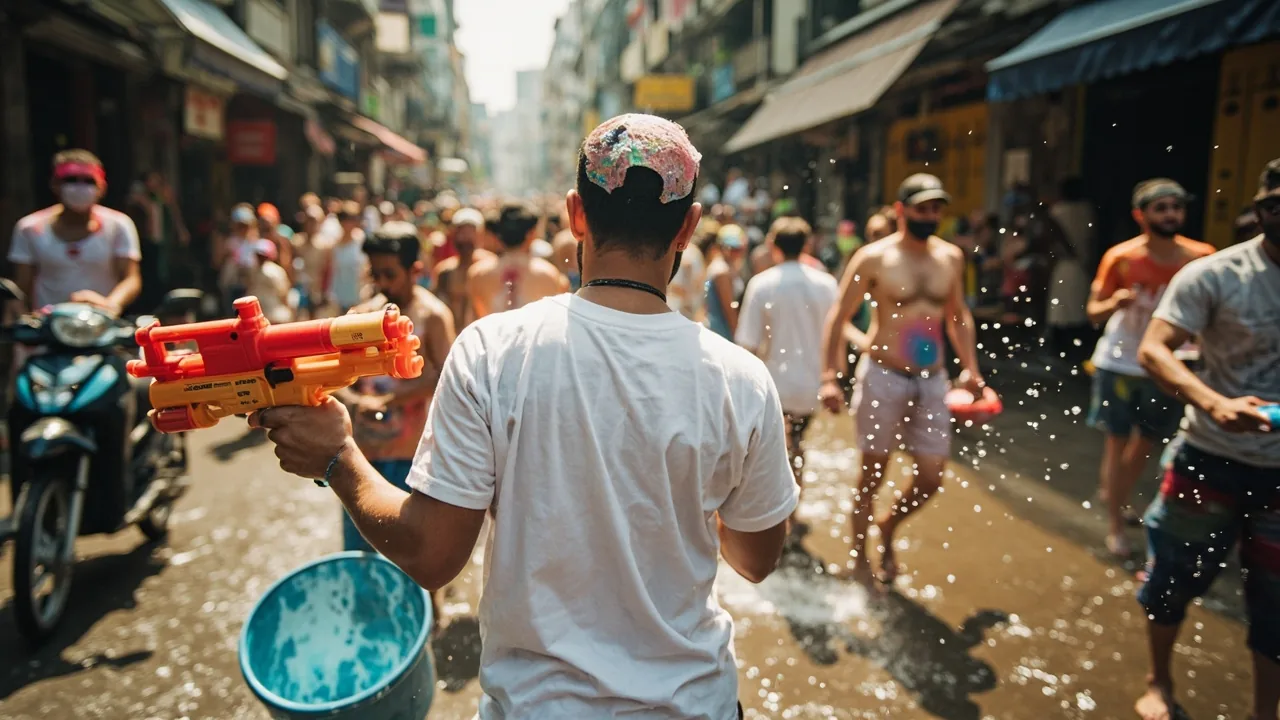
Thailand Water Festival 2026: Songkran & Beyond Guide
Songkran is the world’s largest coordinated water fight layered over a real Thai new year ritual. Travellers who treat it like just another Full Moon on Koh Phangan end up confused, soaked, and out of pocket. This guide covers the dates, costs, cities, and the gotchas that never make Instagram. The Thai new year runs 13–15 April every year. If you’re routing through Southeast Asia, check our SEA backpacking hub for the full regional picture.
Quick Answers
| What | Answer | Price (INR) |
|---|---|---|
| When is Songkran 2026? | 13–15 April 2026, with extended events 11–19 April in Bangkok | Free to join |
| Official Songkran capital | Chiang Mai (most intense water fights, traditional ceremony) | Free to join |
| Bangkok party zone | Silom Road + Khao San Road | Free entry, waterguns ₹287-₹861 (~100-300 THB or ~$2.98-$8.94) |
| Phuket option | Patong Beach (less traditional, more beach-party vibe) | Free entry |
| Cost per day | Beer, transport, watergun, lunch, dinner | ₹4,307-₹7,179 (~1,500-2,500 THB or ~$44.68-$74.47) |
What Songkran Is (and Why It Matters)
Thai new year. Historically a family-cleaning ritual where Thais pour scented water over Buddha statues, elders’ hands, and each other as a gesture of washing away bad luck from the previous year. The modern version is a three-day national water fight where every street, tuk-tuk, and rooftop becomes a target. The “water filling festival” framing you might have heard from family is the older translation: filling clay pots with flower-water, gently pouring over elders’ hands for blessings. The street-water-pistol version took over in the 1990s and has gotten bigger every year since.
For Indian travellers, the cultural layer is the part most foreigners miss. On the morning of 13 April, Thais go to the local wat (temple) to pour water over Buddha statues, offer food to monks, and build sand stupas. The afternoon water fights only start after the merit-making is done. If you skip straight to the bucket throwing without understanding that part, you miss what Songkran is, and locals notice.
Three Songkran realities every Indian backpacker should know before booking flights:
- Alcohol is officially restricted on Songkran days. Bangkok put restrictions in place in recent years that ban alcohol sales from 18:00 Saturday through midnight Monday of Songkran week; Chiang Mai aligned. Phuket, Koh Samui, and Pattaya apply the rules unevenly. Bring your own from duty-free, or accept that the only easy drink is whatever the bar already has open.
- Your phone is going to get wet. Dropped in puddles, hit with high-pressure waterguns, or knocked into a canal in Bangkok, phones fail during Songkran. A cheap waterproof pouch is non-negotiable, not optional.
- The dates move a little. Songkran is “13–15 April” by official decree. Bangkok extends events across 11–19 April, and Chiang Mai’s “Seven Days of Songkran” runs 11–17 April. If you only have 3 days, pick the centre dates, not the edges, when transport is busiest.
The Best Cities for Songkran 2026
Chiang Mai: The Cultural Heart
Chiang Mai is the unofficial Songkran capital and the only place where the traditional and modern versions still coexist in the same week. The old city moat fills up with pickup trucks loaded with 1,000-litre water drums, and everyone from monks to tourists stands on the roadside soaking each other down. The famous Tha Pae Gate is a sensory overload from 10am to 6pm every day, with elephant-spray sections, foam parties, and a “Ladyboy Songkran Beauty Pageant” that draws a real Thai crowd.
The traditional side happens at Wat Phra Singh and Wat Chedi Luang on the morning of 13 April, where you can join Thai families pouring flower-water over Buddha statues. No waterguns, no foam, just the real ritual. If you have never seen a Theravada Buddhist new year, this is the cleanest window in Thailand.
For Indian food when the water-fight heat gets too much, head to Chada Vegetarian Restaurant Chiang Mai in the old city, or Chai “N” Thai @ Nimman for a proper North Indian-South Indian meal with vegan options. Budget ₹287-₹574 (~100-200 THB or ~$2.98-$5.96) for a vegetarian thali. For Thai food, Aonchorn Thai restaurant (ออนชอน ราชดำเนิน) and The Simple are both rated 4.9 by travellers and worth the stop. Dorm beds in Chiang Mai’s old city run ₹689-₹1,005 (~240-350 THB or ~$7.15-$10.43) during Songkran week, double the normal rate, so book 6-8 weeks ahead.
Bangkok: The Big-Energy Party Zone
Bangkok’s Songkran is a different animal: louder, longer, more organised, more tourist-heavy, and more expensive. The official “Maha Songkran World Water Festival 2026” runs across multiple zones: Silom Road (the biggest organised foam-and-water party, with stages and DJ sets), Khao San Road (backpacker chaos, less ceremony, more buckets), RCA (club district, alcohol ban partially ignored), and Siam Square (mall-friendly, family-oriented daytime foam zones).
Silom is the one to pick if you want the full Bangkok-Songkran experience. The road closes to traffic, the BTS Skytrain still runs overhead, and you will see 50,000 people packed into one street throwing water from 10am to 8pm. The Khao San version is more backpacker-concentrated but smaller and more aggressive, with drunk British tourists and German tour groups that can make it tiring by 4pm.
For Indian food between water-fights, the Silom area has plenty of Indian restaurants on the side streets. The Khao San area is hit-or-miss; head to the small cluster of Indian places on Tanao Road. Budget ₹431-₹718 (~150-250 THB or ~$4.47-$7.45) for a meal. Dorm beds in Bangkok’s Khao San or Silom zones run ₹718-₹1,120 (~250-390 THB or ~$7.45-$11.62) during Songkran week, with surge pricing up to ₹1,723 (~600 THB or ~$17.87) if you walk in.
Phuket and Koh Samui: The Beach Version
Phuket’s Patong Beach Songkran is closer to a beach party than a Thai new year. The Bangla Road closure turns into a foam-and-water tunnel with bucket drinks widely available on the ground, even with the alcohol ban nominally in force, and you can walk from the beach to the party zone without leaving the wet zone. Less traditional, more spring-break vibe, fewer Thai families.
Koh Samui’s Chaweng Beach Songkran sits in between: smaller than Phuket, more family than Bangkok, with bucket bars along the beach road and a waterfight that runs noon to sunset. Both are good backup options if Chiang Mai and Bangkok are full or if you want to combine Songkran with a beach holiday on either side.
For Thai food near Patong, Chacha Beach Café & Restaurant on the beachfront is rated 5 by travellers and works for a break from the water-fight. Budget ₹574-₹1,149 (~200-400 THB or ~$5.96-$11.91) per meal for proper Thai seafood. ร้าน พี่ชาย BROTHER is the local favourite for authentic Thai in a more local setting, worth a stop if you want to escape the tourist strip.
Chiang Rai, Pai, and the Quiet Options
Chiang Rai’s Songkran is smaller and more relaxed, with the famous Wat Rong Khun (White Temple) drawing extra visitors during the week. Budget travellers who want the cultural version without Chiang Mai’s crowd should consider it. For Indian-leaning or vegetarian comfort food when the Thai street food gets repetitive, Kunda Vegetarian Vegan Burger Cafe Chiang Rai lists vegan burgers on its menu. IROHA Ramen & Izakaya Chiang Rai is a good Japanese noodle break.
Pai’s Songkran is the smallest and most laid-back option, with backpackers tubing down the river and throwing water at each other from inner-tubes. Dorm beds in Pai run ₹488-₹861 (~170-300 THB or ~$5.06-$8.94) normally and stay cheap during Songkran since the town stays low-key. Pai only has a few Indian restaurants, so plan accordingly.
Songkran Budget Breakdown (Verified 2026)
For the full Thailand budget breakdown beyond Songkran, see our Thailand budget guide.
| Item | Cost (THB) | Notes |
|---|---|---|
| Watergun (heavy-duty, lasts the week) | 250-450 | Buy at Khao San or Silom markets; cheap plastic ones break in 2 hours |
| Waterproof phone pouch | 50-120 | 7-Eleven, every MBK stall. Non-negotiable. |
| Songkran t-shirt (printed for the year) | 150-300 | Common, not essential, easy to skip |
| Beer (7-Eleven, before 18:00 alcohol ban) | 35-55 | Chang and Singha cans. Cheapest legal source. |
| Beer (Songkran bucket, where sold) | 150-300 | Mixers and ice included. Quality varies wildly. |
| Local Thai lunch (street food) | 60-120 | Pad thai, som tam, khao soi |
| Indian vegetarian meal | 100-250 | Thali or veg biryani in Chiang Mai or Bangkok |
| Dorm bed in Bangkok or Chiang Mai | 250-390 | Surges to ₹1,436-₹1,723 (~500-600 THB or ~$14.89-$17.87) on 13-15 April |
| Songthaew ride within Chiang Mai | 30-50 | Per person, city centre |
| BTS/MRT single trip (Bangkok) | 17-62 | Per trip, Rabbit Card deposit ₹287 (~100 THB or ~$2.98) refundable |
Daily total for a backpacker on a real Songkran budget: ₹4,307-₹7,179 (~1,500-2,500 THB or ~$44.68-$74.47). That covers dorm, three meals, two beers, transport, and a watergun that lasts the week. Splurge budget with buckets and entry to a paid foam party: ₹8,614-₹12,922 (~3,000-4,500 THB or ~$89.36-$134.04) per day.
What to Pack (and What to Leave at the Hostel)
Bring:
- Waterproof phone pouch with lanyard. Not the cheap flat ziplock type, the sealed plastic case with a strap. ₹144-₹345 (~50-120 THB or ~$1.49-$3.57) at 7-Eleven.
- Two changes of clothes in a dry bag. You will stay wet all day. Cotton shirts take 12+ hours to dry in Chiang Mai humidity.
- Cheap flip-flops or Crocs. Closed shoes are torture when soaked for 8 hours.
- One set of dry “going-out” clothes for evening bars that check at the door.
- Passport photocopy, not the actual passport. If your real passport gets stolen in the water chaos (it happens, every year), you keep the original in the hostel locker.
- Small waterproof cash stash. ₹1,436-₹2,872 (~500-1,000 THB or ~$14.89-$29.79) in a sealed bag for taxis and food when your wallet is soaked.
- Sunscreen. Strong. The April sun in Chiang Mai is brutal, and you forget about it because you are wet.
Leave at the hostel:
- Actual passport. Lock it up. Take a photocopy on your phone and a paper copy in your pocket.
- Real leather shoes. They will be ruined.
- White t-shirts. Foam + water + dust = permanently grey.
- Nice camera. Unless it is waterproof-rated, it will die. Use the phone in the pouch.
Songkran Scams and Safety Issues
Indian backpackers should read this section carefully.
1. The “Scoop Your Pocket” Pickpocket Gang. Bangkok Silom and Chiang Mai Tha Pae Gate both see organised pickpocket rings during Songkran. The method: a girl in a bikini asks you for a hug and a photo, two of her friends bump you from behind and lift your wallet, then a third is already 50 metres away with it. Keep wallet in front pocket, ideally zipped. Keep phone in zipped pocket or waterproof pouch with strap.
2. The Foam Party “Free Entry” Cover Charge. Bangkok and Pattaya foam parties during Songkran week advertise “free entry” but then hit you with a ₹861-₹2,297 (~300-800 THB or ~$8.94-$23.83) drink minimum or “foam zone access fee” at the door. If the cover charge is not posted, ask twice before walking in. If they say “free entry, free foam, just buy one bucket”, the bucket is ₹2,297 (~800 THB or ~$23.83).
3. The “Motorbike Taxi Water Shortcut.” In Chiang Mai, songthaew drivers will offer to take you “the long way around the closed road” for ₹574 (~200 THB or ~$5.96). The closed road is closed for a reason, the short walk is around 10 minutes, and the songthaew scam works only because tourists do not realise they can walk. The same trick happens in Bangkok around Silom. Walk, do not pay.
4. The “Canal Push” in Bangkok. Bangkok has had multiple incidents in 2024-2025 where drunk tourists were shoved into Khlong Saen Saep and other canals during Songkran. Some were accidents, some were targeted by gangs of teenagers. Stay off the canal-side walkways in Khao San and Silom zones. Do not lean over railings.
5. The Squirt Gun With Powder Inside. Some prank waterguns are filled with white powder (flour, baby powder, or worse). It is sold as a “joke.” It clogs your eyes and can ruin a phone if the pouch seal is weak; reports from 2025 Songkran also flagged mix-ins like chilli powder. Use sealed pouches, and rinse your face with clean water from a 7-Eleven bottle, not the public water drums.
6. The Drunk-Driver Scooter Hire. Bangkok and Phuket Songkran scooter hire rates spike to 500-800 THB/day, and many tourists drive after drinking. This is the most common Songkran injury cause reported to Thai hospitals every year. Do not ride scooters after drinking, full stop.
For broader Thailand night-time safety that carries over to Songkran week, the official rules on alcohol sales and late-night transport are worth reading before you go: see the Thailand nightlife safety guide for the legal context.
Indian Traveller Logistics: Visa, SIM, Money
For the complete Thailand logistics overview, see our Thailand travel guide. Below is what matters specifically for Songkran week.
Visa. Indian passport holders get visa-free entry to Thailand for up to 60 days under the bilateral agreement, more than enough for Songkran. The TDAC digital arrival card is mandatory before boarding, fill it at the official portal (https://tdac.immigration.go.th), free, takes 5 minutes. Verified 2026-06-27 against the Thai immigration site.
SIM card. Buy at the airport AIS or dtac counter on arrival. ₹859 (~299 THB or ~$8.91) for 15 days, 15GB. Indian networks (Jio/Airtel international roaming) also work but cost ₹500/day (~174 THB or ~$5.24) and are slower. For a week-long Songkran trip the local SIM is cheaper and faster. If you want zero airport-counter friction, Get Nomad eSIM and activate before you fly, lands on the Bangkok or Chiang Mai network within minutes of landing.
Money. Use a forex card (HDFC, ICICI, Axis) for the big Songkran purchases (hostels, tours, bucket bars). Withdraw THB from Bangkok or Chiang Mai ATMs with the forex card, ₹632 (~220 THB or ~$6.55) foreign-transaction fee per withdrawal. Withdraw the maximum ₹57,430-₹86,145 (~20,000-30,000 THB or ~$595.72-$893.59) at a time to spread the fee. UPI is now accepted at some Bangkok 7-Elevens and major chains (Central, MBK) via the QR prompt, but Songkran street vendors and most food stalls still want cash. Carry ₹14,358-₹28,715 (~5,000-10,000 THB or ~$148.93-$297.86) in small notes for the water-fight days when you do not want to pull out a phone near wet hands.
Currency conversion. Based on 1 THB ≈ ₹2.87 (1 INR ≈ 0.3485 THB). Quick mental math: 1,000 THB = ₹2,870 ($29.78), 3,000 THB = ₹8,610 ($89.34), 10,000 THB = ₹28,700 (~$297.86).
Songkran Etiquette Most Foreigners Miss
- Do not pour water on monks, elderly, or anyone with obvious prayer/ceremony in progress. Thais consider it disrespectful, especially during the morning merit-making on 13 April. A small respectful sprinkle is fine, a full bucket is not.
- Do not throw water on motorcyclists with passengers, families with babies, or people walking with food. Most Thais avoid this, but foreign tourists sometimes do not. It is a real safety issue and Thai locals notice.
- The white powder and white foam on your face is not “lucky.” It is a foreign-tourist thing Thai locals find strange. If you want to participate in the cultural side, ask before applying any paste or powder to yourself or others.
- Alcohol ban hours are real. Bangkok: 18:00 Saturday through midnight Monday of Songkran week. Officially, no alcohol sales in stores or restaurants. Bars with licences sometimes serve “tea” (which is not tea). Buy your duty-free allowance at the airport before Songkran week starts if you want your own stash.
- Respect the road closures. In Chiang Mai, the old city moat road closes 11-17 April. The 4km walking loop is the Songkran zone. If a songthaew or car tries to drive through, they are either lost or scamming. Cars and motorbikes inside the walking zone are a serious danger.
The Truth About Songkran “Bucket Bars”
Most other guides will recommend specific bucket bars by name. I am not going to, because the ones famous in 2024 (like Bangkok’s “Bucket Bar” near Khao San) are already closed or rebranded by 2026. Bucket bars open, get raided by police during alcohol ban hours, close, reopen under a new name, and the cycle repeats every year. Instead, here is the actual pattern: walk down any closed Songkran street, look for the cluster of plastic tables with ice buckets and whisky bottles, sit down, pay ₹431-₹861 (~150-300 THB or ~$4.47-$8.94) for a mixed-bucket (whisky + Red Bull + Coke + ice), drink it slowly. The bar is wherever the buckets are.
In Chiang Mai specifically, Tha Pae Gate and the surrounding streets have multiple bucket stations operating during daylight hours even with the alcohol ban, because they are technically “cultural zones” with exemptions. This is not something the Thai Tourism Authority promotes but it is consistent year over year.
Songkran FAQs
Is Songkran safe for solo female travellers? Yes, with normal precautions. Daytime Songkran is family-friendly and crowded enough that solo women are usually fine. Evening hours (after 8pm) get rowdier and the same standard nightlife rules apply as the rest of the year. Avoid isolated side streets, keep your phone pouch on a strap, and travel in groups after dark. Bangkok Silom at night during Songkran week is the most reported-on area for groping incidents.
What is the difference between Songkran and the Full Moon Party? Songkran is a Thai national new year celebration across the country, mostly daytime water fights, waterguns, foam zones, and traditional temple rituals. Full Moon Party is a single beach party on Koh Phangan, mostly nighttime, music-driven, and alcohol-led. They are different events. Read our Full Moon Party guide for the full breakdown. If you are doing both, plan at least a week apart because you will be exhausted and broke.
Can I bring my own watergun from India? Technically yes, but the Indian airline rules on watergun-carry-on vary. Check with the specific airline. Most Indian travellers buy on arrival in Bangkok or Chiang Mai for ₹718-₹1,292 (~250-450 THB or ~$7.45-$13.40). Heavy-duty waterguns from Thai markets are 3-5x more powerful than the ones you find at Indian toy stores.
Is Songkran 2026 still happening? Yes. Songkran is the biggest national holiday in Thailand and is unaffected by political events. Tourism Authority of Thailand confirmed 2026 dates on its official site. Book flights and hostels early because Bangkok and Chiang Mai hostels fill 8-10 weeks ahead.
Do I need to book Songkran events in advance? The street water-fights are free and no booking needed. Paid foam parties and concerts in Bangkok and Phuket do sell out. If you want a specific ticketed event (Khao San’s main foam party or a Bangkok headline DJ), book 4-6 weeks ahead via the official event sites or GetYourGuide’s Songkran listings.
What happens after Songkran? Is it worth staying? Yes. Songkran week is exhausting, and most tourists fly out 16-17 April. Those who stay get the best of Thailand at lower prices and quieter streets. The week after Songkran (18-25 April) is one of the best times to be in Chiang Mai or Bangkok for a backpacker who wants Thai new year plus a few relaxed days after.
Subodh’s Take
Songkran is one of those rare travel experiences where the Instagram version is genuinely worth doing in real life, but only if you go in with a plan: waterproof pouch, dry passport, two changes of clothes, ₹574 (~200 THB or ~$5.96) in your pocket, and zero alcohol expectations after 6pm. The cultural morning ritual on 13 April is the part your relatives will want to hear about when you get home. The water-fight is the part your friends will want to see. Do both. Budget ₹4,307-₹7,179 (~1,500-2,500 THB or ~$44.68-$74.47) per day, stay 4-5 days, fly into Chiang Mai if you want the real Thai version, fly into Bangkok if you want the organised party version. Leave Phuket and Koh Samui as second choices unless you are already doing a beach trip. And read the Thailand monsoon season honest review before you go, because April in Thailand is technically the start of monsoon, and Songkran rain on top of Songkran water is a real thing. See you on Tha Pae Gate.
