Unusual Things to Do in Phnom Penh: Offbeat Spots Most Tourists Miss (2026)
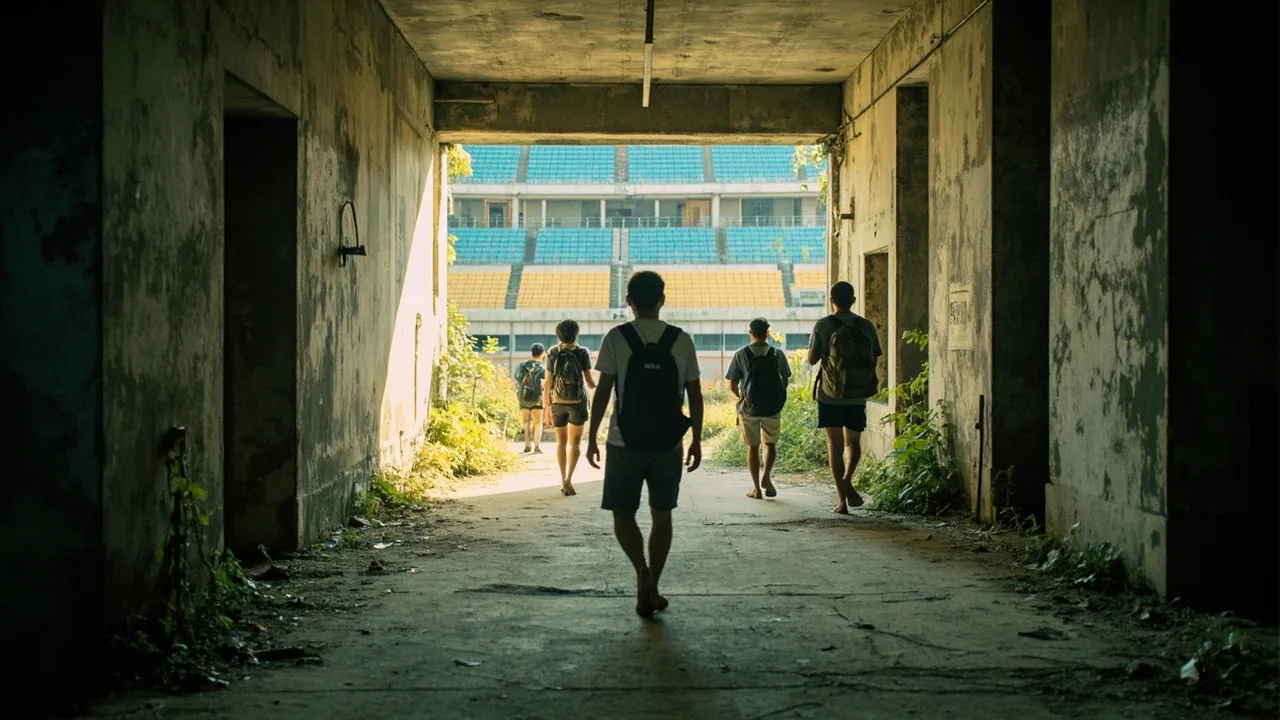
Phnom Penh is the river-city Cambodia’s backpacker trail still treats as a stopover, the sad bit between Bangkok and Siem Reap. Spend four nights here instead of two and the place opens up: a defunct Olympic stadium, rooftop cocktails above unmarked alleyways, live Khmer kickboxing, and a Mekong island you can cycle across before lunch. For related planning, see our guide on Sea Backpacking Hub.
Quick Answers
| What | Answer | Price (INR) |
|---|---|---|
| Cheapest dorm bed in Phnom Penh | 400-800 | ₹400-800 (~20,000-40,000 KHR or ~$5-10) |
| Street food meal (fish amok, num pang) | ₹97-₹290 (~1-3 USD) | ₹85-250 (~4,000-12,500 KHR or ~$1-3) |
| Tuk-tuk across town | ₹193-₹483 (~2-5 USD) | ₹170-420 (~10,000-25,000 KHR or ~$2-5) |
| Smart/Cellcard tourist SIM, 7 days, 10GB | ₹290 (~3 USD) | ₹145 (~7,000 KHR or ~$1.50) |
| Visa on arrival, Indian passport | ₹2,896 (~30 USD) | ₹579 (~6 USD) |
How to Get There
Most backpackers arrive from Bangkok or Ho Chi Minh City. From Bangkok, the standard move is an overnight bus to Siem Reap with a stopover here, or a direct sleeper to Phnom Penh itself. From Ho Chi Minh City, buses run daily via the Moc Bai border and take roughly 7 hours. You may also find Koh Rong useful for this trip.
If you’re coming from Bangkok, the cheapest sleeper buses to Phnom Penh run 800- and take 12-14 hours, usually leaving from Khao San Road area at night and arriving the next morning. From Ho Chi Minh City, Giant Ibis and Mekong Express are the two operators worth trusting; tickets run ₹2,413-₹3,379 (~25-35 USD) and the air-conditioned coaches leave from district 1 around 6-8 AM. Book on 12go or compare Ho Chi Minh City options via Book on 12go shows all the operators, timings, and current prices in one place. See also: Cheap Things to Do in Phnom Penh.
Flying is possible but rarely worth it for this leg. Phnom Penh International to Bangkok runs about 1 hour, but with check-in, immigration, and the airport being 30 minutes from town, the time saving disappears. Air Asia occasionally prices BKK-PNH at 1,800- one way if you book a week out, but buses win on door-to-door time. For related planning, see our guide on Kanchanaburi Complete Guide for Indian Travelers Tours Transport Budget Tips.
Where to Stay
| Hostel / Guesthouse | Cost/night | Vibe | Book Here |
|---|---|---|---|
| Mad Monkey Phnom Penh | ₹400-₹800 (~$4.14-$8.29) | Party hostel, rooftop bar, central | Check prices |
| Onederz Phnom Penh | ₹400-₹800 (~$4.14-$8.29) | Clean, pool, quieter crowd | Check prices |
| Pooltop Phnom Penh | ₹400-₹800 (~$4.14-$8.29) | Rooftop pool, social, newer | Check prices |
| The Big Easy Phnom Penh | ₹400-₹800 (~$4.14-$8.29) | Live music, river-adjacent | Check prices |
| THE PLACE Hostel Phnom Penh | ₹400-₹800 (~$4.14-$8.29) | Quiet dorms, central, work-friendly | Check prices |
| Sacred Lotus - Vegan - Café x Hostel | ₹400-₹800 (~$4.14-$8.29) | Strict vegetarian, café downstairs, calmer | Check prices |
| My pick is Onederz for most travellers. It’s new, the dorms are quieter than Mad Monkey (which is fine if you want a party, less fine if you want sleep), and the rooftop pool catches the late afternoon when the city cools off. |
You may also find Kanchanaburi on a Budget How to Spend 1 500 a Day Real Cost Breakdown useful for this trip.
What to Eat
Phnom Penh’s food scene sits in an unusual place. Cambodia isn’t Thailand or Vietnam for street food fame, but the local cooking holds its own, and there’s a real Indian restaurant scene for when you need dal-chawal.
Fish amok is the national dish and non-negotiable: curried fish steamed in banana leaf with coconut, lemongrass, and kaffir lime. Order it at Cuisine Wat Damnak if you want the polished, contemporary version, or at Phnom Penh Three Rivers Restaurant for the homestyle riverside take. Either way, budget around ₹386 (~4 USD) per serve.
Num pang is the Cambodian answer to the banh mi: a baguette sandwich with pickled carrot, cucumber, cilantro, and your choice of pork, chicken, or egg. Stalls everywhere charge ₹97-₹145 (~1-1.50 USD). Get it from any morning vendor near Psar Thmei (the Central Market) and eat it standing.
Lok lak is the stir-fried beef dish you’ll see on every menu, served over rice with a lime-pepper dip on the side. Most versions use beef, which Indian travellers usually skip, but the chicken lok lak at Three Rivers is worth a try.
For Indian food: Gorkha Palace does solid North Indian curries and the usual dal-rice-roti spread in the ₹579-₹869 (~6-9 USD) range per person. Indian Royal Halal Food Restaurant on the riverside leans Punjabi and Mughlai, slightly fancier, better for a sit-down meal. If you’re strict vegetarian, MDSK (Best Vegan Masala Dosa & Indian Street Food) is the obvious pick, the vada pav and masala dosa are well-reviewed, and the price point is around ₹1,931 (~20 USD) for two, which is fair given the location.
Strict veg fallback: Sacred Lotus, the hostel itself, runs a vegetarian café downstairs. It’s the rare hostel kitchen worth recommending because the food is the point, not a guest microwave. The kimchi-toast and Khmer-inspired vegan plates run ₹290-₹483 (~3-5 USD).
Subodh’s Pro Tip: Cambodia is pork-heavy at the street-food level. Anything wrapped in banana leaf, skewered on a stick, or ladled from a broth is almost pork unless the menu says otherwise. Chicken and fish are the safer defaults for non-pork eaters.
What to Do (Offbeat)
Most lists start with the Killing Fields and the Royal Palace, both of which you should see, both of which other articles cover better. Below is what they skip.
1. The abandoned Olympic Stadium (Morasikan)
Built in the 1960s and abandoned after the Khmer Rouge tore the country apart, the Morasikan sits in the middle of the city like a 60,000-seat time capsule. The gates are technically locked but the perimeter wall has gaps and travellers report walking inside is routine; security varies. The track is overgrown, the stands are cracked, and the scoreboard still says 1975 in some places. Take a tuk-tuk, ask for “Olympic Stadium,” and wander. Bring water, it’s exposed.
2. Wat Phnom and the founding myth
The hilltop temple that gave the city its name is tourist-brochure stuff, but the 4 PM blessing ritual by the resident monks is the part most people miss. You can sit on the steps, watch the chanting, and join the small ceremony if you dress appropriately. The temple itself is 1 USD to enter, and the clock tower at its base is a separate photo stop with city views. Wat Phnom Daun Penh tour
3. Live Kun Khmer (Khmer kickboxing) at Olympic Stadium or TV5
This is Cambodia’s national sport, distinct from Muay Thai. Matches happen most weekends at Olympic Stadium or the TV5 arena; weekday cards happen too but on a smaller scale. Tickets start around ₹965 (~10 USD) for general seating and run up to ₹2,896 (~30 USD) for ringside. The atmosphere is louder and rougher than a tourist Muay Thai show: bands play live between rounds, betting is open, and locals take it seriously. Watch Kun Khmer Kickboxing Matches at a Stadium tour or Live Khmer Traditional Boxing Tickets tour lists the current week’s cards.
4. Cycling the Mekong islands
Most visitors don’t realize Phnom Penh sits at the confluence of the Mekong, the Tonle Sap, and the Bassac, with several small islands in between. A half-day bike loop takes you across a ferry to Koh Dek, through rice paddies and stilt-house villages, and back via a different river crossing. Several guesthouses rent bikes for ₹193-₹290 (~2-3 USD) per day, or join a guided Mekong Island cycling trip that includes the ferry and lunch for around ₹3,379-₹4,344 (~35-45 USD). The combination of cycling, ferry crossings, and village stops is the offbeat Mekong experience most Phnom Penh articles skip entirely.
5. Cambodian performing arts: Apsara dance and traditional theatre
Beyond food and sport, Phnom Penh has a real performing arts scene that the typical itinerary misses. The Apsara dance, with its slow, finger-bent hand gestures and gold-leaf headdresses, originated here, and a handful of small venues stage authentic performances for under ₹965 (~10 USD). The National Museum runs occasional traditional dance evenings and the Cambodian Living Arts organization supports performances of classical and folk forms that are otherwise vanishing. This is the cultural counterweight to the heavy history of the Killing Fields: a reminder that pre-1975 Cambodia had a court culture that produced some of Southeast Asia’s most refined art.
6. Rooftop cocktails in hidden alleys
The rooftop bar scene in Phnom Penh exists, it’s just up unmarked stairwells. UP by KVL (above a restaurant in BKK1) does serious cocktails with a city view for ₹483-₹676 (~5-7 USD) each. Above Eleven, behind a near-invisible door, leans Tokyo-Lima fusion with a dress code locals obey. For a beer and a river view, The Wild Rover on the riverside pulls a younger crowd and shows live sport. End the night at LOVE, a tiny cocktail bar down a back alley near BKK1 that’s harder to find than it should be. No sign, follow Google Maps to “LOVE Phnom Penh” and look for the unmarked door.
7. Night markets after 9 PM
The Russian Market (Psar Tuol Tom Poung) and Phsar Chas (the old market near Wat Phnom) both run night versions with food stalls, souvenir vendors, and cheap beer. The night version of Psar Tuol Tom Poung is more local than the day version; bring cash, eat the grilled skewers, and avoid the cocktail bars at the back of the market unless you want a ₹386 (~4 USD) sugar-fruit thing in a bag.
8. Day trip to Angkor Wat from Phnom Penh
This one is borderline offbeat because it’s the most-touristed thing in Cambodia, but doing it as a day trip from Phnom Penh instead of staying in Siem Reap is genuinely unusual. The drive is 5-6 hours each way, but a tour operator does it as a 14-hour day with a van, Angkor Wat at sunrise, Bayon, Ta Prohm, and lunch included, around ₹7,722-₹10,618 (~80-110 USD). You’ll sleep on the bus, but if you’re time-poor, it’s a real option. Phnom Penh to Angkor Wat, Bayon & Ta Prohm Day Trip tour
9. The Killing Fields and Tuol Sleng (still worth it)
I’ll keep them in the list because skipping them entirely is a mistake, but I’ll keep it short. The Choeung Ek Killing Fields and Tuol Sleng (S-21) prison together take half a day and cost ₹579 (~6 USD) combined for the audio guide. Both are heavy, both are necessary. Go in the morning. The Killing Fields & Tuol Sleng Genocide Museum tour or Tuol Sleng Genocide Museum tour
10. Cambodian chocolate workshop
This one is genuinely weird and worth listing. Several small producers in Phnom Penh run 2-3 hour workshops where you source cacao, roast beans, and make your own bar. The finished bar goes home with you in a small box. Price is around ₹2,413-₹3,379 (~25-35 USD) per person including materials, and the workshop is more hands-on than you’d expect. Cambodian Chocolate Workshop tour
Safety Alert: Some parts of the Olympic Stadium grounds are fenced off for redevelopment and security has tightened in recent years. Locals can tell you which entrance currently allows walk-ins. If you’re turned away at the main gate, don’t argue; try a different side.
Getting Connected
Cellcard and Smart are the two main tourist SIM operators, both sold at Phnom Penh International on arrival and at any phone shop or 7-Eleven in town. The 7-day tourist SIM with around 10GB runs ₹290 (~3 USD) at the airport counter; the same SKU is ₹97-₹193 (~1-2 USD) cheaper at a 7-Eleven if you don’t mind a 10-minute detour from your hostel. Activation needs your passport and the staff do it for you on the spot.
If you’d rather skip the airport queue, Get Nomad eSIM delivers a Cambodia eSIM by email before you fly. You activate on landing, no passport photocopying at a counter.
WiFi at most hostels and cafes is reliable enough for video calls; the slow spots are usually outside the BKK1 / riverside core.
Daily Budget Breakdown
Phnom Penh sits in the sweet spot for Indian backpackers: cheaper than Bangkok, friendlier than Hanoi, and easier on the wallet than Siem Reap in peak season. Here is what a real budget day looks like on the ground.
| Category | Budget/day |
|---|---|
| Dorm bed | ₹400-₹800 (~$4.14-$8.29) |
| Food (3 meals) | ₹1,000-₹2,000 (~$10.36-$20.72) |
| Local transport | ₹200-₹400 (~$2.07-$4.14) |
| Activities | ₹600-₹1,200 (~$6.22-$12.43) |
| Misc / drinks | ₹300-₹600 (~$3.11-$6.22) |
| Total | ₹2,500-₹5,000 (~$25.90-$51.80) |
These figures reflect on-the-ground spending. A strict-budget day (street food only, no paid activities) is doable around ₹1,500 (~$15.54); a comfortable day with one paid activity, a couple of drinks, and a tuk-tuk or two lands around ₹4,000 (~$41.44).
Visa / Entry Notes
Indian passport holders get a visa on arrival at Phnom Penh International for ₹2,896 (~30 USD) and a 30-day single-entry stay. Bring two passport-size photos (4x6 cm, white background) and USD cash; the immigration counters don’t always take cards and the rate they offer is poor.
The e-Visa is ₹3,475 (~36 USD) on the official portal at evisa.gov.kh. It’s worth the extra ₹579 (~6 USD) to skip the visa-on-arrival queue, which can run 30-45 minutes when multiple flights land at once.
Extensions cost ₹4,344 (~45 USD) at the immigration office on the riverfront; the office opens 7:30 AM-11:30 AM weekdays only. Plan around it.
Common Mistakes
Mistake 1: Treating Phnom Penh as a one-night stop. Two nights gives you the Killing Fields and the Palace. Four nights lets you do the offbeat stuff above. The city rewards extra nights more than any other stop on the regional loop.
Mistake 2: Exchanging money at the airport. The airport counters offer noticeably worse rates than any money changer in town; if you arrive with no KHR, exchange ₹1,931 (~20 USD) to get a tuk-tuk into town, then change the rest at a BKK1 money changer. Rates move daily; the airport is consistently the worst.
Mistake 3: Skipping the cyclo for “ethical” reasons. Cyclo drivers are a real part of Phnom Penh’s transport mix and tipping them directly is more ethical than refusing the ride; they need the work. A 30-minute sunset ride along the riverfront runs ₹483-₹676 (~5-7 USD) and is one of the better things to do at golden hour. If you don’t want to use one, that’s fine, but don’t lecture other travellers into refusing either.
Mistake 4: Not booking sleeper buses in advance during Khmer New Year (mid-April). The whole country moves at once and buses sell out 3-4 days ahead for that week. Outside Khmer New Year, walk-up tickets are fine.
Where to Go From Here
Phnom Penh sits at a transport crossroads. These are the most common next stops on the trail, with current 12go prices.
| Destination | Mode | Duration | Price | Book |
|---|---|---|---|---|
| Bangkok | flight | , | , | Book on 12go |
| Phuket | flight | 10h 15m | ₹59,269 (~614 USD) | Book on 12go |
| Hanoi | flight | 7h 10m | ₹24,325 (~252 USD) | Book on 12go |
| Battambang | bus | 4h 10m | , | Book on 12go |
| Pakse | bus | 11h | ₹4,247 (~44 USD) | Book on 12go |
| Angkor Wat | sleeper | , | , | Book on 12go |
For most backpackers, the next move is Siem Reap via the standard bus or the sleeper. Battambang is the underrated detour: 4 hours by bus, fewer tourists, more bamboo trains.
FAQ
Is Phnom Penh safe for solo Indian women? Yes, with the usual urban caution. The riverside, BKK1, and the Russian Market area are well-lit and patrolled. Standard rule: don’t walk alone after 11 PM on side streets; tuk-tuk back to your hostel for ₹193-₹290 (~2-3 USD). Dress modestly outside the tourist core, shoulders and knees covered at the Killing Fields and the Royal Palace.
Can I get Indian food in Phnom Penh? Yes. Gorkha Palace (BKK1) and Indian Royal Halal Food (riverside) are the main North Indian restaurants. For strict vegetarian, MDSK and the cafe at Sacred Lotus Hostel cover it. None are cheap by Indian standards; budget ₹772-₹1,448 (~8-15 USD) per person.
Do I need to visit the Killing Fields? Yes. It’s heavy and it’s necessary. Half a day, ₹579 (~6 USD) including audio guide, and you’ll understand why Cambodia is the way it is today. Skip it and the rest of the country doesn’t make sense.
How many days should I spend in Phnom Penh? Three nights minimum. Four is better if you want to do the offbeat stuff (kickboxing, Mekong cycling, rooftop bar hopping). One night is a waste of the bus ride in.
What’s the best time of year to visit? November to February is the cool dry season, 25-30°C daytime. March-May is brutally hot, often 38°C+. June-October is rainy season but cheaper and quieter.
Should I book Phnom Penh hostels in advance? Only during Khmer New Year (mid-April) and the Water Festival (Bon Om Touk, usually early November). Otherwise walk-ups are fine; Onederz and Mad Monkey occasionally fill on Friday nights.
Is Phnom Penh worth it if I’m headed to Siem Reap anyway? Yes. The two cities show you different Cambodias, the river city and the temple city. If you only do Siem Reap you miss the part of the country that’s alive now.
Subodh’s Take
Phnom Penh is the city I underrated on my first loop and overcorrected on my second. The sweet spot is four nights: one for the Killing Fields and Tuol Sleng, one for the Palace and Wat Phnom, two for the offbeat stuff this article lays out. Get yourself to a Kun Khmer fight on a weekend, cycle the Mekong islands one morning, and sit with a craft beer at one of the rooftop bars on your last night. The city has a way of growing on you after day three.
Before you fly: Cambodia’s situation is generally calm for tourists, but the Indian Ministry of External Affairs publishes a current travel advisory at mea.gov.in. Check it the week you fly; advisories update more often than guidebooks do.
