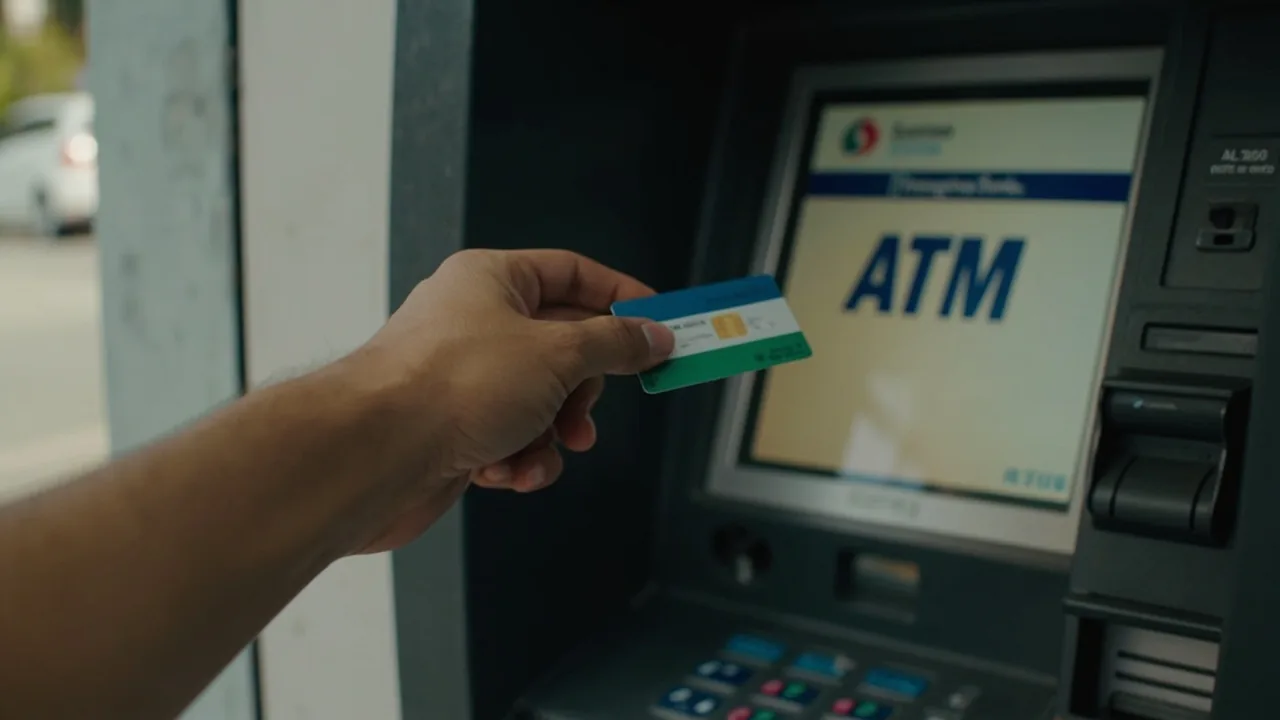
ATM Philippines: Fees, Indian Card Acceptance, and No-Fee Options
Subodh’s Pro Tip: Always decline Dynamic Currency Conversion (DCC) at the ATM. When the screen asks “Convert to your home currency?” always pick NO and let the transaction settle in PHP. Your Indian bank does the conversion at a much better rate than the ATM operator.
Quick Answers
| What | Answer | Price (INR) |
|---|---|---|
| Will my Indian Visa debit work? | Yes, on most BancNet, BDO, BPI, Metrobank ATMs | PHP 200-250 (₹300-₹375, ~$3.10-$3.90) |
| Will my Indian RuPay card work? | Rarely, only on select ATMs | Mostly fails at the ATM |
| Standard per-transaction ATM fee | PHP 200-250 charged by Filipino bank | PHP 200-250 (₹300-₹375, ~$3.10-$3.90) |
| Your Indian bank charges (Visa/MC) | 1%-3.5% forex markup | 1%-3.5% forex markup on ₹10,000 (~$103.73) |
| Limit to stay under the 20% TCS threshold | Within ₹7 Lakh per financial year | ₹7,00,000 (~$7,266 USD, LRS threshold) |
| Local currency of the Philippines | Philippine Peso (PHP) | 1 PHP ≈ ₹1.50 (~$0.0156 USD) |
| Best no-fee option in 2026 | BPI, EastWest, and select Security Bank ATMs waive the PHP 200 fee on certain Visa cards | Save PHP 200 (~₹300, ~$3.10 USD) per withdrawal |
All prices are approximate and may vary by bank, card network, and date of withdrawal.
How ATM Withdrawals Work in the Philippines
When you stick an Indian Visa or Mastercard debit into a Philippines ATM, three different parties each take a cut:
- The Filipino bank operating the ATM charges PHP 200-250 per withdrawal. BDO and Metrobank sit at PHP 250, BPI at PHP 200, and EastWest at PHP 200 on most card types. This is the most visible fee, the one shown on-screen when you confirm.
- Your Indian bank adds a forex markup of 1% to 3.5% on top of the mid-market FX rate. HDFC Infinia and ICICI Coral users pay closer to 1%, standard HDFC debit card holders pay 2.5%-3.5%, and Niyo/Fi zero-markup cards sit between 0% and 0.5%. For a deeper comparison of card options, see our forex card vs debit card guide.
- The ATM network (BancNet or Visa/Plus) routes the transaction. On most Filipino ATMs you do not see this as a separate fee, but it is baked into the PHP 200-250 the local bank charges.
So when you withdraw PHP 10,000 on a standard HDFC debit card:
- Filipino bank fee: PHP 250 (~₹375 or ~$2.60)
- HDFC forex markup (3.5%): PHP 350 (~₹525 or ~$3.65)
- Total landed cost: roughly PHP 10,600 effective for PHP 10,000 in your hand, about a 6% all-in drag.
The same PHP 10,000 on a Niyo or Fi card with a Visa network:
- Filipino bank fee: PHP 250 (~₹375 or ~$2.60)
- Niyo/Fi markup (0%-0.5%): PHP 0-50 (~₹0-75 or ~$0-$0.52)
- Total: PHP 10,250-10,300 effective, around 2.5%-3% all-in.
That 3 percentage-point gap compounds fast. Across a month-long Philippines trip with PHP 50,000 withdrawn across five trips, choosing the right card can save you around PHP 1,500 (~₹2,250 or ~$15.60).
Indian Cards That Work in the Philippines
- Visa Debit (HDFC, ICICI, Axis, SBI, Kotak): works on the vast majority of ATMs. Look for the Visa/Plus logo on the machine. BDO, BPI, Metrobank, EastWest, Security Bank, and RCBC all accept Visa debit.
- Mastercard Debit: works widely. The same banks accept Mastercard in most locations.
- RuPay: mostly does not work. Only a handful of BancNet ATMs reportedly accept RuPay, and travellers report consistent failures. Do not rely on RuPay in the Philippines.
- American Express: limited acceptance. Stick to Visa/Mastercard.
Pro Tip: Bring at least two cards from different networks (one Visa, one Mastercard). Card readers can decline a specific network for no clear reason, and backcountry ATMs in places like Siquijor and Port Barton sometimes reject one but accept the other.
Which Philippine ATMs Have Low or Zero Fees?
| Bank | Standard fee on international cards | Notes |
|---|---|---|
| BPI | PHP 200 | Most reliable network in the country |
| BDO | PHP 250 | Largest ATM count, but highest fee |
| Metrobank | PHP 250 | Common in Manila and Cebu |
| EastWest | PHP 200 | Waives PHP 200 fee on certain Visa cards |
| Security Bank | PHP 200-250 | Waives fee on select Visa Infinite cards |
| PNB | PHP 200 | Smaller network, mainly Luzon |
| UnionBank | PHP 150-200 | Lower fee, growing network |
The genuinely “no-fee” withdrawals exist but they are conditional: some EastWest and Security Bank ATMs waive the PHP 200 fee if you hold a Visa Infinite or Visa Signature card. For most Indian travellers with standard Visa debit, expect to pay PHP 200-250 per withdrawal.
DCC (Dynamic Currency Conversion): The Silent Fee
This is how DCC bites you. When an ATM is DCC-enabled, the screen pops up a question like:
“Would you like to convert this transaction to your home currency at rate X?”
The rate they offer is around 5%-8% worse than what Visa/Mastercard charges. Always pick NO, charge in PHP. Your Indian bank (especially Niyo, Fi, or HDFC Infinia) will convert at the mid-market rate plus their small markup. The savings on a PHP 10,000 withdrawal add up to PHP 500-800 (~₹750-1,200 or ~$5.20-$8.30).
Comparison of Popular Options for Indian Travellers
| Method | Forex markup | Typical ATM fee | Ease of use | One-line verdict |
|---|---|---|---|---|
| Niyo/Fi zero-markup debit | 0%-0.5% | PHP 200-250 (₹300-380, ~$3.10-$3.90 USD) | easy | Best balance of low markup and ATM availability |
| HDFC Infinia debit | ~1% | PHP 200-250 (₹300-380, ~$3.10-$3.90 USD) | Easy if you already hold the card | Premium card, hard to qualify for |
| ICICI Coral debit | ~2% | PHP 200-250 (₹300-380, ~$3.10-$3.90 USD) | Easy | Decent fallback if you already hold Coral |
| Standard HDFC/SBI debit | 2.5%-3.5% | PHP 200-250 (₹300-380, ~$3.10-$3.90 USD) | Easy | Works, but eats into your budget |
| Cash exchanged in India | 5%-8% worse than mid-market | n/a | Risk of carrying cash | Worst option, only as backup |
| Traveller’s cheques | Outdated, low acceptance | n/a | Painful | Skip entirely |
| UPI via GCash | 0% (if it works) | n/a | Hit or miss | Limited usability for foreigners |
India-Specific Gotchas (RBI, TCS, LRS)
The 20% TCS rule trips up many Indian travellers. When you load foreign currency on a forex card, or send money abroad through a bank wire, the bank collects 20% Tax Collected at Source on top if your total remittances exceed ₹7 Lakh per financial year without PAN or ₹10 Lakh with PAN (under the Liberalised Remittance Scheme, or LRS).
For ATM withdrawals on a debit card, this works differently: ATM cash withdrawals abroad are reported under LRS but the 20% TCS does not apply at the moment of withdrawal. You only pay the bank’s forex markup, the ATM’s fee, and the network fee. Tax obligations, if any, happen at ITR filing time.
The ₹7 Lakh threshold counts your entire foreign spending: flights, hotels, tour payments, and ATM withdrawals added together. Most backpackers stay well under it on a single trip, but if you are a high spender or happen to be on a longer itinerary, keep a tab.
What to keep: ATM receipts, SMS debit alerts, and your bank’s monthly statement showing the PHP and INR figures. If you ever face an ITR query, these documents clear things in minutes.
For more details on TCS thresholds, the LRS guidelines on RBI’s site are the definitive reference. For a full breakdown of ATM withdrawal charges across Philippine banks, see our ATM withdrawal charges guide.
What Bananarchy Travellers Use
Across trips, the pattern is consistent. Most travellers carry one Visa debit card with zero or low markup (Fi, Niyo, or HDFC Infinia for those who hold it), plus one backup Visa/Mastercard from a standard bank, and PHP 5,000-8,000 in cash for the first two days.
The big mistake: people bring a forex card, see the 2%-3.5% markup, then withdraw small amounts frequently, which means the PHP 250 fixed ATM fee becomes a much larger percentage of each transaction. A PHP 2,000 ATM withdrawal at PHP 250 fee means a 12.5% fee, more than the forex markup itself. Always withdraw in chunks of PHP 8,000-12,000 to bring the per-peso fee down.
The other mistake: relying on DCC “convenience” because the screen makes it sound safer. Travellers report losing 5%-8% on every transaction this way.
Getting Connected
You need data to check your bank’s app mid-trip and confirm transactions went through. A local SIM or eSIM is essential. Get Nomad eSIM for eSIM, or grab a Globe or Smart SIM at the airport. For full SIM setup, see our SIM card guide.
FX Rate Note
Verified on 2026-07-17 at 1 PHP ≈ ₹1.50 (1 INR = 0.6667 PHP, derived from the base USD/INR rate of 96.3294).
Safety and Avoiding Scams
Beyond the usual ATM precautions (cover the keypad, decline DCC), a few Philippines-specific notes:
- Skimmers are uncommon but real in Manila’s Ermita and Malate districts. Stick to bank-branch ATMs in malls and commercial areas.
- “Helpers” who approach you at the ATM are usually harmless but sometimes scam tourists by saying the machine ate their card and asking for a fee. Politely ignore them and walk into the branch.
- Withdrawal limits: most ATMs cap at PHP 10,000-20,000 per transaction. If you need more, do multiple transactions.
- Some ATMs have withdrawal fees for balance inquiries on foreign cards. Skip the balance check, just withdraw.
- Check your government’s official travel advisory before departure, especially the Indian MEA travel advisory page, since regional advisories can change quickly.
FAQ
Does UPI work in ATMs in the Philippines? No, not at ATMs. UPI works in some retail settings via QR with GCash (limited), but ATMs are card-only or mobile-banking-only. For more on digital payments, see our GCash for foreigners guide.
How much cash should I carry versus keeping on my card? PHP 5,000-8,000 for the first two days. Then reload as you go from ATMs. Carrying too much cash invites theft risk in tourist areas.
Can I withdraw from a credit card? Yes, but it is treated as a cash advance. Expect a 2.5%-3.5% fee plus interest from day one, with no grace period. Use a debit card instead.
What is the maximum I can withdraw in one go? PHP 10,000-20,000 at most ATMs. Withdrawals above PHP 10,000 often need to be split. Daily limits set by your Indian bank typically cap at ₹50,000-₹100,000 (~$518.65-$1,037.30) worth of ATM withdrawals, and your ATM PIN must be enabled for international use before you fly.
What if my card gets swallowed? Most Filipino banks will return swallowed cards at the branch during business hours if you have your passport. Call your Indian bank to block the card immediately on your mobile.
Are there ATMs on Siquijor and Palawan? Yes, but limited. BDO and BPI have branches in main towns. Smaller islands like Bantayan may have one ATM in town. Always withdraw PHP 5,000-10,000 extra when you see a working machine.
Should I use GCash instead? GCash works for many Filipino merchants, but foreigners have to apply with passport and a short
Subodh’s Take
The Philippines punishes people who are precious about using one specific card. The smartest move is two Visa/Mastercard debit cards from low-markup Indian banks, a chunk of PHP cash for the airport, and the discipline to always hit “No” when the ATM offers to charge in your home currency. Every other ATM complication is downstream of those three choices. Planning a broader Southeast Asia trip? Start with our Southeast Asia backpacking hub for country-by-country money guides.
- Subodh
