VIP Sleeper Bus Vietnam Booking: Worth the Bump-Up or Just a Tourist Trap?
📍 Route covered: long-haul Vietnamese sleeper routes, especially Hanoi ↔ Da Nang, Saigon ↔ Mui Ne, Saigon ↔ Da Lat ⏱️ Trips are 7-18 hours depending on route 💰 Cheapest option: Hanoi-Sapa standard sleeper from ~₹920 (~250,000 VND or ~$9.53) ✅ Best option: Major southern operators (e.g. Futa/Phuong Trang) VIP cabin, pre-booked on 12go For related planning, see our guide on Sea Backpacking Hub.
The VIP cabin upgrade on Vietnamese sleeper buses is the single most common question I get from backpackers crossing the country. You’ve seen the photos on Instagram, those curved pods with the privacy curtain and the lie-flat angle, and you’re wondering if it’s worth the extra ₹368-₹552 (~100,000-150,000 VND or ~$3.81-$5.72) over the standard sleeper. I’ve cross-checked current fares from major southern operators like Futa and Phuong Trang against traveller reports from June 2026, and the honest answer is: it depends entirely on your route length and your back. You may also find Hanoi to Ha Long Bay useful for this trip.
Quick Answers
| What | Answer | Price (INR) |
|---|---|---|
| VIP cabin upgrade cost over standard sleeper | ₹368-₹736 (~100,000-200,000 VND or ~$3.81-$7.63) extra per leg (~₹370-740) | ~₹368 (~100,000 VND or ~$3.81) to ~₹736 (~200,000 VND or ~$7.63) |
| Best operator for VIP service | Major southern operators (e.g. Futa/Phuong Trang) on Saigon-Da Lat; smaller operators on Hanoi-Da Nang | ~₹1,250 (~333,000 VND or ~$13) |
| Cabin dimensions (VIP vs standard) | VIP: ~180cm long, 55cm wide, 10-15 degree recline. Standard: ~170cm, 50cm wide, fully flat | ~₹0 (free upgrade sometimes at counter) |
| Best booking platform | 12go.asia, Baolau.com, or operator’s own site (vexere.com / futabus.vn) | ~₹0 (no booking fee on most) |
| Is it worth it for trips under 6 hours? | No. Standard sleeper is fine. | ~₹0 |
What Changes When You Pay for VIP
The word “VIP” gets thrown around loosely on Vietnamese buses. On a true VIP cabin bus (e.g. Futa’s “Luxury Cabin,” Phuong Trang’s “VIP 22,” The Sinh Tourist’s “Premium Sleeper”), you’re paying for three concrete upgrades over the standard 40-berth sleeper: See also: Can You Travel By Train in Vietnam.
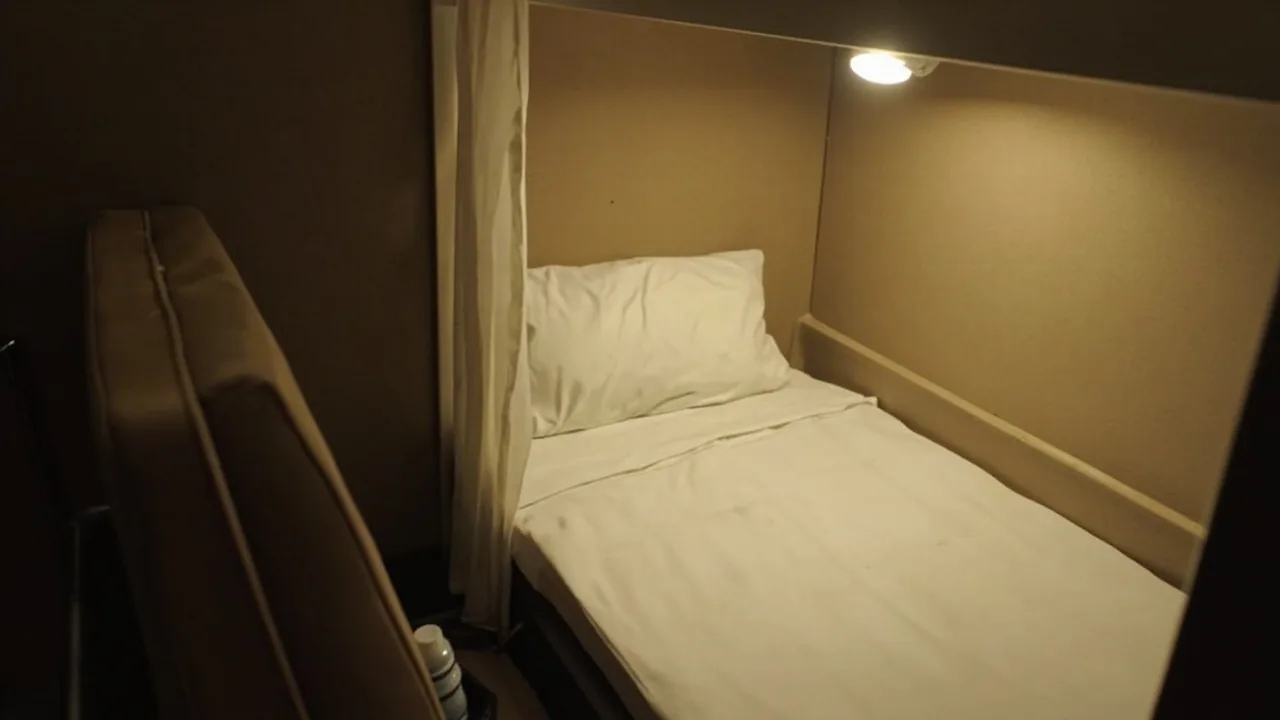
1. Cabin pods vs open bunks. Standard sleepers have 40 semi-reclining bunks stacked three-high with a thin curtain. VIP cabins are fully enclosed, lie-flat pods with a privacy door or zip-up curtain, a small reading light, and sometimes a USB port. If you’ve ever tried to sleep on a Vietnamese night bus with someone in the next bunk watching videos on speaker, you understand why this matters.
2. Seat pitch and bed width. VIP cabins run 22-34 berths per bus instead of 40. The pod floor is wider (around 55cm vs 50cm) and the bed length is closer to 180cm. Travellers over 5’10” report their feet hanging off the end of standard sleepers but fitting properly in VIP cabins.
3. Operator and bus age. VIP services use newer buses (2019-2024 fleet), with better suspension and functioning A/C. Standard sleepers sometimes run older vehicles where the A/C works but sounds like a jet engine, and one of the reading lights is always dead.
What you do NOT get with VIP: a meal (some premium operators include water and a wet wipe, that’s it), a guaranteed empty middle pod (the bus still books 22-34 berths), or faster travel time. The bus still takes 16-18 hours from Hanoi to Da Nang.
Common Operators in Vietnam (and What to Avoid)
Futa (Phuong Trang). Example major southern operator on Saigon-Da Lat, Saigon-Da Nang
Futa runs the largest VIP fleet in southern Vietnam. Their “Luxury Cabin” Saigon to Da Lat (8 hours, ₹1,104-₹1,656 (~300,000-450,000 VND or ~$11.44-$17.16)) is widely regarded as the best sleeper experience in the country. Cabins are 180cm long, fully enclosed with a privacy door, and the bus stops at a proper rest station at the halfway point with clean toilets.
The catch: Futa’s schedules on the Saigon-Da Lat corridor fill up several days ahead during Tet and major holidays. Book on 12go or futabus.vn at least a week ahead if you’re travelling Da Lat weekends.
Phuong Trang. Same fleet, different brand
For practical purposes, Futa and Phuong Trang are the same company (Phuong Trang is the formal corporate name, Futa is the consumer brand). Pricing is identical, cabins are identical, same booking systems.
Smaller VIP Operators. Example tier, book via 12go or operator-direct on Hanoi-Da Nang, Hanoi-Sapa
Smaller VIP operators run a leaner fleet but compensate with route coverage. Their Hanoi-Da Nang VIP cabin (16-18 hours, ₹1,656-₹2,393 (~450,000-650,000 VND or ~$17.16-$24.79)) is one of the few VIP services that consistently runs to central Vietnam from the north. Standard sleepers on this route are rough because the Hai Van Pass section is winding and 18 hours of side-sleeping on a 50cm bunk punishes you.
For Hanoi-Sapa, smaller-operator VIP services (6 hours, ₹1,288-₹1,656 (~350,000-450,000 VND or ~$13.35-$17.16)) are one of only two VIP options on this corridor (the other is a smaller VIP operator). Worth the upgrade here because the standard sleeper on the overnight mountain road is genuinely miserable.
The Operator to Avoid
Any operator advertising “VIP” but showing you a 40-berth bus at the counter with thin curtains. This is the scam: bus companies know foreign tourists pay extra for VIP and some of them will sell you the upgrade, then put you on the same standard sleeper when the bus departs. Check reviews on 12go before booking, specifically look for photos taken inside the cabin.
How to Book VIP Cabin Online (Step by Step)
You have three reliable platforms. All show VIP cabin inventory in real time.
Option A: 12go.asia The most Indian-friendly platform because it accepts international cards and shows prices in multiple currencies. Search your route, filter by “VIP Cabin” or “Sleeper 22,” and book. Confirmation arrives by email within 5 minutes. Compare VIP sleeper prices across operators on 12go.
Option B: vexere.com (VXR) Vietnam’s homegrown booking platform. Slightly cheaper than 12go (no service fee) but the interface is all in Vietnamese and you need a Vietnamese or international Visa/Mastercard. Best for travellers already in Vietnam who want a few percentage points off.
Option C: Baolau.com A third-party aggregator that includes Futa, Phuong Trang, and smaller operators. Good fallback if 12go shows “sold out” for your date. Accepts international cards and PayPal.
Booking timing: Reserve 3-7 days ahead for weekday travel, 7-14 days ahead for weekends and holiday periods (Tet, Reunification Day, National Day). Same-day bookings sometimes work for standard sleepers but VIP cabins sell out first.
One practical tip: when you book, the platform asks you to pick a specific berth (lower berth, upper berth, front, back). Lower berths cost the same but are easier to get in and out of, and slightly more private because no one climbs over you. If your assigned berth has someone else’s name on it at the counter, push back at the desk before boarding.
When VIP Is NOT Worth the Upgrade
Trips under 6 hours. If you’re going Saigon to Mui Ne (4-5 hours) or Hanoi to Ninh Binh (2 hours), standard sleeper or even a seat bus is fine. The cabin-pod advantage only matters over a full night.
Daytime buses. Cabin pods are designed for sleeping. If you’re taking an 8 AM departure, you don’t need the privacy and the standard sleeper is more comfortable for sitting upright reading or scrolling your phone.
The Hanoi-Ho Chi Minh City full length. 1,700 km in one go. Take the train (SE1 or SE3, soft sleeper, 1.65-4.95 lakh VND) or a flight. Even the VIP cabin can’t make 30+ hours on a bus humane. The train costs more than the bus but arrives with your back intact.
Where to Stay at Either End
This is the rough corridor most Indian backpackers ask about. If you’re stopping in Hanoi or Saigon (both) at either end of a long-haul VIP sleeper trip, the dorm prices below are verified against current hostel listings.
| City | Dorm Range (per night) | Private Range | Best For |
|---|---|---|---|
| Hanoi | ₹663-₹1,325 (~180,000-360,000 VND or ~$6.86-$13.73) | ₹1,472-₹2,945 (~400,000-800,000 VND or ~$15.25-$30.51) | Old Quarter, near Hoan Kiem Lake |
| Ho Chi Minh City | ₹552-₹1,215 (~150,000-330,000 VND or ~$5.72-$12.58) | ₹1,288-₹2,577 (~350,000-700,000 VND or ~$13.35-$26.69) | District 1 backpacker zone |
| Da Nang | ₹442-₹994 (~120,000-270,000 VND or ~$4.58-$10.30) | ₹1,104-₹2,209 (~300,000-600,000 VND or ~$11.44-$22.88) | My Khe beach or backpacker street |
| Hoi An | ₹387-₹883 (~105,000-240,000 VND or ~$4-$9.15) | ₹1,288-₹2,577 (~350,000-700,000 VND or ~$13.35-$26.69) | Old Town walking distance |
For the full Hanoi-Da Nang sleeper breakdown including which stops are worth breaking the journey at, see my sleeper bus booking guide. For the Saigon end, the Vietnam 2-week itinerary covers the same VIP operators from the southern end.
Indian Passport Specifics
Indian passport holders need a Vietnam e-Visa before boarding any bus at the border or arrival. Apply at https://evisa.xuatnhapcanh.gov.vn at least 3 days before travel. The fee is ₹2,413 (~25 USD). Valid 90 days, multiple entry.
For sleeper buses, carry:
- A printed copy of your e-Visa approval letter (some operators ask at boarding)
- Passport with at least 6 months validity
- A passport-sized photo for any check-in desk that asks for ID Travellers report occasional requests to show proof of onward travel at bus check-in counters, especially on routes near borders (Saigon-Cambodia, Hanoi-China border towns). Carry a flight or train booking PDF on your phone as backup.
Getting Connected
Cell coverage along Vietnamese highway corridors is generally strong (Viettel and Vinaphone towers line the main North-South highway), but expect dead zones through the Hai Van Pass and any stretch through the central highlands. Viettel sells tourist SIMs at the airport for ₹368-₹736 (~100,000-200,000 VND or ~$3.81-$7.63) with 3-5 GB data valid 30 days.
For one-trip flexibility without committing to a local SIM: Get Nomad eSIM gives you data on landing, no passport photocopy at the Viettel kiosk, no fumbling with SIM ejector pins on a moving bus.
When NOT to Take This Route
September-November (typhoon season, central Vietnam). Routes through Da Nang and Hue get cancelled or delayed when tropical storms close the Hai Van Pass. If you’re travelling this window, take the train instead or fly.
Tet (Vietnamese New Year, late January / early February). Buses run but schedules shift, prices double, and VIP cabins sell out a month ahead. Book early or change travel dates.
Saigon-Da Lat in heavy rain (June-August). The road has multiple switchbacks with reported landslides during prolonged rain. If forecasts show 3+ days of heavy rain in Da Lat, take a flight instead.
FAQ
Can I take a sleeper bus with an Indian e-Visa? Yes. The e-Visa works for all domestic bus travel. Carry the printed approval letter and your passport at boarding.
Is the night bus safe for solo female travellers? Travellers report the VIP cabin style (with privacy curtain/door) is more comfortable for solo travellers than standard sleepers. Stick to reputable operators (e.g. major southern lines like Futa or Phuong Trang). Avoid unmarked “VIP” services at smaller operators.
Do VIP cabins have toilets? Usually not. The bus stops every 3-4 hours at rest stations with clean toilets (₹18-₹37 (~5,000-10,000 VND or ~$0.19-$0.38) entry). VIP cabin buses sometimes run shorter stops because the assumption is the pod is comfortable enough to wait.
Can I cancel or change my booking? On 12go, yes, with fees depending on operator. On vexere.com, often non-refundable. Read cancellation terms before paying.
How much cash should I carry for the trip? Carry ₹736-₹1,840 (~200,000-500,000 VND or ~$7.63-$19.07) in small notes for rest station food, water, and toilet fees. Futa and Phuong Trang buses accept card payment online but the rest stations do not.
What if my assigned pod has someone in it? Show your booking confirmation at the desk. Operators re-seat correctly. This happens occasionally and is fixed in 5-10 minutes.
Subodh’s Take
The VIP cabin bump-up is one of the few upgrades in Southeast Asia that is genuinely worth the money, but only on routes longer than 8 hours. On a Hanoi to Da Nang overnight, the privacy curtain and the lie-flat pod saves your back for the next three days of sightseeing. On a 4-hour Saigon to Mui Ne trip, it is pointless. Book 3-7 days ahead on 12go or directly with the operator, pick a lower berth, and let the bus do the work.
