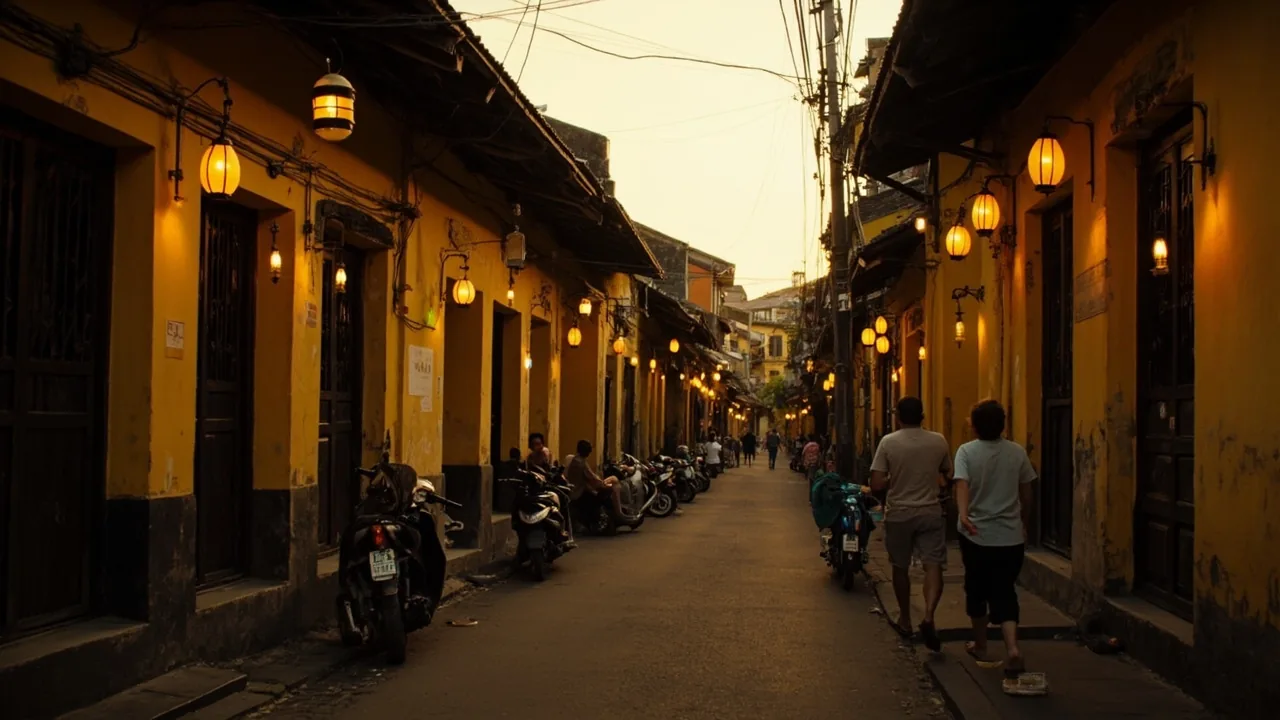
3 Days in Hoi An: A Realistic Itinerary for What to See and Do
This 3 days in Hoi An itinerary covers the Old Town, rivers and rice paddies outside the walls, and a half-day trip to Da Nang, with current 2026 prices for Indian backpackers. Planning the wider region? Our Southeast Asia backpacking hub covers the full multi-country route.
Quick Answers
| What | Answer | Price (INR) |
|---|---|---|
| Is 3 days enough for Hoi An? | Yes, the right amount for most backpackers. | ₹0 (free decision) |
| Old Town entry ticket | Required to enter the historic zone. | ₹442 (~120,000 VND or ~$4.58) |
| Day trip from Da Nang | 45 min by car or 1 hr by bus. | ₹1,542 (~16 USD) |
| SIM with data for 7 days | Viettel or Mobifone physical SIM. | ₹737 (~200,000 VND or ~$7.64) |
| Average hostel dorm | Real backpacker range in 2026. | ₹663 (~180,000 VND or ~$6.88) |
Subodh’s Pro Tip: Buy the 120,000 VND Old Town ticket on day one. It gets you into five heritage houses, the museums, the Japanese Pagoda Bridge, and a few folk performances. Keep the stub, you’ll show it again.
Day 1: Old Town, Tailors, and the Lantern River
Wake up early. The Old Town between 6 and 9 AM is a different town from the 11 AM version. The river is glassy, the lanterns are unlit but the alleys smell like woodsmoke and baguettes, and you can photograph the Japanese Pagoda Bridge without a hundred selfie sticks in the frame. Buy your Old Town ticket at one of the booths, then walk.
The Pagoda Bridge (Lai Vi Vien) is the most photographed spot in town and yes, it’s worth ten minutes even if you’re not a photographer. The 1593-built covered bridge links the Chinese and Japanese quarters, with a small temple inside. It costs nothing beyond the Old Town ticket, and most travellers do the loop in 15 minutes.
Spend the rest of the morning in the heritage houses. Tan Ky, Phung Hung, and the Quan Thang house each cost a small top-up on top of your ticket (usually ₹129-₹184 (~35,000-50,000 VND or ~$1.34-$1.91)) but they’re genuinely old, not reconstructed, and the guides tell you things you can’t get from a blog. If you only do one, do Tan Ky.
By 11 AM the tour buses have arrived. Get out. Two options: the tailors, or the riverside. If you want clothes made, this is the morning for it. A custom two-piece suit in Hoi An runs ₹5,524-₹11,049 (~1,500,000-3,000,000 VND or ~$57.31-$114.61) with two to three fittings over the next 48 hours, which is exactly why three days is the right length. Two fittings means one in the morning on day one, one in the afternoon on day two, and a final pickup on day three before your bus out. Don’t expect miracle quality at the cheap end; ask other travellers which shop they’re using, and always pay 50% on the first fitting, 50% on pickup.
If tailoring isn’t your thing, walk the river. The afternoon is for the Lantern Boat Trip & Release Lantern experience, which sounds kitschy and is, but is also genuinely atmospheric as the sun drops and the river fills with floating silk lanterns. A 30-minute shared boat with one lantern release runs about ₹552 (~150,000 VND or ~$5.73) per person; private boats are ₹1,473-₹2,210 (~400,000-600,000 VND or ~$15.28-$22.92).
Dinner at Nhan’s Kitchen or Grandma Kitchen, both serious local spots serving cao lau, white rose dumplings, and mi quang. Cao lau is the dish Hoi An claims as its own: thick yellow noodles, pork, greens, croutons, in a small amount of broth. Most restaurants have it; Nhan’s does a clean version for around ₹221 (~60,000 VND or ~$2.29). End the night at Pip Bar for craft cocktails (the “Hoi An Sunset” is the signature) or Mezcal Cocteleria if you want mezcal over the river breeze.
Day 2: Rice Fields, Basket Boats, and the Cooking Class
Day two is for getting out of the Old Town walls. Three options, all good.
The most popular is the Basket Boat Hoi An experience in the coconut palms just south of town. A basket boat is a round woven coracle, the original fishing boat here. The tours include a short spin through the palm canals, an inter-village boat race (the rowers deliberately capsize each other for laughs), and usually a quick basket-weaving demo. The whole thing is 90 minutes and runs about ₹921 (~250,000 VND or ~$9.55).
For something slower, the Hoi An Rice Fields Cycling & Sunset tour takes you out of town by bike at the golden hour and loops you back through flooded paddies and small villages. The light is unreal in the hour before sunset, and most operators include a rice wine stop at a local house. Expect 3 hours and ₹1,289-₹1,842 (~350,000-500,000 VND or ~$13.37-$19.10) including bike rental.
If you want a full half-day, the morning cooking class is the move. There are dozens in town and quality varies. The shortlist-recommended ones all start with a market walk at 8 AM and finish with you eating what you cooked around 1 PM, for ₹2,578-₹4,420 (~700,000-1,200,000 VND or ~$26.74-$45.84). Vegetarian options are standard and frankly better than the meat dishes because the veg pho and banh xeo are simple to execute.
The afternoon is a soft one. Walk to Cam Kim Island or Cam Nam Island, both a 15-minute bike ride over the bridges. They’re sleepy, photogenic, and almost completely free of tourists. Or go to the Hoi An Memories Land Entry Ticket with Show, a ₹1,473 (~400,000 VND or ~$15.28) outdoor spectacle with 500 performers on the river. Travellers split on it: some call it the best show in Vietnam, some call it over-produced. I’d do it if you have a free evening and want something different from another riverside cocktail.
Day 3: Da Nang, the Beach, or a Slow Hoi An Day
Three days means a third day, and the question is how to spend it. Three honest answers, in order of how I’d recommend them.
Option A: Day trip to Da Nang (most common)
Da Nang is 30 km north and the bus is ₹1,542 (~16 USD), 1 hour door-to-door. The half-day to spend there depends on what you skipped. Most guidebooks rate the Marble Mountains (₹147 (~40,000 VND or ~$1.53) entry plus an elevator if you don’t want to climb) and the Lady Buddha statue (free, on Son Tra Peninsula) as the two best stops. The Golden Hands Bridge at Ba Na Hills is the famous one, but it’s a 6-hour round trip plus a ₹3,315 (~900,000 VND or ~$34.38) ticket, so it’s its own day trip, not a half-day add-on.
For Indian backpackers specifically: Da Nang has the biggest, best Indian food scene in central Vietnam. If you’ve been eating cao lau for three days straight and want a proper dal makhani and garlic naan, Da Nang is the place. There are several pure-veg Gujarati thali spots around Han Market for under ₹552 (~150,000 VND or ~$5.73). The bus back to Hoi An runs till 9 PM so you don’t need to relocate.
Option B: Beach day at An Bang or Cua Dai
An Bang beach is 4 km from the Old Town, a 15-minute cyclo or ₹147 (~40,000 VND or ~$1.53) Grab. Sunbed rentals are ₹184-₹295 (~50,000-80,000 VND or ~$1.91-$3.06) for the day. The water is brown closer to shore (the Thu Bon river mouth) but clears up the further you walk. But if you’ve been temple-hopping for two days, three hours horizontal with a cold Bia Hanoi does the job.
Option C: Slow Hoi An
Stay in town. Sleep in. Take a Vietnamese Foldable Lantern Making Class at one of the family workshops in the Old Town (₹921-₹1,473 (~250,000-400,000 VND or ~$9.55-$15.28) for two hours, you take home a lantern). Get a custom leather belt or sandals made at one of the dozens of small workshops (under ₹1,105 (~300,000 VND or ~$11.46) with same-day delivery). Have a long lunch at Le Petit Bistro or The Soul Restaurant. Walk the alleys one more time at dusk when the lanterns come on. This is the underrated play.
How to Get to Hoi An
Coming from Hue to the north, the Hue to Hoi An bus via the Hai Van pass is the most scenic transfer in Vietnam, 4 to 5 hours for around ₹1,639 (~17 USD). You bus or Grab the last 30 km from Da Nang.
From Da Nang (the closest airport), the bus is 1 hour and ₹1,542 (~16 USD), or a pre-booked private car is around ₹1,473 (~400,000 VND or ~$15.28) for the same trip if you’re splitting three ways. The Grab option runs ₹921-₹1,289 (~250,000-350,000 VND or ~$9.55-$13.37).
From Hanoi, the overnight sleeper bus to Hoi An is 13 to 16 hours and ₹3,760 (~39 USD), doable but not fun. The smarter move is to fly into Da Nang (1 hour 20 min, around ₹9,062 (~94 USD)) and bus the last hour. Buses depart Hoi An for Da Nang’s airport every 90 minutes during the day.
For a full Hanoi itinerary before coming south, the 3-day Hanoi plan covers the capital side. If Hoi An is your first stop and you’d like a shorter version first, the 1-day in Hoi An plan is a solid day-trip primer.
Where to Stay
| Hostel / Guesthouse | Cost/night | Vibe | Book Here |
|---|---|---|---|
| Lynk Stay | ₹921 (~250,000 VND or ~$9.55) | Newer, design-led, social common area. | Check prices |
| SnapStay Hoi An | ₹737 (~200,000 VND or ~$7.64) | Clean, central, good for first-timers. | Check prices |
| Cheerful Hoi An Hostel | ₹663 (~180,000 VND or ~$6.88) | Quiet, friendly, walking distance to Old Town. | Check prices |
| Backhome Hostel and Bar | ₹737 (~200,000 VND or ~$7.64) | More social, on-site bar, party-leaning. | Check prices |
| The Cuckoo’s Nest Hostel and Bar | ₹810 (~220,000 VND or ~$8.40) | Lively hostel with pool table and bar. | Check prices |
| Gito Hostel | ₹663 (~180,000 VND or ~$6.88) | Budget, smaller, good for solo travellers. | Check prices |
| Subodh’s pick: Lynk Stay if you want the newer common area and don’t mind a slightly higher dorm price; Cheerful Hoi An Hostel if you want the best value without losing sleep. Skip the louder ones (Backhome, Cuckoo’s Nest) if you have an early bus on day three. |
What to Eat
Five local spots and the two Indian/veg fallback places, all in walking distance of the Old Town.
Cao Lau at Nhan’s Kitchen (₹221-₹295 (~60,000-80,000 VND or ~$2.29-$3.06)). The signature Hoi An noodle dish: thick yellow noodles, char siu pork, bean sprouts, croutons, and a small amount of pork-broth-savory broth. Locals claim the noodles are made with water from the ancient Cham well, which is part of why the dish tastes different here.
White Rose Dumplings at any of the dozen Banh Bao Vac shops (₹147-₹221 (~40,000-60,000 VND or ~$1.53-$2.29) for a plate). Translucent shrimp dumplings shaped like roses, only made in Hoi An, only one family used to make them, now a few have licences. The best are at the small unmarked stalls on side streets off the central market; the worst are at the most touristy ones.
Com Ga Hoi An (chicken rice) at Grandma Kitchen (₹221 (~60,000 VND or ~$2.29)). Shredded chicken over yellow rice with turmeric, ginger, and a small bowl of broth on the side. It’s simple, it’s good, it’s what locals eat for lunch.
Mi Quang at A Little Kitchen Restaurant (₹184-₹258 (~50,000-70,000 VND or ~$1.91-$2.67)). The central Vietnamese cousin of pho: turmeric noodles, less broth, peanuts, herbs, and a small portion of protein. Most menus have a veg version with mushrooms and tofu.
Banh Mi Phuong (around ₹110 (~30,000 VND or ~$1.15)). The original is in Hoi An and was made famous by Anthony Bourdain. There’s a small branch near the central market; the baguette is crispy, the pâté is real, and the line moves fast. Eat it standing up like everyone else.
Vegetarian/Vietnamese-veg fallback: MẸT Hội An (two locations, both rated 4.9) does the best vegetarian Cao Lau and a full veg menu of central Vietnamese dishes in a colonial building setting. Dishes run ₹221-₹442 (~60,000-120,000 VND or ~$2.29-$4.58). The pho and the banh xeo both come in solid veg versions. This is the move when you’ve had enough pork or you want a quiet sit-down meal away from the tourist strip.
Subodh’s Pro Tip: If you keep strict veg, MẸT is your anchor for Hoi An and you can hit the local spots for veg-friendly pho and banh mi around it. Don’t try to find Indian food in Hoi An itself, that’s a Da Nang problem.
What to Do (Beyond Day 1 and 2)
If you’ve done the Old Town loop and the basket boat and you still have a half-day, these are the extras that don’t feel like filler.
Vietnamese Foldable Lantern Making Class at one of the family workshops in the Old Town (book here), ₹921-₹1,473 (~250,000-400,000 VND or ~$9.55-$15.28) for two hours. You make and take home a silk lantern. Genuine souvenir, genuinely fun, and the workshop owners are patient with first-timers. Better value than the factory-tour version most operators push.
Silk Village Hoi An (book here), 30 minutes by bike from town. The village still weaves silk on wooden looms, you can watch the whole process from cocoon to garment. Free to wander, ₹368 (~100,000 VND or ~$3.82) for a guided loom demo. Skip the sales pitch at the end unless you want a silk item.
Hoi An Sunrise View Point (book here), 5 AM. There’s a small hill on the south side of town with views back over the river and the Old Town roofs. Most travellers don’t know about it, the lanterns are still lit, and you get the place to yourself. Worth the alarm.
For more off-the-tour-group spots, the Hoi An hidden gems list covers the small alleys, the riverside cafes, and the workshops that don’t show up on the first page of TripAdvisor.
Getting Connected
Physical SIM: Viettel and Mobifone both have airport counters at Da Nang International and small shops throughout Hoi An. A 7-day tourist SIM with 4G data runs ₹737 (~200,000 VND or ~$7.64) with a passport. Buy in town, the airport prices are higher. Viettel has the best rural coverage if you’re cycling out to the rice paddies; Mobifone has better speeds inside the Old Town.
eSIM: If you don’t want to mess with a physical SIM at the airport, eSIM providers such as Nomad sell a Vietnam data plan you activate before you fly. Works the moment you land, no passport scan, no queue.
WiFi: Reliable in every hostel on the shortlist above, and at every café in the Old Town. You can survive without a SIM if you stay inside the walls, but the rice-paddy bike loops and the basket boat area have patchy coverage even with Viettel, so get data.
Daily Budget Breakdown
Real numbers from travellers in Hoi An in mid-2026, in Vietnamese Dong. Exchange rate: 1 INR = 269.541 VND (so 100,000 VND ≈ ₹368).
| Category | Budget/day |
|---|---|
| Dorm bed | ₹663 (~180,000 VND or ~$6.88) |
| Food (3 meals) | ₹921 (~250,000 VND or ~$9.55) |
| Local transport | ₹368 (~100,000 VND or ~$3.82) |
| Activities | ₹1,289 (~350,000 VND or ~$13.37) |
| Misc / drinks | ₹368 (~100,000 VND or ~$3.82) |
| Total | ₹3,609 (~980,000 VND or ~$37.44) |
At ₹3,609 (~980,000 VND or ~$37.44) per day, a 3-day Hoi An trip costs roughly ₹10,828 (~2,940,000 VND or ~$112.32) excluding the dorm and the bus in. Add ₹1,989 (~540,000 VND or ~$20.63) for the dorm across three nights and ₹1,542 (~16 USD) for the Da Nang arrival bus, and you’re at about ₹13,800 (~$143.03) for three full days on the ground.
Safety Alert: Petty theft in the Old Town is real but not aggressive, mostly unattended bags at riverside restaurants and pickpocketing in the lantern market after dark. Keep your bag on you at Pip Bar, Mezcal Cocteleria, and the riverside lanterns release area, the crowds make it easy work. Tap water is not drinkable, brush teeth with bottled water for the first 24 hours until your stomach adjusts. For current regional safety context, check the Indian Ministry of External Affairs travel advisory before you fly.
Common Mistakes Indian Backpackers Make in Hoi An
Mistake 1: Booking a tailor based on the first Google result. The biggest-name tailors on the main strip are mid-quality at premium prices. Ask three backpackers at your hostel which shop they used for what garment, then go with the one mentioned twice. The good tailors fill up in November to February, book on day one of your stay, not day two.
Mistake 2: Buying the Old Town ticket from a tout on the street. Only buy from the official booths at the gates. The touts will charge you ₹737 (~200,000 VND or ~$7.64) for a ₹442 (~120,000 VND or ~$4.58) ticket or sell you a “bundle” that includes things you don’t need.
Mistake 3: Trying to cram too many half-day trips into one day. Each major stop around Hoi An is a half-day minimum. Picking two works; picking three means you spend the whole day in transit. Pick the Old Town and one outside stop, save the rest for separate days.
Mistake 4: Eating at the riverside lanterns restaurants. The cao lau at Nhan’s and Grandma is the same price as the cao lau at the riverside lanterns restaurants but better. The lanterns location charges for the view, not the food.
Where to Go from Here
| Destination | Mode | Duration | Price | Book |
|---|---|---|---|---|
| Da Nang | bus | 1h | ₹1,542 (~16 USD) | Book on 12go |
| Hue | bus | 3h 20m | ₹1,639 (~17 USD) | Book on 12go |
| Hanoi | bus | 13h 15m | ₹3,760 (~39 USD) | Book on 12go |
| Ho Chi Minh City | flight | 1h 35m | ₹9,062 (~94 USD) | Book on 12go |
| Da Lat | sleeper | , | , | Book on 12go |
| Mui Ne | sleeper | , | , | Book on 12go |
The Hue bus is the natural next stop on the trail north, and the Hai Van pass road is the highlight. If you’re heading south, the flight to Ho Chi Minh City is the only sane option (the bus is 18+ hours).
For more on Da Nang itself, see the 3-day Da Nang itinerary or the 1-week Da Nang budget breakdown.
FAQ
Is Hoi An worth 3 days or should I do 2?
Three is the right answer. Two days is the Old Town plus one half-day outside the walls. Three days lets you do the Old Town properly, take a real cooking or lantern class, and either do the Da Nang half-day or have a slow beach day. Four days only makes sense if you’re getting clothes made or you want an extra full day for a major outside stop.
Is Hoi An safe for solo Indian women?
Yes, more so than Hanoi or Saigon. The Old Town is small, walkable, and well-lit at night, and the locals are used to backpackers. Standard precautions (don’t walk alone on the empty beach after 10 PM, watch your drink at the bars, keep your bag zipped in the lantern market) apply. Travellers report feeling safer here than in most Vietnamese cities.
Can I use UPI in Hoi An?
No. UPI does not work in Vietnam. Carry a forex card (HDFC, Niyo, or Fi work well) or Vietnamese Dong in cash. Most restaurants, tailors, and small shops are cash-only. The bigger tour operators and hostels take cards. ATMs are everywhere in the Old Town, Vietcombank and BIDV don’t charge a fee, Agribank does.
Is Hoi An better than Da Nang for backpackers?
Different jobs. Hoi An is the cultural, food, and tailor town, no beach, no nightlife. Da Nang is the beach, the modern city, the Indian food, and the bigger bar scene. Most backpackers spend 2 to 3 days in each and bus between. They’re 1 hour apart.
What’s the best month to visit Hoi An?
February to April is the dry window with the lowest rain and 25 to 28°C days. The lantern festival on the 14th day of each lunar month is worth timing for if you’re flexible, the Old Town cuts power to electric lights and only the silk lanterns stay on.
Do I need a visa for Vietnam as an Indian citizen?
Yes, an e-visa. Apply through the official Vietnam immigration portal before you fly, ₹4,820 (~50 USD), processed in 3 working days. Single entry, 30 days, valid at any international airport.
Subodh’s Take
Three days in Hoi An is enough to do the town properly without it feeling like a checklist. Skip the riverside lantern restaurant dinners, take the cooking class or the lantern class, do the rice paddy bike loop on day two, and save the third day for Da Nang if you want variety or the beach if you don’t. The lanterns at dusk are the thing you’ll remember, and three days gives you three dusks to watch them.
