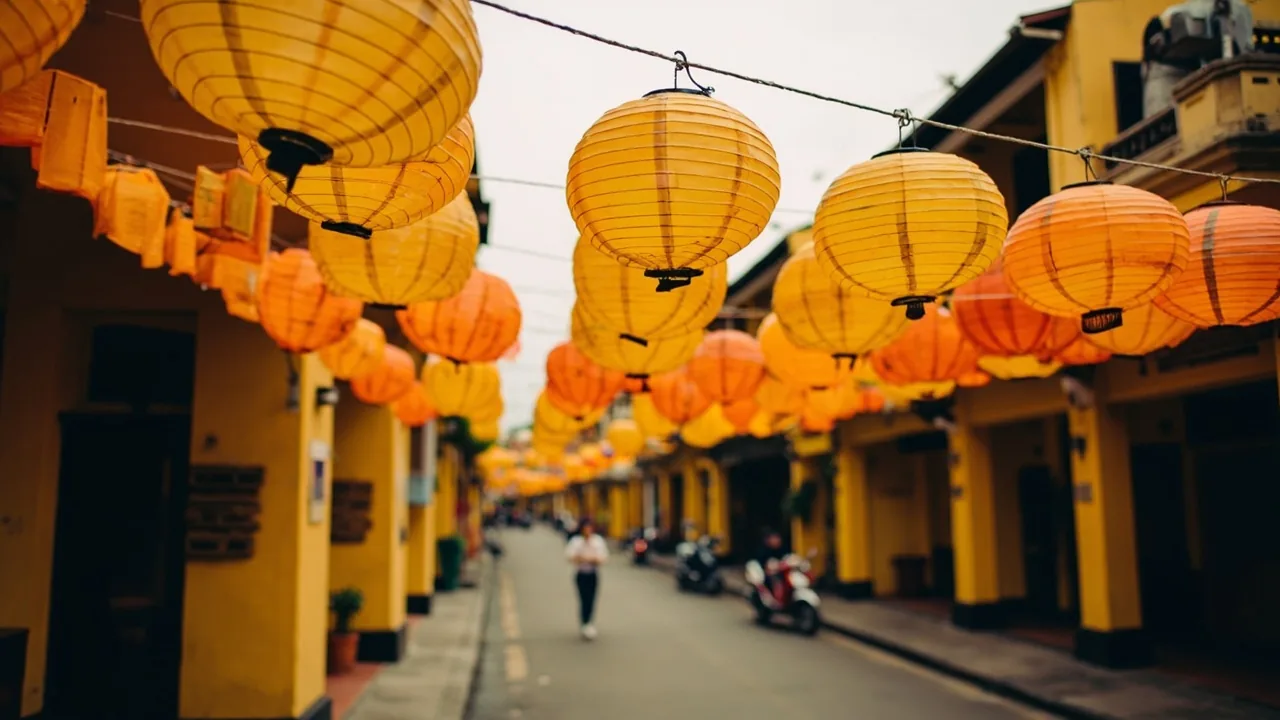
Hoi An for Indian Travellers: Tailors & Lanterns (2026)
This hoi an guide india covers lantern-lit alleys, custom tailors, and a bánh mì scene that has gone full global-trotter pilgrimage. The town sits on Vietnam’s central coast and you should come for two nights minimum. If you’re planning a wider trip, our Southeast Asia backpacking hub covers every country on the trail.
Quick Answers
| What | Answer | Price (INR) |
|---|---|---|
| Old Town entry ticket | Required for 5 of 22 heritage sites | ₹442 (~120,000 VND or ~$4.58) |
| Sleeper bus Da Nang → Hoi An | ~1 hour, door-to-door | ₹736 (~200,000 VND or ~$7.64) |
| Tailored 3-piece suit (wool blend) | 2 days, 2 fittings | ₹16,560-₹27,600 (~4,500,000-7,500,000 VND or ~$171.91-$286.52) |
| Dorm bed per night (mid-range) | Inclusive of breakfast | ₹736 (~200,000 VND or ~$7.64) |
| Best month to visit | Mid-Feb to mid-Apr, dry and warm | Free (weather) |
How to Get There
Most travellers arrive in Hoi An via Da Nang, since Hoi An has no airport or train station of its own. Da Nang is the nearest hub on the Reunification Express line, and it’s only an hour south.
| Route | Mode | Duration | Price (USD) | Book |
|---|---|---|---|---|
| Da Nang → Hoi An | Bus / shuttle | 1h | ₹1,541 (~16 USD) | Book on 12go |
| Hanoi → Hoi An | Sleeper bus | 13h 15m | ₹3,757 (~39 USD) | Book on 12go |
| Hue → Hoi An | Bus | 3h 20m | ₹1,638 (~17 USD) | Book on 12go |
The Da Nang option is the only one that makes sense for most backpackers. The Hanoi sleeper is a real, do-able journey if you leave at 6 PM and arrive 7 AM, but it eats a full day. If you have time, take the daytime bus from Hue and then transfer south; the Hai Van Pass stretch between Hue and Da Nang is widely cited as one of the scenic coastal bus rides on the trail.
The Da Nang airport (DAD) is your actual international arrival point if you fly in from Bangkok or Kuala Lumpur. From DAD to your Hoi An hostel, expect 45-60 minutes in a Grab car for ~₹920 (~250,000 VND or ~$9.55).
Where to Stay
| Hostel | Cost/night | Vibe | Book Here |
|---|---|---|---|
| SnapStay Hoi An | ₹920 (~250,000 VND or ~$9.55) | Quiet social hostel, near Old Town | Check prices |
| Cheerful Hoi An Hostel | ₹736 (~200,000 VND or ~$7.64) | Cozy dorms, good breakfast | Check prices |
| Backhome Hostel and Bar | ₹810 (~220,000 VND or ~$8.40) | Bar attached, lively nights | Check prices |
| The Cuckoo’s Nest Hostel and Bar | ₹1,030 (~280,000 VND or ~$10.70) | Party hostel, central | Check prices |
| Gito Hostel | ₹662 (~180,000 VND or ~$6.88) | Budget, basic, clean | Check prices |
| Lynk Stay | ₹957 (~260,000 VND or ~$9.93) | Modern dorms, near rice fields | Check prices |
| Subodh’s pick: SnapStay Hoi An for the quiet nights, or Backhome if you want to meet people over drinks. Both sit within a 10-minute walk of the Old Town entrance, so you can stumble back from the riverside lanterns without paying for a taxi. |
Most backpackers stay inside the Old Town or just across the bridge in Cam Nam. Staying in An Bang beach adds a 4-km motorbike ride (a ₹221-₹294 (~60,000-80,000 VND or ~$2.29-$3.06) Grab) to every meal, which adds up fast over three days.
What to Eat
Hoi An has four dishes the city is genuinely known for: cơm gà (Hoi An chicken rice), cao lầu (thick noodles, only made here because of a specific local well water), mì quảng (turmeric noodles), and the white-rose dumplings (bánh bao vạc). On the streets it’s also the global capital of bánh mì, partly because of the baguette legacy from French colonial days.
A single bánh mì at a streetside stall runs ₹55-₹74 (~15,000-20,000 VND or ~$0.57-$0.76). The well-known stalls near the central market charge ₹74-₹92 (~20,000-25,000 VND or ~$0.76-$0.96) and are popular with travellers, though queues build at lunchtime. For non-veg, the classic is pork with pâté and pickled carrot. Veg travellers should ask for the “chay” version with tofu and mushroom.
Nhan’s Kitchen is a good local spot for cao lầu and white-rose dumplings. A full dinner here runs ₹294-₹478 (~80,000-130,000 VND or ~$3.06-$4.97) per person. A Little Kitchen Restaurant - Bếp Nhỏ does homestyle Vietnamese in a quiet setting, including a solid vegetarian bún (rice vermicelli) bowl for around ₹147 (~40,000 VND or ~$1.53).
For an Indian food fix or a strict vegetarian meal, MẸT Hội An offers a dedicated vegetarian menu covering Vietnamese classics with meat removed, plus a few fusion Vietnamese dishes inside a restored colonial shophouse. Count on ₹368-₹589 (~100,000-160,000 VND or ~$3.82-$6.11) per head. The same owners also run a separate vegetarian spot, MẸT Hội An - Vietnamese restaurant & Vegetarian Food, with the same cuisine plus the cao lầu and mì quảng converted to all-veg.
Coffee: a Vietnamese cà phê sữa đá (iced coffee with condensed milk) runs ₹74-₹129 (~20,000-35,000 VND or ~$0.76-$1.34) at most cafes. The Old Town has a heavy concentration near the river; some stay open as late as 10 PM, but most close by 9 PM. Wifi at riverside cafes can slow down in the evening when the lanterns attract crowds and many devices connect at once.
Pork and fish sauce show up in almost every Hoi An signature dish. Veg travellers in particular should double-check at smaller stalls; even “vegetable” dishes often use a fish-sauce base. MẸT’s menu is the rare exception.
Subodh’s Pro Tip: Skip the dedicated “banh mi Phượng” queue at lunchtime and walk to any of the smaller stalls on Phan Chu Trinh street. Same bread, same recipe lineage, no 30-minute wait.
What to Do
1. Walk the Old Town at sunrise. Most backpackers go at sunset when the lanterns switch on, which means the alleys are packed and photo spots have 4-5 people in them. A 6 AM walk gives you the lanterns still glowing and zero crowds. Free, 90 minutes. Open 24 hours, but ticket-controlled attractions only open from 8 AM.
2. Pagoda Bridge (Lai Viễn Kiều). The Japanese-built covered bridge from the 1590s is the single most-photographed spot in Hoi An and the only bridge in town you walk across on the heritage ticket. Pagoda Bridge tour. The bridge itself is free to photograph from outside; the 120,000 VND ticket gets you inside plus entry to four nearby assembly halls and the central market.
3. Get a tailored suit or dress. Hoi An has hundreds of tailors and the craftsmanship is real. Two days, two fittings minimum, budget ₹16,560-₹27,600 (~4,500,000-7,500,000 VND or ~$171.91-$286.52) for a wool-blend three-piece. Photocopy what you want before you arrive; the tailors can knock something out from a screenshot on your phone, but a clearer reference gives a better result. Avoid any shop that promises a 24-hour turnaround on a full suit; you will get a bad suit in 24 hours instead of a good one in 48.
4. Cooking class on Cam Kim Island. Most classes include a market walk, a boat ride to the island, and a hands-on 4-dish cook. Budget ₹920-₹1,840 (~250,000-500,000 VND or ~$9.55-$19.10).
5. Basket boat ride in the coconut groves. The round bamboo basket boats are touristy but genuinely fun, and most rides include a quick spin where the driver whips the boat in circles. . Budget ₹552-₹920 (~150,000-250,000 VND or ~$5.73-$9.55) per person.
6. Lantern boat trip on the Hoai River. A 30-minute ride at dusk with a paper lantern you release onto the water. Cheap (₹184-₹294 (~50,000-80,000 VND or ~$1.91-$3.06)) and surprisingly calm even with the crowds. Lantern Boat Trip & Release Lantern tour.
7. Hoi An Memories show. A nightly outdoor performance with 500+ actors covering 400 years of Hoi An history. Tickets from ₹1,840 (~500,000 VND or ~$19.10). Touristy but well-reviewed. Book Hoi An Memories Land Entry Ticket with Show tour.
8. Cycling the rice fields at sunset. Several hostels lend free bicycles; otherwise rent a basic bike for ₹147 (~40,000 VND or ~$1.53) per day. Book Hoi An Rice Fields-Cycling&Sunset tour if you don’t want to ride solo.
The opening hours for ticketed heritage sites run 8:00 AM to 5:30 PM daily, and your ₹442 (~120,000 VND or ~$4.58) ticket covers five sites. A separate night ticket available from 6 PM costs ₹294 (~80,000 VND or ~$3.06) and covers a different set of zones. If you’re only there for one evening, the night ticket is the better value.
For pure craft, Silk Village Hoi An - The Tourist and the Traditional Lantern Class in Old Town are both worth a half-day if you have the time. Travellers report the silk village tour is the more off-the-tourist-path of the two.
Subodh’s Pro Tip: Don’t hire a private tour guide inside the Old Town unless you specifically want the historical detail. The lanes are small enough that the free walking maps your hostel hands out cover 90% of the plaques, and the English-speaking guides at the entry gates are usually happy to answer a few questions for a small tip.
Getting Connected
A Vietnamese tourist SIM is cheap and gives you reliable 4G across Hoi An, Da Nang, and the Hai Van Pass stretch. Viettel and Mobifone both sell a 14-day tourist pack with around 6 GB of data for ₹478 (~130,000 VND or ~$4.97). You can buy at the airport kiosk on arrival or at any phone shop in Da Nang and Hoi An central. Ask for a tourist SIM with English-language support; the staff at both networks speak some English at the central stores.
Bring your passport. Both networks require it for activation and the process takes around 15 minutes.
If you’d rather skip the airport queue and have data the moment your flight lands, get a Nomad eSIM before you fly. You’ll have a working Vietnamese data plan before you reach immigration, no passport swap required. Get Nomad eSIM
WiFi at hostels and cafes in the Old Town is generally fine for messages and Google Maps, but slows down around sunset when every tourist on the planet is uploading their lantern photos. Travellers report that Grab and Bolt are reliable in Hoi An proper; outside the Old Town and into An Bang beach, signal drops off in some stretches of rice field.
Daily Budget Breakdown
| Category | Budget/day |
|---|---|
| Dorm bed | ₹736-₹1,104 (~200,000-300,000 VND or ~$7.64-$11.46) |
| Food (3 meals) | ₹552-₹920 (~150,000-250,000 VND or ~$5.73-$9.55) |
| Local transport (Grab + walk) | ₹294-₹552 (~80,000-150,000 VND or ~$3.06-$5.73) |
| Activities (Old Town ticket + 1 paid activity) | ₹736-₹1,472 (~200,000-400,000 VND or ~$7.64-$15.28) |
| Misc / drinks | ₹368-₹736 (~100,000-200,000 VND or ~$3.82-$7.64) |
| Total | ₹2,686-₹4,784 (~730,000-1,300,000 VND or ~$27.89-$49.66) |
These figures reflect typical backpacker spending in mid-2026, based on Hostelworld booking prices and 12go fares.
The lower end is achievable if you skip the tailored suit, eat mostly at street stalls, and walk. The upper end is realistic if you do a cooking class, a lantern boat trip, and one night of cocktails. Add at least ₹16,560 (~4,500,000 VND or ~$171.91) to the total if you’re commissioning a tailored suit.
Visa / Entry Notes
Vietnam requires Indian passport holders to apply for an e-Visa in advance. Indian passport holders are not eligible for visa-on-arrival and must pre-apply for an e-Visa.
- Fee: ₹2,408 (~25 USD)
- Max stay: 90 days
- Photo: 4x6 cm, white background, taken within 6 months
- Portal: https://evisa.xuatnhapcanh.gov.vn
- Processing time: 3 working days, sometimes faster
Apply at least a week before your flight to give yourself a buffer. Travellers report approval emails sometimes land in spam, so check there first if you haven’t heard back in 72 hours. Print a copy; not every immigration counter asks, but some do.
Hoi An itself is not a port of entry, so this all happens at Ho Chi Minh City, Hanoi, or Da Nang airports before you arrive.
Common Mistakes
1. Booking a “full custom suit in 24 hours”. Travellers report the express tailors deliver suits that don’t fit by the second wear. Two days, two fittings is the minimum standard. If you’re only in Hoi An for one night, get a smaller item like a shirt or trousers instead.
2. Exchanging money inside the Old Town. The jewellery-shop currency exchanges in the heritage zone consistently pay 2-3% below the official rate. Use a bank branch or ATM outside the ticket-controlled zone or withdraw from an ATM, which gives the interbank rate plus a ₹81 (~22,000 VND or ~$0.84) fee per transaction.
3. Ignoring the Old Town entry ticket. The Old Town has controlled entry at five heritage sites between 8 AM and 5:30 PM. Wandering the alleys themselves is free, but you’ll be asked to show a ticket at the bridge, the assembly halls, the central market, and two museums. The ticket is ₹442 (~120,000 VND or ~$4.58) and good for the whole day across all five sites.
4. Renting a motorbike without an International Driving Permit. Hoi An police have set up checkpoints around the Old Town and An Bang beach, especially on weekends. Indian licence holders need a Vietnamese motorbike permit or an IDP from the Indian RTO. We covered the full motorbike rules here. If you don’t have one, use Grab.
Where to Go from Here
| Destination | Mode | Duration | Price (USD) | Book |
|---|---|---|---|---|
| Da Nang | Bus | 1h | ₹1,541 (~16 USD) | Book on 12go |
| Hue | Bus | 3h 20m | ₹1,638 (~17 USD) | Book on 12go |
| Hanoi | Sleeper bus | 13h 15m | ₹3,757 (~39 USD) | Book on 12go |
| Ho Chi Minh City | Flight | 1h 35m | ₹9,055 (~94 USD) | Book on 12go |
Most backpackers head north to Hue next (cheap, scenic, full of imperial history) or skip north and fly straight down to Ho Chi Minh City for the Mekong leg. Mui Ne and Da Lat have sleeper-bus connections but most operators only run them two or three times a week; check 12go’s schedule before booking.
What to Wear
Hoi An’s dress code falls into two buckets: temple/heritage sites and beach.
For temples, assembly halls, and the Pagoda Bridge area, shoulders and knees must be covered. Most Indian travellers already pack for this, loose trousers and a short-sleeve kurta or top with a light shawl works fine. The ticket-controlled sites check at the gate; you’ll be turned away if your shoulders are bare. The full Vietnam packing list by month is here.
For non-religious Old Town walks, the rules relax. Linen trousers, a loose cotton shirt, and comfortable sandals are the local standard. Bring a light rain jacket between mid-September and late January; the rest of the year is dry.
Safety Alert: Hoi An floods badly during typhoon season (typically late August to November). The river-side cafes and ground-floor hostels in Cam Nam get ankle-deep water inside during heavy rain. Check your hostel’s flood policy before booking if you’re travelling in October or November, and ask about rooms on upper floors.
FAQ
Is Hoi An safe for Indian travellers?
Yes. Hoi An is one of the safer cities on the Vietnam backpacker trail. Petty theft (phone snatches from scooters) is rare here because the Old Town is pedestrian-heavy. The main risks are traffic on the roads outside the heritage zone and the typhoon flooding between August and November. General safety on the broader Vietnam route is covered here.
Can I find Indian food in Hoi An?
Yes, but the Vietnamese vegetarian scene is strong enough that most Indian travellers don’t need Indian food here. MẸT Hội An runs a dedicated vegetarian menu with a few South-Asian-friendly dishes. If you need a full Indian thali, a few restaurants in the area serve North Indian fare. Expect to pay ₹442-₹736 (~120,000-200,000 VND or ~$4.58-$7.64) for a plate.
How many days do I need in Hoi An?
Two nights is the minimum to cover the Old Town, a lantern boat, and a tailor visit. Three nights lets you add a cooking class or a beach afternoon. Four or more is for slow travellers, photographers, or anyone who wants multiple tailor fittings.
What is the best month to visit Hoi An?
Mid-February to mid-April is the cleanest weather window: dry, low humidity, and not yet peak heat. The lantern festival on the 14th day of each lunar month also lights up the entire riverside (free, no ticket required for the river itself) and is worth timing your visit around if you can.
Is Hoi An worth it for the lanterns alone?
Yes. The Old Town has been a UNESCO World Heritage Site since 1999, and the lantern lighting at dusk is genuinely photogenic. Travellers report it’s one of the few “Instagram-famous” spots that lives up to the photos.
Do I need a motorbike in Hoi An?
No. Grab bikes run ₹37-₹92 (~10,000-25,000 VND or ~$0.38-$0.96) per trip and the Old Town itself is pedestrian-only. Rent a bicycle (most hostels lend them free) if you want to reach An Bang beach or the rice fields, but don’t bother with a scooter unless you’re heading north toward Hai Van Pass.
Subodh’s Take
Hoi An is the city I tell first-timers to use as their Vietnam anchor. Da Nang is the airport, Hue has the history, Hanoi has the chaos, but Hoi An is where you breathe. Plan three nights, get a shirt tailored, eat one cao lầu and one bánh mì, walk the Old Town at sunrise before the lanterns come down, and you’ll understand what I mean.
