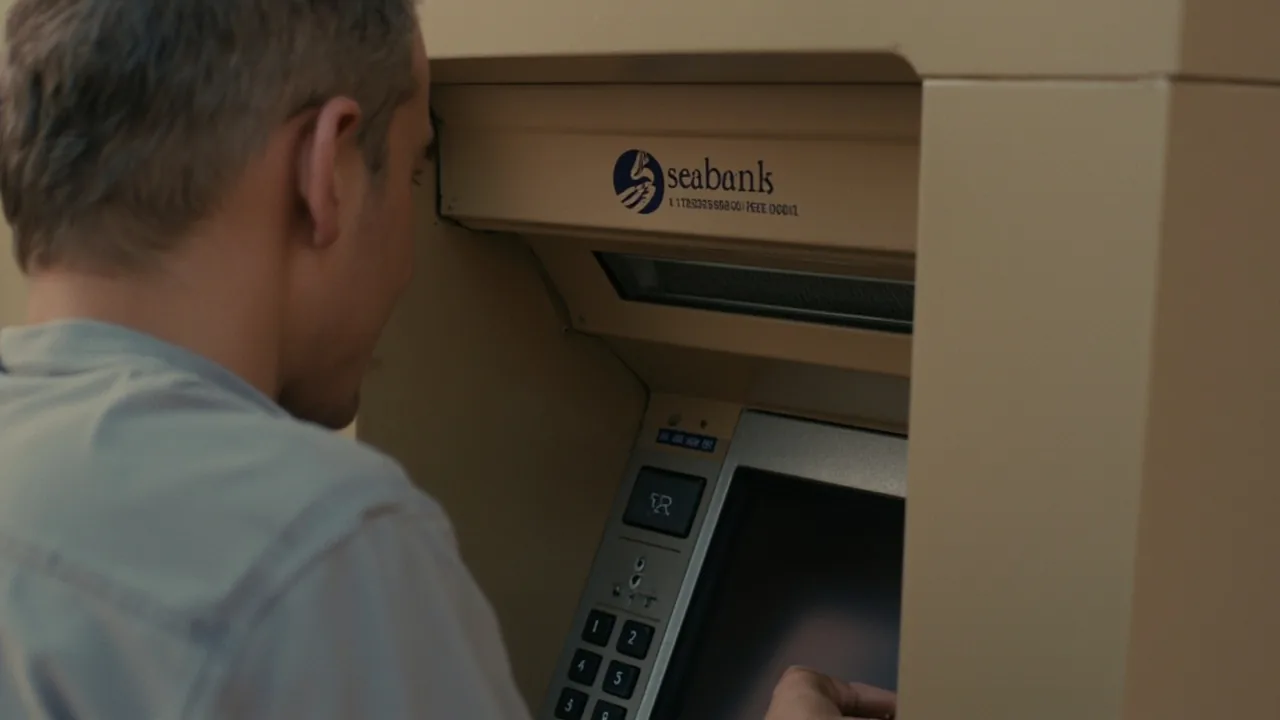
ATM Fees in Southeast Asia: What Indian Backpackers Pay to Withdraw Cash (2026)
You’ll pay ₹210 (~$2.18) to ₹390 (~$4.05) per ATM withdrawal in Southeast Asia on average, and that’s before your Indian bank piles on its own charges. The exact number depends on which country, which ATM network, and which Indian card you carry. SeaBank ATM fees in Vietnam start at 3,300 VND, Bangkok Bank charges 220 THB, and BCEL in Laos takes 10,000 LAK — here’s what that means at the ATM screen.
Quick Answers
| What | Answer | Price (INR) |
|---|---|---|
| Average ATM fee across SEA (4 countries) | Per withdrawal, before Indian bank charges | ₹210 (~$2.18) to ₹390 (~$4.05) |
| SeaBank Vietnam, foreign card | Per withdrawal | ₹70 (~3,300 VND or ~$0.73) |
| Cheapest Vietnam ATM | VPBank (selected branches) | ₹70 (~$0.73) |
| Bangkok Bank Thailand fee | Per withdrawal | ₹631 (~220 THB or ~$6.55) |
| ABA Bank Cambodia fee | Per withdrawal | ₹193 (~$2) |
| BCEL Laos fee | Per withdrawal | ₹43 (~10,000 LAK or ~$0.45) |
| RBI cap on Indian bank ATM fee abroad | Per transaction | ₹210 (~$2.18)+ GST |
| Best card to minimize total cost | Forex card from a bank with 0% markup | Saves ₹3,000+ over a 3-week trip |
What “ATM Fee” Means (Two Layers, Not One)
Most Indian travellers think of “ATM fee” as a single charge. It’s two separate charges stacked together, from two separate banks, and you have to minimise both.
Layer 1 is the ATM operator’s fee. The local bank that owns the ATM (SeaBank in Vietnam, Bangkok Bank in Thailand, ABA in Cambodia, BCEL in Laos) charges a surcharge on top of what your card dispenses. This is printed on the ATM screen before you confirm, and it varies by bank, network, and sometimes by branch.
Layer 2 is your Indian bank’s charge. Your bank charges you separately, either a flat fee (HDFC, ICICI, SBI all have foreign-ATM fees) or a percentage markup on the exchange rate (Axis, Kotak older cards). The RBI caps this at ₹210 (~$2.18) plus GST per transaction as of late 2025, but most banks charge the full cap.
So when an Indian backpacker says “the SeaBank ATM charged me ₹150 (~$1.56),” they’re usually reporting one layer. The real total is ₹70 (SeaBank) + ₹210 (Indian bank) + GST = ₹358, plus the forex markup if the card is a debit card instead of a forex card.
Subodh’s Pro Tip: Always ask for the VND/USD/KHR amount on the ATM screen, not the INR amount. Your bank will convert at the wholesale rate plus markup; the ATM screen shows the operator fee alone. Two different numbers.
Country-by-Country Breakdown (Verified July 2026)
Vietnam: SeaBank, VPBank, Vietcombank, and the rest
Vietnam has the most fragmented ATM landscape in Southeast Asia, and the most room to save money if you pick the right network. The big-state-bank ATMs (Vietcombank, BIDV, Agribank) typically refuse foreign cards entirely or charge the maximum. The newer private and joint-stock banks are where you find SeaBank atm fees that are lower, plus the rare zero-fee machines.
| Bank | Foreign card fee | Notes |
|---|---|---|
| SeaBank | ₹70 (~3,300 VND or ~$0.73) per withdrawal | Widest network that accepts Indian cards consistently |
| VPBank (selected branches) | ₹70 (~$0.73) per withdrawal | Cheapest in Vietnam, but only some branches work with RuPay |
| Vietcombank | ₹215 (~$2.23) or refuses | Older branches often reject foreign cards outright |
| Agribank | ₹215 (~$2.23) | Works, but charges the maximum tier |
| BIDV | ₹215 (~$2.23) | Avoid if you have alternatives |
The fees above are the operator fee only. Your Indian bank adds ₹210 plus 18% GST = ₹248 on top.
Subodh’s Pro Tip: If you’re carrying a RuPay card from an Indian bank, read our detailed Vietnam card guide before you fly. RuPay acceptance at SeaBank varies by branch and time of day.
Thailand: Bangkok Bank and the ₹631 (~220 THB or ~$6.55) standard
Thailand’s ATM fees are the most uniform of any country in the region. Almost every major bank charges ₹631 (~220 THB or ~$6.55) per foreign-card withdrawal. Bangkok Bank, Krungthai, Kasikorn, and Siam Commercial Bank all sit within ₹57 (~20 THB or ~$0.60) of each other.
| Bank | Foreign card fee |
|---|---|
| Bangkok Bank | ₹631 (~220 THB or ~$6.55) |
| Krungthai | ₹603 (~210 THB or ~$6.25) |
| Kasikorn | ₹631 (~220 THB or ~$6.55) |
| Siam Commercial Bank | ₹631 (~220 THB or ~$6.55) |
There’s no “free ATM” tier in Thailand anymore. The big supermarket-branded ATMs (Tesco Lotus, Big C) closed or converted to bank partnerships years ago. Government-backed PromptPay and card-acceptance expansion hasn’t yet reduced ATM fees.
The workaround: withdraw larger amounts less often. The Thai fee is a flat ₹631 (~220 THB or ~$6.55) regardless of whether you take out ₹2,869 (~1,000 THB or ~$29.78) or ₹28,691 (~10,000 THB or ~$297.84), so one ₹28,691 (~10,000 THB or ~$297.84) withdrawal costs the same as ten ₹2,869 (~1,000 THB or ~$29.78) ones.
Laos: BCEL and the ATM duopoly
Laos has effectively two ATM networks: BCEL (state-owned) and LDB (Lao Development Bank). Both charge foreign cards 10,000 LAK per withdrawal, which is ₹43 (1 LAK = ₹0.0043). That’s the operator fee, but Laos adds another wrinkle: a per-transaction cap on how much foreign cards can withdraw, typically 2,000,000 LAK = ₹8,600.
| Bank | Foreign card fee | Withdrawal cap |
|---|---|---|
| BCEL | ₹43 (~10,000 LAK or ~$0.45) | ₹8,612 (~2,000,000 LAK or ~$89.40) |
| LDB | ₹43 (~10,000 LAK or ~$0.45) | ₹8,612 (~2,000,000 LAK or ~$89.40) |
BCEL has offices in Vientiane, Luang Prabang, Vang Vieng, and Pakse. LDB has thinner coverage outside Vientiane. Travellers report that BCEL is more reliable for Visa and Mastercard; LDB has a higher rejection rate on RuPay cards.
Cambodia: ABA Bank and the USD reality
Cambodia runs on USD alongside the Cambodian riel, which makes ATM math weird. ABA Bank charges ₹193 (~2 USD) per withdrawal on foreign cards, which is ₹193 at the current rate (1 USD = ₹96.3294). ANZ Royal, Canadia, and Maybank ATMs charge ₹289 (~3 USD) to ₹482 (~5 USD).
| Bank | Foreign card fee |
|---|---|
| ABA Bank | ₹193 (~$2) |
| Canadia Bank | ₹289 (~$3) |
| ANZ Royal | ₹289 (~$3) to ₹482 (~$5) |
Cambodia dispenses USD bills from the ATM, not riel. The machine shows the amount in USD; you’ll get a small amount of riel as change from any local merchant.
Safety Alert: Cambodia’s USD cash economy is a partial exception. Use ATMs rather than carrying large amounts of physical USD, and rely on your card for any spend over ₹1,927 (~20 USD).
The Indian Bank Side: What RBI Allows in 2026
The RBI’s 2025 revised circular on international ATM transactions set a hard cap of ₹210 (~$2.18) per transaction, plus 18% GST, for the foreign-card usage fee charged by your Indian bank. This applies to debit cards, forex cards, and credit cards.
What this means in practice: every withdrawal abroad costs at least ₹248 (~$2.57) from your Indian bank, even before the local ATM adds its own fee.
| Indian bank charge | Amount (INR) |
|---|---|
| Foreign ATM usage fee (RBI cap) | ₹210 (~$2.18) |
| GST on the fee | ₹38 (~$0.39) |
| Total Indian bank cost per withdrawal | ₹248 (~$2.57) |
On top of this, if you’re using a debit card (instead of a forex card), most banks add a 1.5% to 3.5% markup on the exchange rate. This is where the real money leak is. A ₹20,000 (~$207.62) withdrawal at a 3% markup costs you ₹600 in hidden conversion fees, more than the entire ATM fee.
Subodh’s Pro Tip: Carry at least one zero-markup forex card (HDFC ForexPlus, ICICI Travel Card, Niyo Global, or a multi-currency card from your bank). The difference between a debit card and a forex card over a 3-week SEA trip is ₹3,000 (~$31.14) to ₹5,000 (~$51.91).
Step-by-Step: How to Minimize What You Pay
- Before you fly: order a forex card. Niyo Global, HDFC ForexPlus, or ICICI Travel Card. Load USD on it (USD works in all four SEA countries). Zero forex markup. Cost to issue: ₹300 (~$3.11) to ₹500 (~$5.19).
- Before you fly: check the latest fee schedule. SeaBank and ABA Bank update their foreign-card fee pages every 6 to 12 months. SeaBank’s fee schedule is on their English-language site.
- At the airport: withdraw only what you need for day one. Airport ATMs have the highest fees and worst exchange rates in every SEA country.
- In the city: pick the right ATM network. SeaBank and VPBank in Vietnam, Bangkok Bank in Thailand, BCEL in Laos, ABA in Cambodia.
- In the city: withdraw the maximum allowed per transaction. The operator fee is flat, so withdrawing the cap (typically ₹18,400 (~5,000,000 VND or ~$191.01) in Vietnam, ₹86,073 (~30,000 THB or ~$893.53) in Thailand) once beats four smaller withdrawals.
- Decline the ATM’s “conversion to home currency” prompt. Always choose to be charged in the local currency (VND, THB, LAK, USD). If you accept “conversion to INR,” the ATM operator sets an awful rate.
- Check your bank’s app after each withdrawal. Foreign-card transactions can take 24 to 48 hours to settle. If the markup looks wrong, dispute it within 30 days.
Common Mistakes Indians Make
Mistake 1: Withdrawing from Vietcombank or BIDV because “it’s the biggest bank.” These are state banks that often refuse foreign cards at smaller branches. SeaBank has a wider ATM network that accepts Indian RuPay and Visa cards more consistently.
Mistake 2: Choosing “conversion to home currency” on the ATM screen. The ATM operator offers to convert ₹25,000 to VND at “a great rate.” They mean a great rate for them, not you. Always decline. Pay in local currency, let your Indian bank convert.
Mistake 3: Withdrawing small amounts multiple times. If the operator fee is ₹215 (~$2.23) and the Indian bank adds ₹248 (~$2.57), you’re paying ₹463 (~$4.80) minimum per withdrawal. Five withdrawals of ₹4,000 each = ₹2,315 in fees. One withdrawal of ₹20,000 = ₹463.
Mistake 4: Using a credit card “because it’s safer.” Credit cards have separate cross-border fees (3.5% to 5% on most Indian cards), plus the 20% foreign-currency markup that the RBI allows issuers to charge. The combined cost is usually higher than a forex card.
Mistake 5: Skipping the forex card “to save the ₹500 (~$5.19) issuance fee.” That ₹500 (~$5.19) saves you ₹3,000 (~$31.14) to ₹5,000 (~$51.91) over a typical SEA trip. The math is not close.
What Most Guides Don’t Tell You
Edge case 1: SeaBank’s per-branch variability. SeaBank charges ₹70 (~3,300 VND or ~$0.73) at most branches, but some tourist-area branches in Ho Chi Minh City and Hanoi have been reported at ₹215 (~$2.23). The machine screen always shows the fee before you commit; if it’s higher than expected, walk to the next branch.
Edge case 2: Daily and weekly limits at Vietnamese ATMs. Even if your Indian bank approves a large withdrawal, the ATM itself caps foreign-card withdrawals at ₹18,400 (~5,000,000 VND or ~$191.01) per transaction and 10,000,000 VND per day. ₹5,000,000 VND = ₹18,500 at current rates.
Edge case 3: ATM outages and “transaction not completed” errors. Travellers report intermittent issues at BCEL in Vang Vieng and ABA in Sihanoukville, usually resolved by walking to the next branch. Don’t store large amounts in your accommodation safe.
FAQ
Who has free ATM fees in Southeast Asia? No major bank network is fee-free for Indian cards as of July 2026. The closest you’ll get is VPBank Prime in Vietnam, which is ₹70 (~$0.73) at some branches, or BCEL in Laos at ₹43 (~$0.45).
How much are ATM fees on average for Indian travelers? Between ₹358 (~$3.72) and ₹480 (~$4.98) per withdrawal, after combining the local operator fee (₹70 (~$0.73) to ₹215 (~$2.23)) with the RBI-capped Indian bank fee (₹210 + GST = ₹248).
Do RuPay cards work at SeaBank ATMs in Vietnam? Yes, at most branches. Acceptance varies by branch and by time of day; Visa and Mastercard are more reliable across all networks.
Is it cheaper to exchange money at a money changer than to use an ATM? Usually no. Thai and Vietnamese money changers offer competitive rates, but they charge 1% to 2% commission on top. An ATM with a ₹358 (~$3.72) combined fee on a ₹20,000 (~$207.62) withdrawal is a 1.79% effective cost, which is in line with the best money changers and avoids the cash-carrying risk.
Can I withdraw VND from an ATM in Cambodia? No. Cambodian ATMs dispense USD only, regardless of the account currency on your card.
What’s the maximum I should carry in cash for a 3-week SEA trip? Around ₹57,798 (~600 USD) equivalent (₹58,000 (~$602.10)), loaded mostly on a forex card, with ₹9,633 (~100 USD) in physical USD as a Cambodia-specific buffer. Anything more sits on the card.
Subodh’s Take
The single biggest money-saver for Indian backpackers in Southeast Asia isn’t finding a “free ATM.” It’s carrying the right card. A zero-markup forex card plus one large withdrawal per city cuts your effective cost per withdrawal from ₹480 (~$4.98) to about ₹260 (~$2.70), and that’s over the entire trip. The ATM fees themselves are a rounding error compared to what your bank will quietly take in markup if you bring the wrong card.
