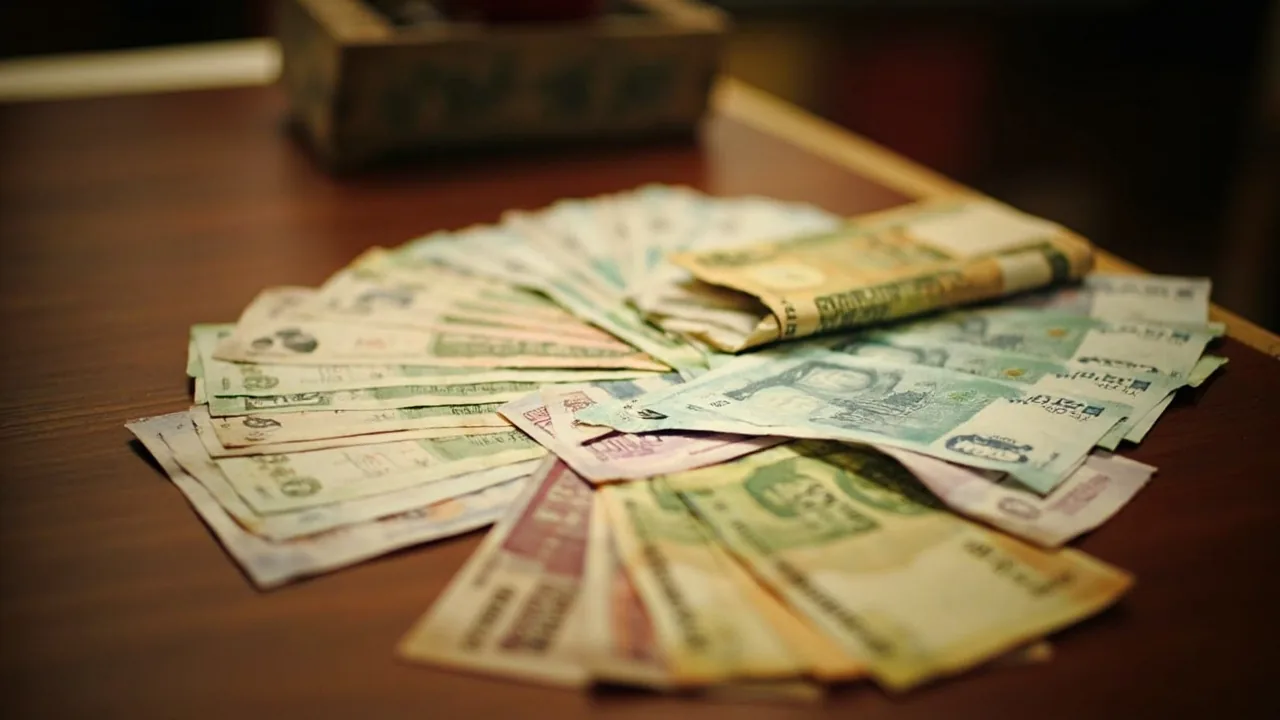
How Much Spending Money Do I Need for Vietnam? (2026 Daily, Weekly & Per-City Reality Check)
Carry enough Vietnamese Dong to cover the first three days, then plan to top up at ATMs once you land. Two-week trips for most Indian travellers land between ₹66,096 (~$686.08) and ₹102,816 (~18,000,000-28,000,000 VND or ~$686.08-$1,067.23) of on-the-ground spend, excluding flights, visa, and the shopping splurge. For related planning, see our guides on Sea Backpacking Hub and How Much Does It Cost to Custom Tailor a Suit.
Subodh’s Pro Tip: Don’t convert INR to VND in your head using rough guesses. The Dong has too many zeros and what looks like “a lot” is sometimes under ₹100. Use 1 INR = 270 VND (1 VND ≈ ₹0.00367) as your mental anchor. A 50,000 VND bowl of pho is roughly ₹185 (~$1.92), not ₹500 (~$5.19). You may also find Hoi an Suit Price useful for this trip.
What Is “Spending Money” in Vietnam, Exactly?
Spending money is the cash you spend on the ground after flights, visa, and pre-booked accommodation are already paid for. In Vietnam this covers three buckets: food at local restaurants and street stalls, ground transport (Grab bikes, city buses, sleeper buses between cities), and entry fees for temples, museums, and day trips. It does not include your e-visa fee (₹2,408 (~$25), ~₹2,408 (~25 USD), for a 90-day multiple-entry e-Visa that Indians must pre-apply for online, there is no visa-on-arrival for Indian passport holders), your round-trip airfare from India, or any big-ticket shopping (tailoring, electronics, gifts). When travellers ask “how much spending money for Vietnam,” they are almost always asking about bucket one, two, and three combined. See also: Hoi an Tailor Dress Price.
The size of that bucket changes a lot by city. Hanoi and Ho Chi Minh City run roughly 10-15% cheaper than Hoi An and Phu Quoc once you account for tourist pricing in the latter two. The figures below assume a mid-range backpacker style: dorm beds, mostly local food, one or two paid attractions per day, and the occasional beer at sundown. For related planning, see our guide on Melaka Temple Etiquette a Practical Guide for Indian Visitors.
Quick Answers
| What | Answer | Price (INR) |
|---|---|---|
| Daily budget (mid-range backpacker) | Hanoi/HCMC | ₹4,406-₹5,875 (~1,200,000-1,600,000 VND or ~$45.74-$60.98) |
| Daily budget (Hoi An/Da Nang/Phu Quoc) | Tourist-tier cities | ₹5,141-₹6,610 (~1,400,000-1,800,000 VND or ~$53.36-$68.61) |
| Two-week trip total (solo) | Hanoi to Phu Quoc | ₹66,096-₹102,816 (~18,000,000-28,000,000 VND or ~$686.08-$1,067.23) |
| ATM withdrawal fee (HDFC/ICICI forex card) | Per pull | ₹722-₹902 (~200,000-250,000 VND or ~$7.63-$9.53) |
| Currency | Vietnamese Dong (VND) | 1 INR ≈ 270 VND |
| Tourist SIM (14 days, ~6GB) | Viettel/Mobifone | ₹478 (~130,000 VND or ~$4.96) |
| Tipping | Not expected at small spots | Round up to nearest ₹37 (~10,000 VND or ~$0.38) |
Step-by-Step: How to Set Your Vietnam Cash Plan
Step 1: Decide Your Travel Style First
Pick a style before converting anything. Three realistic tiers for Indian backpackers in 2026:
- Budget hostel + street food: ₹2,938-₹4,039 (~800,000-1,100,000 VND or ~$30.49-$41.93) per day in Hanoi or HCMC. Works in inland cities, tight on Phu Quoc.
- Mid-range dorm + restaurant meals + one tour: ₹4,406-₹6,610 (~1,200,000-1,800,000 VND or ~$45.74-$68.61) per day, the most common spend.
- Private room + tours + cocktails: 2,500,000+ VND per day, the trip your cousin does once and posts about.
The middle tier is what this article plans around. If your style is budget or splurge, scale the daily figure up or down by 30%.
Step 2: Do the FX Math Once, Write It on a Card
At time of writing, 1 INR ≈ 270 VND (1 VND ≈ ₹0.0037). Stop doing conversions in your head after that. A hostel dorm at ₹918 (~250,000 VND or ~$9.53) is ₹925 (~$9.60) regardless of how many zeros you see. Write down one anchor: “₹37 (~10,000 VND or ~$0.38) = about 37 rupees, the price of a roadside banh mi.” That single mental anchor saves more confusion than any calculator.
Safety Alert: Most traveller scams in Vietnam are FX-based, not violence-based. The classic move: a vendor quotes “100” assuming you read it as ₹367 (~100,000 VND or ~$3.81) when they mean ₹9,634 (~100 USD). Always ask which currency, and default to VND for everything except dive shops and big-ticket tours.
Step 3: Carry Enough VND for Day One, Not Day Four
Land with ₹5,508-₹7,344 (~1,500,000-2,000,000 VND or ~$57.17-$76.23) in cash. That’s enough for a SIM, your first meal, a Grab to the hostel, and the next day’s hostel walk-in if you haven’t pre-booked. Carrying more is a waste because the airport exchange rate is worse than any ATM in District 1.
After that, use ATMs. Most Indian travellers bring a forex card (HDFC, ICICI, or Niyo) and withdraw ₹7,344-₹11,016 (~2,000,000-3,000,000 VND or ~$76.23-$114.35) per pull. Every withdrawal costs you ₹734-₹918 (~200,000-250,000 VND or ~$7.62-$9.53) in combined bank fees, so pulling more per visit means fewer fees overall. Two pulls per week covers the average trip.
Step 4: Watch the Cash-to-Card Ratio
Vietnam is roughly 70% cash, 30% card for a backpacker’s spending pattern. Street food, hostels, local buses, xe om motorbike taxis, market purchases, all cash. Hotels above ₹3,000 (~$31.14) a night, big restaurants, supermarkets, and Grab (the app) take cards. Travellers report getting stuck when they show up with a ₹50,000 (~$519) note at a roadside banh mi stall that needs exact change for ₹92 (~25,000 VND or ~$0.95). Keep small denominations.
Subodh’s Pro Tip: Always keep two ₹184 (~50,000 VND or ~$1.91) notes and a fistful of ₹37 (~10,000 VND or ~$0.38) and ₹73 (~20,000 VND or ~$0.76) notes separate from your main stash. That “tip wallet” lets you settle small bills fast without pulling the full wallet out at every xe om.
Step 5: Pick How You’ll Withdraw
Three working options for Indian travellers in 2026, ranked:
- Forex card at a major-bank ATM (Vietcombank, BIDV, Sacombank): Best FX rate. Fee is your own bank’s ~₹200-₹400 (~$2.08-$4.15) per withdrawal plus whatever the Vietnamese bank charges. Cash lands in seconds.
- Debit card direct (HDFC, SBI): Works, but your bank marks it up 1.5-3% on FX. Worse rate than the forex card, no fee difference.
- Cash exchange at a gold shop in District 1 (HCMC) or Old Quarter (Hanoi): No card fees but you carry more risk and the rate is 0.5-1% worse than ATM mid-rate. Worth it only for the first day’s cash on arrival.
If your debit card has a low ATM fee but high FX markup, withdraw in VND at the machine, not USD. Vietnamese ATMs always offer you the choice. Picking VND instead of USD lets your bank’s network do the conversion (closer to mid-rate); picking USD lets a third-party vendor skim 4-6%.
Step 6: Set a Daily Stop-Loss
Most overspending on Vietnam trips comes from day four onwards, when you stop doing the math. Set a per-day limit (₹5,508 (~1,500,000 VND or ~$57.17) is the mid-range reference) and check your wallet every evening. If you’re at ₹7,344 (~2,000,000 VND or ~$76.23) by lunch, you’ve either had a great day or you’ve been tipping in dollar notes by mistake. Either way, knowing the number tonight prevents the surprise tomorrow.
What It Costs Per City (Mid-Range, 2026)
These are real mid-range backpacker averages, broken down city by city. The daily figure is a real number you can plan around, not a tourist-board fantasy.
| City | Dorm bed | Three meals | Local transport | One attraction | Daily total |
|---|---|---|---|---|---|
| Hanoi | ₹551-₹1,102 (~150,000-300,000 VND or ~$5.72-$11.43) | ₹734-₹1,102 (~200,000-300,000 VND or ~$7.62-$11.43) | ₹367-₹551 (~100,000-150,000 VND or ~$3.81-$5.72) | ₹184-₹551 (~50,000-150,000 VND or ~$1.91-$5.72) | ₹4,406-₹5,875 (~1,200,000-1,600,000 VND or ~$45.74-$60.98) |
| Hoi An | ₹734-₹1,469 (~200,000-400,000 VND or ~$7.62-$15.25) | ₹918-₹1,469 (~250,000-400,000 VND or ~$9.53-$15.25) | ₹184-₹367 (~50,000-100,000 VND or ~$1.91-$3.81) | ₹367-₹734 (~100,000-200,000 VND or ~$3.81-$7.62) | ₹5,141-₹6,610 (~1,400,000-1,800,000 VND or ~$53.36-$68.61) |
| Da Nang | ₹551-₹1,102 (~150,000-300,000 VND or ~$5.72-$11.43) | ₹734-₹1,102 (~200,000-300,000 VND or ~$7.62-$11.43) | ₹294-₹551 (~80,000-150,000 VND or ~$3.05-$5.72) | ₹184-₹551 (~50,000-150,000 VND or ~$1.91-$5.72) | ₹4,406-₹5,875 (~1,200,000-1,600,000 VND or ~$45.74-$60.98) |
| Ho Chi Minh City | ₹551-₹1,102 (~150,000-300,000 VND or ~$5.72-$11.43) | ₹734-₹1,102 (~200,000-300,000 VND or ~$7.62-$11.43) | ₹367-₹734 (~100,000-200,000 VND or ~$3.81-$7.62) | ₹184-₹551 (~50,000-150,000 VND or ~$1.91-$5.72) | ₹4,406-₹5,875 (~1,200,000-1,600,000 VND or ~$45.74-$60.98) |
| Phu Quoc | ₹918-₹1,836 (~250,000-500,000 VND or ~$9.53-$19.06) | ₹1,102-₹1,836 (~300,000-500,000 VND or ~$11.43-$19.06) | ₹551-₹1,102 (~150,000-300,000 VND or ~$5.72-$11.43) | ₹367-₹734 (~100,000-200,000 VND or ~$3.81-$7.62) | ₹5,875-₹8,078 (~1,600,000-2,200,000 VND or ~$60.98-$83.85) |
The single line worth memorising: Hanoi and HCMC sit at the cheap end of the range (~1,200,000-1,600,000 VND), Hoi An and Phu Quoc sit at the tourist premium (~1,400,000-2,200,000 VND), Da Nang sits in the middle.
A sleeper bus Hanoi to Hoi An runs ₹918-₹1,469 (~250,000-400,000 VND or ~$9.53-$15.25), the Reunification Express train Hanoi to HCMC in a soft seat is ₹1,836-₹5,508 (~500,000-1,500,000 VND or ~$19.06-$57.17), and a Viettel or Mobifone tourist SIM with around 6GB of data for 14 days costs ₹477 (~130,000 VND or ~$4.96).
Common Mistakes Indians Make With Vietnam Money
Mistake 1: Withdrawing in USD at the ATM screen. The ATM will offer you the choice between “VND” and “USD conversion.” USD conversion means a third-party vendor is doing the FX at 4-6% worse than your bank. Always pick VND and let your bank convert.
Mistake 2: Counting zeros wrong. 500,000 VND is ₹1,850 (~$19.20), not “5 lakh rupees.” When the waiter says “500” they mean ₹1,836 (~500,000 VND or ~$19.06). When they say “5” they mean ₹18 (~5,000 VND or ~$0.19). Tourists regularly panic over ₹20,000 (~$207.60) meals because they read “500,000” as five hundred thousand.
Mistake 3: Tipping in USD notes. Some tourist restaurants price the menu in dollars and quote higher numbers. You’re not in Cambodia. Vietnam prices in VND, and tipping in USD forces you to break a ₹9,634 (~100 USD) bill for a ₹200 (~$2.08) coffee.
Mistake 4: Carrying your entire budget in cash to Phu Quoc. ATMs on Phu Quoc are sparser than the mainland, and the ones that exist have lower daily limits. Travellers report getting to Phu Quoc with no cash and no working card. Withdraw before you board the flight.
Mistake 5: Forgetting the visa fee is separate. The ₹2,408 (~25 USD) e-visa fee (₹2,400 (~$24.91) at current rates) is paid online before arrival and is not part of your “spending money on the ground” budget. Travellers who confuse the two end up either under-budgeted or surprised at the airport.
What Most Guides Don’t Tell You
The standard “how much to take to Vietnam” articles miss three things Indian backpackers specifically need to know.
Tipping Etiquette Is Real, But Small
Vietnam doesn’t have a tipping culture, but rounding up is normal. At a street food stall, paying 30,000 VND for a 25,000 VND bill gets you a smile. At a sit-down restaurant, 10% is generous but not expected, and only when service was genuine. Tipping tour guides ₹367-₹734 (~100,000-200,000 VND or ~$3.81-$7.62) per day is the one place where tipping is genuinely expected. Most guides work for low base pay and count on tips as a significant slice of income.
The “Daily Average” Hides Huge Day-to-Day Variation
You will not spend ₹5,508 (~1,500,000 VND or ~$57.17) every day. Some days you’ll burn ₹11,016 (~3,000,000 VND or ~$114.35). Other days you’ll spend ₹2,203 (~600,000 VND or ~$22.87). Plan a weekly buffer, not a daily buffer. A two-week trip needs at minimum ₹14,688-₹22,032 (~4,000,000-6,000,000 VND or ~$152.46-$228.69) of buffer for unexpected tours, bus upgrades, and the inevitable tailor deposit if Hoi An is on your itinerary.
Cards Work, But Not Where You Think
Travellers with forex cards assume restaurants and shops take cards. Reality: most local places below ₹367 (~100,000 VND or ~$3.81) per person are cash-only. Supermarkets (Co.opmart, VinMart) take cards. Chain cafes (Highlands Coffee) take cards. The ancient cafes in the Old Quarter that you’d want to sit in: cash only. Plan accordingly.
Safety: What Indians Specifically Worry About
Vietnam is broadly safe for Indian travellers compared to other Southeast Asia destinations. Petty theft is rare. Violent crime against tourists is rare. The genuine risks are:
- Motorbike accidents. Don’t rent a motorbike unless you have an International Driving Permit and have ridden in dense traffic. The hospitals in Hanoi and HCMC are good but a minor scooter scrape can run ₹7,344-₹18,360 (~2,000,000-5,000,000 VND or ~$76.23-$190.58) in medical bills.
- FX scams (covered above).
- Drink-spiking in backpacker bars in Ho Chi Minh City’s Bui Vien area. Stay in groups at the late-night spots.
For the latest situation, check the Indian Ministry of External Affairs travel advisory at mea.gov.in before departure. Vietnam-specific advisories change rarely, but local scam patterns do shift seasonally.
Per-City Spending Cheat Sheet
- Hanoi (3-4 days): Budget ₹16,524-₹22,032 (~4,500,000-6,000,000 VND or ~$171.52-$228.69) for the city. Street food is legendary and dirt cheap; the Old Quarter drains most of your transport budget because walking everywhere is genuinely faster than the motorcycle traffic.
- Hoi An (2-3 days): Budget ₹11,016-₹20,196 (~3,000,000-5,500,000 VND or ~$114.35-$209.63). The tailoring scene here can add 5,000,000+ VND to your trip if you want a custom suit (separate from spending money; factor it in if you’re going).
- Da Nang (2 days): Budget ₹9,180-₹12,852 (~2,500,000-3,500,000 VND or ~$95.29-$133.40). Cheaper than Hoi An but close enough to do as a day trip from there, or stay overnight for the beach time.
- Ho Chi Minh City (3-4 days): Budget ₹16,524-₹22,032 (~4,500,000-6,000,000 VND or ~$171.52-$228.69). Splurge night is here, not Hanoi. The cocktail bars in District 1 are worth the one-off spend.
- Phu Quoc (3-5 days): Budget ₹18,360-₹40,392 (~5,000,000-11,000,000 VND or ~$190.58-$419.27). The most expensive leg because of the resort-heavy island. Hostels exist but most backpackers move here for a beach slowdown, not a budget reset.
Add these per-city figures up, add ₹14,688-₹22,032 (~4,000,000-6,000,000 VND or ~$152.46-$228.69) buffer, and you have your trip total.
For the two-week starter budget Indian backpackers most often use: ₹80,784-₹102,816 (~22,000,000-28,000,000 VND or ~$838.54-$1,067.23) total on the ground, including buffer, excluding flights and visa. At today’s rate that converts to roughly ₹81,000-₹1,03,000 in cash spend.
FAQ
How much cash should I carry from India in USD?
Carry ₹19,268-₹28,902 (~200-300 USD) as a USD safety net only. If your forex card fails or you hit an off-grid island, you’ll want backup. Most of your cash spend should be in VND withdrawn from ATMs in Vietnam. Carrying $1,000 in cash across the border means customs declaration above the $5,000 personal limit and/or risky carrying in cities.
Do Indian credit cards work in Vietnam without foreign transaction fees?
HDFC Regalia, ICICI Emeralde, and SBI Prime cards all waive foreign transaction fees. Standard Visa and Mastercards without a forex markup surcharge add 3.5% per swipe. Confirm with your bank before departure, don’t trust your account manager’s word.
Is Vietnam cheaper than Thailand for Indian travellers?
Thailand is roughly 15-25% cheaper overall for the same backpacker tier. Vietnam’s food is comparable, but Vietnamese hotels and tours run higher. If your trip is Vietnam + Thailand together, expect Bangkok and Chiang Mai to cost less than Hanoi and HCMC.
Can I use UPI in Vietnam?
No. UPI does not work in Vietnam as of 2026. Indian travellers used to scanning a QR code for everything at home will need to relearn cash handling. Most Vietnamese vendors don’t accept UPI, and even where Indian businesses operate in tourist zones, the integration is patchy.
What’s the single biggest line item most travellers underestimate?
Long-distance transport between cities. A flight Hanoi to HCMC is ₹5,508-₹9,180 (~1,500,000-2,500,000 VND or ~$57.17-$95.29), a sleeper bus is ₹918-₹1,469 (~250,000-400,000 VND or ~$9.53-$15.25), the train is ₹1,836-₹5,508 (~500,000-1,500,000 VND or ~$19.06-$57.17). If you’re doing the full Hanoi-to-HCMC run, transport alone is ₹9,180-₹14,688 (~2,500,000-4,000,000 VND or ~$95.29-$152.46), not the under-₹3,672 (~1,000,000 VND or ~$38.12) most budget planners assume.
Should I carry Vietnamese Dong for the whole trip?
No. Withdraw locally as you go. Carrying ₹73,440 (~20,000,000 VND or ~$762.31) in your bag is 200 notes, the kind of bulk that makes you a target and wastes time at every transaction. With ₹7,344-₹11,016 (~2,000,000-3,000,000 VND or ~$76.23-$114.35) on hand at any time you’ll stay safe and pay easily.
Subodh’s Take
Vietnam rewards travellers who think in Dong, not Rupees. Once you’ve done the mental switch from “wow, 500,000 of anything is a lot” to “₹1,836 (~500,000 VND or ~$19.06) is the price of a nice dinner,” the whole country starts to feel reasonably priced rather than chaotically cheap. The mistake most first-timers make is converting Dong mentally as VND-as-if-INR, panicking at numbers that would barely register in India. Carry an anchor number (₹37 (~10,000 VND or ~$0.38) = 37 rupees), use ATMs instead of airport exchanges, and accept that “daily spending money” in Vietnam runs roughly ₹4,500-₹6,500 (~$46.71-$67.47) per day if you travel like a backpacker, ₹2,000-₹4,000 (~$20.76-$41.52) more if you travel like a slightly upgraded backpacker. If you keep your daily spend within that band, you’ll come home with the right amount of leftover Dong (almost none) and the right amount of leftover memories (a lot).
