Banaue Sagada Baguio DIY Itinerary 3 Days: Budget Route for Indian Backpackers (2026)
Yes, you can do the Banaue to Sagada to Baguio loop on your own in three days, no tour package needed. Bus timings were cross-checked against the Ohayami Trans and Coda Lines official Facebook schedules, and Sagada guide rates were verified at the Sagada Tourist Information Office in June 2026. The total cost for an Indian backpacker runs PHP 4,500 to PHP 6,500 all-in, depending on how many guides you hire in Sagada. Planning the wider region? Our Southeast Asia backpacking hub covers the full multi-country route.
This route takes you from Manila up into the Cordillera mountains, hits two of the Philippines’ most photogenic spots (the 2,000-year-old Banaue Rice Terraces and Sagada’s hanging coffins), and ends with cool-weather Baguio, all without booking a single tour operator. Most “guides” you find online are just resold jeepneys plus a Sagada guide. Skip them, do it yourself, and save PHP 1,500 to PHP 2,500.
This 3-day DIY itinerary assumes you start in Manila on Day 1 morning and end in Baguio late on Day 3, with Manila as your base before and after.
Quick Answers
| What | Answer | Price (INR) |
|---|---|---|
| Manila to Banaue (Ohayami bus, 9h) | Departures 7:00 PM and 9:00 PM from Cubao | PHP 750 (₹1,125 approx.) |
| Banaue to Sagada (jeepney, ~3h) | First jeepney leaves ~7:30 AM | PHP 150 (₹225 approx.) |
| Sagada to Baguio (Coda Lines bus, 6h) | Daily departures around 1:00 PM from Sagada terminal | PHP 380 (₹570 approx.) |
| Sagada guide (Echo Valley + Bomod-ok Falls) | Hire at the tourist information office | PHP 700-1,200 (₹1,050-1,800 approx.) |
| Bomod-ok Falls environmental fee | Paid at barangay hall trailhead | PHP 100 (₹150 approx.) |
| Banaue viewpoint tricycle | Round trip including wait | PHP 300-500 (₹450-750 approx.) |
| Where to sleep in Sagada | Homestay, fan room, shared bath | PHP 400-800 (₹600-1,200 approx.) |
| Manila visa for Indians | Visa-free for 30 days | PHP 0 |
Prices verified 2026-07-18 at 1 PHP = ₹1.50 (1 INR ≈ 0.67 PHP). Terminal fee at NAIA is PHP 550-850 (~₹825-1,275), separate from the visa.
Step-by-Step: Day 1, Manila to Banaue (Rice Terraces at Sunrise)
You leave Manila the night before. The Ohayami Trans bus to Banaue runs overnight, and skipping the night bus is the single biggest mistake first-timers make. The alternative is a 9-hour day trip that eats your entire Day 1.
Step 1. Buy your Ohayami ticket the morning of, in person, at the Cubao terminal.
Do not book online. Walk to the Ohayami Trans office at the corner of Aurora Boulevard and Imperial Street in Cubao, Quezon City. Tickets are sold on a first-come basis, cash only, and the office opens at 6:00 AM. Show up by 5:30 PM if you want the 7:00 PM departure, or 7:30 PM for the 9:00 PM bus. PHP 750, snacks and a bottle of water are worth the extra PHP 50 from the sari-sari store outside.
Step 2. Ride the overnight bus to Banaue.
The bus arrives in Banaue town at roughly 4:00 to 5:00 AM. Pull a blanket out, it’s cold at altitude. Drivers stop once in Cabanatuan for a 20-minute dinner break; grab noodles and coffee before reboarding.
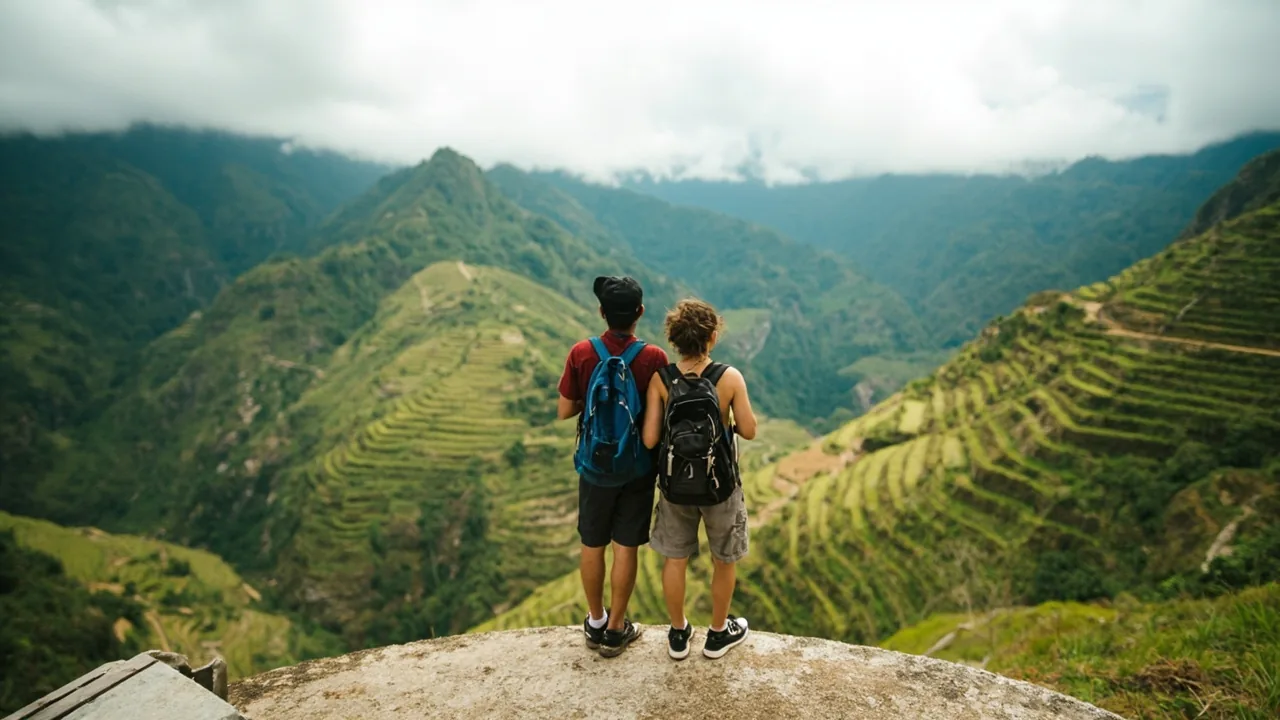
Step 3. Drop bags at your guesthouse, then catch sunrise at the Banaue Viewpoint.
Most guesthouses in Banaue town are a 5-minute walk from the bus drop-off. Drop your bag, ask the owner for a tricycle, and head up to the viewpoint (the main Banaue Rice Terraces overlook). Tricycle round trip including 30 to 45 minutes of waiting: PHP 300-500. Entrance to the viewpoint itself is technically free, though a PHP 20 “maintenance” collection sometimes happens at the top.
Subodh’s Pro Tip: The actual “wow” terraces are a 20-minute drive further at Batad village, but Batad needs a full day (trekking amphitheatre plus Tappiya Falls). Three days is tight for that. If you have one extra day, swap the Banaue Viewpoint sunrise for an overnight in Batad instead.
Step 4. Spend the morning in Banaue, then catch the jeepney to Sagada.
Banaue town itself has nothing beyond a small museum (PHP 50 entry) and a couple of cafes. By mid-morning, head to the jeepney terminal near the public market. The first jeepney to Sagada leaves around 7:30 AM, with later departures when full. PHP 150 per person, 2.5 to 3 hours, sometimes longer if the road is wet.
Step 5. Arrive in Sagada, check in, and rest.
Sagada is small enough that every homestay is within walking distance of the jeepney drop-off. Most are in the PHP 400-800 range for a fan room with shared bath; well-trodden backpacker homestays in the town centre are reliable options to ask about on arrival. Showers are cold (mountain spring water) but you’ll be too tired to care.
Step-by-Step: Day 2, Sagada (Echo Valley, Hanging Coffins, Bomod-ok Falls)
Sagada needs a full day because the spread-out sites mean multiple jeepney or tricycle hops, plus the Bomod-ok Falls trek takes 3 to 4 hours round trip on foot. Budget your energy.
Step 1. Register at the Sagada Tourist Information Office (TIO).
Mandatory. TIO is on the main road, open 8:00 AM to 5:00 PM. You pay the municipal tourism fee (PHP 50), get a receipt, and this is also where you book your mandatory guide for Echo Valley and Bomod-ok Falls. Guides are PHP 700-1,200 per group (split between 1 to 6 people), so solo or pair travellers pay full, while groups of 4 to 6 pay almost nothing each.
Subodh’s Pro Tip: The guide fee is non-negotiable and you cannot legally enter Echo Valley or the Bomod-ok Falls trail without one. The actual amount depends on the trail you choose (Echo Valley only is cheaper, Bomod-ok Falls combo is the top end).
Step 2. Visit Echo Valley and the Hanging Coffins in the morning.
Tricycle from Sagada town to the Echo Valley trailhead: PHP 50 to PHP 80 per person shared. The hike itself is 1.5 to 2 hours round trip, fairly easy, and passes the famous hanging coffins (the Igorot tradition of placing coffins on cliff faces). Bring water and good shoes, the path is rocky and gets slippery after rain.
Step 3. Lunch, then Bomod-ok Falls trek in the afternoon.
Lunch options in town are limited but solid, with local cafes serving Sagada yoghurt (PHP 80-150 per serving) and homemade lemon pie (PHP 120 a slice). Regroup, refill water bottles, then start the Bomod-ok Falls trek by 1:00 PM at the latest.
Bomod-ok Falls requires a separate environmental fee of PHP 100, paid at the barangay hall at the trailhead, plus the guide fee above covers it. The trail is 3 to 4 hours round trip, mostly downhill on the way in (so brace yourself for the climb back), ending at a 60-meter waterfall with a cold-water swimming hole. Bring a towel and a change of clothes.
Step 4. Evening: dinner, optional Sagada weaving demonstration.
Dinner in Sagada is mostly Pinoy rice meals (PHP 120-180) at local diners and cafes in town. Vegetarian options are limited (Filipino veggie dishes tend to be limited to sayote or mongo soup), but almost every place will do an egg-and-veggie fried rice or a vegetable noodles on request. Most travellers report that the indian option is largely absent in Sagada, so look for the veggie options at local restaurants or pick up supplies at the Sagada public market as backup.
Step-by-Step: Day 3, Sagada to Baguio
This is the long-haul travel day. Sagada to Baguio is 6 to 7 hours by bus, mostly winding mountain road, with one comfort stop.
Step 1. Catch the 1:00 PM Coda Lines bus from Sagada to Baguio.
Buy tickets at the Coda Lines office in Sagada the morning of, or just show up by 12:30 PM. Departure is around 1:00 PM but it often leaves late once the bus is full. PHP 380, air-conditioned, mid-size bus, arrives in Baguio between 7:00 PM and 9:00 PM depending on traffic and weather.
Subodh’s Pro Tip: There is also a Lizardo and a G-Bus running this route, with similar schedules and prices. If the 1:00 PM Coda is full, ask at your homestay, the staff always know which bus has space.
Step 2. Arrive in Baguio, drop bags, and grab dinner.
The terminal is in the city centre, walking distance from the Session Road area where most backpacker hostels are. Have dinner near Session Road: Canto is a strong pick if you want something a little more put-together (truffle sisig around PHP 380-450, calamansi sorbet PHP 180), and Leandro’s Bistro in the same district does reliable Filipino comfort food at PHP 200-350 a dish.
Step 3. End the night early. Day 4 (extra) is Baguio proper.
The 3-day loop described above covers Banaue and Sagada in three days but only gives you a Baguio overnight. If you have a Day 4, you can use the Baguio Complete Travel Guide for Indian Backpackers for the cathedral, botanical garden, Camp John Hay, and night market.
Common Mistakes Indians Make on This Route
1. Trying to do Batad in one day along with Sagada. Most Indian travellers arrive thinking Batad is a quick stop on the way to Sagada. It isn’t. Batad is a separate village, 1.5 hours by jeepney from Banaue town, plus a steep downhill trek to Tappiya Falls and back. Doing both in one day means 5 hours of sleep and an aching body. Skip Batad or skip Sagada.
2. Skipping the Sagada guide because it “looks overpriced.” The guide fee at the TIO is municipal, not negotiable, and travelling into Bomod-ok Falls without one triggers a PHP 500 fine plus escort back to town. Travellers report spotty enforcement, and ranger checks have been reported on the trail. Pay the guide.
3. Not carrying small PHP bills for tricycles and fees. Tricycle drivers in Banaue and Sagada rarely have change for a PHP 1,000 note, and the Banaue viewpoint, Sagada TIO, and Bomod-ok Falls trailhead all charge fees that are awkward to pay with large bills. Withdraw PHP 2,000-4,000 in small denominations from an ATM in Cubao before you leave Manila.
4. Taking the wrong bus from Manila. Several night buses run to Bontoc (which passes through Sagada) and Ifugao/Banaue. Ohayami Trans goes to Banaue specifically; if you accidentally board an Autobus or Florida bus, you’ll end up in Bontoc or even further north, with a different jeepney connection to figure out in the dark. Check the destination sign at the front of the bus before boarding.
5. Assuming Indian food exists in Banaue and Sagada. It doesn’t. The Philippines is not Thailand or Vietnam for Indian food access outside Manila and Cebu. Banaue and Sagada are pure Pinoy, with only limited Indian-leaning food options in Baguio. Eat Pinoy veg options like mongo soup, vegetable stir-fry, or egg-and-veggie fried rice at local diners; instant Maggi noodles are only a backup. For a full read on where Indian veg food exists in the Philippines, the Vegetarian Indian Food Philippines Survival Guide covers it.
What Most Guides Don’t Tell You
1. The Ohayami Manila-Banaue bus drops you in Banaue town at 4:00 to 5:00 AM with nowhere to sit. Banaue town is dead quiet at 4 AM, no open restaurants, no transport options until 6 AM. Your guesthouse owner can arrange early check-in if you text from Manila the day before, and this is worth doing. Otherwise, you’ll be sitting on a bench outside the terminal with your backpack.
2. Sagada has no ATM. The nearest reliable ATM is in Bontoc (about 30 minutes by jeepney from Sagada), and even that one ran out of cash during peak weekends. Withdraw in Manila, carry enough PHP for 3 days in small notes, and bring a forex card as backup.
3. The Coda Lines Sagada-Baguio bus stops for dinner in a town with inflated prices. The mid-route stop at a Pinoy diner near San Fernando is well known among travellers for charging 2 to 3 times Manila prices for food. Eat a proper meal in Sagada before boarding. Buy water and snacks at the Sagada public market (cheaper than the bus stop).
4. The “tourist fee” at the Banaue Viewpoint is informal. A local barangay official collects PHP 20 at the top, but this is technically voluntary and goes to maintenance. Don’t refuse aggressively; just hand over PHP 20 and move on.
5. Typhoon season (June to November) makes the Banaue-Sagada road dangerous. Travellers report jeepney delays of 4 to 6 hours when landslides happen, and the Sagada-Baguio bus has been cancelled on typhoon days multiple times in the last 18 months. Check the official PAGASA typhoon tracker the morning of departure and have one extra buffer day in Baguio. For typhoon timing by month, the Best Time to Visit Philippines for Indian Travelers post has a month-by-month breakdown.
Per-Activity Expense Breakdown (PHP)
This is the part most itineraries skip. Here’s what each specific activity costs at the gate.
| Activity | Fee (PHP) | Notes |
|---|---|---|
| Banaue Viewpoint tricycle round trip | 300-500 | Includes wait time |
| Banaue Viewpoint “maintenance” | 20 | Informal, paid at top |
| Banaue Museum entry | 50 | Optional |
| Jeepney Banaue to Sagada | 150 | Per person, first jeep 7:30 AM |
| Sagada TIO municipal fee | 50 | Paid once on Day 2 |
| Sagada guide (Echo Valley only) | 700 | Solo or pair, full guide fee |
| Sagada guide (Echo Valley + Bomod-ok Falls) | 1,200 | Solo or pair, full guide fee |
| Sagada guide per person (group of 6) | 100-200 | Split 6 ways |
| Tricycle to Echo Valley trailhead | 50-80 | Per person, shared |
| Bomod-ok Falls environmental fee | 100 | Paid at barangay hall |
| Sagada Coda Lines bus to Baguio | 380 | Book morning of |
| Manila Ohayami bus to Banaue | 750 | Book at Cubao terminal |
| Cacao Workshop in Baguio (Day 4 optional) | Listed in Baguio shortlist | 2 to 3 hour session |
Exchange rate used: 1 PHP = ₹1.50 (1 INR ≈ 0.67 PHP), verified 2026-07-18.
If you want to bundle the Sagada activities into a single bookable tour instead of chasing jeepneys yourself, search local Sagada-based tour operators once you arrive in town for day-tour packages, which usually run PHP 4,500-6,500 per person including transport, guide, and fees but no accommodation.
Where to Stay
For Manila, Banaue, Sagada, and Baguio, book the Banaue-Sagada-Baguio DIY route via our partner hostel network to lock in fan-room homestays in advance and skip the walk-in search after a 9-hour night bus.
Connectivity
Globe and Smart both sell tourist SIMs at NAIA airport, PHP 50 for the SIM card itself, then load PHP 100 for 5 GB of data valid for 7 days. Signal in Banaue is patchy (1-2 bars of Globe, occasional 4G), Sagada is similar, and Baguio proper has full 4G/LTE. Buy a physical SIM at the airport counter on arrival, top up with a tourist pack, and you’ll have data for the whole 3 days. As a backup or alternative, consider an eSIM from a provider like Nomad before you fly from India, install it on landing, and have data from minute one without queuing at the airport.
FAQ
Do I need a visa for the Philippines as an Indian citizen? No. Indian passport holders are visa-free for 30 days, extendable at any Bureau of Immigration office for PHP 3,030/month. Pay the terminal fee of PHP 550-850 separately at NAIA on exit. For the full rules, see the Philippines Travel From India guide.
How much cash should I carry for 3 days in PHP? PHP 5,000 to PHP 6,500 for the entire loop (transport, accommodation, food, activities). Withdraw from an ATM in Manila in small PHP 200/500/1,000 notes, because Banaue and Sagada have no ATMs and most small fees need exact change.
Can I do Banaue, Sagada, and Baguio in 3 days solo as a female Indian traveller? Yes, and the route is well-trodden by Indian backpackers in 2026. Travellers report feeling safe in guesthouses, on jeepneys, and at the Bomod-ok Falls trail. The main risk is the mountain road itself (driving accidents, landslides in typhoon season), not personal safety. Standard solo female safety rules apply: don’t walk alone after dark in Banaue, and share jeepneys with other travellers where possible.
What if the jeepney or bus gets cancelled? Stay an extra night. Sagada has a homestay for every traveller who gets stuck on the way to Baguio, and the Coda Lines bus does run the next day. Have a buffer day in Baguio, especially in typhoon season (June to November), because landslides have stopped the route entirely for 24 to 48 hours at a stretch.
Is Banaue rice terraces worth it vs the famous Batad ones? The Banaue Viewpoint sees the “stairway to heaven” classic shot but the actual terraces are a bit scruffy from the road. Batad has the famous amphitheatre shape and Tappiya Falls. If you have 4 days instead of 3, replace Day 2 with an overnight in Batad. For a fuller Baguio-side breakdown, see the Baguio 1,500 per day budget guide.
Can I pay with card in Sagada? Mostly no. Most homestays, jeepneys, tricycles, and small restaurants are cash-only. Baguio proper has card acceptance at restaurants and malls, but the moment you leave the city centre, you’re back to cash. Bring a forex card for Manila and Baguio, but actual PHP cash for the whole Banaue-Sagada stretch.
Are there Indian restaurants in Baguio or Sagada? One small Indian-leaning restaurant exists in Baguio, but Sagada and Banaue have none. Plan to eat Pinoy food (rice, egg, mongo soup, vegetable stir-fry) and supplement with veg options from the local market; for a fuller read on where Indian veg food exists in the Philippines, the Vegetarian Indian Food Philippines Survival Guide covers it.
Subodh’s Take
The Banaue-Sagada-Baguio loop is one of the most beautiful short trips in Southeast Asia, and it’s cheaper than a comparable Bali or Vietnam loop once you’re in the Philippines. The trick is treating it as a “moving trip”: Manila to Banaue by night bus, jeepney between mountains, day bus out to Baguio. Book nothing in advance except your Manila hotel for the night before, walk in to Ohayami Cubao terminal at 5:30 PM, and the rest of the route works itself out.
If you have a 4th day, spend it in Baguio proper: the cathedral, the night market, and a quiet evening at the Camp John Hay eco-trail make a soft landing after the mountain chaos. Or skip Batad and add a Sagada overnight in a homestay with a fireplace. Either way, this is one of those trips where going slow saves money.