Best Time to Visit the Philippines: Avoiding Typhoons and Rainy Season (2026)
The Philippines runs on its own weather clock. Book without checking it and you will eat a typhoon for breakfast, lunch, and dinner. The three regional weather zones — Luzon in the north, Visayas in the middle, Mindanao in the south — follow different calendars across the country’s 7,000+ islands. See also: Sea Backpacking Hub.
Quick Answers
| What | Answer | Price (INR) |
|---|---|---|
| Best months overall | December to May (dry season) | , |
| Worst months | July to October (typhoon peak) | , |
| Typhoon peak months | August to September | , |
| Cheapest flight from India | November or June (shoulder) | ₹22,000 (~$227.91) |
| Daily budget (budget) | Dorm + street food + jeepney | ₹2,611 (~1,550 PHP or ~$27.58) |
Philippines Weather at a Glance: The Three Seasons
The Philippines has three seasons, not two. Most blogs lazily say “dry and wet,” but the shoulder month gets lumped into “wet” by default, which is wrong. You may also find Best Place to Visit in Philippines for Single Men useful for this trip.
Dry season (Amihan, December to May): Northeast trade winds push cool, dry air across the country. This is your window. January to March is the driest stretch across all three regions. April to May is dry but starts getting hot, with temperatures pushing 35°C in Manila and Cebu. See also: Day Tour Package Near Manila.
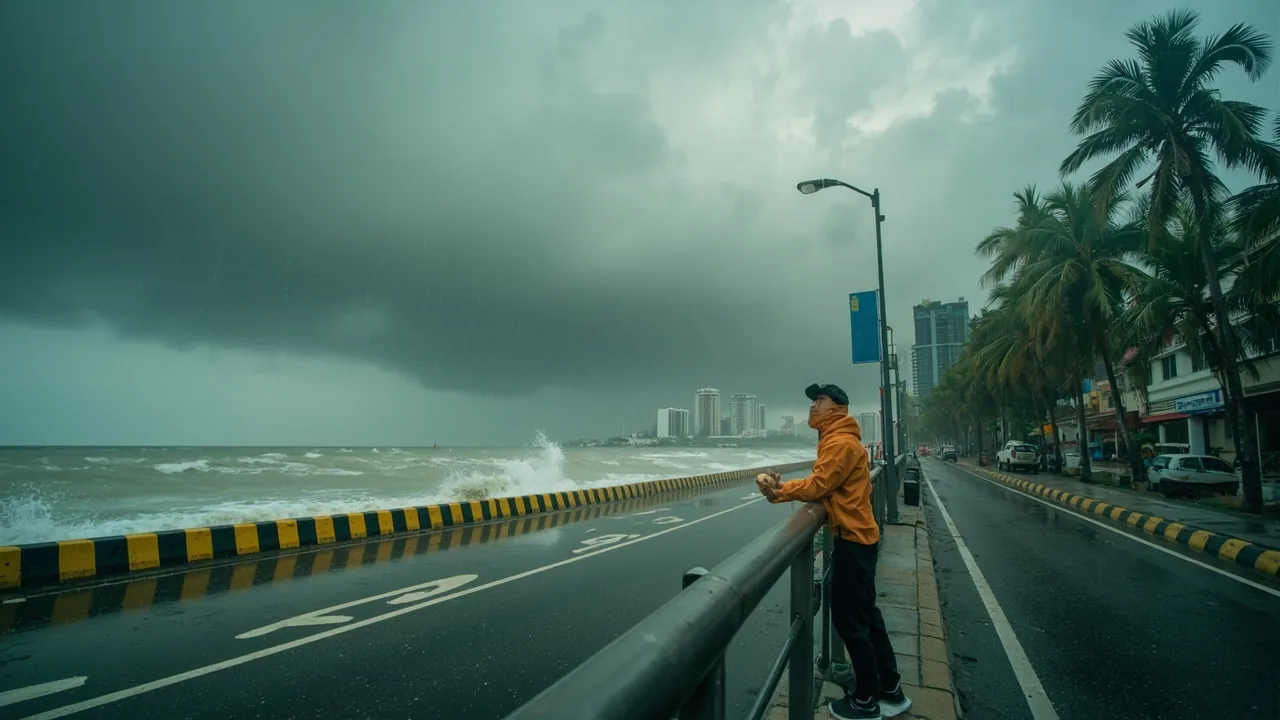
Wet/typhoon season (Habagat, June to November): Southwest monsoon brings heavy rain, high humidity, and 80%+ of the year’s typhoons. Within this, June to July is “rainy but mostly typhoon-free,” August to October is the brutal typhoon peak, and November tapers off. October is statistically the worst month for tropical cyclones in the Philippines. For related planning, see our guide on Cebu City 2 Day Itinerary No Beach.
Shoulder months (November and May): Lighter rainfall, fewer crowds, and pre-typhoon or post-typhoon lulls. The risk isn’t zero (a typhoon can hit any month), but it’s the lowest-stakes way to combine good weather with cheap flights. You may also find 4000 Islands Complete Guide for Indian Travelers Vientiane Routes Itinerary Is It Worth Visiting useful for this trip.
Month-by-Month Breakdown (For Indian Travelers Booking Now)
January to March: The Sweet Spot
These are the driest months countrywide. Manila averages 5 to 8 rain days per month. Cebu and Bohol are sun-soaked. Palawan and El Nido are postcard-perfect. Siargao’s surf season peaks in January and February.
Temperature: 24 to 31°C. Humidity: 65 to 75%. Typhoon risk: low (0 to 2 named storms countrywide per PAGASA 2026 outlook).
Downside: peak tourist season. Boracay hotel rates triple. Flights from Delhi and Mumbai run ₹28,000 (~$290.07) to ₹38,000 (~$393.66) round trip.
April to May: Hot but Dry
Dry across the country. April to early May is still safe. By late May, the southwest monsoon starts stirring, and afternoon thunderstorms become routine in Luzon.
Temperature: 28 to 36°C (Manila can hit 38°C in May). Humidity: 75 to 85%. Typhoon risk: low to moderate (1 to 3 named storms).
Downside: heat exhaustion is real. Holy Week (Semana Santa, late March or April, dates shift yearly) shuts down transport across the archipelago. Check dates before booking.
June to July: Shoulder Rain
Rainy, yes. Typhoon-y, mostly no. Seasonal outlooks for these two months typically forecast several tropical cyclones, mostly weak ones that brush the northern tip of Luzon. Visayas and Mindanao often stay usable for beach trips with afternoon rain patterns.
Temperature: 26 to 33°C. Humidity: 80 to 90%. Typhoon risk: low to moderate.
Downside: unpredictable daily plans. Diving and island-hopping tours in El Nido and Coron get cancelled more often. Still safer than August to October.
August to October: Typhoon Peak
This is the window where flights get cancelled, ferries stop running, and multi-day travel delays become common. Seasonal forecasts typically put 8 to 12 tropical cyclones in this window alone, with multiple making landfall.
Temperature: 25 to 32°C. Humidity: 85 to 95%. Typhoon risk: high.
Past typhoons in this window have battered Luzon, displaced large populations, and shut Manila’s airports for days.
November: Post-Monsoon Recovery
Rain drops fast after mid-November. Crowds are still thin. Flights from India are at their cheapest. This is the second-best window after December.
Temperature: 25 to 31°C. Humidity: 75 to 85%. Typhoon risk: low but not zero .
Downside: some resorts in Boracay and Siargao are still in post-storm repair mode. Check before booking.
Regional Breakdown: Where to Go When
Luzon (Manila, Baguio, Banaue, Palawan)
Manila sits in the typhoon belt. From July to October, plan for at least one major weather disruption. Baguio, the mountain city 1,500 m up, has milder weather year-round (15 to 25°C) and rarely sees typhoon damage, but it does rain more. Palawan (El Nido, Coron, Puerto Princesa) is on the western edge, so it gets less direct typhoon hits than the east coast but still feels the outer bands. Best window: December to April.
Visayas (Cebu, Bohol, Boracay, Siquijor)
Visayas is the geographic sweet spot. It sits in the middle of the archipelago, so typhoons tend to brush either north (Luzon) or south (Mindanao) without direct hits as often. Cebu and Bohol have pleasant weather from December to May. Boracay closes for a rehab period each year (usually October to November, depending on government scheduling), so check tour and ferry availability before flying in. Siquijor is small enough that even a passing storm closes its ports, but December to May is reliable.
Mindanao (Siargao, Davao)
Mindanao is the least typhoon-exposed region. Siargao’s surf season runs September to April, which sounds counterintuitive, but the typhoons pass north and Siargao catches the swell without the wind. Davao and General Santos are the driest spots in the country year-round. If you’re locked into a July to November trip, Mindanao is your safest bet.
How to Get There
Most Indian travellers fly into Manila (MNL) from Delhi or Mumbai. Direct flights take 8 to 9 hours on Philippine Airlines, Air India, or Cebu Pacific. Round-trip fares swing wildly by season:
| Month | Round-trip from Delhi (₹) |
|---|---|
| January to March (peak) | ₹32,000 (~$331.51) to ₹42,000 (~$435.10) |
| April to June (shoulder) | ₹24,000 (~$248.63) to ₹30,000 (~$310.79) |
| July to October (low) | ₹18,000 (~$186.47) to ₹24,000 (~$248.63) |
| November (cheapest) | ₹16,000 (~$165.75) to ₹22,000 (~$227.91) |
If you’re already in Southeast Asia and want to combine the Philippines with Thailand, Vietnam, or Bali, Manila to Bangkok and Manila to Ho Chi Minh City are short 3 to 4-hour flights on Cebu Pacific, AirAsia, and VietJet. Book combined tickets via a regional transport aggregator.
Visa and Entry Notes
Indian passport holders get visa-free entry for 30 days, extendable once at any Bureau of Immigration office for an additional 29 days (about PHP 3,030, paid in cash at the immigration office). The extension is straightforward, but you need to bring your passport, a photocopy of your arrival stamp, and a black pen, plus the fee in Philippine pesos. Don’t try to extend on the last day, the lines are brutal.
At Manila’s Ninoy Aquino International Airport (NAIA), there’s a separate terminal fee of PHP 550 to 850, paid in cash at a dedicated counter before you exit. This is NOT the same as your visa, it’s an airport-use fee and applies to everyone flying out. Budget for it or you’ll be scrambling at the counter.
The eTravel registration (the Philippines’ digital arrival card) is mandatory and free at etravel.gov.ph. Fill it in within 72 hours of departure. Skip this and you’ll be sent to a kiosk at the airport to do it manually, which adds 30 to 45 minutes to your arrival.
What to Eat
Filipino food is pork-heavy, soy-sauce-heavy, and built around rice. If you’re vegetarian, it’s harder than Thailand but easier than Vietnam. Most menus have at least one or two veg options, and Indian restaurants exist in every major city.
Local dishes worth trying:
- Adobo (chicken or pork braised in soy, vinegar, garlic): A staple home-cooked dish found across carinderias for PHP 80 to 150. Order the chicken version, it’s the safer choice.
- Sisig (chopped pork belly sizzled on a hot plate): PHP 100 to 180 at carinderias across the city, served with rice and a raw egg cracked on top. Best with a cold San Miguel beer.
- Halo-halo (shaved ice dessert with beans, fruits, ube, leche flan): PHP 60 to 120 at any carinderia (local eatery). It’s the national dessert and refreshing in Manila’s heat.
- Lechon (whole roast pig): A specialty of Cebu. PHP 350 to 600 per kilo. Crispy skin, tender meat, and the reason Cebu is on every food traveller’s list.
Indian food fallbacks:
- Biryanista in Manila specializes in authentic Hyderabadi biryanis in a stylish modern setting. Expect to pay PHP 350 to 600 per plate.
- Seven Mannah Indian Fusion Food offers Indian fusion with a casual vibe, charging around 300 to 500 PHP per person. Reviewers specifically praise the chicken biryani here.
- Agni - By Mantra is your upscale North Indian option in a chic setting. Best for a proper dal-chawal fix when you’ve eaten too much pork.
Where to Stay
Hostel prices across Manila, Cebu, and Palawan (El Nido) drop 30 to 50% in the wet season (June to November). Book shoulder-season dates for the best value. For a July to November trip, Siargao is the safest backpacker base — the typhoon track rarely hits General Santos or Davao directly, and the surf scene doesn’t shut down when it rains.
Getting Connected
Physical SIM: Globe and Smart both sell tourist SIMs at NAIA arrivals and at every 7-Eleven. The 7-day tourist pack runs PHP 50 (about ₹75), with data add-ons starting at PHP 100 for 5GB. Buy at the airport if you want immediate connectivity, at 7-Eleven if you want the same price without the airport markup.
eSIM alternative: Get Nomad eSIM before you fly. Philippines eSIMs from Airalo, Holafly, and Nomad work on Globe’s network and activate the moment you land. No passport, no kiosk, no queue. Nomad’s 5GB/7-day pack is the best value for a 10-day island-hopping trip.
WiFi: Hostel WiFi in Manila and Cebu is reliable (10 to 30 Mbps). In El Nido and Siargao, expect 5 to 10 Mbps with outages during storms. Most cafes have decent WiFi, but a local SIM is non-negotiable for Grab, Google Maps, and ferry booking.
Daily Budget Breakdown
Daily costs for a budget backpacker staying in dorms, eating street food, and using jeepneys:
| Category | Budget/day |
|---|---|
| Dorm bed | 500 PHP |
| Food (3 meals) | 350 PHP |
| Local transport | 150 PHP |
| Activities | 400 PHP |
| SIM/data | 50 PHP |
| Misc (water, drinks) | 100 PHP |
| Total | 1,550 PHP |
At current rates (1 PHP = ₹1.55), 1,550 PHP ≈ ₹2,403 per day. This is what travellers spend, not what blogs quote. The same trip in peak season (January to March) runs 1,800 to 2,200 PHP/day because accommodation and activities cost 20 to 40% more.
Common Mistakes
Booking a July to October trip without travel insurance. Typhoons strand you for days. Flights get cancelled, ferries stop, and hostels fill up. Travel insurance that covers trip interruption and accommodation extension is the difference between a 3-day delay and a financial hit. Get it before you book anything.
Assuming “the Philippines” has one weather pattern. Manila in August is a typhoon risk. Siargao in August is dry enough to surf. Geography matters. If your dates are fixed and fall in the wet season, choose your region accordingly.
Not registering with your embassy. The Indian Embassy in Manila is at 2190 Pasong Tamo Ext, Makati. Register your trip online before arrival. If a typhoon hits and you need evacuation, the embassy needs to know you’re in the country.
Skipping the eTravel registration. It’s free, takes 5 minutes, and is mandatory. Doing it at the airport kiosk wastes 30 to 45 minutes of your arrival.
Exchanging money at NAIA arrivals. The rates at airport counters run 5 to 8% worse than cityside ATMs. Withdraw PHP from a UnionBank or BDO ATM in the arrivals hall instead.
FAQ
Is the Philippines safe for solo Indian travelers?
Generally yes. Petty theft (pickpocketing, phone snatching) is the main risk in Manila and Cebu. Avoid walking in Ermita (Manila) and Colon Street (Cebu) after 10 PM. Siargao, Palawan, and Bohol are safe enough to walk alone at midnight.
Can I get Indian food in the Philippines?
Yes. Manila has the largest concentration (Biryanista, Seven Mannah, Agni). Cebu has 2 to 3 solid options. El Nido and Siargao have one or two each, with limited hours. Expect to pay PHP 300 to 600 per plate, twice what a Filipino meal costs.
What is the cheapest month to fly to the Philippines from India?
November. Airfares from Delhi and Mumbai drop to ₹16,000 (~$165.75) to ₹22,000 (~$227.91) round trip, and the typhoon risk is mostly cleared by mid-month.
Do I need a typhoon evacuation plan?
If you’re traveling July to October, yes. Save the Indian Embassy Manila number (+63-2-8843-1001), download the PAGASA weather app, and keep a buffer of 1 to 2 extra days in your itinerary for weather delays.
Can I island-hop during typhoon season?
Yes, but with a Plan B. Coastal Connections, 2GO, and OceanJet ferries run on adjusted schedules when storms approach. Buy flexible tickets or book day-of at the pier if you’re in Visayas or Mindanao during July to October.
What is the official source for typhoon forecasts?
PAGASA (pagasa.dost.gov.ph) issues official tropical cyclone bulletins. Download their app or follow @dost_pagasa on X (formerly Twitter) for real-time updates. Their 2026 forecast is the basis for the month-by-month breakdown above.
Is travel insurance worth it for the Philippines?
Yes, even outside typhoon season. Healthcare is private-pay, and a single ER visit in Manila runs PHP 5,000 to PHP 15,000 without insurance. SafetyWing’s nomad plan covers this and evacuation for about $62/month.
Subodh’s Take
Book December to March if you have school or work constraints, it’s the obvious window for a reason. Book November if you’re flexible and want to save ₹8,000 (~$82.88) to ₹12,000 (~$124.32) on flights. Book July to October only if you’re locked in, and only if your region is Mindanao or the inner Visayas. The Philippines is one of the best-value tropical destinations for Indian backpackers right now (cheap food, friendly people, visa-free), but a typhoon can ruin the trip faster than any other risk in Southeast Asia. Check PAGASA, register with the embassy, and pack a rain jacket that keeps you dry.
