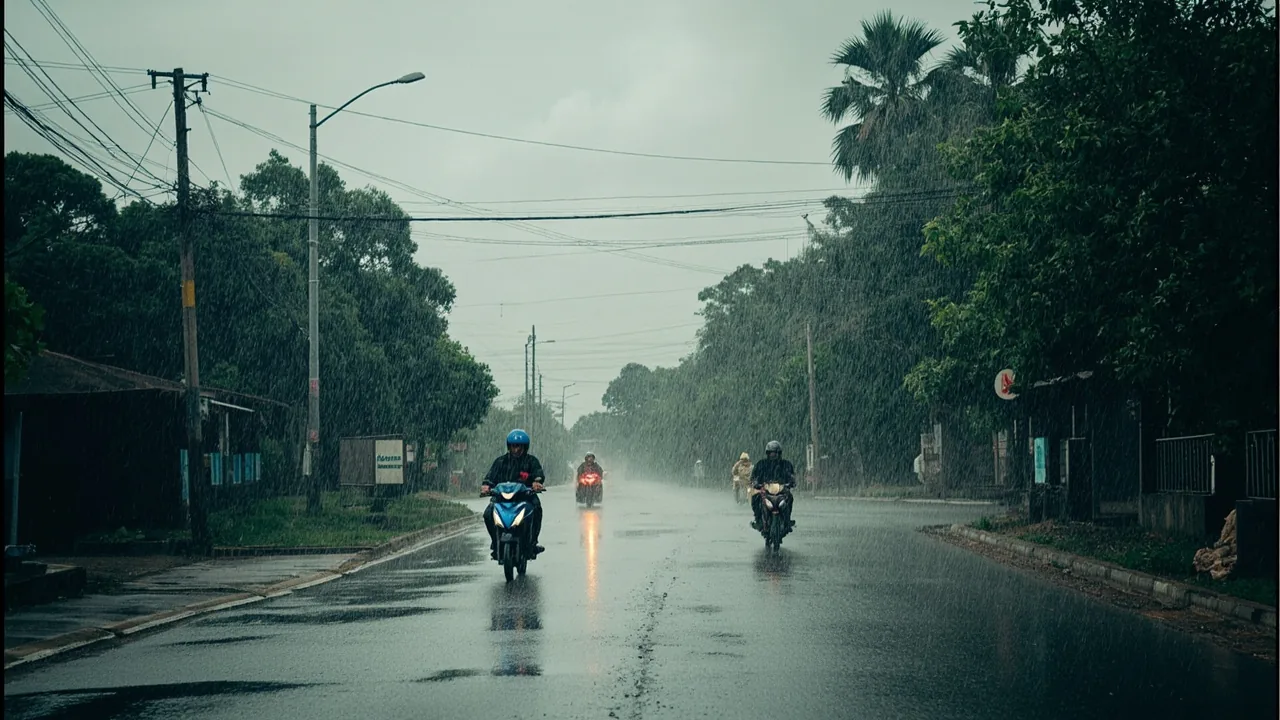
Cambodia Monsoon Season 2026: What Indian Backpackers Need to Know Before Booking
Cambodia’s monsoon runs June through October, and it has two faces: a soft wet season in June and early July that barely disrupts travel, and a proper wet season from late July through September when daily downpours can flood roads around Phnom Penh and turn a Siem Reap temple day into a mud bath. Travelling in it is cheaper, quieter, and greener than a December peak, but it demands a different kind of packing list and a different route plan. This guide walks through what happens month by month, what it costs, and where the rain is genuinely a problem. For related planning, see our guides on Sea Backpacking Hub and Monsoon Travel Guide for Indian Backpackers June October Deals Trends Tips.
Quick Answers
| What | Answer | Price (INR) |
|---|---|---|
| When is monsoon in Cambodia? | June to October (peak downpour: late July to late September) | ~ |
| Is Cambodia worth visiting in monsoon? | Yes for budget travellers; temples stay open, just rain plan | ~ |
| How much cheaper is monsoon vs peak season? | Dorm beds drop ~40%, flights from India drop ~50% | ~ |
| Which region floods most? | Phnom Penh and Tonlé Sap lake region (low-lying) | ~ |
| Best monsoon month for a first-time Indian visitor? | Late June or early October (shoulder rain, fewer crowds) | ~ |
Month-by-Month Breakdown
| Month | Weather | Crowds | Cost Level | Verdict |
|---|---|---|---|---|
| May | Pre-monsoon, hot and humid (33-36°C), short evening storms | Low | Shoulder (₹₹) | Transition month, good value |
| June | Wet mornings, dry afternoons, 25-30 mm rain/day | Low | Low (₹) | First soft month, good entry |
| July | Daily heavy rain, 150-200 mm total, hot and humid | low | Low (₹) | Cheapest month, plan indoor afternoons |
| August | Peak monsoon, full-day rain possible, road flooding | low | Low (₹) | Skip if you hate rain, save 50% on hotels |
| September | Peak monsoon, 200-300 mm rain, floods on NH5 to PP | low | Low (₹) | Bad month for rural travel, OK for cities |
| October | Rain tapering, 1-2 hours morning rain, cool evenings | Low | Low (₹) | Best monsoon value window |
| November | First dry month, 25-30°C, low humidity | Rising fast | Shoulder (₹₹) | Worth waiting for if you can |
Subodh’s Pro Tip: The mistake most Indian backpackers make is treating monsoon as binary, “either I go in dry season or I don’t go.” In reality, late June and early October are almost as rain-free as December, and you pay half the airfare. If your dates are flexible, target those two bookends. You may also find Best Time to Visit Cambodia From India Month By Month Weather Crowds Prices Guide useful for this trip.
Monsoon in Cambodia. Pros and Cons
Pros:
- Flights from Chennai, Kolkata, or Bengaluru to Phnom Penh drop to around ₹12,000-₹18,000 (~$124.56-$186.84) round trip (peak December is ₹28,000-₹35,000 (~$290.64-$363.30))
- Dorm beds in Phnom Penh and Siem Reap drop into the ₹400-₹800 (~$4.15-$8.30) range, half of high-season pricing
- Angkor Wat crowds thin by half. You can take the iconic sunrise photo without 200 people in your frame
- Countryside is the greenest you’ll see all year. Tonlé Sap lake is at its fullest
- Khmer countryside homestays and rural guest houses offer almost-zero rates for walk-ins See also: Visiting Cambodia in January Weather Crowds Prices Events.
Cons:
- Heavy afternoon downpours from late July through September can flood roads on NH5 (Phnom Penh to Battambang) and NH6 (Phnom Penh to Siem Reap via the eastern route)
- Rural buses get cancelled or delayed by 3-4 hours when rural feeder roads flood
- Siem Reap temple roads turn to sticky mud after rain. Slip-on shoes get ruined in a single afternoon
- Mosquito populations peak after the rains, dengue risk is genuinely elevated
- Boat services to Koh Rong can be cancelled a day ahead due to sea swell; refunds are inconsistent
- Most beach guesthouses close or run skeleton staff through August and September For related planning, see our guide on Visiting Cambodia in February Weather Crowds Prices What to Expect.
What happens, week to week: June is a soft open, you get one or two proper downpours a week and the rest of the day is fine for sightseeing. Late July through mid-October is when the real rain arrives, and Cambodian meteorology splits into “afternoon pattern” (big storm 3-5 pm, dry by evening) and “all-day pattern” (grey sky, drizzle, occasional heavy burst, never clears). The all-day pattern is rarer than the afternoon pattern but more disruptive. Flooding on the main highways is the real risk, not the rain itself.
If you arrive in monsoon, budget for one or two “lost days” where you cannot do the planned temple loop or boat trip. Travellers report that Phnom Penh and Siem Reap both have enough café, mall, and museum cover to comfortably waste a rainy day. The coast (Sihanoukville, Koh Rong) does not; an all-day rain pattern there is genuinely miserable because the beach is the entire reason you came.
What to Pack Specifically for Monsoon
Dry bags for your electronics and passport are the single most important item. A 10-litre dry bag costs about ₹289-₹482 (~3-5 USD) at any Phnom Penh market and will save your phone on every boat ride to Koh Rong and every tuk-tuk in a Phnom Penh downpour. Quick-dry shirts and quick-dry trousers beat jeans; wet denim stays wet for 12 hours in Cambodia’s humidity and rots fast.
A lightweight poncho (₹300-₹500 (~$3.11-$5.19) in Mumbai before you fly, or ₹71 (~3,000 KHR or ~$0.74) / ₹72 (~0.75 USD) at any Phnom Penh night market) is fine. A proper rain jacket with taped seams is better if you’ll be doing temple walks. Skip the umbrella; it doesn’t work in monsoon winds and it leaves one hand free for nothing.
Footwear matters more than you think. Solid waterproof hiking sandals (Tevas, Merrells, or any knock-off with grippy soles) handle both flooded pavements and temple mud. Closed shoes are a liability in monsoon, they never dry. One pair of quick-dry trainers for bus and plane rides is enough.
Pack two changes of clothes minimum, even for a five-day trip. Humidity means laundry does not dry in a closed hostel dorm room, even with a fan. Pack a small bottle of Dettol or Savlon and a tube of DEET-based repellent (Odomos is fine, but bring a stronger one for jungle temple days). Dengue is the bigger monsoon risk than rain itself.
A packable backpack cover (₹200-₹400 (~$2.08-$4.15)) is worth the weight. Many hostels don’t lend plastic covers, and a soaked daypack is an unpleasant travel companion. A simple money belt for your passport and spare cash, kept in your dry bag, makes monsoon day-trips much easier psychologically.
Season Costs Comparison
| Item | Peak Season (Nov-Feb) | Shoulder (May, Oct) | Low Monsoon (Jun-Sep) |
|---|---|---|---|
| Flight from India (round trip) | ₹28,000 (~$290.64) | ₹18,000 (~$186.84) | ₹12,000 (~$124.56) |
| Dorm bed Phnom Penh (per night) | ₹800 (~$8.30) | ₹600 (~$6.23) | ₹400 (~$4.15) |
| Dorm bed Siem Reap (per night) | ₹1,000 (~$10.38) | ₹700 (~$7.27) | ₹400-₹800 (~$4.15-$8.30) |
| Dorm bed Sihanoukville (per night) | ₹900 (~$9.34) | ₹700 (~$7.27) | ₹500-₹900 (~$5.19-$9.34) |
| Phnom Penh to Siem Reap bus | ₹1,200 (~$12.46) | ₹900 (~$9.34) | ₹700 (~$7.27) |
| Angkor Wat 1-day pass | ₹3,900 (~$40.48) | ₹3,900 (~$40.48) | ₹3,900 (~$40.48) |
| Cambodia e-Visa fee | ₹3,500 (~$36.33) | ₹3,500 (~$36.33) | ₹3,500 (~$36.33) |
The big-ticket items, your airfare and the Angkor pass, are fixed across the year. But hotel and bus savings are real, and the difference between a December peak trip and an August monsoon trip runs ₹10,000-₹15,000 (~$103.80-$155.70) on a 7-day itinerary for a single traveller. Two travellers splitting a private room save more.
Where the Rain Floods
Phnom Penh: The city itself handles rain well, drainage is decent along the riverfront and most central districts. Some northern neighbourhoods (Russei Keo, parts of Chbar Ampov) flood 30-60 cm deep in late August after a full day of heavy rain. Cambodian tuk-tuk drivers will refuse to cross flooded streets, and for good reason, even a small Honda Dream can stall.
Siem Reap: The temple complex at Angkor drains reasonably well because it’s on slightly elevated ground, and the causeways handle rain. The issue is mud on the access roads after a storm. Once your shoes are muddy, your next temple visit is uncomfortable. Tours push morning temple visits and indoor afternoons for this reason.
Coast (Sihanoukville, Koh Rong): The ocean swells in July through September. Ferry operators cancel services a day ahead when swell exceeds about 1.5 metres. Refunds are inconsistent, expect to lose part of your fare if you book a ferry during monsoon.
Countryside and border regions: NH5 west from Phnom Penh, NH6 north and east, and the road to Koh Kong can flood in patches. Ask at your hostel what the current road status is; word travels fast in Cambodian backpacker hostels about which stretches are blocked.
Angkor and the Coast in Monsoon. What Changes
Angkor Wat remains open year-round, and monsoon is the single best time to photograph it without tourist crowds. The moat is at its fullest in September, the reflection photos are better in monsoon than any other month. The main issue is the temple weather itself: Angkor Wat sunrise (the iconic photo) works in early morning, before clouds roll in, and clouds most days in monsoon. Plan it for the first day of your Siem Reap stay so you can try again if clouds spoil it.
Koh Rong ferries run most days, but expect cancellations in August and September. Build in two buffer days in Sihanoukville in case you arrive and find no boat. Sihanoukville itself has been under development pressure in recent years; many older guesthouses along the beachfront have closed for redevelopment and the main backpacker strip is not what it was a few years ago. Travellers report the beach and island experience is best from October to March.
Getting Connected
A solid data connection matters in monsoon more than any other time of year: ferry cancellations, flood road closures, and weather alerts all arrive by Telegram or SMS first. A local SIM or eSIM is non-optional.
At current rates (1 KHR = ₹0.0239, so 5,000 KHR ≈ ₹120), any of the major operators sells a tourist SIM with 5-10 GB valid 7-30 days for ₹119-₹238 (~5,000-10,000 KHR or ~$1.24-$2.47). Buy at the airport counter on arrival (fastest, no address needed) or at a Smart or Cellcard shop in central Phnom Penh if your hostel doesn’t hand you a SIM card with check-in.
For an Indian traveller flying multi-leg out of a hub, an eSIM lets you switch on data before you even land. Get Nomad eSIM works on arrival and avoids the airport queue. Either way, set up Telegram for your hostel group and Google’s flood-alert layer for Siem Reap before you need them.
Visa and Entry
Indian passport holders get visa on arrival (₹2,890 (~30 USD), roughly ₹2,900 (~$30.10) at current rates) or an e-visa (₹3,468 (~36 USD), roughly ₹3,480 (~$36.12)). The e-visa route is slightly more expensive but lets you skip the airport queue, useful if you’re arriving on a late flight with a tired group. Both give 30 days single entry. Extensions cost ₹4,335 (~45 USD) at the immigration office in Phnom Penh. Apply through the official government portal at evisa.gov.kh, no third-party sites, the official site returns the visa in 3 business days for most Indian applicants.
You’ll need a passport photo (4x6 cm, white background) for the visa-on-arrival form. Keep two spares for any tour book-up that asks for ID across your stay.
Safety and Health
The three real risks in Cambodian monsoon are dengue, road flooding, and food-borne stomach bugs.
Dengue peaks in monsoon because mosquito populations peak. Use DEET-based repellent from sundown to sunrise, wear long sleeves in the evenings, and consider sleeping under a net if your hostel room doesn’t already have one (most do). If you develop a sustained fever above 38.5°C with body aches, see a doctor in Phnom Penh or Siem Reap within 24 hours, dengue is treatable but the early phase is the same as a bad flu.
Road flooding is the leading non-health risk. Don’t try to walk or ride through flooded streets after heavy rain. Tuk-tuks will refuse, listen to them, the locals know which streets flood. If a rural bus trip is cancelled, accept the delay and stay one more night; rescheduling is cheap in monsoon.
Tap water is not safe anywhere in Cambodia; rain doesn’t help this. Drink bottled or filtered water only. Ice in tourist restaurants is usually fine (factory-made, not tube ice) but street-stall ice cubes can be risky in monsoon humidity.
Beyond that, generic Cambodia travel advice applies year-round: dress modestly at temples, use Grab (the local ride-hailing app) over unmarked tuk-tuks at night, and keep your passport in your hostel safe rather than on your body. For Indian travellers specifically, check the MEA travel advisory at mea.gov.in before booking; border tensions with Thailand have been historically unpredictable, and Cambodia shares long land borders with Thailand and Laos.
FAQ
Is Cambodia worth visiting during monsoon season?
Yes for budget and crowd-averse travellers; no for beach-first itineraries. Phnom Penh and Siem Reap work fine in monsoon with a rain plan, and Angkor Wat is at its greenest. Sihanoukville and the islands are best in October-March.
When does Cambodia’s monsoon end?
Monsoon tapers through October and ends completely in most years by early November. The “shoulder” months of May and October have low rain but high humidity and are the best deal windows.
What is the cheapest month to visit Cambodia?
August, by a small margin. Flights are at their floor, dorm beds drop to ₹400-₹800 (~$4.15-$8.30), and tour prices fall. The trade-off is more rain and reduced rural transport.
Can I do Angkor Wat in monsoon?
Yes, and July through October is the best time to photograph Angkor without crowds. Mornings are typically dry; afternoon storms are common. Wear quick-dry shoes and plan temple visits before 11 am.
Will monsoon cancel my flights within Southeast Asia?
Low risk on major routes (KUL-PNH, BKK-PNH). Higher risk on small turboprop flights to Koh Rong or Mondulkiri. Build buffer nights into your itinerary.
Is dengue a real risk?
Yes, elevated in monsoon compared to dry season. Use repellent, sleep under a net when possible, and see a doctor quickly if you develop a fever with body aches.
Should I book a hostel for the entire trip?
For Phnom Penh and Siem Reap, yes, during monsoon walk-ins still find rooms but cancellations make it risky to commit last-minute. For the coast (Koh Rong), book only 1-2 nights ahead in August-September because ferry cancellations can strand you.
Subodh’s Take
Monsoon in Cambodia is one of the most under-rated windows in Southeast Asia for Indian backpackers on a budget. The country empties out, prices drop 40-50% from December peak, Angkor Wat becomes photographable without fighting crowds, and the rain patterns are manageable with a half-day plan. The first-time Cambodia visitor who can spare the flexibility of “I might lose one temple afternoon to rain” gets a better trip for half the money. The beach-first traveller should wait until October or November; monsoon at the coast is a different beast. If your dates are flexible, late June or early October is the sweet spot: low prices, low crowds, and rain you can plan around.
