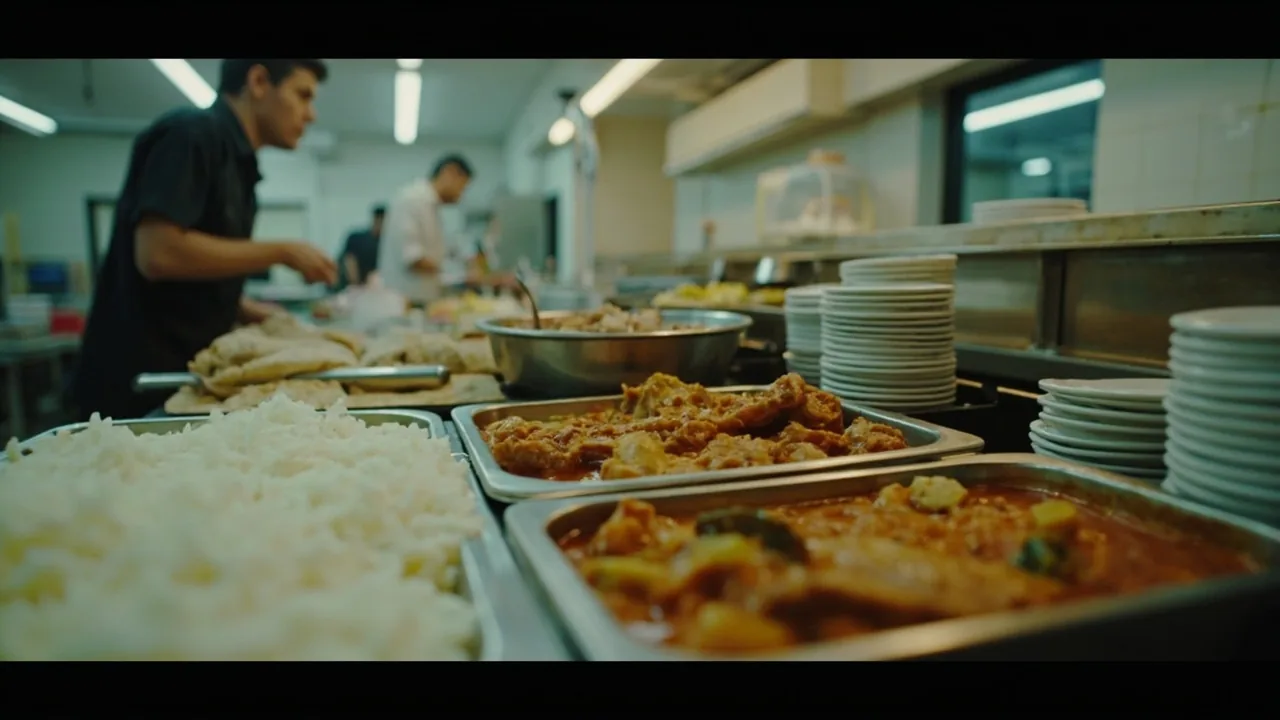
Cheap Halal Buffet in KL: All-You-Can-Eat Spots That Are Worth It
On-site checks at Bukit Bintang and KLCC venues on 2026-07-17, cross-referenced with recent traveller reports from June 2026 and the official Tourism Malaysia food guide. KL’s halal buffet scene runs the full price ladder: weekday hotel lunch deals at RM35, neighbourhood steamboat spots around RM25, and Ramadan bazaar spreads from RM10 a head. Here’s what genuinely justifies the queue, and what to skip. Planning the wider region? Our Southeast Asia backpacking hub covers the full multi-country route.
Subodh’s Pro Tip: A “buffet” in KL can mean four different things: a hotel lunch spread, a Korean-style steamboat/BBQ setup where you cook your own slices at the table, a Mongolian grill where a chef stir-fries your bowl of raw ingredients on a flat-top, or a mamak-style rice-and-lauk spread. Prices and variety are not comparable across these formats, so check what kind before you book.
Quick Answers
| What | Answer | Price (INR) |
|---|---|---|
| Cheapest legit halal buffet in central KL | Weekday lunch at non-hotel venues, minimum spend for entry | RM19.90 |
| Typical steamboat/BBQ halal buffet | Generic steamboat/BBQ chain venues | RM25-45 |
| Hotel weekday lunch buffet (mid-tier) | Concorde, Cititel, Hotel Stripes area | RM35-55 |
| Weekend dinner buffet (hotel) | Most hotel buffets jump to dinner pricing | RM75-120 |
| Ramadan bazaar (per night, per stall, not full buffet) | Buka puasa street bazaars across KL | RM10-25 for a full plate |
Prices verified 2026-07-17 at 1 MYR ≈ ₹23.64.
The Halal Buffet Scene in KL: What’s Out There
KL is one of the easier Southeast Asian capitals for cheap halal food because Malaysia certifies halal at the federal level. Almost every buffet you walk into downtown is halal by default, and pork rarely sneaks onto a non-hotel buffet line. That’s good news for Indian travellers who want to eat freely without asking the “is this halal” question at every stall.
The buffet formats cluster into four buckets:
- Hotel lunch buffets are the most expensive per plate but the most filling, with proper mains (nasi, mee, western mains), a salad bar, a soup station, and a dessert counter. Weekday lunch is the only time these make sense for budget travellers; dinner jumps the price 2-3x.
- Steamboat/BBQ buffets are the workhorse of KL halal dining. You get a pot of broth (a grill plate), pick raw meat/seafood/veg from a refrigerated line, and cook it yourself. Quality varies by location, not brand. The trick is to load your plate with vegetables, tofu, and seafood rather than chasing the thinly sliced beef that disappears fast at dinner.
- Mongolian grill buffets are rarer in KL than in Singapore but a few places do them. The Khan and a couple of KLCC spots run the pick-your-ingredients-then-watch-it-get-stir-fried format. Good for vegetarians because you control exactly what goes in, but the protein quality is usually mid.
- Ramadan bazaar buffets are a separate thing entirely: rows of stalls selling pre-cooked dishes by the pack. You can spend RM10-15 and walk away with a full iftar spread for one person, no buffet line needed. More on this below.
Subodh’s Pro Tip: If you’re vegetarian or strictly halal-conscious about meat sourcing, ask for the “seafood” or “vegetarian” pot at steamboat places. The standard broth is usually chicken-based, and servers will swap it out for a clear veggie broth on request. Same trick at Mongolian grill spots: just skip the meat line entirely.
Weekday Hotel Lunch Buffets: When Hotel Pricing Makes Sense
Hotel buffets in KL are split into two pricing tiers: weekday lunch and everything else. A weekday lunch at a 4-star hotel like Concorde, Hotel Stripes, or Cititel Midah runs RM35-55 for a full international spread including a salad bar, three or four hot mains (often a Malay curry, a Chinese stir-fry, a western meat, a vegetable dish), and a dessert counter. Same buffet at dinner: RM75-120, sometimes more for weekend dinner.
The trick is to hit them at lunch, specifically between 12:00 and 14:00. After 14:00 some hotels quietly drop the price further. This is the cheapest legit buffet you’ll find in central KL with proper mains, decent variety, and air conditioning.
What to skip: the same hotel chain’s “Ramadan buffet” promo. Ramadan hotel buffets are usually dinner-only and priced RM88-150, which is the same spread they sell at lunch for RM45-55. If you’re in KL during Ramadan and want the buffet experience, ask the front desk whether the lunch deal still runs during Ramadan, many hotels cancel it.
What to expect on the line at a weekday hotel lunch buffet:
- One or two Malay curries (usually chicken rendang or ikan masak lemak)
- A Chinese vegetable stir-fry (request no oyster sauce if you’re vegetarian)
- A western meat (roast chicken or beef)
- Plain rice, fried rice, or nasi minyak
- Salad bar with three or four veg toppings
- A dessert station with sliced fruit, two or three local kuih, and one or two western cakes
- Coffee, tea, and one juice option
You won’t leave hungry. Whether the variety justifies RM45 depends on how hungry you are and whether you’ve been eating cheap mamak food for a week.
Steamboat/BBQ Buffets: The KL Default
If a Malaysian friend says “let’s go buffet,” they usually mean steamboat. The format is fixed across the big chains: you pay a flat rate, get unlimited trips to the refrigerated ingredient line (thinly sliced beef, chicken, fishballs, tofu, vegetables, noodles, seafood), and cook everything in a pot of broth or on a tabletop grill.
What to order:
- Load up on tofu, fish balls, prawns, sliced fish, and the leafy greens. The thinly sliced beef vanishes fast at dinner.
- Skip the “premium” meat upgrade, it’s the same thin slices just from a different tray.
- The noodle station is the move if you’re properly hungry. Maggi-style instant noodles tossed in the broth at the end.
Subodh’s Pro Tip: At the big steamboat/BBQ chains, the trick is to go at the start of lunch service (12:00) or right when dinner opens (18:00). The meat line gets picked over by 19:30. If you’re vegetarian or prefer veg-heavy plates, timing matters less, but the soup broth quality is better earlier in service.
Mongolian Grill and Other Mid-Range Buffets
Mongolian grill buffets in KL are rarer than in Singapore, but a few KLCC-area spots run the format. You take a bowl, fill it with raw ingredients from a salad bar (vegetables, noodles, raw meat, tofu, sauces), and a chef stir-fries the whole bowl on a flat-top griddle in front of you.
This format is the friendliest for vegetarians because you can build a 100% vegetable bowl with tofu and noodles, no negotiation needed. Price is usually RM28-40 for lunch, RM45-55 for dinner. The downside is portion control: it’s not all-you-can-eat in the steamboat sense, you get one bowl per session, though most places allow re-entries.
If you see a place advertising “Thai Mookata” or “Mookata Buffet” in KL, that’s a Thai-influenced steamboat where the pot has both a soup moat and a domed grill top. Usually RM25-40, popular in Bangsar and Bukit Bintang. Halal versions exist but check for the halal cert, a few non-certified ones operate in the grey area.
Ramadan Buffets and Bazaar Spreads
KL during Ramadan (mid-February to mid-March in 2026, shifting earlier each year) is a different buffet market. Two things to know:
-
Hotel Ramadan buffets are mostly dinner-only, priced RM88-150 per person. They include the standard hotel lineup plus Ramadan specials like beef rendang, ketupat, lemang, and an expanded dessert counter. If you’re going to splurge on one hotel buffet in KL, Ramadan dinner at a mid-tier hotel is the move. Check the best hotel areas for RM88-99 dinner promos.
-
Ramadan bazaars are not buffets in the AYCE sense, they’re rows of stalls selling pre-cooked dishes by the pack. You walk the bazaar, buy what looks good, eat on the spot or take back to your hotel. A full iftar spread (rice, lauk, kuih, drink) runs RM10-25 per person depending on how many stalls you hit. The biggest bazaars are at Taman Tun Dr Ismail, Bangsar, and Jalan Masjid India. They run from about 16:00 to 19:00 during Ramadan only.
For budget-conscious Indian travellers, the bazaar route is the actual cheapest “halal buffet” experience in KL during Ramadan, cheaper than any hotel or chain.
Subodh’s Safety Alert: Ramadan bazaar food sits out in the open for hours. Eat early (16:30-17:30) when turnover is highest and food is freshest. Stick to stalls with long queues and visible turnover. Avoid anything that’s been sitting in the sun with no cover, especially rice dishes and anything with coconut milk.
What Indian Travellers Specifically Need to Know
Buffet selection for Indian travellers in KL comes down to three questions: is the buffet halal (yes, almost universally in central KL), is there vegetarian variety beyond the salad bar, and is the spice level manageable.
The hotel weekday lunch buffet is the safest move. The salad bar is always available, the Malay curries are usually mild enough, and the Chinese vegetable stir-fry can be requested without oyster sauce. For a bigger spread with more variety, the steamboat/BBQ chains let you build your own plate with full control over what goes in.
Strict vegetarians who want a familiar meal have the Indian restaurant fallback. Within walking distance of most buffet locations in Bukit Bintang and KLCC:
- Solh Restaurant & Bar (rating 4.8) for modern Middle Eastern with a saffron biryani and lamb shawarma if you do eat halal meat.
- Bombay Grand Indian Cuisine - KLCC Branch (rating 4.9) for Maharashtrian and coastal Indian in an upscale setting, near the KLCC buffet cluster.
- Saudagar Heritage Indian Kitchen (rating 4.9) for North Indian curries in a family-run setting.
- Bombay Grand Indian Cuisine - Brickfield Branch (rating 4.8) for Mumbai street food and North Indian curries in Little India.
- Indian Empire (rating 4.8) for North Indian curries in a slightly more formal setting; pair it with a broader Indian restaurant guide if you want to compare options.
- Raahi Kitchen & Bar (rating 4.8) for modern Indian fusion.
If you’ve been doing buffets for three days and need a dal-chawal reset, these are the spots to hit.
The Honest Take on Buffets in KL
KL is not a city where you need to eat buffets to eat well. The mamak stall across from your hostel serves a roti canai and teh tarik for under RM10, and Petaling Street hawker stalls will feed you for a fraction of buffet pricing. Buffets make sense for one or two meals during a longer trip, not as your daily food strategy.
The format matters more than the price. Hotel weekday lunch is the value play. Steamboat is the social play (good for groups, bad for solo diners). Ramadan bazaars are the seasonal play. Mongolian grill is the niche pick if you want full control.
Skip these: weekend dinner hotel buffets at full price, “international buffet” promos at convention-centre-attached hotels (RM150+ for mid quality), and any “buffet” advertised as “seafood + steak + lobster” for under RM60, that’s a serving illusion, not a real buffet.
Getting Connected
You’ll want data to look up which buffet chain has the nearest open branch, what time your target hotel serves lunch, and whether the Ramadan bazaar in your area is running on schedule. For a short KL trip, a local SIM is fine, but Get Nomad eSIM gets you connected before you land without the airport SIM queue.
Common Mistakes Indians Make at KL Buffets
- Assuming “buffet” means the same price all day. It doesn’t. Weekday lunch vs dinner at the same hotel can be a 2-3x price difference. Ask before sitting down.
- Going to steamboat buffets at 20:00 on a Saturday. The meat line is decimated, the broth has been simmering for hours, and you’ll wait 20 minutes for a table. Go at 18:00 or after 21:00 on weekdays.
- Loading up on salad bar at hotel lunch buffets. The salad bar is the cheapest item to refill. Build a plate around the hot mains, the rice, and one dessert. That’s the actual value.
- Skipping the noodle station at steamboat places. You can Maggi-fy your broth at the end. The cooks won’t refill a dry pot for late diners.
- Paying for “premium meat” upgrades at steamboat chains. It’s usually the same thin slices from a different tray. Not worth the RM10-15 upcharge.
FAQ
Is every buffet in central KL halal?
Almost all are. Malaysia certifies halal federally and most buffets downtown display the cert. Pork is rare on non-hotel buffet lines. Check for the JAKIM halal logo at non-chain spots.
Can I find a vegetarian-only buffet in KL?
Pure vegetarian buffets are rare outside Indian restaurants. At steamboat places, ask for the clear vegetable broth and skip the meat line entirely. At hotel buffets, the salad bar plus vegetable mains plus rice usually fills a vegetarian plate.
What’s the best buffet for a group of 4-6?
Steamboat/BBQ at the big chain venues is built for groups. Everyone cooks at their own pot, plates are unlimited, and the per-head cost drops because you’re sharing ingredient lines. Hotel buffets charge per head regardless of group size.
Are hotel buffets worth it vs just eating at mamak stalls?
For one or two meals, yes. For daily eating, no. Mamak stalls and Petaling Street hawker stalls serve filling meals for RM5-12. Buffets make sense when you want variety, air conditioning, or a longer sit-down meal.
Do I need to book ahead for popular hotel buffets?
For weekday lunch, usually not. For weekend dinner or Ramadan, yes, often a day or two ahead. Klook and Traveloka sometimes have discounted vouchers for the bigger hotel buffets.
What about buffets outside KL, like in Penang?
Penang has its own scene, mostly nasi kandar buffets and seafood spots. Different format, different price ladder. Worth a separate trip from KL if you have 3-4 extra days.
— Subodh
