Common Scams in Jakarta: How Indian Travelers Get Targeted and How to Avoid Them
Jakarta hits you fast, and it hits Indian travellers with a set of common scams Jakarta visitors rarely hear about before they land. You walk out of Soekarno-Hatta arrivals, a man waves at you shouting “taxi, taxi, taxi?”, and by hour two you have paid three different fake “tourist fees” you did not know existed. This guide covers the scams that hit Indian backpackers specifically, not generic “Southeast Asia is risky” filler.
| What | Answer |
|---|---|
| Most common scam Indian travellers report in Jakarta | Taxi meter tampering or “fixed price” overcharge at the airport |
| What to use instead | Grab or Gojek app, booked before you leave the terminal |
| Average ATM skimming loss per victim in Indonesia | ₹4,800 (~$49.79) to ₹48,000 (~$497.91) |
| Safest ATM behaviour | Use bank-branch ATMs (BCA, Mandiri, BNI), cover the keypad, decline “helper” offers |
| Money changer trick to watch | Counting only the front notes, short-changing on the bill you handed over |
Quick Answers
Local Scams to Watch Out For
The airport taxi mafia
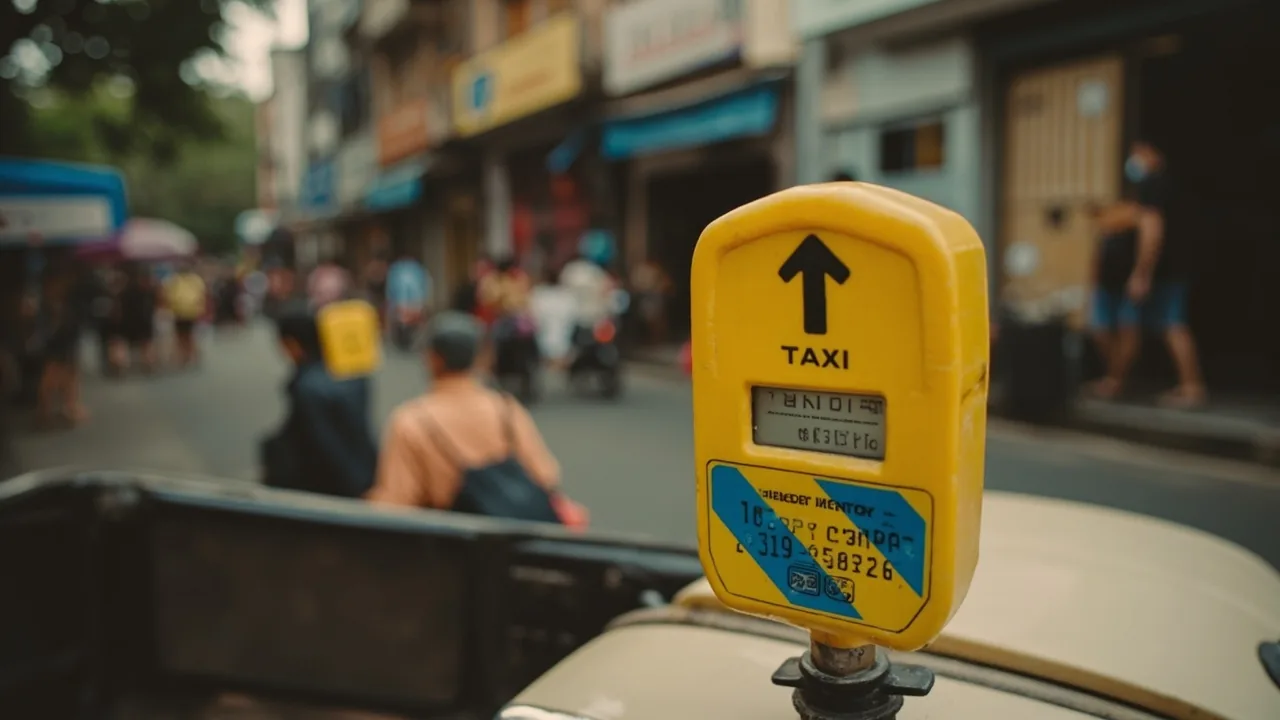
Soekarno-Hatta arrivals is ground zero. A man with no uniform walks up, says “taxi?”, quotes you ₹2,679 (~500,000 IDR or ~$27.79) to ₹4,286 (~800,000 IDR or ~$44.46) for a ride that should cost ₹804 (~150,000 IDR or ~$8.34) to ₹1,607 (~300,000 IDR or ~$16.67) in a metered Silver Bird or a GrabCar. He is not a taxi driver, he is a tout. The trick is volume: he gets a commission from a driver for every fare he hands over, and the driver then runs a rigged meter or “fixed price” that you cannot dispute because you agreed in the parking lot. Indian travellers get hit harder because many arrive tired and eager to get moving, and the tout uses any hesitation to lock the price before you can open Grab.
The fix is mechanical: open the Grab app and type in the airport while you are still on the plane, book your ride to your hostel before you walk out of the arrivals hall, and walk straight to the designated ride-hailing pickup zone. The driver has no room to negotiate because the price is on the app. If Grab is not loading (the airport wifi is bad), use the taxi counter inside the terminal, take a Silver Bird or Blue Bird coupon taxi, and demand the meter. A legitimate coupon taxi to central Jakarta costs ₹804 (~150,000 IDR or ~$8.34) to ₹1,607 (~300,000 IDR or ~$16.67). Anything above that and you are being scammed.
ATM skimming and card cloning
This is the big one Indian travellers underestimate, and it is the reason this guide exists. Indonesia has a documented ATM-skimming problem, particularly at standalone ATMs in malls, convenience stores, and tourist-heavy strips. The mechanism is straightforward: a skimmer fits over the card slot, a tiny camera or fake keypad overlay records your PIN, and the card is cloned within hours. Victims usually find out three to seven days later when their account shows withdrawals they never made, often in ₹10,716 (~2,000,000 IDR or ~$111.16) to ₹107,160 (~20,000,000 IDR or ~$1,111.58) chunks (₹10,000 (~$103.73) to ₹100,000 (~$1,037.30)). Indian debit cards from SBI, HDFC, ICICI, and Axis have all been reported as targets, mostly because their international withdrawal limits are high enough to make the fraud worthwhile.
What makes this specifically dangerous for Indian travellers: many of us carry one primary debit card because we use UPI for everything at home. That single card becomes the only way to access cash abroad, and once it is cloned, you are stuck in Jakarta with no money, no branch, and a fraud claim that takes 30 to 45 days to process at an Indian bank. Travellers report losing ₹4,800 (~$49.79) to ₹48,000 (~$497.91) per incident, with solo travellers relying on a single card and no fallback for the rest of the trip being the hardest hit.
The fix has three layers. First, use bank-branch ATMs only, specifically BCA, Mandiri, BNI, or CIMB inside their own branch lobbies during banking hours. Standalone ATMs in Indomaret, Alfamart, or mall corridors are where skimmers live. Second, cover the keypad with your other hand when you enter your PIN, even if no one is visibly watching, because pinhole cameras are mounted above the screen. Third, and most important, enable international transaction SMS alerts on your Indian bank account before you fly, so a ₹10,716 (~2,000,000 IDR or ~$111.16) withdrawal in a Jakarta suburb at 3 AM triggers an SMS you can react to within minutes. Freezing the card via the bank’s app within an hour of the alert often blocks the second and third withdrawals, which is where most of the financial damage piles up.
For deeper guidance on withdrawal limits, fees, and the right Indian bank cards to carry, our ATM guide for Indian travellers in Indonesia covers the specifics bank by bank.
Money changer short-change
The “X-change” or “Money Changer” signs in Jakarta look official, many have glass counters, certificates on the wall, and uniforms, but the trick is in the count. The teller takes your ₹96,404 (~1,000 USD) bill (your ₹375 (~70,000 IDR or ~$3.89) equivalent from an ATM), fans it on the counter, you see ten notes, you nod, and the teller palms two or three in the fan before sliding the stack to you. The bill you handed over is sometimes swapped mid-transaction for an older, lower-denomination note you did not notice. Indian travellers get profiled here because we tend to count quickly and assume the same hygiene rules apply as in India, where most money changers are formal and CCTV-monitored.
The fix is non-negotiable: count the notes yourself at the counter, in front of the teller, before you walk away. If the count does not match the calculator on the desk, count again out loud. Use only licensed money changers (look for the “Berizin” certificate from Bank Indonesia on the wall), avoid street touts who walk up offering “better rate”, and never change money in Tanah Abang or Glodok market basements, where counterfeit-IDR notes are a separate problem. BCA and Mandiri branch counters give a slightly worse rate but the safety margin is worth the 0.5% to 1% you lose on the spread. Travellers also report that changing ₹9,640 (~100 USD) bills in one go is safer than changing ten ₹964 (~10 USD) bills, because the smaller bills give the teller more room to fudge the count.
The fake “temple is closed” or “tour is half-price today” hustle
This scam works on the sidewalk near Kota Tua, Monas, and the National Museum. A friendly local, often well-dressed and English-speaking, walks up, tells you the monument you wanted to visit is closed for a religious holiday, but “lucky you, today there is a special government cultural tour, only ₹1,072 (~200,000 IDR or ~$11.12) per person, I work at the office, I can take you.” You end up in a batik shop, a gemstone showroom, or a “student art cooperative” where the prices are 10x the regular market rate, and the guide gets a 30% to 50% commission on whatever you buy. Indian travellers get targeted because we are visibly curious, often photograph everything, and tend to engage when addressed in English by a confident stranger.
The fix is simple and rude, which is the only kind that works: refuse the first offer, refuse the second offer, and if the person persists, walk away without engaging. Do not explain yourself. Genuine tour offers do not accost you on the sidewalk. If you want a tour, book it online through a verified operator, or join a free walking tour run by a registered Jakarta community group, not a one-man operation with a laminated ID card.
The Gojek driver “your destination is closed, I will take you somewhere better” reroute
Gojek and Grab are the right apps to use, but the drivers sometimes run a softer version of the airport scam. You book a Gojek to a specific restaurant in Kemang, the driver calls within two minutes saying “the road is blocked, the restaurant is closed, I know a better place, only 5 minutes away.” This is a kickback scheme: the “better place” is a partner restaurant or shop that pays the driver for delivered customers, and the food or souvenirs cost three to four times what they would at your original destination. Indian travellers get caught because we trust the driver’s local knowledge, especially after a long day in a city where traffic and street signs feel chaotic.
The fix: do not cancel the ride when the driver suggests an alternative. Either insist on the original destination by typing “original destination only, please” in the app chat, or cancel the ride (you may be charged a small cancellation fee, usually ₹27 (~5,000 IDR or ~$0.28) to ₹54 (~10,000 IDR or ~$0.56), around ₹25 (~$0.26) to ₹50 (~$0.52)) and book a fresh one. Do not negotiate a new destination with the same driver.
Haggling & Market Etiquette
Haggling in Jakarta is calmer than in Bangkok or Hoi An, but the rules are real. At Tanah Abang (the textile market, the largest in Southeast Asia), start at 40% to 50% of the quoted price for fabrics and clothes, settle at 60% to 70%. At Pasar Baru (antiques, shoes, bags), start at 50%, settle at 65% to 75%. At souvenir stalls around Kota Tua and Monas, start at 50%, settle at 70%. At street food stalls, fixed-price warungs, minimarts, and malls, do not haggle, the price is the price, and trying to negotiate will mark you as an easy target for the next scammer who walks by.
The single most important rule: never haggle for something you are not ready to buy. You say “150,000”, the seller says “deal”, and now you owe ₹804 (~150,000 IDR or ~$8.34) for the sarong you did not want. Indian travellers sometimes haggle out of politeness when they have no intention of buying, which is a fast way to get stuck with three batik scarves at ₹429 (~80,000 IDR or ~$4.45) each. Decide first, then negotiate.
Carry small notes (₹27 to ₹161 or 5,000 to 30,000 IDR) when you plan to haggle. Paying with a ₹536 (~100,000 IDR or ~$5.56) note at a ₹161 (~30,000 IDR or ~$1.67) stall invites the seller to “not have change”, which becomes an excuse to upcharge you.
SIM Cards & Connectivity
The right SIM in Jakarta costs about ₹268 (~50,000 IDR or ~$2.78) for a Telkomsel tourist 7-day pack with roughly 15 GB of data, which is more than enough for Grab, Gojek, Google Maps, and WhatsApp. You can buy this at the airport Telkomsel counter after immigration, at any Telkomsel GraPARI shop in the city, or at Indomaret minimarts, though airport prices are sometimes ₹54 (~10,000 IDR or ~$0.56) to ₹107 (~20,000 IDR or ~$1.11) higher than city shops.
The airport counter is fine for convenience (you have just landed, you need data to book your Grab), but if you can wait 20 minutes, walk out of arrivals, take the airport rail or a Grab to your hostel, and buy the SIM at a city GraPARI or Indomaret instead. You save ₹54 (~10,000 IDR or ~$0.56) to ₹107 (~20,000 IDR or ~$1.11) and you avoid the activation queues that stack up at the airport.
If you would rather skip the physical SIM entirely, an eSIM like Nomad lets you activate data the moment you land, no counter visit, no passport photocopy, no 15-minute registration form. Nomad regional packs cover Indonesia, Thailand, Vietnam, and Malaysia in a single bundle, which is useful if you are continuing onward. Most Indian eSIM-compatible phones (iPhone XS and later, most 2020+ Android flagships) work without any extra setup.
Register the SIM with your passport at the point of sale. Indonesian law requires it, and unregistered SIMs get cut off within 7 days. The seller handles the registration for free; just hand over your passport, confirm the barcode scan, and wait five minutes for activation.
Essential Language & Cultural Taboos
Bahasa Indonesia is the language. English is widely spoken in central Jakarta (Menteng, Sudirman, Kemang, Kuningan) but drops off fast in the outer districts and at bus terminals. Learn five phrases: Terima kasih (thank you), Berapa harganya? (how much?), Mahal (expensive, used as a polite haggling opener), Tidak (no, used firmly when refusing a tout), and Saya tidak tertarik (I am not interested, the phrase that ends 90% of sidewalk approaches).
Cultural rules that matter:
- Use your right hand for money and food. The left hand is considered unclean. This is not a hard taboo for tourists but doing it consistently signals respect.
- Shoes off at mosques. If you visit Istiqlal Mosque (the largest in Southeast Asia, free entry), you will be asked to remove shoes and women will be given a robe and headscarf at the entrance.
- No pointing with your foot. When you sit on a bench at a warteg (small local eatery) or in someone’s home, do not point your sole at another person or at food. Fold your legs to the side.
- Head touching is reserved for elders and children with permission. Indian travellers sometimes pat local kids on the head in a friendly gesture, which is well-meaning but culturally off-key.
- Bargaining is theatre. Smile while you negotiate. Indonesian sellers take a smile as a sign you are enjoying the interaction, and they often give a better price to a polite haggler than to a grim-faced one.
Common Street Mistakes Indians Make
- Carrying one debit card. If it gets skimmed or swallowed by an ATM, you have zero access to cash. Carry two cards from different banks (one Visa, one Mastercard if possible), keep one locked in your hostel locker, and use only one on the street.
- Trusting the first “taxi” offer at the airport. See the airport mafia section above. Always pre-book via app.
- Paying in USD at small warungs. Small food stalls cannot give you change for a 100 USD bill and will give you a terrible exchange rate. Pay in IDR for anything under 100,000 IDR.
- Taking unsolicited “helpers” at ATMs. If anyone approaches you at an ATM and offers to “help” with the machine, decline, walk to a different ATM. This is the standard skimmer-distraction script.
- Letting touts into your phone or wallet conversation. When someone says “wait, I have a better rate, let me see your money”, they are angling for the swap trick. Show them nothing, walk away.
Where to Stay
Jakarta does not have a backpacker hostel scene the way Bangkok or Hanoi do, but the two well-rated hostels below work for short stays.
| What | Answer | Price (INR) |
|---|---|---|
| Konko Hostel Jakarta | 9.24 | Check prices |
| My Capsule Jakarta - Batavia | 8.34 | Check prices |
| Konko is the better choice if you want to meet other travellers, My Capsule if you need a quiet, private pod for an early flight out of Soekarno-Hatta. |
Subodh’s Take
Jakarta is not a scam city. It is a big, working Southeast Asian capital with traffic that punishes you and a few specific hustles that punish the unprepared. Most Indian travellers come through Jakarta for a one- or two-night transit on the way to Bali or Yogyakarta, and the scams above are the ones that cost them money, not the abstract “be careful with your wallet” warnings that fill generic travel blogs. Pre-book your airport ride, use bank-branch ATMs with two cards and SMS alerts, count your own notes at money changers, refuse sidewalk tour offers with a polite “tidak, terima kasih”, and Jakarta is a perfectly manageable 36 hours. Save the worry budget for Bali, where the scams are softer but more frequent.
FAQ
Is Jakarta safe for Indian tourists right now? Generally yes for the main tourist districts (Menteng, Sudirman, Kemang, Kota Tua). For current advisory status, check the Indian MEA travel advisory page at mea.gov.in and the Indonesian government’s official tourism portal before you fly. Avoid demonstrations near government buildings in central Jakarta, which can flare up with little notice.
How much should I budget per day in Jakarta to avoid being scammed into overpaying? Backpacker budget is around ₹2,143 (~400,000 IDR or ~$22.23) to ₹3,215 (~600,000 IDR or ~$33.35) per day (₹2,000 (~$20.75) to ₹3,000 (~$31.12)), which covers a hostel dorm, three warteg meals, two Grab rides, and one attraction entry. Anything below that means you are accepting questionable freebies from strangers, which is where most scams start.
Can I use UPI in Jakarta? Almost nowhere. UPI does not work in Indonesia. You need cash (IDR), or you pay by card at malls, hotels, and mid-range restaurants. Withdraw IDR from a bank-branch ATM on arrival using your Indian debit card.
Are the taxi apps safe in Jakarta? Grab and Gojek are the safest options and the standard for short city trips. Confirm the plate and driver name on the app before you get in, share your trip status with someone back home via the in-app feature, and never get into a car whose plate does not match the app.
What should I do if my card gets skimmed? Freeze it through your bank’s Indian app within an hour of any suspicious alert, file a fraud complaint at the local police (Polisi) to get a stamped report (required by most Indian banks), and contact your bank’s international fraud desk from Jakarta itself. Most banks refund skimming losses within 30 to 60 days if you have the police report.
Is it rude to refuse touts aggressively? No, but a firm “tidak, terima kasih” with eye contact is more effective than ignoring them. Indonesian street sellers respond to polite firmness, and walking away without a word often invites them to follow you for two blocks.
What is the best area to stay for a short Jakarta stopover? Menteng or Cikini, both central, both walkable, both close to Grab pickup points and BCA/Mandiri ATMs. Avoid Tanah Abang for first-night stays (the market area is fine but it is the most scam-dense part of the city for tourists).
