ATMs in Indonesia: Withdrawal Limits, Bank Notes & Fees for Indian Travelers
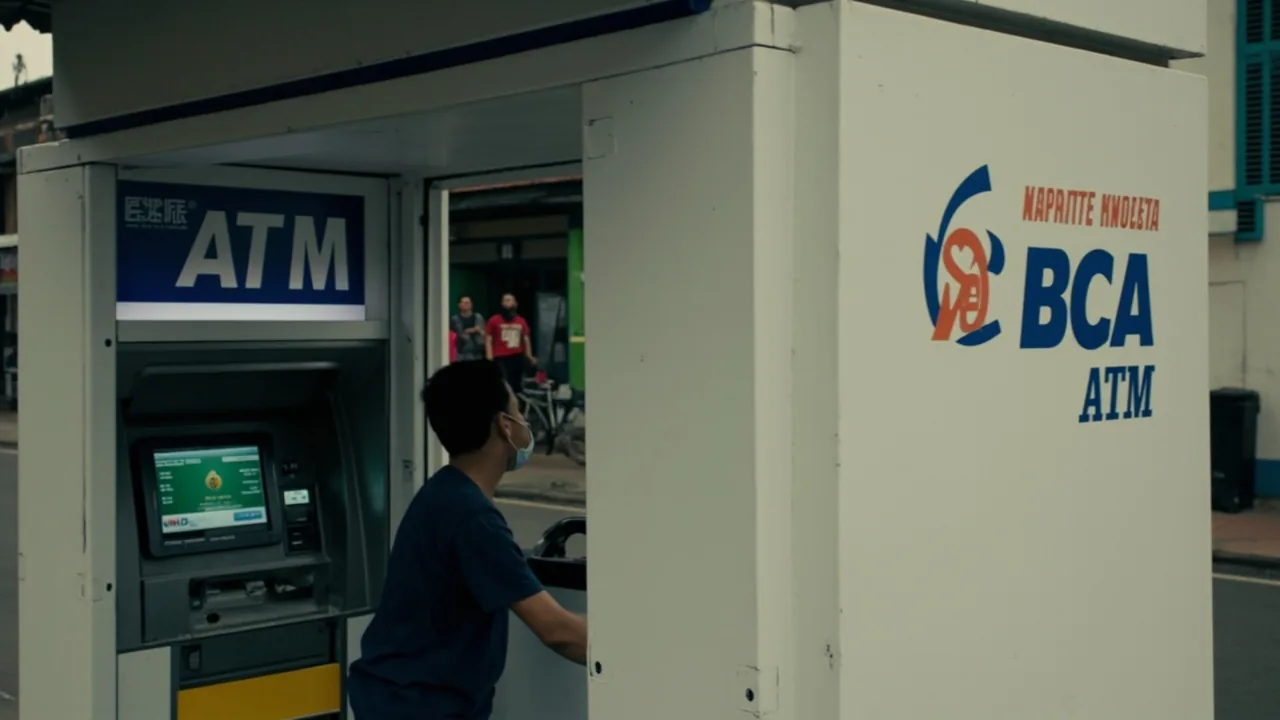
Using an Indonesia ATM with an Indian debit card is straightforward: grab a zero-markup card (Fi or Niyo), walk into any BCA or Mandiri ATM, decline the conversion-to-INR prompt, and withdraw up to ₹16,074 per hit. Everything below covers fees, limits, denominations, and the entry costs most guides skip.
Subodh’s Pro Tip: Always choose “Continue without conversion” or “Save in IDR” when the ATM asks. That prompt is Dynamic Currency Conversion (DCC), and accepting it adds 3% to 7% on top of every fee your bank already charges. The ATM is paid a kickback for offering it. You are not getting a service.
Quick Answers
| What | Answer | Price (INR) |
|---|---|---|
| Best payment method | Zero-markup debit (Fi, Niyo, Jupiter) on a card-network ATM | ~₹0 markup + ~₹190 (~$1.97) ATM fee (~600,000 IDR or ~$2) |
| Backup method | Forex card (HDFC, Axis, Niyo Global) | 2% to 3.5% markup, ~₹130 (~$1.35) ATM fee (~400,000 IDR or ~$1.35) |
| Worst option | Airport money changers in Bali/Jakarta | 5% to 8% worse than mid-market |
| Typical ATM withdrawal | ₹6,698 (~1,250,000 IDR or ~$69.47) to ₹16,074 (~3,000,000 IDR or ~$166.74) per transaction | ₹662 (~$6.86) to ₹1,590 (~$16.47) |
| Daily cap (most cards) | ₹50,000 (~$517.98) to ₹100,000 (~$1,035.96) across ATMs | ₹50,000 (~$517.98) to ₹100,000 (~$1,035.96) |
| Largest IDR note dispensed | ₹536 (~100,000 IDR or ~$5.56) | ₹530 (~$5.49) |
Safety Alert: Standalone ATMs in tourist areas (Kuta vs Seminyak, parts of Canggu) have a documented history of card skimmers. Use bank-branch ATMs (BCA, Mandiri, BNI) inside the lobby or attached to a 24-hour branch. They have CCTV and on-site staff. Avoid “ATM Bersama” or white-label machines in convenience stores for first-use cards.
Which Indonesian Bank ATMs Accept Indian Cards
Three networks cover roughly 90% of working ATMs you’ll walk into:
| Bank | Network | International Card Acceptance | Notes |
|---|---|---|---|
| BCA | Cirrus/Maestro, Plus, Visa, Mastercard | Yes, all four | Largest ATM network in Indonesia. Most reliable. |
| Mandiri | Cirrus/Maestro, Plus, Visa, Mastercard | Yes, all four | Second-largest. Government-affiliated. Common outside Java/Bali. |
| BNI | Cirrus/Maestro, Plus, Visa, Mastercard | Yes, all four | Strong in Bali and tourist hubs. |
| BRI | Limited international support | Some Visa/Mastercard | Works, but more declines than the three above. |
| ATM Bersama / Prima / Alto | White-label networks | Inconsistent | Avoid for first use. |
The ATM screen will show the logos. If your card has a Visa or Mastercard logo and the ATM shows either of those four logos on the screen, you’re fine. If you’re at an “ATM Bersama” machine in a convenience store and your card declines, don’t panic, just walk to the nearest BCA branch, which is rarely more than a kilometre away in any Indonesian city.
How Much Cash You Get Per Withdrawal
Indonesian ATMs dispense in ₹268 (~50,000 IDR or ~$2.78) and ₹536 (~100,000 IDR or ~$5.56) notes. The smallest machine-denomination is ₹268 (~50,000 IDR or ~$2.78), so any withdrawal is chunky.
| Withdrawal amount (IDR) | What it covers | Value in INR |
|---|---|---|
| ₹6,698 (~1,250,000 IDR or ~$69.47) | 3 to 4 days of street food + a hostel dorm + local transport | ₹663 (~$6.87) |
| ₹10,716 (~2,000,000 IDR or ~$111.16) | A week of backpacker daily spend in Bali off-tourist-track | ₹1,060 (~$10.98) |
| ₹16,074 (~3,000,000 IDR or ~$166.74) | Heavy week with a couple of day trips or a domestic flight | ₹1,590 (~$16.47) |
| ₹26,790 (~5,000,000 IDR or ~$277.89) | Two weeks, generous version | ₹2,650 (~$27.45) |
Most Indian bank cards have a per-transaction cap of ₹6,698 (~1,250,000 IDR or ~$69.47) to ₹13,395 (~2,500,000 IDR or ~$138.95). A few (Niyo, Fi with elevated limits) push toward the upper end of that range. You can do two back-to-back withdrawals if you need more, but check the daily cap first. For a deeper breakdown of these per-hit ceilings and the daily bank caps that often override them, see the Indonesia ATM charges & limits guide.
How the Fees Stack Up
There are three separate fees on a single Indonesian ATM withdrawal, and they’re easy to confuse:
- Your bank’s FX markup. This is the markup Visa/Mastercard applies to convert IDR to INR. Zero-markup cards (Fi, Niyo, Jupiter, newer HDFC variants) charge 0%. Traditional forex cards charge 2% to 3.5%. Regular debit cards with INR conversion charges (most SBI, PNB, BoB) charge 3% to 3.5%.
- Your bank’s per-transaction ATM fee. Banks charge you for using a foreign ATM. Niyo: ₹100 (~$1.04)+ GST. Fi: ₹0 to ₹200 (~$2.07) depending on plan. HDFC forex card: ₹0 to ₹150 (~$1.55). SBI global debit: ₹200 (~$2.07). ICICI global debit: ₹100 (~$1.04) to ₹300 (~$3.11).
- The Indonesian ATM operator’s fee. BCA, Mandiri, and BNI charge the foreign-card-issuing bank ₹348 (~65,000 IDR or ~$3.61) to ₹402 (~75,000 IDR or ~$4.17) per transaction (roughly ₹35 (~$0.36) to ₹40 (~$0.41)). Most Indian banks pass this to you.
Total realistic cost per withdrawal: ₹130 (~$1.35) to ₹300 (~$3.11) on a zero-markup card, ₹250 (~$2.59) to ₹500 (~$5.18) on a standard forex card, and ₹400 (~$4.14) to ₹700 (~$7.25) on a regular Indian debit card without forex benefits. For a ₹8,037 (~1,500,000 IDR or ~$83.37) withdrawal, that’s 1% to 3% effective drag, manageable, but it adds up over a three-week trip. For a wider view of ATM fees across the region, see the SE Asia ATM fees guide.
Subodh’s Pro Tip: Withdraw larger amounts less often. A ₹13,395 (~2,500,000 IDR or ~$138.95) withdrawal with a ₹200 (~$2.07) total fee is 0.3% drag. Two ₹6,698 (~1,250,000 IDR or ~$69.47) withdrawals with ₹200 (~$2.07) each is 0.6% drag. Same money, double the cost.
The DCC Trap (and How to Dodge It)
When you insert your card at a BCA or Mandiri ATM, the screen will sometimes (not always) prompt:
“Convert to INR? Your bank may charge a better rate. Yes / No / Continue without conversion.”
This is Dynamic Currency Conversion. The Indonesian ATM operator (their payment processor) offers to charge your card in INR instead of IDR. They pick an exchange rate roughly 3% to 7% worse than Visa/Mastercard’s mid-market rate, then pocket the spread.
Always select “Continue without conversion” / “Save in IDR” / “Decline conversion.”
The card-network rate will be applied by your Indian bank instead, and your zero-markup card keeps that rate clean. If you accidentally accept DCC once, it doesn’t break anything, but you’ve just overpaid on that one withdrawal by roughly ₹40 (~$0.41) to ₹120 (~$1.24). On a ₹8,037 (~1,500,000 IDR or ~$83.37) withdrawal, ₹80 (~$0.83) of pure waste is real money for a dorm bed in Yogya.
There’s no rule that says the DCC prompt appears on every withdrawal. Some machines show it, some don’t. If you see it, decline it. If you don’t see it, your card was charged in IDR, which is what you want. If you’re mapping this against a week-by-week spend plan, the 1-week Indonesia itinerary for first-time visitors shows where the cash goes.
What Indian Backpackers Commonly Use in Indonesia
For Indonesia specifically, the actual setup most Indian backpackers land on:
- One zero-markup debit card (Fi, Niyo, or Jupiter) loaded with ₹30,000 (~$310.79) to ₹50,000 (~$517.98) before flying. This is the workhorse. Hit BCA or Mandiri ATMs, take out ₹13,395 (~2,500,000 IDR or ~$138.95) at a time, repeat every 4 to 5 days.
- ₹15,000 (~$155.39) to ₹20,000 (~$207.19) in cash as a buffer for the first 48 hours, exchanged at a licensed money changer (not a hotel, not an airport booth) in Denpasar or Jakarta. The rate gap is smaller in cities than at airports, but it’s never zero.
- One backup card, ideally a different network. If the primary card gets blocked by the bank’s fraud system (which happens more than people admit), the backup saves a Saturday afternoon of phone calls.
- No forex card, unless the person is specifically testing one. The 2% to 3.5% markup is the same as a regular debit card, with extra steps.
The thing that goes wrong most often isn’t fees. It’s the bank blocking the card mid-trip because three Indonesian ATM withdrawals in two days from different provinces looked suspicious to the fraud algorithm. The workaround travellers describe is to call the bank once before flying (set a travel flag), or to make one small test withdrawal on landing day and one larger one the next day, never two large ones within an hour.
Getting Connected
You need working data on day one to verify which ATM gave you a good rate, to call your bank if a card gets blocked, and to pull up Google Maps when the BCA branch isn’t where Google said it was. A physical SIM is fine, Telkomsel has booths in every airport, but an eSIM you can activate before takeoff is faster.
A regional eSIM you can activate before takeoff is faster than a physical SIM at the airport booth. Nomad eSIM gives you data the moment the plane lands, which is when you’ll most need to check whether the airport ATM gave you a fair rate.
India-Specific Gotchas: RBI, TCS, and the ₹7 Lakh Question
Three things every Indian traveller trips over at least once:
The 20% TCS rule. Under the Liberalised Remittance Scheme (LRS), spending more than ₹7 lakh in a financial year on foreign exchange triggers 20% Tax Collected at Source on the amount above ₹7 lakh (under the 20% TCS slab reintroduced in the 2023 LRS revision; the earlier removal applied only briefly). The threshold is per financial year (April to March), not per trip. Two trips back-to-back cross it faster than you’d think.
For most backpackers doing one Indonesia trip, this isn’t an issue. ₹50,000 (~$517.98) to ₹80,000 (~$828.77) in total ATM withdrawals is well under ₹7 lakh. The trap is when people stack multiple forex cards, multiple trips, and family remittances on the same PAN.
Forex card vs debit card for the ₹7 lakh question. A forex card loaded in India counts as forex purchase. A debit card used abroad also counts as forex purchase (the bank buys the USD/IDR at the time of settlement). Either way, the same ₹7 lakh threshold applies, per PAN, per financial year. You can’t dodge TCS by switching products.
PAN and Form A2. For amounts under ₹50,000 (~$517.98) equivalent per transaction, you don’t need to show PAN at the bank when loading a forex card. Above that, the bank will ask. Keep your PAN handy. Form A2 is the bank’s internal form, you sign it; you don’t fill it out yourself.
Cash declaration at immigration. If you’re carrying more than USD 5,000 (foreign equivalent) in cash, declare it on the Indonesian customs form on arrival. If you don’t and they find it, they can seize it. Realistically, an Indian backpacker with ₹20,000 in cash has nothing to declare.
Daily Cash Budgeting: What to Withdraw
A realistic three-week Indonesia budget for an Indian backpacker using ATMs:
| Category | Per day (IDR) | Three-week total (IDR) | Three-week total (INR) |
|---|---|---|---|
| Dorm bed (8 of 21 nights) | ₹536 (~100,000 IDR or ~$5.56) to ₹1,340 (~250,000 IDR or ~$13.89) | ₹4,286 (~800,000 IDR or ~$44.46) to ₹10,716 (~2,000,000 IDR or ~$111.16) | ₹424 (~$4.39) to ₹1,060 (~$10.98) |
| Hostel (13 of 21 nights) | ₹1,072 (~200,000 IDR or ~$11.12) to ₹2,411 (~450,000 IDR or ~$25.01) | ₹13,931 (~2,600,000 IDR or ~$144.50) to ₹31,344 (~5,850,000 IDR or ~$325.14) | ₹1,378 (~$14.28) to ₹3,101 (~$32.13) |
| Street food + warungs (3 meals) | ₹268 (~50,000 IDR or ~$2.78) to ₹804 (~150,000 IDR or ~$8.34) | ₹5,626 (~1,050,000 IDR or ~$58.36) to ₹16,878 (~3,150,000 IDR or ~$175.07) | ₹557 (~$5.77) to ₹1,670 (~$17.30) |
| Local transport (Grab, Gojek, angkot) | ₹161 (~30,000 IDR or ~$1.67) to ₹536 (~100,000 IDR or ~$5.56) | ₹3,376 (~630,000 IDR or ~$35.01) to ₹11,252 (~2,100,000 IDR or ~$116.72) | ₹334 (~$3.46) to ₹1,113 (~$11.53) |
| Domestic flight or fast boat | one-off ₹3,215 (~600,000 IDR or ~$33.35) to ₹8,037 (~1,500,000 IDR or ~$83.37) | ₹3,215 (~600,000 IDR or ~$33.35) to ₹8,037 (~1,500,000 IDR or ~$83.37) | ₹318 (~$3.29) to ₹795 (~$8.24) |
| Activities (temples, snorkel, surf rental) | ₹536 (~100,000 IDR or ~$5.56) to ₹1,607 (~300,000 IDR or ~$16.67) | ₹11,252 (~2,100,000 IDR or ~$116.72) to ₹33,755 (~6,300,000 IDR or ~$350.15) | ₹1,113 (~$11.53) to ₹3,339 (~$34.59) |
| SIM + eSIM | one-off ₹268 (~50,000 IDR or ~$2.78) to ₹1,072 (~200,000 IDR or ~$11.12) | ₹268 (~50,000 IDR or ~$2.78) to ₹1,072 (~200,000 IDR or ~$11.12) | ₹27 (~$0.28) to ₹106 (~$1.10) |
| Total three weeks | ₹41,953 (~7,830,000 IDR or ~$435.18) to ₹113,054 (~21,100,000 IDR or ~$1,172.71) | ₹4,150 (~$42.99) to ₹11,183 (~$115.85) |
The wide range is real: a backpacker who eats at warungs, takes night buses, and skips paid activities hits the bottom; one who snorkels at Gili Trawangan, books a Komodo boat trip, and stays in nicer hostels hits the top. Most Indians land somewhere in the middle, around ₹7,000 (~$72.52) to ₹9,000 (~$93.24) for three weeks.
For the broader trip-cost picture including flights, visa, and insurance, the Indonesia trip cost breakdown has line-by-line numbers. For a full route, the 2-week Indonesia itinerary for Indian backpackers is a good starting point.
Comparison of Popular Options (2026)
| Tool | FX Markup | ATM fee in IDR | ATM fee in INR | Daily cap | Verdict |
|---|---|---|---|---|---|
| Fi Zero-FX Debit | 0% | ₹161 (~30,000 IDR or ~$1.67) to ₹215 (~40,000 IDR or ~$2.22) | ₹16 (~$0.17) to ₹21 (~$0.22) | ₹100,000 (~$1,035.96) | Best overall. No annual fee, no reload fee. |
| Niyo Global | 0% to 0.5% | ₹161 (~30,000 IDR or ~$1.67) to ₹188 (~35,000 IDR or ~$1.95) | ₹16 (~$0.17) to ₹19 (~$0.20) | ₹100,000 (~$1,035.96) | Solid, slightly older interface. Good for first-time users. |
| Jupiter Zero-FX | 0% | ₹188 (~35,000 IDR or ~$1.95) | ₹19 (~$0.20) | ₹100,000 (~$1,035.96) | Newer, invite-based. Same economics as Fi. |
| HDFC Regalia Forex Card | 2% to 3.5% | ₹0-₹2,143 (~0-400,000 IDR or ~$0-$22.23) | ₹0 to ₹212 (~$2.20) | ₹200,000 (~$2,071.92) | Convenient if you already bank with HDFC. Drag is real. |
| SBI Global Debit | 3% to 3.5% | ₹0-₹4,018 (~0-750,000 IDR or ~$0-$41.68) | ₹0 to ₹398 (~$4.12) | ₹40,000 (~$414.38) | Low cap is the real problem. Skip. |
| ICICI Coral Forex Card | 2% to 3% | ₹0-₹2,679 (~0-500,000 IDR or ~$0-$27.79) | ₹0 to ₹265 (~$2.75) | ₹100,000 (~$1,035.96) | Workable, but Fi is cheaper. |
| Cash (exchanged in India) | 5% to 8% vs mid-market | n/a | n/a | ₹200,000 (~$2,071.92) RBI cash travel allowance | Worst option. Lose 5% on day one. |
A few caveats on these numbers: the “daily cap” is the bank’s per-day ATM withdrawal ceiling, set in INR. Most Indian banks cap you at ₹50,000 to ₹100,000 (~$1,035.96) per day on foreign ATMs, regardless of what the Indonesian machine allows. If the Indonesian machine lets you take out ₹16,074 (~3,000,000 IDR or ~$166.74) but your bank caps at ₹100,000 (~$1,035.96), the machine will dispense ₹10,073 (~1,880,000 IDR or ~$104.49) and stop. Travellers report this as a “broken ATM” when it’s their bank.
When the ATM Card Just Won’t Work
Three failure modes, in order of how often they happen:
- Bank fraud block. The card worked yesterday, declined today. Your bank’s algorithm flagged three Indonesian ATM withdrawals in 36 hours as suspicious. Call the bank’s international number (saved offline, not on the blocked card), get it unblocked, sometimes within five minutes, sometimes the next business day.
- Card type mismatch. The ATM has Cirrus/Maestro but not Visa, or has Visa but not Mastercard. Most modern Indian cards have both logos, but older SBI and Bank of Baroda Visa Electron cards can hit this.
- Indonesian network outage. BCA’s network goes down every few months. The machine eats your card, prints a slip, or just hangs. Wait 10 minutes, try a different BCA branch. If the card is physically retained, you’ll need to visit the branch with your passport to retrieve it. This is a known hassle, not a scam.
The fix for all three is the same: carry two cards on different networks. Fi + Niyo, or Fi + a forex card, covers most real-world failure scenarios.
Visa and Entry Money Logistics
Indonesia’s visa-on-arrival for Indians costs ₹2,918 (~$35 USD). Bali adds a separate ₹1,051 (~150,000 IDR) tourism levy from February 2024. Total entry cost: about ₹2,918 (~$35 USD) plus about ₹1,051 (~150,000 IDR), paid at different counters.
Carry the VoA fee in USD cash (clean, undamaged bills; torn or marked notes get rejected) or in IDR cash, or pay by card at the immigration counter. IDR cash is accepted at the counter alongside USD. Most counters take cards now, but a fallback of ₹2,918 (~$35 USD) in cash is the safer bet. The Bali tourism levy is ₹1,051 (~150,000 IDR), paid at a separate booth before immigration, cash only.
For the full visa walkthrough, Indonesia e-visa for Indians covers the online pre-arrival option if you’d rather skip the airport queue.
Safety Alert: For current travel advisories before flying, check the Indian MEA advisory page at mea.gov.in and the Indonesian government’s own tourism advisory. Regional advisories can shift with little notice, particularly around election periods and religious holidays. A five-minute check the week before departure is worth it.
FAQ
Which Indonesian bank ATMs accept Indian Visa/Mastercard debit cards? BCA, Mandiri, and BNI are the three most reliable. All three accept Visa, Mastercard, Cirrus, and Plus. Look for the matching logos on the ATM screen. Avoid “ATM Bersama” white-label machines in convenience stores for first-use cards; they have a higher decline rate.
What is the maximum IDR I can withdraw in one go? Most Indian bank cards cap at ₹6,698 (~1,250,000 IDR or ~$69.47) to ₹13,395 (~2,500,000 IDR or ~$138.95) per transaction, with a daily cap of ₹50,000 (~$517.98) to ₹100,000 (~$1,035.96) across ATMs. A few premium cards (Niyo with elevated limits, Fi with default plan) push to ₹16,074 (~3,000,000 IDR or ~$166.74) per transaction. BCA’s machine limit itself is ₹16,074 (~3,000,000 IDR or ~$166.74) per hit, so the bottleneck is usually the Indian bank’s daily cap, not the Indonesian ATM.
What denominations do Indonesian ATMs dispense? ₹268 (~50,000 IDR or ~$2.78) and ₹536 (~100,000 IDR or ~$5.56) notes only. There is no ₹107 (~20,000 IDR or ~$1.11) or ₹54 (~10,000 IDR or ~$0.56) ATM withdrawal option. Plan around the chunky minimum.
Does the ATM charge me in IDR or INR? By default, it charges in IDR, which is what you want. If the screen offers “Convert to INR,” decline. That is Dynamic Currency Conversion and adds 3% to 7% on top of your bank’s fees.
My card got blocked at an Indonesian ATM. What now? Most often, it’s your bank’s fraud algorithm. Call the bank’s international customer-care number (save it offline before flying). They’ll verify identity and unblock. If the card is physically retained by the machine, visit the bank branch with your passport during business hours. Don’t expect to retrieve it same-day.
How much IDR cash should I budget per day in Indonesia? Backpacker minimum: ₹1,875 (~350,000 IDR or ~$19.45) per day at the bottom end (basic warung food, cheapest dorm, local transport); most current 2026 floors for Bali/Java sit closer to ₹3,223 (~600,000 IDR or ~$33.39). Comfortable: ₹3,215 (~600,000 IDR or ~$33.35) to ₹4,286 (~800,000 IDR or ~$44.46) per day (private hostel room, mid-range restaurants, one paid activity). Tourist-heavy: ₹6,430 (~1,200,000 IDR or ~$66.69)+ per day (snorkel trips, day tours, nicer accommodation). Three-week totals: ₹39,381 (~7,350,000 IDR or ~$408.50) to ₹135,022 (~25,200,000 IDR or ~$1,400.59).
Will UPI work in Indonesia? Not at ATMs. Some Indonesian merchants accept QRIS (their local QR system), but QRIS does not interoperate with UPI. You cannot scan a QRIS code with PhonePe or Google Pay. Stick to cash and cards.
— Subodh
