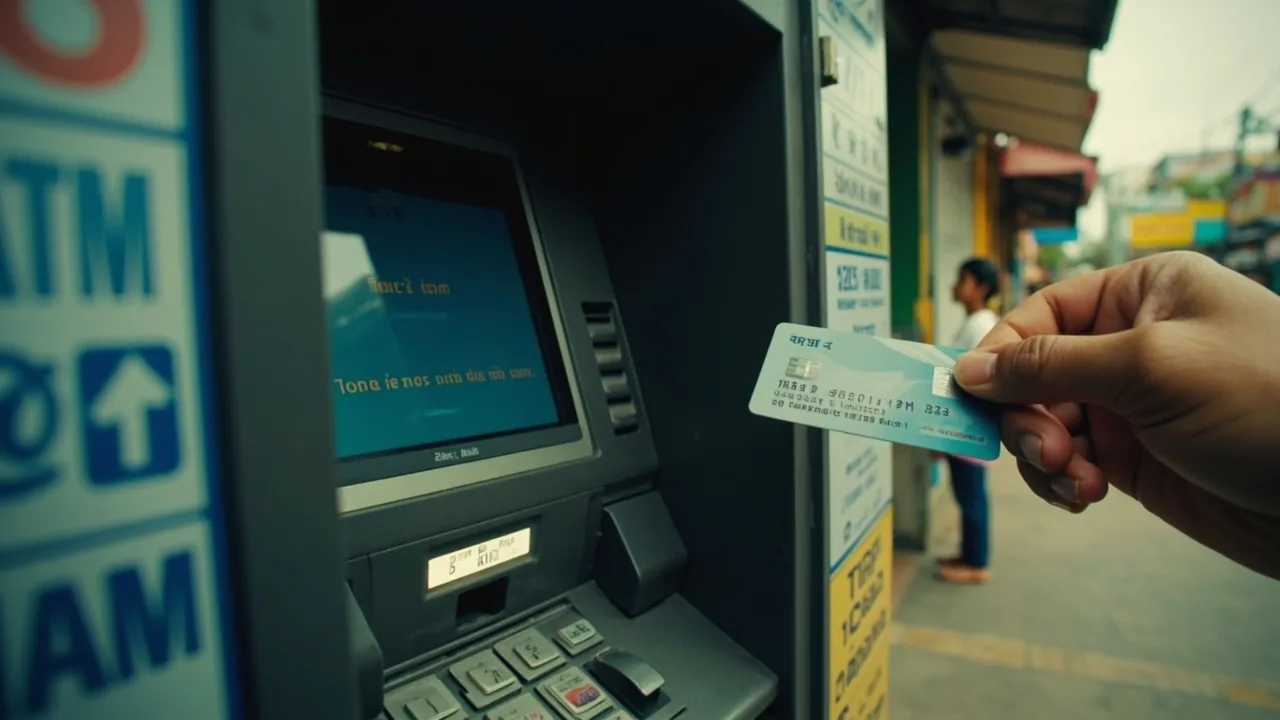
Do Indian ATMs Work in Thailand? A Backpacker’s Guide to Cash Withdrawals, Fees & Limits
Yes. Indian ATM work in Thailand is straightforward: your Indian debit card will work in most Thai ATMs, but you’ll get hit with a flat ₹632 (~220 THB or ~$6.55) fee every time, plus whatever your own bank charges on top. Verified against Bangkok Bank and Krungsri fee schedules, cross-checked with HDFC, ICICI, SBI, and Axis reports from July 2026. For related planning, see our guide on Sea Backpacking Hub.
If you want the single sentence version: bring one Visa or Mastercard enabled debit card with international usage turned on, withdraw the maximum the ATM will give you (usually ₹57,430-₹86,145 (~20,000-30,000 THB or ~$595.72-$893.59) per pull), and pay for almost everything else in cash. Thailand outside Bangkok and the big malls is still a cash economy, and the math only works in your favour if you minimise the number of ATM hits.
Quick Answers
| What | Answer | Price (INR) |
|---|---|---|
| Will my Indian debit card work? | Yes, if it’s Visa/Mastercard with international usage enabled | ₹0 from ATM compatibility |
| Thai ATM operator fee (flat) | Bangkok Bank, Krungsri, Kasikorn, SCB, TMB all charge ₹632 (~220 THB or ~$6.55) | ₹632 (~220 THB or ~$6.55) |
| Your bank’s fee on top | HDFC/ICICI/Axis/SBI charge ₹100-₹300 (~$1.04-$3.11)+ 3-3.5% markup | ₹100-₹300 (~$1.04-$3.11) |
| Per-withdrawal cost (real) | ₹632 (~220 THB or ~$6.55) + ₹150 (~$1.55) bank fee + ~3% markup on amount | ~₹800-₹900 (~$8.29-$9.33) on a ₹20,100 (~7,000 THB or ~$208.50) pull |
| Smart withdrawal size | ₹57,430 (~20,000 THB or ~$595.72) per pull (most ATMs cap here) | ₹57,430 (~20,000 THB or ~$595.72) ≈ ₹57,382 (~$594.75) |
| Cash vs card in Thailand | Cash for 80% of expenses (street food, tuk-tuks, 7-Eleven, markets) | — |
How Thai ATM Withdrawals Work
When you stick an Indian Visa or Mastercard debit card into a Bangkok Bank or Krungsri ATM in Bangkok, four separate charges stack up:
- Thai ATM operator fee: ₹632 (~220 THB or ~$6.55) flat, charged by the ATM owner (Bangkok Bank, Krungsri, Kasikorn, SCB, TMBThanachart, Government Savings Bank, etc.). This is the most consistent number across Thailand and is the same whether you withdraw ₹2,872 (~1,000 THB or ~$29.79) or the maximum. Travellers report that AEON and some TMB machines occasionally charge only ₹431 (~150 THB or ~$4.47), but these are not common.
- Your bank’s foreign transaction fee: Most Indian banks charge 1.5-3.5% of the withdrawal, plus a flat ₹100-₹300 (~$1.04-$3.11)“cross-currency” fee on top. HDFC Regalia and Millennia, ICICI Coral, Axis Burgundy and Atlas, SBI Gold and Platinum, Kotak White, IndusInd Pioneer, and Yes Premier cards all follow this pattern in 2026.
- The Visa/Mastercard wholesale exchange rate: Your bank uses this to convert THB to INR. It’s not the mid-market rate you see on Google, and your bank embeds a 2-3% margin on top.
- DCC (Dynamic Currency Conversion): If the ATM offers to charge you “in INR instead of THB,” that’s a trap. The conversion rate offered is 5-7% worse than letting your own bank do it. Always select “Continue without conversion” or “in Thai Baht.”
So a 7,000 THB withdrawal (₹20,083 (~$208.15) at current mid-market) costs you:
- ₹632 (~220 THB or ~$6.55) Thai ATM fee (₹631 (~$6.54))
- ~₹150 (~$1.55) Indian bank flat fee
- ~₹600 (~$6.22) in combined markup and FX margin
Real cost: ~₹21,464 (~$222.47) to get cash worth ₹20,083 (~$208.15). That’s a 7% haircut, on top of which you also paid ₹632 (~220 THB or ~$6.55) for the privilege of being charged.
This is why the smartest move is fewer, larger withdrawals: pulling ₹57,430 (~20,000 THB or ~$595.72) at once (₹57,382 (~$594.75)) means you only pay that ₹632 (~220 THB or ~$6.55) Thai fee once for a bigger stack. Five small pulls of ₹11,486 (~4,000 THB or ~$119.14) each would cost you ₹3,159 (~1,100 THB or ~$32.76) in Thai fees alone, before your own bank’s charges.
Subodh’s Pro Tip: Withdraw the maximum the ATM will allow. Most Bangkok Bank and Krungsri machines cap single withdrawals at ₹57,430 (~20,000 THB or ~$595.72); some go to ₹71,788-₹86,145 (~25,000-30,000 THB or ~$744.66-$893.59). Splitting your stay into 3-4 big withdrawals instead of 10 small ones typically saves you ₹1,500-₹2,000 (~$15.55-$20.73) over a two-week trip.
Indian Banks: What Works Reliably in Thailand
Based on traveller reports from late 2025 and 2026 trips, plus each bank’s current cross-border policy:
Works well:
- HDFC Regalia, Millennia, and Infinia debit cards: 3.5% FX markup + ₹125 (~$1.30) flat per transaction. Most reliable Thai ATM acceptance reported.
- ICICI Coral, Rubyx, Sapphiro: 3.5% markup + ₹100-₹125 (~$1.04-$1.30) flat. Works at all major Thai bank ATMs.
- Axis Burgundy and Atlas: 3.5% markup + ₹100 (~$1.04) flat. Higher acceptance than older Visa Electron cards.
- IndusInd Pioneer, Legend: 3.5% markup + ₹100-₹150 (~$1.04-$1.55) flat.
- Yes Bank Premier, Yes First: 3.5% markup + ₹125 (~$1.30) flat. Younger card, fewer reports but no failures logged.
Works but with quirks:
- SBI Gold and Platinum debit cards: 3.5% markup + ₹300 (~$3.11) flat (highest flat fee among major banks). Some travellers report occasional declines at non-Bangkok Bank machines.
- Kotak White, Aqua, League: 3.5% markup + ₹150 (~$1.55) flat. Acceptance generally good but not as smooth as HDFC/ICICI.
- IDFC First: 3.5% markup + ₹125 (~$1.30) flat. Some reports of first-attempt declines, succeeding on retry.
Problematic:
- RuPay cards: Most Thai ATMs do not accept RuPay. Only AEON and a handful of others have started rolling out RuPay support, but traveller reports from 2026 trips still show frequent failures. Bring a Visa or Mastercard as backup.
- Basic savings account Visa Electron cards from SBI, BOB, PNB: Higher decline rates at Thai ATMs, especially outside Bangkok.
Subodh’s Pro Tip: “International usage” must be turned on before you leave India. Most banks require you to enable it in netbanking or by calling customer care. Cards arrive with domestic-only enabled by default. Travellers regularly arrive in Bangkok, swipe their card at the airport ATM, and watch it decline three times before they remember to call.
Comparison: How to Fund Your Thailand Trip in 2026
| Method | Markup / fee | Per-withdrawal cost | Daily limit | Verdict |
|---|---|---|---|---|
| Indian Visa/Mastercard debit card (HDFC/ICICI) | 3.5% + ₹100-₹125 (~$1.04-$1.30) | ~₹800-₹900 (~$8.29-$9.33) on ₹20,100 (~7,000 THB or ~$208.50) | ₹57,430-₹86,145 (~20,000-30,000 THB or ~$595.72-$893.59) per ATM pull | Cheapest if you minimise withdrawals |
| Zero-markup forex debit card (Niyo, Fi, Jupiter) | 0% markup + ₹100-₹200 (~$1.04-$2.07) | ~₹300-₹500 (~$3.11-$5.18) on ₹20,100 (~7,000 THB or ~$208.50) | ₹57,430 (~20,000 THB or ~$595.72) per pull | Best rate, but card must be loaded with forex first |
| Traditional bank forex card (HDFC, ICICI, Axis) | 2-3.5% markup + ATM fee | ~₹600-₹800 (~$6.22-$8.29) on ₹20,100 (~7,000 THB or ~$208.50) | ₹28,715-₹57,430 (~10,000-20,000 THB or ~$297.86-$595.72) per pull | Fine, but worse than zero-markup debit cards now |
| Cash exchanged in India (Thomas Cook, UAE Exchange) | 5-8% spread vs mid-market | n/a (paid upfront) | n/a | Worst option for amounts over ₹20,000 (~$207.29) |
| Cash exchanged in Thailand (SuperRich, Vasu, Twelve Victory) | 1-2% spread | n/a | n/a | Good for topping up leftover baht, not for large amounts |
| UPI / PhonePe / GPay in Thailand | Not accepted at most merchants | n/a | n/a | Doesn’t work outside a handful of Indian-friendly spots |
The pattern is clear: a zero-markup forex debit card (Niyo, Fi, Jupiter) loaded with ₹96,404-₹144,606 (~1,000-1,500 USD) wins on rate, but you’ll still pay the ₹632 (~220 THB or ~$6.55) Thai ATM fee per withdrawal. A regular HDFC or ICICI debit card loses 3.5% on top, but the convenience of withdrawing directly from your Indian savings account without loading a separate wallet has its own appeal.
For most Indian backpackers on a 10-14 day trip, the realistic setup is one zero-markup card (Fi or Niyo) for the bulk of withdrawals, plus ₹15,000-₹20,000 (~$155.47-$207.29) in cash exchanged in India for the first day or two.
India-Specific Gotchas: RBI, TCS, and the ₹7 Lakh Trap
This is the part most travel blogs skip, and it’s where Indian travellers lose money.
The 20% TCS rule (Tax Collected at Source): If your combined LRS outflows cross ₹7 lakh in a financial year (the 20% TCS threshold for most purposes from FY 2023-24 onwards), the bank collecting your money (loading your forex card) must deduct 20% as TCS, refundable when you file ITR. The threshold drops to ₹7 lakh total across all international forex outflows from your accounts combined in a year. This means if your father funded your college fee of ₹5 lakh in July, then you go load your forex card with ₹3 lakh in August, you’re already over ₹7 lakh and 20% TCS applies.
What to keep: Screenshot your forex card load transaction showing the PAN, the amount, the purpose code. When you file ITR next year, claim it as refund. Most banks tag the purpose as “Tourism” or “LRS Remittance” automatically.
PAN card mandatory: Any single forex outflow above ₹50,000 (~$518.23) requires PAN. Below that, you can load your forex card or buy foreign currency cash without PAN. Above ₹50,000, the bank will insist on PAN.
LRS limit: USD 250,000 per financial year (the RBI Liberalised Remittance Scheme ceiling). Most Indian backpackers will never come close, but if you’re a family funding multiple trips, the cumulative count matters.
Safety Alert: Travellers have reported HDFC and ICICI temporarily blocking cards that show Thai ATM activity without prior intimation, even with international usage enabled. The fix is to call the bank’s 24/7 line from India before departure, register your travel dates and destination, and set an expected transaction amount. The 5-minute call saves a 2-hour branch visit if the card gets blocked on day 3 of your trip.
What Bananarchy Travellers Use
Most travellers on our trips arrive at Bangkok Don Mueang or Suvarnabhumi with two things: ₹15,000-20,000 in cash already converted to Thai baht in India (typically via a Thomas Cook or UAE Exchange branch in Mumbai, Delhi, or Bangalore), and one zero-markup forex debit card loaded with ₹77,123-₹115,684 (~800-1,200 USD). Before you fly, make sure your travel insurance is in place so a blocked card or hospital visit doesn’t blow up the trip.
The cash covers the airport taxi, the first night’s hostel payment, and any SIM card or street food in the first 12 hours. The forex card handles every ATM pull after that.
What goes wrong when people deviate: travellers who brought only cash may end up at Bangkok SuperRich on Silom exchanging leftover baht at a poor rate. Travellers who brought only debit cards get stuck if their bank blocks the card mid-trip and they have zero baht in pocket. Travellers who loaded everything onto one forex card and forgot the ATM PIN can’t withdraw until they recover it from the issuer.
The most common expensive mistake: pulling ₹2,872-₹5,743 (~1,000-2,000 THB or ~$29.79-$59.57) at a time from a tourist-area ATM, paying ₹632 (~220 THB or ~$6.55) per pull. On a 14-day trip this adds up to ₹4,307-₹5,743 (~1,500-2,000 THB or ~$44.68-$59.57) in Thai ATM fees alone.
Getting Connected
You need working data the moment you land: for Grab/GrabBike hailing, for checking your bank’s app after an ATM withdrawal, for Google Maps in Bangkok’s twisty sois, and for the Thailand Digital Arrival Card confirmation. The cheapest reliable option is a local AIS or dtac SIM from Suvarnabhumi or Don Mueang airport (₹861 (~300 THB or ~$8.94) for 15 days with 50 GB, or grab one from a 7-Eleven in town for ₹571 (~199 THB or ~$5.93)). If you’d rather skip the airport kiosk queue, consider an eSIM you can activate on landing. Either way, set up a working VPN back to India so your bank’s app and OTP messages work consistently. For a smooth arrival, our Thailand visa guide for Indian citizens covers what to sort before you fly.
Quick-Reference Cheat Sheet
| Action | Do this | Avoid this |
|---|---|---|
| At the ATM | Select “Without conversion” / “In Thai Baht” | Selecting “In INR” (DCC, +5-7% loss) |
| Withdrawal size | ₹57,430 (~20,000 THB or ~$595.72) per pull (₹57,382 (~$594.75)) | ₹2,872-₹5,743 (~1,000-2,000 THB or ~$29.79-$59.57) pulls (₹632 (~220 THB or ~$6.55) fee hits every time) |
| ATM choice | Bangkok Bank, Krungsri, Kasikorn, SCB, TMB | Independent “currency exchange” ATMs in tourist areas (extra fee) |
| Card type | Visa or Mastercard debit | RuPay (rarely accepted), prepaid forex card (PIP issues) |
| Card prep before flying | Enable international usage + register travel dates with bank | Assuming your card “just works” (many don’t by default) |
| Cash to bring | ₹15,000-₹20,000 (~$155.47-$207.29) in pre-exchanged baht | Nothing, or all-in on card (risky) |
FAQ
Does UPI or Google Pay work in Thailand?
No. UPI is not accepted at Thai merchants. A handful of Indian-friendly restaurants in Bangkok and Pattaya have started accepting UPI via QR, but this is the exception, not the rule. Don’t plan around it. For more on payment options, our Thailand budget guide covers what works and what doesn’t.
What if my Indian ATM card gets blocked in Thailand?
This happens more than banks admit. The most common cause: your bank’s fraud detection flags a sudden Thai ATM after years of activity in India. Call your bank’s international customer care line immediately. Most banks can unblock within 15-30 minutes after identity How much Thai baht cash can I legally bring into Thailand?
Thai immigration requires you to declare any foreign currency exceeding USD 3,000 (₹2,89,000) or equivalent on entry. There is no limit on Thai baht leaving Thailand, but the RBI allows you to take out of India up to ₹3,000 (~$31.09) per person in foreign currency cash without any paperwork, and up to the LRS limit of USD 250,000 with PAN documentation.
Are Thai ATMs safer than exchanging cash on the street?
Thai bank ATMs (Bangkok Bank, Krungsri, Kasikorn, SCB) are safer than random money changers. Look for the bank’s logo, never use a standalone ATM in a tourist bar or nightclub, and always cover the keypad when entering your PIN. Bangkok Bank ATMs inside bank branches are the safest. ATM skimming is rare in Thailand compared to other Southeast Asian countries, but it does exist in tourist areas.
Should I use a forex card or a debit card in Thailand?
In 2026, zero-markup forex debit cards (Niyo, Fi, Jupiter) beat traditional forex cards on rate and convenience. Traditional forex cards from HDFC, ICICI, and Axis still charge 2-3.5% markup, which defeats the purpose. If you already have a Niyo or Fi card, use it. If not, your HDFC Regalia or ICICI Coral debit card with international usage enabled will work almost as well.
What’s the real cost of withdrawing ₹57,430 (~20,000 THB or ~$595.72) from a Thai ATM with an HDFC debit card?
Roughly ₹1,500 (~$15.55) in fees on top of the withdrawal. Breakdown: ₹632 (~220 THB or ~$6.55) Thai operator fee (₹631 (~$6.54)), ₹125 (~$1.30) HDFC flat fee, plus ~₹700 (~$7.26) in combined FX markup and bank margin. The math: you get ₹57,382 (~$594.75) worth of baht, but ₹58,900 (~$610.48) leaves your HDFC account. That’s a 2.6% all-in cost, which is competitive if you’re making fewer, larger withdrawals.
For bank-specific details and per-bank limits, our Thailand ATM fees guide has the complete breakdown.
Subodh’s Take
I’ve been pulling baht from Thai ATMs since my first trip, and the setup that has never failed me is simple: one HDFC Infinia debit card with international usage pre-enabled and travel dates registered, one Fi zero-markup card as backup, and ₹10,000 (~$103.65) in pre-exchanged cash for the first 36 hours. That covers every failure mode I’ve seen other backpackers hit. The travellers who lose money are the ones who bring one card with international usage turned off, or who pull ₹2,872 (~1,000 THB or ~$29.79) at a time because “I only need a little for now.” The Thai ATM fee doesn’t care how much you take out. Pull what you need, pull it once, and stop thinking about it.
