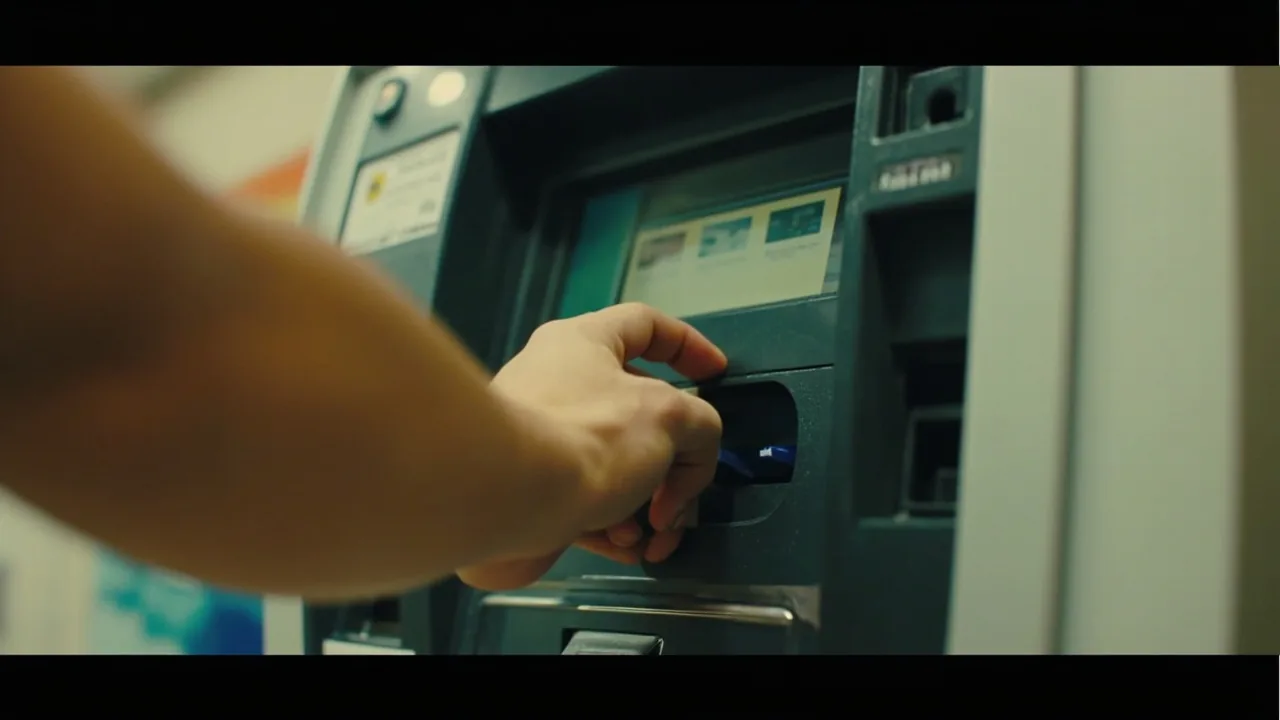
Thailand ATM Withdrawal: Fees, Limits & Charges Every Indian Traveler Must Know
Every Thai ATM charges a flat ₹629 (~220 THB or ~$6.53) foreign-card fee. On top of that, your Indian bank adds its own charge, usually ₹100-200 per swipe, plus a 1-3.5% currency-conversion markup. Withdraw 10,000 THB in five ATM hits and you can lose ₹2,000 (~$20.76) before you spend a single baht on pad thai. This guide breaks down the real 2026 math, the cards and neobank apps that skip or refund that fee, and the exact steps to keep your per-baht cost close to the mid-market rate. For related planning, see our guides on Sea Backpacking Hub and Southeast Asia on 2 500 Day Private Rooms Local Restaurants Free Activities.
Current rate: 1 THB ≈ ₹2.8690 right now, so 1,000 THB ≈ ₹2,869 and ₹1,000 (~$10.38)≈ ₹995 (~348 THB or ~$10.33).
Quick Answers
| What | Answer | Price (INR) |
|---|---|---|
| Thai operator fee | Flat ₹629 (~220 THB or ~$6.53) charged by the ATM itself, on top of any fee from your Indian bank | ₹629 (~220 THB or ~$6.53) |
| Indian bank ATM fee (typical) | ₹100-₹200 (~$1.04-$2.08)+ 1-3.5% markup (HDFC, SBI, ICICI vary) | ₹100-₹200 (~$1.04-$2.08) per swipe + 1-3.5% |
| Single-transaction limit (most Thai ATMs) | ₹5,718-₹8,577 (~2,000-3,000 THB or ~$59.35-$89.03) per withdrawal | ~₹5,738-₹8,607 (~$59.56-$89.34) per hit |
| Daily limit (Indian bank side) | ₹50,000-₹100,000 (~$519-$1,038) for most savings accounts; HDFC Infinia goes to ₹200,000 (~$2,076) | varies by card |
| Best option for Indians in 2026 | Zero-markup debit (Fi, Niyo) or Wise multi-currency card | ₹0 markup + ₹100 (~$1.04) ATM fee |
| Backup option | Traditional forex card (HDFC, Axis, ICICI) | 2-3.5% markup |
| Worst option | Airport exchange counters | 5-8% worse than mid-market |
How Thai ATMs Charge You
When you stick your Indian debit or forex card into a Bangkok Bank, Krungsri, or 7-Eleven ATM, three separate layers of fees stack up before any money lands in your hand.
Layer 1: The Thai operator fee. The bank that owns the ATM (Bangkok Bank, Krungsri, Krungthai, Kasikorn, the ATM inside your 7-Eleven) charges a flat ₹629 (~220 THB or ~$6.53) for every foreign-card withdrawal. This is non-negotiable and not refunded. It shows up on your bank statement as a separate line item, often labelled “ATM Surcharge” or “Thai Operator Fee.” It does not matter if you withdraw ₹2,859 (~1,000 THB or ~$29.68) or the maximum ₹8,577 (~3,000 THB or ~$89.03). The ₹629 (~220 THB or ~$6.53) fee is the same.
Layer 2: Your Indian bank’s ATM fee. Your home bank (HDFC, SBI, ICICI, Axis, etc.) charges a separate per-transaction fee for using an international ATM. Most Indian banks charge ₹100-₹200 (~$1.04-$2.08) per foreign-currency withdrawal plus a currency-conversion markup of 1-3.5% on the exchange rate. SBI’s global ATM fee is roughly ₹100 plus 3.5%. HDFC’s Millennia card charges ₹125 (~$1.30) per foreign transaction plus 3.5% markup. ICICI’s standard debit cards sit in the same range.
Layer 3: The exchange rate markup. Even when your card says “zero forex markup,” read the small print. Most Indian banks quietly add a 1-3.5% markup to the Visa or Mastercard wholesale rate. This is the real cost most travellers miss because they only look at the visible per-swipe fee.
DCC, the silent killer. Many Thai ATMs (especially at tourist spots, malls, and airports) will offer to charge your card in INR instead of THB. This is Dynamic Currency Conversion, and it is a trap. The DCC rate is always worse, often 5-8% above the real Visa/Mastercard rate. Always select “THB” or “Without Conversion” at the prompt. If the machine does not give you a choice, walk to a different ATM.
Subodh’s Pro Tip: Withdraw the maximum the ATM allows (usually ₹5,718-₹8,577 (~2,000-3,000 THB or ~$59.35-$89.03)) to dilute the ₹629 (~220 THB or ~$6.53) operator fee. Hit a ₹5,718 (~2,000 THB or ~$59.35) ATM five times and you pay ₹3,145 (~1,100 THB or ~$32.64) in operator fees alone. Hit it twice at ₹8,577 (~3,000 THB or ~$89.03) each and you pay ₹1,258 (~440 THB or ~$13.06). Same total cash, different fee-to-baht ratio.
Comparison of Popular Options for Indians in 2026
| Tool | Markup | Indian bank ATM fee | Per-foreign-ATM fee | Daily limit | FX rate used | Verdict |
|---|---|---|---|---|---|---|
| HDFC/ICICI/SBI standard debit card | 1-3.5% | ₹100-₹200 (~$1.04-$2.08) | Same | ₹50,000-₹100,000 (~$519-$1,038) | Bank rate with markup | Worst option for ATM use |
| HDFC/ICICI/SBI forex card (preloaded) | 2-3.5% (loaded rate) | None extra | None extra | Card balance | Card’s loaded rate | OK if pre-loaded in Thailand, weak if reloaded abroad |
| Niyo Zero Markup card | 0% | ₹0 markup | ₹100 (~$1.04) per foreign ATM (some partner banks refund this) | ₹50,000-₹200,000 (~$519-$2,076) | Mid-market | Strong ATM option |
| Fi Federal debit card | 0% markup | ₹0 markup | First 5,000 THB/month free, then 1% + GST | ₹50,000-₹100,000 (~$519-$1,038) | Mid-market | Best for smaller ATM users |
| Wise multi-currency card | 0.41-1.4% (varies) | ₹0 markup | 2 free withdrawals/month up to ₹14,000 (~$145.32), then ~₹67 (~$0.70)+ 0.41% | Hold balance + ATM cap | Mid-market | Best for high-value ATM users who hold GBP/USD balance |
| Revolut Standard/Plus/Premium | 0% markup (weekday) | ₹0 markup | Standard: ₹1,250/month free, then 2% fee | Card balance | Mid-market (weekdays) | Good if you reload via INR transfer; weekend markup applies |
| N26 Standard | 0% markup (Mastercard rate) | ₹0 markup | Free up to ₹8,300/month, then 1.7% | Card balance | Mid-market | Limited Indian onboarding; treat as secondary card |
| Cash from Indian airport counter | N/A | N/A | N/A | ₹25,000/day | 5-8% worse than mid-market | Worst option |
| Cash from Thai airport counter (Bangkok Suvarnabhumi) | N/A | N/A | N/A | No cap | 2-4% worse than mid-market | Acceptable for landing day only |
The three neobank cards (Wise, Revolut, N26) follow the same playbook as Niyo and Fi, but with different fee structures aimed at frequent travellers. Wise charges a low percentage-based fee but caps how much you can withdraw for free each month (roughly ₹14,000 (~$145.32), after which a small percentage applies). Revolut gives you a generous flat monthly allowance (around ₹1,250 (~$12.98) on Standard) before a 2% fee kicks in, but only on weekdays (a 1.5% markup applies Friday-Sunday). N26 lets you withdraw up to around ₹8,300/month for free, then charges 1.7%. All three use the mid-market rate with zero markup, so the only real question is how much cash you plan to pull out per month.
For a backpacker doing 21 days in Thailand pulling roughly ₹22,871-₹28,589 (~8,000-10,000 THB or ~$237.40-$296.75) every 4-5 days (about ₹23,000-₹29,000 (~$238.74-$301.02) per withdrawal), Niyo or Fi cover that within their free-ATM allowance. Wise or Revolut work better for travellers planning to also hit Vietnam or Cambodia on the same trip, since the same card works across SEA.
Subodh’s Pro Tip: Carry two cards from different networks. If your primary Visa ATM goes down or hits a daily limit, your backup Mastercard (vice versa) saves you. Travellers report being stuck at 11 PM in Pai with one working card and no backup. Do not be that person.
India-Specific Gotchas: RBI, TCS, and the ₹7 Lakh Trap
Indian travellers face a layer of rules no foreigner deals with. These are the RBI’s Liberalised Remittance Scheme (LRS) rules, and the 2023 amendment added a 20% Tax Collected at Source (TCS) on most overseas spending above ₹7 lakh per financial year.
The ₹7 Lakh exemption. Under the RBI’s LRS framework, the first ₹7,00,000 you spend abroad per financial year (April to March) is exempt from the 20% TCS. Above ₹7 lakh, you pay 20% TCS upfront, refundable when you file your ITR. This applies to forex cards, foreign-currency ATM withdrawals, international debit-card swipes, and any other forex outflow.
What counts toward ₹7 lakh. Every rupee you load onto a forex card, every ATM withdrawal abroad, every international debit-card swipe. So if you preload ₹100,000 (~$1,038) on a Niyo card, take out ₹50,000 (~$519) in Thailand, and use your HDFC debit for another ₹30,000 (~$311.40) in Vietnam, all ₹180,000 (~$1,868.40) counts.
How to stay under ₹7 lakh legally. For a typical 3-4 week Thailand trip costing ₹80,000-₹150,000 (~$830.40-$1,557) total, you are nowhere near ₹7 lakh. The TCS rule only bites if you are funding a long trip, a couple’s combined expenses, or multiple trips per financial year.
PAN and Form A2. When you load a forex card or make large international transfers, the bank will ask for your PAN. This is mandatory for any single transaction above ₹25,000 (~$259.50) or cumulative above ₹50,000 (~$519) in a financial year. Keep your PAN handy when buying forex or reloading cards abroad.
The refund. The 20% TCS collected above ₹7 lakh shows up as a tax credit in your Form 26AS. When you file your ITR, you can claim it back. Most travellers never bother and treat it as a hidden cost. If your employer handles your tax filing, push for the refund; the money is legally yours.
Subodh’s Pro Tip: Do not split spending across cards to “hide” amounts from LRS. Banks report all forex outflows against your PAN. Hiding only delays the mess at ITR filing. Stay within ₹7 lakh per financial year per PAN and you avoid TCS entirely.
ATM Withdrawal Limits in Thailand
Thai ATMs themselves cap single withdrawals at ₹5,718-₹8,577 (~2,000-3,000 THB or ~$59.35-$89.03) depending on the bank and the card network. Most Bangkok Bank and Krungsri machines let you pull ₹5,718-₹7,147 (~2,000-2,500 THB or ~$59.35-$74.19) per hit. Some Kasikorn ATMs go up to ₹8,577 (~3,000 THB or ~$89.03). Your Indian bank’s daily ATM limit is a separate cap on top of that.
| ATM operator | Single-tx limit | Foreign card accepted | ₹629 (~220 THB or ~$6.53) fee? |
|---|---|---|---|
| Bangkok Bank | ₹5,718-₹7,147 (~2,000-2,500 THB or ~$59.35-$74.19) | Yes (Visa/MC/UnionPay) | Yes |
| Krungsri (Bank of Ayudhya) | ₹5,718-₹7,147 (~2,000-2,500 THB or ~$59.35-$74.19) | Yes | Yes |
| Krungthai | ₹5,718-₹7,147 (~2,000-2,500 THB or ~$59.35-$74.19) | Yes | Yes |
| Kasikorn | ₹5,718-₹8,577 (~2,000-3,000 THB or ~$59.35-$89.03) | Yes | Yes |
| 7-Eleven ATM (Krungsri) | ₹5,718-₹7,147 (~2,000-2,500 THB or ~$59.35-$74.19) | Yes | Yes |
| Government Savings Bank | ₹4,288-₹5,718 (~1,500-2,000 THB or ~$44.51-$59.35) | Yes | Yes |
| Tesco Lotus ATM | ₹5,718 (~2,000 THB or ~$59.35) | Yes | Yes |
Indian-bank-side limits (typical savings accounts):
| Bank | Daily ATM limit | Per-transaction limit |
|---|---|---|
| HDFC Bank (Millennia, EasyShop) | ₹50,000-₹100,000 (~$519-$1,038) | ₹20,000-₹25,000 (~$207.60-$259.50) |
| HDFC Infinia / Diners Black | ₹200,000 (~$2,076) | ₹50,000 (~$519) |
| SBI (basic savings) | ₹40,000-₹60,000 (~$415.20-$622.80) | ₹20,000-₹25,000 (~$207.60-$259.50) |
| ICICI Bank (HPCL Platinum, etc.) | ₹50,000-₹100,000 (~$519-$1,038) | ₹20,000-₹25,000 (~$207.60-$259.50) |
| Axis Bank | ₹50,000-₹75,000 (~$519-$778.50) | ₹20,000-₹25,000 (~$207.60-$259.50) |
| Kotak Mahindra | ₹50,000-₹100,000 (~$519-$1,038) | ₹20,000-₹25,000 (~$207.60-$259.50) |
If your daily limit is ₹50,000 (~$519) and you are withdrawing at ₹7,147 (~2,500 THB or ~$74.19) per hit (~₹7,173), you can pull roughly 7 ATM hits per day before your bank refuses. In practice, the ₹629 (~220 THB or ~$6.53) fee per hit kills that math. Two or three larger hits is smarter than seven small ones.
Safety Alert: ATM skimmers exist at Thai tourist ATMs, especially in Phuket, Koh Samui, and Pattaya. Use ATMs inside bank lobbies (Bangkok Bank, Krungsri, Kasikorn branches) rather than standalone street machines. Cover your PIN. If a machine feels loose around the card slot, walk away.
What Indian Travellers Use
Most Indian backpackers I have spoken with run a two-card setup: a zero-markup debit (Fi, Niyo, or Wise) as the primary, and a traditional forex card (HDFC, ICICI) preloaded with a smaller buffer amount as the backup. The reasoning is simple. The zero-markup card saves money on the bulk of withdrawals. The forex card carries no FX risk on the preloaded balance and works as a fallback if the primary card gets blocked.
A common pattern: load ₹25,000 (~$259.50) on the forex card before flying (enough for two days of hotel, food, and transport on landing). Withdraw the rest in THB from ATMs using the zero-markup card. Do not reload the forex card from inside Thailand; the reload fee plus exchange-rate markup wipes out the original advantage.
Thailand is more cash-heavy than Bangkok looks. Big malls, 7-Eleven, and chain restaurants take cards. Small street-food stalls, night markets, songthaew rides, motorbike rentals, and most guesthouses outside the big cities want cash. Plan for roughly 60-70% of daily spending in cash during a Thailand trip.
For the broader Thailand budget math across hostels, food, and transport, see our Thailand budget guide. For the bank-wise fee breakdown from the Indian side, our Indian ATM card in Thailand guide goes deeper on HDFC, SBI, ICICI, and Axis.
FAQ
How much does one ATM withdrawal cost me in total in 2026?
A ₹7,147 (~2,500 THB or ~$74.19) withdrawal typically costs you ₹629 (~220 THB or ~$6.53) plus ₹100-₹200 (~$1.04-$2.08) plus 1-3.5% markup. On a Fi or Niyo card, the markup drops to 0%, so you pay ₹629 (~220 THB or ~$6.53) plus ₹100-₹150 (~$1.04-$1.56). On an HDFC forex card with no per-swipe fee, you pay only the ₹629 (~220 THB or ~$6.53) operator fee plus whatever markup the card loaded.
Should I bring Thai Baht cash from India or withdraw at Bangkok Suvarnabhumi?
Withdraw at the airport ATM on arrival. The SuperRich or Vasu exchange counters at Suvarnabhumi are 2-4% off mid-market. Indian airport forex counters are worse, 5-8% off. Pull ₹14,295-₹22,871 (~5,000-8,000 THB or ~$148.38-$237.40) at the airport ATM to cover your first 24 hours (taxi, food, hotel deposit), then settle into a regular ATM routine. ATMs in Bangkok’s arrivals halls are open 24/7.
Is using a forex card cheaper than a debit card for Thailand?
Only if you load the card in India before flying AND do not reload abroad. The loaded rate beats the live ATM rate by roughly 1-2% at the moment of loading. Once you reload from inside Thailand (bank transfer or card top-up), the reload fee plus conversion wipes out the original edge. For most Indian travellers, a zero-markup debit card (Fi, Niyo, Wise) is simpler and roughly the same cost.
Can I use UPI in Thailand in 2026?
Yes, but only at a small and growing set of merchants, mostly in Bangkok malls, 7-Eleven, and some tourist-area restaurants. The Thai QR (PromptPay) network accepts UPI through partner banks like DBS and ICICI. Outside Bangkok, do not rely on UPI. Use cards or cash. For more on what works across Southeast Asia, our Southeast Asia budget guide covers the cash-versus-card question by country.
What if my Indian debit card gets blocked in Thailand?
This is common. HDFC, SBI, and ICICI all have anti-fraud triggers that freeze a card after 2-3 foreign ATM hits in a day. Call the 24/7 international helpline the moment it happens. For HDFC, the number is on the back of the card and works from Thailand via +91-22-6160-6160. Most banks unblock after a one-time OTP How do I claim VAT refund on my Thailand shopping?
Thailand’s VAT refund scheme is available to tourists who shop at participating stores and depart from international airports. The full walkthrough is in our Thailand VAT refund guide.
Subodh’s Line
The single mistake I see every Indian traveller make in Thailand is pulling small amounts at the ATM. The ₹629 (~220 THB or ~$6.53) fee is the same whether you take out 1,000 or 3,000 baht, and your bank’s per-swipe fee is the same. Withdraw the maximum the machine allows, do it twice a week instead of seven times, and the per-baht cost drops by half. Everything else in this guide is optimization. That one habit is the actual savings.
Getting Connected
You will need working data to check your bank app mid-trip (to confirm ATM withdrawals, unblock a frozen card, or check your remaining balance). A Thai SIM or eSIM is the simplest fix. AIS’s tourist SIM at the airport counter runs ₹855 (~299 THB or ~$8.87) for 8 days; the 7-Eleven version is the same SKU for around ₹57 (~20 THB or ~$0.59) less.
