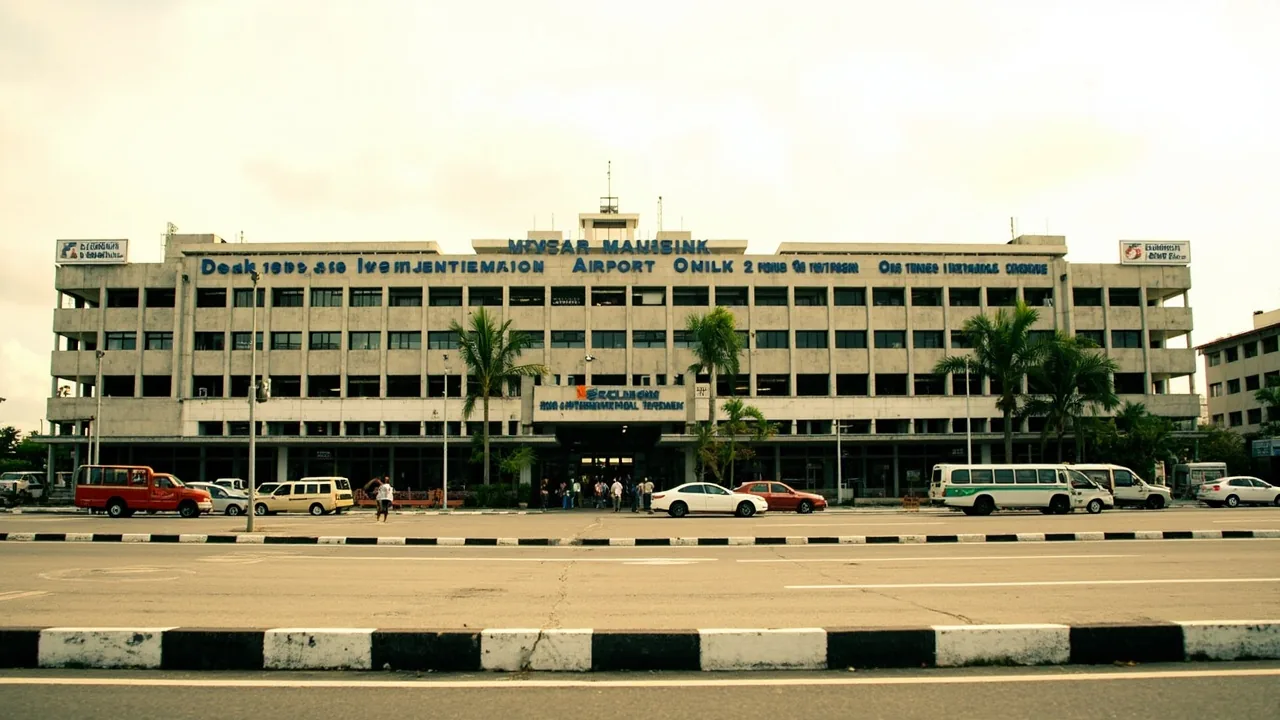
Don Mueang (DMK) Airport Guide 2026: Terminals, Transit, Sleeping & Getting to Bangkok
Don Mueang (DMK) is Bangkok’s budget airline hub, mostly Air Asia, Nok Air, and Thai Lion Air, with a tighter footprint than Suvarnabhumi (BKK). This Bangkok DMK airport guide covers terminals, transit rules, layover sleeping, and how to get into the city without getting ripped off. For the full picture on Southeast Asian transport hubs, airports, and overland crossings, check our SEA backpacking hub.
Subodh’s Pro Tip: Don Mueang is roughly 24 km north of central Bangkok (Siam/Khao San area), versus Suvarnabhumi’s 25 km east. The difference matters less for distance and more for which airlines fly where. Most Indian carriers (Indigo, Spicejet, Air India Express) historically use BKK, but a few Thai Air Asia routes from Don Mueang connect to Indian cities directly. Always check which airport your booking says, because the two airports are not connected by a direct train and a transfer by road in traffic is 45-90 minutes.
Quick Answers
| What | Answer | Price (INR) |
|---|---|---|
| DMK to Khao San by Grab/taxi | ₹1,005-₹1,436 (~350-500 THB or ~$10.43-$14.89) | ₹1,003-₹1,434 (~$10.40-$14.87) |
| DMK to Sukhumvit (Asok) by train + AOT bus | ₹144 (~50 THB or ~$1.49) total (75 min) | ₹143 (~$1.48) |
| AOT airport bus A1 to BTS Mo Chit | ₹86 (~30 THB or ~$0.89) | ₹86 (~$0.89) |
| Sleeping pods at DMK (terminal 2) | 250-400 THB/hour | ₹717-₹1,147 (~$7.44-$11.90) |
| Transit visa needed for Indian passport holder? | Only if you leave the airside; transit between DMK flights without leaving airside = no visa | ₹0 |
DMK Terminal Layout & Which Terminal You Need
Don Mueang has two terminals, but it’s not the confusing mess it looks like. Here’s the real breakdown.
Terminal 1 (International) is the older, larger building on the east side of the complex. It handles all international flights in and out: most Thai Air Asia international routes, Thai Lion Air international, and most of the carriers flying to and from China, India, Singapore, Malaysia, and Vietnam. As of March 2026, Terminal 1 is the only DMK terminal that clears international arrivals.
Terminal 2 (Domestic) is the newer building on the west side, opened in stages through the 2010s and handling all domestic flights: Air Asia, Nok Air, and Thai Lion Air domestic routes. If you’re flying from Chiang Mai, Phuket, Krabi, or Koh Samui into Bangkok, you’re almost arriving at Terminal 2.
The two terminals are a 5-7 minute walk apart via a covered outdoor walkway (the path is signed “Terminal 1 / Terminal 2” and is partly elevated). There are moving walkways in some sections but expect to do some walking. If you have heavy luggage or a tight connection (under 90 minutes domestic-to-international), allow extra time.
Safety Alert: The terminal walkway is partly outdoors. During Bangkok’s rainy season (roughly May-October), expect to get wet between covered sections even with an umbrella. Pack a small rain layer in your carry-on if you’re self-transferring.
DMK Transit Rules for Indian Passport Holders
The big question for most Indian backpackers: do I need a transit visa? Here’s the actual rule, not the vague stuff you’ll find on forums.
Airside transit (staying inside the secure area, no immigration): You do NOT need a Thai visa. As an Indian passport holder, you can transit through DMK without a visa as long as you don’t pass through Thai immigration. If you’re connecting from one international flight to another and staying airside the whole time, no visa is required.
Self-transfer between terminals at DMK: Airside connection between Terminal 1 (international) and Terminal 2 (domestic) is not always possible in the way you’d hope. The terminals have separate airside zones, and to go from domestic arrival to international departure you typically need to clear immigration briefly to access the terminal transfer path. This means most “self-transfers” at DMK do require either a Thai visa or an onward boarding pass showing same-day continuation. Travellers report that on a single ticket with checked-through baggage, the airline handles the terminal transfer bus and you stay in a controlled corridor. On separate tickets, plan as if you’ll go landside (immigration in, walk, immigration out).
Landside transit (leaving the airport during a long layover): If your layover is long enough that you want to see Bangkok or stay in a city hotel, you DO need either:
- A valid Thai visa (Tourist Visa, Visa on Arrival, or eVisa), or
- The Visa Exemption rule: Indians are eligible for visa-free entry to Thailand for stays up to 60 days (used to be 30, doubled in mid-2024 and still current as of mid-2026). You need a passport valid 6+ months, proof of onward travel within 60 days, and a TDAC arrival card. Full details in our Thailand visa guide for Indians.
The 60-day visa-free rule for Indians: Verified against the Thai MFA site on 2026-07-17. Indian passport holders get 60 days visa-free, extendable once for another 30 days at any immigration office (₹5,456 (~1,900 THB or ~$56.59) fee). This is generous, and it means most long layovers don’t require a separate visa at all, just walk out and go out. If your layover is shorter than 6 hours, leaving the airport is rarely worth it. If it’s 10+ hours, the city is closer than you think.
Subodh’s Pro Tip: For overnight layovers at DMK between 11pm and 6am, the airport itself is the better choice. Bangkok traffic at 3am is light, but Khao San hostels won’t check you in at midnight, and you’ll pay 600+ THB for a Grab both ways for a few hours of sleep. The airport sleeping pod cabins at Terminal 2 are designed exactly for this case.
Sleeping at DMK: Pods, Lounges, Bunk Beds
DMK has surprisingly good options for in-airport sleeping, far better than what you’ll find at Suvarnabhumi, and most of them have been open for at least 4 years as of mid-2026. Verified against AOT’s airport services listing on 2026-07-17.
Miracle Sleeping Pods (Terminal 2, both landside and airside): The most popular option. Private single pods with a bed, AC, USB charging, and a small locker. 250-400 THB/hour depending on which pod tier you book. For a 6-7 hour overnight sleep, expect to pay ₹4,307-₹7,179 (~1,500-2,500 THB or ~$44.68-$74.47) total. Landside pods are accessible without a boarding pass. Airside pods require an onward boarding pass.
Miracle Transit Hotel (Terminal 1, inside the international departures zone, 2nd floor): Small rooms, not just pods. Real beds, private bathrooms, hourly rates. Around ₹3,446-₹5,169 (~1,200-1,800 THB or ~$35.74-$53.62) for 4-6 hours. Long-day rates run ₹7,179-₹10,050 (~2,500-3,500 THB or ~$74.47-$104.25). This is where you stay if you’ve already cleared immigration and don’t want to come back out.
Air Asia travelers lounge (Terminal 1) is technically for premium passengers but the day-pass price varies. If your ticket includes it, use it; if not, the pods above are simpler.
Free sleeping spots (no facilities): The benches near the check-in counters in Terminal 1 get quieter after midnight. Travellers report the area near Gates 1-4 (Terminal 1 airside) is the calmest for a flat-bench sleep with a small blanket. Free, but bring a jacket. Terminals at DMK run AC aggressively, airside is often 18-20°C at night.
Bringing luggage through to a sleeping pod: The pods and transit hotel both have small lockers, and the airlines’ left-luggage counters near Terminal 1 arrivals (open roughly 6am-midnight) charge ₹287-₹431 (~100-150 THB or ~$2.98-$4.47) per bag per day. After midnight, you’re on your own with what fits under your pod bed.
Safety Alert: Common sleeping scam at DMK: people offering “better rates” on overnight stays at unmarked kiosks near the terminal exit. They’ll quote ₹574 (~200 THB or ~$5.96) and then add “service fees” or “tourism tax” once you’re inside the car. The legitimate pods and hotels have published rates on official AOT signage. Stick to the on-airport options listed above.
Getting from DMK to Central Bangkok
The honest comparison of every option, in order of when each one makes sense:
Grab (Ride-hailing App)
The most reliable option at any hour, fixed-ish price, no meter scams, no haggling. For DMK-to-Bangkok itself, just open the Grab app. We compared Grab vs Bolt in Bangkok, and Grab wins on coverage at DMK. Typical Grab fares DMK to Khao San: ₹1,005-₹1,436 (~350-500 THB or ~$10.43-$14.89). DMK to Sukhumvit Asok: ₹1,149-₹1,579 (~400-550 THB or ~$11.91-$16.38). DMK to Suvarnabhumi (BKK) cross-airport transfer: ₹1,723-₹2,584 (~600-900 THB or ~$17.87-$26.81), allow 60-90 minutes.
The catch: Grab pickup at DMK runs from a designated area about 200m from Terminal 1 arrival exit. Some travellers report confusion about where the official pickup is. Look for the “Grab” or “Ride-hailing” signs on the left side as you exit, or use the in-app map. Taxi cartels blocking ride-hailing pickups have been reported at some Bangkok airports historically; at DMK as of 2026, the Grab area is officially signed and is generally fine.
Cash vs app payment: Indian credit and debit cards often fail on Grab’s international payment screen. Set up a cash-on-arrival option in the Grab app, or top up the GrabPay wallet via 7-Eleven (counter staff can do it). At current rates, the rides above come out to roughly ₹1,000-₹1,600 (~$10.37-$16.60).
AOT Airport Bus A1 (to BTS Mo Chit)
The cheapest reliable option. Bus A1 runs from outside Terminal 1 to BTS Mo Chit station 24 hours a day, departures every 20-30 minutes (more frequent during the day, less overnight). ₹86 (~30 THB or ~$0.89) flat fare (~₹86), cash on board. From BTS Mo Chit you can connect to the BTS Skytrain (another ₹46-₹169 (~16-59 THB or ~$0.48-$1.76) depending on distance) or transfer to MRT. Total time DMK to Asok/Sukhumvit via this route: roughly 75-90 minutes. To Khao San, take A1 to Mo Chit then MRT to Kamphaeng Phet or Bang Yi Khan, then a short tuk-tuk. Less convenient than Grab but 10x cheaper.
SRT Dark Red Line (Train)
A newer option, opened in 2021, with DMK having its own station (Don Mueang Railway Station, technically separate from the airport terminals but a short walk or shuttle away). The SRT Dark Red Line runs from Don Mueang to central Bangkok (Krung Thep Aphiwat, the new central terminus), then on to Bang Sue. Around ₹57-₹115 (~20-40 THB or ~$0.60-$1.19) depending on destination. Faster than the bus but requires the walk/shuttle to the station and a connection to MRT or BTS for most central destinations. Less useful for first-time visitors with luggage.
Public Taxi (Metered)
The official public taxi queue at DMK is well-managed, with staff helping you into a metered taxi. You pay the meter (around ₹861-₹1,149 (~300-400 THB or ~$8.94-$11.91) to Khao San) plus a ₹144 (~50 THB or ~$1.49) airport surcharge. Total to central Bangkok: ₹1,005-₹1,292 (~350-450 THB or ~$10.43-$13.40). The old airport scam of “meter broken, flat ₹2,872 (~1,000 THB or ~$29.79)” still happens but is no longer the norm. Insist on the meter, decline any flat-rate offer up front, and you’ll be fine. Travellers report some drivers taking the longer toll-road detour by default, which is faster (15-20 min saved) but adds ₹144-₹230 (~50-80 THB or ~$1.49-$2.38). Decide based on your time pressure.
Do NOT accept rides from touts inside the terminal building offering “taxi, taxi, where you going.” They are 2-3x the meter rate and there’s no recourse if they overcharge.
Tuk-tuk to Khao San
The classic Bangkok experience, and not the most practical for first-time arrivals with luggage. ₹574-₹1,149 (~200-400 THB or ~$5.96-$11.91) from DMK to Khao San, no meter, fixed-price negotiation. Fun for the photo, not great value.
Eating at DMK (Without Getting Robbed)
DMK’s food court and grab-and-go options are similar to most Asian airports: a mix of Thai, Japanese, and Western chains at marked-up prices, plus a 7-Eleven (landside Terminal 1, near Gate 6 area). For Thai food at airport prices, expect ₹287-₹718 (~100-250 THB or ~$2.98-$7.45) per dish. A bowl of tom yum or pad thai in the food court lands around ₹431-₹574 (~150-200 THB or ~$4.47-$5.96). A coffee at the chain cafe will run ₹230-₹345 (~80-120 THB or ~$2.38-$3.57).
Before your flight lands, here’s a real Bangkok meal option: many travellers with long layovers take the 40-minute Grab into the city for a meal at one of the well-reviewed Thai spots and ride back. If you do this on a 10+ hour layover, the math works. Well-rated options near the old town include The Island Bangkok – Top Rated Thai Restaurant & Bar (rated 4.9) for Thai food and Aonchorn Thai restaurant ออนชอน ราชดำเนิน (rated 4.9) for authentic local flavours. For a quick Thai food fix inside DMK, the food courts in both terminals will run you ₹431-₹718 (~150-250 THB or ~$4.47-$7.45) per dish; budget ₹574 (~200 THB or ~$5.96) for a meal + drink.
If your layover is long enough that you want Indian food instead, Indique- Best indian food in bangkok (rated 4.9) in central Bangkok serves butter chicken and North Indian dishes at around ₹1,330 (~$14) per person. Mustache Bangkok (rated 4.6) does creative Middle Eastern street food if you want something different from Thai. For a quick Thai food fix inside DMK, the food courts in both terminals will run you ₹431-₹718 (~150-250 THB or ~$4.47-$7.45) per dish; budget ₹574 (~200 THB or ~$5.96) for a meal + drink.
Subodh’s Pro Tip: Travellers report that the Thai street-food-stall-feeling places in Terminal 2’s food court (landside) serve more authentic-tasting dishes than the chain restaurants in the central concourse, and at half the price. Look for stalls with active woks.
Where to Stay in Bangkok (For Longer Layovers)
If you’re spending 2+ nights in Bangkok during or after your DMK visit, the city is where you want to be, not the airport. The hostel scene in Khao San and Sukhumvit is deep, the food is everywhere, and the city is fun to crash in. Our best hostels in Bangkok guide covers the best hostels under 500 baht. For an action-heavy itinerary of Bangkok, see the Bangkok airport to city center transport guide.
If you’re heading south to the islands, the Koh Samui airport (USM) terminal guide has a similar structure for the southern islands.
SIM Cards & Connectivity at DMK
Both terminals have AIS, TrueMove, and DTAC booths landside near the arrivals exit. All three sell tourist SIMs that work on Indian phones (most modern 4G/5G phones are compatible). Budget ₹859-₹1,720 (~299-599 THB or ~$8.91-$17.84) for a 7-15 day tourist SIM with 50-100GB of data.
For an eSIM alternative that activates before you land, Get Nomad eSIM has India-friendly plans with 1-5GB for short trips, or 10-20GB for longer stays, activated by QR code from your home WiFi. Useful if you want data the moment you land, rather than queueing at the booth at 1am.
Why this matters at DMK specifically: Working data on landing is what makes Grab work, what makes the 12go booking happen on the fly, and what gets you through immigration faster (most immigration counters now read passport chips digitally). Don’t land data-less.
Common Transit Mistakes Indian Travelers Make at DMK
Confusing DMK with BKK on the wrong booking. These are 25+ km apart, on opposite sides of the city, with no direct train between them. Always read your booking confirmation to confirm which three-letter code (DMK vs BKK) you’re flying into. A cross-airport transfer in Bangkok traffic can blow a 4-hour layover.
Self-transferring between terminals on separate tickets without a visa plan. If you book an Air Asia international arrival into Terminal 1 and a separate domestic departure from Terminal 2, on the same day, you DO need a visa or visa-free entry to clear Thai immigration. This is the most common Indian-traveler rejection at the gate. Either book both legs on the same ticket (airline handles the transfer) or plan to stay airside and accept that same-ticket self-transfers aren’t “transit” at DMK.
Paying ₹4,307 (~1,500 THB or ~$44.68) for a taxi when Grab would be 400. Old habits and fatigue at landing push people toward accepting the first offer. Insist on the meter, use Grab, or take the A1 bus if you’re on a budget. The price differential is ~3-4x and there’s no upside to overpaying.
Missing the visa-free entry eligibility check. Indian passport holders get 60 days visa-free, but only with a passport valid 6+ months and proof of onward travel. If you don’t have a return ticket or onward booking ready on your phone, immigration will send you to the secondary queue and you may miss your connecting flight.
Landing at 2am and trying to check into a hostel. Most Khao San and Sukhumvit hostels don’t do midnight check-ins. Either book an airport pod for the night and hostel the next day, or pre-book a hostel with 24-hour reception.
FAQ
Q: How long does DMK immigration take for Indian passport holders? A: 20-60 minutes typical, longer during peak arrivals (8-10pm). Indian passport line moves faster than Chinese/Russian passport lines at DMK but slower than ASEAN passport holders.
Q: Can I leave DMK during a 7-hour layover? A: Yes, and it’s worth it. Bangkok’s old town (Khao San / Rattanakosin) is 40 minutes by Grab. Plan for 60 minutes immigration + 40 minutes Grab in + 90 minutes exploring + 40 minutes Grab back + 30 minutes re-check + 30 minutes security = around 4 hours, fits a 7-hour layover comfortably.
Q: Does DMK have free WiFi? A: Yes, “AOT WiFi” network, free for 2 hours per session. Speed is fine for WhatsApp and email, slow for video. A local SIM is better.
Q: Where do I sleep at DMK for free? A: The benches near Terminal 1 Gates 1-4 airside, after midnight. Bring a layer (the AC is aggressive at night) and accept that “sleep” will be light. Better than paying for a pod if you’re just resting for 2-3 hours.
Q: Is DMK or BKK better for Indian travelers? A: BKK for international arrivals from Indian carriers (Indigo, Spicejet, Air India Express all fly to BKK). DMK for connecting onward to domestic Thai routes via Air Asia or Nok Air. If you’re staying only in Bangkok, either works. The bangkok airport to city center guide covers both arrivals.
Q: Can I get a SIM card at DMK at 2am? A: AIS and DTAC booths generally close around 10-11pm. The 24-hour 7-Eleven in Terminal 1 landside sells tourist SIMs from a kiosk, but stock varies. The eSIM option above is the most reliable for late-night arrivals.
Q: Is DMK safe at night? A: Yes. Terminal 1 has 24-hour security, landside is busy with late arrivals, and the airport staff presence is consistent. Travellers report no unusual security concerns at DMK compared to BKK. As with any major airport, watch for the unmarked-taxi-scam mentioned above.
Subodh’s Take
DMK is what it is: Bangkok’s budget airline hub, slightly cramped, slightly chaotic, well-staffed, and 30-40% cheaper to reach the city from than Suvarnabhumi. The two real decisions are (1) which terminal you need, and (2) whether your layover is worth leaving the airport for. For an overnight layover: book a Miracle Sleeping Pod, eat at the Terminal 2 food court, sleep near Gates 1-4 if you’re on a tight budget. For a 10+ hour day layover: take Grab into Khao San, eat real Thai food, ride back. The third real decision is which airport your next flight is at, and that’s a 60-second check on the booking confirmation, not something you figure out on landing.
