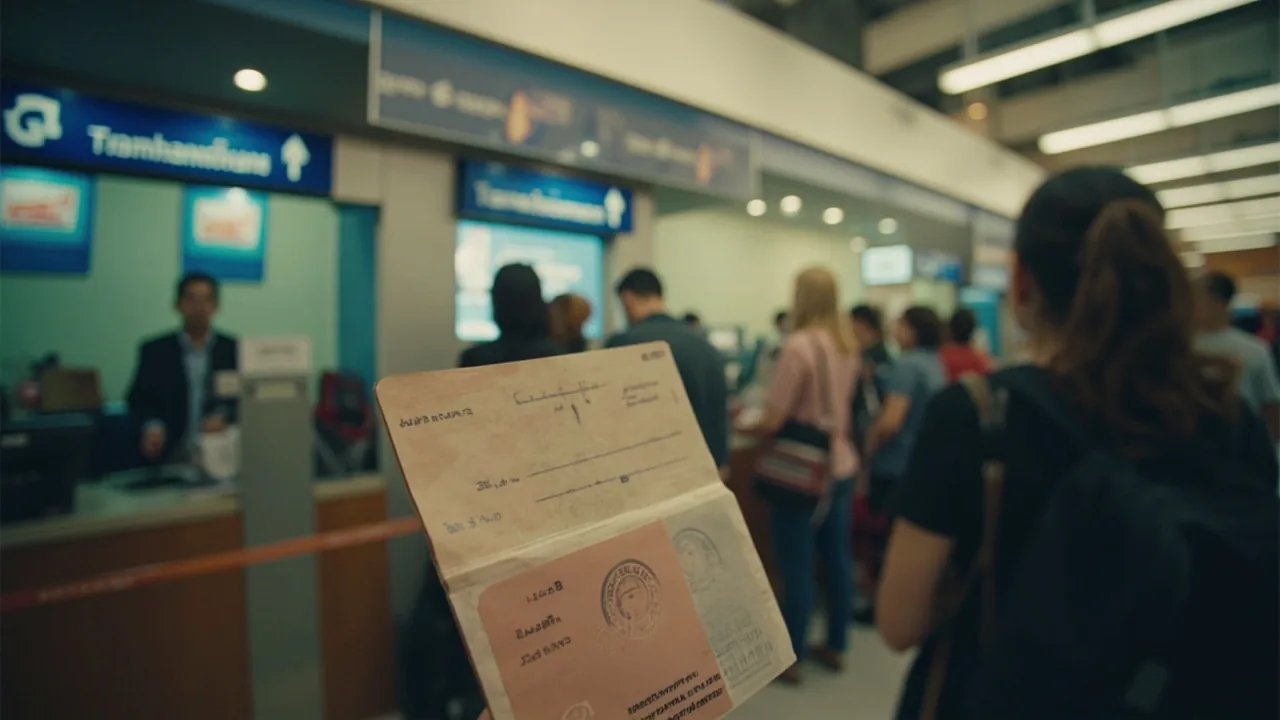
Thailand Visa for Indians in 2026: Fees, Process & Documents
If you hold an Indian passport and you’re flying to Thailand in 2026, here’s the bottom line on the Thailand visa for Indian citizens: you don’t need a tourist visa. The bilateral visa-free entry gives you 60 days, and the only document you must file before boarding is the free TDAC digital arrival card. Visa-on-arrival still exists, but for Indians it’s mostly a downgrade.
This guide breaks down every visa option available to Indian passport holders, the exact fees in THB and INR, the documents Thai immigration checks, and the three mistakes that get people turned away at Bangkok Suvarnabhumi.
Subodh’s Pro Tip: At current rates (1 THB = ₹2.8691), the visa-on-arrival fee of 2,000 THB comes to roughly ₹5,743 (~$59.57). The bilateral visa-free entry costs ₹0. Unless you have a specific reason to take VoA (you’re arriving without a TDAC, for example), don’t.
Quick Answers
| What | Answer | Price (INR) |
|---|---|---|
| Do Indians need a visa for Thailand? | No, visa-free for 60 days under the bilateral agreement | ₹0 |
| Best option for most Indians | Visa-free entry + TDAC | ₹0 |
| VoA fee for Indians | 15 days, not extendable | ₹5,743 (~2,000 THB or ~$59.57) |
| Tourist visa from Indian embassy (single entry) | Apply at Thai Embassy/Consulate, 3–5 day processing | ₹7,230 (~2,520 THB or ~$75) |
| TDAC arrival card | Mandatory, free, file at tdac.immigration.go.th | ₹0 |
| Passport validity required | Minimum 6 months from entry date | — |
| Extension cost (visa-free) | 30 more days at any Thai immigration office | ₹5,456 (~1,900 THB or ~$56.59) |
How Thailand’s Visa System Works for Indians
Thailand runs four parallel entry paths for Indians. Most blogs mush them together. Don’t. Each one has a different fee, stay length, and document list.
1. Visa-Free Entry (bilateral)
Since the 2024 bilateral agreement, Indian passport holders walk into Thailand and get a 60-day stamp at no charge. You can extend once at a Thai immigration office for 30 more days, paying ₹5,456 (~1,900 THB or ~$56.59) in cash.
Requirements:
- Passport valid for at least 6 months from the date of entry
- Confirmed return or onward ticket (they sometimes ask)
- Proof of accommodation or a hotel booking for the first night
- TDAC confirmation (QR code or PDF printout)
2. Visa on Arrival (VoA)
This is the legacy option, still alive but rarely useful for Indians. The fee is 2,000 THB, which converts to roughly ₹5,743 (~$59.57). You get 15 days, single entry, and it’s not extendable. The only sensible reason to choose VoA in 2026 is if you forgot to file your TDAC and you want to buy yourself some entry-room; otherwise, the visa-free path is strictly better.
Documents for VoA:
- Passport with 6+ months validity
- One 4×6 cm white-background photo taken within 6 months (Thailand-specific; passport-photo size won’t work)
- Confirmed return ticket within 15 days
- Hotel booking covering the full stay
- 2,000 THB in cash (THB only, no USD, no card)
- Completed TDAC form (they’ll point you to a counter if you haven’t done it)
3. Tourist Visa (TR) from Indian Embassy
If you want a 60-day stamp with a paper visa in your passport before you fly, apply at the Royal Thai Embassy in New Delhi or a consulate in Mumbai, Kolkata, or Chennai. Fee is ₹7,230 (~2,520 THB or ~$75) for single entry. Processing takes 3 to 5 working days.
Multiple Entry Tourist Visa (METV) costs ₹17,229 (~6,000 THB or ~$178.72) and lets you bounce in and out of Thailand for six months per entry. Useful if you’re combining Thailand with Laos or Cambodia.
4. TDAC Digital Arrival Card
This is not a visa. It’s a free digital form every foreigner files before boarding a flight to Thailand. Takes 3 minutes. You fill it in at tdac.immigration.go.th within 72 hours of departure, get a QR code, and show it at the immigration desk. No fee. Required for every entry type, including visa-free.
Document Checklist for Indian Travellers
Whether you’re going visa-free, VoA, or TR, here’s what to keep in your hand-luggage folder.
| Document | Visa-Free | VoA | TR |
|---|---|---|---|
| Passport (6+ months validity, 2 blank pages) | Yes | Yes | Yes |
| TDAC QR code or printout | Yes | Yes | Yes |
| Return/onward flight ticket | Recommended | Mandatory | Recommended |
| Hotel booking (first night or full stay) | Recommended | Mandatory | Recommended |
| 4×6 cm white-background photo | No | Yes | Yes |
| Visa fee in cash (THB) | No | ₹5,743 (~2,000 THB or ~$59.57) | Already paid at embassy |
| Bank statement (last 3 months) | Sometimes asked | Sometimes asked | Required at embassy |
| Travel insurance | Recommended | Recommended | Recommended |
The Thai immigration officer at Suvarnabhumi has discretion to ask for any of these even on a visa-free entry. Travellers report the most common request is the return ticket.
Comparison of Visa Options for Indians
| Feature | Visa-Free | VoA | TR (Single) | METV |
|---|---|---|---|---|
| Fee | 0 | ₹5,743 (~2,000 THB or ~$59.57) | ₹7,230 (~2,520 THB or ~$75) | ₹17,229 (~6,000 THB or ~$178.72) |
| Stay length | 60 days | 15 days | 60 days | 60 days per entry, valid 6 months |
| Extendable | Yes, +30 days | No | Yes, +30 days | Yes, +30 days per entry |
| Processing | At airport | At airport | 3-5 working days at embassy | 3-5 working days at embassy |
| TDAC required | Yes | Yes | Yes | Yes |
| Best for | Most Indians | Last-minute arrivals | First-time paper-visa comfort | Multi-country SE Asia loops |
Verdict: The visa-free option wins on every axis except one, and that axis (a paper visa in your passport) doesn’t help you at the gate. Skip TR unless a future employer or visa application requires it.
India-Specific Gotchas
The ₹7 Lakh TCS Trap
If you book your Thailand trip on a credit card and the total crosses ₹7 lakh in a financial year, your bank will withhold 20% TCS (Tax Collected at Source) under the Liberalised Remittance Scheme (LRS). This applies across all international spends, not just Thailand.
For a ₹1.5 lakh Thailand trip, this isn’t an issue. For families booking flights and hotels together, it can sneak up. You can claim the TCS back as a refund when you file your ITR, but it ties up cash for months. Travellers report splitting spends across two cards or paying via forex cards to avoid the threshold.
Cash Carrying Limit at Mumbai/Delhi Airports
You can carry up to ₹25,000 out of India in Indian notes without declaration. Foreign currency up to USD 3,000 (equivalent) can be carried without customs declaration; above that, you fill out a Form EMF at the airport.
Forex Card vs Cash at Thai Immigration
Thai immigration doesn’t care how you paid for the trip. They care if you can show funds for the stay. A forex card statement works, an Indian bank statement works, a UPI screenshot does not (UPI doesn’t work in Thailand, more on that below).
The Passport Photo Size Trap
This is the single most common reason VoA applications get rejected. Thai immigration wants a 4×6 cm photo, not the standard 2×2 inch Indian passport size. Photocopies, selfies, and mobile phone printouts all get refused. Get it done at a studio that knows the spec, or skip VoA entirely.
What Bananarchy Travellers Do
Most of our travellers arrive at Bangkok on a visa-free stamp and never look at a visa form. The setup is simple: file TDAC 24 hours before departure, keep a screenshot of the return ticket on your phone, and carry the first night’s hotel booking (forwarded to your email from Booking.com).
For the small number who take VoA, it’s usually because they decided to extend their stay spontaneously at the airport and their visa-free entry date had passed. VoA still works as a “second chance” inside Thailand at a land border if you overstay and need to regularise, but the 500 THB/day fine plus the ₹5,743 (~2,000 THB or ~$59.57) VoA fee stacks up fast.
The one case where we recommend a TR from the Indian embassy: if your onward destination (Japan, Korea, Schengen) wants to see a Thai visa in your passport as proof of travel history. Some visa officers view a clean tourist visa stamp more favourably than a border-run entry.
Getting Connected
You need data the moment you land, both for Grab/Bolt rides and for showing the TDAC QR if the immigration counter asks. Two options:
Physical SIM: Buy an AIS, dtac, or TrueMove tourist SIM at Suvarnabhumi or Don Mueang airport kiosks. ₹859 (~299 THB or ~$8.91) for 7 days with 15 GB, ₹1,720 (~599 THB or ~$17.84) for 15 days with 30 GB. Requires passport. The kiosk staff handle the registration.
eSIM: Get Nomad eSIM before you fly. Data-only, activates on landing via QR code, no passport needed at the airport. Better if you want to skip the SIM queue.
What About Money in Thailand?
Visa paperwork is one piece. The other is having baht in hand. See our Thailand ATM withdrawal fees guide for the breakdown of which Indian bank cards work without the foreign-currency-conversion trap, and our Thailand budget guide for what 60 days in Thailand costs in THB.
Verified 2026-07-17: 1 INR ≈ 0.3485 THB. So 1,000 THB ≈ ₹2,869.
Safety & Insurance Notes
Thai immigration is straightforward for Indians, but the bigger risks are medical and logistical. A motorbike accident on Koh Samui or a dengue bout in Pai can run into lakhs. Travel insurance with medical evacuation is non-negotiable.
Planning a multi-country route? Our Southeast Asia backpacking hub covers visa rules, budgets, and itineraries across the region.
Check the Indian Ministry of External Affairs travel advisory at mea.gov.in before you fly. The current advisory for Thailand is routine; no specific alerts as of 2026-07-17.
Subodh’s Take
Most Indians overthink the Thailand visa. The bilateral visa-free entry has been running smoothly for nearly two years, and the only real preparation is the three-minute TDAC form. The travellers who get stuck are the ones who read a 2023 blog and assume VoA is still the default, then land at midnight and have no 4×6 cm photo, no ₹5,743 (~2,000 THB or ~$59.57) in cash, and a 15-day stamp they didn’t want. Don’t be that person. File the TDAC, screenshot the return ticket, carry a printout of your hotel booking, and walk through immigration in five minutes.
FAQ
Do Indians need a visa for Thailand in 2026?
No. Under the bilateral visa-free agreement, Indian passport holders get a 60-day stamp at no charge. You still need a passport valid for 6 months and a TDAC arrival card filed before boarding.
What is the Thailand visa-on-arrival fee for Indian citizens?
₹5,743 (~2,000 THB or ~$59.57) in cash. The fee is fixed in Thai baht; they don’t accept USD or card. VoA gives only 15 days and is not extendable, so most Indians skip it.
How do I file the TDAC arrival card?
Go to tdac.immigration.go.th within 72 hours of departure. Fill in passport details, flight info, and Thailand address. You’ll get a QR code by email. Show it at Thai immigration. No fee.
Can I extend my 60-day visa-free stay in Thailand?
Yes. Visit any Thai immigration office (Bangkok, Chiang Mai, Phuket, Pattaya all have one) and pay ₹5,456 (~1,900 THB or ~$56.59) in cash for a 30-day extension. Apply at least 7 days before your current stay expires.
What documents do Indian minors need for Thailand visa?
Minors travelling with one parent need a notarised consent letter from the other parent. See our dedicated Thailand visa for Indian minor children guide for the full document list.
Does UPI work in Thailand?
No. UPI does not work in Thailand as of 2026. Carry a forex card or use a zero-markup debit card like Niyo or Fi at Thai ATMs. See our UPI abroad guide for Southeast Asia for which countries accept UPI and what works instead. The ATM fee is around ₹632 (~220 THB or ~$6.55) per withdrawal.
How much cash can I carry into Thailand?
There’s no limit on cash into Thailand, but declaring amounts over USD 20,000 (equivalent) at Thai customs is required. From India, you can carry up to ₹25,000 (~$259.33) in Indian notes and up to USD 3,000 in foreign currency without declaration at Indian customs.
