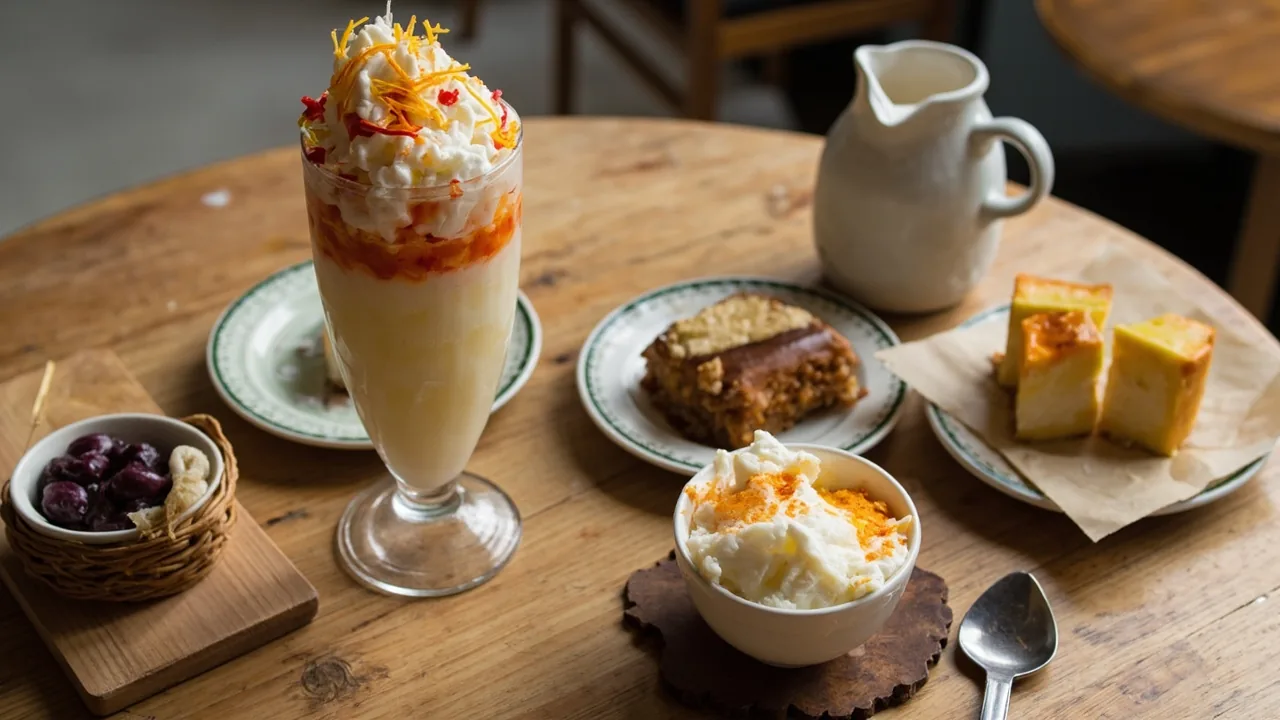
Filipino Desserts, Drinks & Tropical Fruits: 25+ Sweet Things You Can’t Miss in the Philippines
Filipino sweets are an entirely different sport from Indian ones. Less ghee-and-cardamom, more coconut milk, condensed milk, and a near-religious devotion to ice. The archipelago stretches across 7,000+ islands, so one region’s dessert is another region’s breakfast, and the difference between a good halo-halo and a great one comes down to which mamang (uncle) shaved the ice. Cross-checked against traveller reports from June 2026 and the official Tourism Philippines food guides, this is the short version of what to chase with a spoon. For related planning, see our guide on Sea Backpacking Hub.
Subodh’s Pro Tip: Halo-halo means “mix-mix.” You are supposed to stir it into a colourful soup. Don’t eat it in layers like a parfait, that’s a rookie move and the local server will quietly judge you. You may also find Vegetarian Food in Baguio Where Indian Backpackers Can Eat Well on a Budget useful for this trip.
Quick Answers
| What | Answer | Price (INR) |
|---|---|---|
| What is halo-halo and where do I get a great one? | Shaved ice dessert with ube, leche flan, beans, fruits, topped with evaporated/condensed milk. Best at Razon’s (Pampanga original) or Chowking for budget. | 60 PHP (~₹90) |
| What is the most popular dessert in the Philippines? | Halo-halo, then leche flan, then bibingka. All three appear on every celebration table. | 60 to 350 PHP (~₹90 to ~₹525) |
| Is Filipino food vegetarian-friendly for desserts? | Yes. Most kakanin (rice cakes) and fruit-based desserts are meat-free, but check for lard in some rice cakes. | 30 to 150 PHP (~₹45 to ~₹225) |
| What fruit should I try first in the Philippines? | Mango (Carabao variety from Guimaras) is the flagship. Then durian, mangosteen, rambutan. | 30 to 200 PHP (~₹45 to ~₹300) |
| What is a non-alcoholic Filipino drink I should order? | Sago’t Gulaman (pearls + jelly in brown sugar syrup) or Calamansi juice. Both are ubiquitous carinderia drinks. | 20 to 60 PHP (~₹30 to ~₹90) |
The Sweet Landscape: Coconut, Condensed Milk, and a Lot of Ice
Filipino desserts lean on four pillars: coconut milk (gata), condensed and evaporated milk, sticky rice (glutinous, called malagkit), and tropical fruit. Compared to Thai sweets, which chase balance between hot-chilli and sour, or Vietnamese sweets, which use mung bean and pandan heavily, Filipino sweets tilt sweeter and more dairy-rich because of the Spanish-Mexican influence. Leche flan, our flan, descends directly from the Iberian flan. See also: Baguio Indian Restaurants Guide Where to Find Indian Food in the City.
What’s worth knowing for an Indian vegetarian:
- Lard (mantika) shows up in some rice cakes, especially bibingka and some puto. The ones sold by street vendors at dawn outside churches during Christmas season are usually made with lard or butter.
- Gelatin in some gulaman desserts is animal-derived. Look for agar-agar versions at vegan/vegetarian spots.
- Coconut milk is your friend. It’s in buko pandan, ginataang bilo-bilo, and most kakanin.
- Condensed milk is in everything sweet, but it’s a key ingredient in halo-halo and mais con yelo, and it makes everything kid-friendly. For related planning, see our guide on Where to Find Indian Food in Melaka Restaurants Shops Catering.
For a broader look at savoury Filipino food, see our Philippines food guide.
Halo-Halo: The Flagship, Ranked
Halo-halo is the only dessert in the world where you build a small edible tower, drown it in evaporated milk, then dig in. The “best” version is hotly contested, and it varies wildly by region. Here’s the consensus ranking, based on local forums and repeat traveller feedback:
- Razon’s of Guagua (Pampanga original). The purist’s pick. Fewer ingredients, but the ones they use (saba banana, macapuno, leche flan) are top-tier. Around 130 PHP.
- Aling Lucing’s (Pampanga, Angeles). The original 1970s version with ube and langka (jackfruit). Slightly heavier, around 100 PHP.
- Chowking halo-halo (everywhere). The 60 PHP budget version. Yes it’s a fast-food chain, no it’s not embarrassing, Filipinos eat it too.
- Sampaguita Halo-Halo (Quezon City). The Instagram favourite with a kitchen-sink topping list.
- Cebuana Lhuillier-style / carinderia halo-halo. The 40 to 50 PHP street bowl with ube ice cream on top. Don’t expect toppings, expect sugar and joy.
Subodh’s Pro Tip: A halo-halo with ube (purple yam) ice cream on top is almost always better than one with plain shaved ice. The ube adds an earthy, almost pistachio-like depth. If the ube ice cream is missing, walk out.
Where to get a proper one in Manila: Kantina Manila does a strong halo-halo alongside their sisig and adobo, and Manam | Robinsons Place offers a modern take. If you want a more traditional setup, head to Pyesta Diner for the diner-style classic.
Kakanin: The Sticky Rice Cake Universe
This is the gap most English-language competitor articles on Filipino desserts miss. Kakanin is the umbrella term for traditional Filipino rice cakes, and they are everywhere: breakfast, merienda (afternoon snack), Christmas, Holy Week, and at every family gathering. They’re gluten-free by default (made from glutinous rice, which is gluten-free), and most are dairy-light. For Indian vegetarians, this is one of the safer sweet categories in the country.
| Kakanin | What it is | Where to find | Price |
|---|---|---|---|
| Biko | Sticky rice cooked in coconut milk and brown sugar, topped with latik (caramelized coconut curd) | Carinderia, market stalls | 30 to 50 PHP |
| Suman | Sticky rice wrapped in banana leaves, dipped in coconut caramel. Often paired with ripe mango for breakfast. | Palengke (markets), early-morning vendors | 20 to 40 PHP |
| Sapin-sapin | Three-layered sticky rice cake, typically purple (ube), white, and yellow (langka), each with a different flavour | Pasalamat tables, special occasions | 50 to 80 PHP |
| Puto | Steamed mini rice cakes, slightly sweet. Often paired with dinuguan (pork blood stew) for savoury-sweet combos. | Street vendors, breakfast stalls | 10 to 30 PHP per piece |
| Bibingka | Rice cake baked in clay pots lined with banana leaves, often topped with salted egg and cheese. Christmas classic. | Church courtyards Dec-Jan, bakeries year-round | 50 to 150 PHP |
| Palitaw | Flattened sticky rice discs rolled in coconut, sesame, and sugar. Chewy, simple, perfect. | Markets, weekend bazaars | 20 to 40 PHP |
| Kutsinta | Steamed brown rice cake with a chewy texture, dyed with annatto, topped with grated coconut. Brown, jiggly, addictive. | Street vendors, carinderia | 10 to 25 PHP |
Safety Alert: Some kakanin, especially bibingka and puto, are made with lard or butter. If you’re strict vegetarian or Jain, ask the vendor: “May mantika ba?” (Is there lard?) or “Mantika lang o gata?” (Lard or coconut milk?). Travellers report most sari-sari store versions of suman and palitaw use coconut milk only.
For the broadest version of the table experience, EMILIA, House of Filipino Food offers kakanin platters alongside their savoury Filipino mains. Taas restaurant is another good bet for a curated sampler.
Beyond Halo-Halo: The Rest of the Dessert Universe
These show up at every Filipino celebration, and almost all are vegetarian-friendly by default. Most are made with eggs, milk, and coconut.
Leche flan (60 to 120 PHP). The Filipino version of crème caramel, but firmer, denser, and more egg-yolk-heavy than the Spanish original. Every household has a lola who claims hers is the best. Buy from any bakery or carinderia.
Bibingka (50 to 150 PHP). Covered above in the kakanin table, but worth a second mention because it’s the Christmas-morning ritual cake.
Maja blanca (50 to 100 PHP). A coconut pudding set in a square pan, usually with sweet corn kernels. Creamy, jiggly, served cold. A staple at parties.
Ube halaya (80 to 200 PHP per tub). Ube (purple yam) jam. Often eaten on its own with bread, or as a halo-halo ingredient. The flavour is unique, earthy-sweet, closer to a sweet potato than to ube-flavoured artificial stuff.
Buko pandan (60 to 120 PHP). Young coconut and pandan-flavoured gelatin in cream. Green, jiggly, served cold. Most malls have it.
Cassava cake (60 to 150 PHP). Grated cassava baked with coconut milk and condensed milk, topped with a custard layer. Heavy and rich.
Turon (15 to 30 PHP per piece). Caramelized banana wrapped in spring roll pastry. Sometimes with langka (jackfruit). A merienda must.
Banana cue (20 to 40 PHP). Deep-fried saba bananas on a stick, caramelized in brown sugar. A street food sweet.
Camote cue (20 to 40 PHP). Same as banana cue but with sweet potato. Equally good, slightly less sweet.
Taho (15 to 30 PHP). Warm soft tofu in brown sugar syrup, with sago pearls. Sold by vendors cycling through neighbourhoods in the morning, calling out “Tahooo!” It’s a Filipino breakfast ritual.
Dirty ice cream (20 to 50 PHP per scoop). Street-vendor scooped ice cream, usually ube, mango, or chocolate flavours. Served in a wafer cone or a small bread bun. The “dirty” is a joke, it’s clean.
Halo-halo (see above).
For the classics in a sit-down setting, Leandro’s Bistro and Valencia’s Restaurant both run reliable dessert menus. In Baguio, Hill Station does an unusual calamansi-infused dessert that’s worth ordering if you’re up in the Cordillera region. Down south in Siquijor, Mae’s Kitchenette Siquijor Branch has homestyle Filipino sweets that don’t always make the tourist circuit.
Drinks: Non-Alcoholic Filipino Beverages
Filipino non-alcoholic drinks are underrated. The carinderia (small eatery) scene runs on a few of these, and they’re a great way to cool off without doing the global iced-coffee thing.
| Drink | What it is | Price | Notes |
|---|---|---|---|
| Sago’t Gulaman | Tapioca pearls + agar jelly in brown sugar syrup, served over crushed ice | 20 to 50 PHP | The carinderia default. Sometimes called “sago at gulaman” |
| Calamansi juice | Philippine lime juice, sweetened, served over ice | 25 to 60 PHP | Tart, refreshing, sometimes with honey. Available at every carinderia |
| Buko juice | Fresh young coconut water, served in the coconut with a straw | 30 to 80 PHP | Buy from roadside stands. The water is the cleanest if you see them crack it in front of you |
| Salabat | Hot ginger tea, often with honey or pandan | 30 to 60 PHP | The local cold cure. Salabat with honey is a rainy-day ritual |
| Tsokolate | Filipino hot chocolate, traditionally made with tablea (cacao tablets). Served with suman on the side. | 50 to 150 PHP | Found in Baguio, Batangas, and heritage cafés |
| Mais con yelo | Shaved ice with sweet corn kernels and condensed/evaporated milk | 40 to 80 PHP | Dessert or drink, depending on the cup size |
| Mango shake | Blended ripe mango (Carabao if you’re lucky) with milk and ice | 80 to 150 PHP | The mall-court default |
| Melon juice / watermelon juice | Fresh-fruit juice, often with buko for creaminess | 50 to 120 PHP | Beach-area classic |
| Iced coffee (cold brew) | Filipino-style cold brew, often with condensed milk | 60 to 150 PHP | Strong, sweet, perfect for hot afternoons |
| Buko pandan juice | The drink version of buko pandan dessert | 40 to 80 PHP | Green, sweet, pandan-forward |
Subodh’s Pro Tip: Salabat is the Filipino equivalent of kadha. Hot ginger tea, sometimes with a cinnamon stick, occasionally spiked with honey. If you feel a cold coming on, ask the carinderia for one. Travellers report it cuts the sniffles faster than a pharmacy run.
Tropical Fruits: What to Eat, and When
The Philippines is in the tropical-fruit sweet spot, and the diversity blows Thailand out of the water. Mango, in particular, is the flagship, and the Carabao mango from Guimaras is the variety to chase. If you’re island-hopping in the Visayas, buy as many as you can carry.
| Fruit | Season | Price range | What to know |
|---|---|---|---|
| Mango (Carabao) | March to June peak | 50 to 200 PHP per kg | The “champagne mango.” Sweet, fibreless, eats like dessert |
| Durian | August to October | 100 to 400 PHP per kg | Polarizing smell. Buy a single fruit, not a kilo, until you know |
| Mangosteen | July to September | 80 to 200 PHP per kg | ”Queen of fruits.” White-fleshed, sweet-tart, worth the price |
| Rambutan | June to September | 50 to 120 PHP per kg | Hairy red exterior, lychee-like interior. Cheaper than Thailand |
| Lanzones | October to December | 60 to 150 PHP per kg | Translucent, sweet-sour, sold in bunches. Camiguin island version is the best |
| Soursop (Guyabano) | Year-round | 50 to 100 PHP per kg | Custard-like flesh. Often blended into shakes |
| Pomelo | Year-round | 30 to 80 PHP per kg | Big, mild, like a sweeter grapefruit |
| Santol | June to August | 30 to 60 PHP per kg | Sandoricum, sour-sweet, often eaten with shrimp paste (not vegetarian, ask for plain) |
| Atis (Sugar apple) | August to November | 30 to 80 PHP per kg | Custard-apple family, eaten cold |
| Jackfruit (Langka) | Year-round | 50 to 100 PHP per kg | The unripe green version is cooked as a vegetable (vegetarians, check for shrimp paste). The ripe yellow version is sweet and sold by the wedge |
| Coconut (Buko) | Year-round | 30 to 80 PHP | See drinks above |
| Banana (Saba) | Year-round | 10 to 30 PHP per bunch | The cooking banana, eaten fried as banana cue or grilled |
Safety Alert: Durian is banned on most public transport and in many hotels because of the strong smell. Check the rules before bringing one on a bus or into your room. Some airlines (Cebu Pacific in particular) won’t let you fly with one.
How to Order These: Phrases That Help
| English | Filipino | Pronunciation |
|---|---|---|
| Is this vegetarian? | Ito ba ay vegetarian? | ee-to ba ai veh-jeh-tay-ree-an |
| No meat, no fish sauce | Walang karne, walang patis | wah-lang kar-neh, wah-lang pah-tees |
| Is there lard in this? | May mantika ba ito? | mai man-tee-ka ba ee-to |
| Coconut milk only, please | Gata lang, pakiusap | ga-ta lang, pa-kee-u-sap |
| Less sugar, please | Kaunti lang ang asukal | ka-un-tee lang ang ah-soo-kal |
| No egg | Walang itlog | wah-lang it-log |
| I’m allergic to dairy | May allergy ako sa gatas | mai ahl-er-gee ah-ko sa ga-tas |
Common Sweet-Seeking Mistakes Indians Make
1. Assuming halo-halo is just a shaved-ice drink. It’s a meal. With ube ice cream, leche flan, and condensed milk, a large halo-halo can hit 600+ calories. Order it as a dessert, not a refresher.
2. Buying kakanin without asking about lard. Some kakanin, especially bibingka and certain puto, are made with lard. If you’re strict vegetarian, ask “Gata lang o may mantika?” (Coconut milk only or with lard?).
3. Skipping the regional specialties because they’re unfamiliar. Baguio’s taho, Cebu’s danggit-and-rice-with-mango, Davao’s pomelo and lanzones, Guimaras’s mango. The Philippines rewards regional eating. If you’re in Baguio, eat the taho. If you’re in Guimaras, eat the mango until you’re sick.
4. Ordering fresh buko water from a stand that didn’t open it in front of you. If the vendor is pouring from a pre-cut coconut that sat in the sun for an hour, the water is suspect. Buy only from stands that crack the coconut on demand.
5. Missing sago’t gulaman because it looks “too simple.” It is the default carinderia drink and it’s good. The brown sugar syrup, the chewy pearls, the jelly. Don’t sleep on it.
When You Need a Dal-Chawal Fix
Filipino desserts are mostly vegetarian-friendly, but the savoury Filipino meal is lard-and-fish-sauce territory. After three days of rice-and-sinigang you’ll want a proper Indian meal. The Manila restaurant scene has you covered:
- Tandoor by RICH Landmark for North Indian tandoori classics
- Royal Indian Curry House for rich, aromatic North Indian curries
- Biryanista for Hyderabadi-style biryanis in a modern setting
- Seven Mannah Indian Fusion Food for Indian-fusion plates, around 300 to 500 PHP per person
- Agni - By Mantra for upscale North Indian in a chic setting
- Indus Modern Indian Kitchen for a North Indian + contemporary fusion
If you’re specifically hunting vegetarian Indian food, see our vegetarian Indian food in Manila and Cebu guide.
Getting Connected
For Google Maps, Google Translate, and food delivery apps, you’ll need data. Pick up a local SIM (Globe or Smart) for 200 to 400 PHP for 7 days of data, or skip the airport counter and Get Nomad eSIM before you fly. The eSIM activates on landing.
Subodh’s Take
The Philippines is a dessert country that doesn’t market itself as one. There’s no glossy “dessert trail” brochure. You find the good stuff by wandering into a carinderia at 3pm and asking for the merienda. Order a halo-halo, a sago’t gulaman, and a plate of palitaw. If the lola behind the counter smiles, you’re in the right place. Don’t rush it. Sweets here are a slow afternoon, not a checklist.
FAQ
Is halo-halo the same everywhere in the Philippines? No. Pampanga versions are simpler and lean on the quality of the ingredients. Manila versions pile on toppings. Visayas versions often use more local fruit. The “best” version is regional.
What is the most popular dessert in the Philippines? Halo-halo, hands down. It’s the national dessert by consensus. Leche flan is the second.
Are Filipino desserts safe for vegetarians? Most kakanin and fruit-based sweets are. Watch for lard in bibingka and some puto. Halo-halo is usually safe, but check if the jelly is gelatin or agar-agar (vegetarian version).
Can I get these desserts in Manila malls? Yes. Almost every mall has a Chowking, a Mang Inasal, and a baker that does kakanin. For higher-end versions, try Manam or the dessert counters at Shangri-La.
What’s the best fruit to try first? Carabao mango if it’s in season (March to June). If not, rambutan is the easiest “wow” fruit for first-timers, sweet, photogenic, no learning curve.
What Filipino drink should I order if I don’t like sweet things? Calamansi juice, less sugar. It’s a tart lime drink that balances the sweet Filipino palate.
Is durian worth trying? Yes, but with caution. Buy a single fruit from a vendor, eat it there, decide. Don’t commit to a kilo. Some people love it, some can’t get past the smell, and that’s fine.
