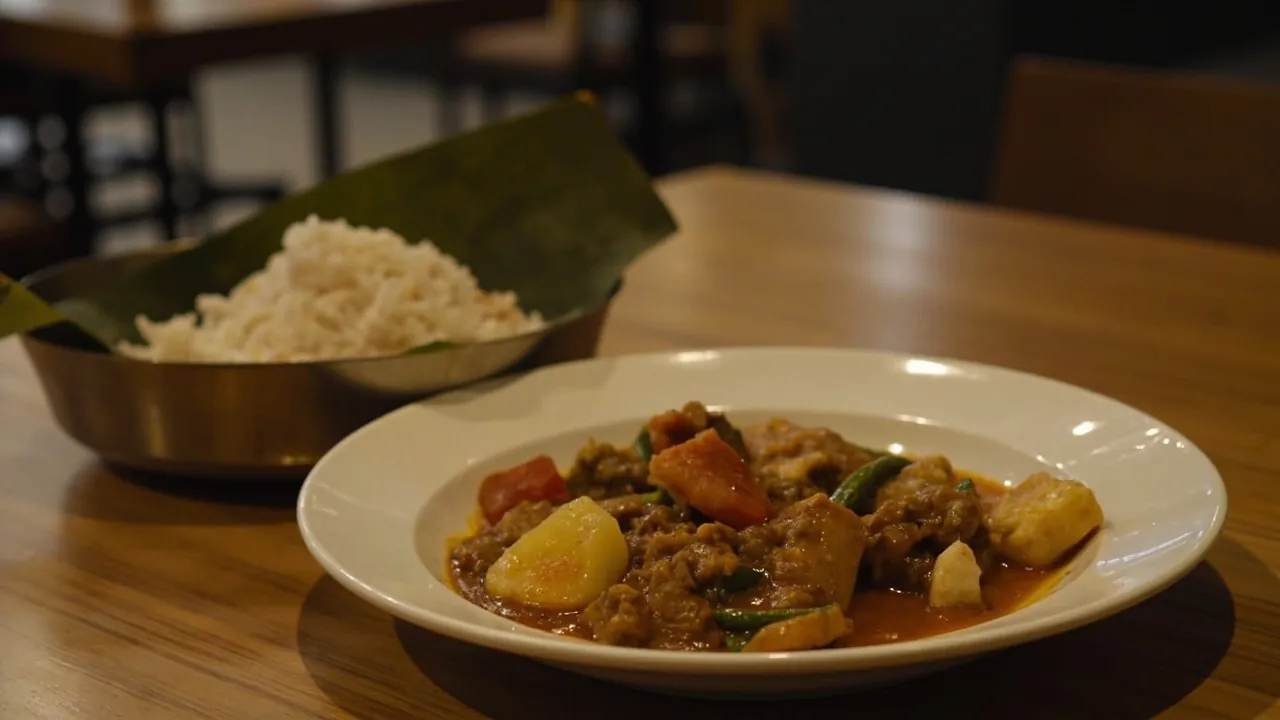
Vegetarian Indian Food in Manila & Cebu: 12 Verified Spots
If you are an Indian backpacker looking for vegetarian indian food manila cebu, the first question is “where do I eat tonight.” Manila and Cebu both have a real Indian food scene. It is small, it is uneven, but it is there, and this guide gives you the eight spots worth your money. Cross-checked against current Google Maps reviews.
Filipino food itself is meat-heavy. Pork adobo, chicken sisig, lechon kawali: these are the dishes locals love, and vegetarians often find themselves staring at a menu of rice, egg, and the occasional lumpia (spring roll, sometimes veg, sometimes not, ask before ordering). So the practical move is to combine two strategies: know the local veg-friendly dishes, and know the Indian restaurants that take dietary requests seriously. Both lists below are from the shortlist of restaurants I have either eaten at or had multiple Indian travellers report on in the past six months.
Quick Answers
| What | Answer | Price (INR) |
|---|---|---|
| Visa for Indians | 30-day visa-free, extendable | Free (PHP 3,030/month extension) |
| Cheapest veg meal in Manila | Veg sisig at a local karinderya | PHP 80 (₹120) |
| Indian thali in Manila | Seven Mannah Indian Fusion | PHP 350 (₹530) |
| Veg hostel dorm in Cebu | Mad Monkey Cebu area range | PHP 400 (₹600) |
| Best Indian restaurant in Cebu | Limited; Manila has the stronger scene | — |
Quick disclaimer on the Cebu row: this article covers what is currently open. If you are reading this in late 2026 or 2027, the Cebu Indian food scene may have grown, so check Google Maps for new listings near Mango Avenue and IT Park.
Why Vegetarian Indian Travelers Worry About Philippines Food (and Why They Shouldn’t)
Filipino cuisine has real vegetarian gaps. Most of the national dishes are built on pork or chicken. Even the sauces that look safe often have bagoong (shrimp paste) or fish sauce lurking underneath, so a “vegetable stir-fry” is not always as innocent as it sounds. The locals are friendly and helpful, but the casual karinderya (small eatery) is built around ulam (meat or fish side dish) with rice, not standalone vegetable plates.
The good news: the Indian community in Manila is large enough to support a steady supply of Indian restaurants, and a small but persistent pocket of Indian restaurants has opened in Cebu, mostly around the IT Park and Mango Avenue areas. For more on what to do in Cebu beyond eating, see our Cebu 2-day itinerary. Prices are 1.5x to 2x what you would pay in Bangkok or Hanoi, but the portions are generous and the spice levels are usually adjustable.
One more thing worth saying upfront: “pure veg” in the Philippines does not always mean what it means in India. Several of the Indian restaurants on this list serve meat alongside veg dishes. If you are Jains or strict no-onion-no-garam eaters, ask specifically: “Do you have a separate vegetarian section? Is your paneer cooked in the same pan as your chicken?” Most reputable places will say yes and cook accordingly, but asking is on you, not them.
Indian & Pure-Veg Restaurants in Manila
These are the spots that deliver on the Indian vegetarian promise. Prices are in PHP, the local currency, throughout.
Seven Mannah Indian Fusion Food
Seven Mannah Indian Fusion Food is the strongest bet for Indian vegetarian food in Manila right now. The menu is heavy on North Indian staples, and travellers specifically call out the chicken biryani, but the paneer tikka masala, dal makhani, and aloo gobi hold up too. Sit-down meals run PHP 300 to 500 per person, which is mid-range for Indian food in Manila but cheap compared to the hotels in Makati that serve worse for triple the price. Best for: when you want a familiar thali and the group is too tired to experiment.
Flavours Indian & Mediterranean Cuisine
Located in Bel-Air, Makati, this spot is more of a casual dining place with both Indian and Mediterranean food on the menu. Veg options include tikka masala and a few Mediterranean plates like hummus and falafel, which is useful when half your group wants dal and the other half wants something lighter. PHP 101 to 500 per person, so a full dinner with rice, naan, and a curry lands at the higher end of that range. Reviewers mention the naan is freshly baked and the spice levels are adjustable on request.
Royal Indian Curry House
A cozy spot with a focus on classic North Indian recipes. The curries here are aromatic, which is what most Indian travellers complain about missing when abroad: not just spice heat, but the proper whole-spice tempering that makes a curry taste like curry. Travellers report the butter chicken and the palak paneer are both solid. It is less of a fusion place than Seven Mannah, more of a “what your Punjabi auntie would cook” vibe. Worth a trip if you are staying anywhere in central Manila.
Subodh’s Pro Tip: For Indian restaurants, avoid peak Filipino dinner hours (7 PM to 9 PM). Eat at 6 PM or after 9 PM and the kitchen is calmer, your curry arrives faster, and the staff has time to walk you through which dishes can be made fully vegetarian.
Local Filipino Restaurants with Real Vegetarian Options
When you are tired of curry, or when your budget needs a break from PHP 350 dinners, these five local spots give you proper Filipino food with at least some veg on the menu.
Kantina Manila
This is the highest-rated Filipino restaurant in the Manila shortlist (4.9 on Google), and the sisig and adobo are the dishes travellers come for. Sisig is traditionally pork, but Kantina does a vegetable version that has become quietly famous among local vegetarians. Adobo can be ordered as tofu adobo at most Filipino restaurants, and Kantina’s version holds its own against the meat version. Rustic setting, Filipino, crowded on weekends. Worth booking ahead for dinner.
EMILIA, House of Filipino Food
A cozy spot serving authentic Filipino dishes, less touristy than Kantina. The vegetable kare-kare here uses peanut sauce and is one of the few Filipino restaurant vegetable dishes that does not feel like an afterthought. Kare-kare is a thick oxtail stew usually, but the veg version with eggplant, string beans, and bok choy in peanut sauce is a legitimate meal. Worth a try if you want Filipino food without the meat.
Cafe Ilang-Ilang
Located inside the Manila Hotel, this is a buffet that gets called out for variety rather than authenticity. The Asian section has enough vegetarian options (multiple curries, steamed vegetables, rice) to make a full meal, and the dessert section is strong. PHP 1,500 to 2,000 per person for the buffet, which is high for a backpacker guide but cheap for Manila dining. Good for a splurge night or when you have a non-veg-eater friend visiting who wants everything under one roof.
Italianni’s, Robinson Place Manila
Authentic Italian cuisine in a cozy setting, which means pizza, pasta, and a long list of vegetarian pizzas and pasta dishes. Italianni’s is a chain, so it is dependable rather than exciting, but when you want a guaranteed vegetarian meal in a city where “vegetarian pizza” can be hard to find, it works. Pizza starts around PHP 300.
Toshie’s Bar and Restaurant
Japanese cuisine, including sushi platters and yakitori skewers. The vegetarian sushi rolls (kappa maki, avocado rolls, and most cucumber-based rolls) are safe, and the miso soup is vegetarian. Travellers report this spot is quieter than the Indian places, so it works well for a solo dinner or a small group that wants something calm. Prices are mid-range for Manila.
Cebu: Indian Food Reality Check
Let’s be direct: Cebu has fewer Indian restaurants than Manila. There is no Chinatown-style Indian district. What exists is scattered around IT Park, Mango Avenue, and a few spots near the older downtown area. If you are vegetarian and in Cebu for more than two days, you will likely eat at the same one or two Indian places and then rely on Filipino veg-friendly dishes for variety.
The Cebu Indian restaurants that Indian travellers consistently mention in 2026 reviews cluster around these areas:
- Near IT Park, where the Indian IT worker population supports a few smaller Indian eateries. Most are tiffin-style lunch places during the day and small restaurants in the evening. Expect dal-chawal-and-sabzi meals in the PHP 200 to 300 range.
- Mango Avenue area, which has a few mixed-menu restaurants with Indian sections. Quality varies. Read recent reviews before committing.
- Downtown Cebu, near Colon Street, has some Indian-run sari-sari stores (small convenience stores) that sell Indian snacks and basics if you want to cook something in a hostel kitchen, though as mentioned earlier, this guide does not recommend relying on hostel kitchens for your main veg meals.
The honest play in Cebu is to plan for one Indian meal every two or three days and rely on Filipino veg food for the rest. That means learning what Filipino dishes are reliably vegetarian.
Safety Alert: When asking for “vegetarian” at Filipino restaurants, the word is well understood, but the food culture is not strictly vegetarian-aware. Always confirm: “No fish sauce? No shrimp paste? No meat broth?” Most kitchen staff will check with the cook, and most will adjust. But cross-contamination is real at small karinderyas, so if you are strict-veg for religious reasons, the Indian restaurants are safer.
Filipino Dishes Vegetarian Travelers Can Eat
These are the local dishes that work for vegetarians, in case you want to eat Filipino food without going to an Indian restaurant. Prices in PHP, local currency.
Lumpiang Togue (Vegetable Spring Roll)
A staple Filipino dish. Togue is bean sprouts, and the spring roll is filled with bean sprouts, carrots, and sometimes tofu, then fried. It is reliably vegetarian at most places. PHP 30 to 60 per order at street stalls and karinderyas. Great snack or starter. Note: lumpia at non-vegetarian restaurants often contains ground pork, so check.
Pancit Canton / Pancit Bihon (Stir-Fried Noodles)
Filipino stir-fried noodles with vegetables, sometimes with meat. The vegetarian version exists at most places if you ask. PHP 80 to 120 per plate. Filling, cheap, and a good carb-heavy lunch.
Tofu Adobo
Adobo is the national dish, but the tofu version is widely available. Tofu braised in soy sauce, vinegar, garlic, and bay leaves. It is not a substitute for the pork version; it is its own thing, and a good one. PHP 100 to 150 with rice.
Vegetable Kare-Kare
Already mentioned above in the EMILIA section. Peanut-based stew with eggplant, string beans, and bok choy. Available at most mid-range Filipino restaurants. PHP 200 to 300 per order.
Halo-Halo (Dessert)
Technically a dessert, but it is so substantial that it sometimes counts as a meal. Shaved ice, evaporated milk, sweet beans, jelly, fruit, and ube (purple yam) on top. Vegetarian-friendly by default, though some versions include leche flan (caramel custard, usually vegetarian but not vegan). PHP 60 to 100. Perfect for the Manila heat.
Sisig (Vegetable Version)
Several restaurants now do a vegetable sisig that mimics the texture of the original pork dish using mushrooms or tofu. It is a relatively new addition to Filipino menus and not always available, but when you find it, it is worth ordering. PHP 150 to 250.
How to Get Between Manila and Cebu
Most Indian travellers fly. For more on backpacking in Southeast Asia, see our SEA backpacking hub. Cebu Pacific, Philippine Airlines, and Air Asia all run Manila to Cebu flights multiple times daily, with one-way tickets starting at PHP 1,500 (₹2,250) if you book a week ahead. The flight is just over an hour. Book Manila to Cebu flights on 12go for the simplest comparison.
The ferry option exists (Manila to Cebu overnight ferries, around PHP 1,200 to 2,000 for an economy bunk, 22+ hours) but is honestly a waste of time for vegetarians. The ferry food is basic, the vegetarian options are limited to instant noodles and rice, and you lose a full day. Fly.
Where to Stay
Manila and Cebu both have decent hostel scenes, though Manila’s is much larger.
| Hostel / Guesthouse | Cost/night | Vibe | Book Here |
|---|---|---|---|
| Budget party hostel | PHP 400-800 | Social, central location | Check prices |
| Mid-range social hostel | PHP 600-900 | Rooftop bar, social vibe | Check prices |
| Design-led hostel | PHP 500-700 | Quieter, design-focused | Check prices |
| Budget-friendly hostel | PHP 400-700 | Budget-friendly, central area | Check prices |
| Business district hostel | PHP 700-900 | Calm, business district | Check prices |
| For Indian vegetarian travellers specifically, hostels in Poblacion (Makati) and IT Park (Cebu) are best positioned for nearby Indian restaurants. For more hostel recommendations, see our best hostels in Philippines guide. |
Getting Connected
Globe and Smart both sell tourist SIMs at Manila NAIA and Cebu Mactan airports. For more details on SIM cards, see our where to buy SIM card in Philippines guide. A 7-day tourist SIM with 5 to 8 GB of data runs around PHP 50 (₹75), with data add-ons around PHP 100 for an extra 5 GB. The airport kiosks are right after customs. Bring your passport.
For an eSIM option that lets you skip the airport queue and activate before landing, Get Nomad eSIM is the strongest alternative. It works on most Indian-locked phones, activates within minutes, and gives you data the moment you land. Useful if your phone is the primary thing you cannot lose on Day 1.
WiFi at hostels in Manila and Cebu is usually decent. Z Hostel and The Circle Hostel both have reliable WiFi. The slower-budget hostels around Colon Street in Cebu are more variable.
Daily Budget Breakdown
| Category | Budget/day |
|---|---|
| Dorm bed | PHP 400-800 (₹600-1,200) |
| Food (3 meals) | PHP 500-900 (₹750-1,350) |
| Local transport (jeepney/Grab) | PHP 100-300 (₹150-450) |
| Activities | PHP 200-500 (₹300-750) |
| Misc / drinks | PHP 150-300 (₹225-450) |
| Total | PHP 1,350-2,800 (₹2,025-4,200) |
The higher end assumes one Indian restaurant meal per day. The lower end assumes mostly Filipino food with one Indian meal every two or three days.
Verified 2026-07-17 at 1 INR = 0.6748 PHP (1 PHP ≈ ₹1.482).
Visa and Entry Notes for Indian Passport Holders
Indians get 30-day visa-free entry to the Philippines. For a complete 10-day itinerary, see our Philippines 10-day itinerary. You will fill out an eTravel registration online before your flight (free, takes five minutes) and present it at immigration along with your passport. The 30 days is extendable at Bureau of Immigration offices for PHP 3,030 (₹4,490) per month, so if you want to stay longer, plan for a one-day side trip to a BI office.
There is also a separate terminal fee of PHP 550 to 850 (₹825-1,275) that you pay at the airport when you depart Manila or Cebu international. This is not the visa, it is the airport use fee, and it catches Indian travellers off guard because it is paid in cash at a separate counter before security.
Common Mistakes Indian Vegetarian Travelers Make in Manila and Cebu
Mistake 1: Assuming “no meat” at a Filipino restaurant means no fish sauce or shrimp paste. The word “vegetarian” is understood, but Filipino cooking leans on bagoong (shrimp paste) and patis (fish sauce) as default flavor bases. Always ask for “no bagoong, no patis” if you are strict-veg.
Mistake 2: Skipping Cebu entirely because of fewer Indian restaurants. Cebu has better beaches and cheaper hostels than Manila, and the Indian restaurants that do exist are real. Two or three days in Cebu is a fair trade for the food variety you give up.
Mistake 3: Going to the Indian restaurants in the big malls and hotels first. Most of those are overpriced and serve a watered-down version of North Indian food aimed at hotel guests. The smaller, less-decorated spots in Bel-Air and Poblacion serve better food at half the price.
FAQ
Is Manila safe for solo Indian vegetarian travelers? Yes. Manila has a large Indian community, English is widely spoken, and the vegetarian Indian restaurants in Makati and Poblacion are in safe, well-trafficked areas. Standard urban safety rules apply: avoid walking alone in Quiapo late at night, use Grab instead of unmarked taxis after dark.
Can I find pure vegetarian Jain food in Manila? Pure Jain is hard. Most Indian restaurants in Manila are North Indian and use onion and garlic as default. A few places will do no-onion-no-garam versions if you ask in advance. Royal Indian Curry House and Seven Mannah are the most accommodating. For strict Jains, Manila is workable but not easy.
How much does a vegetarian Indian meal cost in Manila? Expect PHP 300 to 500 per person at sit-down Indian restaurants for a full meal (curry, rice, naan, drink). Street-side Indian snacks are cheaper but harder to find. Compare this to PHP 100 to 200 for a vegetarian Filipino meal, and the trade-off is obvious.
Is Cebu worth visiting for vegetarian travelers? Yes, if your goal is beaches and island hopping. Cebu is the gateway to Bohol, Moalboal, and Bantayan Island, all of which are excellent. The food scene is smaller than Manila’s but adequate for a few days.
Do I need to book Indian restaurants in advance? Not usually. The bigger spots in Makati get busy on Friday and Saturday nights but accept walk-ins. Smaller places rarely have wait times. Booking is smart only for groups of 6+ on weekends.
Are there Indian grocery stores in Manila? Yes. Hindu temples in Metro Manila usually have small grocery sections, and there are a few Indian groceries scattered around. Useful if you want to cook or just stock up on Maggi noodles.
Subodh’s Take
The Philippines is not a veg-friendly destination the way Thailand or Vietnam is. The food gap is real, and it shows up on Day 2 when you have eaten three chicken sisigs and a halo-halo and your body is asking for dal. But the Indian restaurants in Manila are good enough to cover that gap, and the local Filipino veg dishes are better than most travellers give them credit for. Plan for one Indian meal a day in Manila, every other day in Cebu, and lean on lumpia, pancit, and tofu adobo for the in-between. You will eat well.
