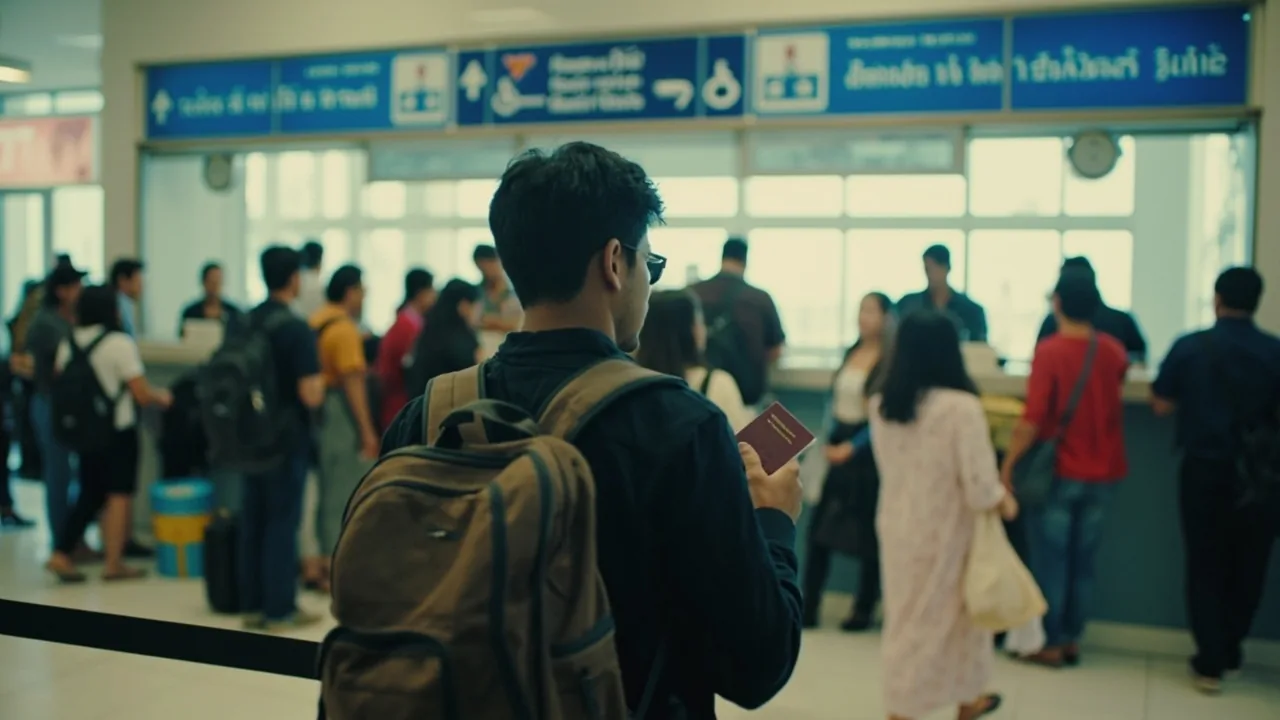
First International Trip from India: SE Asia Starter
For most Indians doing this for the first time abroad from India, Southeast Asia is the answer. This guide walks through the exact route, the documents you need, and the mistakes first-timers keep making, verified against current government portals and recent traveller reports. For related planning, see our guide on Sea Backpacking Hub.
What Is a “Starter Route”?
A starter route is a fixed loop through 3-4 countries that first-timers can finish in 2-3 weeks without visa stress, language panic, or budget blowouts. The Thailand-Vietnam-Laos-Cambodia loop is the most common one because every leg has direct transport, every country accepts Indian rupees or Indian forex cards without resistance, and the food never goes more than 48 hours without a veg option. You may also find 7 Days Thailand Tour Package Price useful for this trip.
Quick Answers
| What | Answer | Price (INR) |
|---|---|---|
| Cheapest entry country | Thailand (visa-free for Indians) | , |
| Total budget for 14 days | Comfortable but tight | ₹50,000 (~$518.65) |
| Passport validity needed | 6 months beyond return date | , |
| Visa needed for Thailand | No (60 days visa-free) | ₹0 |
| Visa needed for Vietnam | E-visa required | ₹2,410 (~25 USD) |
| Visa needed for Cambodia | E-visa or VOA | ₹2,800 (~$29.04) |
| Cheapest SIM option | AIS / Viettel tourist SIM | ₹482-₹737 (~$5-$7.64) |
| Travel insurance (2 weeks) | SafetyWing | ₹5,900 |
FX rate as of 2026-07-18: 1 THB ≈ ₹2.87 | 1 VND ≈ ₹0.0037 | 1 USD ≈ ₹96.33
Step-by-Step: Your First Trip from India
1. Check Your Passport (4-6 Months Before)
You need at least 6 months validity from your date of entry into Thailand. Renew first if you’re under 6 months. Two blank pages minimum for visa stamps. See also: Average Spend in Thailand Per Day.
2. Book Flights to Bangkok (1-2 Months Before)
Round-trip from Delhi or Mumbai to Bangkok runs ₹18,000-₹28,000 (~$186.71-$290.45) with IndiGo, Thai Airways, or Air India direct. Bangkok is the standard entry point because it’s cheapest to fly into, has the most flights, and connects to overland routes into Cambodia and Laos.
Subodh’s Pro Tip: Book the Tuesday-Thursday departure on a Tuesday itself. IndiGo’s fare calendar shows ₹4,000-₹6,000 (~$41.49-$62.24) swings on adjacent days for the same route.
3. Buy Travel Insurance (1 Month Before)
Get SafetyWing or a similar plan before you book anything else. Indian banks sometimes block cards abroad if you don’t have insurance on file.
4. Apply for Vietnam E-Visa (3 Weeks Before)
Vietnam requires Indians to get an e-visa in advance. Apply at the official portal (evisa.xuatnhapcanh.gov.vn), not any .com site. Cost: ₹2,410 (~25 USD). Processing: 3 business days. Valid: 90 days, single or multiple entry.
5. Sort Your Money (2 Weeks Before)
Get a forex card (HDFC or Niyo are the cleanest for Southeast Asia), load ₹38,561-₹48,202 (~400-500 USD), and carry ₹10,000-₹15,000 (~$103.73-$155.60) in cash for the first 3 days. Airport exchange counters give terrible rates. ATMs in Bangkok and Hanoi give market rates with a ₹200-₹300 (~$2.07-$3.11) flat fee per withdrawal. Details in our forex card guide.
6. Pack Light (1 Week Before)
One backpack, max 50 liters. You’ll regret anything bigger. Pack 5 t-shirts, 2 trousers, one light jacket (AC is aggressive everywhere), sandals, and quick-dry towel. Full checklist in our packing list.
7. Fly Out (Day 0)
Arrive at Delhi/Mumbai airport 3 hours early for international. Keep passport, printed return ticket, printed hotel booking for first 2 nights, and visa printout in your carry-on. You’ll show all four at immigration in Bangkok.
The 14-Day Route
| Day | Location | Stay | Transport to Next |
|---|---|---|---|
| 1-4 | Bangkok | Hostel dorm 350-500 THB/night | Sleeper train to Chiang Mai |
| 5-7 | Chiang Mai | Hostel dorm 250-400 THB/night | Flight to Hanoi |
| 8-10 | Hanoi + Ha Long Bay | Hostel dorm 150,000-250,000 VND/night | Bus to Luang Prabang |
| 11-12 | Luang Prabang | Guesthouse 80,000-150,000 LAK/night | Slow boat to Huay Xai, then bus |
| 13-14 | Bangkok return | Flight from Vientiane (or loop back) | Fly home |
The Chiang Mai to Hanoi leg is the one that needs booking in advance. Use Book on 12go for the comparison. Hanoi to Luang Prabang by sleeper bus takes 24 hours and costs around ₹3,131 (~850,000 VND or ~$32.47).
Subodh’s Pro Tip: Skip the slow boat from Huay Xai if you get seasick easily. Travellers report 8-hour boats on choppy Mekong that end with three days of recovery. The flight is 5x the price but 6x the comfort.
Common Mistakes Indians Make
Mistake 1: Exchanging All Money at Delhi Airport
What people do wrong: walk to the InterContinental Forex counter and change ₹30,000 (~$311.19) the moment they land. What happens: they get ₹2,800 (~$29.04) per ₹9,640 (~100 USD) when the market rate is ₹3,200 (~$33.19) per ₹9,640 (~100 USD), losing ₹4,000-₹5,000 (~$41.49-$51.87) in one transaction. How to avoid: exchange ₹4,820 (~50 USD) max for the airport taxi, then use your forex card or ATM for everything else. Licensed exchange counters in Bangkok city (away from the airport) and in Chennai give the best rates.
Mistake 2: Overpacking
What people do wrong: four suitcases, a hair dryer, and “just in case” formal shoes for a hostel trip. What happens: they pay 300 THB/day per extra bag at hostels, drag 25kg across temple steps, and check in 30 minutes slower at every hotel. How to avoid: one backpack, 7kg carry-on. Pack 5 of everything, wash twice a week. Laundry costs 50 THB/kg in Thailand.
Mistake 3: Ignoring Transit Visa Rules
What people do wrong: book a cheap flight through Singapore or Kuala Lumpur without checking if they need a transit visa. What happens: they get denied boarding at Delhi. How to avoid: Indians get visa-free transit in Singapore (96 hours) and Malaysia (120 hours) but only if they stay in the airport or take a pre-booked tour. Book a single-airline itinerary through Bangkok instead if this is your first time.
Mistake 4: Booking the E-Visa on a Fake Site
What people do wrong: Google “Vietnam e-visa” and click the first .com result. What happens: they pay ₹4,820-₹7,712 (~50-80 USD) to a service that either scams them or charges 3x the official fee. The real site has no .com domain. How to avoid: only use evisa.xuatnhapcanh.gov.vn. If you see “.com,” leave. Same rule for Cambodia: official is evisa.gov.kh.
Mistake 5: Not Telling Their Bank
What people do wrong: use their HDFC debit card abroad without enabling international transactions. What happens: the card declines at the Bangkok 7-Eleven, then gets blocked after 3 attempts. How to avoid: call your bank 24 hours before flying and enable international usage. Set a transaction alert limit. Carry two cards from different banks as backup.
What Most Guides Don’t Tell You
The Vegetarian Problem Is Smaller Than You Think
Every Thai city now has a Jay restaurant (pure vegetarian, sometimes vegan). Bangkok’s major mall food courts (including Pantip Plaza) have Indian food stalls. Vietnam is harder, but Hanoi has a Little India around Pho Hue street. If you stick to Jay signs and Indian restaurants in tourist areas, you’ll eat well for ₹230-₹574 (~80-200 THB or ~$2.38-$5.96) or ₹110-₹221 (~30,000-60,000 VND or ~$1.15-$2.29) per meal.
Thailand’s “Visa-Free” Has Quiet Conditions
Indians get 60 days visa-free in Thailand, but immigration officers sometimes ask for a printed hotel booking and a return flight ticket. Have all three printed and ready. The 60-day stamp also means you must leave within 60 days total, even if you extend by doing a border run.
The Sleeper Train Beats Night Buses for First-Timers
Thailand’s overnight trains have proper beds, AC, and a dining car. They’re more expensive than buses but you save a night’s hostel. Bangkok to Chiang Mai in a 2nd-class sleeper is a common first-timer experience. Book sleeper train tickets at least a week ahead.
Cambodia Is Best Done Last
Cambodia accepts Indian e-visas (₹2,800 (~$29.04)) and visa-on-arrival (₹2,800 (~$29.04) + passport photo). Doing Cambodia last means you fly Bangkok to Phnom Penh, spend 2-3 days, then fly home from there. Trying to add Cambodia mid-loop means complicated bus routes that burn a full day each way.
Connectivity: SIM and eSIM
Buy a local SIM on arrival. Vietnam’s Viettel tourist SIM runs ₹482-₹737 (~$5-$7.64) for 30 days with 4GB/day. Cambodia’s Smart and Metfone both have ₹482 (~5 USD) starter packs.
If you’d rather not swap physical SIMs, Get Nomad eSIM gives you data the moment you land. Works across all four countries on one purchase.
Safety and Health
Southeast Asia is safer than most Indian cities for petty crime. Bangkok and Hanoi have pickpockets in tourist zones, but violent crime against tourists is rare. Use Grab (not tuk-tuks in Bangkok) for transport, keep your passport in the hostel locker, and carry a photocopy.
For health: drink bottled water, get travel insurance before flying (covers hospital visits, which can run ₹14,358-₹57,430 (~5,000-20,000 THB or ~$148.93-$595.72) without coverage), and bring a small first-aid kit. Pharmacies in Bangkok are excellent and cheap. Check MEA travel advisories before departure for any current updates on the specific regions you’re visiting.
Safety Alert: Border regions in Thailand’s deep south and parts of Laos near the Golden Triangle have periodic security situations. Check your government’s travel advisory before booking transport through these zones.
Subodh’s Take
Your first international trip will feel huge in the planning and small in the doing. The visa looks scary, the airport looks confusing, and the first tuk-tuk ride feels like a scam. By day three, you’re ordering pad thai in broken Thai and figuring out which 7-Eleven has the cheapest beer. Thailand, Vietnam, Laos, and Cambodia are the world’s cheapest teacher. Take the trip, take the eSIM, take the forex card, and skip the .com visa sites. You’ll come back knowing more than half your college batch.
FAQ
Is Thailand the easiest country for Indians to visit first? Yes. Thailand gives Indians 60 days visa-free, has direct flights from every major Indian city, and Bangkok’s airport has more Hindi-speaking staff than any other Southeast Asian hub.
Can first-time Indian travelers go to Japan instead? Technically yes, but Japan is expensive and requires a visa in advance. A 7-day Japan trip costs ₹80,000-₹120,000 (~$829.84-$1,244.77) for a tight budget. Southeast Asia delivers the same first-trip experience for ₹50,000 (~$518.65).
Do I need a return ticket to enter Thailand? Yes. Immigration can ask for proof of onward travel. Book a refundable return ticket or print a confirmed itinerary showing your exit date.
How much cash should I carry from India? Carry ₹15,000-₹20,000 (~$155.60-$207.46) in cash for emergencies, but put the rest on a forex card. Cards get better rates and offer fraud protection that cash doesn’t.
What if I get sick in Vietnam or Laos? Hospitals in Hanoi and Vientiane handle English-speaking tourists. Travel insurance covers the bill. Without insurance, a hospital visit can cost ₹48,202-₹192,807 (~500-2,000 USD).
Is Cambodia safe for solo female Indian travelers? Phnom Penh and Siem Reap are both safe for solo female travelers. Standard precautions apply: don’t walk alone at night in unfamiliar areas, use registered taxis or Grab, and keep your hotel’s contact saved.
What is the one thing I should not forget? Photocopies of your passport, visa, and insurance card. Keep one set in your bag, one in your email, and one with a family member back home. If you lose the original, these copies save you hours at the embassy.
