Getting Around Cambodia: Transport Options, Real Costs & Practical Tips
Cambodia runs on tuk-tuks, share-taxis, and cheap long-distance buses with no metro or reliable city buses like Bangkok. For Indian backpackers, the cheapest mix is night buses between cities, local tuk-tuks for short hops, and Grab where it works. Renting a scooter opens up the coast but needs a valid licence. See our Phnom Penh Airport Guide for arrival tips.
This guide breaks down every transport option in Cambodia with what it costs in 2026, where it’s worth the money, and the specific scams Indian travellers hit at checkpoints and rental shops. You may also find Siem Reap Techo International Airport Rep Guide Terminals Transfers Layover Tips useful for this trip.
Quick Answers
| What | Answer | Price (INR) |
|---|---|---|
| Cheapest way between Phnom Penh and Siem Reap | Giant Bus or similar VIP coach, 6-7 hours | ₹771-₹1,445 (~8-15 USD) |
| Average tuk-tuk fare inside Phnom Penh | Short hop within the city | ₹193-₹482 (~2-5 USD) |
| Full-day Angkor Wat tuk-tuk (sunrise to sunset) | Charter a driver for the day | ₹1,445-₹2,408 (~15-25 USD) |
| Is Grab available in Cambodia? | Yes, mainly in Phnom Penh, limited in Siem Reap | ₹193-₹578 (~2-6 USD) |
| Motorbike rental, automatic scooter, per day | From a guesthouse or rental shop | $5-10 (~₹420-840) |
All conversions above use the current rate of 1 USD = ₹96.5289. Cambodia prices its transport in US dollars, the de facto second currency alongside the Cambodian riel (KHR), so we use USD throughout.
Cambodia’s Transport Landscape at a Glance
Public transport in Cambodia is thin. Phnom Penh has the country’s only functioning city bus network (the Phnom Penh City Bus, with around 13 routes at ~₹36 (~1,500 KHR or ~$0.37) per ride), but it’s slow, doesn’t run at night, and few backpackers bother once they figure out the tuk-tuk system. Siem Reap has no city bus at all. Sihanoukville, Battambang, and Koh Rong have nothing resembling scheduled public transit.
What fills the gap is the private transport economy: tuk-tuks, motorbike taxis (called motos), shared taxis, minivans, and chartered minibuses. For an Indian traveller used to Ola and Uber, the closest analogue is the Grab app, which works in Phnom Penh and (spottily) in Siem Reap. Everywhere else, you wave down a tuk-tuk and agree on a price before you sit down.
Subodh’s Pro Tip: Tuk-tuks don’t use meters in Cambodia. Always agree on the fare before you get in. The rule of thumb inside Phnom Penh or Siem Reap is ₹193-₹482 (~2-5 USD) for a short trip inside town, ₹1,445-₹2,408 (~15-25 USD) for a full-day Angkor tour. If the first quote is too high, walk 50 metres and try again.
Getting Between Cities: Buses, Minivans, and Shared Taxis
For inter-city travel, you have four real options. Each has its own sweet spot.
Giant Bus, Mekong Express, and similar VIP coaches are the backbone of overland travel in Cambodia. They run Phnom Penh to Siem Reap, Phnom Penh to Sihanoukville, Siem Reap to Bangkok (via the Poipet border), and a handful of cross-border routes. The Phnom Penh to Siem Reap leg takes 6-7 hours and costs ₹771-₹1,445 (~8-15 USD). Buses have air-con, reclining seats, and a single bathroom stop halfway. Travellers report that Giant Bus and Mekong Express are roughly equivalent on reliability.
Minivans are faster but rougher. Companies like Mekong Express and Larryta run Phnom Penh to Sihanoukville in about 4 hours for ₹963-₹1,252 (~10-13 USD). They leave when full (which can mean a 30-minute wait), and bags get stacked on top. The road is paved but potholed in sections.
Shared taxis are the fastest overland option and the most uncomfortable. A Toyota Camry or similar sedan seats four passengers plus the driver, and the driver drives aggressively. Phnom Penh to Siem Reap in a shared taxi runs ₹1,156-₹1,445 (~12-15 USD) per seat and takes about 5 hours. Only worth it if you’re pressed for time and can’t stomach a bus.
Boats connect a handful of riverside and coastal spots. The slow boat from Phnom Penh up the Tonlé Sap to Siem Reap is gone for tourists these days (the speedboats that replaced it had too many accidents). What still runs is the boat to Koh Rong and Koh Rong Samloem from Sihanoukville, plus river crossings at a few spots.
Tuk-Tuks, Motos, and Grab Inside Cities
Once you’re in a Cambodian city, your three options are tuk-tuk, moto, or Grab.
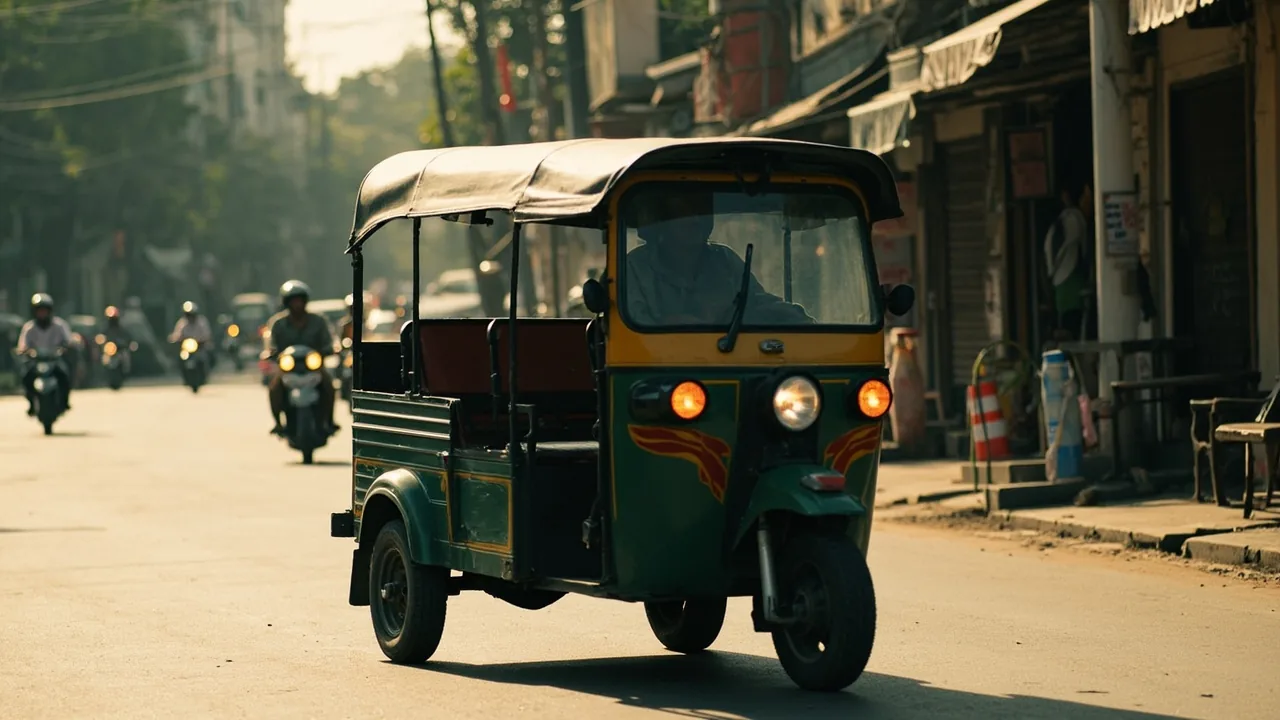
Tuk-tuks (motorised three-wheelers with a passenger bench) are everywhere in Phnom Penh and Siem Reap. They don’t use meters. A typical short hop in Phnom Penh runs ₹193-₹482 (~2-5 USD). A full-day Angkor Wat tour out of Siem Reap runs ₹1,445-₹2,408 (~15-25 USD) and is the standard way Indian backpackers visit the temple complex. The drivers wait while you visit each temple, which is half the value: you don’t have to find a new ride every hour.
Motos are motorbike taxis. You sit on the back of a scooter driven by a local. Cheaper than tuk-tuks (₹96-₹193 (~1-2 USD) for a short hop), faster in traffic, and riskier. Helmet rarely provided. Not recommended if you have luggage.
Grab works in Phnom Penh and (limitedly) in Siem Reap. Fares are similar to tuk-tuks (₹193-₹578 (~2-6 USD) for most trips). The app shows the price upfront, which removes the haggling, and the driver is GPS-tracked. The downside: tuk-tuk drivers at popular spots (airport, central market, Angkor ticket office) actively resist Grab pickups and will sometimes tell you “no Grab here.” If you order a Grab, walk 100-200 metres away from the tourist cluster before confirming the pickup.
Safety Alert: Tuk-tuk drivers at Phnom Penh airport and the Angkor ticket office in Siem Reap run a coordinated cartel. They will refuse to take you to your hotel for the standard ₹193-₹482 (~2-5 USD) fare and quote ₹963-₹1,927 (~10-20 USD) instead. Pre-book a hostel pickup or walk past the first row of drivers to the second row before negotiating. Travellers report this gets easier the further you walk from the terminal.
Renting a Motorbike or Scooter
Scooter rental is the default way backpackers cover the Cambodian coast (Sihanoukville, Kampot, Kep), the rice paddies around Battambang, and the back-roads around Angkor. Daily rates for an automatic scooter run ₹482-₹963 (~5-10 USD) depending on the bike and the town. Phnom Penh rentals are cheapest because of competition; Sihanoukville and Koh Tao are most expensive.
Licence rules: Your Indian car licence is not valid for riding a scooter in Cambodia. You need either an International Driving Permit (IDP) with a motorcycle endorsement, or a Cambodian motorbike licence. Indian DLs that include a two-wheeler category are technically valid in some border-crossing contexts, but Cambodian police checkpoints outside Phnom Penh and Siem Reap are rare and the risk is lower than in Thailand or Vietnam.
The rental scam: The bike gets scratched when you return it. The shop “finds” damage that was already there and charges you ₹4,826-₹14,479 (~50-150 USD). The fix is photos and video of every panel, the handlebars, the seat, and the odometer before you leave the shop. Take the timestamp on. Spend 5 minutes, save ₹9,653 (~100 USD).
The road reality: Outside Phnom Penh and Siem Reap, road conditions vary wildly. National Route 4 (Phnom Penh to Sihanoukville) is paved and fine. The road from Sihanoukville to Kampot has good sections and rough sections. Anywhere off the main highways, expect dirt, sand, and surprise potholes. Rain turns dirt roads into mud slicks.
Subodh’s Pro Tip: Wear a helmet, even for a 5-minute ride. Cambodia doesn’t enforce helmet laws aggressively, but the hospital bills for a scooter crash are real, and most travel insurance policies (including SafetyWing) require you to be legally licensed and helmeted for the claim to pay out.
Border Crossings: How to Get to/from Thailand, Vietnam, and Laos
Most Indian backpackers enter Cambodia from Bangkok via the Aranyaprathet (Thailand) / Poipet (Cambodia) border, or from Ho Chi Minh City via the Moc Bai (Vietnam) / Bavet (Cambodia) border. Both work smoothly for visa-on-arrival.
From Bangkok to Siem Reap: Take a minibus or bus from Bangkok’s Mo Chit or Khao San area directly to Poipet (about 4 hours, 250-), walk across the border, then take a shared taxi or minibus from Poipet to Siem Reap (about 3-4 hours, ₹963-₹1,445 (~10-15 USD)). The whole journey takes 8-10 hours including border formalities.
From Ho Chi Minh City to Phnom Penh: Direct buses via the Moc Bai/Bavet border take 6-7 hours and cost ₹963-₹1,445 (~10-15 USD). Mekong Express and Giant Bus both run this route daily.
From Phnom Penh to Laos: There’s no direct overland route. You have to go via Thailand (via Stung Treng and the Lao border at Trapeang Kreal, but services are infrequent and the road is rough), or fly. Most backpackers fly or take a bus to Bangkok and then a night bus to Vientiane.
Border crossings have their own set of scams: “visa processing fees,” “health check fees,” and “exit tax receipts” that the officials pocket. Have ₹2,890 (~30 USD) cash for the visa fee in neat bills, your e-visa printout if you got one in advance, and a passport photo. Apply for your Cambodia e-Visa here before you go, it costs ₹3,468 (~36 USD) and skips the visa-on-arrival queue.
Getting Connected: SIM Cards and eSIMs
You need working data to use Grab, Google Maps, and 12go. Cambodia has four mobile operators (Cellcard, Smart, Metfone, and Seatalk) with overlapping coverage. A tourist SIM with 5-10 GB of data for 7-15 days runs ₹385-₹771 (~4-8 USD) from any airport kiosk or phone shop. Cellcard and Smart are the most reliable for tourists. If you don’t want to swap physical SIMs, Get Nomad eSIM, which gives you a data package you activate on arrival without needing a Cambodian SIM tray.
Where to Eat Between Rides
Long bus rides in Cambodia mean a 30-minute meal stop at a roadside restaurant. The food is mid and safe-ish but rarely memorable. If you have time before or after a bus leg, here are the spots worth detouring for.
Smokin’ Pot Authentic Cambodian Restaurant and Cooking School in Phnom Penh is the place to learn amok and lok lak hands-on. They run half-day cooking classes with a market tour and finish with a full meal of what you cooked. The class runs about ₹2,408-₹2,890 (~25-30 USD) and includes the recipe book.
Cambodia kitchen in Phnom Penh does rustic Cambodian dishes in a converted shophouse. The fish amok and beef lok lak are reliable, and the setting is air-conditioned enough to escape the afternoon heat. A full meal with a drink runs ₹578-₹963 (~6-10 USD).
HoubHoub Cambodian Restaurant (BKK1) is in the BKK1 neighbourhood and is the local-Indonesian-cuisine crossover spot that Cambodian and expat regulars keep going back to. Order the beef lok lak and a fresh coconut. Mains run ₹385-₹674 (~4-7 USD).
When the dal-chawal craving hits hard (it will, after a week of rice and fish), you have a few solid Indian spots. Indian Restaurant in central Phnom Penh is bare-bones but cheap, with veg thalis around ₹385-₹578 (~4-6 USD). If you’re crossing the border from Thailand and stopping in Poipet, both Galaxy Indian Restaurant and Saffron Indian Restaurant Poipet serve familiar North Indian dishes (paneer, dal, naan) at Indian-friendly prices, and the cooks often speak Hindi or Punjabi.
Common Transit Mistakes Indians Make in Cambodia
1. Booking a “direct bus” without checking the transfer point. Many bus tickets from Bangkok to Siem Reap or from Ho Chi Minh City to Phnom Penh include a transfer at the border, where you change buses and sometimes walk across with your luggage. Read the fine print. If the ticket says “transfer,” you’ll be dragging your backpack through two immigration halls.
2. Paying tuk-tuk drivers at the airport before asking the price. Inside Phnom Penh International Airport (PNH) and Siem Reap-Angkor International Airport (REP), the official airport tuk-tuks are marked and charge ₹963-₹1,445 (~10-15 USD) for a trip into the city. The unofficial drivers waiting outside the terminal charge the same or more. Pre-book your hostel pickup, or insist on the official airport counter rate.
3. Riding a scooter in flip-flops and shorts. Cambodia has no motorcycle gear culture and police rarely enforce it, but the road rash from a low-speed slide in shorts is exactly what you’d expect. Wear closed shoes and long pants if you’re riding more than a few kilometres.
4. Trusting “the only way is with my driver” at Angkor Wat. Tuk-tuk drivers at the Angkor ticket office will tell you the temple complex is too spread out for anything but a driver. They’re half-right, the complex is huge, but you can rent an e-bike for ₹482-₹771 (~5-8 USD) from shops near the ticket office and pedal around yourself. It saves the driver fee and gives you flexibility.
5. Skipping the e-Visa to “save money.” The e-Visa costs ₹3,468 (~36 USD), the visa-on-arrival costs ₹2,890 (~30 USD). The ₹578 (~6 USD) difference pays for itself in saved queue time at peak hours (especially at PNH), and the e-Visa has your photo and details pre-verified, which makes the border process smoother. If you’re flying into Phnom Penh during a busy weekend, the e-Visa is worth the ₹578 (~6 USD).
Frequently Asked Questions
Does Cambodia have Grab? Yes, but only in Phnom Penh, with limited coverage in Siem Reap. The rest of the country is tuk-tuk only. Grab works similarly to Uber in India: you set your pickup, see the fare upfront, and pay by card or cash. Tuk-tuk drivers at tourist hotspots actively resist Grab pickups, so walk a block away before confirming.
How do I get from Phnom Penh airport to the city centre? The official airport taxi counter inside the terminal charges a flat ₹1,156-₹1,445 (~12-15 USD) for a tuk-tuk or taxi into central Phnom Penh. Pre-booking a hostel pickup is usually the same price or cheaper. Avoid the unmarked drivers standing just outside the terminal door, they quote inflated rates. For the full breakdown, see our Phnom Penh airport to city guide.
Is it safe to ride a motorbike in Cambodia? Outside Phnom Penh, the traffic is calmer but the road conditions are rougher. The bigger risk is unpaved roads at speed, potholes, and sand patches. If you have no motorcycle experience, skip the scooter rental and use tuk-tuks. If you’ve ridden in India, you’ll adapt quickly to Cambodian traffic, just watch for the road quality.
What is the cheapest way to travel between Phnom Penh and Siem Reap? The cheapest reliable option is the Giant Bus or Mekong Express VIP coach at ₹771-₹1,445 (~8-15 USD), taking 6-7 hours. Shared taxis are faster but more expensive per seat. Minivans split the difference. Night buses save a night of accommodation if your schedule is tight.
Can I cross from Cambodia to Vietnam or Thailand by land? Yes, both borders are open to tourists. The Bavet/Moc Bai border (Cambodia/Vietnam) and the Poipet/Aranyaprathet border (Cambodia/Thailand) both accept visa-on-arrival for Indians. Buses run direct from Phnom Penh to Ho Chi Minh City and from Siem Reap to Bangkok.
How much cash should I carry for transport? Cambodia is heavily USD-cash. Most tuk-tuks, buses, and rentals are priced and paid in dollars. Bring ₹9,653-₹19,306 (~100-200 USD) in small bills (₹97 (~1 USD), ₹483 (~5 USD), ₹965 (~10 USD), ₹1,931 (~20 USD)) for your first week. Larger notes (₹4,826 (~50 USD), ₹9,653 (~100 USD)) sometimes get rejected or given bad change. ATMs in Phnom Penh and Siem Reap accept Indian-issued Visa and Mastercard, though your bank will charge a foreign transaction fee.
Subodh’s Take
Here’s the honest read on Cambodia transport: it’s cheap by Southeast Asian standards, but it rewards travellers who plan the big legs in advance and stay flexible on the small ones. Book your inter-city buses through 12go or your hostel the day before, not the morning of. Walk past the first row of airport tuk-tuks. Photograph every scratch on a rental scooter before you take the keys. And if you’re doing the Bangkok-to-Siem-Reap or Phnom-Penh-to-Ho-Chi-Minh-City overland run, build an extra 2-3 hours into your schedule for the border, because it always takes longer than the bus company promises. Do that and Cambodia is one of the easiest countries in the region to cross.
For more on Cambodia and the rest of the Southeast Asia backpacking circuit, see our SEA backpacking hub or the Siem Reap transport guide.
