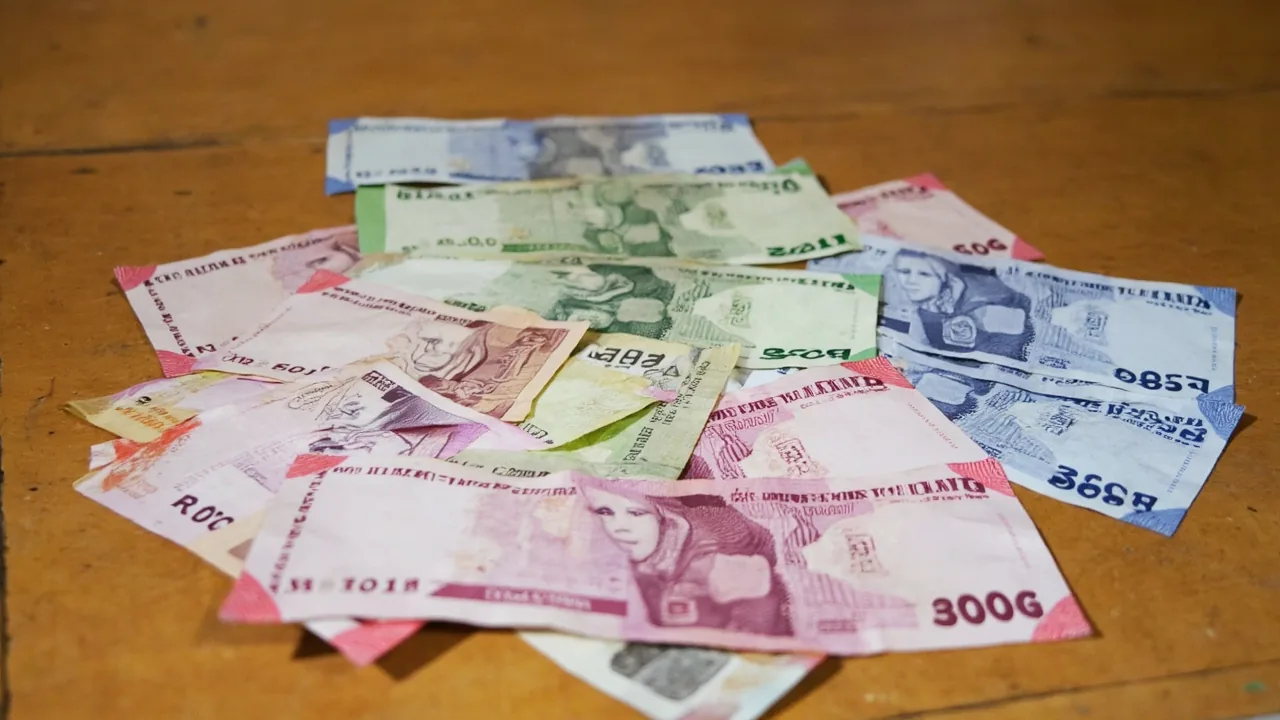
Is Indian Rupee Accepted in Vietnam? The Real Truth (2026 Guide)
Short answer: No, the Indian Rupee (INR) is not accepted anywhere in Vietnam. You will need Vietnamese Dong (VND) for everything from street food to taxi rides. This guide covers INR to VND rates, where to exchange, whether your debit card works at Vietnamese ATMs, and the currency scams targeting tourists in Hanoi, Ho Chi Minh City, and Da Nang.
Vietnamese Dong has stayed remarkably stable against the Indian Rupee over the past year, which is one less thing to worry about.
Quick Answers
| What | Answer | Price (INR) |
|---|---|---|
| Is INR accepted in Vietnam? | No. INR has zero acceptance in shops, hotels, or restaurants. | ₹0 (no exchange possible) |
| What is Vietnam’s official currency? | Vietnamese Dong (VND). Current rate (verified 2026-07-17): 1 INR ≈ 270 VND. | ₹1 (~270 VND or ~$0.01) |
| Can I exchange INR for VND in Vietnam? | Almost nowhere. Only a few large money changers in HCMC may do it at terrible rates. | ₹1,000 (~270,000 VND or ~$10.39) |
| Do Indian debit cards work at Vietnamese ATMs? | Yes. Visa/Mastercard withdrawals from BIDV, Vietcombank, TPBank work reliably. | ₹500 (~135,000 VND or ~$5.19 withdrawal fee typical) |
| What’s the best way to pay as an Indian in Vietnam? | Withdraw VND from a local ATM using your Indian forex card. Avoid airport exchange counters. | ₹2,000 (~540,000 VND or ~$20.76 typical weekly spend) |
The Real Truth About INR in Vietnam
Let me be blunt: trying to use Indian Rupees in Vietnam is a waste of time. No restaurant, no hotel, no shop, no taxi driver, and no market vendor in Hanoi, Da Nang, or Ho Chi Minh City will accept INR. Vietnamese Dong is the only legal tender, and the country runs almost entirely on cash for daily transactions.
This surprises many first-time Indian visitors because Vietnam is geographically close to India, has a large Indian diaspora in Ho Chi Minh City, and feels culturally connected. For a broader overview of backpacking across Southeast Asia, see our Sea Backpacking Hub. But the currency situation is completely separate. Vietnam does not have a INR to VND exchange mechanism for tourists. Even the gold shops in HCMC’s Cholon (Chinatown) district that cater to Vietnamese-Chinese communities don’t quote INR.
The only realistic options for Indians in Vietnam are:
- Carry USD as a backup and exchange it at city money changers.
- Use an Indian forex or debit card to withdraw VND directly from Vietnamese ATMs. This is what most Indian backpackers in 2026 do.
- Carry some VND in cash before flying in (exchange at Mumbai/Delhi airports or in India before departure).
For a detailed breakdown of how much cash to carry versus how much to withdraw from ATMs, see our How Much Money to Carry to Vietnam from India guide.
Current INR to VND Exchange Rate (2026)
At current rates (verified 2026-07-17, source: Vietcombank public rates):
- 1 INR ≈ 270 VND
- 1 USD ≈ ₹96.33
- 1,000 VND ≈ ₹4 (rounded for practical use)
- ₹368 (~100,000 VND or ~$3.82) ≈ ₹370 (~$3.84)
- ₹737 (~200,000 VND or ~$7.64) ≈ ₹740 (~$7.68)
- ₹3,683 (~1,000,000 VND or ~$38.20) ≈ ₹3,700 (~$38.38)
The Vietnamese Dong has one of the lowest per-unit values in the world, so prices look enormous at first glance. A bowl of pho for ₹147 (~40,000 VND or ~$1.53) reads like “40,000” on the menu, which triggers instant sticker shock for anyone used to INR-denominated prices. In real terms, that bowl of pho costs about ₹148 (~$1.54). Getting comfortable with the “drop three zeros and it’s in rupees” mental shortcut helps a lot on day one.
Vietnamese Dong has been remarkably stable against most major currencies including INR. Don’t expect to “win” on currency fluctuations the way you might in Turkey or Argentina. The arbitrage window doesn’t exist here.
Subodh’s Pro Tip: Always count your VND notes twice before walking away from any exchange counter or ATM. Vietnamese banknotes come in 1,000, 2,000, 5,000, 10,000, 20,000, 50,000, 100,000, and 200,000 denominations. The 100,000 and 200,000 notes are similar in color and easy to mix up in a hurry. A 10x mistake (confusing ₹368 (~100,000 VND or ~$3.82) with ₹37 (~10,000 VND or ~$0.38)) is a genuinely painful ₹333 (~$3.45) error.
How to Get VND as an Indian Traveler
Option 1: Withdraw from Vietnamese ATMs (Recommended)
This is what most Indian backpackers do in 2026, and it’s the most practical method. Any Vietnamese bank ATM that accepts Visa or Mastercard will let you withdraw VND directly using your Indian forex card or international debit card.
Best banks for Indian cards:
- Vietcombank: Widest ATM network, reliable for foreign cards. The red-and-white logo is everywhere.
- BIDV: Another state-owned bank with solid ATM coverage.
- TPBank: A newer private bank with a good ATM network in tourist areas.
Typical ATM withdrawal fees in Vietnam (2026):
- Vietnamese bank fee: 0 (most don’t charge the account holder)
- Your Indian card issuer’s fee: ₹300 (~$3.11) to ₹500 (~$5.19) flat per transaction, plus 1-3% currency conversion markup
So withdrawing 2,000,000 VND (~₹7,400) from an ATM with a ₹500 (~$5.19) Indian bank fee means your effective cost is about ₹7,900 (~$81.95). The same withdrawal at a bad airport exchange counter could cost you ₹8,500 (~$88.17) or more. ATMs usually win.
ATM withdrawal limits in Vietnam:
Most Vietnamese ATMs cap foreign-card withdrawals at ₹7,366-₹18,415 (~2,000,000-5,000,000 VND or ~$76.41-$191.02) per transaction. At current rates, that’s roughly ₹7,400 (~$76.76) to ₹18,500 (~$191.90). You’ll need multiple transactions for larger amounts.
Subodh’s Pro Tip: Before you fly, call your Indian bank (HDFC, ICICI, SBI, Axis) and confirm three things: (1) that international ATM withdrawals are enabled, (2) the per-transaction foreign currency markup (ideally under 3%), and (3) the daily withdrawal limit in INR. Many Indian travelers land in Hanoi only to find out their card was blocked for international use after a fraud alert back home.
Option 2: Exchange USD or Other Hard Currency at Money Changers
If you prefer to carry physical currency, the standard approach is:
- Exchange INR to USD in India (Mumbai/Delhi airport counters or any Indian bank) before departure.
- Exchange USD to VND at reputable money changers in Vietnam.
Avoid INR to VND direct exchange entirely. No Vietnamese money changer quotes INR on their board. If a shop in HCMC agrees to take your INR (rare), the rate will be insulting, often 30-40% worse than what you’d get converting USD to VND at the same shop.
Best money changers in Ho Chi Minh City:
- Gold shops near Ben Thanh Market: Long-standing reputation, transparent rates displayed on a board.
- Vietcombank branches: Not the highest rates but completely scam-proof.
- Hotel reception desks: Convenient but rates are 2-3% worse than street-side gold shops.
Best money changers in Hanoi:
- Old Quarter gold shops on Hang Bac Street: The street is famous for it. Look for shops with a visible rate board and a VAT receipt printer.
- Gold shops near Hoan Kiem Lake: A reliable option with visible rate boards.
- Vietcombank or BIDV branches: Lower rates but zero scam risk.
Best money changers in Da Nang:
- Money changers near Han Market and the riverside: Several legitimate options.
- Vietcombank or BIDV branches: Lower rates but zero scam risk.
Always ask for a receipt (VAT invoice) when exchanging. This is your protection against counterfeit notes or short-counting.
Option 3: Buy VND in India Before Flying
You can buy Vietnamese Dong at major Indian banks (HDFC, ICICI, SBI) by ordering foreign currency 2-3 working days in advance. The rate is usually 1-2% worse than what you’ll find at Vietnamese ATMs, but you land with cash in hand.
For a more detailed comparison of forex cards versus cash versus ATMs, see our INR to Vietnam Currency Exchange guide.
Currency Exchange Scams to Watch Out For
Scam 1: The “Counting” Trick at Street Money Changers
How it works: The money changer counts your VND stack out loud, but uses a sleight-of-hand to drop 1-2 notes off the bottom of the pile while sliding the rest across to you. You think you received ₹7,366 (~2,000,000 VND or ~$76.41) but got ₹6,629 (~1,800,000 VND or ~$68.77).
How to avoid: Count the stack yourself, every time, before walking away. Use the calculator on your phone to multiply their stated rate by your USD amount and verify the expected VND total before they start counting. Once you have the cash, count it again on the shop counter before pocketing it.
Scam 2: The “Slipped” Bill
How it works: A money changer takes your USD note, makes a show of examining it, and “accidentally” drops a lower-denomination Vietnamese Dong note underneath your original USD bill. They then claim you only gave them a ₹482 (~5 USD) instead of a ₹9,640 (~100 USD).
How to avoid: Put your USD bill directly on the counter and watch it the entire time. Don’t let them take it to a back room. Don’t let them walk away with it. Use a pen to mark your bills beforehand (a small dot on the corner is enough to prove yours).
Scam 3: The “Airport Only” Rate Markup
How it works: Tan Son Nhat (HCMC), Noi Bai (Hanoi), and Da Nang airports have currency exchange counters that quote rates 5-10% worse than the city. Travelers who haven’t researched ahead think “well, this is the official rate” and lose hundreds of rupees on a ₹9,640 (~100 USD) exchange.
How to avoid: Exchange only ₹1,928-₹4,820 (~20-50 USD) at the airport to get enough VND for a taxi and first meal, then exchange the rest in the city. Or skip airport exchange entirely and withdraw from an ATM inside the airport (most Vietnamese airports have Vietcombank or BIDV ATMs in the arrivals hall).
Scam 4: The Taxi Driver “No Change” Scam
How it works: A taxi driver takes you on a deliberately long route, then claims he has no change when you pay with a ₹737 (~200,000 VND or ~$7.64) note. He pockets the change worth ₹700 (~$7.26) or so.
How to avoid: Always carry small VND denominations (10,000, 20,000, ₹184 (~50,000 VND or ~$1.91) notes) for taxi rides. Better yet, use Grab app to book rides with a fixed fare shown upfront. See our Vietnam Solo Travel for Girls guide for more on safe transport options.
Where to Exchange in Major Cities
Ho Chi Minh City (Saigon)
Best areas for money exchange:
- District 1 around Ben Thanh Market: Multiple gold shops and money changers within a 500m radius. Competitive rates.
- Le Loi Street and Dong Khoi Street: High-end shops, slightly better rates, less haggling needed.
- Nguyen Hue Walking Street area: Modern shops with clear rate boards.
Recommended approach: Head to the money changers near Ben Thanh Market in District 1. Multiple gold shops within a 500m radius display rate boards and have long-standing reputations among travelers.
If you’re craving Indian food after all that money handling, Shri Natraj Indian Cuisine in District 1 is a reliable North Indian tandoori spot. Family-friendly and busy with Indian travelers, so you’ll hear Hindi around you.
Hanoi
Best areas for money exchange:
- Hang Bac Street in the Old Quarter: The traditional jewelry-and-money-changing street. Look for shops with the gold-and-silver Vietnamese text signage.
- Around Hoan Kiem Lake: Several legitimate options in the tourist belt.
- Trang Tien Plaza area: High-end shops, slightly better rates.
Recommended specific option: Gold shops on Hang Bac Street, particularly the cluster between Hang Ngang and Hang Dao. Rates are competitive and the shops are used to dealing with foreign tourists daily.
After exchanging, try Nhà An for Vietnamese vegan-friendly local food, or Hoang’s Restaurant if you want Vietnamese comfort food with vegetarian options.
Da Nang
Best areas for money exchange:
- Near Han Market: Several shops in the immediate area, rates are slightly worse than HCMC/Hanoi but still reasonable.
- Along Bach Dang Street (riverside): Modern money changers, often with English-speaking staff.
For authentic Da Nang flavors, NGON DA NANG specializes in Bun Cha Ca and Banh Xeo, two local specialties you should try on your first night. The restaurant has a 4.9 rating and a strong local following.
ATM Tips Specifically for Indian Card Holders
What to Do Before Leaving India
- Enable international transactions on your forex card or international debit card. SBI, HDFC, ICICI, and Axis all allow this through their net banking or mobile app, usually with a toggle called “International Usage.”
- Set the right withdrawal limit. Most banks cap international ATM withdrawals at ₹50,000 (~$518.65) to ₹200,000 (~$2,074.61) per day. Adjust it upward if you’re doing a long Vietnam trip.
- Carry two cards from different networks. Visa and Mastercard both work in Vietnam, but having both gives you backup if one network has an outage.
- Save the bank’s international helpline number. If a card gets stuck in an ATM or blocked for fraud, you’ll need it.
What to Do at Vietnamese ATMs
- Look for ATMs inside bank branches or shopping malls. These are less likely to have card skimmers than standalone street ATMs.
- Cover your PIN entry. Vietnamese ATMs don’t have the same anti-skimming protections as Indian ATMs.
- Always choose “Without Conversion” (“Charge in VND”) when the ATM offers to charge you in INR or USD. If you let the ATM convert, the rate is usually 3-5% worse than your bank’s conversion.
- Take your card and cash immediately. Count both before walking away.
- Keep transaction SMS alerts on. If you don’t receive an SMS for a withdrawal, it may have failed and you could be charged twice.
What If Your Card Gets Stuck?
Vietnamese banks generally return stuck cards to the issuing bank within 24-48 hours. If your card is captured:
- Call the ATM’s bank (the number is on the front of the machine) and note the ATM ID.
- Call your Indian bank’s international helpline and report it.
- Get a replacement card sent to your hotel via courier (some banks can do this in HCMC/Hanoi within 24 hours) or have a friend send you a backup card.
SIM Cards and Connectivity
You’ll need data on your phone the moment you land in Vietnam to use Grab, Google Maps, and translation apps. Here are your options:
Physical tourist SIM at the airport:
- Viettel or Mobifone tourist SIM (14-day): ₹479 (~130,000 VND or ~$4.97). Includes approximately 6GB of data.
- Available at airport kiosks right after baggage claim, in Hanoi (Noi Bai), Da Nang, and HCMC (Tan Son Nhat).
- Buy this if you want zero hassle. The setup time is 5 minutes.
Buying SIM in the city:
- Viettel/Mobifone/Vinaphone stores: Same tourist SIM, sometimes slightly cheaper (₹442 (~120,000 VND or ~$4.58)). You’ll need your passport.
- Convenience stores (Circle K, 7-Eleven): Mostly sell top-up cards, not full tourist SIMs.
eSIM option:
- Get Nomad eSIM lets you activate a Vietnamese data plan before you even board your flight. Plans start from a few dollars for 1GB and scale up. Best if your phone supports eSIM and you want zero physical card handling.
- Airalo and Holafly are alternatives if Nomad is out of stock.
Airport vs city SIM price:
- Airport SIM: ₹479 (~130,000 VND or ~$4.97) for 6GB
- City SIM: ₹442 (~120,000 VND or ~$4.58) for 6GB
The price difference is small, so buy at the airport for convenience. For a detailed comparison of roaming versus local SIM versus eSIM options, see our Vietnam SIM Card for Indian Travelers guide.
Common Money Mistakes Indians Make in Vietnam
Mistake 1: Exchanging INR Directly
What people do wrong: Walk into a money changer in HCMC with ₹20,000 (~$207.46) in cash and ask for VND. What happens: The shop either refuses or quotes a rate 30-50% below market value. How to avoid: Always convert INR to USD (another hard currency) before flying to Vietnam. Alternatively, just use your Indian forex/debit card at Vietnamese ATMs.
Mistake 2: Carrying All Money in One Large VND Note
What people do wrong: Withdraw ₹18,415 (~5,000,000 VND or ~$191.02) at once and receive a stack of ₹737 (~200,000 VND or ~$7.64) notes (₹740 (~$7.68) each). What happens: Small vendors and taxi drivers can’t break a ₹737 (~200,000 VND or ~$7.64) note, forcing you to find a shop that can make change or pay ₹184 (~50,000 VND or ~$1.91) extra. How to avoid: At the ATM or money changer, ask for a mix of 50,000 and ₹368 (~100,000 VND or ~$3.82) notes. Use the smaller notes for daily purchases.
Mistake 3: Not Informing the Bank Before Travel
What people do wrong: Use an Indian debit card abroad without activating international transactions. What happens: The first ATM transaction fails, the card gets blocked as a fraud precaution, and you’re stuck without cash in a foreign country. How to avoid: Activate international usage on all your cards at least 7 days before departure. Confirm by doing a small test transaction if possible.
Mistake 4: Trusting “Official” Airport Money Changers
What people do wrong: Exchange ₹19,281 (~200 USD) at the airport “because it has an official logo.” What happens: The rate is 7-10% worse than city rates, costing you roughly ₹1,500 (~$15.56) in unnecessary loss. How to avoid: Withdraw VND from the airport ATM instead. Or exchange only ₹1,928-₹2,892 (~20-30 USD) at the airport for immediate needs.
Mistake 5: Paying in USD or Offering Foreign Currency
What people do wrong: Offer USD or Indian Rupees at small local shops and restaurants in the mistaken belief that they’ll accept it. What happens: The vendor either refuses politely or, worse, gives you a terrible rate because they don’t know the current USD value. How to avoid: Pay in VND only. Always. For everything.
Safety Context for Money Handling
Vietnam is a safe country for tourists overall, but pickpocketing and money scams do occur in tourist-heavy areas. Keep your wallet in your front pocket in crowded markets like Ben Thanh, Dong Xuan, and Han Market. Split your cash between two locations (wallet + hotel safe) so a single loss doesn’t wipe you out.
Before departure, check the latest advisory from the Indian Ministry of External Affairs for Vietnam-specific guidance. The U.S. State Department and UK FCDO also publish detailed advisories that cover street-level safety concerns in Hanoi, HCMC, and Da Nang.
For broader safety and health topics (including tap water safety, which matters when you’re buying bottled water with your VND), see our Vietnam Cities Tap Water Guide.
FAQ
Can I use Indian debit cards at all Vietnamese ATMs?
Yes, any Vietnamese bank ATM displaying the Visa or Mastercard logo will accept Indian-issued debit and forex cards. Vietcombank, BIDV, and TPBank have the most reliable networks.
Should I carry USD or INR as backup cash?
Carry USD, not INR. No money changer in Vietnam will give you a fair rate for INR. USD is universally accepted at all reputable exchange counters.
What is the best forex card for Indian travelers going to Vietnam?
HDFC ForexPlus, ICICI Travel Card, and SBI Foreign Travel Card all work well in Vietnam. Compare their ATM withdrawal fees and currency markup before choosing. Many 2026 forex cards from Indian banks have a 1-2% currency conversion markup, which is better than the 3-5% charged by credit cards.
Is it safe to exchange money on the street in Vietnam?
At legitimate gold shops and money changers (with visible rate boards and VAT receipts), yes. Avoid anyone approaching you on the street offering “best rate, brother.” Stick to established shops.
Can I pay by UPI or Indian mobile wallets in Vietnam?
No. UPI, Paytm, PhonePe, and other Indian mobile payment systems do not work in Vietnam. Cash and physical cards are your only options.
How much VND should I carry for a 7-day Vietnam trip?
For a budget trip (hostels, street food, public transport), budget roughly ₹18,415-₹25,781 (~5,000,000-7,000,000 VND or ~$191.02-$267.43) for the week, plus a buffer of ₹7,366 (~2,000,000 VND or ~$76.41) for unexpected expenses. Withdraw in batches rather than carrying all of it at once.
What happens if I have leftover VND at the end of my trip?
You can exchange VND back to USD at the airport, though the rate will be poor. Better option: spend the last of your VND at the airport duty-free shop or on a meal before flying out. Almost no Indian bank will buy back VND from you, so converting it back to INR is not realistic.
Subodh’s Take
Vietnam is a genuinely affordable country for Indian travelers, but only if you handle the money smartly. The difference between a savvy traveler and an unprepared one is often ₹5,000 (~$51.87) to ₹10,000 (~$103.73) over a week-long trip, which on a tight backpacker budget is real money. Use your Indian forex card at a Vietcombank ATM, carry small USD bills as backup, exchange at gold shops on Hang Bac Street or near Ben Thanh Market, and keep your VND in small denominations. Do these four things and you’ll navigate Vietnam’s money system like someone who’s been doing it for years.
