Is It Safe to Swim in Bali in 2026? Rip Currents, Jellyfish Stings & Beach Safety Guide
Bali beach safety is mostly about knowing what to look for before you get in the water. Yes, Bali is safe to swim in for the vast majority of visitors. Most beaches have calm water, lifeguards in the busy resort areas, and well-flagged swimming zones. The risk that catches Indian travellers off guard is not the water itself, it’s the specific hazards you wouldn’t know to look for: rip currents at beaches like Bingin and Padang Padang, seasonal jellyfish blooms around the Bukit peninsula, and the casual attitude towards swimming after sunset or during incoming tide.
This article was checked against the latest BMKG (Indonesia’s Meteorology, Climatology and Geophysical Agency) public warnings on 2026-07-17, plus the daily surf reports from Magicseaweed and the SAR (Search and Rescue) advisory pages maintained by Basarnas Bali. The good news: zero large-scale coastal incidents on the open beaches this season. The bad news: the same small-scale drownings that happen every year keep happening, almost always to people who walked past a red flag because they wanted “just one quick dip.”
This guide walks you through the four beach hazards you’ll face in 2026, how to spot them in the ten seconds before you put your foot in the water, and what to do if it goes wrong. Read it once before you board the flight, not after your mate gets pulled out to sea. For the full picture on Indonesian travel safety, see our Indonesia travel warning for Indians and the SEA backpacking hub.
Quick Answers
| What | Answer | Price (INR) |
|---|---|---|
| Is it generally safe to swim in Bali? | Yes, on lifeguarded beaches with red/yellow/green flags. Avoid unflagged beaches with visible rip currents. | ₹0 |
| When is the jellyfish season on Bali’s south coast? | Roughly November to March, peaking during plankton blooms after heavy rain. Worst at sunset. | ₹0 |
| Which Balinese beaches have the strongest rip currents? | Bingin, Padang Padang, Dreamland, Uluwatu beach breaks, and parts of Canggu during big swell. | ₹0 |
| Do I need travel insurance for a Bali beach injury? | Strongly recommended. Treatment at a private hospital in Denpasar runs ₹21,432 (~4,000,000 IDR or ~$222.32) to ₹80,370 (~15,000,000 IDR or ~$833.68) for emergency cases. | ₹5,900 (~$61.20) |
| Can I call Indian emergency services from Bali? | No. Local emergency numbers: 112 (general), 115 (medical), +62 361 234 451 for SAR Bali. | ₹0 |
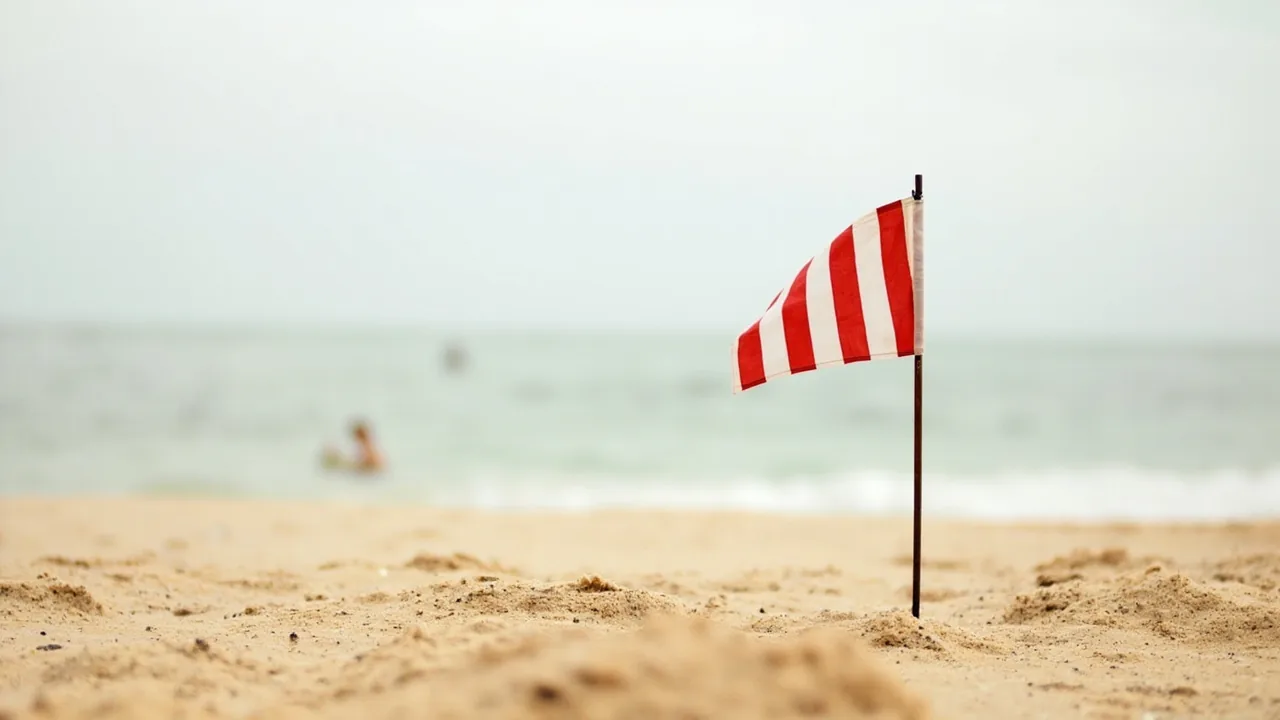
Subodh’s Pro Tip: The flag colour matters more than the beach name. A green flag means normal swimming conditions. A yellow flag means caution, check with the lifeguard before entering. A red flag means do not enter the water, full stop, even if you “see other people swimming.” No Bali beach is worth ignoring a red flag, and no Bali trip is worth flying home in a body cast.
The Real Risks (What to Worry About)
Ranked by how often Indian travellers get into trouble, not by what makes the best Instagram caption:
| Risk | Likelihood | Impact | How to Avoid |
|---|---|---|---|
| Rip currents (especially at Bukit peninsula surf beaches) | High during wet season | Severe (drowning) | Swim only between red-and-yellow flags, learn the “swim parallel to shore” escape, never swim alone at surf beaches like Bingin, Padang Padang, Dreamland, and Uluwatu. |
| Jellyfish stings on south coast beaches | Moderate (Nov-Mar) | Low to moderate (pain, welts) | Wear a thin rash guard or wetsuit top, avoid swimming at sunset, don’t touch anything washed up on the sand. |
| Serious cuts and abrasions from reef rock | Moderate | Moderate (infection risk) | Wear reef shoes on rocky entries (Padang Padang, Blue Point), wash cuts with bottled water and antiseptic immediately, watch for red streaking. |
| Drowning after dark or while intoxicated | Moderate | Severe | Swimming after sunset is illegal on most Bali beaches per local government rules (Perda). Alcohol and ocean do not mix. |
| Tsunami risk from undersea earthquakes | low | Catastrophic | Know the route to high ground at your hotel, check the Indonesia natural disasters guide before arrival, treat any sustained strong tremor as a natural warning. |
| Strong undertow + incoming tide trap | High on Kuta, Seminyak, Legian during full-moon tides | Severe | Time your swim 2-3 hours before or after low tide, ask local warung staff before entering. |
Subodh’s Pro Tip: Most “Bali almost drowned” stories share one detail: the swimmer was alone, off the main flagged area, and got caught on an outgoing tide. Trips don’t ruin because of bad luck, they ruin because of small mistakes stacked together.
How to Spot (and Escape) a Rip Current
Rip currents kill more beachgoers in Bali than jellyfish, sharks, and tsunamis combined. They are also the easiest hazard to survive if you know what you’re looking at.
Three ways to spot a rip current in 10 seconds:
- A line of foam, seaweed, or discoloured water moving steadily seaward. That “calm patch between waves” is the rip feeding back out, not a safe spot.
- A break in the incoming wave pattern. Waves roll in, then suddenly there’s a flat strip where nothing breaks. That’s the rip channel.
- The water looks deeper or darker between two visible sandbars. The sandbar on either side is breaking whitewater; the rip is the smooth, deeper gap.
If you get caught in one:
- Do not panic and do not try to swim straight back to shore against it. A typical Bali rip runs 1-2 m/s, you cannot outpace it.
- Swim parallel to the shore, usually 10-20 metres in either direction, until you feel the pull release. Then angle in at 45 degrees towards the breaking waves.
- If you cannot escape, float on your back, signal for help with one arm raised, and let the rip carry you out. It will eventually lose energy offshore and you can swim back diagonally.
Which Bali beaches have the worst rips? Bingin, Padang Padang, Dreamland, and the Uluwatu surf break all sit on reef ledges that channel water back out fast. So do parts of Canggu (Batu Bolong) when the south swell is running over 6 feet. Kuta and Seminyak get longshore rips during big tides.
The basic rule: if it says “surf beach,” it is not a swimming beach. If there is a lifeguard tower and a flagged zone, swim there or don’t swim. For a broader look at areas to steer clear of, check our places to avoid in Bali guide.
Jellyfish, Sea Lice, and Other Sting Hazards
The south coast of Bali (Kuta, Seminyak, Canggu, Bukit peninsula) sits in the Indonesian Throughflow, which carries periodic jellyfish blooms from November through March, peaking after heavy planktonic rain. The species you see are mostly box jellies and bluebottles (which are siphonophores, not true jellies, but sting the same way).
Realistic risk for Indian travellers:
- December-February: genuinely sting-prone, especially within 2 hours of sunset.
- March and November: occasional, mostly washed-up specimens on the sand.
- April-October: rare, but never zero.
Treatment that works (instead of the old urine myth):
- Get out of the water immediately.
- Rinse the sting with vinegar for 30 seconds. Most Bali lifeguard stations keep a bottle for exactly this. If you don’t have vinegar, use seawater, not fresh water (fresh water bursts nematocysts and dumps more venom in).
- Pluck visible tentacles off with tweezers or the edge of a credit card. Do not rub the area with sand or a towel, that’s the single biggest mistake tourists make.
- Hot water immersion (about 45°C, hot shower temperature) for 20-40 minutes neutralises the remaining protein-based venom. This is more effective than ice packs.
- Antihistamine (Cetirizine 10mg) for itching, paracetamol for pain. See your hotel doctor if welts cover more than a hand-span or you feel chest tightness, both signs of an allergic reaction.
Carry a small bottle of white vinegar in your daypack if you plan to swim at Kuta, Double Six, or Bingin during wet season. Travellers on the Bukit peninsula report that vinegar helps with most stings within an hour.
Safety Alert: If you have any trouble breathing, swallowing, or swelling around the face after a sting, call medical emergency 115 immediately. Anaphylaxis from marine stings is rare but does happen, and Bali’s private hospitals (BIMC Kuta, Siloam) stock epinephrine. Don’t “wait it out” if breathing is affected.
Which Bali Beaches Are Flagged Unsafe Right Now
This is the question the search engines get hammered with, so let me give you a framework instead of a single screenshot that will be outdated next week.
The four safety tiers to remember:
- Always safe (with normal swimming sense): Sanur beach (east coast, calm lagoon), Nusa Dua beach (Geger, Mengiat, watched by lifeguards 8am-6pm), Jimbaran beach (early morning only, watch for afternoon boat traffic).
- Swim between the flags: Kuta, Legian, Seminyak (the main flagged zones are patrolled by Balawista lifeguards; outside the flags is your own risk).
- For experienced swimmers only: Canggu (Batu Bolong, Echo Beach), Padang Padang, Bingin, Dreamland, Uluwatu. Confident swimmers only, never alone, never after rain.
- Don’t even wade: Batu Bolong ” Templo ” cliff areas, parts of Amed and Tulamben during strong east winds, any beach with a red flag up that day.
The Bingin Beach question everyone asks: Bingin is dramatic, photogenic, and genuinely one of the most dangerous beaches for casual swimmers in Bali. There is no flagged swimming zone, no lifeguard station, and the entry requires hopping a low-tide rock shelf into a 2-3 metre deep channel that pulls directly out to sea. Local surfers use it daily. Tourists who try to “swim in the lagoon” regularly get pulled out, and the rescue is a lengthy operation due to the cliff access. Treat Bingin as a surf beach, not a swimming beach. Same for Padang Padang (the one in Eat Pray Lie), Dreamland, and the Uluwatu surf break.
Prevention and Preparation (Before You Fly)
A boring checklist saves Bali trips:
- Vaccinations: Hepatitis A and Typhoid are the two worth getting before Bali. Japanese Encephalitis is optional but smart if you’re spending time near rice paddies. Routine boosters (Tetanus, MMR) should be current. Bali has no yellow fever risk unless you’re arriving from a yellow fever country. See our Bali health survival guide for the full rundown on dengue, rabies, and Bali belly.
- Travel insurance: Hospital costs at a private Bali clinic (BIMC Kuta, Siloam Denpasar) for a moderate emergency (broken bone, severe jellyfish reaction, scooter accident) run ₹21,432 (~4,000,000 IDR or ~$222.32) to ₹80,370 (~15,000,000 IDR or ~$833.68), that’s ₹21,000 to ₹80,000 at current rates (1 IDR ≈ ₹0.0053). A basic full policy that covers emergency medical and medical evacuation is non-negotiable here. Full evacuation to Singapore for a serious case can run into lakhs. Read more in our travel insurance guide for Bali.
- Digital document backups: Email yourself scans of passport, visa page, insurance card, and a separate family contact. WhatsApp them to a relative too. If your bag vanishes in a rip or theft, you can still board a flight home.
- Pack a beach safety kit: 50ml white vinegar bottle in a zip-lock, two Cetirizine tablets, paracetamol, two sachets of ORS, and a basic reef shoe pair (₹800-₹1,500 (~$8.30-$15.56) at Decathlon India before you fly, saves you ₹2,000 (~$20.75) at Bali beach stalls).
What to Do If Something Goes Wrong
Scenario 1: You or your mate get pulled out in a rip.
- Lifeguard alarm signal: keep one arm straight up, splash with the other, do not thrash.
- If you’re onshore, throw anything that floats (board, esky lid, pool noodle) before you enter the water yourself. Most bystander drownings happen because the rescuer became victim #2.
- Call the SAR line directly: +62 361 234 451 (Basarnas Bali, English-speaking). The 112 general line works for ambulance dispatch to BIMC Kuta, Siloam, or Kasih Ibu hospital.
Scenario 2: A jellyfish sting covers a wide area or breathing feels off.
- Vinegar rinse, hot water soak (45°C), antihistamine.
- If breathing tightens, call 115 (medical emergency).
- Get to BIMC Kuta or Siloam within 60 minutes. Both hospitals have English-speaking doctors and direct billing with most major insurers.
Scenario 3: You step on coral or sea urchin and bleed.
- Vinegar dissolves sea urchin spines (if you can’t extract them with tweezers). Hot water soak helps.
- Tetanus booster should be current within 10 years, get a fresh one if you’re not sure.
- A red streak moving up the leg = infection, not “just the sting.” Get to a clinic the same day.
Scenario 4: A strong tremor shakes your hotel and you’re on the south coast.
- Don’t wait for an official siren. A natural warning of 30+ seconds of strong shaking = self-evacuate to high ground (Bukit peninsula, inland Ubud).
- After the shaking stops, walk to high ground inland and away from rivers. Stay there until Basarnas or BMKG issues an “all clear” message.
- Full tsunami protocol in the natural disaster guide.
Indian-Specific Considerations
Medicine equivalents you can swap at the pharmacy:
| Indian brand | Use | Indonesian equivalent |
|---|---|---|
| ORS / Electral | Rehydration | Oralit (sachets, identical formula) |
| Crocin / Dolo | Fever, pain | Paracetamol (Sanmol brand) |
| Avil | Allergic reaction | CTM (Chlorpheniramine) |
| Pantocid | Acidity | Omeprazole 20mg |
| Metrogyl | Diarrhoea / amoebiasis | Metronidazole 500mg |
| Ciplox eye/ear drops | Infection | Siprofloksasin tetes |
All easily available at Guardian, Century, or Kimia Farma pharmacies across Bali. Pharmacist consultation is free.
Indian Embassy in Bali and Jakarta:
- Indian Consulate services in Bali are limited. The Embassy of India in Jakarta handles consular work: +62 21 520 4150 / +62 21 520 4157, [email protected] (embassy.consular email). Address: Jalan Embassy No. 2-4, Menteng, Jakarta Pusat 10310.
- For non-emergency document services, the e-CVIS portal (indianconsularservices.mea.gov.in) handles most paperwork remotely.
Beach injury cost reality check:
| Treatment | Cost (IDR) | Approx (INR) | Approx (USD) |
|---|---|---|---|
| Local clinic consult + basic dressing | ~500,000 IDR | ₹2,679 (~$27.79) | ~$28 |
| Stinger / jellyfish reaction, full treatment | ~2,500,000 IDR | ₹13,395 (~$138.95) | ~$139 |
| Emergency room visit (per hour, private hospital) | ~1,200,000 IDR | ₹6,430 (~$66.69) | ~$67 |
| Broken bone + X-ray + plaster | ~8,000,000 IDR | ₹42,864 (~$444.63) | ~$445 |
| Ambulance transfer Kuta area | ~1,500,000 IDR | ₹8,037 (~$83.37) | ~$83 |
If your travel insurance doesn’t have direct billing (which is most Indian retail policies), you’ll pay upfront and claim on return. Carry enough cash or card buffer for at least ₹64,296 (~12,000,000 IDR or ~$666.95) for a single emergency.
Getting Connected
Working mobile data is the difference between “I’ll call you back” and “who do I call?” in an emergency. Get a SIM with data roaming the moment you land:
- Physical SIM: Telkomsel (the strongest 4G across Bali including coastal areas, including Bingin) at the Ngurah Rai airport counter for ~₹268 (~50,000 IDR or ~$2.78) starter pack with 5-10 GB data, easy top-ups via MyTelkomsel app.
- eSIM (lighter alternative): Get Nomad eSIM, activated before departure, no passport handover at the airport, coverage across most Bali beaches via partner XL or Smartfren towers.
Save these four contacts in your phone on day one, before any swim:
- 112 (general emergency, English support)
- 115 (medical, ambulance)
- +62 361 234 451 (Basarnas SAR Bali)
- Your hotel front desk WhatsApp (they can dispatch a driver to BIMC Kuta faster than you can hail one)
For the complete list of emergency numbers, embassy contacts, and drug laws, see our Bali emergency contacts guide.
FAQ
Which Bali beaches are flagged unsafe to swim at right now?
The standard rule: any beach without red-and-yellow flags in the morning is “swim at your own risk” by lunchtime. Bingin, Padang Padang, Dreamland, and Uluwatu are surf beaches without lifeguard towers. Kuta, Legian, Seminyak, Sanur, and Nusa Dua have daily flag systems; red flag = do not enter, even for a quick splash. Check the Balawista lifeguard Instagram account for daily flag photos if you’re heading to one of the busier south coast beaches.
Is Bali safe to swim in December / wet season?
Yes, with extra caution. Wet season (Nov-Mar) brings bigger south swells, stronger rips at surf beaches, and the jellyfish bloom peaks. Stick to Sanur and Nusa Dua during these months. Avoid swimming at sunset or after rain. The flagged swimming zones at Kuta and Seminyak remain operational year-round.
Are there dangerous jellyfish in Bali, and what do I do if stung?
Yes, mostly box jellies and bluebottles, peaking November-March on the south coast. Treatment: rinse with vinegar for 30 seconds (not fresh water), pluck visible tentacles with tweezers, soak in hot water (45°C) for 20-40 minutes, take Cetirizine for itching. Get to a clinic immediately if welts cover more than a hand-span, or if you have any breathing trouble.
Is Bingin Beach safe to swim?
For confident open-water swimmers familiar with rips and reef entries only. There is no lifeguard station, no flagged swimming zone, and the entry requires hopping a low-tide rock shelf into a channel that pulls directly out to sea. Casual swimmers should treat Bingin as a surf beach and a sunset viewpoint, not a swimming beach.
What is the safest area in Bali for first-time beach travellers?
Nusa Dua (Geger and Mengiat beaches) for ocean swimming with full lifeguard cover and calm conditions year-round. Sanur is the next safest, with a fringing reef that breaks surf well before the swimming line. Both are also the safest in terms of marine sting risk outside jellyfish season.
Do I need travel insurance for Bali in 2026?
Not legally required, but practically essential. A single private hospital emergency in Bali can run ₹26,790 (~5,000,000 IDR or ~$277.89) to ₹80,370 (~15,000,000 IDR or ~$833.68). A medical evacuation to Singapore for a critical case can run into lakhs. Insurance that covers emergency medical, scooter accidents (note: many policies exclude scooter/ATV injury), and medical evacuation is the difference between a recoverable travel hiccup and a financial disaster.
Can I swim in Bali beaches at night?
No. Most south-coast beaches (Kuta through Uluwatu) have local bylaws (Perda) prohibiting swimming after sunset, and there are no lifeguards on duty. Currents shift unpredictably at night, boats run without lights, and the darkness hides incoming tide changes. Stick to a beach club pool or a hotel pool after dark.
Subodh’s Take
Ninety percent of Bali beach incidents happen because people treat a tropical beach like a swimming pool. Swim where there’s a flagged zone and a lifeguard, learn the rip-current escape before you put your foot in the water, carry a small bottle of vinegar if you’re on the south coast in December, and don’t mix alcohol with the ocean. The other 10% of incidents are random bad luck, weather, and marine life, but those are manageable with a basic first-aid kit and a full policy. Bali’s beaches reward preparation, not bravery. Do the boring reading first, then go enjoy the sunset.
