Khmer New Year & Bon Om Touk 2026: Cambodia’s Biggest Festivals
Cambodia’s Cambodia water festival Bon Om Touk 2026 dates and events highlight two events that genuinely transform the country each year: Khmer New Year in April and Bon Om Touk in November. Both draw Indian backpackers planning a Cambodia trip, and these are the two windows worth flying in for. For related planning, see our guide on Sea Backpacking Hub.
The two festivals are wildly different vibes. Khmer New Year is a national water-fight-meets-family-reunion, chaotic and local, with almost no organised tourist programming. Bon Om Touk is a structured civic spectacle centred on the river, with concerts, illuminated flotillas, and a closing-night party scene that briefly turns Phnom Penh into Southeast Asia’s most underrated party city. Plan for at least one, ideally both, and budget extra days for recovery because the heat + alcohol + jet-lag combo is brutal. You may also find Da Nang Nightlife Guide Best Bars Clubs Late Night Things to Do useful for this trip.
Quick Answers
| What | Answer | Price (INR) |
|---|---|---|
| Khmer New Year 2026 dates | April 13 to 16 (3 public holidays) | ₹0 |
| Bon Om Touk 2026 dates | November 14 to 16 (full moon of Kadeuk, boat races over 3 days plus full-moon party on the 16th) | ₹0 |
| Best city for Khmer New Year water fight | Phnom Penh (BKK1, Riverside) or Siem Reap (Pub Street) | ₹0 |
| Best city for Bon Om Touk boat races | Phnom Penh (Sisowath Quay, riverfront) | ₹0 |
| Tuk-tuk within Phnom Penh | ₹193-₹482 (~2-5 USD) | ₹190 (~$1.97) to ₹480 (~$4.98) |
The Two Festivals at a Glance
Khmer New Year (Chaul Chnam Thmey) is the Cambodian new year on the Buddhist calendar, falling on the same three days every April. The country grinds to a halt, government offices close, and the national mood shifts into three distinct phases: Moha Songkran (Day 1, a quiet day of cleaning houses and Buddha offerings), Virak Wanabat (Day 2, the big family-and-temple day where people wash elders’ feet and give donations), and Virak Loeng Sak (Day 3, the chaotic one with water fights, powder-throwing, and street parties). See also: Hoi an Nightlife Bars Clubs Late Night Things to Do.
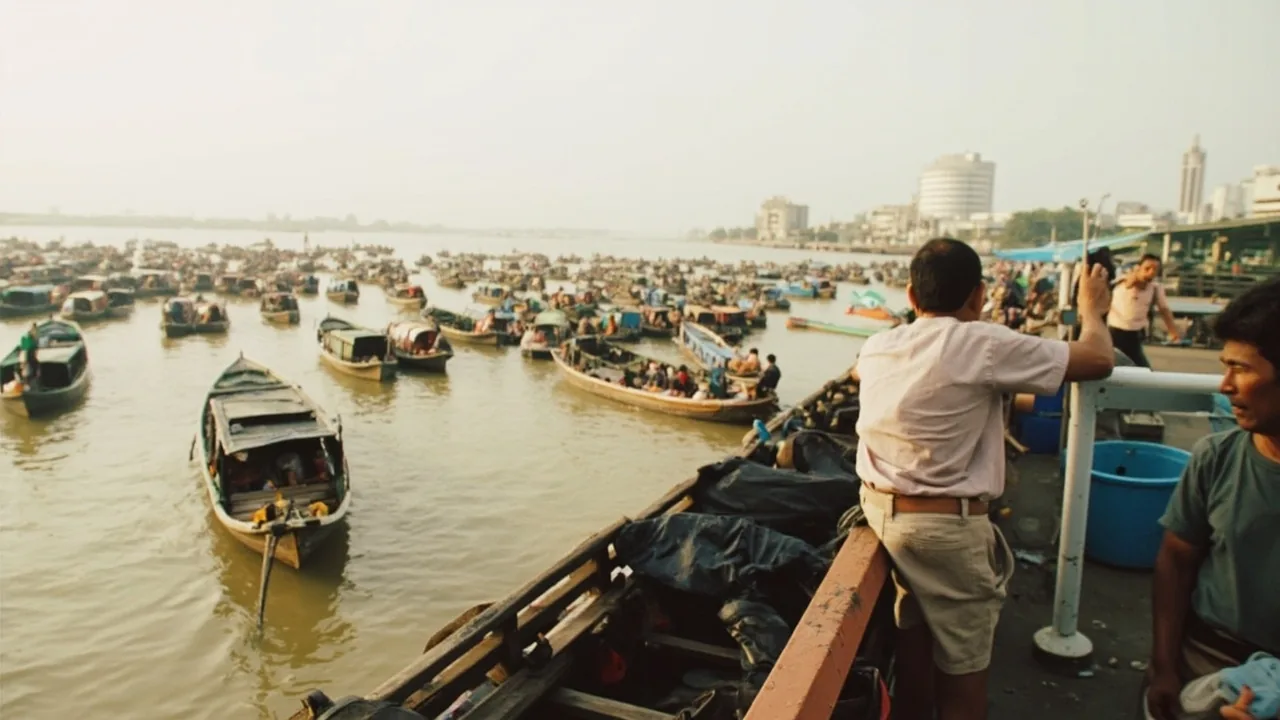
Bon Om Touk (Water & Moon Festival) is the November event, tied to the full moon of the lunar month of Kadeuk. The headline is the boat races on the Tonle Sap river in Phnom Penh: long, brightly painted wooden boats called pirogues, each rowed by a team of 40 to 80 paddlers, racing in heats over three days. Add to that the illuminated Sampeas Preah Khe (the floating lantern ceremony on the night of the full moon, where thousands of small banana-leaf boats carrying flowers, incense, and candles are set adrift), a riverside concert series, and a food fair that runs the length of Sisowath Quay. Siem Reap runs a smaller-scale version, but Phnom Penh is the only real party. For related planning, see our guide on Nha Trang Nightlife Best Bars Clubs and Late Night Spots.
Subodh’s Pro Tip: Khmer New Year and Bon Om Touk are the two periods when you should book hostels 2 to 3 weeks in advance. Phnom Penh fills up hard for both, and Siem Reap fills up for Khmer New Year because everyone wants to combine the festival with Angkor. Last-minute walk-ins in mid-April will leave you paying double at whatever’s left.
City-by-City Breakdown: Where the Parties Are
Phnom Penh (the headline city for both)
Phnom Penh is the only city in Cambodia that goes hard for both festivals. For Khmer New Year, the action clusters around BKK1, the Riverside (Sisowath Quay), and the Olympic-area streets, with spontaneous water fights breaking out anywhere a tuk-tuk slows down. Pub Street in the tourist zone near the river is the most foreigner-friendly, but the local energy is in BKK1. Expect to be ambushed with water from balconies, motorbikes, and roaming groups of kids; the polite refusal doesn’t exist, the universal sign is an open palm and a smile.
For Bon Om Touk, Phnom Penh is non-negotiable. The boat races are visible from anywhere along the riverfront, the main stage is set up near the Royal Palace, and the closing night (the full moon) becomes an open-air street party that runs until 3 to 4 AM. This is also the one time of year Phnom Penh nightlife genuinely rivals Bangkok or HCMC.
Siem Reap (Khmer New Year alternative, low-key Bon Om Touk)
Siem Reap throws a louder Khmer New Year than Phnom Penh in some ways, because the expat and tourist density is high and Pub Street becomes a foam party for three days. The water fights here are more organised and less local-only; you’ll see water trucks, foam machines, and roving sound systems. The trade-off is that Pub Street gets so packed that walking takes 20 minutes to cover 100 metres. Book Pub Street early if you want a front-row table.
Bon Om Touk in Siem Reap is a quieter affair: small boat races on a local river, a candle-lantern ceremony at the night market, and a fraction of the Phnom Penh crowd. Worth it if you’ve just finished an Angkor pass and want a low-key riverside evening, but it’s not the headline event.
Battambang, Sihanoukville, and the coast (skip the festival, hit the beach)
Most of the coast (Sihanoukville, Koh Rong, Kampot) treats both festivals as a reason to close shop and head to the village. Which is great if you want a cheap beach dorm with no crowds but bad if you want energy. Battambang has a small but charming Khmer New Year with local processions; Bon Om Touk is mostly a family event with no big boat races.
Where to Stay During the Festivals
Phnom Penh and Siem Reap hostels raise prices 20 to 40% during festival windows, and the best spots sell out. The canonical price registry puts dorm beds in Phnom Penh at ₹482-₹964 (~5-10 USD) and Siem Reap at ₹482-₹1,157 (~5-12 USD); during the festivals, expect to pay at the top of those ranges, sometimes a little more. Book at least two weeks ahead.
| Hostel | City | Vibe | Dorm/Night | Book |
|---|---|---|---|---|
| Onederz Hostel Phnom Penh | Phnom Penh | Big rooftop, social, party-friendly | ₹771-₹1,157 (~8-12 USD) | Check prices |
| Mad Monkey Phnom Penh | Phnom Penh | Pool, bar, loudest hostel in town | ₹964-₹1,446 (~10-15 USD) | Check prices |
| Onederz Hostel Siem Reap | Siem Reap | Pool, central, festival favourite | ₹675-₹1,350 (~7-14 USD) | Check prices |
| Lub d Cambodia Siem Reap | Siem Reap | Polished, pool, slightly older crowd | ₹964-₹1,735 (~10-18 USD) | Check prices |
| Mad Monkey Siem Reap | Siem Reap | Pub Street location, party hostel | ₹1,157-₹1,735 (~12-18 USD) | Check prices |
Safety Alert: Phnom Penh and Siem Reap hostels during the festivals get hammered with bookings. The cheapest dorms at ₹482-₹578 (~5-6 USD) are usually 12-bunk rooms with one shared bathroom, which is fine for two nights, miserable for four. If you’re coming for the whole festival, spring for the ₹771-₹1,157 (~8-12 USD) private-single-in-dorm options at Onederz or Lub d; the upgrade pays for itself in sleep.
How to Join the Water Fights (Without Being the Obvious Tourist)
Khmer New Year water fights are open-invitation. You don’t need a ticket, a wristband, or a venue. You walk out of your hostel, and within 90 seconds someone on a motorbike will drench you. The traditional local approach: wear a floral-patterned shirt called a check sarong or a plain white tee, smear boung sorsor (white powder) on your cheeks and forehead, and carry a water gun or a bucket. The powder is sold at every street corner for about ₹48 (~2,000 KHR or ~$0.49). Water guns run ₹119-₹358 (~5,000-15,000 KHR or ~$1.24-$3.71) from market stalls.
The social rules: don’t target monks, don’t target anyone older than your grandparents, don’t pour ice water (locals consider it disrespectful), and don’t spray anyone who’s eating. If you don’t want to participate, you keep your head down and walk fast; the polite refusal is to cover your face with both palms and shout “orkun!” (thank you). The water fights die down by 8 PM on Day 3, and the night of Day 3 shifts to a proper street party with sound systems.
For Bon Om Touk, the water element is gentler: families release floating lanterns onto rivers and ponds on the full-moon night, and some areas have foam-and-water zones, but it’s not the same all-day drenching as Khmer New Year. The headline is the boat races during the day and the concerts at night.
Where to Eat During the Festivals
Most restaurants stay open through both festivals, but a lot of the best local spots close for family reunions on Days 1 to 2 of Khmer New Year. Plan around it.
| When | What to eat | Where (named spots from the shortlist) | Approx. Price |
|---|---|---|---|
| Khmer New Year Day 1-2 | Light, family-style | Smokin’ Pot Authentic Cambodian Restaurant and Cooking School | ₹596-₹1,192 (~25,000-50,000 KHR or ~$6.18-$12.36) |
| Khmer New Year Day 3 night | Street food, post-water-fight | Stalls along BKK1 and Riverside | ₹119-₹358 (~5,000-15,000 KHR or ~$1.24-$3.71) |
| Bon Om Touk days | Cambodian river food | Cambodia Kitchen | ₹715-₹1,430 (~30,000-60,000 KHR or ~$7.42-$14.84) |
| Bon Om Touk full-moon night | Big meal before the party | HoubHoub Cambodian Restaurant (BKK1) | ₹954-₹1,907 (~40,000-80,000 KHR or ~$9.89-$19.78) |
| Need a dal-chawal break | Indian food | Indian Restaurant, Galaxy Indian Restaurant (Poipet), Saffron Indian Restaurant (Poipet) | ₹596-₹1,192 (~25,000-50,000 KHR or ~$6.18-$12.36) |
The Phare, The Cambodian Circus is the standout ticketed event in Siem Reap year-round and runs special Khmer New Year programming some years. Worth booking ahead if you’re in Siem Reap; the dinner-plus-show package is a great break from the water-fight chaos.
Getting Around During the Festivals
Tuk-tuks and Grab (the Southeast Asian Uber equivalent) are the two real options in Phnom Penh and Siem Reap. During Khmer New Year, tuk-tuk drivers try to charge 2 to 3x the normal rate, partly because traffic is gridlock, partly because they know you’re soaked and desperate. The local tuk-tuk rate within Phnom Penh is ₹48-₹477 (~2,000-20,000 KHR or ~$0.49-$4.95), and within Siem Reap it’s similar. During the festival, the higher end of that range is fair for a cross-town trip; anything above ₹596 (~25,000 KHR or ~$6.18) is a negotiation.
Subodh’s Pro Tip: Grab is your friend during both festivals. The app’s fare is fixed before you get in, the driver can’t renegotiate, and you don’t have to stand in the street soaked trying to flag one down. The only catch is that Grab pickup zones near the riverside during Bon Om Touk get blocked by parade crowds; walk two blocks inland and you’ll find a driver in 30 seconds.
For getting between cities, the Phnom Penh to Siem Reap bus is ₹771-₹1,446 (~8-15 USD) and runs year-round; book via 12go if you want a guaranteed seat during the festival rush. The bus takes 6 to 7 hours; the alternative is a private taxi (around ₹4,820 (~50 USD)), which is worth it if you’re splitting between three or four people.
- Book Phnom Penh to Siem Reap on 12go
- Book Bangkok to Siem Reap on 12go
- Book Phnom Penh to Bangkok on 12go
Nightlife-Specific Safety
Cambodian festival nights are some of the most fun you’ll have in Southeast Asia, but the scams and safety issues scale up with the crowd. Here are the real ones to watch for.
1. Pickpockets in the water-fight crowd. Khmer New Year water fights in Phnom Penh BKK1 and Siem Reap Pub Street attract pickpockets because everyone’s distracted, soaked, and carrying phones in one hand. The fix: keep your phone in a zipped front pocket or a waterproof phone pouch worn under your shirt, leave the passport at the hostel, and carry only the cash you want to spend that day.
2. Tuk-tuk overcharging and “your hotel is closed” scams. During Bon Om Touk especially, tuk-tuk drivers near the riverside will quote 5x the normal rate and then claim your hotel is closed or flooded, steering you to a partner guesthouse that pays them commission. The fix: use Grab, or have your hostel’s exact location written in Khmer script (any hostel reception will write it for you) and show it to the driver before you get in.
3. Spiked drinks at Pub Street. The spike risk is lower than Bangkok or Bali, but it exists, particularly on the closing night of Bon Om Touk when everyone is 8 drinks deep. The fix: never accept a drink you didn’t watch poured, hold your own bucket, and switch to beer or sealed-bottle spirits after 1 AM.
4. The “monk” powder scam. A rarer one is people dressed as monks aggressively throwing powder and then demanding money for a “blessing.” Genuine monks don’t ask for cash on the street. The fix: politely decline and walk away; no real monk will chase you.
5. Road safety after drinking. This is the one that kills people. Cambodia’s road-death rate is among the worst in the world, and Bon Om Touk closing night combined with mopeds is a recipe for trouble. Don’t ride a scooter after midnight, don’t ride a scooter at all if you’ve had more than two drinks, and don’t trust rented scooters with bald tyres (most of them).
Subodh’s Pro Tip: The night of Day 3 is when most of the festival’s serious injuries happen. Take it seriously: stay on foot, eat street food, drink water between beers, and call a Grab when you’re done.
Local Rules and Etiquette
No alcohol sales restrictions. Unlike some Southeast Asian countries with Buddhist dry days, Cambodia generally allows alcohol sales during both festivals.
Buddhist temple behaviour. Days 1 and 2 of Khmer New Year involve visiting wats (temples) to offer food and prayers. If you visit a temple on these days, dress covered (shoulders and knees), don’t point feet at Buddha statues, and don’t take photos of worshippers without asking. Phnom Penh’s Wat Phnom and Siem Reap’s Wat Bo are the most foreigner-friendly.
Drugs. Cambodia’s drug laws are harsh, and enforcement is uneven. The closing-night parties at Pub Street and Phnom Penh riverside bars sometimes have dealers working the crowd. Don’t buy. Travellers have been caught, fined heavily, and in some cases detained. The festival isn’t worth a criminal record.
Curfew. No official nightlife curfew, but most riverside bars close by 2 AM on regular nights and stay open until 4 AM during the festivals. Don’t be loud outside hostels after 11 PM; residential-area noise complaints during Khmer New Year are taken seriously by local police.
Common Mistakes Indians Make at These Festivals
1. Not booking the visa in advance. Khmer New Year and Bon Om Touk both fall in periods when Indian arrivals spike. The visa-on-arrival queue at Phnom Penh airport can take 90 minutes during Khmer New Year week. The fix: pay the ₹578 (~6 USD) premium for the official e-Visa (36 USD total, ₹3,470 at current rates of 1 USD = ₹96.33) and skip the line.
2. Wearing white the whole festival. White gets ruined in 10 minutes of a water fight, and once it’s transparent, you’ve got a problem if you’re visiting a temple later. The locals rotate floral shirts or wear dark colours. Buy a cheap floral shirt on Day 1 from a market stall; it’s also a souvenir.
3. Carrying the passport. The festival crowds and water-fight humidity are not passport-friendly conditions. Keep the passport in the hostel safe and carry a colour photocopy plus your e-visa printout. Police checks during the festivals are rare, and a photocopy + the printout is the standard accepted form of ID.
4. Assuming everything closes on Day 1 of Khmer New Year. Day 1 is the quiet day, but most tourist-facing restaurants, malls, and hostels stay open. The real shutdown is Day 2 morning, when even convenience stores close for family temple visits.
5. Trying to do Angkor on Day 2 of Khmer New Year. Siem Reap’s temples are packed with locals making merit on Day 2, and the lines for sunrise at Angkor Wat are brutal. If you want a quiet Angkor experience, save it for the days before or after the festival, not during.
6. Not registering with the Indian embassy. Cambodia is a low-risk destination, but the Indian MEA travel advisory page at mea.gov.in is the place to check before you fly. For two-week festival trips, it’s overkill, but for any longer stay, register your presence online so the embassy knows you’re in-country if anything goes sideways.
Getting Connected
Cambodia’s two main mobile operators are Smart and Cellcard. A 30-day tourist SIM with 5 to 10 GB of data runs ₹482-₹675 (~5-7 USD). The trick: buy at the official airport counter, not from the random SIM stalls in the arrivals hall, which sometimes sell unregistered lines that get cut off after a week. The data is essential for Grab, Google Maps, and festival-day coordination with your hostel.
The other option is an eSIM, which you can activate before you fly. Get Nomad eSIM for Cambodia, set it up at home, land connected, and avoid the airport queue entirely. Cambodia eSIMs typically start at ₹482 (~5 USD) for 5 GB over 30 days, similar pricing to physical SIMs.
Pub Crawls and Group Events
If you don’t want to organise your own festival schedule, the easiest move is a pub crawl. Pub Street in Siem Reap runs daily crawls during Khmer New Year (around ₹1,446-₹1,928 (~15-20 USD) to ₹1,930 (~$20.02), includes 4 to 5 bars, a free shot at each, and free entry to a club). Phnom Penh pub crawls are less formal but the riverside bars in BKK1 coordinate loosely on Bon Om Touk closing night. Search the operator on GetYourGuide for current schedules and pricing.
FAQ
1. Are Khmer New Year and Bon Om Touk the same festival? No. Khmer New Year is the Cambodian Buddhist new year in April; Bon Om Touk is the Water and Moon Festival in November tied to the full moon of Kadeuk. Both involve water, both are public holidays, but they have different origins and structures.
2. Which festival is better for the boat races? Bon Om Touk, hands down. The Tonle Sap boat races in Phnom Penh are the headline event. Khmer New Year has no boat races.
3. Is it safe to travel in Cambodia during these festivals? Yes, but with the usual caveats: pickpockets in crowds, tuk-tuk overcharging, and road-safety issues. The political situation is calm during the festivals; no specific advisories for either window beyond the general Cambodia safety guidance.
4. Can I visit Angkor Wat during Khmer New Year? Yes, but expect Day 2 to be packed with Cambodians making merit at the temples. Sunrise at Angkor Wat on Day 2 of Khmer New Year is a logistical nightmare; the rest of the festival days are workable.
5. Do I need to book transport between Phnom Penh and Siem Reap in advance for these festivals? Yes, especially for Bon Om Touk. Buses sell out 3 to 5 days ahead, and the 12go platform lets you compare schedules and lock in seats. Same advice for Khmer New Year, though the demand spike is smaller.
6. What’s the legal drinking age in Cambodia? 18, but enforcement is loose. You’ll be asked for ID at upscale Phnom Penh bars and clubs; Pub Street and riverside beer gardens rarely check.
7. Will my Indian debit/UPI cards work during the festivals? ATMs work but charge ₹386-₹482 (~4-5 USD) per withdrawal. UPI is not accepted in Cambodia, so bring a forex card or withdraw USD cash at the airport and exchange at any Phnom Penh or Siem Reap money changer. Keep small USD notes for tuk-tuks and market stalls; the rate is better than the riel cash-back.
Subodh’s Take
Both festivals are unmissable, but for different reasons. Khmer New Year is the more chaotic, more local, more fun-in-the-moment experience, and it pairs perfectly with a Siem Reap + Phnom Penh loop if you’re willing to handle three days of being permanently wet. Bon Om Touk is the more photogenic, more structured, and more easily appreciated event, especially the closing-night full-moon riverside. Pick based on your travel window, but if you have flexibility, try to hit both. The country opens up in a way that doesn’t happen any other time of year.
