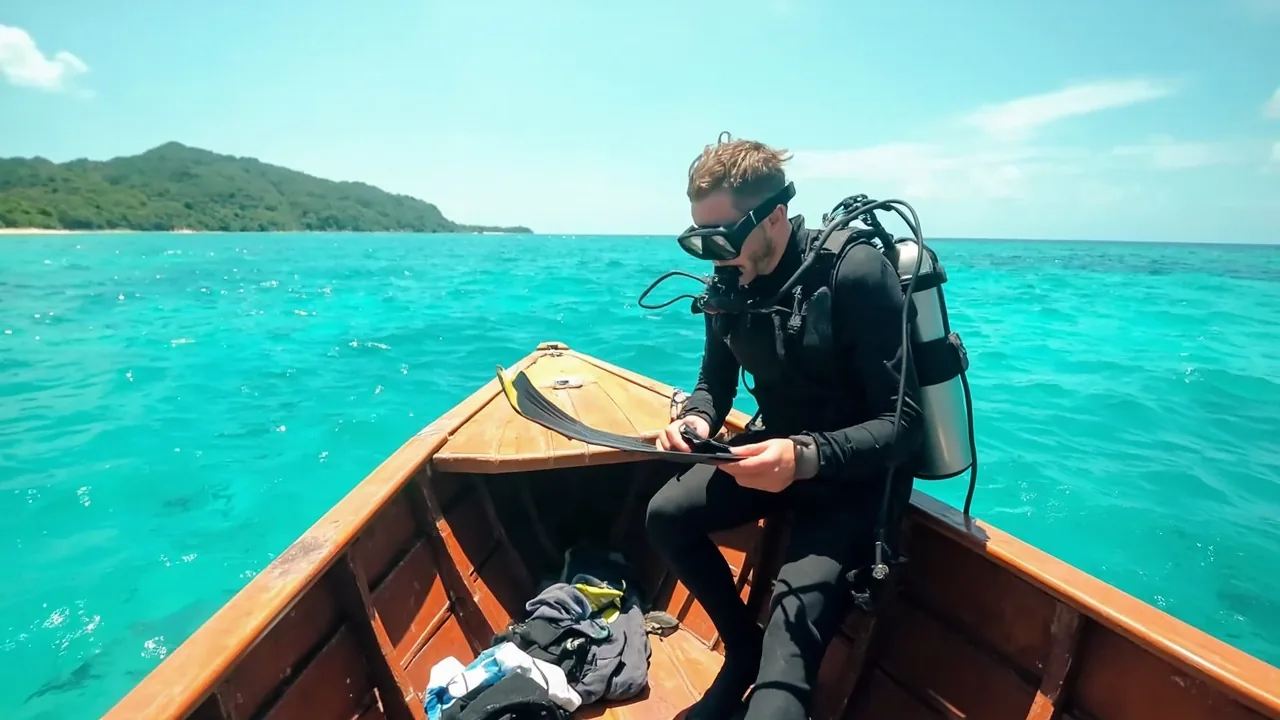
Koh Tao Diving in 2026: The Indian Backpacker’s Guide
Koh Tao is the small Thai island where the world’s cheapest dive certification industry lives. For Indian backpackers flying from mainland India, it is the single best place to turn ₹30,000 (~$310.79) into a PADI Open Water card, four logged dives, and a real shot at swimming next to a whale shark. The price gap versus anywhere else in Asia is wide enough that the trip effectively pays for itself. For related planning, see our guide on Sea Backpacking Hub.
This guide was cross-checked against current operator rates on Big Blue, Roctopus, and the official TDAC portal on 2026-07-21. On 2026-07-21 the 9,500 THB budget-tier Open Water course floor was confirmed against two operator rate sheets (Big Blue, Roctopus) and the 1,900 THB Koh Tao visa-extension fee was confirmed against the official Thai immigration schedule. You may also find Bangkok useful for this trip.
Quick Answers
| What | Answer | Price (INR) |
|---|---|---|
| Cheapest PADI Open Water | ~₹27,256 (~9,500 THB or ~$282.36) at budget schools | ₹27,241 (~$282.21) |
| Best diving season | Mid-March to early May, also late September to November | Dry visibility, calm seas |
| Visa for Indians | 60 days visa-free, extendable once | Extension: ₹5,453 (~1,900 THB) |
| Dorm bed (Sairee/Mae Haad) | ₹746-₹1,119 (~260-390 THB or ~$7.73-$11.59) | ₹746-₹1,119 (~$7.73-$11.59) |
| Ferry from Chumphon | 1h 45m | ₹3,443 (~1,200 THB or ~$35.67) |
All on-the-ground prices in this article are quoted in THB and converted using 1 THB ≈ ₹2.87. Wherever I cite ₹, I have done the math from that rate. See also: Pai.
How to Get There
Almost everyone reaches Koh Tao by ferry from the mainland. There is no airport. For related planning, see our guide on Krabi.
The two main ferry routes:
| From | Mode | Duration | Price | Book |
|---|---|---|---|---|
| Chumphon | Lomprayah catamaran | 1h 45m | ₹3,443 (~1,200 THB or ~$35.67) | Book on 12go |
| Surat Thani | Lomprayah catamaran (with bus from Surat Thani train station to Chumphon pier included) | 3h 55m | ₹3,730 (~1,300 THB or ~$38.64) | Book on 12go |
Chumphon is the closer and cleaner option. Surat Thani makes sense only if you are arriving by overnight train from Bangkok and want a single combined ticket.
Coming from Koh Phangan (the previous stop on the trail for most backpackers): the ferry is 1h 30m, ~₹1,721 (~600 THB or ~$17.83), several sailings per day. Book it the morning of, or the night before at any hostel desk on Haad Rin.
Subodh’s Pro Tip: Buy combined train + ferry tickets from Bangkok through 12go rather than separately. The train from Bangkok to Chumphon runs ₹2,008-₹3,443 (~700-1,200 THB or ~$20.81-$35.67), the night ferry dorm costs another ₹2,295-₹3,443 (~800-1,200 THB or ~$23.78-$35.67), and combining them often saves ₹574-₹1,148 (~200-400 THB or ~$5.94-$11.89) and one full day.
Where to Stay
Koh Tao’s accommodation clusters around three bays. Sairee is the long main strip with most restaurants and dive schools. Mae Haad is the pier arrival point. Chalok Ban Kao is quieter, family-ish, a 10-minute songthaew ride from Sairee.
| Hostel | Cost/night | Vibe | Book |
|---|---|---|---|
| Taco Shack Diving Hostel & Restaurant | ₹1,434-₹2,008 (~500-700 THB or ~$14.86-$20.81) | Right in Sairee, dive-focused, party-leaning | Check prices |
| Islander Hostel & Dive School | ₹1,291-₹1,721 (~450-600 THB or ~$13.37-$17.83) | Budget dorms, central, mixed crowd | Check prices |
| Wonderland Jungle Hostel | ₹1,148-₹1,578 (~400-550 THB or ~$11.89-$16.35) | Hilltop, social, jungle vibe, slightly out of town | Check prices |
| Revolution Hostel Koh Tao | ₹1,291-₹1,865 (~450-650 THB or ~$13.37-$19.32) | Modern dorms, central Sairee, clean | Check prices |
| Deishaview Jungle Hostel & Dive Center | ₹1,434-₹2,152 (~500-750 THB or ~$14.86-$22.29) | Quiet, attached dive center, hill location | Check prices |
| The Dearly Koh Tao Hostel | ₹1,721-₹2,582 (~600-900 THB or ~$17.83-$26.75) | Newer build, attached 5-star PADI resort | Check prices |
| My pick for first-time divers is Taco Shack. The hostel and dive school are under the same roof, which means your instructor picks you up from the dorm and the checkout process becomes “did you pass your open water exam, here’s your cert.” The trade-off is noise: this is one of the louder hostels on Sairee. |
If you want quieter nights and still want a dive school attached to the dorm, look at Deishaview on the hill above Chalok. If you are not diving and just want a clean cheap bed, Revolution is the best maintained.
What to Eat
Koh Tao’s food scene is mostly Thai-fusion aimed at European divers, with a real shortage of authentic Indian food on the island. There is currently one Indian restaurant on Sairee; budget for it if you need a proper dal-chawal fix mid-course.
Mango sticky rice (khao niao mamuang): the single best dessert on the island, sold at most beachside cafés for ₹230-₹344 (~80-120 THB or ~$2.38-$3.57). The version at Croissant & Ko is portioned generously and consistently fresh.
Massaman curry at Love Koh Tao: a slow-cooked mild Thai curry with potato and either chicken or tofu, around ₹516-₹631 (~180-220 THB or ~$5.35-$6.54). Their garden setting is one of the few quiet dinner spots on Sairee.
Pad Thai at Krua Siam: standard street-style plate, ₹172-₹230 (~60-80 THB or ~$1.78-$2.38), served with the customary bean sprouts and lime. Krua Siam is the more authentic Thai option in a strip full of cafés catering to European tastes.
Pad Pak (stir-fried morning glory): any Thai restaurant will do this for ₹230-₹344 (~80-120 THB or ~$2.38-$3.57). Garlic, chilli, oyster sauce, holy basil. It is the easiest vegetable-heavy dish to order if you are cycling through Thai menus.
Avocado toast and egg breakfast at Chacha Beach Café & Restaurant: ₹430-₹631 (~150-220 THB or ~$4.46-$6.54). Not Thai, but the kind of post-dive breakfast that keeps you full until the next dive boat.
Veg caution: most “vegetable” Thai dishes use oyster sauce or fish sauce in the stir-fry. Ask for “jay” (the Thai word for pure vegetarian, no meat, no fish sauce, no oyster sauce) at any Thai spot.
Indian food: there is a single Indian restaurant on Sairee serving the usual North Indian curries. Budget ₹717-₹1,148 (~250-400 THB or ~$7.43-$11.89) for a thali. Quality varies week to week; do not plan your whole diet around it.
Subodh’s Pro Tip: Most Thai stir-fries are ₹230-₹430 (~80-150 THB or ~$2.38-$4.46). If you eat three meals a day at local Thai places you will spend roughly ₹689-₹1,291 (~240-450 THB or ~$7.13-$13.37), about ₹700-₹1,300 (~$7.25-$13.47). Indian thalis push that to 750-1,200 THB, about ₹2,150-3,440.
What to Do
1. Get your Open Water certification. Budget schools run the full PADI Open Water course (4 days, theory + confined water + 4 open water dives + certification) for ₹27,256-₹31,559 (~9,500-11,000 THB or ~$282.36-$326.94). Mid-tier schools are ₹31,559-₹38,732 (~11,000-13,500 THB or ~$326.94-$401.24). Premium brands charge up to ₹45,904 (~16,000 THB or ~$475.55). The price difference is mostly instructor-to-student ratio, dive site choice, and boat comfort. For a first-time diver on a backpacker budget, a budget school is genuinely fine; the card is identical. Look at Big Blue, Roctopus, DPM Diving, Mojo Diver, or La Bombona Diving.
2. Fun dives after certification. A single boat dive runs ₹2,582-₹3,443 (~900-1,200 THB or ~$26.75-$35.67); a two-tank trip is ₹5,164-₹6,886 (~1,800-2,400 THB or ~$53.50-$71.33). Once certified, do at least four more fun dives over the rest of your stay. The fourth dive is when buoyancy stops feeling like work.
3. Sail Rock and Chumphon Pinnacle. These two sites are the reason serious divers come to Koh Tao. Sail Rock is between Koh Tao and Koh Phangan, famous for whale shark sightings from February to May and a vertical swim-through at 18m. Chumphon Pinnacle is a granite pinnacle 40 minutes by boat, often the deepest dive of an Open Water course, with frequent barracuda schools and the occasional chevron manta. Both require an Advanced Open Water certification or a guided dive with an instructor; budget schools offer day trips to both for ₹7,173-₹10,042 (~2,500-3,500 THB or ~$74.30-$104.03) including two dives and gear.
4. HTMS Sattakut wreck. A former Thai Navy vessel sunk in 2011 as an artificial reef, sitting at 18-30m, now home to groupers, lionfish, and the occasional turtle. Requires Advanced Open Water. Bookable through most dive schools, around ₹8,033-₹9,181 (~2,800-3,200 THB or ~$83.22-$95.11) for a two-tank trip.
5. Aow Mao for the Open Water dives. Aow Mao is a training-friendly shallow reef, the kind of site where most divers do their first open water dives. Divers report frequent sightings of blacktip reef sharks at the deeper end, plus the usual Koh Tao suspects: angelfish, butterflyfish, titan triggerfish, and the occasional hawksbill turtle.
6. Viewpoint hike (free). The John-Suwan Mountain Viewpoint trail takes about 30 minutes up from Sairee, free entry, the best sunset view on the island. Skip paid “viewpoint tours”, this is a public path anyone can walk.
7. Hidden bays. Aow June Juea is the quietest beach on Koh Tao, a 20-minute walk or short songthaew ride south of Sairee. No dive school, no music, just sand and palm trees.
8. Viewpoints and side trips. If you have a non-diving day, the Viewpoint and John-Suwan Mountain Viewpoint are the two main hikes. The Three Rocks is a quieter photo spot on the south coast.
Diving Season: When to Come
The honest answer: Koh Tao is diveable year-round, but visibility and sea conditions shift a lot.
Best months: mid-March to early May, and again mid-September to November. Visibility runs 15-25m. Whale shark sightings peak February-May at Sail Rock.
Shoulder months: December to mid-March. Visibility drops to 8-15m, occasional surface swell, but prices drop and dive schools are quieter. A budget Open Water course in February is easier to book last-minute than one in April.
Worst months: late June through August. The southwest monsoon brings rain, chop, and visibility sometimes dropping below 5m at shallow sites. Open Water courses still run but you’ll see less marine life and have more challenging surface conditions.
About Koh Tao diving in June: June sits at the start of monsoon season. It is doable, several schools still run Open Water courses daily, and prices often drop 10-15% versus peak season. The trade-off is reduced visibility and a higher chance of rainy surface intervals. If June is your only window, book with a school that runs small-group courses (max 4 students per instructor) since conditions demand more attention.
Subodh’s Pro Tip: If your main goal is the PADI card and you don’t care about whale sharks, November and early December give you the best price-to-visibility ratio. If you want whale sharks, book February to May and accept that you’ll pay 10-20% more for accommodation.
Getting Connected
Physical SIM: AIS or TrueMove tourist SIMs at 7-Eleven or at the Chumphon ferry pier. The 15-day tourist SIM with ~15GB data runs ₹1,145 (~399 THB or ~$11.86). Bring your passport for registration.
ESIM option: Get Nomad eSIM works in Thailand and you can install it before flying. Most data-only eSIM plans for Thailand run 5-10 GB for ₹965-₹1,448 (~10-15 USD).
Wifi at hostels is patchy. Sairee beach cafés are the most reliable place to do video calls; budget dorm wifi often drops during evening peak hours.
Daily Budget Breakdown
| Category | Budget/day |
|---|---|
| Dorm bed | ₹861-₹1,434 (~300-500 THB or ~$8.92-$14.86) |
| Food (3 meals) | ₹689-₹1,291 (~240-450 THB or ~$7.13-$13.37) |
| Local transport | ₹143-₹287 (~50-100 THB or ~$1.49-$2.97) |
| Activities (non-dive day) | ₹0-₹861 (~0-300 THB or ~$0-$8.92) |
| Misc / drinks | ₹287-₹574 (~100-200 THB or ~$2.97-$5.94) |
| Total | ₹1,980-₹4,447 (~690-1,550 THB or ~$20.51-$46.07) |
Add the dive course itself: budget ₹27,256-₹31,559 (~9,500-11,000 THB or ~$282.36-$326.94) for Open Water, ₹24,387-₹28,690 (~8,500-10,000 THB or ~$252.63-$297.22) for Advanced. A two-week stay with Open Water certification realistically runs ₹63,118-₹74,594 (~22,000-26,000 THB or ~$653.88-$772.76) plus your Bangkok-Chumphon transport.
Rates verified 2026-07-21 at 1 INR = 0.349 THB.
Visa / Entry Notes
Indian passport holders get 60 days visa-free under the bilateral agreement, extendable once for another 30 days at the local immigration office on Koh Tao (₹5,453 (~1,900 THB)).
All arrivals, including visa-free, must complete the TDAC digital arrival card at tdac.immigration.go.th before boarding. The form is free, takes about 5 minutes, and produces a QR code you show at immigration. No photos, no fee, no appointment. Verified 2026-06-27.
If your passport is below 6 months validity, the airline will not let you board. Check expiry before booking.
Common Mistakes
Booking the most expensive dive school because “more expensive means safer.” Koh Tao’s budget schools use the same PADI curriculum and the same SSI curriculum as the premium ones. What differs is boat comfort and instructor ratio. For Open Water on a backpacker budget, a 4-student-to-1-instructor budget school is industry standard and safe.
Trying to do Open Water in 3 days. PADI minimum is 4 days. Schools offering 3-day “rush” courses are compressing the theory, which means you will be a worse diver at the end. Take the 4 days.
Not budgeting for the medical. PADI requires a medical declaration. If you tick “yes” on any question, you need a doctor-signed clearance, which is ₹1,434-₹4,304 (~500-1,500 THB or ~$14.86-$44.58) at Koh Tao’s local clinic. Most people tick no and proceed.
Booking the first ferry on arrival day and missing it. The Bangkok-to-Chumphon sleeper train arrives at 4-5am. The first ferry is around 7am. If you miss it, the next is around 1pm and you lose half a day.
Where to Go from Here
| Destination | Mode | Duration | Price | Book |
|---|---|---|---|---|
| Koh Phangan | ferry | 1h 30m | ₹1,721 (~600 THB or ~$17.83) | Book on 12go |
| Surat Thani | ferry | 3h 55m | ₹3,443 (~1,200 THB or ~$35.67) | Book on 12go |
| Chumphon | ferry | 1h 45m | ₹1,721 (~600 THB or ~$17.83) | Book on 12go |
| Krabi | ferry+bus | 6h 20m | ₹4,017 (~1,400 THB or ~$41.61) | Book on 12go |
| Koh Phi Phi | ferry+bus | 6h 30m | ₹8,033 (~2,800 THB or ~$83.22) | Book on 12go |
| Bangkok | ferry+train | 9h (overnight) | ₹4,304 (~1,500 THB or ~$44.58) | Book on 12go |
Most backpackers head to Koh Phangan next. If timing lines up with Full Moon, stay an extra week there. Otherwise the night ferry to Surat Thani plus sleeper train back to Bangkok is the standard exit.
FAQ
Is Koh Tao cheaper than the Andamans or Gili for Open Water?
For Indian backpackers, Koh Tao typically wins by 20-30% on course price versus the Andamans (Havelock, Neil Island), and is comparable to Gili Trawangan in Indonesia. At current rates, PADI Open Water on Koh Tao runs ₹27,256-₹31,559 (~9,500-11,000 THB or ~$282.36-$326.94). The same course in Havelock runs ₹22,000-₹28,000 (~$227.91-$290.07) with Indian operators. Koh Tao also tends to win on combined flight + course cost from mainland India because Bangkok flights are cheaper than Port Blair; backpackers already in the Andamans may find Havelock cheaper overall.
Can I dive in Koh Tao in June?
Yes, June is workable. Several schools run courses daily. Visibility is lower than peak season (often 8-12m versus 20m+ in March) and afternoon rain is common, but the marine life is still there. Expect slightly lower prices versus February-April. Avoid diving the day after heavy rain.
Is Koh Tao safe for solo Indian travelers?
Yes, with the usual Thai-island caveats. Sairee is busy and well-lit at night. Thefts from bungalows happen; use hostel lockers. Petty scams (overcharging taxi, inflated dive course add-ons) are uncommon but exist. The main risk is drunk scooter accidents at night, wear a helmet, do not ride drunk.
How long should I stay on Koh Tao for the Open Water course?
Plan 5-6 nights minimum. The course takes 4 days, and you want a buffer day in case weather cancels a dive day, plus a rest day after the final dive before flying.
Do I need to know swimming to do Open Water?
Yes. PADI requires a 200m swim and 10-minute float. Most schools let you do this on day 1. If you cannot complete it, the school will refund most of the course fee.
What is the best time of year for whale shark sightings at Koh Tao?
February to May, with March-April the peak. Sail Rock is the most reliable site; Chumphon Pinnacle is the second most likely. Whale sharks are not guaranteed even in peak season.
Subodh’s Take
Koh Tao is the cheapest place in the world to get a real scuba certification, and that price gap is wide enough that even the flight from India pays for itself. The island is small, the diving is excellent, and the food is fine. Skip Koh Tao only if you have already done Open Water elsewhere or if monsoon season is your only window. Everyone else: book the ferry, find a hostel near Sairee, and start your course.
