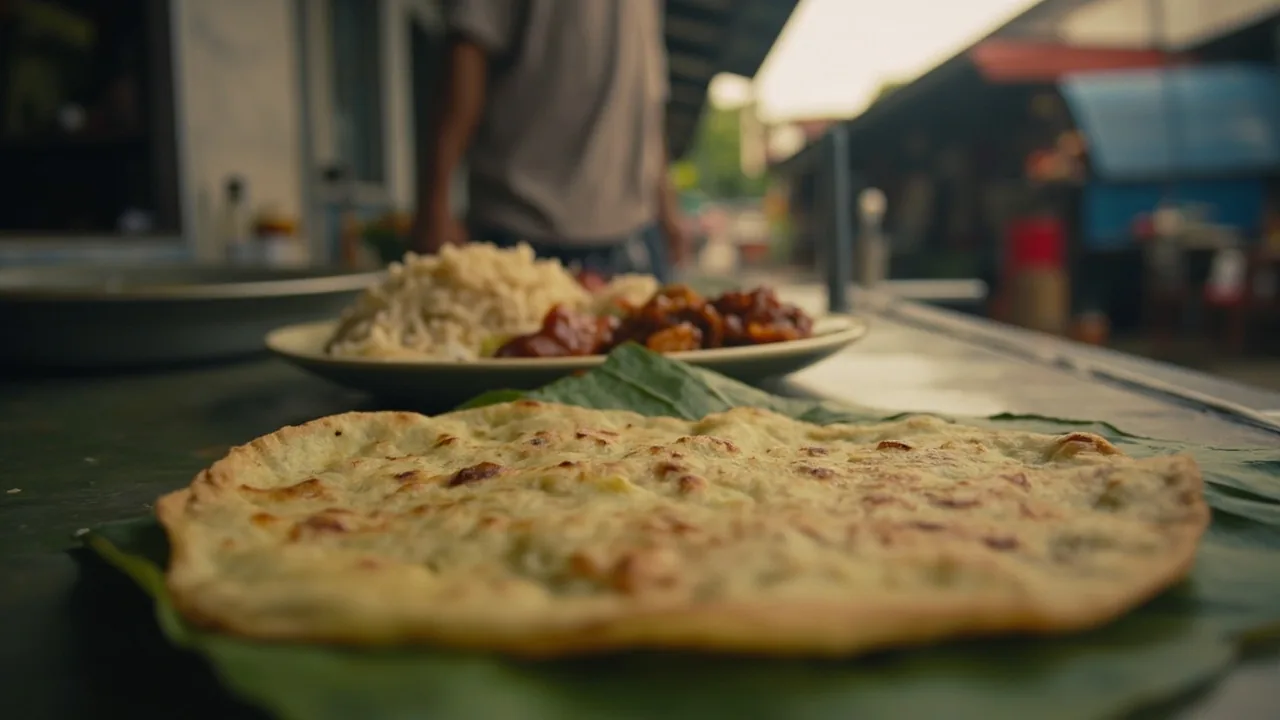
Kuala Lumpur Street Food Under RM 10: The Indian Backpacker’s Cheat Sheet
Kuala Lumpur is one of the cheapest big cities in Southeast Asia for Indian backpackers hunting for cheap street food Kuala Lumpur under RM 10, if you know where to eat. Planning the wider region? Our Southeast Asia backpacking hub covers the full multi-country route.
Quick Answers
| What | Answer | Price (INR) |
|---|---|---|
| Cheapest breakfast in KL | Roti canai + teh tarik at any mamak | ₹59-₹83 (~2.50-3.50 MYR or ~$0.61-$0.86) |
| Cheapest lunch | Nasi lemak with sambal, egg, and peanuts at a warung | ₹59-₹95 (~2.50-4 MYR or ~$0.61-$0.98) |
| Jalan Alor dinner for one | Hawker centre mixed plate (char kway teow, satay, grilled fish) | ₹237-₹592 (~10-25 MYR or ~$2.46-$6.14) |
| Budget banana leaf rice | Brickfields South Indian shops, weekday lunch | ₹189-₹355 (~8-15 MYR or ~$1.96-$3.68) |
| Strict-veg Indian thali | Bombay Grand KLCC, veg thali | ₹426-₹592 (~18-25 MYR or ~$4.42-$6.14) |
Why KL Is a Street-Food Paradise for Indians
KL’s food scene is built on three layers that happen to overlap perfectly with Indian tastes: mamak stalls (Indian-Muslim-run eateries serving roti, maggi goreng, and teh tarik), Chinese-Malaysian hawker centres (wantan mee, char kway teow, hokkien mee), and banana-leaf South Indian shops in Brickfields. Most Indian backpackers settle into a routine of two mamak meals and one banana-leaf or hawker meal per day, with the occasional Indian restaurant when homesickness hits.
The other reason KL wins for Indian budgets is the FX math. At current rates (1 MYR ≈ ₹23.64), RM 10 is roughly ₹236, which is less than the price of a single plate of idli at most Mumbai tourist-trap restaurants. Compared to Singapore ( ≈ ₹74.69 (~$0.77)), the same nasi lemak costs 2-3x less here, and compared to Bangkok’s tourist-zone food courts, it’s about 40-60% cheaper per dish.
Subodh’s Pro Tip: Mamaks are the best deal in KL, full stop. Most run 24 hours, the menus are identical across chains, and the roti canai is consistently under RM 3. Find one with a queue of office workers during lunch hour and you’ve found a good one.
Roti Canai and Mamak Staples Under RM 5
The roti canai is the anchor of every budget day in KL. At any mamak (Restoran Pelita, Devi’s Corner, Sri Pelita, or local independent spots), a plain roti canai runs RM 1.80 to RM 2.50, with telur (egg) adding about RM 1. Pair it with a teh tarik (pulled tea, RM 2 to RM 2.50) or kopi (coffee, RM 1.50 to RM 2) and you’re at RM 4 to RM 5 for a full breakfast that beats most Indian hotel buffets at home.
The mamak menu beyond roti is enormous: maggi goreng (fried instant noodles, RM 5 to RM 7), murtabak (stuffed pan-fried bread with meat, RM 8 to RM 12), tosai/thosai (RM 3 to RM 5), and rice sets with curry (RM 7 to RM 10). For Indian backpackers who want a heavier South Indian-style breakfast, the tosai + dhall + egg combo at any mamak runs RM 6 to RM 8 and fills you up until 3 PM.
Safety Alert: Most mamaks are Muslim-owned, so vegetarian items are marked but cross-contamination is normal. If you’re strict-veg, stick to tosai, plain roti, vegetable curry, and teh halia (ginger tea, no milk cross-contact). Avoid anything labelled “ayam” (chicken) or “sotong” (squid) unless you’ve confirmed it’s the vegetarian version.
Nasi Lemak and Malay Hawker Dishes Under RM 5
Nasi lemak is Malaysia’s national dish: coconut rice, sambal, fried anchovies (ikan bilis), peanuts, cucumber, and a boiled or fried egg. The standard nasi lemak bungkus (wrapped to-go) at a warung costs RM 2.50 to RM 4 and is the cheapest real meal in the city. For RM 1.50 to RM 3 more you can add chicken rendang, sambal sotong, or fried chicken.
Other Malay hawker dishes worth knowing:
- Mee goreng / Char kway teow: wok-fried noodles with prawns, egg, bean sprouts. RM 5 to RM 8 at hawker centres.
- Satay: skewered grilled meat with peanut sauce. RM 0.80 to RM 1.20 per stick at Jalan Alor.
- Roti john: a thick omelette-bread hybrid, RM 4 to RM 6.
- Cendol: shaved ice with pandan jelly, palm sugar, and coconut milk. RM 2.50 to RM 4 for dessert.
The cheapest nasi lemak spots are in residential neighbourhoods, not tourist zones. Chow Kit, Kampung Baru, and the morning stalls around Masjid India all serve nasi lemak for RM 2 to RM 3 before 9 AM, which is when the sambal is freshest.
For an in-depth look at the broader KL hawker scene beyond just mamaks, the Kuala Lumpur night markets guide covers the after-dark options that aren’t Jalan Alor.
Jalan Alor: The Famous Night Food Street
Jalan Alor in Bukit Bintang is the single most-cited KL street food location, and for good reason. The entire street becomes a hawker centre from around 5 PM to 3 AM, with plastic tables spilling into the road, satay smoke drifting into the air, and prices visibly posted on every stall. Most full meals run RM 10 to RM 25, and a satay stick starts at RM 0.80.
What to order at Jalan Alor on a budget:
- BBQ chicken wings: 3-4 pieces, RM 8 to RM 12.
- Steamed mussels (sotong kangkung): huge plate, RM 15 to RM 20, shareable.
- Char kway teow: one plate, RM 8 to RM 12.
- Hokkien mee: RM 10 to RM 15.
- Oyster omelette (oh chien): RM 10 to RM 15.
- Cendol or ais kacang: RM 4 to RM 6 for dessert.
At current rates (1 MYR ≈ ₹23.64), a RM 15 plate works out to around ₹355 (~$3.68). That’s a sit-down dinner with a drink for less than the cost of a single thali at a mid-range Indian restaurant in Bangalore.
Subodh’s Pro Tip: Skip the first 50 metres of Jalan Alor where touts grab you. The stalls at the back end (away from Jalan Alor intersection, closer to Changkat) have the same food at RM 2 to RM 5 less per plate because they don’t pay the front-row premium.
For a full breakdown of stall-by-stall prices and what to skip, the Jalan Alor food street prices article goes deeper than this cheat sheet can.
Banana Leaf Rice and South Indian Spots in Brickfields
Brickfields is KL’s “Little India,” a 10-minute LRT ride from KLCC on the Kelana Jaya line. The banana leaf rice shops here serve unlimited refills of rice with a tray of curries (dhal, sambar, rasam, vegetable, plus a non-veg option) for RM 8 to RM 15 on weekdays, RM 10 to RM 18 on weekends. The standard add-ons: papadum (RM 1 to RM 2), fried chicken (RM 3 to RM 5 per piece), mutton varuval (RM 5 to RM 8).
What to expect for RM 10 to RM 12:
- A full banana leaf with four vegetable curries, dhal, rasam, and papadum.
- One piece of fried chicken or a small portion of mutton.
- A glass of buttermilk or masala chai.
For backpackers used to Indian-city prices, this is almost absurd value. RM 10 banana leaf in Brickfields works out to about ₹236 (~$2.45) at current rates, undercutting the price of a comparable thali back home.
If you’re after strict-veg Indian or want a more upscale setting, Bombay Grand Indian Cuisine - KLCC Branch (rating 4.9) does traditional Maharashtrian and coastal dishes. The veg thali runs RM 18 to RM 25 and is the closest thing to a South Indian restaurant meal you’d get back home, just with cleaner air-conditioning and bigger portions.
Other Indian spots to know in KL:
- Bombay Grand Indian Cuisine - Brickfield Branch (rating 4.8): upmarket Mumbai street food and North Indian curries. Slightly pricier than the banana leaf shops but worth it for a treat meal. RM 25 to RM 40 per person.
- Solh Restaurant & Bar (rating 4.8): modern Middle Eastern with the saffron biryani and lamb shawarma. Not strictly Indian but the biryani pulls in Indian tourists regularly. RM 30 to RM 50 per person, more of a dinner-out splurge than a daily meal.
Hawker Centres and Food Courts: The Underrated Budget Option
Most tourists ignore KL’s indoor food courts, which is a mistake. The top floors of shopping malls (Pavilion KL, Lot 10, Sungei Wang, Fahrenheit 88) all have air-conditioned hawker centres with RM 5 to RM 10 sets. The quality is consistent, the hygiene is better than roadside stalls, and you avoid the rain.
Lot 10’s “Hutong” food court on the lower ground floor is famous for heritage stalls (some dating back 50+ years) serving wonton noodles, hokkien mee, and curry laksa at RM 8 to RM 15. The curry laksa alone justifies the trip.
For the strict-veg or Indian-food-averse crowd, the food courts always have at least one Chinese vegetarian stall marked with a green sign. A plate of mixed veg rice + tofu + one curry runs RM 6 to RM 9 and includes free-flow rice.
Non-Indian Surprises Worth Trying on a Budget
If you’re tired of Indian food (it happens, especially after 2-3 weeks of roti canai), these shortlist spots break the monotony without blowing the budget:
- Seeds Origin - Healthy Food Cafe Kuala Lumpur (rating 4.8): the go-to healthy bowl spot. RM 15 to RM 25 for a quinoa or poke bowl, more than a mamak but cheaper than a restaurant.
- MODU TRX | Samgyetang Speciality Korean Restaurant | Kuala Lumpur (rating 4.8): Korean ginseng chicken soup, the samgyetang set is RM 35 to RM 50. Splurge-tier, not daily, but excellent value for Korean food at that quality.
- Les Bouchons French Steakhouse Kuala Lumpur (rating 4.7): French bistro, RM 60+ for steak. Not budget. Mentioning it so you know it exists for one celebratory meal, not as a regular stop.
- Irama Dining Kuala Lumpur (rating 4.6): flavour-fusion spot, RM 30 to RM 50 range. Treat dinner, not street food.
- Food Stalls (rating 4.3): the generic hawker stalls you’ll find at most night markets, RM 5 to RM 12 per plate, the most authentic KL street-food experience.
A Realistic Daily Food Budget for Indian Backpackers
At current rates (1 MYR ≈ ₹23.64), here’s what a budget day costs:
| Meal | What you eat | Price |
|---|---|---|
| Breakfast | Roti canai + teh tarik at mamak | ₹107 (~4.50 MYR or ~$1.10) |
| Lunch | Nasi lemak + extra sambal | ₹95 (~4 MYR or ~$0.98) |
| Snack | Cendol or ais kacang | ₹95 (~4 MYR or ~$0.98) |
| Dinner | Banana leaf or Jalan Alor hawker plate | ₹355 (~15 MYR or ~$3.68) |
| Daily total | ₹651 (~27.50 MYR or ~$6.75) |
A splurge day with one Indian restaurant meal runs RM 60 to RM 80 (≈ ₹1,400 to ₹1,900). Three weeks of budget eating with two splurges per week lands at around RM 500 to RM 600 total (≈ ₹11,800 (~$122.30) to ₹14,200 (~$147.18)), which is less than a single week of mid-range eating in Singapore.
Practical Tips That Save Real Money
- Pay in cash at mamaks: most add a small surcharge (RM 0.50 to RM 1) for card payments, or refuse cards below RM 10.
- Avoid tourist-zone restaurants in Bukit Bintang main strip: the same food as Jalan Alor at 2-3x the price.
- Eat your big meal at lunch: banana leaf rice shops run RM 3 to RM 5 cheaper at lunch than dinner.
- Tap water: do not drink it, even at mamaks. Order air mineral (bottled water, RM 1.50 to RM 2.50).
- Hawker stall tip: most don’t expect tips, but rounding up the bill (RM 15 → RM 20) is appreciated and common.
For a broader view of how KL compares to Penang, Melaka, Ipoh, and JB for street food, the Malaysia best street food cities roundup covers the next stops worth adding to your itinerary.
- Currency: pay in MYR, never in your home currency if offered the choice. The Dynamic Currency Conversion markup at tourist spots runs 5-10%. For the current INR to MYR rate and ATM withdrawal tips, the Indian rupee to Malaysian ringgit exchange rate guide is kept updated.
For a wider list of food phrases that help at the stalls, the essential Malay words for ordering street food guide covers everything from “tak pedas” (not spicy) to “asing” (no ice).
FAQ
Is street food in KL safe for Indian vegetarian travellers? Most of the time. Cross-contamination is common at mamaks because the same griddle cooks meat and veg. Strict-veg travellers should look for marked veg stalls or stick to the Indian restaurants listed above.
How much should I budget per day for food in KL? RM 25 to RM 35 covers three solid meals at hawker stalls and mamaks. RM 50 to RM 80 per day covers one nicer Indian restaurant meal plus hawker meals.
Can I use Indian UPI or forex cards at street stalls? No. Mamaks, hawker stalls, and most food courts are cash-only or take Touch ‘n Go eWallet. Bring enough MYR cash for the day, top up via ATM (Maybank, CIMB, Public Bank have the lowest withdrawal fees for foreign cards).
What’s the cheapest area to eat in KL? Chow Kit, Kampung Baru, and Brickfields. Brickfields wins for Indian-food specifically because of the banana leaf shops.
Is Jalan Alor worth the hype? For first-timers, yes. The atmosphere and variety are genuinely good. For repeat visitors, the same hawker food is available at lower prices in Chow Kit or Brickfields night markets.
Subodh’s Take
KL is the most underrated food city in Southeast Asia for Indian backpackers, and the budget math is unbeatable: RM 25 a day for three meals beats Bangkok, Singapore, and Bali on price while matching them on variety. Eat at mamaks for breakfast and dinner, hit Brickfields for banana leaf lunches, and do one Jalan Alor night for the experience. You’ll eat well, spend little, and probably gain a kilo.
