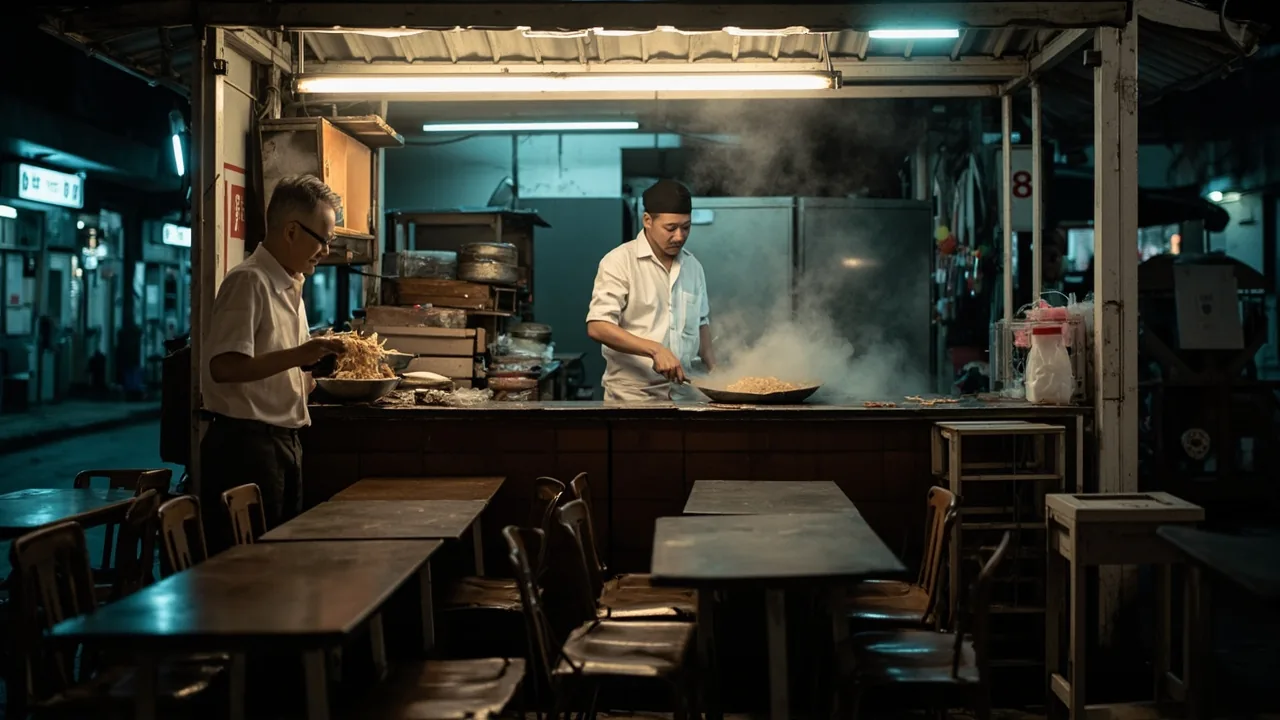
Penang vs Melaka vs Ipoh vs JB: Which Malaysian City Has the Best Street Food?
Prices below were cross-checked at Gurney Drive, Lebuh Chulia, Jonker Street, and Medan Makan in June-July 2026 against menu boards and the standard hawker rate. Hawker turnover (200+ plates/night per stall) was used as the freshness signal. Penang is the answer to the best street food city Malaysia question. The other three are real, they’re cheaper in spots, and they’re worth a stop. This guide sorts the four cities by signature dishes, real hawker prices in Malaysian ringgit, and a plain detour verdict. For related planning, see our guide on Sea Backpacking Hub.
One practical note before we start: at the current rate, 1 MYR is roughly ₹23.59, so a RM6 bowl of laksa is about ₹142 (~$1.47) in your wallet. Use that number to size up your daily food budget against your forex card.
Quick Answers
| What | Answer | Price (INR) |
|---|---|---|
| Which city has Malaysia’s best street food? | Penang (George Town), no real debate | A hawker meal runs RM5-12 (~₹118-234) |
| Cheapest city for a hawker meal | Ipoh, followed by Melaka | A simple dish runs RM4-7 (~₹94-165) |
| Most expensive city for street food | Johor Bahru | A hawker meal runs RM7-15 (~₹165-234) |
| How many days do you need in Penang for food? | 3 full days (4 hawker centres, plus Indian-food stops) | A Penang food trip costs ~RM45-60/day (~₹1,062-1,415) |
| Is KL worth adding for food? | Yes, for one or two nights at Petaling Street or Jalan Alor | A hawker meal in KL runs RM6-15 (~₹142-354) |
The Four-City Comparison at a Glance
| City | Best Street-Food Area | Signature Dish | Hawker Meal (MYR) | Worth the Detour? |
|---|---|---|---|---|
| Penang (George Town) | Gurney Drive, Lebuh Chulia, New Lane | Assam laksa, char koay teow, hokkien mee | RM5-12 | Yes, the headline |
| Melaka | Jonker Street night market, Medan Makan | Chicken rice balls, nyonya laksa, cendol | RM5-10 | Yes, especially on a Friday-Saturday night |
| Ipoh | Old Town (Concubine Lane), Greentown | Bean sprout chicken, hor fun, white coffee | RM4-7 | Yes, and cheap |
| Johor Bahru | Johor Bahru old town, Taman Sentosa | Laksa Johor, mee rebus, banana leaf | RM7-15 | Only if you’re crossing from Singapore |
| Kuala Lumpur (bonus) | Petaling Street, Jalan Alor | Hokkien mee, char koay teow, satay | RM6-15 | Yes, for one night |
Penang (George Town): The Headline Answer
Penang’s reputation is built on three things: a hawker culture that has UNESCO recognition, an unusually dense concentration of Chinese, Malay, and Indian stalls in a walkable old town, and a small set of dishes that don’t exist the same way anywhere else.
Signature dishes to eat:
- Asam laksa is the dish to try first. It’s a tamarind-based, fishy, sour-spicy noodle soup with mint, pineapple, and torch ginger. Most travellers either love it on the first spoonful or never come back to it. RM6-9 per bowl.
- Char koay teow is the famous fried flat-noodle dish with prawns, cockles, bean sprouts, and egg. The good versions are smoky from high-heat wok hei and a touch sweet from dark soy. RM7-10.
- Hokkien mee (prawn mee) is a brothy prawn noodle soup with pork ribs, prawns, and egg noodles. Comes with a side of sambal. RM7-10.
- Rojak is the fruit and vegetable salad with a thick shrimp-paste dressing, toasted peanuts, and lime. RM5-7.
Where to eat:
- Gurney Drive hawker centre is the famous one. It runs along Gurney Drive and is busiest from 6 pm onwards. The famous Teochew chendul stalls on Penang Road draw queues nightly; expect RM4-6 for a bowl.
- Lebuh Chulia (Chulia Street) is where backpackers stay, and the night hawker scene runs through the back of the street. Most of the Indian restaurants cluster here.
- New Lane (Lebuh Baru) is a smaller hawker lane with a slightly more local crowd than Gurney.
- Madam Priya’s House of Curries @ Beach Street is the South Indian option for a banana leaf set. Customers report the set meal runs RM16-26 per person depending on what you pile on. See Madam Priya’s on Google Maps listings rotate, so search by name on the day.
- Chulia Court - Best Indian Restaurant and Sports Bar on Chulia Street does tandoori chicken around the RM30-40 range per person for a proper plate.
- D’Sakra in the heritage zone is the more upscale Indian pick, with a dahi pani puri that reviewers specifically call out, around RM50 per person.
Indian and veg-friendly backup in Penang:
If you’ve burned through three meals of asam laksa and want a guaranteed veg option, the easiest move is to land at one of the Chulia Street banana leaf places. Most Indian-run stalls in George Town know what a Jain thali is. D’Sakra is the more modern call, and Madam Priya’s is the everyday fix. Non-veg food for Indian travellers in Penang is genuinely easy.
Verdict: Penang is the answer to the headline question, full stop. Plan 3 full days, split between George Town hawker centres, the Indian stretch on Chulia Street, and one morning at a kopitiam for half-boiled eggs, toast, and white coffee.
Melaka: Worth It on a Friday or Saturday Night
Melaka’s hawker scene is smaller than Penang’s and built around one night: the Jonker Street weekend night market. Friday and Saturday nights the street closes to cars and turns into a long hawker alley with grilled skewers, nyonya laksa, durian puffs, and a wall of cendol stalls.
Signature dishes:
- Chicken rice balls are Melaka’s calling card. Poached chicken with rice that has been rolled into golf-ball-sized balls and steamed. Most places serve a small bowl of four to six balls with the chicken. RM6-9.
- Nyonya laksa is the Peranakan version, less sour than Penang’s asam laksa, with a coconut-milk-based broth, prawns, and a thick sambal. RM7-10.
- Cendol in Melaka comes with shaved ice, coconut milk, palm sugar, and green rice-flour jelly. RM4-6.
Where to eat:
- Jonker Street night market runs Friday-Sunday, 6 pm to midnight, and is the most tourist-friendly hawker scene in Melaka. Prices are slightly inflated versus local neighbourhood spots but still cheap.
- Medan Makan (food court) along Jalan KPKS is a quieter, more local option with multiple hawkers under one roof.
Indian and veg-friendly backup:
Melaka has fewer Indian restaurants than Penang. The easiest option for veg food is to ask at any kopitiam for mee goreng without egg or a plate of roti canai with dhal. The bigger Indian restaurants cluster near Jonker’s eastern end.
Verdict: One or two nights is enough. If your Penang-to-KL route passes through, sleep here on a Friday or Saturday specifically for the Jonker market. Skip Melaka if your dates don’t line up with the weekend.
Ipoh: The Cheap, Quiet, Slightly Underrated One
Ipoh is a smaller, slower city, about 2 hours north of KL on the ETS train. The hawker scene is concentrated in Old Town around Concubine Lane and the surrounding streets, and the prices are noticeably lower than Penang or KL.
Signature dishes:
- Bean sprout chicken (taugeh ayam) is Ipoh’s defining dish: poached chicken served with crunchy, fat local bean sprouts, on rice with a clear soy-ginger sauce, and a bowl of chicken broth. RM5-8.
- Ipoh hor fun is a flat-noodle dish in a clear prawn-and-chicken broth with prawns, chicken, and bean sprouts. The broth is the whole point. RM6-9.
- White coffee is Ipoh’s other claim to fame. Roasted with palm-oil margarine, brewed strong, served sweet. RM2.50-4 at a kopitiam.
Where to eat:
- Old Town, around Concubine Lane and Jalan Bandar Timah, is the food core. The two famous bean sprout chicken spots are within walking distance of each other; travellers report that whichever one has the shorter queue is the right call.
- Greentown is a slightly newer area with hawker centres that local office workers crowd at lunch.
Indian and veg-friendly backup:
Ipoh has a smaller Indian community than Penang, so veg options outside the kopitiam roti canai network are thinner. Most kopitiams do a roti canai with dhal and a vegetarian mee goreng if you ask.
Verdict: Worth a 2-night stop on the way between KL and Penang, especially if you’re into quieter cities and don’t mind skipping the big-city hawker scene for one leg. The food is cheaper than Penang by 20-30%.
Johor Bahru: Only If You’re Crossing from Singapore
JB’s street food is genuinely good, and it’s noticeably cheaper than Singapore. The catch is that almost every Indian backpacker who reaches JB has either just crossed from Singapore or is about to.
Signature dishes:
- Laksa Johor is the local version, a coconut-based, slightly sweet fish and noodle soup with crushed ice added for a cold-and-spicy contrast. RM7-10.
- Mee rebus is a thick yellow-noodle dish in a sweet-spicy peanut-anchovy gravy, topped with lime, egg, and bean sprouts. RM5-8.
- Banana leaf rice is a strong option, with several South Indian banana leaf spots in JB old town doing a full meal for RM12-18.
Where to eat:
- Johor Bahru old town (Jalan Trus area) is the hawker cluster, with several Indian-run restaurants and kopitiams side by side.
- Taman Sentosa is a residential neighbourhood with a known weekend night market.
Verdict: Only worth the detour if you’re crossing the Johor-Singapore Causeway. If your route is Penang-to-KL or KL-to-Penang, skip JB and put the time into Ipoh or Melaka instead.
Where Kuala Lumpur Fits
Kuala Lumpur is the country’s capital and the transport hub you’ll almost pass through, and its street-food scene is large enough that ignoring it would be wrong. KL doesn’t beat Penang on a per-dish basis, but it has two hawker areas that are worth a night each.
Petaling Street (Chinatown) is the daytime market area and turns into a hawker scene in the evening. Travellers report a mix of Chinese-Malaysian hawker food, Indian banana leaf spots, and a long stretch of durian sellers once the season starts. A hawker meal runs RM6-12.
Jalan Alor is KL’s main hawker street, a few blocks of permanent stalls running from end to end. It’s louder, brighter, and more touristy than Penang’s hawker centres but with similar dishes (char koay teow, hokkien mee, satay, grilled seafood). A hawker meal runs RM8-15.
The honest take: if you have 2 nights in KL, spend one at Petaling Street and one at Jalan Alor. Then take a bus or train to Penang.
For a deeper KL food pass, see the Kuala Lumpur cheap street food under RM10 guide and the Petaling Street food guide.
The Suggested 7-Day Food Route
| Day | Where | What to Eat |
|---|---|---|
| 1 | Kuala Lumpur | Jalan Alor or Petaling Street |
| 2-3 | Penang (George Town) | Gurney Drive, Lebuh Chulia, New Lane |
| 4 | Penang to Ipoh (2.5-hour bus or train) | Ipoh hor fun + bean sprout chicken |
| 5 | Ipoh to Melaka (4-hour train + bus) | Jonker Street night market (Fri-Sat) |
| 6 | Melaka | Chicken rice balls + nyonya laksa |
| 7 | Melaka to KL | Last hawker meal at Petaling Street |
Skip Johor Bahru unless Singapore is your starting point.
Getting Between Cities
| Route | Option | Price (MYR) | Time |
|---|---|---|---|
| KL to Penang | Bus or ETS train | RM35-55 | 4.5-5.5 hours |
| Penang to Ipoh | Bus or ETS train | RM20-35 | 2-2.5 hours |
| Ipoh to Melaka | Bus + train | RM35-55 | 4-5 hours |
| Melaka to KL | Bus | RM15-25 | 2 hours |
| KL to Johor Bahru | Bus or train | RM30-50 | 5-6 hours |
Book buses and trains between these cities on 12go.
Visa, SIM, and Money in One Quick Pass
Visa for Indian passport holders: Apply online before travel. ENTRI is free and gives 15 days, eVISA is around USD 22 (about ₹2,124 at the current rate of 1 USD = ₹96.53) and gives 30 days. The official portal is entri.petra.gov.my. No visa on arrival for Indians.
SIM cards: The tourist SIM from Hotlink or Celcom runs RM15 for 7 days with about 5 GB of data. That’s about ₹354 (~$3.67). The same SKU is sold at the airport and at 7-Eleven stores across the country, often for the same price or slightly less at the 7-Eleven. For a multi-city trip covering all four of these food cities, the Hotlink Tourist Pass is the easiest choice because it works across Peninsular Malaysia without roaming surcharges.
For travellers who’d rather not swap a physical SIM at the airport, Get Nomad eSIM covers Malaysia with data-only plans that activate the moment you land.
Money: Bring a forex card loaded in MYR if your bank allows it. ATMs in Malaysia (Maybank, CIMB, Public Bank) charge around RM10-12 per foreign-card withdrawal, so withdraw larger amounts less often. For hawker food and small stalls, carry RM20-50 in small notes because some hawkers genuinely can’t break RM100.
For the full breakdown on ATM fees from Indian bank cards, see the ATM fee comparison for Southeast Asia guide.
Street Food Safety: What to Eat, What to Skip
Four honest rules that work across all four cities:
- Eat at hawker centres with high turnover. A stall that sells 200 plates of char koay teow a night is safer than a quiet stall with 8 plates. Busy stalls don’t have time for food to sit.
- Stick to cooked-to-order dishes. Laksa, char koay teow, hokkien mee, mee goreng: all cooked in front of you. Skip pre-cooked fish, raw vegetables in salads, and any seafood that’s been sitting on ice.
- Drink only sealed drinks or freshly boiled tea/coffee. Bottled water is cheap (RM1-2 per bottle), and most kopitiams serve drinks made from boiled water.
- Carry oral rehydration salts. Even careful eaters get a day of traveller’s tummy. ORS costs around RM5-8 at any pharmacy and saves you a clinic visit.
For more on street-food safety across Southeast Asia, see the street food safety at SEA guide.
Local Phrases That Help at Hawker Stalls
A few Malay words will save you time and a few ringgit at hawker stalls. “Tidak pedas” means not spicy, “tidak panas” means not hot (for drinks), “satu” means one, and “berapa harga” means how much. A short phrase list for ordering lives in the essential Malay words guide.
Subodh’s Pro Tip: The single biggest mistake Indian backpackers make in Malaysia is treating the four cities as separate trips and trying to base in KL. Kuala Lumpur is for one or two nights of transit food, not for hawker deep-dives. Sleep in Penang for the bulk of your food trip.
Safety Alert: Malaysian hawker food is generally safe, but check your government’s travel advisory before flying. The Indian Ministry of External Affairs maintains an updated travel advisory page at mea.gov.in for current conditions.
Subodh’s Take
Penang is the answer, and the honest version of this comparison is that the other three cities are enjoyable bonuses, not alternatives. If your route is short, do Penang. If your route is 7 to 10 days, do Penang plus one of the other three. If your route is 14 days or longer, you can do all four plus KL and treat the whole thing as a Penang-centric loop with side trips.
FAQ
Is Penang’s street food safe for vegetarians? Yes. The hawker centres all have vegetarian stalls, the Indian restaurants on Chulia Street do South Indian banana leaf meals, and kopitiams serve roti canai with dhal. Carry the names Madam Priya’s, Chulia Court, and D’Sakra as backup options.
Do I need a separate trip to Ipoh just for the food? No. The honest version is that Ipoh is worth a 2-night stop on the way between KL and Penang, not a separate trip. The white coffee and bean sprout chicken are the draw, and both fit into a 2-day layover.
What is the cheapest of the four cities for a hawker meal? Ipoh, by 20-30%. A bowl of Ipoh hor fun runs RM6-9 versus RM7-10 for a similar Penang noodle dish. Melaka is roughly equal to Ipoh on hawker prices, with slightly higher markups at the Jonker weekend night market.
Is Kuala Lumpur’s street food as good as Penang’s? KL has more variety across cuisines and a bigger hawker footprint, but Penang’s per-dish quality is higher. If you have one night in KL, do Jalan Alor. If you have two nights, add Petaling Street.
Can I do all four cities in 5 days? Tight but possible. The fastest reasonable version is 2 nights Penang, 1 night Ipoh, 1 night Melaka, 1 night KL. The bus and train transfers eat 5-6 hours each, so expect to lose a half-day per city to travel.
Is street food in Johor Bahru cheaper than Singapore? Yes, by a wide margin. A hawker meal in JB runs RM7-15 versus ₹597-₹1,119 (~$6.20-$11.62) in Singapore. JB is a sensible food stop only if you’re already crossing the causeway, not as a stand-alone food destination.
Do hawker stalls in Malaysia accept UPI? Mostly no. Carry cash in small notes (RM5, RM10, RM20). A few tourist-area stalls in Petaling Street and Jonker Street have started accepting QR pay, but don’t rely on it for the four-city hawker route.
