Laos Food Guide: Must-Try Dishes, Eating Habits & Where to Eat
Lao food is one of Southeast Asia’s best-kept secrets, and Indian travellers often miss it because they don’t know what to order or assume it’s all fish sauce and pork. Verified against traveller reports from June 2026 and cross-checked with current menus at spots in Vientiane, Luang Prabang, and Pakse, this guide gives you the dishes that matter, the phrases that get you safe veg food, and the specific places where locals eat. No fluff, no invented “must-try” lists.
Quick Answers
| What | Answer | Price (INR) |
|---|---|---|
| National dish | Laap (minced meat salad, herb-heavy) | ₹108 (~25,000 LAK or ~$1.12) |
| Cheapest street meal | Khao jee baguette or khao sin skewer | ₹65 (~15,000 LAK or ~$0.67) |
| Veg-friendly local dish | Sticky rice + jaew (chilli dip), order without fish sauce | ₹65 (~15,000 LAK or ~$0.67) |
| Beer | Beerlao bottle | ₹43 (~10,000 LAK or ~$0.45) |
| Bottled water | 500ml | ₹17 (~4,000 LAK or ~$0.18) |
The Local Culinary Landscape
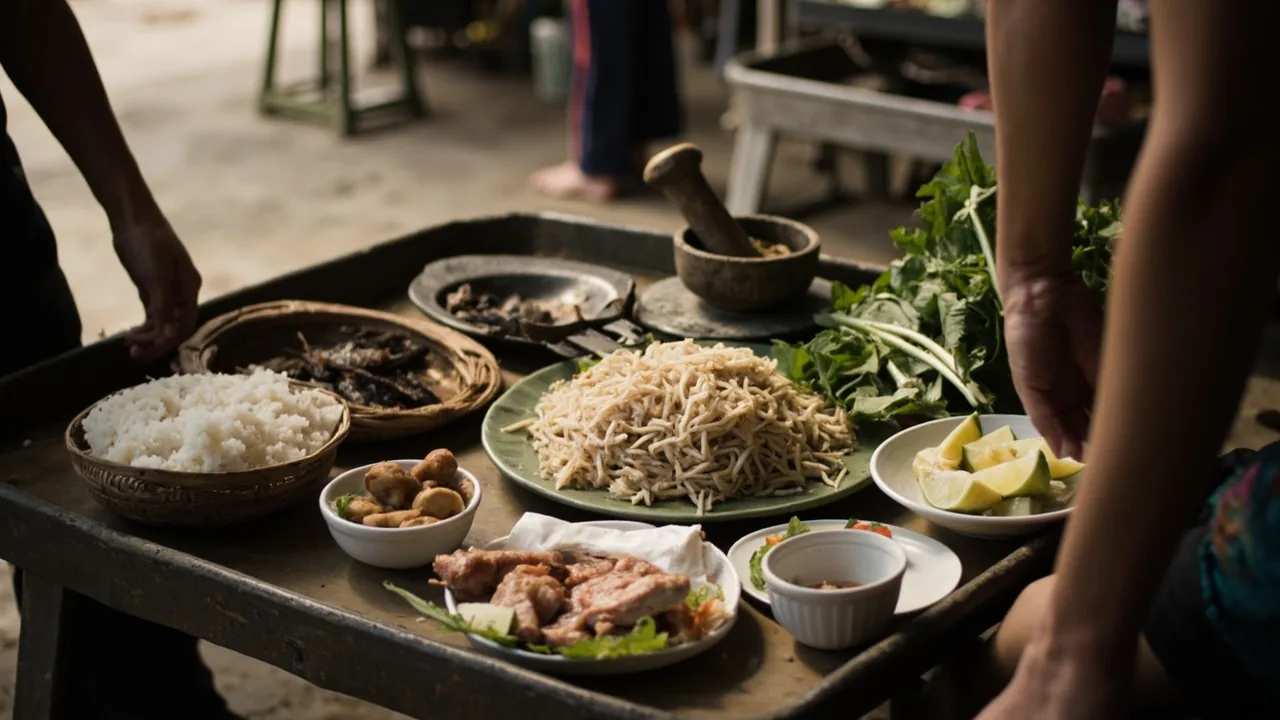
Lao cuisine sits in the same family as Thai and Isan food from northeastern Thailand, but it’s lighter on sugar, heavier on herbs, and built around sticky rice (khao niao) as the centre of every meal. The flavour profile leans on fish sauce (nam pa), shrimp paste (kapi), padaek (fermented fish), plus loads of fresh herbs like dill, sawtooth coriander, and holy basil. Pork is the dominant meat, beef shows up in the north, and river fish rules the Mekong-side menus. Planning the wider region? Our Southeast Asia backpacking hub covers the full multi-country route.
For vegetarians, the hidden ingredients are the real problem. A “vegetable soup” in Laos often starts with pork broth or dried shrimp. A “mushroom laap” sometimes still includes padek. Even tomato-based dips can have dried shrimp blended in. Travellers report that “vegetarian” without specifics usually means “less meat, not no meat.” If you’re strict, you say “jay” (the Thai word that has spread across the Mekong region and is understood in Lao restaurants) and you specify “no fish sauce, no oyster sauce, no egg.”
Local attitudes toward vegetarianism are more relaxed than in India. Buddhism here is Theravada, and most monks eat before noon, so the tradition of strict vegetarianism for the laity is weak. People will understand “no meat” but may not think twice about fish sauce or chicken stock. Be specific.
Key Phrases in Local Script
| English Phrase | What it Means | Local Script | Pronunciation |
|---|---|---|---|
| I am vegetarian | No meat, no fish, no seafood | ຂ�້ອຍກິນຜັກ (say “Jay”) | Khoy kin phak / “Jay” |
| No fish sauce | The biggest hidden meat source | ບໍ່ໃສ່ນ້ຳປາ | Bo sai nam pa |
| No egg | Important for strict veg | ບໍ່ໃສ່ໄຂ່ | Bo sai khai |
| No shrimp paste | Often in chilli dips | ບໍ່ໃສ່ກະປິ | Bo saikapi |
| Sticky rice, please | The Lao staple | ຂອຍໜຽວ | Khao niao |
| Without meat or seafood | Belt-and-suspenders clarification | ບໍ່ໃສ່ຊີ້ນ ບໍ່ໃສ່ປາ | Bo sai sin, bo sai pa |
The Thai “Jay” travels well. Most Lao restaurant owners in tourist towns (Luang Prabang, Vientiane’s city centre, Vang Vieng) have lived or worked in Thailand and will recognise it. In rural spots and Pakse, fall back to “kin phak” (eat vegetables) and be ready to point at things.
Safe Local Street Food Dishes
These are the Lao dishes that are either vegetarian or easy to make veg with one or two phrase changes.
Laap (ລາບ) is the national dish and a must-try even if you order the mushroom version. Traditional laap uses minced meat (beef, pork, duck, or fish) tossed with lime, chilli, toasted rice powder, shallots, and a fistful of fresh herbs. The mushroom laap (laap hed) is widely available and one of the best veg bets in the country. Ask for it without fish sauce (“bo sai nam pa”). Travellers report it’s one of the most flavour-packed veg dishes in Southeast Asia. Price: ₹108 (~25,000 LAK or ~$1.12).
Khao niao (sticky rice) is non-negotiable. Every meal centres on it. You get a bamboo basket (tip khao) and you tear off a piece with your right hand, pinch it into a small ball, and dip. Eaten alone it’s vegan; eaten with most dishes it becomes the vehicle for fish sauce. Always ask what the accompaniment contains. Price: ₹22-₹43 (~5,000-10,000 LAK or ~$0.22-$0.45) as a side.
Jaew (ແຈ່ວ) are the chilli dips served with sticky rice. Jaew mak len (tomato-chilli) and jaew bong (sweet-savoury pork dip) are the classics. The tomato version is often safe for vegetarians if made without shrimp paste, but ask. Jaew het (mushroom dip) is the fully veg option. Price: ₹22-₹65 (~5,000-15,000 LAK or ~$0.22-$0.67).
Khao jee (ເຂົ້າຈີ່) is the Lao baguette sandwich, a French colonial legacy. Baguettes stuffed with pâté, pickled vegetables, and herbs are everywhere at breakfast. Skip the pâté and ask for egg only (“sai khai”) or just veg. The bread itself is excellent, crusty, fresh-baked. Price: ₹43-₹86 (~10,000-20,000 LAK or ~$0.45-$0.90).
Khao sin (ເຂົ້າຊິນ) are grilled meat skewers sold at evening markets. The chicken and pork versions are non-starter for vegetarians, but vendors usually have grilled vegetables or sticky rice wrapped in banana leaves alongside. Stick to those, or use the skewers as a photo op only. Price: ₹65 (~15,000 LAK or ~$0.67) per skewer.
Or lam (ໜອມ) is a Luang Prabang specialty stew, dark, earthy, slightly bitter from the sakhan vine. The traditional version includes deer or pork. Vegetarian orlam is rare but exists. Worth trying if you see it.
For more local dish detail, the famous food in Laos piece goes deeper on regional variations.
Where to Eat: Real Local Spots
Laos is small enough that almost every traveller ends up in the same handful of towns, so I’ve grouped recommendations by where you’ll be.
Vientiane
Manda de Laos is the upscale Lao experience, set on the Mekong riverside with refined takes on classic dishes. The mushroom laap here is consistently good and the staff understands vegetarian requests. Not a backpacker budget, but worth one splurge meal. Expect to pay ₹259-₹432 (~60,000-100,000 LAK or ~$2.69-$4.48) per dish. Book Manda de Laos tour
PVO Vietnamese Food is a Vientiane sleeper, Vietnamese-run, fresh herbs piled high, pho and rice bowls that work for vegetarians when you ask for no meat and no fish sauce. Prices are gentle (₹108-₹173 (~25,000-40,000 LAK or ~$1.12-$1.79) per bowl) and the menu has enough variety that you’ll come back twice.
Luang Prabang
Ma Maison Restaurant sits in the old town and is the most reliable mid-range Lao spot for a first proper meal. The menu walks you through laap, orlam, and mok (steamed fish in banana leaf), and they handle vegetarian requests without confusion.
LuLaLao Shokudo is the unexpected one. Japanese and Lao fusion sounds gimmicky but the coffee is genuinely some of the best in Luang Prabang (Bolaven Plateau beans, grown on the same farms that supply many Lao and Vietnamese cafés). Good for a slow breakfast with a vegetarian-friendly menu.
Pakse and the South
Champa Hom Restaurant is the kind of small local place where the menu is short and the food is what the family eats. Order the morning glory stir-fried with garlic (no oyster sauce), the sticky rice, and ask what’s vegetarian that day.
Akhin Restaurant in Pakse has a near-perfect 4.9 rating from travellers and serves straightforward Lao food in a simple setting. The mushroom laap and the eggplant dishes are reliable veg choices.
Nong Khiaw and the North
SASSYS BAR & RESTAURANT in Nong Khiaw is the go-to for trekkers. Riverside seating, solid vegetarian laap, and staff used to foreign requests.
When You Need a Dal-Chawal Fix
For Indian travellers craving familiar food or strict-veg safety, these spots cover Laos’s main hubs:
Vegetarian Food (4.9) is the veg-forward option, mostly vegan, mostly Lao. Good when you want to try local dishes in a fully plant-based kitchen.
My Kitchen Indian Authentic Food (4.9) lives up to its name for North Indian curries and generous portions. Expect Punjabi-style cooking.
M&M Restaurant Indian Halal Food (Pakse, with a Luang Prabang branch) is the long-running favourite for traditional Punjabi halal cuisine with a warm atmosphere.
Jamil Zahid Indian and Pakistani Food in Vientiane is family-run, basic setting, and travellers highlight the curries. Budget around ₹216-₹432 (~50,000-100,000 LAK or ~$2.24-$4.48) per person.
Baba Restaurant offers North Indian and Pakistani dishes in a casual setting.
Chennai Restaurant in Luang Prabang blends South Indian, Lao, and Malaysian halal dishes for something different.
For a deeper dive on Indian restaurants across the country, indian restaurants in Laos has city-by-city coverage.
Getting Connected
You’ll want Google Maps and Google Translate working the moment you land. For translation, the Lao script is tricky to read even when you know the language, and a phrasebook only gets you so far. Pick up a local SIM at the airport (Unitel and Lao Telecom have counters before customs) or skip the queue entirely with a travel eSIM, which lets you activate before you board the flight from Delhi.
Food Safety & Hygiene
Laos has a quieter food-safety reputation than Thailand, mostly because tourist food routes are smaller and less standardised. Most travellers eat well, but the standard precautions still apply.
Bottled water only. Tap water is not drinkable anywhere in Laos. Bottled water is cheap (₹17 (~4,000 LAK or ~$0.18) for 500ml) and available at every minimart. Refuse ice at small roadside stalls unless you can see it coming from a sealed bag.
Eat where locals eat. A busy stall with high turnover is always safer than an empty one. The food is fresher and the pot has been boiling all day. Markets at peak hours (lunch, early evening) are your friend.
Stick to cooked food for your first 48 hours. Your gut needs to adjust to local bacteria, the cooking oils, and the spices. Save the raw papaya salad and raw vegetables for day three onwards.
Watch the meat. Pork and chicken should be fully cooked. River fish in the Mekong is generally safe when well-cooked but skip the raw or lightly cured preparations. Travellers report the most stomach issues from undercooked meat at low-end spots.
Wash your hands or carry sanitiser. Lao dining is hands-on with sticky rice, so you’ll be eating with your right hand at most traditional meals. Hand sanitiser before and after is non-optional.
Peel your own fruit. Bananas, mangoes, dragon fruit, watermelon sold on the street are all safe if you wash the outside and peel yourself.
Common Food Mistakes Indians Make
Mistake 1: Assuming “vegetable soup” means veg. A clear broth with pumpkin, tomato, or mushroom still has pork bones or dried shrimp in it 80% of the time. Always ask “bo sai nam pa, bo sai sin” (no fish sauce, no meat) and watch for the nod.
Mistake 2: Ordering “no meat” but accepting fish sauce. This is the single biggest reason Indian travellers think they had a veg meal and then feel off the next day. Fish sauce (nam pa) is in almost every savoury Lao dish. Specify “bo sai nam pa” every time.
Mistake 3: Eating sticky rice with bare hands when you don’t know what’s in the dip. The basket of sticky rice is safe. The dips (jaew) are where the fish sauce, shrimp paste, and pork lurk. Confirm each dip before you scoop.
Mistake 4: Drinking the “fresh juice” at the morning market. The fruit, the sugar, the ice, the glass. Four risk points. Stick to bottled drinks or smoothies from sit-down cafés where the ice is commercial.
Mistake 5: Skipping Lao food entirely because you “can just eat Indian every meal.” You can. But you’ll miss laap, orlam, khao niao with jaew bong, and the morning khao jee baguette, which are some of the best eating experiences in Southeast Asia. Two Indian meals a day plus one Lao adventure meal is the right balance for most Indian backpackers.
FAQ
Is there Jain food available in Laos?
No dedicated Jain restaurants. Onion and garlic are everywhere in Lao cooking, and there’s no “no onion no garlic” tradition in Lao cuisine. Stick to the Indian restaurants for Jain, and at Lao spots order plain sticky rice, plain baguette, fried rice without egg (khao pad), or fruit. Bring your own snacks from India if you’re strict.
Can I find vegetarian options in Luang Prabang easily?
Yes. Luang Prabang is the most vegetarian-friendly town in Laos. Manda de Laos, Ma Maison, and the night market all handle veg requests. The morning alms-giving ceremony (tak bat) means most monks eat before noon, so breakfast in town is geared around simpler foods.
Is Beerlao worth trying?
Yes. It’s a clean, light lager, brewed in Laos from German and Lao recipes. The bottle (₹43 (~10,000 LAK or ~$0.45)) is everywhere. Drink it with sticky rice and laap, the way locals do.
How much should I budget per day for food in Laos?
Budget backpacker: ₹216-₹345 (~50,000-80,000 LAK or ~$2.24-$3.58) a day (street food, khao jee, one Indian meal). Mid-range: ₹432-₹647 (~100,000-150,000 LAK or ~$4.48-$6.71) a day (café breakfast, Lao restaurant lunch, Indian or nicer Lao dinner). For detailed daily costs, the Laos budget guide has the full breakdown.
Is street food safe at the Luang Prabang night market?
Mostly yes. The night market on the main street has standardised stalls with high turnover, and the food is cooked to order. Avoid pre-cut fruit and pre-made salads sitting out. Stick to grilled skewers, noodle soups boiling in the pot, and the khao jee baguettes.
Is the food in Vang Vieng different from Vientiane?
Vientiane has more variety and more Vietnamese influence (because of the proximity). Vang Vieng leans heavily on traveller comfort food, with pizzas, burgers, and banana pancakes on most menus, but the Lao spots still serve proper laap and sticky rice. Try the local sausage (sai oua) if you eat meat.
Subodh’s Take
Eat Lao food at least once a day. The mushroom laap, the sticky rice with mushroom jaew, the khao jee baguette with egg, the morning glory stir-fried without oyster sauce. These are some of the most distinctive meals in Southeast Asia, and you’ll never get them in a Thai or Vietnamese restaurant back home. Learn “bo sai nam pa,” keep a phrasebook screenshot on your phone, and trust the busy stalls. You’ll eat better than 90% of the tourists who default to pad thai every night. For a slow-day trip option between meals, the Vang Vieng piece has the local cafés worth stopping at.
For more on what Lao food costs in 2026, from market kip to restaurant bills, see the Laos food prices guide.
