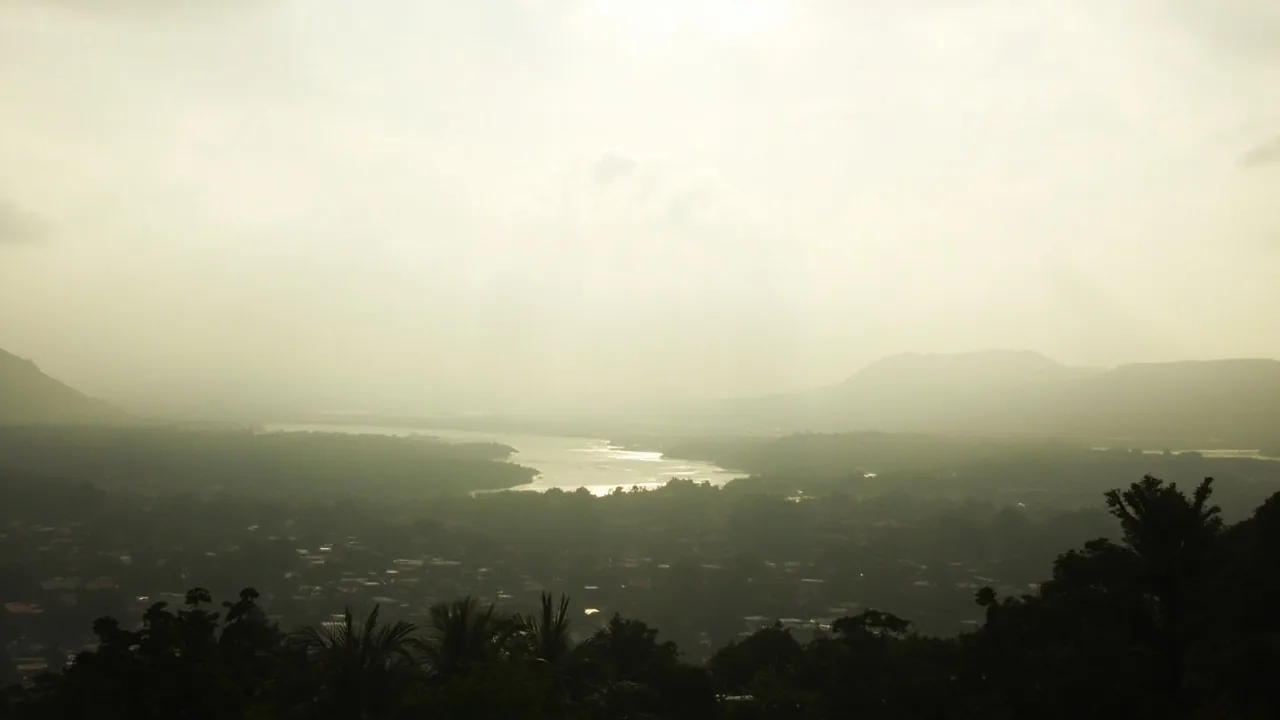
Luang Prabang Weather by Month (2026): When to Go, When to Skip
Luang Prabang’s weather comes in three flavours: cool dry (Nov-Feb), hot dry (Mar-Apr), and wet monsoon (May-Oct). Most Indian backpackers should aim for November through February, accept March and April if heat is bearable, and skip June to August.
Quick Answers
| What | Answer | Price (INR) |
|---|---|---|
| Best months | November, December, January, February | — |
| Worst months | June, July, August (rain) plus March, April (heat) | — |
| Coolest month | December (down to 13-15°C at night) | — |
| Hottest month | April (36-39°C daytime) | — |
| Wettest month | August (around 280 mm) | — |
| Rainy season | May to October | — |
| Cheapest window | Late September to early November | — |
| Peak festival | Pi Mai (Lao New Year), mid-April | — |
| Mekong slow boat runnable | November to May (low water + calm) | — |
| Visited by Indian backpackers most | December and January | — |
Luang Prabang’s Climate, in Plain English
Luang Prabang sits in northern Laos, on a peninsula where the Mekong and Nam Khan rivers meet. It’s a small bowl of low mountains, which traps heat in summer and pulls cool air down the Mekong valley in winter. You may also find Ngapali Temple Etiquette Guide How to Respect Local Customs At Pagodas Near the Beach useful for this trip.
You only need to understand three seasons:
Cool dry (Nov-Feb). Daytime highs of 25-28°C, nights dropping to 13-15°C in December and January. Almost no rain. Clear skies, sunsets on Phousi Hill that earn the climb, and the Mekong turns a glassy brown. This is the postcard window. See also: Southeast Asia Trip Budget Breakdown By City How Much a Backpacker Spends in.
Hot dry (Mar-Apr). Temperatures climb to 36-39°C in April. Humidity stays under 50%, so it bakes rather than steams. The rivers drop to their lowest level. Pi Mai (Lao New Year) happens in mid-April and involves three days of water-throwing, which sounds fun until you have a 6 AM flight the next day and your bag is soaked.
Wet monsoon (May-Oct). Rain falls almost every afternoon, sometimes for hours. The rivers rise, turning the Mekong from brown to chocolate. Trails get muddy. Mornings are often clear, so you can still cycle or kayak early, but afternoons cancel half your plans. Peak rainfall is August. By late September it tapers.
The catch for Indian travellers: the cool dry window is also the peak tourist window, so prices rise and hostels fill. March-April and late September are the sweet spots if budget matters more than perfect weather.
Month-by-Month Breakdown
January
Cool dry, high season. Highs around 27°C, lows around 14°C. Rain: near zero. The Mekong is low and calm, the slow boat from Huay Xai runs reliably. Pack a light jumper for evenings. Hostels fill 2-3 weeks ahead for Christmas-New Year stragglers.
Book by: early December for New Year week.
February
Cool dry, still high season but slightly cooler crowds after Chinese New Year. Same temperature profile as January. Wat Sibounheuang is at its photogenic best under blue-sky mornings.
Indians visiting in Feb: this is the safest, easiest, most-recommended month.
March
Transitions to hot dry. Highs climb to 32-34°C by late March. Humidity still low. Mornings and evenings are fine; midday feels like Delhi in summer. Slow boat services sometimes start reporting low-water issues by late March, though they usually run through April.
April
Hot dry, peak heat. Daytime 36-39°C from late morning to mid-afternoon. Nights around 22°C. Rain is rare until the end of the month. Pi Mai (Lao New Year) hits 14-16 April: the whole town throws water at each other for three days. It’s the most fun you’ll have in Laos and the worst time to bring a phone or a paper book.
Skip April if: you hate heat, or you’re moving on to outdoor treks.
May
Wet monsoon starts. Late May sees the first real storms, usually afternoon thunderstorms that clear in an hour or two. Highs drop back to 32°C but humidity rises to 70-80%. The river starts climbing. Slow boat from Huay Xai becomes unreliable for backpackers planning it late in the month.
June
Wet. Highs 30-32°C, lows 23-25°C, humidity 80%+. Rain every 2-3 days, often heavy. Mornings still usable. Trails around Kuang Si Falls get slippery. Hostel prices drop.
July
Wet. Same pattern, slightly less rain than June in some years, more in others. The Nam Khan river is high enough that the kayaking tours cut their routes short. Elephant Conservation Center office visits still run but transfers take longer on muddy roads.
August
Wettest month, around 280 mm of rain historically. Expect at least one solid day where it rains from morning to evening. Temperatures are kind: 28-30°C, low 23°C. The good news: you’ll have the night market almost to yourself.
The Living Land Company farm tours run rain or shine, and being on a working rice paddy in the rain is a specific kind of joy. Check The Living Land Company availability.
September
Wet, but tapering. Rain frequency drops in the second half. Temperatures stay pleasant. This is the cheapest month in Luang Prabang for a reason: rivers are high, slow boat is off, and afternoon storms still hit. Trade-off: dorm beds in tour-favourite hostels are empty, guesthouses negotiate.
October
Transitions out of monsoon. First week can still be wet; last week is usually dry. Temperatures 28-30°C, humidity easing. By the end of October the rivers drop and the slow boat is bookable again for November departures.
October is the sleeper pick: cheap, mostly dry by month-end, low crowds, and you arrive before the November peak starts.
November
Cool dry returns. Highs around 28°C, lows around 18°C. Rain almost zero. The whole town exhales. Book hostels 2-3 weeks ahead for the best spots.
December
Peak. Highs 26-28°C, lows 14-16°C. Fog over the Mekong on some mornings, burning off by 9 AM. Christmas and New Year fill hostels and double prices. Mornings need a jumper; afternoons are T-shirt weather.
| Month | High °C | Low °C | Rain | Verdict |
|---|---|---|---|---|
| Jan | 27 | 14 | Dry | Best |
| Feb | 29 | 16 | Dry | Best |
| Mar | 32 | 19 | Dry | OK if heat-tolerant |
| Apr | 37 | 23 | Dry | Heat + Pi Mai |
| May | 32 | 23 | Building wet | Skip |
| Jun | 31 | 24 | Wet | Skip |
| Jul | 30 | 24 | Wet | Skip |
| Aug | 30 | 23 | Wettest | Skip |
| Sep | 31 | 23 | Tapering wet | Cheap |
| Oct | 29 | 21 | Easing | Sleeper pick |
| Nov | 28 | 18 | Dry | Best |
| Dec | 27 | 14 | Dry | Peak |
Festivals That Affect Your Timing
Pi Mai / Lao New Year (14-16 April). Three days of water fights. Everything is closed on 15 April. The morning alms-giving ceremony (tak bat) is paused for those three days. Book accommodation 2-3 months ahead.
Boun Suang Heua / Boat Racing Festival (September, full moon). Longboat races on the Nam Khan river, night markets, and the town being noticeably busier than usual.
That Luang Festival (late October to early November). Held at Wat That Luang, the festival involves evening processions, candle-lit offerings, and a riverside ceremony. Best visited in late October, which lines up nicely with the weather turning dry.
For the full regional picture, see the Southeast Asia festival calendar.
What to Pack, by Season
November to February (cool dry):
- Light jumper or fleece for evenings (it gets properly cold at night in December)
- Long trousers for temple visits and early-morning alms-giving
- One pair of quick-dry trousers for the riverside
- Sunglasses, sunscreen, hat
March to April (hot dry):
- Light, loose, light-coloured clothes only
- A wide-brim hat you wear
- Refillable water bottle: 1.5 L per day minimum
- A sarong for Pi Mai (you will get soaked)
May to October (wet):
- One proper rain jacket (not a ₹200 (~$2.08) street-market poncho, it tears)
- Quick-dry everything; cotton stays wet for hours
- Dry bag for phone and wallet on boat days
- Sandals you can wear through mud
- Mosquito repellent with DEET, especially for evenings
Getting Connected (SIM and eSIM)
You’ll want data for Grab, Google Maps, and the slow-boat operator’s WhatsApp updates.
Unitel tourist SIM, 15 GB: ₹107 (~25,000 LAK or ~$1.11) at any Unitel shop in town. Ask for the “tourist pack.” They’ll set it up in five minutes and your passport stays at the counter for registration.
eSIM alternative: If you don’t want to swap physical SIMs or queue at a shop, a Nomad eSIM gets you data before you land and works across Laos and the rest of your SEA loop.
Both options cover the four-country Bananarchy route (Thailand, Laos, Vietnam, Cambodia) cleanly.
Getting Around and In
Tuk-tuks within town are ₹215-₹430 (~50,000-100,000 LAK or ~$2.23-$4.46) depending on distance and your haggling mood. Drivers at the airport quote higher; walk out to the main road and flag one for half.
The classic arrival is the Mekong slow boat from Huay Xai: ₹1,074-₹1,331 (~250,000-310,000 LAK or ~$11.15-$13.82) for the two-day journey with overnight in Pak Beng. Book it at the Huay Xai pier the day before, or ahead online: Book on 12go.
The alternative is the VIP bus from Vientiane, around ₹644 (~150,000 LAK or ~$6.69) and 9-10 hours. It climbs through mountains, the AC is aggressive, bring a jumper.
For getting to Luang Prabang from Vang Vieng, the bus is your only realistic option: ₹430-₹644 (~100,000-150,000 LAK or ~$4.46-$6.69), around 7 hours. Book on 12go.
Where to Eat (and When to Skip the Hotel Breakfast)
Luang Prabang has a stronger food scene than its size suggests. The night market on Sisavangvong Road is a starter, not the main meal.
For local Lao food:
- Redbul Restaurant & Bar in the city centre does the spicy laap ( minced meat salad) properly, with sticky rice in the bamboo basket. Live traditional music most evenings. Order the laap and a Beerlao.
- Two Little Birds Cafe on the riverside has Lao-Western fusion and the coconut pancakes are a real draw for breakfast or a slow afternoon.
- Breeze Bar By Best cafe sits up on a hill overlooking the town. Lao coffee-infused cocktails, breezy terrace, and a sunset view. Go for one drink at golden hour, not a full meal.
For Indian food (when you need dal-chawal):
- M&M Restaurant Indian Halal Food serves Punjabi halal. Dal makhani, butter chicken, the works. The kitchen is small so wait times can run 20-30 minutes at peak.
- Fathima Indian & Malaysian Halal Restaurant does a chicken rogan josh with paratha for under ₹482 (~5 USD) per person. Clean, casual, and closer to South Indian spice levels than M&M.
- Chennai Restaurant Indian, Lao and Malaysian Halal Food covers South Indian breakfasts (idli, dosa) when you’re missing a Madras morning.
No hostel kitchens here for cooking your own veg. If you’re strict veg, plan one Indian meal a day minimum, supplement with fruit and bread from the morning market.
Safety and Health Notes by Season
Cool dry (Nov-Feb): Lowest risk. Tap water is still not safe (use bottled or a SteriPen). Mosquitoes minimal.
Hot dry (Mar-Apr): Heat exhaustion is real. Midday sun between 11 AM and 3 PM will cook you. Reapply sunscreen every two hours. The alms-giving ceremony happens around 6 AM; bring water.
Wet (May-Oct): Mosquitoes spike. Dengue is present in Laos year-round but rises in wet months. Long sleeves at dusk, DEET repellent, and if you spike a fever within 14 days of being bitten, see a clinic the same day. Trails around Kuang Si Falls and the Living Land rice paddy get slippery, wear shoes with grip, not flip-flops.
River safety: The slow boat is operated by multiple companies and standards vary. Most travellers report the journey is uneventful, but you board without life jackets in some boats. If that bothers you, ask at the pier for boats carrying jackets, or fly from Vientiane instead.
For current safety context, check the MEA travel advisory for Laos on mea.gov.in before you fly, and recheck the day before departure.
What Most Guides Don’t Tell You
The rivers shape your trip more than the rain. Luang Prabang’s “rainy season” isn’t the problem; the slow boat from Huay Xai stops running for safety reasons once water levels shift in May-June, then returns in November. If the river journey is on your list, that window matters more than the calendar.
Pi Mai is fun, but book 3 months out. Every other guide says “book accommodation ahead.” Nobody says how far. Three months is realistic for a private room during 14-16 April. Hostels fill 4-6 weeks ahead.
December cold is real cold. Northern Laos gets cold snaps. December and January nights can drop to 12°C, and your hostel may not have heating. Pack a fleece.
The 13°C nights in December are a feature, not a bug. Morning fog over the Mekong at 6 AM, burning off by 9 AM, is the most-photographed thing in Luang Prabang for a reason. Bring a jumper, wake up early.
Subodh’s Take
Most Indian travellers should book November to February, accept the peak-season prices, and stop overthinking it. If budget matters more than perfect weather, late September to late October is the sleeper window: same dry skies by month-end, half the tourists, hostels empty, and you can walk into Phousi Hill at sunrise without a queue. Skip June to August unless you’ve got a reason to be there, and treat March and April as “only if you can handle Delhi-summer heat.” The Mekong slow boat is the one constraint that bends every other decision: book it for December or January and the rest of the trip sorts itself.
FAQ
Is Luang Prabang safe to visit in the rainy season? Yes. Towns are walkable, food is fine, the night market still runs. Trails and boat routes are the things that change, not safety. Check the MEA travel advisory at mea.gov.in the week before you fly.
What month has the best weather in Luang Prabang? December and January. Daytime 26-28°C, nights 13-15°C, no rain, calm rivers, and clear sunsets. The trade-off is peak prices and full hostels.
When is monsoon season in Luang Prabang? May to October, peaking in August. Mornings are usually clear; afternoons bring heavy rain that often clears in 1-2 hours.
Can I take the slow boat from Huay Xai in July or August? Usually not. Operators pause or reroute during peak high-water months. November to May is the safe window for the classic two-day Mekong crossing.
Should I visit Luang Prabang in April? Only if you’re going for Pi Mai. Otherwise April is the hottest month and you’ll burn through sunscreen and patience. Visit in November instead.
What should I pack for December? Light daytime clothes, one fleece or jumper for evenings, long trousers for temple visits, sunscreen, sunglasses, and a thin rain layer in case of the rare December drizzle. Sandals for day, shoes with grip for Kuang Si Falls and Phousi Hill steps.
