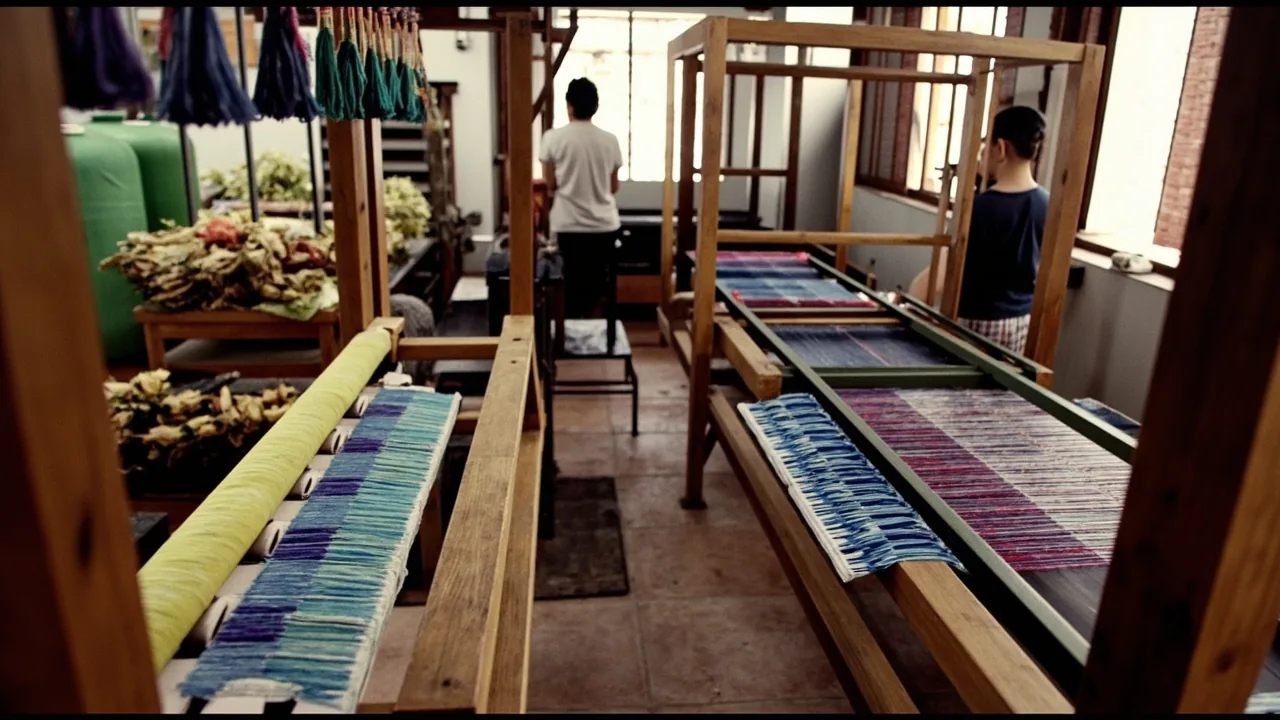
Textile Workshops in Luang Prabang: Weaving, Dyeing & Batik Experiences on the Mekong
Textile workshops in Luang Prabang fall into two clear buckets: half-day weaving (1 to 3 hours, ₹644-₹1,074 (~150,000-250,000 LAK or ~$6.69-$11.15)) and full-day natural dyeing and batik (6 to 8 hours, ₹1,503-₹2,362 (~350,000-550,000 LAK or ~$15.60-$24.52)). Pick the dyeing session if you’ve got a full free day, it’s the single best craft class in mainland Southeast Asia at the price. Pick the weaving session if you’re passing through for a night or two and want a souvenir you’ll wear. For related planning, see our guide on Sea Backpacking Hub.
Operators have run roughly the same workshops in Luang Prabang for years, and the landscape has barely changed since the slow boat reopened for tourists. Most operators cluster either in the old town peninsula or just across the Mekong in Ban Xieng Khong village, 25 to 30 minutes by tuk-tuk from the main street. A few sit between the two, near Phousi Hill. Travellers report that the workshop scene stays much the same across seasons, so off-peak visits still find the same core programmes open.
What Is a Luang Prabang Textile Workshop?
A textile workshop in Luang Prabang is a small-group class taught by a Lao weaving family or a heritage-focused social enterprise. Sessions cover traditional Hmong and Tai Lue techniques on floor looms and backstrap looms, and on full-day programmes, natural dye extraction (indigo, jackfruit wood, morinda) and wax-resist batik. Classes range from two-hour sampler sessions to multi-day apprenticeships.
Quick Answers
| What | Answer | Price (INR) |
|---|---|---|
| Half-day weaving class | ₹644-₹1,074 (~150,000-250,000 LAK or ~$6.69-$11.15) | , |
| Full-day dyeing and batik | ₹1,503-₹2,362 (~350,000-550,000 LAK or ~$15.60-$24.52) | , |
| Group size | 1 to 6 students per session | , |
| Languages taught | English, Lao, some Thai | , |
| What you keep | 1 finished piece (scarf, bag, or panel) | , |
| Booking | Walk-in or WhatsApp 24 hours ahead | , |
| Payment | Cash (LAK or Thai baht) is king | , |
| Where | Old town or Ban Xieng Khong across the river | , |
| Best season | Nov to Feb, dry and cool | , |
Choosing Your Workshop: Weaving vs Dyeing/Batik
Pick half-day weaving if…
You’re in Luang Prabang for one or two nights. A half-day weaving class runs 2 to 3 hours, costs ₹644-₹1,074 (~150,000-250,000 LAK or ~$6.69-$11.15), and teaches you the basic warp-and-weft on a floor loom. You’ll make a small scarf or a coin purse, and you’ll leave understanding why Lao silk costs what it costs. Most weaving classes sit inside the old town, a 10-minute walk from any hostel in the peninsula. The class is paced for tourists, not artisans, so don’t expect to walk out threading your own loom.
Pick full-day dyeing and batik if…
You have a full free day and want the real thing. The dyeing and batik workshops in Luang Prabang run 6 to 8 hours including lunch, cost ₹1,503-₹2,362 (~350,000-550,000 LAK or ~$15.60-$24.52), and cover indigo vat preparation, mordanting, wax-resist drawing, and two or three dye baths. You finish with a scarf or a 50x50 cm panel in a colour you’ll never replicate in a screen-printed knockoff. The longer programmes are concentrated in Ban Xieng Khong, across the Mekong, which is where the natural-dye knowledge still lives.
Subodh’s Pro Tip: The dyeing day is physically harder than it sounds. You’ll be standing at a vat for 90 minutes at a stretch, and indigo stains everything it touches. Wear closed-toe shoes you don’t care about, and bring a bandana for the wax step.
Step-by-Step: How to Book and What Happens
Step 1: Decide on duration (do this before you land)
If your Luang Prabang itinerary is fixed, work backwards. The full-day dyeing programme needs 8 clear hours including pickup, lunch, and the tuk-tuk back. The half-day weaving fits inside any morning or afternoon.
Step 2: Book at least 48 hours ahead
Walk-ins work in November to February. In March to May (burning season) and July to September (rainy season), small operators prefer advance notice so they can batch students. Most workshops take a WhatsApp message or a walk-in the day before. Pay a 30 to 50 percent deposit on arrival in cash.
Step 3: Confirm what’s included
Always ask four questions before paying the deposit:
- Is the loom/dye material included in the price, or do you pay extra for silk thread?
- Is lunch included (the full-day programmes almost always include it, but confirm)?
- Is tuk-tuk pickup from your guesthouse included, or do you find your own way to Ban Xieng Khong?
- Do you keep the finished piece, or is it pooled for the cooperative?
A no on any of these doesn’t mean it’s a bad operator, it just means the price on the menu is the base, not the all-in.
Step 4: Show up with the right clothes
Indigo dye stays in fabric for weeks. Wear dark colours you don’t love, closed-toe shoes, and bring a hair tie. Most operators provide aprons, but aprons don’t save your sleeves.
Step 5: Pay the balance in LAK
Workshops quote in LAK or Thai baht and sometimes accept both at a 1:250 rough rate. Don’t pay in USD, the rate is bad and you’ll get small dirty bills. If you’re carrying baht from the slow boat from Huay Xai, you’re already set.
Common Mistakes Indians Make
Mistake 1: Book the cheapest half-day and expect “the dyeing experience”
A ₹644 (~150,000 LAK or ~$6.69) class is weaving only. If you want indigo vats and wax batik, you need the full-day, full-price programme. Travellers report the disappointment of expecting a dye day and getting a scarf on a loom.
How to avoid: Read the operator’s menu line by line. “Weaving” and “Natural dyeing” are two different items. Don’t book whichever is cheaper.
Mistake 2: Pay the deposit on a card and assume the balance works the same way
Laos is still mostly cash. Some workshops accept card for the deposit via Wise or a forex card, but the balance, especially for the dyeing programme, is almost always LAK cash on the day. Travellers who’ve loaded everything onto a forex card have walked out to find an ATM queue.
How to avoid: Carry ₹2,577 (~600,000 LAK or ~$26.75) in cash for a full-day booking, or confirm card acceptance for the full amount in writing before you show up.
Mistake 3: Book for the wrong season
The dyeing and batik workshop needs dry weather to set the wax properly. Heavy rain (June to September) means indoor-only programmes and rushed drying. Travellers who booked in peak monsoon have reported sessions shortened to 4 hours.
How to avoid: Book for November to February for the cleanest experience. If you’re visiting in shoulder season, call ahead and ask how they handle rain.
Mistake 4: Skip the village trip thinking it’s just a long ride
Ban Xieng Khong is a weaving village, not a tourist stop. The 25-minute tuk-tuk across the Mekong is part of the experience. Travellers who opted for an “old town only” workshop missed the village context that makes the dyeing programme meaningful.
How to avoid: If you choose the full-day, accept that you’ll be across the river. The village itself is worth the ride even without the class.
What Most Guides Don’t Tell You
The “bring your own silk” option is real
Some Luang Prabang textile workshops let you bring your own silk scarf (around ₹1,718-₹2,577 (~400,000-600,000 LAK or ~$17.83-$26.75) for a good one in the night market) and dye it on-site for a reduced fee (around ₹1,074-₹1,503 (~250,000-350,000 LAK or ~$11.15-$15.60) instead of the full programme). Travellers report this is the move if you’ve already shopped the night market and want to upgrade a piece.
The morning dyeing session is shorter than the afternoon one
Most full-day programmes run 9 am to 4 pm with a lunch break. A few operators offer a “morning only” version from 8 am to 12:30 pm at ₹1,074-₹1,503 (~250,000-350,000 LAK or ~$11.15-$15.60) that skips the wax and does one indigo dip plus one morinda dip. This is a fair compromise if you have a slow boat to Pak Beng to catch in the afternoon.
The cooperatives are honest about pricing
Social-enterprise workshops in Luang Prabang pay their weavers a published wage and show you the math. The price you pay is roughly: 40 to 50 percent to the weaver, 20 to 30 percent to materials, the rest to operations. If an operator can’t tell you what the weaver gets paid, you’re in a tour-trap version of the experience.
Safety Alert: When booking across the river in Ban Xieng Khong, confirm the tuk-tuk pickup is included or arrange your own return. The last public boat from the village to the peninsula leaves around 5:30 pm, and missing it means a 25-minute tuk-tuk detour in the dark.
Connectivity and Booking
You’ll need mobile data to message operators on WhatsApp, and most workshops confirm the day before via message. A local Lao SIM (Unitel or Lao Telecom) runs ₹129-₹215 (~30,000-50,000 LAK or ~$1.34-$2.23) for 7 days with 5 to 10 GB, sold at the airport or any 7-Eleven in town. For a single day of use, a Nomad eSIM with a Laos data pack is the cheaper option, with no SIM-card swap and no passport photocopy needed at the counter.
Getting There From Across the Mekong
If you’re staying in the old town peninsula, the weaving workshops are walking distance. If you’ve booked the full-day dyeing programme in Ban Xieng Khong, the operator will usually arrange tuk-tuk pickup (₹43-₹64 (~10,000-15,000 LAK or ~$0.45-$0.67) per person each way) or you can hire your own from the main road for ₹107-₹172 (~25,000-40,000 LAK or ~$1.11-$1.78). The short boat crossing from the peninsula to the village is ₹21 (~5,000 LAK or ~$0.22) per person if you skip the tuk-tuk.
Booking Platforms vs Walk-In
Walk-in works for half-day weaving. Full-day dyeing needs a WhatsApp booking 48 hours ahead because they batch students and prep dye vats the morning of. GetYourGuide lists a small selection of Luang Prabang textile experiences if you want a refundable card booking: textile workshops in Luang Prabang on GetYourGuide.
Where to Eat After
After a half-day weaving session, lunch in the old town is easy. After the full-day programme, the on-site village lunch is usually included, but if you’ve wandered back into the peninsula early, Two Little Birds Cafe does a Lao-Western fusion lunch with coconut pancakes and Lao coffee on the riverside, and Redbul Restaurant & Bar in the city centre does the classic laap and sticky rice with live traditional music in the evenings.
If you’ve spent the day dyeing and need a dal-chawal reset, M&M Restaurant Indian Halal Food in the old town serves Punjabi thalis, and Chennai Restaurant Indian, Lao & Malaysian Halal Food does South Indian dosas and biryani. Fathima Indian & Malaysian Halal Restaurant has chicken rogan josh with paratha for under ₹482 (~112,000 LAK or ~$5) per person, and the Indian food scene in Luang Prabang is one of the more reliable ones in Laos.
Sample Day Budget
| Item | Cost |
|---|---|
| Half-day weaving workshop | ₹859 (~200,000 LAK or ~$8.92) |
| Full-day dyeing and batik | ₹1,933 (~450,000 LAK or ~$20.06) |
| Tuk-tuk to Ban Xieng Khong (round trip) | ₹215 (~50,000 LAK or ~$2.23) |
| Lao SIM, 7 days | ₹172 (~40,000 LAK or ~$1.78) |
| Lunch on-site (if not included) | ₹258 (~60,000 LAK or ~$2.67) |
| Coffee afterwards | 25,000 LAK |
Subodh’s Take
If you’ve got one full day in Luang Prabang, do the full-day natural dyeing and batik. It is the single best craft experience in mainland Southeast Asia at this price point, the village setting makes it feel less like a class and more like an apprenticeship, and you walk out with a piece you’d pay ₹2,577-₹3,436 (~600,000-800,000 LAK or ~$26.75-$35.67) for in the night market. The half-day weaving is a fine Plan B if your schedule is tight, but the dye vat is the reason Luang Prabang is on the textile map.
FAQ
How much does a textile workshop in Luang Prabang cost?
Half-day weaving runs ₹644-₹1,074 (~150,000-250,000 LAK or ~$6.69-$11.15). Full-day dyeing and batik runs ₹1,503-₹2,362 (~350,000-550,000 LAK or ~$15.60-$24.52). Add ₹215-₹344 (~50,000-80,000 LAK or ~$2.23-$3.57) for tuk-tuk round-trip if you’re staying in the old town and doing the village programme.
Do I need to book a Luang Prabang weaving workshop in advance?
Walk-in works for weaving in peak season (November to February). Full-day dyeing needs 48 hours’ notice so the operator can prep vats. WhatsApp the day before if you’re not sure.
Are the dyeing workshops in Luang Prabang worth the price?
Travellers report yes, if you go with a social-enterprise operator who pays weavers fairly. You’ll spend 6 to 8 hours doing real work and leave with a unique piece. A cheap operator will hand you a pre-dyed scarf and call it a workshop.
What should I wear to a batik and dyeing workshop in Luang Prabang?
Dark clothes you don’t care about, closed-toe shoes, a hair tie, and bring a bandana. Indigo stains skin for days. Aprons are provided but don’t save sleeves.
Can I keep the piece I make?
Yes, every legitimate workshop includes the finished piece in the price. If the operator pools outputs, walk away, that’s a sign of a tourist-trap operation.
Is the workshop open in the rainy season?
Yes, but heavy rain (June to September) shortens outdoor dye sessions. Book for November to February for the cleanest experience.
