Luggage Storage in Southeast Asia: Backpacker Guide (2026)
Most Indian backpackers don’t think about luggage storage until they need it, and by then they’re stuck with a 40-litre pack at a 10 AM check-out and a 2 PM flight. Luggage storage in Southeast Asia is one of those things that works fine once you know the rules, but bites anyone who assumes. Hotels will hold bags, hostels almost always will, airports have dedicated counters, and there are a handful of private locker networks in the bigger cities. The trick is matching the right option to your situation, and packing so your bag is easy to find when it’s stacked with 80 others behind a hostel reception. For related planning, see our guide on Sea Backpacking Hub.
Quick Answers
| What | Answer | Price (INR) |
|---|---|---|
| Will hotels in SE Asia hold bags after check-out? | Yes, almost every hotel and hostel stores bags free for same-day guests, often for 24-72 hours | Free to ₹286 (~100 THB or ~$2.97) |
| Changi airport baggage storage cost | Left Baggage counters at Changi run ₹448-₹895 (~6-12 SGD or ~$4.65-$9.29) per bag per 24 hours depending on size, with discounts for longer stays | ~₹450 (~$4.67) to ~₹900 (~$9.34) |
| Are there private luggage locker networks? | Yes, in Bangkok, Singapore, KL and Hanoi: StowEasy, Lock&Store, Bounce, and Radical Storage at hotels and shops | ₹229-₹858 (~80-300 THB or ~$2.37-$8.90) per bag per day |
| Best way to identify your bag in storage? | Bright ribbon tied to the handle, a printed luggage tag with name and phone number, and a unique laundry strap or carabiner | One-time, under ₹200 (~$2.08) |
| Safest way to store valuables inside a stored bag? | Lock the main compartment with a TSA-approved padlock, keep passports and cards in a money belt on your body, and photograph the bag before storage | ₹600-₹1,500 (~$6.23-$15.57) for a good lock |
Why Luggage Storage Matters on a Long Route
A backpacking route through Thailand, Vietnam, Laos, and Cambodia involves at least one or two layover cities, a beach detour, a visa-run day, or a flight out at 6 AM. None of these match your check-in or check-out time. You will need somewhere to leave your bag for between four hours and four days, and the answer changes depending on whether you’re a paying guest at that hotel, a stranger walking in off the street, or a traveller between two transport legs.
The three most common situations:
- You’ve checked out of your hostel but your flight or sleeper bus is in 8-12 hours. This is the everyday case. Hostel reception will hold your bag for free in 95% of cases, even if you check out at 11 AM and don’t collect until 11 PM.
- You want to do a day trip from a hub city and don’t want to drag a 40-litre pack to the train station. Bangkok, Hanoi, and Singapore all have commercial luggage networks where you drop a bag at a shop or counter for a flat day rate.
- You’re transiting through a major airport (Changi, Bangkok Suvarnabhumi, Kuala Lumpur KLIA) and have a 6-12 hour layover before a separate flight. All three airports have official Left Baggage counters with 24-hour pricing tiers.
Hotel and Hostel Bag-Hold: Free, but With Rules
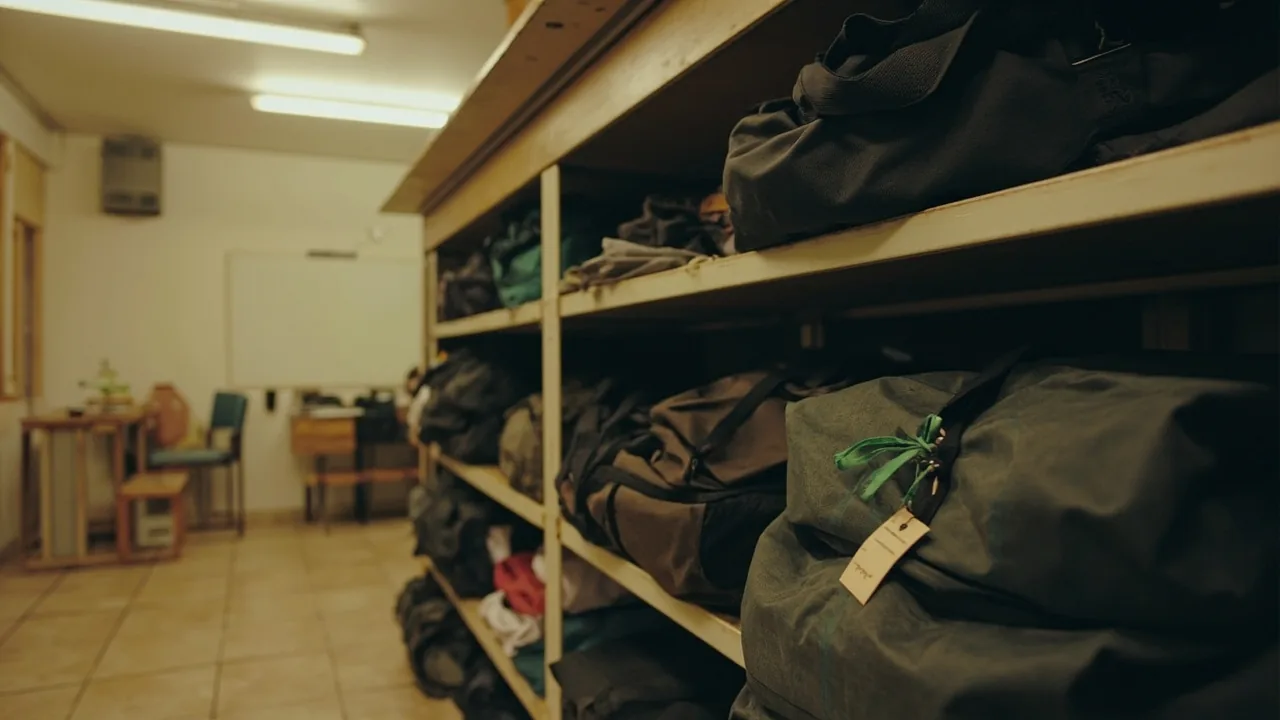
Hotel luggage storage southeast asia works on a simple logic: if you slept there last night, they will hold your bag. Most mid-range hotels and every hostel I’ve seen in Bangkok, Chiang Mai, Hoi An, Hanoi, Phnom Penh, and Luang Prabang keeps a dedicated storage shelf behind the front desk. You hand the bag over, they write your name in a register or stick a numbered tag on it, and you’re free.
Subodh’s Pro Tip: Take a photo of the bag with your phone the moment you hand it over. If anything goes missing, the photo is your evidence. Hostel staff are honest in my experience, but bags do get swapped when two black 40-litre packs are sitting next to each other and a tired traveller grabs the wrong one.
A few things to know about the free tier:
- Same-day storage is universal. Check out at 11, leave your bag, collect at 11 PM before your sleeper bus. No charge.
- Multi-day storage usually works too. Most hostels will hold a bag for 1-3 extra days if you paid for a multi-night stay, especially if you explain you’re coming back. Some charge a small fee (₹143-₹286 (~50-100 THB or ~$1.48-$2.97) per day) for stays over 48 hours.
- Hotels that you have never stayed at generally will not hold your bag. The free storage perk is for past, current, or future guests. If you walk into a random Bangkok hotel and ask “can I leave my pack here for 8 hours?”, the answer is almost always no. The exceptions are the expensive hotels (Four Seasons, Mandarin Oriental) which have a security-first policy and won’t store anything for non-guests.
- Lock the bag before handing it over. The bag goes into a shared room with 30-80 other bags. Use a small padlock on the main compartment; even a ₹300 (~$3.11) combination lock is enough to deter a casual rummage.
If you have valuables like a passport, laptop, or extra cash, do not put them in the stored bag. Keep them in a money belt or a small daypack you carry with you. The bag behind reception is fine for clothes and toiletries; it is not a safe.
Changi Airport Baggage Storage Cost and Other Major Hubs
Singapore Changi is the regional transit hub most Indians pass through, and it has the most organised luggage storage in Southeast Asia. The Left Baggage counters sit in each terminal (T1, T2, T3, T4) and operate 24 hours. Pricing is tiered by bag size and duration.
Changi airport baggage storage cost (as of mid-2026):
- Small item (laptop bag, handbag): ₹448 (~6 SGD or ~$4.65) for the first 24 hours
- Standard bag (suitcase or backpack up to medium size): ₹597 (~8 SGD or ~$6.19) for 24 hours
- Large item (oversize suitcase, surfboard, pram): ₹895 (~12 SGD or ~$9.29) for 24 hours
- Each additional 24-hour block: same rate (no surcharge)
- Stays of 5 days or more: discount applied at counter
Converted at current rates (1 SGD ≈ ₹74.76), the standard backpack rate works out to roughly ₹600 (~$6.23) per 24-hour block. It’s not cheap, but Changi is one of the few airports where the storage is genuinely open 24/7 and the staff tag your bag with a proper claim ticket.
Subodh’s Pro Tip: Changi has a free option most travellers miss. If you have a long layover (4+ hours) and want to leave the airport for a quick Singapore city trip, you can store your bag at Changi and take the MRT downtown, all without paying for luggage storage at all. Many of the airport terminals have free luggage lockers for transit passengers on shorter stays; check the Changi website for the current promo.
The other major hubs:
- Bangkok Suvarnabhumi (BKK): Left Baggage on Level 1 of the airport, between Gates 1-2 and 7-8. Standard bag runs ₹286 (~100 THB or ~$2.97) per day for the first 3 days, then ₹429 (~150 THB or ~$4.45) per day. Open 24 hours.
- Bangkok Don Mueang (DMK): Left Baggage near the arrivals hall, ₹229-₹343 (~80-120 THB or ~$2.37-$3.56) per day depending on bag size. Slightly limited hours (usually 6 AM to midnight).
- Kuala Lumpur KLIA: Left Baggage counters in both KLIA and KLIA2. Pricing is ₹353-₹589 (~15-25 MYR or ~$3.67-$6.11) per bag per 24 hours, depending on size. Open 24 hours.
- Hanoi Noi Bai (HAN): Storage counter in Terminal 2. ₹184-₹367 (~50,000-100,000 VND or ~$1.91-$3.81) per bag per day, basic but functional.
- Phnom Penh (PNH) and Siem Reap (REP): Limited official counters; most travellers use hotel storage or a tour operator’s shop.
For more on transit-specific gadgets and what you can carry through Changi, see the Singapore tourist gadget rules guide.
Private Locker Networks: The Bangkok-Singapore-KL Triangle
In the last few years, a handful of commercial luggage networks have set up shop across the major tourist cities. These are bookable through apps (StowEasy, Bounce, Radical Storage, Lock&Store) and they work like Airbnb for bags: you book a slot at a participating cafe, hotel, or shop, drop your bag, and pick it up later.
The pricing is usually flat per bag per day, with no size surcharge:
- Bangkok: ₹229-₹429 (~80-150 THB or ~$2.37-$4.45) per bag per 24 hours
- Singapore: ₹448-₹746 (~6-10 SGD or ~$4.65-$7.74) per bag per 24 hours
- Kuala Lumpur: ₹353-₹589 (~15-25 MYR or ~$3.67-$6.11) per bag per 24 hours
- Hanoi: ₹110-₹184 (~30,000-50,000 VND or ~$1.14-$1.91) per bag per day
The catch: most of these networks use the storage space at small partner hotels and shops. You turn up at a noodle shop in Silom or a souvenir store in Chinatown and say the magic word “StowEasy” or “Bounce.” The shopkeeper retrieves a pre-tagged bag from a back room. It’s a workable system but it depends on the partner’s opening hours, so check the booking confirmation carefully.
For backpackers, this is most useful when you’ve checked out, your hostel won’t hold bags (rare), and you want to do a half-day temple visit or a shopping trip without dragging 12 kg of gear around.
Three Identification Tricks That Save You at Pickup
This is where most backpackers lose time, not money. You arrive at the hostel after a 14-hour bus ride, half-asleep, and you’re staring at a shelf of 60 identical black backpacks. Identification tricks sound trivial until you’re the one standing there with a dead phone at 11 PM.
Trick 1: Bright ribbon on the handle. Buy a one-metre piece of bright fabric ribbon (red, yellow, orange, hot pink) from any Indian textile shop before you fly, costs about ₹20 (~$0.21). Tie it to the top grab handle of your pack in a visible knot. From across a hostel storage room, you can spot your bag in two seconds. Travellers report this is the single most useful trick on the route.
Trick 2: Printed luggage tag with phone number. Most backpacks come with a tiny sewn-on tag with the brand name and no contact info. Replace it (or add a second one) with a printed paper tag showing your name, your Indian mobile number, and the email you check. If a bag gets misrouted by an airline or lost in a hostel, this is how it comes back to you. Plastic sleeve tags cost ₹100-₹200 (~$1.04-$2.08) on Amazon.
Trick 3: A unique strap, carabiner, or bandana. Tie a colourful bandana, paracord, or large carabiner to the side of the pack. Black 40-litre packs all look the same; black 40-litre packs with a fluorescent green carabiner hanging off them do not. Cheap, quick, and the kind of thing other backpackers will ask you about, which is how you spot it from across a room.
Safety Alert: Identification tricks help you find your own bag. They also help a thief target yours. If you tie a bright ribbon to your pack, never leave the bag unattended in public. The same visibility that makes it findable makes it worth stealing.
For more on protecting your gear from humidity, theft, and rough handling across the region, see the protecting electronics in Cambodia humidity guide and the best power banks for Southeast Asia buyer guide.
Packing Your Bag So It Stores Well
A few small habits make the storage experience cleaner for you and the staff:
- Empty the liquids bag. If you’ve been carrying sunscreen, insect repellent, or shampoo, dump them or seal them in zip-lock bags. A leaking tube of mosquito repellent ruins three other people’s bags in a shared storage room, and the hostel staff will remember you.
- Strap loose items down. Sleeping bag, jacket, sandals attached externally. A bag with dangling straps catches on other bags and pulls things off shelves.
- Keep the main compartment closed and locked. Even if you trust the hostel, a padlock prevents accidental opening during handling. Combination padlocks (₹300-₹600 (~$3.11-$6.23) on Amazon) work fine for hostel storage; TSA-key locks are only needed for airline-checked luggage in the US.
- Don’t tape your bag shut. Tape looks suspicious, makes staff wary, and leaves residue. A lock is enough.
Common Mistakes Indian Backpackers Make With Storage
Mistake 1: Trusting a random hotel just because they said yes. Walking into a five-star hotel lobby and asking to leave a backpack is how you get turned away. The hotel might say yes, but the security guard on duty has the final word. Ask at reception explicitly and look for a bag tag or claim slip. If they hesitate, walk away.
Mistake 2: Leaving passports and cash in the stored bag. I’ve heard multiple traveller reports of bags being pilfered from hotel storage rooms in Bangkok, particularly from budget guesthouses near Khao San Road. The hostel staff aren’t doing it, but the bag goes into a room that other guests walk past, and a zip that’s not locked is an open invitation.
Mistake 3: Not checking opening hours of the storage counter. You arrive at Changi at 4 AM to find the Left Baggage counter closed. Each terminal has its own hours. Confirm before you queue.
Mistake 4: Paying for hotel storage when you can stay another night. If your flight is at 6 AM the next morning and you’re already at the hotel, the cheapest storage option is usually just booking one more night. Even a cheap hostel dorm at ₹572-₹858 (~200-300 THB or ~$5.94-$8.90) beats paying ₹286 (~100 THB or ~$2.97) per day at the airport.
Mistake 5: Forgetting the photo. Seriously, take the photo before you hand it over. It takes 3 seconds and has saved multiple traveller disputes that I have heard about over the years.
Connectivity While Your Bag Is in Storage
Most storage situations involve waiting: at the airport, at a cafe, on a bench outside a hostel. You’ll want data. If your Thailand SIM or Vietnam SIM is in the bag being stored, you lose signal the moment you hand it over.
If you’re using a phone-based eSIM, the eSIM stays active in your phone regardless of where your bag is, and that’s one of the reasons eSIMs have become so popular with backpackers. You can drop your bag at storage and still have Google Maps, Grab, and WhatsApp working.
Get Nomad eSIM, coverage across Thailand, Vietnam, Laos, Cambodia, Singapore, and Malaysia with no physical swap. If you’d rather use a local SIM at the airport, see the Malaysia SIM guide for pre-flight options.
FAQ
Do hotels in Southeast Asia store luggage for non-guests?
Almost never. Mid-range and budget hotels require that you’ve stayed there, are staying there, or have a confirmed future booking. The free storage is a perk for guests. If you walk in off the street, expect a polite no.
How much does Changi airport baggage storage cost?
Standard backpack-sized luggage runs ₹597 (~8 SGD or ~$6.19) per 24 hours, smaller items ₹448 (~6 SGD or ~$4.65), oversized items up to 12 SGD. Discounts kick in for stays over 5 days. Converted at current rates (1 SGD ≈ ₹74.76), the standard rate works out to around ₹600 (~$6.23) per day.
Are there safe luggage lockers at Bangkok Suvarnabhumi?
Yes. The Left Baggage counters on Level 1 run ₹286 (~100 THB or ~$2.97) per day for standard bags for the first 3 days, then ₹429 (~150 THB or ~$4.45) per day. They’re open 24 hours and the bags are CCTV-monitored.
Can I leave my bag at a hostel for multiple days after checking out?
Most hostels in the major backpacker hubs (Bangkok, Chiang Mai, Hanoi, Phnom Penh) will hold bags for 1-3 days after check-out, free if you stayed multiple nights. Some charge ₹143-₹286 (~50-100 THB or ~$1.48-$2.97) per day for longer stays. Always ask explicitly and get a claim slip.
What’s the cheapest luggage storage option in Bangkok for backpackers?
Free if you’re still a guest at your hostel or hotel. After that, the Suvarnabhumi airport counter at ₹286 (~100 THB or ~$2.97) per day is the most reliable. Private networks (Bounce, StowEasy) run ₹229-₹429 (~80-150 THB or ~$2.37-$4.45) per bag per day at partner cafes and shops.
Should I lock my bag before handing it over at hostel storage?
Yes. Use a small combination padlock (₹300-₹600 (~$3.11-$6.23)) on the main compartment. It stops casual rummaging and keeps loose items from falling out when bags are stacked.
What happens if I lose my bag tag from a hostel storage room?
Tell the staff the name you registered under and the date you dropped it. Most hostels keep a written log. The photo you took before drop-off (Rule 14 above) also helps. If the bag has your ribbon and luggage tag with phone number, they can call you.
