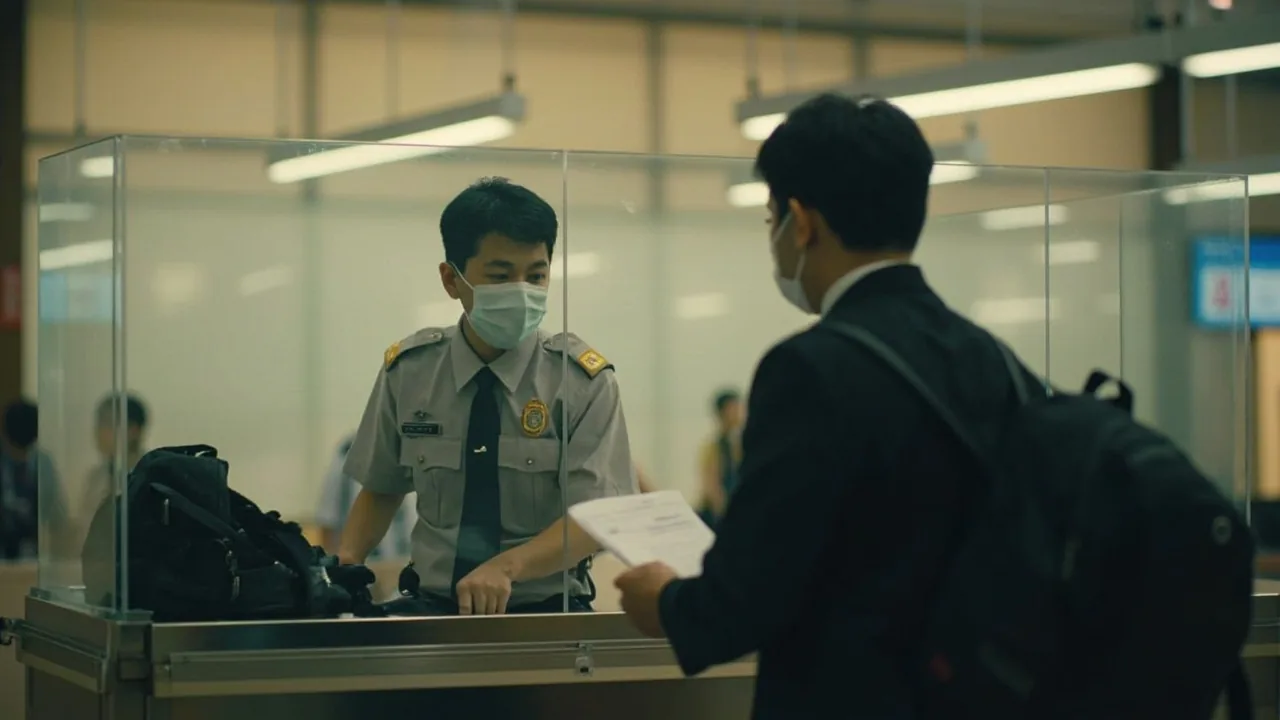
Malaysia Customs Rules for Camera Gear and Electronics: What Indian Tourists Must Know
Checked against the Royal Malaysian Customs tourist channel guidance and the India Customs Baggage Rules, 2023 amendment, both as of July 2026. What catches people is the other end of the journey: when you land back in India with the same gear stamped “out,” and you cannot prove you took it out. This article covers the Malaysia side, the Indian re-entry side, and the in-between stuff (drone permits, power bank limits, how many laptops count as “personal use”) so the gear goes out, comes back, and stays duty-free. For related planning, see our guide on Sea Backpacking Hub.
Quick Answers
| What | Answer | Price (INR) |
|---|---|---|
| Are cameras and laptops dutiable on entry to Malaysia for tourists? | No, one of each per traveller, used personally, is treated as personal effects and enters duty-free under tourist passport channels. | ₹0 |
| Is there a tourist duty-free allowance at KLIA for new electronics? | Yes, up to ₹11,780 (~500 MYR or ~$122.28) in goods per arriving traveller, plus ₹4,712 (~200 MYR or ~$48.91) of processed confectionery and similar; new purchases above this are dutiable. | MYR 500 |
| Do Indians need to declare high-value camera gear on arrival in Malaysia? | No, if it is personal, used, and reasonable for tourism (a GoPro, a mirrorless, a drone under one personal limit). Commercial use, drones above the recreational class, and large quantities change this. | ₹0 |
| What is the safest way to protect gear from Indian customs duty on return? | Get a passport endorsement at the airport of exit (India) before flying out, listing serial numbers and values. This proves the item was owned and exported, so re-import is duty-free under the Baggage Rules. | ₹0 |
| Does a foreign-bought camera attract customs duty if imported into India later by post? | Yes, used personal cameras can be imported by NRI/transferring resident rules, but a tourist re-entering with the same item they took out only needs the endorsement as proof of prior ownership. | Variable |
Everything below uses single local-currency figures (MYR for Malaysia, USD where a fee is USD-denominated by law, INR only for genuinely rupee-native things like airfares).
The Three Customs Doors Your Gear Walks Through
Your camera, laptop, drone, hard drives, and power banks cross three borders on a Malaysia trip from India, and each one has its own rules:
- India exit (when you fly out of BOM/DEL/BLR)
- Malaysia entry (when you land at KLIA or Penang)
- India re-entry (when you land back at BOM/DEL/BLR)
Most travellers prepare for the wrong one. They research the Malaysian duty-free allowance carefully and skip the Indian exit-side endorsement entirely, then get taxed on the way home. Below is the order the rules need to be handled in, with the Indian exit step listed first because it is the one that protects you later.
Step 1, Before You Fly Out of India: Get the Passport Endorsement
This is the single most important step, and almost nobody does it. The Customs department at Indian international airports endorses your passport and issues a certificate that lists the electronics you are taking out of India. The endorsement is your proof on return that the gear was already yours and you are re-importing your own property, not importing a new purchase from abroad.
What to do:
- Pack every electronic item you intend to take (camera, lenses, laptop, drone, GoPro, hard drives, audio recorders) before you go to the airport. Customs officers want to see the actual items, not a list.
- Reach the airport 30 to 45 minutes earlier than you usually would. The Customs endorsement counter is not at the check-in bank; it is usually one floor up or behind the airline check-in zone, marked as “Customs Facilitator” or “Export Facilitator Counter.”
- Carry purchase invoices for the high-value items. A mirrorless body, a MacBook, a DJI drone, a high-end lens, all of these should have either a GST invoice, an Amazon invoice, or the original bill from a retail store.
- The officer will verify the items physically, list serial numbers and approximate values on your passport (a stamp) and on a small paper certificate, and that is it. Take a clear phone photo of the stamp immediately.
What it costs: nothing. The endorsement is free, and on certain airports it is a paid service that charges a small fee (typically ₹100 (~$1.04) to ₹300 (~$3.11)) for the paper booklet.
Subodh’s Pro Tip: Photograph the endorsed stamp page immediately, both sides of each stamp, and email the photos to yourself. The paper certificate gets coffee, water, or folded into a passport pocket and lost. The photo is what gets you through arrivals back home if you ever get pulled aside.
Safety Alert: If you skip the endorsement entirely and your camera body has a foreign serial number (a Nikon or Sony bought abroad in a previous trip, or a friend’s camera you are borrowing and paying duty on), Indian customs on return can demand duty on the published MRP. The endorsement cannot be issued retroactively at arrival; it has to be done at the airport of exit before you fly out.
Step 2, What Malaysia Asks of You on Arrival
Malaysia’s Royal Malaysian Customs operates the “Nothing to Declare” (green) and “Goods to Declare” (red) channel system at KLIA1, KLIA2, and Penang International. The rule for tourists carrying personal electronics is simple and favourable:
- Personal, used, reasonable electronics enter as personal effects: cameras, laptops, tablets, drones, gimbals, hard drives, audio gear, all of these are treated as personal effects if you brought them for tourism or work as a traveller and you are taking them back out when you leave. No declaration, no duty, no forms.
- One of each major category: more than one laptop is technically dutiable, more than one drone triggers more paperwork, several cameras and a bag full of lenses is fine but raises eyebrows. Travellers report a single GoPro plus a mirrorless plus lenses is the realistic upper bound of “personal.”
- Tourist duty-free allowance is ₹11,780 (~500 MYR or ~$122.28) per arriving adult, on top of personal effects. This applies to anything you buy in Malaysia (a new GoPro, an extra lens, a smartwatch). You can bring in ₹11,780 (~500 MYR or ~$122.28) worth of newly purchased goods duty-free. Above that, duty applies on the excess.
- New drones require a permit from CAAM (Civil Aviation Authority of Malaysia) or a temporary import pass for tourists. A small DJI Mavic or Mini under 20 kg takeoff weight (recreational class) is usually waved through at tourist channels, but a heavier commercial-grade unit is not. Travellers report that the KLIA customs hall is more interested in drones than cameras.
- Currency carrying above USD 3,000 (equivalent) must be declared on a separate form. This is unrelated to cameras but routinely asked at the green/red channel entrance.
What you do at the airport:
- Walk through the green “Nothing to Declare” channel if you are carrying personal-use electronics only.
- Use the red channel only if you bought something in Malaysia above ₹11,780 (~500 MYR or ~$122.28) OR if you have commercial quantities of any item.
- Keep purchase receipts for anything you bought in Malaysia in your phone’s email so you can show value on request.
For Indian travellers specifically, the duty-free allowance for goods imported from abroad (Langkawi’s special cases aside) is ₹11,780 (~500 MYR or ~$122.28). Electronics bought in Malaysia and brought home to India are governed by Indian customs rules, not Malaysian, and they are taxable in India under your Indian baggage rules. The ₹11,780 (~500 MYR or ~$122.28) limit is purely a Malaysian rule for re-entering Malaysia, and irrelevant for what you bring back to India.
Step 3, On the Way Back to India
This is the easier step if you completed Step 1. If you got the passport endorsement on the way out, returning with the same gear is a “matching serial numbers to listed items” exercise at Indian arrivals.
Without the endorsement, the customs officer at BOM/DEL can ask where the camera, drone, or laptop was bought and assess duty on it. A GoPro made in 2023 imported by a stranger in 2024 is generally small enough that nobody picks on it. A Sony A7R V body or a DJI Mavic 3 Pro is large enough that the answer matters.
The practical answer most Indian travellers rely on is:
- Personal electronics with clear domestic invoices (Amazon, Croma, Reliance Digital, original camera-store bills) and a serial number that matches the invoice are treated as Indian-owned re-imports.
- Buy what you can in India before flying out, and use the Indian-bought cameras, drones, lenses, and laptops for the Malaysia trip. The endorsement then becomes a small formality rather than a need.
- For gear that is genuinely foreign-bought or borrowed, the endorsement is non-negotiable if you ever want to bring that exact item back without paying duty.
What About Power Banks, Hard Drives, and Spare Batteries
These are the items that get confiscated at security rather than customs. Customs does not touch them. Aviation security does.
- Power banks must go in cabin baggage, not check-in. The airline limit is 100 Wh per power bank without airline approval, 100 to 160 Wh requires airline approval, and anything above 160 Wh is banned. A 20,000 mAh power bank at 3.7 V is 74 Wh, well below the limit; a 27,000 mAh unit at 3.7 V is 100 Wh, borderline, usually let through but check with your airline.
- Spare lithium camera batteries (NP-F, LP-E6, EN-EL15 types) go in cabin baggage, not check-in, because of the same lithium-ion rules. Carry them in a plastic bag.
- Hard drives and SSDs (with footage, important files) go in cabin or check-in freely; they are treated as electronics with no lithium battery in them, except external SSDs with internal lithium backup batteries, which must be in cabin.
- Drones with lithium batteries have the same cabin-only rule.
None of this is customs. It is pre-boarding security. But travellers conflate the two and worry about the wrong one.
The Practical Packing Setup That Survives All Three Borders
Given the above, a sensible carry kit for an Indian backpacker in Malaysia looks like:
- One mirrorless camera body plus two to three lenses (24 MP or higher is normal, no issue)
- One GoPro or action camera with mounts
- One small drone (Mavic Mini, Mini 4 Pro, etc., recreational class, CAAM visit avoided)
- One laptop (and only one; second laptop triggers extra formality)
- Two power banks, each under 20,000 mAh
- One phone
- Hard drives and SSDs for footage backup
For “What to Pack” specifics, the packing list for Malaysia goes deeper on clothing, monsoon, and toiletries. The charging guide covers Type G plug behaviour at Malaysian hostels.
Connectivity on Arrival (Tangential but Useful)
Cameras need to dump footage every couple of days, and most Indian travellers want WiFi or a working SIM for the maps app, Grab, WhatsApp, and Google Photos backup. Malaysian options:
- A tourist SIM at the airport counters at KLIA1 and KLIA2 is the fastest option. The Hotlink/Celcom tourist 7-day SIM runs around ₹353 (~15 MYR or ~$3.67) and includes about 5GB of data.
- A traveller-friendly eSIM with regional Asia data plans is a solid fallback if you have an eSIM-capable phone and want to skip the airport counter entirely. See Get Nomad eSIM for plans that cover Malaysia.
- Free WiFi at most hostels, cafes, and shopping malls in KL, Penang, and Langkawi. Speed is fine for messages and uploads.
For deep eSIM vs SIM comparisons, the Malaysian eSIM guide and the SIM card buying guide walk through options. The KLIA airport SIM pickup guide is the relevant one if you are landing on a late flight.
Common Mistakes Indian Travellers Make at KLIA Customs
- Worrying about Malaysia customs and ignoring India exit endorsement. The biggest single mistake. Malaysia almost never pulls a tourist aside for camera gear; India can and does on return.
- Carrying a brand-new camera in original packaging, sealed box, no Indian invoice, not endorsed before flying out. The “I bought it for the trip” line does not hold up at the Indian arrivals customs hall for higher-value mirrorless bodies.
- Bringing two laptops in cabin baggage, intending to use both, and treating the second as personal effects. The second one is fine on Malaysian entry but dutiable on Indian return unless endorsed.
- Forgetting that drones require a CAAM permit in Malaysia for anything above the recreational-use category (commercial-class takeoff weight, or used commercially). One Mavic Mini is fine. A larger unit can trigger Malaysian customs paperwork.
- Photographing everything in USD and treating the 500 MYR Malaysian allowance as the “what I can bring home free” limit. The 500 MYR limit is for re-entering Malaysia. Indian baggage rules govern what you bring home, and electronics are taxed over the basic duty-free allowance on the Indian side.
- Packing power banks in check-in luggage. They get pulled at security, not customs, but the trip still goes sideways when your bag does not make the flight.
- Skipping the SIM card registration at the counter and walking out with an unregistered SIM that stops working after 24 hours.
Where to Eat (And Why It Is in This Article)
This section is unusual for a customs piece, but it appears because many Indian travellers spend their evenings editing footage in KL cafes and Penang kopitiams, and a good place to spend 4 hours with a laptop and free WiFi matters. Cameron Highlands and Langkawi are two tourist clusters where camera-heavy travellers spend more time than usual, and both have decent Indian food plus a quiet cafe or two:
- De Telang Cafe at Kea Farm in Cameron Highlands: a charming local cafe with strong WiFi and pastry options. Travellers report the upstairs corner has good light for editing.
- The Hidden Lab, also in Cameron Highlands: a cozy, quieter option if the bigger cafe is full.
- KOKO Cafe Langkawi, vegetarian-friendly and Muslim-friendly, useful if you want plant-based options near Pantai Cenang.
- niàn Cafe plant-based: a chill option if you are vegan-leaning.
- Pia’s the Padi: local cuisine, cosy, useful for a long lunch before sunset.
For Indian food in those regions (a dal-chawal fix, South Indian breakfast before a sunrise shoot):
- Ponmalar Indian Stall in Cameron Highlands: family-run, South Indian. Travellers report the masala dosa and filter coffee are the reason to come.
- FOOD PARADISE RESTAURANT AND BISTRO: Pakistani and Indian cuisine, broader menu.
- NJ Indian Bistro in Langkawi: Indian food with a local twist, useful if you have been eating Malay food for a week.
For a broader Malaysian vegetarian and Indian restaurant list, the dedicated article is the right reference.
Safety and Travelling with Camera Gear
The rules above cover customs. Safety is a separate layer:
- Do not leave a camera, lens, or laptop unattended at KLIA or Penang airports while waiting at the green/red channel. The Customs hall has visible CCTV but theft of unattended bags does happen.
- Carry a simple rain cover or dry bag for camera gear if you are headed to Cameron Highlands or Langkawi during the monsoon window (October to February on the east coast). The Malaysia packing list covers the rain-gear specifics.
- For drones, check the CAAM temporary import permit page before flying a non-recreational unit into Malaysia. Recreational-class drones are normally waved through; commercial-class units are not.
- Check the Indian Ministry of External Affairs travel advisory page for Malaysia (mea.gov.in) before departure for any current advisories around border regions or specific events. Malaysia is generally safe for tourists; periodic advisories do appear.
FAQ
Can I carry a GoPro, mirrorless, and drone together without declaring on arrival in Malaysia? Yes, used and personal gear is treated as personal effects at the green “Nothing to Declare” channel. Customs only cares if the quantity looks commercial or the drone is above the recreational size threshold.
Do I need a passport endorsement if I bought the camera in India? You do not legally need one for re-importing your own Indian-bought item, but it makes the Indian arrivals customs smoother and protects you from questions about where the camera was bought. For a GoPro or entry-level mirrorless, the practical risk of being questioned is low. For a Sony A7R, a MacBook Pro, a DJI Mavic Pro, or any other item with a five-figure price tag, the endorsement is worth the 20 minutes at the airport.
What happens if I bought a new camera in Langkawi and want to bring it back to India? Indian customs will tax it at the standard baggage duty rate (around 18 percent plus social welfare surcharge for electronics, plus GST) on the assessed value. The ₹11,780 (~500 MYR or ~$122.28) Malaysian allowance has nothing to do with what Indian customs charges you.
Is a DJI Mavic Mini allowed in Malaysia without a CAAM permit? A Mavic Mini or Mini 4 Pro in the recreational-use class is generally waved through at tourist channels. Travellers report no permit needed for that class. Larger units require CAAM paperwork.
Can I bring multiple lenses and spare batteries? Yes. Lenses are personal effects. Spare lithium camera batteries go in cabin baggage (with the device, terminals taped), and there is no per-traveller limit beyond what airline safety rules permit.
What is the Indian customs allowance for re-entering with personal electronics? For items taken out with a passport endorsement (that you can prove you owned before travelling), there is no duty. New electronics bought abroad and brought in by an Indian passenger are taxed under the Indian baggage rules, and the basic duty-free allowance is relatively small (₹289,017 (~3,000 USD) or equivalent in personal and household goods beyond the daily-use threshold).
Do I have to declare camera gear on an Indian customs form when returning? If your gear matches the passport endorsement or domestic invoices, no formal declaration is needed at the green channel. If you bought new electronics abroad above the baggage allowance, declare at the red channel.
Subodh’s Take
The gear survives the trip fine; the paperwork is what decides whether you pay duty or not. Get the Indian passport endorsement before flying out, keep your invoices for everything over ₹20,000 (~$207.60), and use the Malaysian green channel on the way in for personal-use gear. That single endorsement on exit is what almost no traveller bothers with and what keeps your camera and drone untaxed at arrivals back home. Skip the airport-counter upsell on the ₹707 (~30 MYR or ~$7.34) “insurance” plan for your GoPro while you wait; you do not need it.
