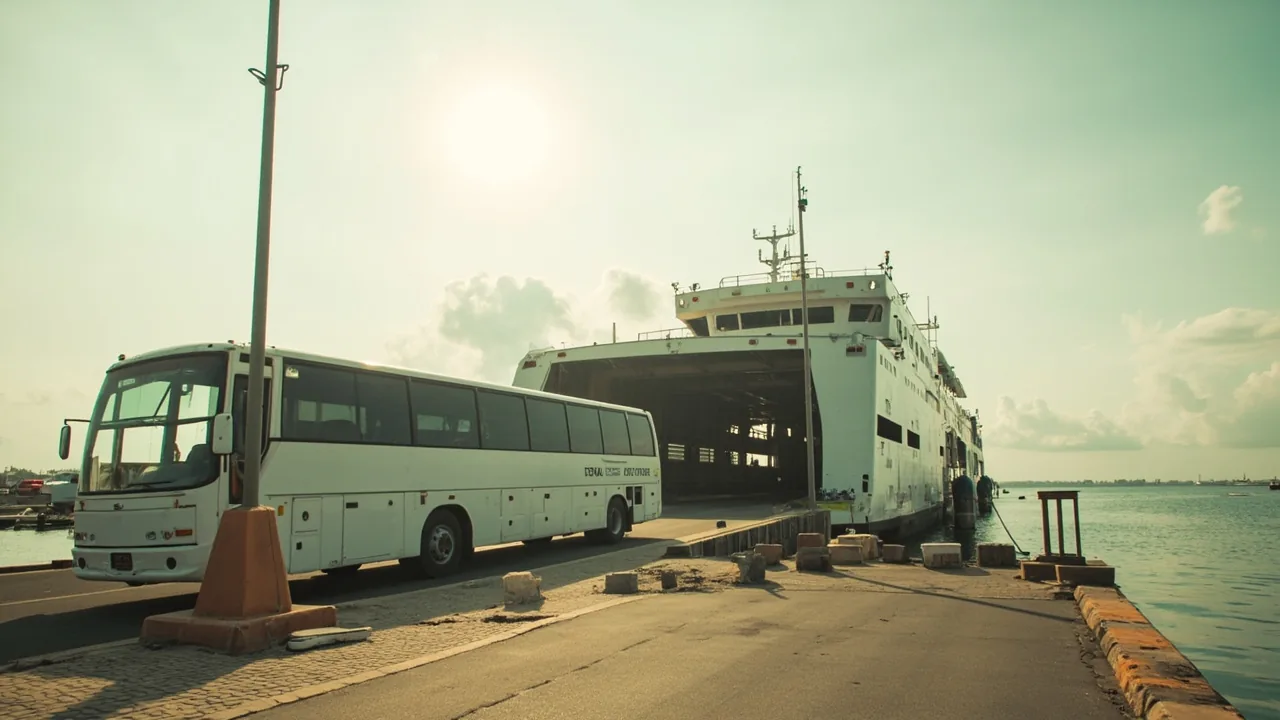
Manila to Boracay Without Flying: The Cheapest Route (Bus + Ferry, Under 2,500)
Montenegro and 2GO fares confirmed against the Batangas Pier counter boards (July 2026); Jam Liner direct Buendia service runs roughly every 45 minutes; Caticlan environmental fee currently 75 to 150 PHP. See Southeast Asia Backpacking Hub for more.
This route is not for everyone. The overnight bus is not a luxury coach. The RoRo (roll-on, roll-off) ferry crossing through the Sibuyan Sea is rough in the wrong season. But for budget backpackers from India, the Manila to Boracay overland is a test of patience at a low price. You may also find Day Tour Package Near Manila useful for this trip.
Quick Answers
| What | Answer | Price (INR) |
|---|---|---|
| Cheapest Manila to Boracay overland route | Bus (Manila → Batangas Pier) + RoRo ferry (Batangas → Caticlan) + tricycle to Caticlan Jetty Port + 15-min pump boat to Boracay | ~1,200 to 1,800 PHP (~₹1,850 to ₹2,775 or ~$19 to $29) |
| Total time, door to door | 14 to 18 hours including transfers and waiting | — |
| Fastest bus option (non-stop, Manila to Batangas Pier) | Jam Liner or JAM Transit direct, ~3 hours | 250 to 350 PHP (~₹385 to ₹540 or ~$4 to $5.60) |
| Cheapest ferry operator (Batangas → Caticlan) | Montenegro Shipping Lines, 9 to 11 hours | 800 to 1,100 PHP (~₹1,235 to ₹1,695 or ~$13 to $17) |
| Total cost if you skip the RoRo and fly Caticlan only | Caticlan (Boracay) airport is on a separate island. There is no cheap short hop option. | — |
The headline number (under ₹2,500 (~$25.90) total overland) is achievable if you take the cheapest bus + cheapest ferry + skip the optional 2GO ferry upgrade. Add 500 to 800 PHP if you want Montenegro’s air-con cabin instead of open-deck. See also: Best Time Visit Philippines Typhoon Season.
The Overland Route, Step by Step
There is no secret shortcut. The bus + RoRo ferry is the only true no-flight overland option for Indian travelers. Here is the actual route, with the boring details that most blog posts skip. For related planning, see our guide on Cebu City 2 Day Itinerary No Beach.
Step 1: Manila to Batangas Pier
You have two real options from Manila. The first is the direct bus to Batangas Pier, the second is bus to Lipa or Sto. Tomas then jeepney to the pier. The direct bus wins on every metric except cost.
The two main operators are Jam Liner (from Cubao or Pasay terminals) and JAM Transit. Jam Liner’s flagship is a direct Buendia-to-Batangas-Pier service, no transfer, AC, ~3 hours. It departs roughly every 45 minutes from 4:00 AM to about 9:00 PM. The fare is 250 to 350 PHP depending on the class of bus.
Subodh’s Pro Tip: Avoid the Ceres Bus from Cubao unless you have no other option. It is slower than Jam Liner, with longer stops en route, and the buses are older.
The alternative, the “savings” version, is the public bus to Lipa (around 100 to 150 PHP from Cubao’s Araneta Center or Pasay) and then a jeepney from Lipa to Batangas Pier (around 30 to 50 PHP). Total 130 to 200 PHP, but adds 2 to 3 hours and a transfer with bags. If you are on a tight budget, do it. If you are time-conscious, do not.
Step 2: Batangas Pier to Caticlan, the RoRo Ferry
This is the longest leg. Two operators run the Batangas → Caticlan RoRo: Montenegro Shipping Lines and 2GO Travel. 2GO is the national carrier, slightly more expensive, slightly more comfortable (enclosed cabin, assigned bunk). Montenegro is the budget workhorse.
| Operator | Vessel Type | Time | Price (PHP) |
|---|---|---|---|
| Montenegro Shipping Lines | RoRo ferry, open-deck / air-con cabin | 9 to 11 hours | 800 to 1,100 |
| 2GO Travel | RoRo ferry, air-con cabin / tourist class | 9 to 11 hours | 1,000 to 1,400 |
Montenegro operates 2 to 3 sailings per day; common departure times are around 6:00 PM and 9:00 PM, with occasional 7:30 PM sailings. The popular option is the 7:30 PM overnight sailing. You board at dusk, sleep on a flat bunk (open deck, bring a sarong or sleeping bag) or pay extra for an air-con cabin, and arrive in Caticlan around 4:00 to 5:00 AM.
Subodh’s Pro Tip: Book the 6:00 PM sailing if you are picky about sleep. The 9:00 PM sailing arrives at 6:30 AM, which means the Caticlan → Boracay ferry counter is just opening and the line is short. The 7:30 PM sailing is the most popular, so it fills first.
Ferry terminals in the Philippines collect a “terminal fee” of 50 to 100 PHP that is almost never included in the advertised ticket. Pay it in cash at the dedicated window after security. The fee is in addition to the ticket and you will not get a receipt.
Step 3: Caticlan to Boracay Jetty Port
Caticlan is the small mainland port across the strait from Boracay. The two are about 1 km apart. You have two options: tricycle (20 to 50 PHP per person, or 80 to 150 PHP for the whole tricycle) or the 5-minute walk if you have a light pack. Most travelers take the tricycle.
At the Caticlan Jetty Port, you pay the environmental fee (75 to 150 PHP depending on season, called the “Boracay Environmental Fee”) and the jetty port terminal fee (50 to 100 PHP). Total fees: 125 to 250 PHP before you step on the pump boat.
Step 4: Pump Boat to Boracay
The Caticlan → Boracay pump boat is 15 minutes, costs 30 to 50 PHP, and runs continuously from 5:00 AM to 9:00 PM. It is small, crowded, and sometimes wet. Pack your valuables in a dry bag or your daypack on your chest. There is no other way to reach Boracay from the mainland except this pump boat. Even the Caticlan airport flyers land at the Caticlan airport on the mainland and take this same pump boat.
You arrive at Cagban Port on Boracay’s southern tip. From there, a tricycle or multicab to White Beach (the main backpacker zone) is 50 to 100 PHP. Multicabs are cheaper but slower.
Where to Stay (Boracay)
You have just spent 14 to 18 hours on buses and ferries. The hostel choice on Boracay matters, because Station 2 (the backpacker heart) and Station 1 (the upscale end) are different. Most Indian backpackers end up in Station 2 or Station 3, near White Beach.
For your Manila overnight if you arrive in Manila and need to crash before the bus, the dorm range in Manila is ₹400 to ₹900 (~$4.14 to $9.32).
For Boracay itself, dorm beds on Station 2 and Station 3 run 400 to 1,100 PHP per night (~₹615 to ₹1,695 or ~$6.30 to $17.40). Station 2 is the backpacker heart, Station 3 is quieter and cheaper. Book via Hostelworld or Agoda for the best rates. Most hostels have AC, lockers, and free WiFi. Skip the party hostels if you are on the overland route and tired from 14 to 18 hours of buses and ferries.
What to Eat on Boracay
Boracay has Indian food concentrated in D’Mall (the indoor market complex in Station 2), roughly 2x the price of Manila. Several small, family-run Indian restaurants serve dal-chawal, biryani, and curry staples. Most are cash-only and close by 10:00 PM.
Subodh’s Pro Tip: Eat early. Most Indian restaurants in Boracay close by 10:00 PM, and D’Mall shuts down shortly after.
What to Do in Boracay
Boracay is a 7-km-long, 500-meter-wide island. The main backpacker activity loop is:
- White Beach (Stations 1, 2, 3): Free, open 24/7. White powder sand, sunset at 6:00 to 6:30 PM. The most expensive stretch is Station 1, the most crowded is Station 2, the most local is Station 3. Station 2 around sunset is the photo you’ll send home.
- Puka Beach: The northern, less-developed beach, named for the puka shells. Tricycle from D’Mall: 150 to 250 PHP. Free entry, but some stalls charge 50 to 100 PHP for beach access. Quieter, more “real” feel, less white sand.
- Boracay Island Hopping (Crystal Cove, Magic Island, Crocodile Island): Half-day boat tour with snorkeling stops, 700 to 1,200 PHP per person. The boats leave from Station 1 or Station 2 around 9:00 AM. Check Boracay Island Hopping tours on GetYourGuide
- Diniwid Beach: A 10-minute walk north of Station 1, much quieter than White Beach. A few small cafes, no hawkers, good for a half-day of reading. Free.
- Bulabog Beach (east side): The kiteboarding side of the island, windy, almost no swimming. Free, and worth a half-day even if you do not kiteboard, just to see the other side of the island.
The “tourist trap” you should skip: the paraw sunset sail (1,500 to 2,500 PHP). It is a small native outrigger sailboat ride at sunset, sounds magical, is a 45-minute slow drift with 8 other tourists and a hard-sell photographer. The free sunset from White Beach is the same view.
Getting Connected (Philippines SIM)
The two main operators are Globe and Smart. Coverage on Boracay is good, better than most of the smaller islands, but the rural northwest (where Puka Beach is) drops to 3G.
For Indian backpackers, the cheapest physical SIM is the Globe Prepaid “GoSAKTO” promo:
- GoSAKTO 8-day: priced per current Globe promo, register via the GlobeOne app or text. The same tourist SIM at NAIA airport counters is sold as SIM + promo bundle at the standard tourist rate.
- Data-only eSIM from Airalo or Nomad: If you are arriving on a late flight and do not want to queue at the airport, the eSIM option is cleaner. 1 GB / 7 days runs around ₹386 to ₹579 (~$4 to $6).
Subodh’s Pro Tip: If you buy a physical SIM at NAIA (Manila airport) and you are heading straight to a bus, the activation takes 20 to 30 minutes. Do not buy it on the way out, buy it at the airport and test it before you leave the terminal.
WiFi at most Boracay hostels is 10 to 20 Mbps, enough for video calls, but drops during peak hours (7:00 to 10:00 PM).
Daily Budget Breakdown (Boracay, 2026)
| Category | Budget/day |
|---|---|
| Dorm bed | 450 to 800 PHP (~₹695 to ₹1,230 or ~$7.10 to $12.60) |
| Food (3 meals, mixed local + 1 Indian) | 350 to 600 PHP (~₹540 to ₹925 or ~$5.55 to $9.50) |
| Local transport (tricycle, multicab) | 100 to 200 PHP (~₹155 to ₹310 or ~$1.60 to $3.20) |
| Activities (1 day tour or beach time) | 0 to 1,200 PHP (~₹0 to ₹1,850 or ~$0 to $19) |
| Misc / drinks / laundry | 100 to 300 PHP (~₹155 to ₹460 or ~$1.60 to $4.70) |
| Total | 1,000 to 3,100 PHP (~₹1,540 to ₹4,775 or ~$15.80 to $48.70) |
The Indian restaurants push food cost up sharply: eating three Indian meals in Boracay can hit 800 to 1,200 PHP/day, more than the dorm.
Visa / Entry Notes (Philippines, Indian Passport)
Good news for Indian passport holders: the Philippines is visa-free for 30 days, single entry, extendable.
| Item | Detail |
|---|---|
| Visa type | Visa-free |
| Maximum stay | 30 days per entry |
| Extendable | Yes, at any Bureau of Immigration (BI) office, +29 days, one extension |
| Extension fee | 3,030 PHP per the standard BI schedule (~₹4,650 or ~$47.50) |
| Airport terminal fee | 550 to 850 PHP (~₹845 to ₹1,310 or ~$8.65 to $13.40), paid at airport on departure |
| Passport validity required | 6 months beyond date of entry |
| Return ticket | Required, on paper or e-ticket |
Subodh’s Pro Tip: The terminal fee is NOT included in your airfare. Pay it in cash (PHP or USD) at the dedicated counter after immigration. Allow 20 to 30 extra minutes before your flight for this.
Before departure, check the official Indian MEA travel advisory (mea.gov.in) for the Philippines for any current advisories specific to Mindanao, Sulu Archipelago, or the southern islands. Boracay itself is in the Western Visayas region, which is consistently rated low risk.
Common Mistakes
- Booking the ferry from Manila directly to Boracay: There is no Manila → Boracay ferry. Every RoRo ends at Caticlan on the mainland, and the last leg is the 15-minute pump boat. Search “Manila to Caticlan” not “Manila to Boracay” on 12go or any booking site. The “Boracay” listings are usually flights to Caticlan airport.
- Booking the ferry for the wrong day: The Batangas → Caticlan RoRo does not run hourly. Montenegro has 2 to 3 sailings daily, 2GO has 1 to 2 (specific departure times vary). Show up at the pier without a confirmed booking and you may wait 6 to 12 hours for the next sailing. Book the night before, especially in peak season (December to May).
- Skipping the terminal fee: 50 to 100 PHP. It is collected at a separate counter after the ferry ticket, in cash. Travelers who do not have the exact change get pulled out of the line and sent to a side ATM that often charges 150 to 250 PHP per withdrawal.
- Forgetting the return ferry: The same RoRo runs Caticlan → Batangas. Book the return at the same time as the outbound, especially in typhoon season (June to November). Last-minute ferries sell out fast when storms approach.
Safety Note
Boracay is one of the safest small islands in the Philippines. Petty theft (unattended bags on the beach) is the main risk, not violent crime. The bigger concern is the weather: the Philippines sits in the typhoon belt, and Boracay is occasionally evacuated when a Category 3 or higher storm approaches.
If you are traveling June to November, the “shoulder/typhoon season,” check the official PAGASA (Philippine Atmospheric, Geophysical and Astronomical Services Administration) typhoon tracker before you commit to the overland route. A direct flight is faster, but also cancelled in the same storm. No route to Boracay is storm-proof.
For general advisory, check the Indian government’s MEA travel page for the Philippines (mea.gov.in) and the Philippine Department of Tourism’s Boracay advisories before you leave.
FAQ
Is Manila to Boracay doable without flying in 2026? Yes, and it is the standard budget route. 14 to 18 hours total, ~1,200 to 1,800 PHP. No flight required.
Is there a sleeper train from Manila to Batangas? No. The Philippines has a limited rail network (the PNR line from Tutuban to Alabang, southern Metro Manila, and nothing south of that). The bus is the only land option.
Is the Manila to Boracay overnight ferry safe? Yes, Montenegro and 2GO are licensed and inspected. The rough sea crossing through the Sibuyan Sea can be choppy in typhoon season. If you get motion-sick, take Bonamine/Dramamine 30 minutes before boarding.
Is Boracay cheaper than Goa for an Indian traveler? No. Goa is cheaper for Indian visitors because there is no airfare, no visa question, and the rupee goes further. Boracay is worth the premium for the white sand, but it is a 1.5x to 2x cost stretch compared to Goa.
Can I do Manila to Boracay and back in 5 days? Yes, with one full day for the outbound, 2 to 3 days on Boracay, one full day for the return. The overland route is the bottleneck, the island itself is small and walkable.
Do I need a return ticket to enter the Philippines visa-free? Yes. The Bureau of Immigration at NAIA may ask for proof of onward travel. An e-ticket printout or your return ferry booking confirmation is sufficient.
Is there a direct bus from Manila to Boracay without the ferry? No. The sea crossing is required. There is no bridge and no land connection to Boracay.
Subodh’s Take
The Manila to Boracay overland is the kind of trip you do once, never forget, and never repeat. The bus is fine. The RoRo is a cultural experience (sleeping on a hard bunk, watching the stars, waking up at sunrise over the Sibuyan Sea). The pump boat is the gatekeeper to the island. If you have 2 weeks in the Philippines, do it. If you are tight on time, fly. The 4,000 to 6,000 PHP you save is not worth the trade-off for everyone.
— Subodh
