Myanmar Food Guide: Must-Try Dishes, Vegetarian Options & Food Culture
Burmese food is one of Southeast Asia’s quieter cuisines, less famous than Thai or Vietnamese, but honestly underrated. If you stick to Yangon, Mandalay, Bagan, and Inle, you’ll eat well for 1,500 to 4,000 MMK per meal at a tea shop, with mohinga (the fish noodle soup that’s the national dish) usually around 1,500 MMK a bowl. For Indian backpackers, the catch is that Burmese cooking leans on fish sauce, shrimp paste, and dried shrimp the way Thai food does, so a “vegetable curry” at a local eatery is rarely vegetarian unless you ask. The good news: there’s a strong Indian restaurant layer in Yangon and Mandalay, plus a few dedicated Burmese vegetarian restaurants that cater to Buddhist dietary rules. Before you go, check the MEA travel advisory (mea.gov.in) for Myanmar, since the safety situation has been variable. For related planning, see our guides on Sea Backpacking Hub and Where to Eat Indian Food in Koh Chang Restaurants Worth Knowing.
Subodh’s Pro Tip: Myanmar’s official currency is the kyat (MMK), but US dollars are accepted almost everywhere and often preferred. Carry clean, unmarked $20s and $50s, no folds, no tears. The official rate and the black-market rate can differ by 10-20%, so ask at your guesthouse what locals use before changing money at the airport.
Quick Answers
| What | Answer | Price (INR) |
|---|---|---|
| What is Myanmar’s national dish? | Mohinga, a fish noodle soup usually eaten for breakfast | ~1,500 MMK |
| Is vegetarian food easy to find? | Moderate. Look for “thathetta” (vegetarian) or eat at dedicated veg restaurants | 1,500-4,000 MMK |
| Is street food safe for Indians? | Yes, eat at busy stalls with high turnover, skip pre-cut fruit | ₹85-₹250 (~$0.88-$2.60) |
| Best SIM for food navigation? | Local SIM (MPT, Telenor, Ooredoo) with data, or a Nomad eSIM | ₹482-₹963 (~5-10 USD) |
| Do Burmese consider fish “vegetarian”? | Often yes, due to Buddhist traditions. Always specify no fish sauce and no shrimp paste | Free clarification |
The 5,000 MMK you’ll spend on a meal of mohinga plus tea buys more food in Myanmar than in almost any other Southeast Asian country right now. The official exchange rate hovers around 1 MMK per 0.048 INR, so 1,000 MMK works out to roughly ₹48 (~$0.50) right now.
The Local Culinary Landscape
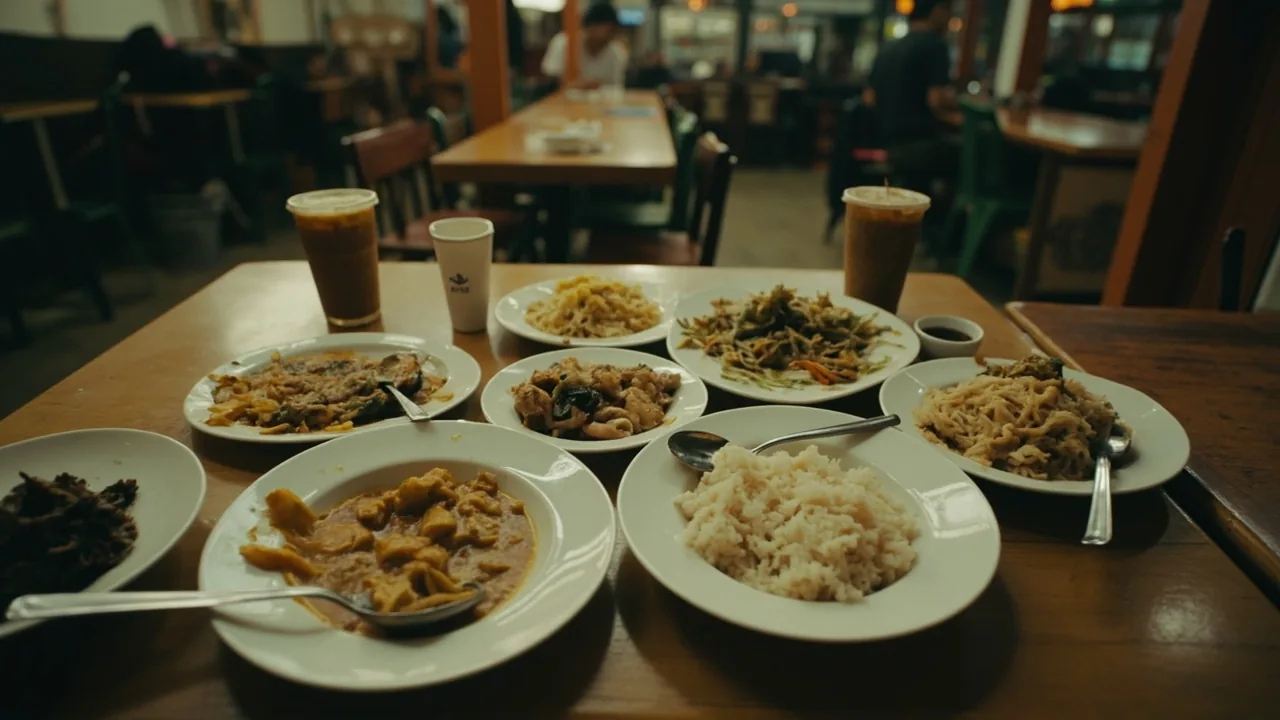
Burmese food sits at a crossroads between India, Thailand, China, and Bangladesh. You see the influences clearly: roti and paratha from the Indian border, coconut noodles from the south, Shan-style rice noodles from the east, and Chinese stir-fries in Mandalay. Rice is the backbone of every meal, and meals tend to come with a clear soup on the side plus a small plate of free salad (a mix of raw or blanched greens, sometimes with fermented tea leaves).
What catches Indian vegetarians off guard is the Burmese definition of “vegetarian.” In a Buddhist context, vegetarian often means no meat from animals with red blood, but fish, shrimp paste, and fish sauce are sometimes considered acceptable, especially in everyday cooking. That’s why mohinga, the national dish, is a fish broth noodle soup, and many “vegetable curries” at tea shops still start with dried shrimp and ngapi (fermented shrimp paste).
The four hidden ingredients to watch for:
- Ngapi (ငပိ) - fermented shrimp paste, the Burmese equivalent of Thaikapi. Used as a base in curries, salads, and dipping sauces.
- Fish sauce (ငါးဆီရည်) - lighter than Vietnamese fish sauce but used almost as widely.
- Dried shrimp (ပုစွန်ခြောက်) - rehydrated and added to vegetable dishes for umami.
- Chicken or pork broth - the base of many “vegetable” soups and congees.
The flip side is that Myanmar has a strong Buddhist vegetarian culture during the three-month Vassa (rainy season retreat, roughly July to October), when many Burmese eat vegetarian or vegan. During this period, restaurants across the country put out “thathetta” signs (vegetarian), and even regular tea shops offer meat-free versions of their menus. Outside Vassa, you’ll still find plenty of permanent vegetarian spots.
Safety Alert: Myanmar’s internet, banking, and SIM activation require official registration, and several regions outside Yangon, Mandalay, Bagan, and Inle have active travel restrictions. Check the MEA advisory (mea.gov.in) and your embassy’s latest updates before booking.
Key Phrases in Local Script
Burmese script is round and reads left to right. Even learning five phrases will save you from the worst “I thought this was vegetarian” moments.
| English Phrase | What it Means | Burmese Script | Pronunciation |
|---|---|---|---|
| I am vegetarian | Tells the kitchen your restriction | ကျွန်တော်/မ သက်သတ်လွတ် စားတယ် | Kyaung-toh-ma thatet-lut sar-tay |
| No fish sauce | Excludes the most common hidden ingredient | ငါးဆီရည် မထည့်ပါ | Ngar-see-yay ma-htey-ba |
| No meat, no seafood | Catch-all for strict vegetarians | အသားနဲ့ ပင်လယ်စာ မထည့်ပါ | A-than-nay pin-lay-tha ma-htey-ba |
| No egg | Important for breakfast dishes | ကြက်ဥ မထည့်ပါ | Kyay-oo ma-htey-ba |
| No onion, no garlic | For Jains or those who follow stricter Buddhist rules | ကြက်သွန်နီနဲ့ ကြက်သွန်ဖြူ မထည့်ပါ | Kyay-thwon-ni-nay kyay-thwon-phru ma-htey-ba |
| Tea, please | Standard way to order the default meal at a tea shop | လက်ဖက်ရည် တစ်ခွက် | Let-phet-yay tik-khwet |
| Vegetarian food | Useful search term for signs and menus | သက်သတ်လွတ် စားသောက်ဆိုင် | Thatet-lut sar-taw-htaing |
Pronunciation note: Burmese tones are flat compared to Thai or Vietnamese, and the “th” sound is softer, almost a “t” with breath. Burmese people are forgiving of bad pronunciation and will often respond in English once they see you’re struggling.
Safe Local Street Food Dishes
Burmese street food is mostly safe if you follow the usual Southeast Asia rules: busy stalls, high turnover, cooked in front of you. Here are five dishes that are either vegetarian or easy to customize.
1. Mohinga (မုန့်ဟင်းခါး) - The national dish. A fish-broth rice noodle soup with lemongrass, ginger, banana stem, and boiled egg. Price: ~1,500 MMK. Order without fish broth during Vassa or at vegetarian tea shops, where a chickpea or coconut-based mohinga is common. The tea shop version is often cheaper and just as satisfying.
2. Shan Noodles (ရှမ်းခေါက်စားပြုတ်) - Rice noodles in a clear, slightly spicy broth with pickled mustard greens, tomato, and peanuts. Originally from Shan State, now everywhere. Price: ~1,800 MMK. Order with vegetables only and ask for no fish sauce. The peanut-to-pickle ratio is a personal choice; ask for “extra peanuts” if you want it richer.
3. Tea Shop Rice and Curry (ထမင်းဆိုင် ထမင်းဟင်း) - This is how most Burmese eat lunch. A plate of rice surrounded by 4-6 small bowls of curries and vegetables, plus a clear soup and a small plate of salad. Price: 1,500-3,000 MMK. Tell the server “vegetarian” and they’ll point you to the meat-free bowls. Skip any bowl that has dried shrimp on top, it’s a common garnish.
4. Tofu and Peanut Salad (တိုဟူးသုတ်) - A simple cold dish of soft tofu, sliced tomato, Chinese chives, and crushed peanuts dressed with sesame oil and a touch of vinegar. Price: ~1,000 MMK. Vegetarian and found at most tea shops. A safe default if you don’t want to navigate the menu.
5. Mont Lone Yay Paw (မုန့်လုံးရေပေါ်) - Glutinous rice balls filled with jaggery or grated coconut, served in coconut milk. Price: ~500 MMK for a small bowl. A dessert or snack, vegetarian, sold by street vendors in markets and outside pagodas. Eat fresh from the pot, not from a tray that’s been sitting out.
Subodh’s Pro Tip: Look for the small green and white “Pure Food” stickers (introduced by Myanmar’s Food and Drug Administration) on tea shop menus and at street stalls, particularly in Yangon and Mandalay. These signal the kitchen has passed basic hygiene inspections. They aren’t a guarantee, but they’re a useful filter when you’re choosing between three otherwise-identical tea shops.
Recommended Vegetarian Restaurants
Outside of the tourist trail, dedicated Burmese vegetarian restaurants (သက်သတ်လွတ်စားသောက်ဆိုင်) are clustered near pagodas and monasteries, since Buddhist devotees need meat-free options during religious observances. Here are the standout spots.
1. Khaing Shwe Wha Vegetarian Restaurant ခိုင်ရွှေဝါ(သားသတ်လွတ်စားသောက်ဆိုင်) (rating 4.6) - A dedicated vegetarian Burmese spot serving plant-based versions of mohinga, tea shop curries, and Shan noodles. Clean, simple setting, popular with locals. Must-try: the vegetarian mohinga, made with chickpeas instead of fish.
2. The Moon Vegetarian Restaurant (rating 4.4) - A charming local restaurant serving Burmese vegetarian dishes in Yangon. Order the rice and curry set to get a variety of meat-free curries on one plate.
3. Nepali & Indian Food (100% Vegetarian) နီပေါ-အိန္ဒိယသက်သတ်လွတ်စားသောက်ဆိုင် (rating 4.2) - Exactly what it says on the tin. Nepali and Indian vegetarian thalis, momos, and curries for under ₹482 (~5 USD) per person. If you’ve been on the road for a week and need a dal-chawal reset, this is your spot.
4. Yohannes Indian Food (rating 4.6) - Punjabi dishes in a casual setting, popular with the small Indian community in Yangon. The menu leans North Indian, so paneer, dal, and naan are reliable.
5. Ingyin Nwe South Indian Food Centre (rating 3.6) - South Indian option serving masala dosa and idli, with meals in the 1,000-4,000 MMK range. The dosa is the standout; ask for it extra crispy.
6. Unique Mandalay Tea Room (rating 4.2) - Tea room with a vegetarian-leaning menu. A good lunch stop in Mandalay when you’re templed out and want a quiet, clean place to eat.
For local Burmese food in non-veg settings, Food Affair Restaurant (rating 4.6) and Aung Thu Kha Traditional Myanmar Food House (rating 4.2) are reliable choices if you’re with non-veg friends. For seafood in Bagan, Bagan Beach Food Garden (rating 5) is a riverside spot, though it’s irrelevant for vegetarians.
Subodh’s Pro Tip: A whole section of your Yangon trip should be spent at the city’s Indian restaurants if you want variety. The Indian community in Yangon is well-established, and the range from Punjabi thalis at Yohannes to South Indian dosa at Ingyin Nwe means you can eat Indian food in Yangon without ever feeling like you’re eating at the same place twice.
Food Safety & Hygiene
Myanmar’s food safety standards are improving but still variable, especially outside Yangon and Mandalay. Travellers report stomach issues from tap water, ice from street vendors, and raw salads washed in contaminated water. Here’s how to keep your trip on track.
-
Bottled water only - Tap water isn’t potable in Myanmar. Buy sealed bottles (~500 MMK each at tea shops). Avoid ice unless it’s the hollow-tube kind from a branded factory.
-
Eat at busy stalls - The tea shop rule applies here: if locals are lining up, the food is fresh. If a stall has been sitting with no customers for an hour, skip it.
-
Skip pre-cut fruit - Whole fruit you peel yourself (bananas, oranges, pomelo) is fine. Pre-cut watermelon, papaya, and pineapple from street carts is a common source of stomach issues.
-
Hand sanitizer or soap - Carry both. Many tea shops have a basin out front for handwashing, which is a good Burmese tradition to copy.
-
Carry ORS - Oral rehydration salts are cheap at pharmacies and invaluable if you do get sick. Imodium helps short-term but shouldn’t replace rehydration.
-
Cooked vegetables, not raw - Stick to cooked vegetables at tea shops. The raw salad (သုတ်) is a Burmese staple but is washed in tap water at most small places.
-
Avoid dairy from street vendors - Especially in hot weather. Stick to tea (boiled) and packaged drinks.
Safety Alert: Medical facilities outside Yangon and Mandalay are limited. If you have a pre-existing condition or are travelling to remote areas like Chin State or parts of Shan State, traveller reports strongly suggest you buy evacuation-grade insurance before departure. The official MEA advisory (mea.gov.in) is worth checking for the latest on which regions are restricted.
For more on eating safely across Southeast Asia, the street food safety guide covers water, ice, and stall selection in detail.
Getting Connected
You’ll want data on your phone for Google Maps (tea shops in Yangon are not well-mapped), a translation app for reading Burmese menus, and Grab or a local ride-hailing app for getting to restaurants. Local SIMs from MPT, Telenor, and Ooredoo are available at the airport and in town for ₹482-₹963 (~5-10 USD) with a few GB of data. Bring your passport for registration. For short trips, a Nomad eSIM keeps you online the moment you land and avoids the SIM registration queue. Useful apps: Google Translate (Burmese works for short menu snippets), Maps.me for offline maps, and Eatigo for restaurant discounts in Yangon.
Common Food Mistakes Indians Make
Mistake 1: Ordering “vegetable curry” without specifying no fish sauce.
What happens: You get a curry that’s mostly vegetables but starts with dried shrimp and a spoon of ngapi, leaving you with an upset stomach and a wasted meal.
How to avoid it: Say “no fish sauce, no shrimp paste” in Burmese (the phrase table above has both) or order at a dedicated vegetarian restaurant where fish sauce isn’t used at all.
Mistake 2: Assuming “vegetarian” in Burmese excludes fish.
What happens: Many Burmese Buddhist vegetarians don’t count fish as meat, so a “vegetarian tea shop” might still serve fish broth.
How to avoid it: Look for the sign “သက်သတ်လွတ်” (thathetta, strict vegetarian). The Vassa season (July to October) sees many tea shops run fully vegetarian menus with no fish at all, which is the safest window for strict vegetarians.
Mistake 3: Trusting English menus in tourist areas.
What happens: Some restaurants translate “shrimp paste curry” as “spicy curry” or skip the ingredient list entirely, since tourists don’t always ask.
How to avoid it: Use Google Translate’s camera feature on the Burmese script menu, not the English tourist menu. Or stick to dedicated vegetarian restaurants where the menu is what it says.
Mistake 4: Skipping Indian restaurants to “experience local food.”
What happens: You spend five days eating white rice with boiled vegetables and get home exhausted.
How to avoid it: Mix it up. Eat local food twice a day and lean on Indian restaurants for one meal, especially dinner. The Indian restaurant scene in Yangon is good enough that you’re not “giving up” on local food, you’re pacing yourself.
Mistake 5: Drinking fresh juice from street vendors.
What happens: The ice is from a local factory but the water used to wash the fruit is tap, leading to a day of regret.
How to avoid it: Eat whole fruit instead, or order juice at a clean indoor café where you can see them wash the fruit with bottled water.
FAQ
1. Is McDonald’s or Burger King safe for vegetarians in Myanmar?
McDonald’s exists in Yangon and has a vegetarian-friendly menu section (veg burger, fries, apple pie). Burger King has a smaller presence. Both are safer than street food if you’re worried about hygiene, but neither is a substitute for trying Burmese food properly. Expect Western fast-food prices: 3,000-5,000 MMK for a meal.
2. Can I get Jain food (no onion, no garlic) in Myanmar?
Outside Vassa season, dedicated Jain food is hard to find. Your best bets: Khaing Shwe Wha Vegetarian Restaurant, which has onion-and-garlic-free options on request, and Indian restaurants with a North Indian menu. Learn the phrase “no onion, no garlic” from the phrase table above. Carry snacks like khakra or homemade thepla as backup.
3. Is fish sauce used in everything?
Almost. It’s in most tea shop curries, all mohinga, and many “vegetable” stir-fries. The exceptions: dedicated vegetarian restaurants, Indian restaurants, and most Chinese restaurants. If you’re at a non-vegetarian Burmese restaurant, assume fish sauce is in the dish unless you specifically ask them to leave it out.
4. How much should I budget for food per day in Myanmar?
Travellers report that 8,000-15,000 MMK per day covers three meals at a mix of tea shops and one nicer restaurant. If you’re eating at Indian restaurants or nicer Burmese spots, budget 15,000-25,000 MMK. Street food only, you can get by on 5,000-8,000 MMK.
5. Do I need a Myanmar e-Visa before travelling?
Yes. The e-Visa is the only reliable option right now, since visa-on-arrival is suspended. Apply at the official portal (https://evisa.moip.gov.mm) for ₹4,817 (~50 USD), single entry, 28-day max stay. Allow 3-5 working days. Before booking anything, check the MEA travel advisory at mea.gov.in, since the safety situation has been variable.
6. What about food tours in Myanmar?
Yangon and Mandalay both have food tours that walk you through markets, tea shops, and street stalls. They’re a good way to eat safely as a vegetarian since the guide handles the language barrier. Book through GetYourGuide or ask at your guesthouse for a local guide.
7. Should I avoid Myanmar food entirely if I have a sensitive stomach?
No, but be strategic. Stick to cooked dishes, busy tea shops, and bottled water. Avoid raw salad unless you’re at a clean restaurant. Carry ORS and Imodium. Travellers with sensitive stomachs report that Burmese tea shop food is generally gentler on digestion than Thai or Vietnamese street food, partly because the cuisine uses less chili and fewer raw herbs.
Subodh’s Take
Myanmar is a quieter, slower food destination than Thailand or Vietnam, and that works in your favour. Less tourism pressure means smaller portions, friendlier kitchens, and more flexibility on customising vegetarian dishes. Learn “thathetta” and the fish sauce phrase, keep a list of two or three vegetarian restaurants in each city, and you’ll eat well. The biggest surprise is how much of the cuisine is genuinely friendly to Indian palates: rice, dal-like lentil curries, paratha, tea, and the same fermented-pickle flavours you grew up with. Don’t overthink it. Print the phrase table, carry ORS, and dig in.
