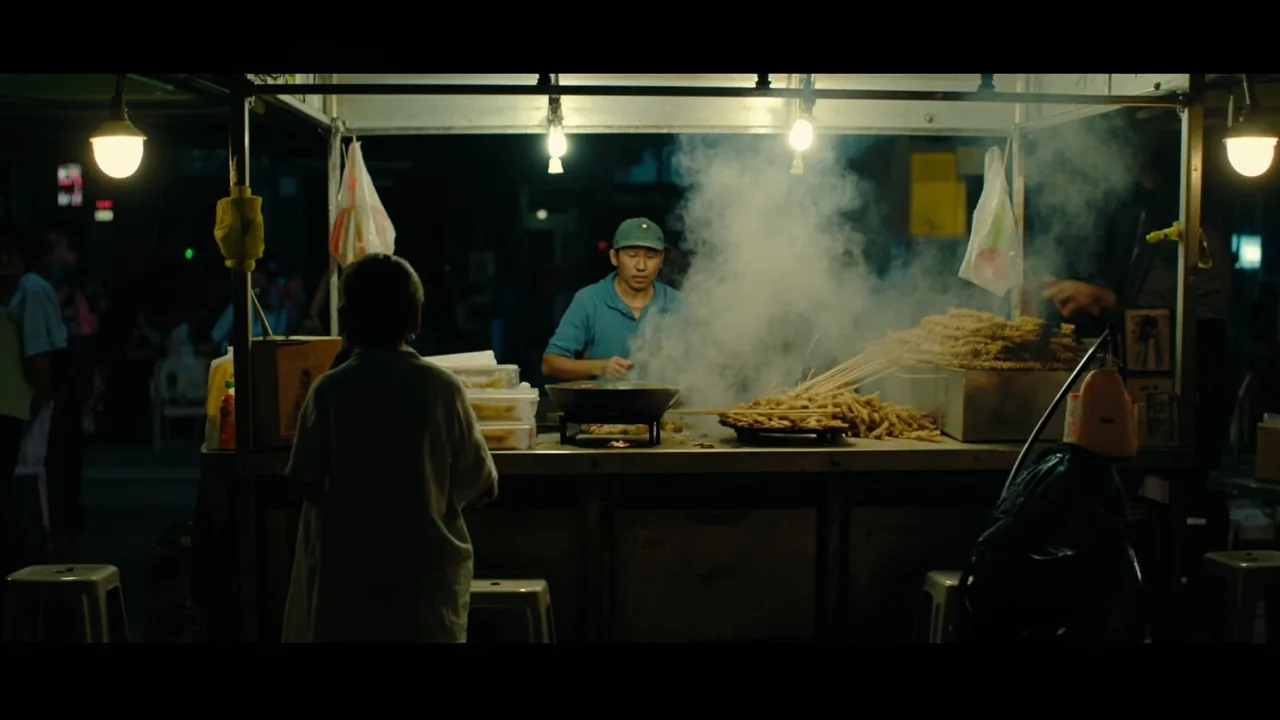
Street Food Safety in Southeast Asia: A Budget Backpacker’s Guide
Most backpackers who get sick in Southeast Asia don’t get sick from street food. The busiest stall with the shortest turnover is almost always safer than the quiet restaurant with the printed menu. Here’s how to eat well on the street without losing a day to the toilet.
This guide covers Thailand, Vietnam, Laos, Cambodia, Singapore, Malaysia, and Indonesia, with practical rules, the cleanest street foods to order, the dishes to skip, and the dishes that look vegetarian but aren’t.
Quick Answers
| What | Answer | Price (INR) |
|---|---|---|
| Is street food safe in Southeast Asia? | Yes, if you follow four rules: busy stall, high turnover, cooked in front of you, no lukewarm food | ₹0 |
| What country has the safest street food? | Singapore (hawker centres, strict hygiene grading) and Thailand (high turnover, transparent cooking) | ₹0 |
| Should I avoid tap water and ice? | Tap water: bottled across most of the region (Singapore and Malaysia tap water is fine). Ice: only “tube ice” with a hole through the middle | ₹0 |
| What’s the cheapest safe meal on the street? | A plate of rice + veg curry or noodles from a busy stall, anywhere in the region | ₹120 (~150 THB or ~$1.25) |
| How often do backpackers get sick? | Mild 24-hour episodes are common across the region; severe illness is rare and usually avoidable. | ₹0 |
Subodh’s Pro Tip: The single best predictor of stall safety is how fast the food is moving. A stall with ten people waiting and a wok that’s been on the burner for six hours is almost always safer than the empty place next door with a laminated menu.
The Four Rules of Street Food Safety
These rules apply from Bangkok to Hanoi to Phnom Penh. Print them, screenshot them, tattoo them on your arm if you have to. They are the difference between eating your way through the trip and losing three days to your hostel bathroom.
Rule 1: Busy stall, high turnover. A stall selling 200 plates a day at ₹172 (~60 THB or ~$1.79) each is making real money. The wok is hot, the ingredients are fresh, and nothing sits around. The quiet stall with the printed menu has had the same pad thai sitting in the window since lunch. Choose the queue.
Rule 2: Watch it cook in front of you. Wok cooking, grilling, boiling, deep-frying: all good. Sauces that have been simmering in a pot since 8 a.m. That nobody stirs: that’s where problems start. The exception is long-simmered broths at pho and khao soi stalls, which are designed to cook for hours and are usually fine.
Rule 3: Skip the raw stuff. Raw vegetables that have been washed in tap water, raw shellfish, half-cooked eggs, fresh oysters, and unpeeled fruit you didn’t peel yourself are the top transmission routes for travellers. Cooked vegetables, cooked eggs (fully set), and fruit you peel (banana, mango, dragon fruit) are fine.
Rule 4: Drink bottled or filtered water. Trust tube ice, distrust cloudy ice. In Thailand, Vietnam, Laos, Cambodia, and Indonesia, drink bottled water and check the seal is intact. In Singapore and Malaysia, tap water is fine. Ice that is clear, hollow-cylinder shaped (with a hole through the middle), and from a factory bag is generally safe across the region. Ice that is opaque, irregularly shaped, or chipped from a large block is the riskier kind.
Safety Alert: If a country in the region has issued a specific advisory for your nationality around street food or water safety, check the Indian Ministry of External Affairs travel advisories before you fly. Country-by-country advisories get updated faster than any blog post.
What Country Has the Safest Street Food?
Singapore sits at the top of the list for one reason: the National Environment Agency grades every hawker stall. Look for the “A” grade sticker, which means the stall has been audited for hygiene. Singapore hawker centres are also climate-controlled, have running water, and have regular pest control — see our best hawker centres under 5 SGD for where to eat on a budget. They’re a public-health system disguised as a food court.
Thailand comes second for a different reason: pure turnover. Bangkok, Chiang Mai, and Phuket have street food that’s cooked at volume and consumed within minutes — our Bangkok night market street food guide covers the busiest spots. The Bangkok Metropolitan Administration runs periodic hygiene inspections and posts results. Vietnam is similar: the pho stalls and banh mi carts of Hanoi and Ho Chi Minh City are some of the safest street food anywhere, because the broth is boiling and the bread comes out of the oven in batches.
Laos and Cambodia are more variable. In Vientiane and Luang Prabang, the night market food is generally fine; in rural areas, treat it like anywhere else and follow the four rules. Cambodia has more stomach issues reported than Thailand, mostly from travellers eating at cheap restaurants where ingredients may have been out too long.
Indonesia (Bali in particular) and Malaysia fall in the middle. Bali’s warungs can be excellent or risky depending on the spot; stick to busy ones with high turnover. Penang in Malaysia has some of the best street food in the region and the hygiene is generally strong.
Safe Street Foods to Confidently Try
These dishes are cooked at high heat, served immediately, and use ingredients that don’t sit around. They are also the dishes Indians tend to love.
Grilled meat or tofu skewers. The grill is hot, the meat cooks in minutes, and you watch it the whole time. Found across the region. In Thailand, look for satay and moo ping (pork skewers); in Vietnam, nem lui (lemongrass pork skewers); in Cambodia, similar grilled beef skewers.
Wok-fried noodles and rice. Pad thai, char kway teow, nasi goreng, mei fun, bami goreng: all cooked in a screaming-hot wok in under five minutes. The high heat kills anything problematic. Skip it if it’s been sitting in a pile for ten minutes.
Boiled or simmered soups that just came off the burner. Pho, khao soi, bun bo Hue, soto ayam, tom yum. Long-simmered broths at busy stalls are safe because the broth has been at boiling for hours and is replenished constantly.
Fresh spring rolls (not fried). In Vietnam, goi cuon (rice paper rolls) are filled with cooked shrimp or pork, herbs, and rice noodles. The ingredients are fresh, the rolls are made to order, and there’s no reheating.
Banana and mango sticky rice, fresh fruit shakes. These are safe because the fruit is cooked (in the case of sticky rice) or peeled fresh in front of you. Fruit shakes are safe if the ice is tube ice and the fruit hasn’t been sitting out.
Foods to Avoid (and Why)
Pre-cut fruit sitting out. Watermelon, pineapple, and papaya cut in the morning and sitting in the open air are common culprits. Eat fruit you peel yourself or that you watch the vendor cut.
Raw vegetables and salads. Anything leafy that has been rinsed in tap water and is now sitting in a pile: yes, including the gai (cucumber) garnish in Thailand, the rau song herbs in Vietnam, and the salad at the Indonesian warung. Skip it or bring your own.
Half-cooked eggs. Runny yolks, soft-scrambled eggs that aren’t fully set, and eggs in sauces that haven’t been brought to a boil. In Cambodia especially, fried eggs are usually fine but soft-cooked or poached eggs at cheap places are not worth the risk.
Lukewarm food that should be hot. If your pad thai arrives cool, send it back or leave. Hot food that goes lukewarm sits in the bacterial danger zone (4°C to 60°C, sometimes cited up to 63°C) for too long.
Raw shellfish, oysters, and ceviche. These are the highest-risk items anywhere in the region. Skip them.
Subodh’s Pro Tip: When in doubt, look at the oil in the wok. If it’s shimmering and moving, the heat is real. If it’s still and dark, the wok hasn’t been hot in a while. Trust your eyes.
The Vegetarian Trap: Dishes That Look Veg But Aren’t
This is the single biggest mistake Indian travellers make — our vegetarian restaurants across Southeast Asia has city-by-city picks. In Southeast Asia, “vegetarian” often means “no meat chunks” but the broth, sauce, or seasoning still contains animal products. Here’s how to stay safe.
Fish sauce (nam pla in Thai, nuoc mam in Vietnamese, teuk trei in Khmer). Fish sauce is the salt of Southeast Asia. It goes into almost every savoury dish, including ones that look completely vegetarian. If you’re vegetarian, you must say “no fish sauce” or you will eat it.
Shrimp paste (kapi in Thai, mam tom in Vietnamese). Even more concentrated than fish sauce, used in curries, dipping sauces, and fried rice. A tiny amount gives the dish its flavour; a tiny amount also means you’re not eating vegetarian.
Oyster sauce. Used in stir-fried vegetables, noodles, and morning glory. Even when you order “vegetable stir fry,” oyster sauce is the default seasoning.
Chicken or pork broth. Vegetable soups are sometimes made with chicken or pork stock. Clear soups almost always are.
Lard. Used as the cooking fat in many stir-fries. The dish looks vegetarian but the fat isn’t.
For a full breakdown of how to navigate the vegetarian scene by country, ask at your hostel or guesthouse for local veg-friendly stalls.
Magic Words to Stay Safe and Veg
Learn these phrases. They will save your stomach and your conscience.
| English | What it means | Thai | Vietnamese | Khmer |
|---|---|---|---|---|
| I am vegetarian | No meat, no seafood | Gin Jay | Toi an chay | Knyom sot jia |
| No fish sauce | Critical for veg travellers | Mai sai nam pla | Khong co nuoc mam | Min sai tuk trei |
| No egg | Skip eggs in any dish | Mai sai khai | Khong co trung | Min sai pung |
| No oyster sauce | Critical for stir-fries | Mai sai hoi nam | Khong co dau hao | Min sai tuk ho |
| Just vegetable only | Emergency fallback | Thao phak only | Chi rau thoi | Trov smae jia |
In Thailand, “Jay” is the magic word and a yellow flag with red Thai script marks vegetarian stalls. In Singapore and Malaysia, look for “vegetarian” signs in English and Tamil at Little India hawker stalls and at dedicated vegetarian restaurants.
What to Do If You Do Get Sick
Even careful travellers get a 24-hour episode. Here’s the drill.
Rehydrate with oral rehydration salts (ORS). Available at every pharmacy in the region; prices vary by country and brand. Mix with bottled water. Sip, don’t gulp.
Eat plain food when appetite returns. Rice porridge (khao tom in Thai, chao in Vietnamese, bobor in Khmer), plain white rice, bananas, toast. Avoid dairy, spicy food, and alcohol for 48 hours.
Skip the antibiotics unless prescribed. Most traveller’s diarrhoea is viral or mild bacterial and resolves in 24 to 48 hours. If you have blood in stool, high fever (above 38.5°C), or symptoms lasting more than three days, see a doctor. Clinics in Bangkok, Singapore, Ho Chi Minh City, and Kuala Lumpur have English-speaking staff and reasonable cash prices (₹1,927 (~20 USD) to ₹5,780 (~60 USD) for a consultation).
For Indian travellers specifically: ORS brands like Electral are available across SEA but if you can’t find them, mix 6 teaspoons sugar + 1 teaspoon salt in 1 litre of bottled water. It works.
Safety Alert: Travellers report that the most common cause of multi-day illness isn’t street food at all, it’s ice in fresh juices and smoothies at quiet stalls. If you want a fruit shake, go to a stall with a crowd, watch them make it, and check the ice is tube ice.
Common Mistakes Indian Backpackers Make
Mistake 1: “Vegetable fried rice, no meat.” What you get: vegetable fried rice with fish sauce, oyster sauce, and chicken fat. How to avoid it: “Vegetable fried rice, no fish sauce, no oyster sauce, please.”
Mistake 2: Trusting the hotel breakfast buffet. What happens: the eggs, paneer, and dal sit out for two hours under a heat lamp. Bacteria grow. How to avoid it: eat the stuff that comes out fresh (eggs cooked to order, bread from the toaster, sealed yoghurt) and skip anything that’s been sitting.
Mistake 3: Ordering “vegetarian soup.” What you get: clear broth made from pork bones with cabbage floating in it. How to avoid it: ask if the broth is meat-based, and if it is, skip it or ask for a veg-only broth version.
Mistake 4: Ice in drinks at quiet stalls. What happens: the block ice from the corner shop isn’t from a regulated factory. How to avoid it: tube ice only, or skip ice altogether.
Mistake 5: Brushing teeth with tap water. Small but real exposure. Use bottled water to brush your teeth across the region except in Singapore and Malaysia.
Getting Connected
A working SIM is your safety net for finding pharmacies, translating ingredient lists, and calling a Grab or Bolt when you need to bail on a sketchy stall fast. For a quick regional data option that works across Thailand, Vietnam, Laos, and Cambodia without swapping SIMs, Our food tour booking guide for Indian backpackers covers vetted walking and night food tours across the region, led by locals who know which stalls are clean.
FAQ
Is street food in Thailand safe for first-time visitors? Yes. Bangkok and Chiang Mai have some of the cleanest street food in the world because of the sheer turnover. Follow the four rules above and you’ll be fine.
What about Cambodia? I heard it makes people sick. Cambodia has more reports of stomach issues than Thailand, mostly from cheap restaurants and from ice in remote areas. Stick to busy stalls with cooked-to-order food and you’ll be fine. Phnom Penh and Siem Reap have plenty of safe options.
Should I take a probiotic before my trip? It can help. Start a week before departure and continue through the trip. It won’t prevent all illness but it reduces severity for many travellers. Generic Saccharomyces boulardii is widely available at Indian pharmacies.
Is McDonald’s or Burger King safe for vegetarians? Yes, but boring. Both chains in the region have vegetarian menus and strict hygiene. They’re a safe fallback on day one when you’re still adjusting, but you’re in Southeast Asia to eat the real food, yaar.
Can I trust fruit shakes from the street? Yes, if the ice is tube ice, the fruit is cut in front of you, and the stall is busy. Skip the pre-bottled smoothies that have been sitting in the sun.
What’s the one thing I should never eat? Raw oysters and pre-cut fruit sitting in the open air. Those are the two highest-risk items across the region.
Subodh’s Take
Honestly, you’ll probably get a mild 24-hour episode at least once. It’s not a sign you did something wrong, it’s just your gut meeting bacteria it hasn’t met before. The four rules above reduce your odds dramatically, and once you’ve eaten at a few busy stalls without incident, you’ll trust the system. The street food across Southeast Asia is one of the great food experiences on Earth, and it would be a shame to miss it out of fear. Eat the khao soi, eat the banh mi, eat the pad krapow, just eat it where the queue is. Your stomach will thank you.
Where to Stay
We cover hostels, guesthouses, and the occasional splurge hotel in the Where to Stay section of our main Southeast Asia backpacker hub. For Bangkok specifically, see our best hostels in Bangkok guide.
